
AI算力

Search documents
四大芯片巨头CEO罕见同台
第一财经· 2026-01-07 08:06
Core Viewpoint - The article highlights the collaboration and competition among major chip manufacturers, including NVIDIA, Intel, AMD, and Qualcomm, during the Lenovo Tech World event, emphasizing the shift in the AI landscape from training to inference and the need for integrated systems that can leverage diverse computing power [3][4]. Group 1: Collaboration and New Opportunities - NVIDIA's CEO Jensen Huang and Lenovo's Chairman Yang Yuanqing aim to quadruple their business collaboration over the next three years, reflecting a long-standing partnership that has evolved through various technological shifts [5][6]. - The collaboration focuses on the "Lenovo AI Cloud Super Factory," which aims to standardize AI infrastructure, transforming highly customized AI deployments into industrialized solutions [6][8]. - This partnership is expected to help cloud service providers reduce the "time to first token" for AI deployment and scale up to support trillion-parameter models [8]. Group 2: Competitive Landscape - AMD's CEO Lisa Su introduced the Helios rack-level AI platform, positioning it as a challenge to NVIDIA's GPU-centric approach, emphasizing the need for robust system-level infrastructure to support larger models and higher throughput [10][11]. - Intel's new CEO Pat Gelsinger announced the Aura Edition AI PC, showcasing a shift from traditional PCs to AI-enhanced computing experiences, indicating a blend of legacy computing with new AI paradigms [11]. - Qualcomm's CEO Cristiano Amon focused on AI-native endpoints, highlighting the evolution of wearable devices into "personal intelligent companions," which aligns with Lenovo's strengths in ecosystem and global channels [12]. Group 3: Industry Trends and Insights - The article notes that the market for wearable devices is expected to exceed one billion units, indicating significant growth potential in this segment [13]. - The collaboration among the four chip giants illustrates a new industry consensus that the true value of AI lies not in having the most powerful chip, but in the ability to transform computing power into usable capabilities for businesses and users [13].





长鑫正式登场:今年A股最硬核IPO全拆解
半导体芯闻· 2026-01-07 07:46
Core Viewpoint - The article highlights the significance of Changxin Technology's upcoming IPO as a pivotal moment in the A-share market, marking a shift towards high-end semiconductor capabilities in China, particularly in the AI computing sector [1][2][12]. Group 1: Changxin Technology's Position - Changxin Technology is the only large-scale DRAM manufacturer in China and is theoretically the only player capable of entering the HBM market, which is crucial for AI computing [6]. - The company has become the largest DRAM producer in China and the fourth globally, with its core products and technologies reaching international advanced levels [6]. Group 2: Importance of DRAM in AI - The article emphasizes that DRAM is essential for AI computing, as it provides real-time data transfer necessary for GPU calculations, making it a strategic component in AI systems [5]. - The current bottleneck in AI computing is referred to as the "memory wall," where improvements in GPU speed are hindered by slower memory access speeds [5]. Group 3: IDM Model Advantages - Changxin employs an IDM (Integrated Device Manufacturer) model, which enhances supply chain security and allows for deeper optimization of products compared to the Fabless model used by many domestic GPU companies [8]. - The IDM model has been validated by major global memory manufacturers like Samsung and SK Hynix, providing a competitive edge in the market [8]. Group 4: Financial Performance and Growth - Changxin's prospectus reveals a cumulative revenue of 73.636 billion yuan from 2022 to September 2025, with a compound annual growth rate of 72.04% in main business revenue from 2022 to 2024 [10]. - The company has demonstrated a strong commercial presence with established relationships with major clients such as Alibaba Cloud and Tencent, indicating high market recognition and product stability [10]. Group 5: Market Implications - Changxin's IPO is seen as a critical step for China's semiconductor industry, transitioning from a phase of catching up to one of conquering high-end markets [12]. - The unique position of Changxin as the only domestic DRAM IDM in the A-share market suggests significant premium potential under the logic of self-sufficient AI computing capabilities [12].

上海一套房算什么,卖一盒内存条就搞定!
是说芯语· 2026-01-07 07:19
Core Viewpoint - The price of memory modules has surged significantly, with some prices comparable to real estate in Shanghai, driven by a severe supply-demand imbalance in the memory semiconductor market due to increasing global AI computing power demand [1][7]. Group 1: Price Surge - The price of a single 256G DDR5 server memory module from Hynix and Samsung has exceeded 40,000 yuan, with some reaching as high as 49,999 yuan. This translates to nearly 5 million yuan for a box of 100 modules [1]. - In the first quarter of this year, Samsung and Hynix have proposed price increases for DRAM customers, with expected price hikes of 60%-70% compared to the fourth quarter of last year [7]. Group 2: Supply-Demand Dynamics - The memory manufacturers are focusing on producing HBM3E, leading to a backlog in server DRAM production and widening the supply-demand gap [8]. - Companies like Google and Microsoft are expanding their AI service businesses, which is driving up the demand for general-purpose server DRAM [8].
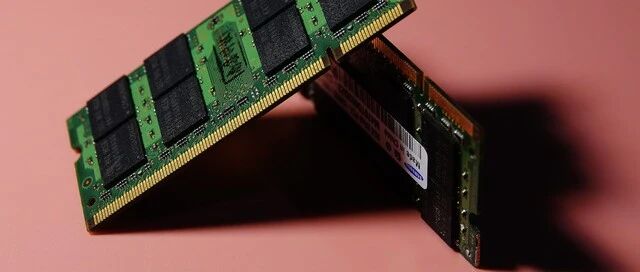
半导体ETF南方(159325.SZ)涨1.13%,科创芯片ETF南方(588890.SH)涨1.60%,中微公司涨4.94%
Jin Rong Jie· 2026-01-07 06:10
Core Viewpoint - The A-share market is experiencing an upward trend, particularly in the semiconductor sector, driven by rising prices and strong demand across various segments [1] Semiconductor Industry Summary - The semiconductor equipment, analog chips, and semiconductor materials sectors are all seeing price increases due to tight supply and demand dynamics [1] - The storage sector is on an upward cycle, with strong demand from cloud infrastructure and an opening for domestic production [1] - In the wafer foundry segment, BCD process prices are rising, and there is an increase in demand for analog chips alongside accelerated domestic substitution [1] - The validation of domestic photolithography machines is promoting the expansion of wafer fabs, reinforcing the logic of domestic material substitution [1] - AI computing power demand is continuously driving growth in the storage industry chain, with an upward cycle for analog chips and development opportunities in core chip areas like GPUs [1] - Several semiconductor companies are accelerating product iteration and commercialization, creating a complete product matrix from chips to solutions, with significant resonance between technological innovation and market demand [1] - The semiconductor probe card industry is characterized by high prosperity and dual drivers of domestic substitution, with a projected global market size of approximately 18.6 billion RMB in 2024, and a domestic market share of nearly 15% but a domestic substitution rate of less than 5%, indicating significant replacement potential [1] - High technical barriers exist in the industry, with leading companies gaining technological advantages through binding with IDM/foundry firms, while domestic semiconductor manufacturing capacity expansion provides development opportunities for local firms [1] Investment Opportunities - The Southern Semiconductor ETF (159325.SZ) and Southern Sci-Tech Chip ETF (588890.SH) cover the semiconductor industry chain, including storage, analog chips, wafer foundry, and equipment materials, benefiting from the upward industry cycle and accelerated domestic substitution, presenting long-term investment value [1]

【金牌纪要库】太空光伏犹如电力之于地面AI算力,卫星电池片市场有望实现从百亿级向万亿级别跨越(附梳理)
财联社· 2026-01-07 05:26
①太空光伏犹如电力之于地面AI算力,卫星电池片市场有望实现从百亿级向万亿级别跨越,为相关头部企 业提供一个高附加值、高壁垒的"蓝海"市场;②太空光伏的主流技术路线逐步向P型HJT和钙钛矿叠层技 术演进,对应原材料端将迎来配套升级,这些公司已经率先完成卡位;③太空光伏设备和地面光伏设备存 在显著差异,技术细节对太空级钙钛矿电池至关重要,行业龙头积极布局迎接行业红利期。 前言 《金牌纪要库》是财联社VIP倾力打造的一款高端会议纪要类产品,结合财联社的媒体资源和行业圈层 优势,为投资者提供全面、深入的市场及行业洞察,以及专业分析和解读。 栏目专注于捕捉投资市场 的最新题材机会,通过一线记者的即时报道、资深编辑的专业整理,以及行业资深专家的深度访谈,为 投资者提供前瞻性、独家性、热门性及专业性的市场分析。 ...

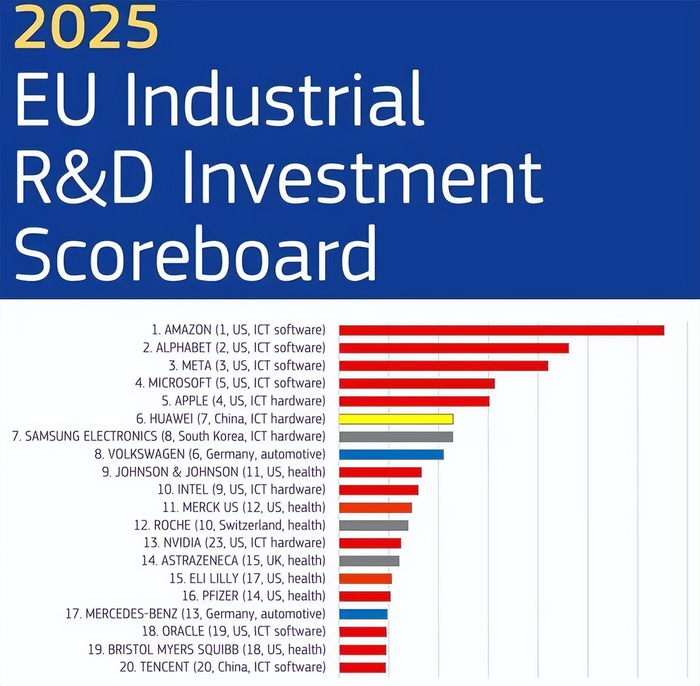
欧盟发布研发榜单:华为以229.4亿欧元成唯一进入前十的中国企业
Xin Lang Cai Jing· 2026-01-07 05:24
Core Insights - The article highlights the significant position of Huawei in global R&D investment, ranking sixth with an investment of €22.94 billion, showcasing China's shift from "catching up" to "keeping pace" in technology competition [4][12] R&D Investment Overview - The EU's 2025 Global R&D Investment Top 100 list shows that the US has 674 companies, accounting for 47.1% of total R&D investment, while China has 525 companies at 16.1%, and the EU has 318 companies at 16.2% [1] - Huawei's R&D expenses for the first half of 2025 reached ¥96.95 billion, representing 22.7% of its revenue, equating to approximately ¥5.36 billion spent daily, which is significantly higher than competitors like Apple and Xiaomi [5][6] Strategic Focus Areas - Huawei's R&D strategy is not merely about cost but targets critical areas, such as semiconductor technology, with over 7,000 engineers dedicated to developing the Kirin and Ascend chips, aiming to overcome technological barriers [6][9] - The company has established a comprehensive capability loop in three key areas: computing power, quantum technology, and operating systems, moving beyond isolated breakthroughs [7][8][10] Technological Innovations - In computing power, Huawei has innovated through architecture rather than relying on EUV lithography, creating a "supercomputer" with the Atlas960 Super PoD, which supports 15,488 computing cards and achieves a total computing power of 30 EFLOPS [8] - In quantum technology, Huawei focuses on core technology breakthroughs and industry applications, having secured a patent for superconducting quantum chips that significantly reduce qubit interference [9] - The HarmonyOS has evolved from being Android-compatible to redefining standards, with significant R&D investment leading to the release of HarmonyOS 5.0, which enhances task efficiency across devices [10] Implications and Challenges - Huawei's entry into the top ten of global R&D investment is a milestone for Chinese technology, reflecting a deeper transformation in global innovation dynamics [12] - Despite the achievements, the article notes that outside of Huawei, few Chinese companies rank highly in R&D, indicating a need for broader industry growth and support for long-term investment strategies [12]
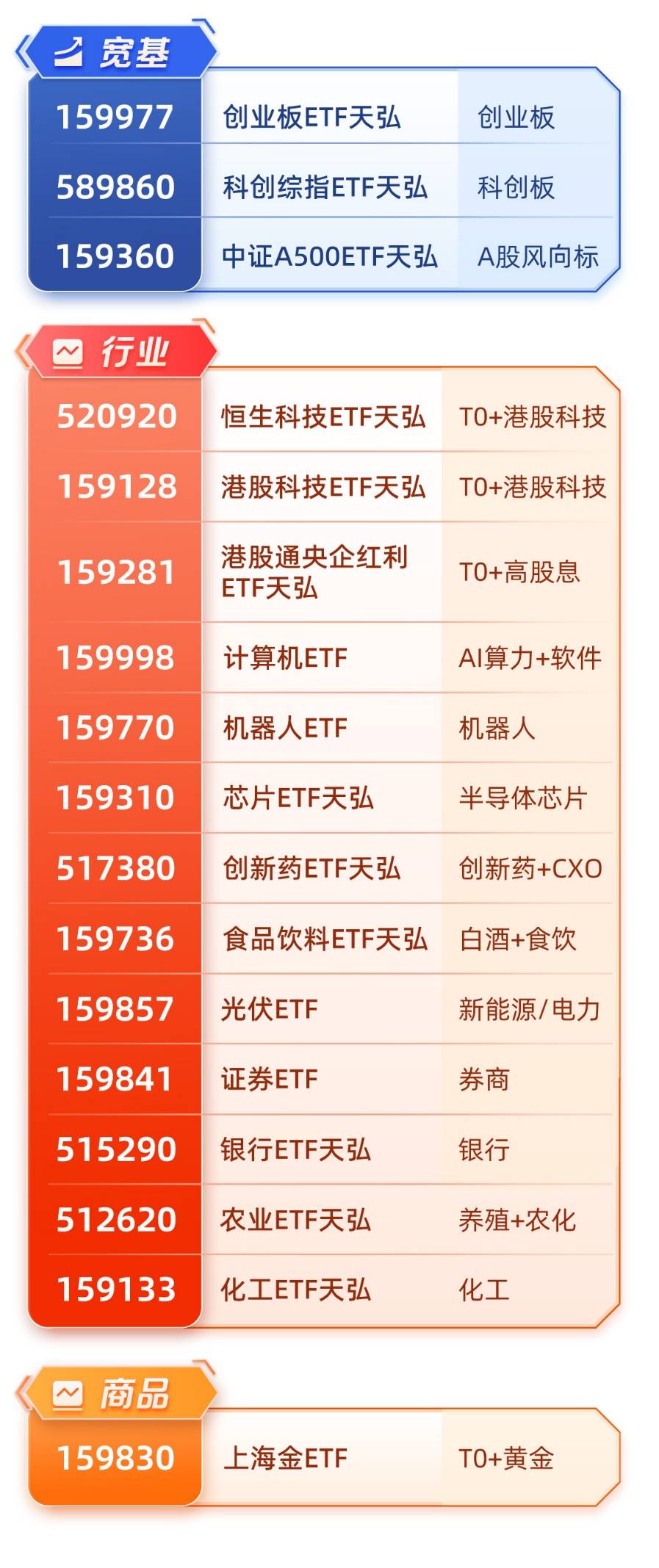
AMD CEO喊话算力百倍提升!芯片ETF天弘(159310)标的指数劲升涨超2%,科创综指ETF天弘(589860)标的指数冲击三连阳,全球芯片巨头火力全开
Sou Hu Cai Jing· 2026-01-07 05:13
Core Insights - The semiconductor ETF Tianhong (159310) saw a trading volume of 14.87 million yuan, with the index tracking the semiconductor industry rising over 2% [1] - The Tianhong semiconductor ETF has experienced a significant growth of 17.05 million yuan over the past two weeks [1] - The Tianhong Sci-Tech Index ETF (589860) had a turnover rate of 7.56% and a trading volume of 23.45 million yuan, with the index rising by 1.49% [1][2] Product Highlights - The Tianhong semiconductor ETF (159310) tracks the CSI Semiconductor Industry Index, reflecting the overall performance of listed companies in the semiconductor sector [1] - The Tianhong Sci-Tech Index ETF (589860) covers 97% of the market capitalization of the Sci-Tech Board, providing a balanced industry distribution to adapt to rapid market changes [2] Key Events - AMD CEO Lisa Su stated that global computing power needs to increase by 100 times in the next five years to meet AI development demands, with a projected leap from Zetta to 10 YottaFLOPS [3] - AMD's next-generation AI chip MI455 GPU will utilize 2nm and 3nm processes, aiming for a 1000-fold increase in AI performance over four years [4] - Intel launched its first mass-produced 2nm client chip, the Core Ultra Series 3, with a performance increase of up to 60% compared to the previous generation [5] Institutional Views - According to Zhongyin Securities, the global semiconductor materials market is expected to exceed $87 billion by 2029, with domestic companies accelerating capacity and technology development in key areas [6]
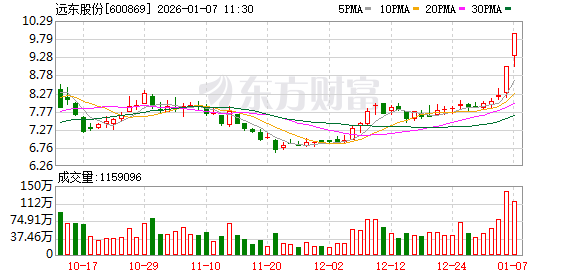
三重因素共振 远东股份2025年12月份斩获超30亿元订单
Zheng Quan Ri Bao· 2026-01-07 04:37
Core Viewpoint - Far East Smart Energy Co., Ltd. has secured significant contracts exceeding 30.7 billion yuan in December 2025, driven by the growing demand in the renewable energy, new power systems, and smart manufacturing sectors, indicating a positive impact on the company's future performance [2][5]. Group 1: Company Performance - In the first three quarters of 2025, the company achieved a revenue of 20.209 billion yuan, a year-on-year increase of 10.91%, and a net profit attributable to shareholders of 1.68 billion yuan, up 268.86% [6]. - The company reported a net operating cash flow of 4.92 billion yuan, reflecting a significant year-on-year growth of 330.80% [6]. - The total order amount for the fourth quarter of 2025 exceeded 65 billion yuan, with substantial contracts signed in October (10.62 billion yuan), November (23.83 billion yuan), and December (30.7 billion yuan) [6]. Group 2: Market Expansion and Product Diversification - The company is focusing on expanding its market share in emerging industries and traditional manufacturing, with a product matrix that includes smart cables, smart batteries, and smart airports [3]. - The order structure is diversifying, with significant contracts in smart grid cables (7.06 billion yuan) and other strategic customer orders totaling 23.63 billion yuan across various sectors, including clean energy cables and smart manufacturing [4]. - The company is actively promoting green building cable projects in multiple cities, with contract amounts ranging from 10 million to 40 million yuan [4]. Group 3: Industry Trends and Future Outlook - The demand explosion in domestic and international renewable energy, new power systems, AI computing power, and smart manufacturing is laying a solid foundation for business growth [5]. - The company aims to leverage its core technology innovation and market expansion to support a diverse order base, benefiting from the increasing concentration in the smart cable industry and the growth in AI computing demand [5]. - Future strategies include advancing technology iterations and business upgrades centered around "electricity + computing power + AI" to further consolidate market advantages [6].

下游资本开支上行-国产化率提升-看好半导体设备新机遇
2026-01-07 03:05
Summary of Semiconductor Equipment Industry Conference Call Industry Overview - The global semiconductor equipment market is expected to reach $133 billion by 2025, growing by 14% year-on-year, primarily driven by front-end wafer fabrication [1][4] - By 2026, the market is projected to grow to $145 billion, with a 10% increase, driven by AI, advanced logic storage, and advanced packaging [1][4] - The market is anticipated to further increase to $156 billion by 2027 [1][4] Key Insights - China is becoming increasingly significant in the global semiconductor equipment market, expected to exceed 40% market share in Q3 and Q4 of 2025, maintaining a range of 30%-40% in 2026 [1][5] - Major players like SMIC and Hua Li are actively expanding advanced logic capacity, with SMIC's capacity utilization reaching 95.8% and ongoing capital expenditure [1][6][7] - Changxin Storage (CXMT) has applied for an IPO on the Sci-Tech Innovation Board, planning to raise approximately $30 billion for technology expansion and DRAM production line upgrades, with projected revenue of $58 billion by 2025 [1][8] Investment Opportunities - Two main investment directions in the semiconductor equipment industry are identified: 1. Front-end wafer fabrication, with significant capital expenditure expected in 2026, particularly in memory and advanced logic plants, leading to a substantial increase in orders for etching and thin film deposition equipment. New order growth is conservatively estimated at 20%-30%, with a neutral to optimistic estimate of 40%-50% [2] 2. Domestic AI computing-related testing machines and advanced packaging equipment, with companies like Huafeng, Changchuan, and Maiwei positioned for growth [2] Market Dynamics - The unit investment cost in semiconductor manufacturing is rapidly increasing with advancing process nodes, with the cost for 5nm nodes reaching $3 billion per 10,000 wafers, indicating a trend of rising capital expenditure [2][9] - The domesticization rate in the semiconductor equipment industry is crucial, expected to reach 22% by 2025, driven by sanctions and national policy support [2][11] Competitive Landscape - There is competition among semiconductor equipment companies, but differentiation is achieved through specialization in various etching and deposition technologies [2][13] - Recommended companies in front-end semiconductor equipment include North Huachuang, Zhongwei Company, Tuojing Technology, Weidao Nano, and Maiwei Technology, each focusing on different processes and showing significant order growth [2][14] Emerging Areas - Current low domesticization rates in areas such as metrology, photoresist coating, and ion implantation equipment are highlighted as potential growth segments, especially with increased storage expansion [2][12] - Investment opportunities in domestic AI computing are emphasized in advanced packaging and testing fields, with key companies identified for potential growth [2][15]
价格再创新高,低费率创业板人工智能ETF华夏(159381)盘中涨超1%,蓝色光标冲击9连阳
Mei Ri Jing Ji Xin Wen· 2026-01-07 02:33
Group 1 - The A-share technology sector is experiencing significant activity, particularly in AI computing and applications, with the Huaxia AI ETF (159381) rising over 1.4% and achieving a new high, with trading volume exceeding 100 million yuan [1] - At the CES 2026, NVIDIA's CEO Jensen Huang announced the full production of the new AI chip platform Vera Rubin, which offers a 5x improvement in AI inference performance compared to Blackwell, with costs reduced to one-tenth [1] - NVIDIA also introduced the world's first open-source VLA autonomous driving inference model, with the first vehicle equipped with NVIDIA's full-stack DRIVE system set to hit the roads in the U.S. in the first quarter [1] Group 2 - Guosen Securities reviewed the stock price trends of major U.S. tech companies over the past three years, noting that AI narratives have evolved, with OpenAI leading the acceleration in 2023 and Microsoft benefiting from its exclusive partnership with OpenAI [2] - In 2024, the market is expected to underestimate the progress of models, shifting focus to application companies, with Meta positioned advantageously in social media and advertising [2] - By 2025, the gap between models and OpenAI is expected to narrow, with Google gaining ground due to its ecosystem advantages, while in 2026, demand for model inference may reach a turning point, making models and computing power optimal investment directions [2] Group 3 - The Huaxia AI ETF (159381) tracks the AI index and has a significant allocation in optical modules, with the top three holdings being Zhongji Xuchuang (26.62%), Xinyi Sheng (19.35%), and Tianfu Communication (5.05%) [3] - The 5G Communication ETF (515050) focuses on the 5G communication theme index, with a recent scale of nearly 8 billion yuan, emphasizing companies like NVIDIA, Apple, and Huawei [3] - The Information Technology ETF (562560) covers a wide range of sectors including consumer electronics, software development, and communication, providing comprehensive exposure to the information technology industry [3]


