
地缘政治

Search documents
石油股集体走低 中海油服跌超3% 地缘局势暂缓引发油价下跌
Zhi Tong Cai Jing· 2025-11-21 03:38
Core Viewpoint - Oil stocks collectively declined, influenced by a drop in international oil prices and geopolitical developments regarding the Russia-Ukraine conflict [1] Group 1: Stock Performance - CNOOC Limited (601808) fell by 3.07%, trading at HKD 7.59 [1] - PetroChina (00857) decreased by 2.67%, trading at HKD 8.76 [1] - Sinopec (00386) dropped by 2.41%, trading at HKD 4.45 [1] - CNOOC (00883) declined by 1.64%, trading at HKD 21.6 [1] Group 2: Geopolitical Context - The Ukrainian President's office announced that President Zelensky has officially received a peace plan draft from the U.S. regarding the Russia-Ukraine conflict [1] - Zelensky is expected to have a detailed discussion with President Trump about diplomatic possibilities and core elements for achieving peace [1] Group 3: Market Outlook - Citigroup indicated that the future direction of the oil market will depend on geopolitical developments, OPEC+ production strategies, and changes in U.S. domestic policies [1] - The market needs to closely monitor the actions of major oil-producing countries and U.S. policy signals in the global energy market [1]



港股异动 | 石油股集体走低 中海油服(02883)跌超3% 地缘局势暂缓引发油价下跌
智通财经网· 2025-11-21 03:35
Core Viewpoint - Oil stocks collectively declined, influenced by a drop in international oil prices and geopolitical developments regarding the Russia-Ukraine conflict [1] Group 1: Company Performance - CNOOC Limited (02883) fell by 3.07%, trading at HKD 7.59 [1] - PetroChina (00857) decreased by 2.67%, with a price of HKD 8.76 [1] - Sinopec (00386) dropped by 2.41%, now at HKD 4.45 [1] - CNOOC (00883) saw a decline of 1.64%, priced at HKD 21.6 [1] Group 2: Market Influences - Overnight international oil prices experienced a decline [1] - The Ukrainian President's office announced that President Zelensky has received a peace plan draft from the U.S. regarding the Russia-Ukraine conflict [1] - Zelensky is expected to discuss diplomatic possibilities and core elements for peace with President Trump in a forthcoming phone call [1] Group 3: Future Outlook - Citi indicated that the future direction of the oil market will depend on geopolitical developments, OPEC+ production strategies, and changes in U.S. domestic policies [1] - The market is advised to closely monitor the actions of major oil-producing countries and U.S. policy signals in the global energy market [1]
花旗:OPEC+逐步解除限产助推油价走低 预期布兰特原油明年至中期选举前或维持60美元水平
Zhi Tong Cai Jing· 2025-11-21 02:33
Group 1 - Citigroup's report indicates that Saudi Arabia and OPEC+ have been gradually lifting oil production limits since April, leading to increased market supply, aligning with President Trump's long-standing push to lower energy prices [1] - The report forecasts a weak global crude oil market in the coming quarters, with Brent crude prices expected to hover around $60 per barrel at least until the U.S. midterm elections next year [1] - Prices above $60 per barrel are likely to encourage OPEC+ to continue increasing production, with Saudi Arabia expected to play a key leadership role in stabilizing market supply and demand [1] Group 2 - Citigroup further notes that as the Trump administration prepares for the 2025 midterm elections and addresses economic pressures from high domestic interest rates, the focus may shift towards lowering overall commodity prices [2] - The report suggests that achieving this goal may involve pushing to end the Russia-Ukraine war; if unsuccessful, the U.S. may exert greater diplomatic pressure on OPEC+ to increase production and lower international oil prices [2] - The future direction of the oil market will depend on geopolitical developments, OPEC+ production strategies, and changes in U.S. domestic policies, necessitating close monitoring of actions from major oil-producing countries and U.S. policy signals in the global energy market [2]

美国大使施压希腊出售中企运营港口,希腊拒绝
Huan Qiu Shi Bao· 2025-11-20 22:55
Core Points - The U.S. Ambassador to Greece urged the sale of the Piraeus port, operated by a Chinese company, which has drawn strong criticism from China [1][2] - Chinese investments in Piraeus port have been recognized for their positive impact on the Greek economy, with local politicians defending the partnership [2][3] Group 1: U.S. Position - The U.S. Ambassador expressed regret over the presence of China’s COSCO Shipping at Piraeus port and suggested alternatives to mitigate China's influence, such as increasing throughput at other ports or selling Piraeus [1] - The U.S. government has reportedly pressured Greece to limit Chinese activities at Piraeus, linking this to the designation of COSCO as a "military entity" [1] Group 2: Chinese Response - The Chinese Embassy in Greece condemned the U.S. Ambassador's remarks as malicious and an interference in Greek internal affairs, emphasizing that Piraeus port belongs to the Greek people [2] - The Chinese Embassy highlighted that Piraeus port is a crucial gateway for Asian goods to Europe and criticized the U.S. for using it as a tool for geopolitical confrontation [2] Group 3: Greek Perspective - Greek officials, including the Foreign Ministry, reaffirmed their commitment to past agreements regarding Piraeus port, which was sold during the debt crisis when China was the only bidder [2] - Local politicians acknowledged the success of Chinese investments in modernizing Piraeus port, enhancing its status as one of Europe’s most important ports and benefiting the national economy [3]

毛宁昭告全球,中方不见高市,钝刀子割肉开始,日本股票应声暴跌
Sou Hu Cai Jing· 2025-11-20 16:52
从日本国内政治逻辑来看,高市早苗正处于巩固自身权力基础、回应保守派选民、展现强硬外交的时点。借助对外强硬姿态,一方面可在国内赢得"国家安 全担当"者的支持,另一方面也能借"对华敢言"展示其领导力。但这一算盘也埋下风险:在敏感议题上动作太快,容易被外交对手"抓住把柄"。 高市早苗自上台以来,就将"强化日本防卫"、"强化与台湾的关系"作为其执政路线的重要组成。依据公开资料可知,她主张修改《日美安全保障条约》框架 下的防卫法制、提升防卫预算、强化日台安全连结。 11月7日国会问答中,她明确提出:若中国大陆对台湾动武、出现战舰出动或使用武力的情景,日本将视为"威胁日本存亡的情形",因而有启动集体自卫权 的可能。该言论相较于以往日本政府一直强调"战略模糊"立场而言,具有明显转向。 一方面,日本在东亚安全布局中正试图扮演更主动的角色。高市早苗及其所属自民党保守派,在防卫预算、修宪议题、日台安全连结上都表现出加速趋势。 日本国内民调也显示,约六成民众支持其加强防卫开支。 另一方面,中国方面视"台湾"问题为核心红线,任何外部力量介入被视为"触碰主权底线"。对此,中国不仅有外交回应,也有经济、旅游、文化手段作为支 撑。日本若在 ...

ZIM Integrated Shipping Services .(ZIM) - 2025 Q3 - Earnings Call Transcript
2025-11-20 14:02
Financial Data and Key Metrics Changes - In Q3 2025, the company generated revenue of $1.8 billion, a decrease of 36% year-over-year, primarily due to lower freight rates and volume [4][13] - Net income for Q3 was $123 million, down from $1.1 billion in the same quarter last year [20] - Adjusted EBITDA was $593 million with a margin of 33%, and adjusted EBIT was $260 million with a margin of 15%, compared to 55% and 45% respectively in Q3 2024 [19][20] - Total liquidity remained at $3 billion as of September 30, 2025 [4] Business Line Data and Key Metrics Changes - The average freight rate per TEU in Q3 was $1,602, down from $2,480 in Q3 2024 [14] - Carried volume in Q3 was 926,000 TEUs, a 4.5% decline year-over-year, but a 3.5% increase sequentially [20] - Revenues from non-containerized cargo totaled $78 million, down from $145 million in Q3 2024, attributed to lower volume and rates [14] Market Data and Key Metrics Changes - Trans-Pacific volume decreased by 1.5% year-over-year but increased by 17% sequentially [21] - Latin America trade volumes grew by 2.4% year-over-year [21] - The company noted ongoing geopolitical and trade tensions affecting the shipping industry [4] Company Strategy and Development Direction - The company is focusing on diversifying its network, particularly in Southeast Asia and Latin America, to capture new trade opportunities as global trade patterns evolve [7][8] - A significant charter agreement for 10 LNG dual-fuel vessels is expected to enhance operational flexibility and sustainability [9][10] - The company aims to maintain a modern fleet, with approximately 60% of its capacity being new builds and 40% LNG-powered [10] Management's Comments on Operating Environment and Future Outlook - Management expressed caution regarding the fourth quarter, expecting weaker performance than initially projected [5][6] - The reopening of the Suez Canal is anticipated to improve fleet efficiency but may also increase supply pressure on freight rates [12][25] - The company remains confident in its strategy and competitive position despite ongoing market volatility [10][11] Other Important Information - The board declared a dividend of $0.31 per share, totaling approximately $37 million, representing 30% of Q3 net income [5] - Total dividends distributed since the IPO amount to approximately $5.7 billion, reflecting a strong commitment to returning capital to shareholders [5][48] Q&A Session Summary Question: Management buyout discussions - Management stated that there are no comments on the potential management buyout, and the board will decide on any related matters [28][30] Question: Return to the Red Sea - Management confirmed plans to return to the Red Sea and Suez Canal as soon as insurance approvals are obtained [32][44] Question: Dividend policy during negative net income - Management reiterated the dividend policy of distributing 30% of net profit quarterly, with the possibility of special dividends at the board's discretion [39][42] Question: Cost expectations for 2026 - Management indicated that costs would likely remain under pressure due to the current market dynamics and the need to redeliver older vessels [34][35] Question: Route profitability and capacity adjustments - Management noted that profitability varies by route and emphasized the importance of reliability in service as they expand into new markets [66][68]

安世之争,迈出关键一步
虎嗅APP· 2025-11-20 10:18
Core Viewpoint - The semiconductor dispute involving Nexperia has escalated into a significant geopolitical issue affecting the global automotive supply chain, with China and the Netherlands engaged in negotiations to resolve the crisis [5][6]. Group 1: Background of the Dispute - The conflict originated from a unilateral action by the Netherlands on September 30, 2025, which involved freezing Nexperia's global assets and operations for one year under the guise of national security [8]. - Following the Dutch government's actions, Nexperia's management faced immediate legal challenges, leading to a rapid court ruling that suspended the CEO and placed the company's shares under third-party control [8][9]. - The situation worsened when Nexperia announced a halt in supply to its Dongguan factory, impacting 70% of its production capacity and further straining the global automotive chip supply chain [11]. Group 2: Impact on the Automotive Industry - Major automotive manufacturers, including Volkswagen, BMW, and Mercedes, reported supply chain disruptions, with some factories nearing shutdown due to chip shortages [10]. - The European Automobile Manufacturers Association issued warnings about potential production halts if the semiconductor supply issue was not resolved promptly [10]. Group 3: Recent Developments - In early November, the Dutch government indicated a willingness to negotiate, leading to discussions in Beijing on November 18 and 19, where the Netherlands announced a suspension of its previous intervention measures [13][14]. - Despite the Dutch government's pause, Nexperia's control issues remain unresolved, with ongoing legal measures still in effect [14]. Group 4: Importance of Nexperia - Nexperia is a critical player in the automotive semiconductor market, supplying 40% of the global automotive power semiconductors and holding significant market shares in various semiconductor components [15]. - The company has established a robust supply chain in China, which has proven resilient despite the geopolitical tensions, with sufficient inventory to meet customer demands [15][17]. - Nexperia's history reflects its evolution from a Philips subsidiary to a key global semiconductor company, highlighting the complexities of international ownership and control in the semiconductor industry [16][17].


安世之争,迈出关键一步
3 6 Ke· 2025-11-20 08:03
Core Viewpoint - The semiconductor dispute involving Nexperia has escalated into a significant geopolitical issue affecting the global automotive supply chain, with recent negotiations between China and the Netherlands indicating a potential path towards resolution, although substantial challenges remain [1][10][11]. Group 1: Background of the Dispute - The conflict originated from the Netherlands, where a ministerial order was issued on September 30, 2025, freezing Nexperia's global assets and operations for one year, which was perceived as a unilateral action [2][3]. - The rapid legal actions taken by Nexperia's foreign executives led to a court ruling that resulted in the forced third-party custody of shares held by its parent company, Wingtech Technology [5][6]. Group 2: Impact on the Automotive Industry - Nexperia is a critical player in the automotive semiconductor market, supplying 40% of automotive-grade power semiconductors and holding over 40% market share in small signal diodes and ESD protection devices [13][20]. - The disruption caused by the dispute has led to significant supply chain issues for major automotive manufacturers, with companies like Volkswagen, BMW, and Mercedes-Benz acknowledging supply shortages and potential production halts [7][8][9]. Group 3: Recent Developments - On November 5, 2025, Nexperia announced a suspension of supplies to its Dongguan factory, impacting 70% of its production capacity, which further exacerbated the global automotive chip supply chain crisis [8][9]. - Following negotiations on November 18 and 19, the Dutch government announced a suspension of its previous intervention measures, which was welcomed by China as a positive step, although the core issues remain unresolved [10][11]. Group 4: Nexperia's Strategic Position - Nexperia, originally part of Philips, has undergone significant changes since its acquisition by a Chinese consortium in 2017, which has positioned it as a key player in the semiconductor industry with a robust supply chain [16][19]. - The company has established a comprehensive production network across Europe and Asia, with annual shipments exceeding 110 billion devices and a customer base of over 25,000, predominantly in the automotive sector [20].
美媒:中国真该谢谢特朗普,美国这下搞不好要成“香蕉共和国”了
Sou Hu Cai Jing· 2025-11-20 07:31
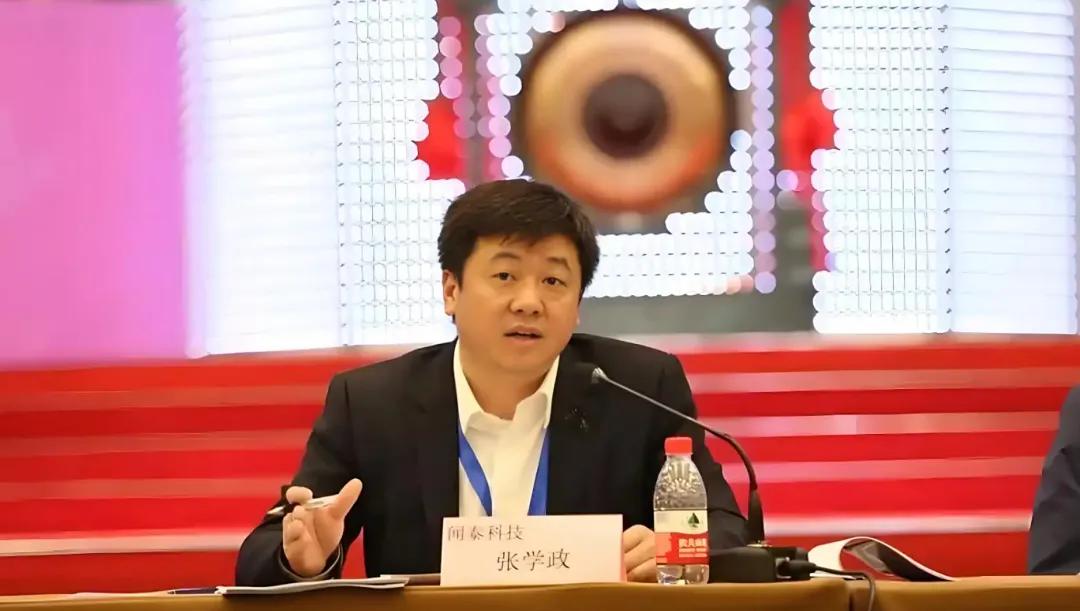
Core Viewpoint - Janet Yellen warns that the U.S. democracy is in "deadly danger," likening its potential future to that of a "banana republic," a term typically used to describe politically unstable countries with economies controlled by external forces or internal oligarchs [1][4]. Group 1: Political and Economic Stability - Yellen emphasizes that the influx of global capital into the U.S. is driven by the certainty provided by a stable political system, which includes the rule of law, policy coherence, and equal treatment under the law [4]. - She observes that this foundational stability is being replaced by impulsive and discontent-driven personal will, particularly criticizing the actions of former President Trump [5]. Group 2: Fear in Business and Academia - Yellen notes that fear has silenced U.S. CEOs, who worry about being targeted if they cross invisible lines, leading to a chilling effect that extends to universities and research institutions [5][7]. - The White House's threats to cut federal funding for "politically incorrect" universities contribute to a hostile environment for foreign-born scientists and students, jeopardizing U.S. leadership in cutting-edge technology [7]. Group 3: Independence of the Federal Reserve - Yellen warns that the independence of the Federal Reserve is at risk, as Trump has criticized the Fed and attempted to influence its decisions, which could lead to a collapse of the firewall between monetary and fiscal policy [8][12]. - She highlights that if the President demands the Fed to finance government deficits, it would mirror the situation in "banana republics," leading to currency collapse and hyperinflation [8][12]. Group 4: Economic Indicators and Risks - Despite the current AI investment boom, Yellen believes it masks underlying economic risks that may not be immediately visible in consumer prices but will manifest in the value of the dollar [9][11]. - Since the announcement of new tariffs in April, the dollar has depreciated by 4% against a basket of major currencies, indicating a lack of confidence among global investors [11]. Group 5: Long-term Implications - Yellen's concerns reflect a broader issue of institutional decay that could take decades to unfold, potentially undermining the U.S.'s ability to attract global capital and talent [12][13]. - The erosion of institutional integrity could represent a strategic advantage for U.S. competitors, as the country risks dismantling its core assets that have historically supported its global dominance [12][13].
中辉有色观点-20251120
Zhong Hui Qi Huo· 2025-11-20 02:15
1. Report Industry Investment Ratings - Gold: Long - term holding [1] - Silver: Long - term holding [1] - Copper: Long - term holding [1] - Zinc: Rebound under pressure [1] - Lead: Rebound under pressure [1] - Tin: Rebound under pressure [1] - Aluminum: Under pressure [1] - Nickel: Stabilize [1] - Industrial silicon: Range - bound [1] - Polysilicon: High - level oscillation [1] - Lithium carbonate: Bullish [1] 2. Core Views of the Report - The Fed's interest - rate decisions and data suggest no rate cuts this year, but some sentiment has been priced in. Gold and silver may continue to fluctuate, with long - term support logic remaining intact [1][2][3] - Copper has stopped falling and rebounded, but the sharp increase in LME copper inventory restricts its upside. In the medium - to - long - term, copper is still bullish [1][6][7] - Zinc is in a situation of weak supply and demand. In the short - term, the rebound has limited space, and in the medium - to - long - term, supply increases while demand decreases [1][9][10] - Aluminum prices are under pressure during the transition between peak and off - peak seasons [1][12][13] - Nickel prices have stopped falling and stabilized, and stainless steel is under pressure at a low level [1][16][17] - The fundamentals of lithium carbonate remain in a tight supply - demand situation, with total inventory decreasing for 13 consecutive weeks and the decline accelerating [1][20][22] 3. Summary by Related Catalogs Gold and Silver - **Basic Logic**: Most Fed officials support no rate cuts in December. The release of October non - farm payroll data has been postponed, and the market has almost given up on betting on a December rate cut. High - level purchases of gold by central banks in November may drive up gold prices, and in the long - term, gold will benefit from global monetary easing, the decline of the US dollar's credit, and the reconstruction of the geopolitical pattern [4][5] - **Strategy Recommendation**: In the short - term, pay attention to the support of domestic gold at 920 and silver around 11500. Hold long - term value - allocation positions and be cautious in the short - term [5] Copper - **Market Review**: Shanghai copper has stopped falling and rebounded, returning to the 86,000 - yuan mark [7] - **Industry Logic**: The global supply of copper concentrates remains tight. The production of electrolytic copper has declined, and high copper prices have significantly suppressed demand. The global visible copper inventory is at a historically high level, and the LME copper inventory has increased significantly [7] - **Strategy Recommendation**: In the short - term, copper is oscillating and accumulating momentum. It is recommended to go long with a light position near the 85,000 - yuan mark. In the medium - to - long - term, copper is still optimistic. The short - term range for Shanghai copper is [84,500, 87,500] yuan/ton, and for LME copper, it is [10,500, 11,000] US dollars/ton [8] Zinc - **Market Review**: Shanghai zinc has stopped falling and rebounded, with narrow - range oscillations [10] - **Industry Logic**: The supply of zinc concentrates has tightened in the short - term, and domestic smelters may reduce production due to raw material shortages. Consumption has entered the off - season, the export window for domestic zinc ingots has opened, and the risk of soft squeezing has been alleviated [10] - **Strategy Recommendation**: In the short - term, the rebound of zinc has limited space, waiting for more macro - level guidance. In the medium - to - long - term, maintain the view of selling on rallies. The range for Shanghai zinc is [22,200, 22,600] yuan/ton, and for LME zinc, it is [2,950, 3,050] US dollars/ton [11] Aluminum - **Market Review**: Aluminum prices have rebounded under pressure, and alumina is in a weak position at a low level [13] - **Industry Logic**: The expectation of a Fed rate cut at the end of the year has weakened. Overseas electrolytic aluminum plants have reduced production, and the supply tension has resurfaced. The inventory of electrolytic aluminum ingots and aluminum rods has increased. The demand shows a structural differentiation. The alumina market remains in an oversupply situation [14] - **Strategy Recommendation**: It is recommended to take profits on rallies for Shanghai aluminum in the short - term, and pay attention to the change direction of the social inventory of aluminum ingots. The main operating range is [21,000 - 21,800] [15] Nickel - **Market Review**: Nickel prices have stopped falling and stabilized, and stainless steel is under pressure at a low level [17] - **Industry Logic**: The expectation of a Fed rate cut at the end of the year has weakened. Indonesia plans to lower the nickel production target in 2026, and the global refined nickel inventory has reached a five - year high. The terminal consumption of stainless steel has gradually weakened, and there is a risk of inventory accumulation [18] - **Strategy Recommendation**: It is recommended to gradually take profits on dips for nickel and stainless steel, and pay attention to downstream consumption and stainless steel inventory changes. The main operating range for nickel is [115,000 - 117,000] [19] Lithium Carbonate - **Market Review**: The main contract LC2601 opened high and went high, with a significant increase in positions and a daily increase of over 6% [21] - **Industry Logic**: The fundamentals remain in a tight supply - demand situation, with total inventory decreasing for 13 consecutive weeks and the decline accelerating. Domestic production has reached a new high, but the shortage of raw materials limits the production increase. The terminal market is strong, and the optimistic demand expectation is difficult to falsify [22] - **Strategy Recommendation**: Wait for opportunities to go long during callbacks or sideways consolidations in the range of [97,000 - 99,800] [23]