能源转型

Search documents
马斯克说对了!继芯片后又一东西全球疯抢,中国或成最大受益者
Sou Hu Cai Jing· 2025-11-06 07:21
Core Insights - The article discusses the increasing global demand for transformers, which has become a critical component in the energy transition, as predicted by Elon Musk two years ago [1][3][31] - China has emerged as the largest supplier of transformers, leveraging its decades of industrial strength and supply chain advantages to secure significant overseas orders [3][16][41] Group 1: Demand Drivers - The surge in demand for transformers is driven by the global expansion of renewable energy sources, such as solar and wind power, which require transformers for voltage conversion to integrate into the main power grid [8][10] - The rise in electric vehicle ownership and the construction of charging stations and energy storage facilities have further increased the need for transformers [8][10] - Aging global power grids, with 70% of them past their service life, have created a rigid demand for new transformers, particularly in the U.S. where the average transformer age is 30-40 years [10][14] Group 2: Supply Constraints - The production of transformers is complex, involving over a hundred processes, high technical barriers, and long production cycles, with new factories taking 1-2 years to establish [11][14] - The average delivery time for transformers has extended to 2.3-4 years globally, exacerbating supply shortages [11][14] - Major companies like Hitachi Energy are investing heavily, such as a $6 billion factory project that will take at least four years to yield effective production capacity [13][14] Group 3: China's Competitive Advantage - China's transformer exports reached 29.71 billion yuan in the first eight months of 2025, a 51.42% year-on-year increase, with exports to the EU soaring by 138% [16][18] - China dominates the production of oriented silicon steel, which constitutes 60% of the global market, allowing it to maintain a complete supply chain and reduce dependency on external suppliers [18][20] - Chinese suppliers can deliver transformers in 10-12 months, significantly faster than the 18 months typical for Western companies, making them attractive to countries in urgent need [20][22] Group 4: Market Dynamics - The price of Chinese transformers is 20%-30% lower than comparable Western products, providing a competitive edge in international bidding [22][30] - Chinese transformers are increasingly capable of meeting advanced requirements, such as smart diagnostics and energy management, with over 70% of exports in 2025 expected to meet high energy efficiency standards [24][30] - Leading Chinese companies like TBEA and Baobian Electric are expanding their global footprint, with TBEA operating 24 manufacturing bases across over 90 countries [26][28] Group 5: Future Outlook - The demand for transformers is expected to grow as AI, renewable energy, and robotics industries develop, solidifying China's role in the global energy transition [31][43] - Musk's vision connects AI, robotics, and renewable energy, emphasizing the essential role of transformers in supporting these technologies [31][35] - China's advancements in manufacturing and technology position it as a key player in the global energy transformation, moving beyond low-cost production to become a respected leader in the industry [41][43]


潍柴与希锂斯重磅合作!布局这一市场蓝海
第一商用车网· 2025-11-06 06:58
Core Viewpoint - The collaboration between Weichai Power and Xilius marks a significant advancement in China's solid oxide fuel cell (SOFC) industry, enabling a complete technological chain from battery to power station, thus breaking overseas technological barriers [1] Group 1: Energy Transition and SOFC Advantages - SOFC is recognized as a highly efficient power generation device, achieving over 90% overall efficiency and fuel flexibility, making it a key player in the global energy transition [2] - The rapid growth of the SOFC industry is driven by two main factors: the explosive growth of AI technology leading to increased energy demands in data centers, and supportive policies such as the U.S. Inflation Reduction Act providing significant tax credits for fuel cells [3][4] Group 2: Weichai Power's Strategic Development - Weichai Power has established a leading position in the domestic SOFC industry through a closed-loop model of "forward-looking layout - technological breakthroughs - commercial validation," showcasing a clear progression from technology introduction to full-chain integration [6] - The company has developed differentiated competitive capabilities in the SOFC field, launching several benchmark products, including the world's first high-power metal-supported commercial SOFC product with a record efficiency of 92.55% [7] - Weichai Power is focusing on core applications such as AI data centers and industrial parks, with plans to introduce next-generation high-power products that significantly enhance performance metrics [9] Group 3: Market Dynamics and Future Outlook - The SOFC industry is at a critical juncture, transitioning from technology validation to commercial explosion, with Weichai Power poised to leverage its comprehensive technological capabilities for global competition [9][10] - The promotion of "scenario-based demonstration" models is essential for overcoming initial trust issues in SOFC commercialization, allowing for rapid replication in various applications once stability is proven [8]
我国新型储能装机规模跃居世界第一,储能电池ETF(159566)受资金关注
Mei Ri Jing Ji Xin Wen· 2025-11-06 04:32
Group 1 - The new energy sector continues to rise, with the National Energy Administration reporting that as of the end of September, China's new energy storage capacity exceeded 100 million kilowatts, growing over 30 times compared to the end of the 13th Five-Year Plan, accounting for over 40% of the global total and ranking first in the world [1] - The China Securities Index for new energy batteries rose by 0.6%, and the energy storage battery ETF (159566) saw a net subscription of 13 million shares, with a total net inflow exceeding 350 million yuan over the past five trading days [1] - According to Cinda Securities, the lithium battery sector is expected to enter a new upward cycle driven by energy transition and domestic storage policy support, with a projected 50% growth in energy storage demand in 2026 [1] Group 2 - The China Securities Index for new energy batteries covers the core industrial chain of energy storage batteries, with energy storage systems accounting for approximately 65%, indicating potential benefits from industry-related catalysts [1] - The energy storage battery ETF (159566) tracks this index, providing investors with a convenient way to invest in the energy storage industry chain [1]
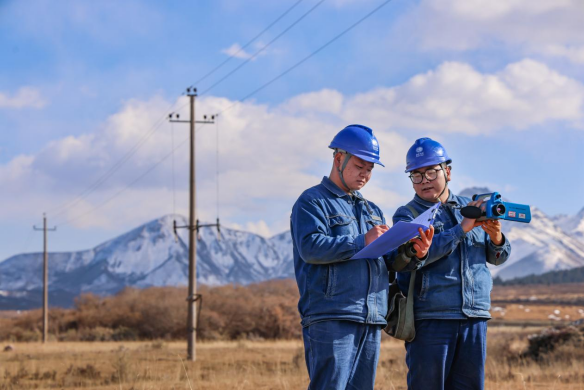
国网张掖供电公司:守护绿水青山 “电”暖雪域高原
Zhong Guo Neng Yuan Wang· 2025-11-06 04:17
Core Viewpoint - The transition from traditional heating methods to electric heating in Zhangye's military horse farm represents a significant step towards ecological protection and energy transformation, enhancing the quality of life for local residents while promoting green energy initiatives [3][5]. Group 1: Energy Transition and Ecological Benefits - The Zhangye Power Supply Company has prioritized electric heating projects as part of its commitment to ecological protection and improving the welfare of residents, implementing a "coal-to-electricity" plan for the military horse farm area [3]. - The company has invested over 1 million yuan in upgrading the power grid, including the renovation of 9 kilometers of 10 kV lines and the installation of 3 intelligent load monitoring terminals, facilitating the installation of 17,700 kW heat storage boilers [3]. - The transition to electric heating is expected to reduce coal consumption by over 5,000 tons annually, equivalent to planting 15,000 new trees at the foot of the Qilian Mountains [3]. Group 2: Impact on Local Community - The comprehensive electrification of the military horse farm has resolved issues related to power supply and communication, significantly improving the quality of life for herders [5]. - The shift from traditional heating methods to electric heating has not only enhanced living standards but also contributed to the green energy transition and the construction of beautiful rural areas [5]. - The company actively engages with users, particularly in remote areas, to provide services and educate them about electric heating pricing policies, resulting in over a 10% reduction in operational costs compared to coal heating [3][5].
2025碳中和与绿色投资大会即将启幕
Yang Shi Wang· 2025-11-06 03:07
Core Insights - The 2025 Carbon Neutrality and Green Investment Conference, along with the Fourth Zero Carbon City Forum, will commence on November 8 in Shanghai, focusing on energy transition and sustainable development of the zero-carbon industry [1] - The conference aims to gather over 300 guests from more than ten countries, including the UK, France, Germany, South Korea, Brazil, Zambia, Indonesia, New Zealand, and the UAE, to discuss industrial upgrading paths and new investment opportunities under carbon neutrality goals [1] Group 1 - The theme of the conference is "Energy Transition New Engine, Building a New Zero Carbon Economy," emphasizing key technologies and innovative practices in energy transition [1] - The forum will cover critical dimensions such as new trends in green investment, carbon market mechanism construction, zero carbon city planning, and industrial innovation [1] - A series of "Zero Carbon China" standards and pilot projects will be released during the conference, providing authoritative references and action guidelines for scientific layout and standardized development in the zero-carbon field [1] Group 2 - The conference leverages the international platform of the China International Import Expo to connect domestic and foreign entities, facilitating the practical application of zero-carbon concepts and the high-quality development of the green economy [2]
中俄平等互利务实合作典范,为什么是能源?
中国能源报· 2025-11-06 01:41
Core Viewpoint - The article emphasizes the importance of Sino-Russian energy cooperation as a cornerstone for practical collaboration between the two countries, particularly in the context of global energy security and the evolving international landscape [1][10]. Group 1: Energy Cooperation and Market Dynamics - Sino-Russian energy cooperation is built on natural complementary advantages, with Russia possessing abundant energy resources and China being one of the largest energy consumption markets globally [3]. - In 2024, China is expected to import 108.47 million tons of crude oil from Russia, accounting for 19.6% of China's total crude oil imports, making Russia the largest supplier [3]. - Russia has supplied 31 billion cubic meters of natural gas to China via pipelines and exported 8.6 million tons of liquefied natural gas (LNG) [3]. - Key cross-border energy infrastructure projects, such as the China-Russia oil pipeline and the East Route Gas Pipeline, are being developed to enhance energy connectivity [3]. Group 2: Transition to Comprehensive Cooperation - The focus of Sino-Russian cooperation is shifting from merely expanding trade volume to building a comprehensive industrial chain collaboration, emphasizing quality over quantity [4]. - Future areas of interest include stabilizing Russian oil supply to China, ensuring full operation of the Siberian Power Gas Pipeline, and enhancing financial cooperation to increase the proportion of local currency settlements in oil and gas trade [4]. - The cooperation is evolving to include infrastructure interconnectivity, emerging fields, and financial standards, indicating a more resilient and in-depth partnership [4]. Group 3: Clean Energy and Technological Collaboration - Both countries are accelerating cooperation in clean energy, with a focus on renewable energy, hydrogen, and energy storage [6]. - Russia is seeking to diversify its energy exports and modernize its economic structure, while China excels in renewable energy equipment manufacturing [6]. - There is a push for bilateral investments and cooperative development in green energy sectors such as wind, solar, and biomass [6][7]. - The two nations are also collaborating on new-generation small nuclear reactors and planning hydrogen energy industrial chains [7]. Group 4: Global Energy Governance Impact - Sino-Russian energy cooperation has implications beyond bilateral relations, significantly influencing global energy governance and transition processes [8]. - The partnership aims to ensure energy security at national, regional, and global levels, promoting affordable, reliable, and sustainable modern energy [9]. - The cooperation is seen as a stabilizing factor for regional and global energy security, contributing to the low-carbon transition of energy supply chains and the upgrading of industrial chains [9][10].
行业投资长夜将明,光伏板块拐点已现 | 每日研选
Shang Hai Zheng Quan Bao· 2025-11-06 01:20
Core Viewpoint - The renewable energy sector in China is poised for significant growth, with projections indicating that renewable energy generation could double in the next five years, potentially replacing fossil fuels in the energy supply [2] Group 1: Industry Trends - The electricity sector is experiencing a transformation, with power operators gaining renewed vitality and intrinsic value being reassessed due to ongoing reforms [3] - The demand for electricity is robust, driven by the urgent need for smart grid upgrades and infrastructure improvements, leading to a high growth cycle in grid investment [5] - The photovoltaic (PV) industry is witnessing a trend of reducing losses, with the third quarter showing signs of recovery and a potential for performance improvement [5][6] Group 2: Investment Recommendations - Investors are encouraged to focus on high-quality thermal power operators such as Huaneng International and Datang Power, as well as major hydropower companies like Yangtze Power and Guotou Power [3] - The electricity sector's basic fundamentals are solidifying, with recommendations to pay attention to long-cycle growth areas such as ultra-high voltage and smart grid technologies [4] - The PV industry is expected to benefit from a dual boost of performance improvement and structural changes, suggesting a favorable environment for investment in this sector [5][6]




给石油留下的时间不多了
Tai Mei Ti A P P· 2025-11-06 01:03
文 | 万联万象,作者|万爷 OPEC+的一纸声明悄然划破原油市场的宁静。 近日,OPEC+在经过线上会议磋商后宣布,将在明年1月至3月暂停实施原定的增产计划。这一决定标 志着该组织生产策略的重大转变,也凸显出全球原油市场面临的严峻挑战。 过去一个月,原油市场经历了剧烈震荡,油价先是因供应过剩担忧跌至近五年低点,随后又因地缘政治 因素出现反弹。 此次OPEC+的急刹车决策,恰逢全球能源市场处于关键转折点,既反映出产油国对市场供需失衡的深 切忧虑,也展现出主要产油国在复杂局势下维护自身利益的战略考量。 在全球原油大过剩的不安中,一场自救在紧锣密鼓的进行中。 增产政策急转弯的多重原因 OPEC+此次暂停增产的决定背后,蕴含着对市场现状的深刻认知与对未来走势的审慎预判。 从表面看,这一决策的直接诱因是季节性需求减弱。每年第一季度通常是全球石油消费的淡季,北半球 取暖需求逐渐减少而夏季出行高峰尚未到来,这种季节性的消费下滑往往会导致库存累积和价格承压。 然而,更深层次的原因则来自于对全球原油市场结构性变化的应对。 过去几个月,尽管OPEC+稳步推进增产计划,但市场供需格局的恶化速度超出预期。美国页岩油产量 的持续攀升 ...
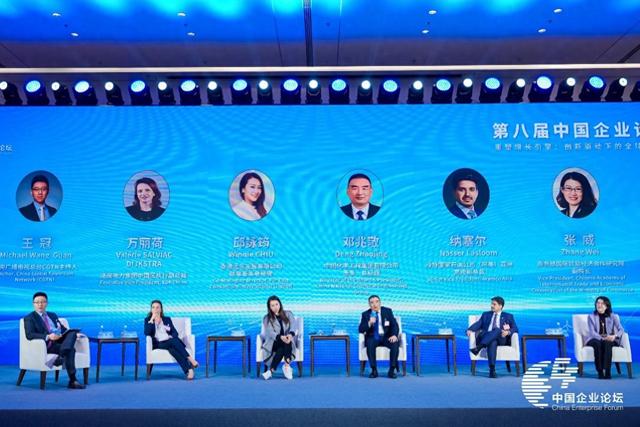
创新驱动,中外企业家探讨共赢新模式
Huan Qiu Wang· 2025-11-06 00:33
Core Insights - The eighth China Enterprise Forum emphasizes the importance of innovation in reshaping growth engines and enhancing global competitiveness [1] - Chinese enterprises play a crucial role in shaping global innovation patterns and promoting sustainable development [2] Group 1: Innovation and Growth - Enterprises are key components of the global economic system, and innovation is essential for reshaping growth dynamics and countering external uncertainties [1] - Continuous optimization of technology innovation mechanisms and incentive systems is supported by the State-owned Assets Supervision and Administration Commission [1] - The integration of ESG principles into corporate strategies is vital for building competitive advantages and benefiting society [5] Group 2: Sustainable Development - The transition to low-carbon energy and the promotion of green technologies are critical for achieving sustainable development [4][5] - Collaboration between international partners is essential for addressing energy security and achieving sustainable development goals [7] - The modernization of power grids, particularly ultra-high voltage grids, is crucial for stable green electricity supply [4] Group 3: Global Cooperation - Joint innovation between Chinese and foreign enterprises is key to creating future opportunities and addressing geopolitical challenges [7] - The establishment of regional supply chain collaboration networks can enhance resilience and risk management in complex environments [7][8] - Cross-border cooperation in green finance and technology sharing can facilitate the scaling of green projects [4] Group 4: Market Dynamics - The changing cost structure of global supply chains necessitates a reevaluation of local market relationships by multinational companies [8] - The current global supply chain is undergoing deep adjustments, and open cooperation is essential for achieving win-win outcomes [8]
能源早新闻丨北京获评城市气候领导联盟“地方气候领袖”奖
中国能源报· 2025-11-05 22:32
Group 1: Energy and Infrastructure - China and ASEAN have established 16 cross-border interconnected power transmission lines, with over 90% of the electricity traded being green energy [2] - As of September, China's new energy storage capacity exceeded 100 million kilowatts, ranking first in the world and accounting for over 40% of global total capacity [3] - The first silicon photonics pilot line in Northwest China has officially commenced operations, marking a significant milestone in the region's silicon chip development [5] Group 2: Automotive Industry - In Shaanxi, the production of new energy vehicles accounted for 66% of the total automotive output in the first three quarters, with a total production of 87.6 million units [4] - The overall automotive production in Shaanxi reached 132.7 million units, reflecting a year-on-year growth of 11.5% [4] Group 3: Environmental Initiatives - Beijing was awarded the "Local Climate Leader" award by the C40 Cities Climate Leadership Group for its climate adaptation project [2] - Australia plans to offer households free access to solar energy for at least three hours daily starting July next year, promoting clean energy usage [6]