
债券收益率

Search documents
日本参议院选举推升长期债券收益率 分析师称恐危及实体经济
news flash· 2025-07-15 02:20
日本参议院选举推升长期债券收益率 分析师称恐危及实体经济 日本10年国债收益率 金十数据7月15日讯,日本10年期国债收益率触及2008年以来的最高水平,增加了债市动荡将导致企业 和消费者借贷成本上升的风险。收益率上行的原因是人们担心本周末参议院选举之后,政府支出可能会 增加。明治安田研究所经济学家Yuichi Kodama说,10 年期收益率非常重要,因为它驱动固定抵押贷款 利率,并将对实体经济产生重大影响。伊藤忠研究所首席经济学家Atsushi Takeda说:"10年期收益率上 升是我们必须密切关注的。 如果反对党获胜,财政焦虑将继续存在。如果自民党获胜,投资者可能会 重新购买债券。"三菱日联摩根士丹利证券策略师Takahiro Otsuka表示:"10年期收益率受超长债需求担 忧及流动性下降驱动,无法断言1.6%将成涨势终点。" ...
美国CPI数据重磅来袭 金价上演“过山车”行情
Jin Tou Wang· 2025-07-15 02:17
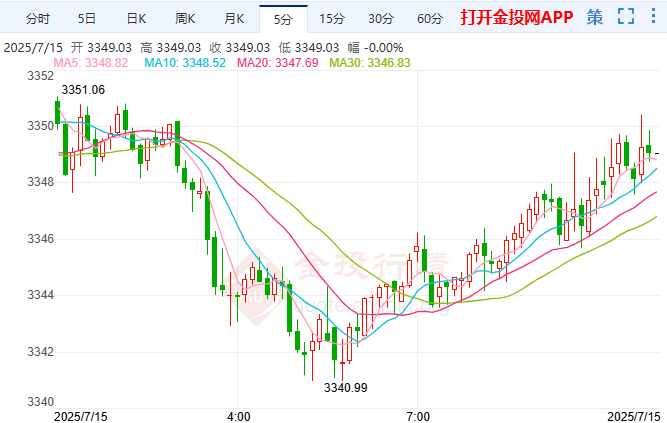
Group 1 - Gold prices experienced volatility, with spot gold rising to $3350 per ounce after a turbulent trading session on Monday, where it reached a three-week high before closing lower [1] - The U.S. Department of Commerce initiated two import investigations on drone systems and polysilicon, which may lead to tariffs, raising concerns about a potential trade war impacting the global economy [3] - U.S. Treasury yields rose, with the 30-year yield reaching nearly 5% and the 10-year yield at 4.447%, increasing the opportunity cost of holding non-yielding gold [3] Group 2 - Upcoming U.S. inflation data is expected to influence gold prices, with a forecasted rise in June CPI from 2.4% to 2.7% and core CPI expected to reach 3%, which could strengthen expectations for sustained high interest rates [4] - Political pressure on the Federal Reserve regarding interest rates has created market unease, particularly concerning the future of Fed Chair Jerome Powell amid calls for lower rates from the Trump administration [4] - Technical analysis indicates that gold is likely to experience a range-bound trading pattern, with resistance at $3365 and support levels identified at $3341 and $3334-30 [5]

每周经济观察第28期:WEI指数上行至7%左右-20250714
Huachuang Securities· 2025-07-14 10:15
Economic Indicators - The Huachuang Macro WEI index rose to 7.08% as of July 6, 2025, up from 6.00% on June 29, marking an increase of 1.08%[2] - Domestic flight executions increased to 14,400 flights in the first five days of July, a year-on-year increase of 3%[8] - The operating rate of asphalt plants rose to 32.7% as of July 9, 2025, a year-on-year increase of 4.7%[15] Consumer Trends - Retail sales of passenger cars showed a year-on-year increase of 1% as of July 6, down from 3% previously, and June's total was 15%[8] - The sales area of commercial residential properties in 67 cities decreased by 24% year-on-year in the first 11 days of July, compared to a 17.6% decline in June[3] - The land premium rate fell to 4.88% as of July 6, down from 5.47% in June[9] Price Movements - Resource prices continued to rise, with Shanxi thermal coal prices increasing by 1.4%, and rebar prices in Shanghai rising by 1.9%[46] - The national average price of second-hand homes fell by 0.3% as of June 30, with first-tier cities down by 0.2%[47] - The overall price index for agricultural products rose, with vegetable prices increasing by 1.8% and fruit prices by 2.1%[46] Debt and Interest Rates - New special bond issuance accelerated, with 2.39 trillion yuan issued this year, achieving 54.3% of the annual target, compared to 39.3% last year[54] - As of July 11, 2025, the yields on 1-year, 5-year, and 10-year government bonds were 1.3702%, 1.5292%, and 1.6653%, respectively, reflecting increases of 3.4bps, 3.63bps, and 2.2bps from the previous week[67]
德国30年期债券收益率升至3.254%,为2023年10月以来的最高水平
news flash· 2025-07-14 07:42
Core Viewpoint - The yield on Germany's 30-year bonds has risen to 3.254%, marking the highest level since October 2023 [1] Group 1 - The increase in bond yield indicates a potential shift in investor sentiment and expectations regarding long-term interest rates [1] - The current yield level reflects broader economic conditions and may influence future borrowing costs for both the government and private sector [1]
高盛交易台:预计铜关税最终是 25% 未来12个月周期和结构性因素支撑股票回报
智通财经网· 2025-07-12 01:09
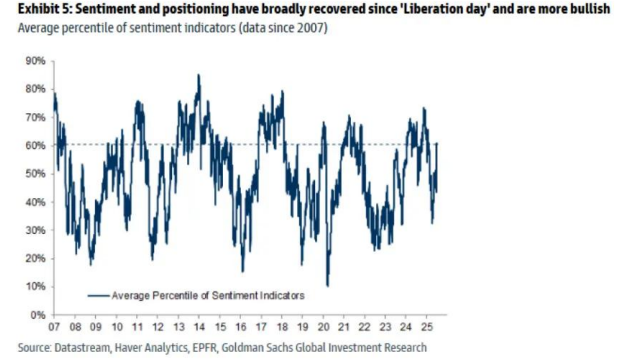
Group 1: Market Sentiment - The positive impact of short positions and sentiment in the US stock market may have largely passed, with fundamentals expected to become the main driver across asset classes in the second half of the year [2][4] - Market sentiment indicators are slightly above long-term averages, indicating a shift towards optimism [2] Group 2: Macro Research Focus - Goldman Sachs has lowered its US Treasury yield expectations, now forecasting 2-year and 10-year yields to reach 3.45% and 4.20% respectively by year-end, indicating a slight steepening of the yield curve [4] - The firm has raised its forward P/E ratio expectations for the S&P 500 from 20.4x to 22x, increasing target levels for the index to 6400, 6600, and 6900 for 3, 6, and 12 months respectively [4][5] Group 3: Tax and Trade Implications - The anticipated increase in tariffs, including a 25% tariff on copper, is expected to add to the already projected 14 percentage point rise in effective US tariff rates this year [5][6] - Ongoing tariff negotiations may create uncertainty for US businesses and foreign investors, contributing to expectations of a weaker dollar [6][7] Group 4: Global Economic Impact - The implementation of tariffs is expected to suppress export growth for US trading partners, with an estimated overall export decline of 4%-5% for major economies [12] - The anticipated effects of tariffs and currency fluctuations may lead to a 1%-5% decline in industrial production and a 1-4 percentage point drop in manufacturing PMI in the coming months [12][13]

信用策略备忘录:逼仄行情备忘录
SINOLINK SECURITIES· 2025-07-11 13:01
Investment Rating for the Reported Industry - There is no information provided about the industry investment rating in the given content. Core Viewpoints of the Report - As of July 4, the heavy - position strategy for secondary capital bonds has significantly recovered, with the weekly returns of the bullet - type and industrial ultra - long - term strategies for secondary bonds approaching their highest levels in the past three months[2][12]. - The average return of the heavy - position strategy for ultra - long - term bonds has rebounded by about 38bp, and the cumulative returns of the industrial and secondary ultra - long - term strategies in the second quarter were lower than that of the urban investment ultra - long - term strategy, but this week's returns are almost at the highest level in the past three months[2][12]. - The duration of general commercial financial bonds has rapidly lengthened from 2.1 years last week to 3.3 years this week, approaching the historical high[3][14]. - As of July 7, 2025, compared with last week, the yields of non - financial and non - real - estate industrial bonds have all declined, with short - term varieties experiencing a larger decline in returns. Real - estate bond yields also mainly declined, especially private - enterprise bonds within 2 years[4][18]. - The activity of ultra - long - term credit bonds has basically remained stable, with high trading enthusiasm this week. The weekly trading volume of industrial bonds with a term of 7 years and above is basically the same as last week, and the weekly trading volume of urban investment bonds with a term of 7 - 10 years has returned to over 100 transactions[5][22]. - In July, the supply rhythm of local government bonds in each province has accelerated. For example, the planned issuance scale of Hunan and Sichuan is over 10 billion. Local government bonds have high coupon rates and long - term configuration value in the current low - interest - rate environment[6][25]. Summary by Relevant Catalogs Quantified Credit Strategy - As of July 4, the heavy - position strategy for secondary capital bonds has significantly recovered, with the average return of the credit - style secondary capital bond heavy - position portfolio rising by 28bp to around 0.27%. The ultra - long - term strategy's excess return has rebounded to the level in early June, and the duration strategy has rotated from urban investment bonds to industrial and secondary bonds[2][12]. Variety Duration Tracking - As of July 4, the weighted average trading terms of urban investment bonds and industrial bonds are 2.27 years and 3.27 years respectively, both at over 90% quantile levels since March 2021. Among commercial bank bonds, the weighted average trading terms of secondary capital bonds, bank perpetual bonds, and general commercial financial bonds are 4.28 years, 3.73 years, and 3.27 years respectively. Among other financial bonds, the durations of securities company bonds, securities sub - bonds, insurance company bonds, and leasing company bonds are 1.52 years, 1.69 years, 3.33 years, and 1.37 years respectively[3][14]. Coupon Asset Heat Map - As of July 7, 2025, compared with last week, the yields of non - financial and non - real - estate industrial bonds have declined, with short - term private - enterprise non - perpetual bonds showing significant declines (19.6BP for 1 - 2 - year public bonds and 14.2BP for private bonds within 1 year). Real - estate bond yields also declined, and private - enterprise bonds within 2 years were more popular. Among financial bonds, the yield decline of commercial financial bonds was within 8BP, and 1 - 2 - year varieties performed better. Short - duration bank sub - bonds had a strong performance, with the yield of 1 - year joint - stock bank's perpetual and secondary bonds declining by nearly 13BP[4][18]. Ultra - long - term Credit Bond Micro - tracking - The activity of ultra - long - term credit bonds has basically remained stable. The weekly trading volume of industrial bonds with a term of 7 years and above is basically the same as last week, and the weekly trading volume of urban investment bonds with a term of 7 - 10 years has returned to over 100 transactions. The spread between the weekly average trading return of industrial bonds with a term of 7 years and above and the 20 - 30 - year treasury bonds has narrowed to about 25BP, lower than the lowest value in the long - bond market at the beginning of this year[5][22]. Local Government Bond Supply and Trading Tracking - In July, the supply rhythm of local government bonds in each province has accelerated. Hunan and Sichuan plan to issue over 10 billion each. Many provinces have issued new special bonds to support infrastructure, land storage, and payment of corporate accounts payable. The accelerated supply of local government bonds echoes the policy of front - loading fiscal efforts, fulfilling the dual tasks of stabilizing growth and debt reduction, and highlighting the high - coupon and long - duration configuration value in the current low - interest - rate environment[6][25].
220亿美元长债标售携就业数据来袭 美债价格小幅下跌
Zhi Tong Cai Jing· 2025-07-10 12:27
Group 1 - U.S. Treasury prices experienced a slight decline ahead of the issuance of 30-year bonds and employment data, leading to the largest weekly gain being narrowed [1] - The yield on 10-year U.S. Treasury bonds rose by 1 basis point to 4.34%, recovering slightly from a 7 basis point drop due to strong demand for bond issuance [1] - The U.S. Treasury is set to issue $22 billion in 30-year bonds, contributing to a slight increase in long-term bond yields [1] Group 2 - Investors are focusing on fiscal policy, with the Congressional Budget Office estimating that the recent tax reform will increase the U.S. fiscal deficit by approximately $3.4 trillion over the next decade [1] - The borrowing costs for the UK government have also risen due to concerns about the need to issue more bonds to cover expenditures [1] - In Japan, bond yields surged by 20 basis points earlier in the week amid fears that politicians would loosen fiscal policy to gain voter support ahead of elections [1] Group 3 - Upcoming U.S. employment data is a key focus, with economists predicting a slight increase in initial jobless claims to 235,000 for the week ending July 5 [2] - Weekly initial jobless claims are seen as crucial for understanding the Federal Reserve's future policy direction [2] - Swap trading indicates that the Federal Reserve is expected to maintain interest rates this month and potentially lower them twice by 25 basis points each before the end of the year [2]
新西兰债券收益率续升,新西兰联储维持利率不变。
news flash· 2025-07-09 02:24
Core Viewpoint - New Zealand's bond yields continue to rise as the Reserve Bank of New Zealand maintains its interest rates unchanged [1] Group 1 - The Reserve Bank of New Zealand decided to keep the official cash rate steady, which has implications for the bond market [1] - Rising bond yields indicate market expectations of future interest rate hikes or inflation concerns [1] - The decision to maintain rates reflects the central bank's assessment of the current economic conditions and inflation targets [1]