日债

Search documents
周周芝道-原油如何重塑全球格局
2026-03-30 05:15
Summary of Key Points from Conference Call Industry and Company Overview - The conference call discusses the impact of geopolitical conflicts, particularly the US-Iran and Russia-Ukraine conflicts, on global oil prices and economic structures. It highlights the shifting dynamics in the energy sector and the broader implications for financial markets and asset pricing. Core Insights and Arguments 1. **Geopolitical Impact on Oil Prices** The US-Iran conflict is expected to systematically elevate global oil price levels, with supply constraints (e.g., the Strait of Hormuz accounting for 20% of global oil demand) becoming a key factor beyond economic growth [1][3][4]. 2. **Shift in Asset Pricing Logic** The asset pricing logic has shifted from short-term cycles to a more fragmented global structure, with gold prices driven by the "weaponization of the dollar" rather than traditional inflation metrics [1][5]. 3. **New Stagflation Dynamics** The traditional "recession trade" logic is no longer applicable, as the world enters a new stagflation characterized by declining national credit and competitiveness, particularly in Europe and Japan due to energy and supply chain vulnerabilities [1][10]. 4. **Dollar Index and Currency Weakness** The strength of the dollar index is primarily due to the weakness of the euro and yen, rather than an absolute strengthening of the dollar's credit. The true value of the dollar should be assessed against gold and the yuan [1][9]. 5. **Long-term Effects of High Oil Prices** Historical analysis shows that high oil price levels benefit resource-exporting countries and those with strong supply chain control. The current geopolitical tensions may lead to a systematic bearish outlook on the dollar if US influence in the Middle East diminishes [1][3]. 6. **Changes in Major Asset Classes** Post-Russia-Ukraine conflict, the pricing logic for gold, copper, and major developed countries' long-term bond yields has changed, reflecting deeper global fragmentation. Gold prices are influenced by the dollar's role as a financial sanction tool, while copper prices benefit from supply chain shifts towards China [5][6]. 7. **Rising Long-term Bond Yields** Despite expectations of economic recession leading to lower bond yields, long-term yields in the US, Europe, and Japan have risen, indicating structural changes in asset pricing due to energy and monetary system fragmentation [6][10]. 8. **Historical Context of Oil Price Centers** The evolution of global economic structures can be analyzed through the lens of oil price centers, with significant shifts occurring during the 1970s, 1980s, and the early 2000s, impacting the fortunes of various countries [7][8]. 9. **Future Asset Pricing Framework** The traditional recession trading logic is outdated; a new framework is needed that considers the interplay between a country's bonds and currency as indicators of national strength. The current geopolitical landscape suggests that Western economies, particularly Europe and Japan, face significant challenges [10]. Other Important but Overlooked Content - The discussion emphasizes that the current geopolitical conflicts may lead to a prolonged period of high oil prices, which could have more severe implications than previous conflicts, potentially reshaping global economic and political landscapes [4][9]. - The analysis suggests that the US stock market, particularly the tech sector, may face increased volatility due to rising global oil prices and liquidity pressures stemming from geopolitical tensions [9].
海外宏观周报:地缘冲突骤然升级,避险情绪升温-20260302
Dong Fang Jin Cheng· 2026-03-02 08:50
Market Overview - Global assets experienced significant volatility due to rising risk aversion, with gold and silver prices increasing by 3.35% and 11.76% respectively last week[3] - The 10-year U.S. Treasury yield fell by 11 basis points to 3.97%, while European bond yields also declined significantly[3] - U.S. stock markets saw a collective drop in major indices, contrasting with gains in Japanese and European markets[3] U.S. Economic Indicators - The U.S. January PPI rose by 2.9% year-on-year, exceeding expectations of 2.6%, driven primarily by rising service prices[13] - Fed Governor Milan reiterated the need for a 100 basis point rate cut in 2026, complicating the monetary policy outlook due to inflationary pressures[7] Japanese Economic Outlook - The Bank of Japan's Governor indicated a careful review of data in March and April to decide on potential interest rate hikes, with February's core CPI at 1.8%[8] - The Nikkei 225 index surged by 3.56%, leading global stock market performance[3] Bond Market Trends - The 10-year U.S. Treasury yield decreased by 11 basis points to 3.97%, with foreign holdings of U.S. debt dropping by $88.4 billion to $9.27 trillion[33] - The 10-year UK bond yield fell by 23 basis points to 4.24%, while German and French yields also saw declines of 5 basis points and 8.4 basis points respectively[40] Commodity Prices - Spot gold prices reached $5,222, marking a 3.35% increase, while silver prices rose to $90, up 11.76%[5] - WTI crude oil prices increased by 1.22% to $67, reflecting a year-to-date rise of 17.39%[5]
债市日报:2月27日
Xin Hua Cai Jing· 2026-02-27 08:23
Market Overview - The bond market showed signs of recovery on February 27, with most government bond futures closing higher and interbank bond yields generally declining by around 1 basis point [1][2] - The People's Bank of China conducted a net injection of 269 billion yuan through reverse repos, indicating stable liquidity ahead of the upcoming two sessions [1][5] Bond Futures Performance - The 30-year main contract fell by 0.07% to 112.07, while the 10-year main contract rose by 0.05% to 108.395 [2] - The yields on major interbank bonds, including the 10-year government bonds, decreased, with the 10-year government bond yield down by 0.85 basis points to 1.809% [2] International Bond Market - In North America, U.S. Treasury yields fell across the board, with the 10-year yield down by 4.59 basis points to 4.004% [3] - Asian markets also saw declines in bond yields, with Japan's 10-year yield down by 3.9 basis points to 2.115% [3] - In the Eurozone, yields on 10-year bonds from France, Germany, Italy, and Spain all decreased [3] Primary Market Activity - The bidding results for local bonds in Liaoning Province showed a strong demand, with a bid-to-cover ratio exceeding 27 times for the 10-year bond [4] Liquidity and Funding Conditions - The central bank's reverse repo operation on February 27 resulted in a net injection of 269 billion yuan, with a fixed rate of 1.40% [5] - Short-term Shibor rates mostly declined, with the overnight rate down by 1.0 basis point to 1.358% [5] Institutional Insights - Huatai Securities noted a slight improvement in credit demand for 2026, particularly in dividend insurance, while cautioning about mid-term challenges [6] - CITIC Securities highlighted that the bond market is expected to play a stabilizing role rather than trend significantly in one direction [7] - Changjiang Securities pointed out that the ongoing debt resolution policies are reshaping the financing landscape for local government financing vehicles [7]
日本的海外资本会“大规模回流”吗?
Hua Er Jie Jian Wen· 2026-02-20 07:33
Core Viewpoint - The article discusses the recent surge in Japanese government bond (JGB) yields and the implications for foreign capital inflow, while highlighting the ongoing depreciation pressure on the yen despite short-term strength due to this inflow [1][9]. Group 1: Foreign Capital Inflow - In January, net purchases of JGBs reached 6.04 trillion yen, just shy of the record 6.08 trillion yen set in March 2023, indicating strong foreign interest [1]. - Despite the inflow, Goldman Sachs suggests that there is no significant evidence of a large-scale repatriation of Japanese funds from overseas assets back to domestic investments [1][9]. - Retail investors, particularly through the NISA (Nippon Individual Savings Account), continue to show strong demand for foreign stocks, indicating a persistent interest in overseas investments [5]. Group 2: Investor Behavior - Non-hedged investors, such as pension funds, are unlikely to make significant adjustments to their asset allocations until the next strategic review in 2030, as the current Japan-U.S. interest rate differential remains too wide [1][6][7]. - Hedge fund investors may provide some support for the yen, but their influence is limited due to the declining relative attractiveness of JGBs as a result of lower hedging costs [2][8]. - The BoP data shows weak signals of capital returning to Japan, primarily driven by custodial centers like the Cayman Islands and Luxembourg, which do not indicate a strong trend [3]. Group 3: Market Dynamics - Although there has been a decrease in funds flowing into U.S. stocks compared to early 2025, demand for Japanese equities remains, particularly following the post-election rebound in the domestic market [4]. - Historical trends suggest that even with significant capital inflows, macroeconomic factors such as U.S. stock performance and interest rate differentials can dominate, leading to continued yen depreciation [7]. - The current environment suggests that investors expecting a significant shift towards domestic assets may be disappointed, as the macro backdrop favors risk assets and the yen's depreciation pressure is likely to persist [9].

债市日报:2月12日
Xin Hua Cai Jing· 2026-02-12 08:13
Core Viewpoint - The bond market shows slight differentiation in performance, with government bond futures experiencing a decline while interbank bond yields continue to decrease, indicating a "warm yet restrained" market sentiment ahead of the Spring Festival [1][4]. Market Performance - Government bond futures closed with half of the contracts down; the 30-year main contract fell by 0.03% to 112.7, while the 10-year main contract rose by 0.02% to 108.585 [2]. - Interbank bond yields generally decreased, with the 10-year government bond yield down by 1 basis point to 1.776% and the 30-year government bond yield down by 0.15 basis points to 2.2255% [2]. Overseas Bond Market - In North America, U.S. Treasury yields rose across the board, with the 2-year yield increasing by 6.41 basis points to 3.512% [3]. - In Asia, Japanese bond yields fell, with the 5-year and 10-year yields down by 0.4 basis points and 1.2 basis points, respectively [3]. - In the Eurozone, yields on 10-year bonds from France, Germany, Italy, and Spain all decreased, indicating a general trend of declining yields [3]. Liquidity Conditions - The central bank conducted a net injection of 448 billion yuan through reverse repos, with a total of 1665 billion yuan in 7-day reverse repos and 4000 billion yuan in 14-day reverse repos [4]. - The Shibor rates for short-term instruments mostly declined, with the overnight rate rising slightly by 0.2 basis points to 1.368% [4]. Institutional Perspectives - Citic Securities noted that while CPI remains low, PPI is steadily rising, which may have a marginal impact on bond market pricing; the sentiment-driven bond market may continue to show slight strength until the Spring Festival [5]. - Shenwan Hongyuan indicated that the bond market may enter a phase of compressed spreads, with ongoing market dynamics influenced by the balance of asset allocation and the potential for capital to flow from bonds to equities [6].
王涵:日本大选后,日元日债稳住了吗
Di Yi Cai Jing· 2026-02-11 04:39
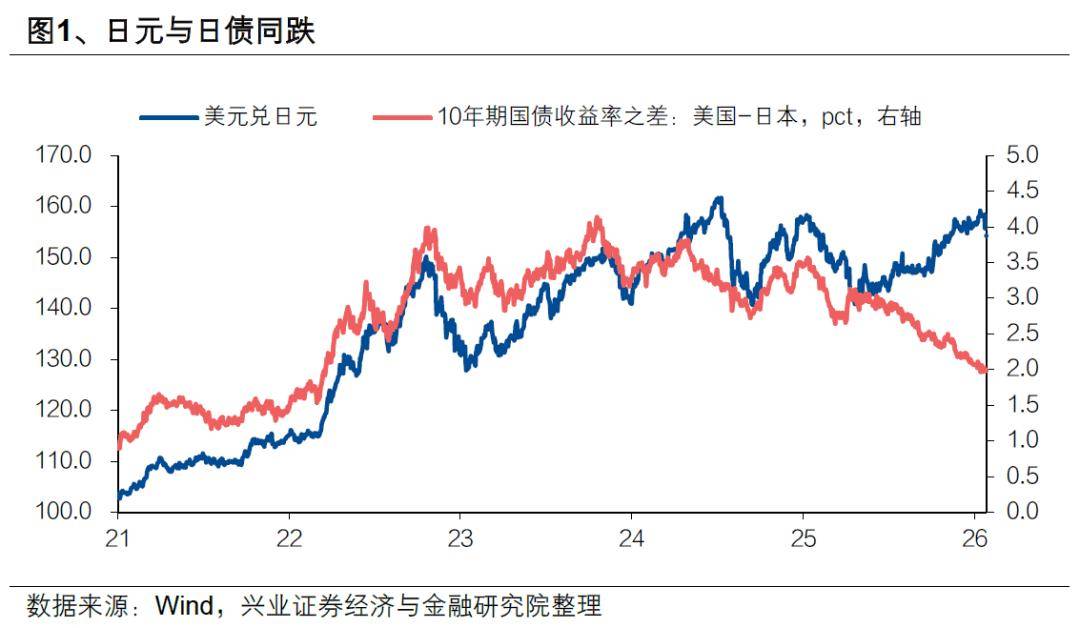
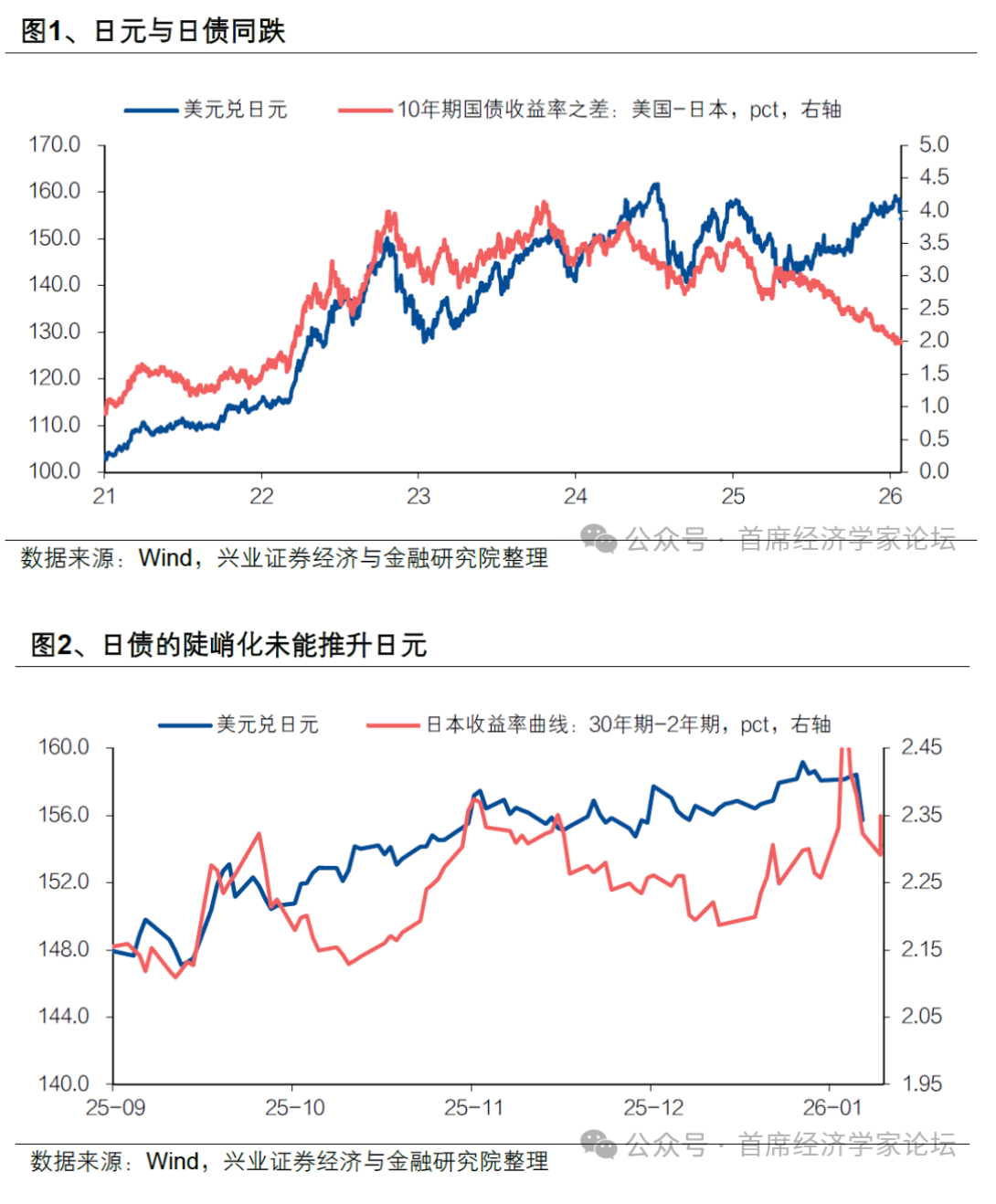
Group 1 - The global order is transitioning from unipolarity to multipolarity, fundamentally reshaping the pricing logic of global asset classes, with Japan's asset volatility reflecting this change [1] - Japan's capital market has experienced significant fluctuations since the beginning of the year, with both the yen and Japanese government bonds weakening, indicating a diminished safe-haven status [1] - The structural changes in the yen and Japanese bonds cannot be solely attributed to short-term economic fluctuations but should be understood within the broader narrative of global order evolution [1] Group 2 - Japan's geopolitical position has evolved through two phases: during the Cold War, it served as a critical support for the U.S. in Asia, and in the unipolar order post-Soviet Union, its role shifted to a financial one [6][7] - In the unipolar order, Japan enjoyed a dual benefit of a low-risk environment and stable capital returns, which underpinned the perception of the yen and Japanese bonds as safe-haven assets [7] - The transition to a multipolar order is altering this logic, as the U.S. strategic retrenchment reduces the demand for Japan as a leverage tool in capital expansion [12] Group 3 - The U.S. strategic retrenchment is pushing Japan to the geopolitical forefront, potentially destabilizing the regional security environment established since the signing of the Japan-China Peace and Friendship Treaty [15] - Although Japanese government interventions can temporarily stabilize market sentiment, the underlying fundamentals of the yen and Japanese bonds remain fragile due to the changing geopolitical role [15] - The trend of "de-securitization" of Japanese assets is a specific reflection of the multipolar narrative in the global financial landscape, with long-term implications for asset pricing logic [16]

债市日报:2月10日
Xin Hua Cai Jing· 2026-02-10 07:53
Core Viewpoint - The bond market is experiencing a period of consolidation, with the 10-year government bond yield breaking below its recent trading range, indicating potential resistance at the 1.80% level, which may act as a support if maintained by the central bank [1][7]. Market Performance - The closing performance of government bond futures showed mixed results, with the 30-year and 10-year contracts slightly up, while the 5-year and 2-year contracts remained unchanged [2]. - The interbank market saw a continuation of a warm trend in major interest rate bonds, with notable declines in yields for various government bonds [2]. Overseas Market Trends - In North America, U.S. Treasury yields mostly fell, with the 10-year yield at 4.202%, while the 30-year yield increased slightly [3]. - Asian markets saw a decline in Japanese bond yields, while European markets also reported decreases in yields for various government bonds [3]. Primary Market Activity - The Ministry of Finance reported weighted average yields for newly issued government bonds, with the 7-year bond at 1.6130% and a strong bid-to-cover ratio across different maturities [4]. - The China Development Bank's financial bonds also showed competitive yields and bid-to-cover ratios, indicating healthy demand [4]. Liquidity Conditions - The central bank conducted a reverse repurchase operation, injecting 205.9 billion yuan into the market, with a fixed interest rate of 1.40% [5]. - Short-term Shibor rates increased across various maturities, indicating tightening liquidity conditions [5]. Institutional Insights - Analysts suggest that the 10-year bond yield's downward space is limited below 1.80%, with significant buying pressure from funds and brokerages [6][7]. - The current market sentiment is relatively subdued, with no strong catalysts to push long-term rates beyond their current range, especially ahead of the upcoming holiday [7].
兴证王涵:日本大选结果对金融市场的潜在影响
Xin Lang Cai Jing· 2026-02-09 09:18
Core Viewpoint - The recent fluctuations in the Japanese capital market, particularly the weakening of the yen and Japanese government bonds (JGBs), reflect a structural change influenced by the shift from a unipolar to a multipolar global order, which is reshaping the pricing logic of global assets [1][6][19]. Group 1: Japanese Yen and JGBs - The yen and JGBs have lost their status as "safe-haven assets" due to significant market volatility since the beginning of the year, with both showing a marked decline [1][6][24]. - Recent government interventions have temporarily stabilized market sentiment, but the underlying structural changes in the yen and JGBs cannot be attributed solely to short-term economic fluctuations [1][6][25]. Group 2: Geopolitical Context - Japan's geopolitical position has evolved from being a key ally of the U.S. in a unipolar order to facing increased geopolitical risks as the U.S. reduces its strategic reliance on Japan [2][24][36]. - The decline of U.S. hard power and its strategic adjustments in Asia have led to a reassessment of the geopolitical security foundation that previously supported Japanese assets, resulting in a diminished "safe-haven" perception [2][24][36]. Group 3: Long-term Implications - The ongoing transition to a multipolar world will continue to impact global financial markets, with Japan's asset "de-securitization" being a specific manifestation of this trend [4][19][20]. - The long-term shift of global capital and growth towards emerging markets, alongside a diversification of the international monetary and financial system, will persistently reshape the underlying logic of global asset pricing [4][20][38].
“高市交易”卷土重来
Xin Lang Cai Jing· 2026-02-09 07:39
Group 1 - The ruling coalition led by Kishi Nobuo won over two-thirds of the seats in the Japanese House of Representatives, paving the way for further fiscal stimulus policies [1] - Analysts suggest that the unexpected victory of the ruling coalition may lead to a resurgence of "Kishi trading," with pressure on the yen and potential upward volatility in the Japanese stock market [1] - The victory of the Liberal Democratic Party (LDP) may result in continued depreciation of the yen in the short term, with a higher likelihood of foreign exchange intervention by Japanese authorities if key levels are breached [1] Group 2 - Political uncertainty is decreasing, and combined with "dual easing" policies, this may provide temporary support for the valuation of Japanese risk assets [1] - Despite the potential for fiscal expansion and slow interest rate hikes under Kishi's administration, concerns about the yen's exchange rate are increasing, especially if it approaches critical levels such as 160 yen per dollar [1] - The Japanese authorities have already signaled a willingness to intervene in the currency market, which could increase if the yen crosses significant thresholds [1]
日本大选结果对金融市场的潜在影响
Sou Hu Cai Jing· 2026-02-09 06:12
Core Viewpoint - The recent Japanese general election results indicate a continued dominance of the ruling Liberal Democratic Party, which may influence Japan's geopolitical and economic landscape, particularly in the context of the shifting global order from unipolarity to multipolarity [1][2][3] Group 1: Japanese Yen and Bond Market Dynamics - Since the beginning of the year, the Japanese capital market has experienced significant volatility, with both the yen and Japanese government bonds weakening, indicating a diminished safe-haven status [5][10] - Recent government interventions have temporarily stabilized market sentiment, but the underlying structural changes in the yen and bond markets are attributed to broader geopolitical shifts rather than short-term economic fluctuations [5][20] - The transition from a unipolar to a multipolar world order is fundamentally reshaping the pricing logic of global assets, with Japan's asset volatility reflecting this transformation [5][20] Group 2: Japan's Geopolitical Role and Economic Implications - Japan's previous status as a safe-haven asset was rooted in its unique role within the U.S.-led unipolar order, benefiting from low-risk environments and stable capital returns [2][11] - As the global order shifts, Japan's geopolitical position is becoming increasingly precarious, with a reduced reliance from the U.S. on Japan as a financial lever and an expectation for Japan to take on more regional security responsibilities [2][15] - The decline of U.S. hard power and its strategic contraction in Asia are pushing Japan towards the forefront of geopolitical tensions, which may undermine its status as a safe asset [3][15][18] Group 3: Long-term Market Trends - The ongoing transition from a unipolar to a multipolar world will continue to impact global financial markets, with a trend of "de-securitization" of Japanese assets serving as a specific reflection of this narrative [20] - The U.S. is attempting to maximize its interests through strategic contractions in various regions, which may exacerbate the internal "shrinking circle" effect among developed economies [20] - Long-term trends indicate a shift of global capital and growth focus towards emerging markets, leading to a diversification of the international monetary and financial system, which will further reshape the underlying logic of asset pricing [20]