反倾销调查

Search documents
成材矛盾持续积累,后期关注宏观情况
Hua Tai Qi Huo· 2025-09-02 23:32
1. Report Industry Investment Rating No relevant content provided. 2. Core Viewpoints - As financial and macro - economic data weaken, steel consumption in August shows off - season characteristics, with high steel production, poor inventory performance compared to seasonality, and steel inventory accumulating for five consecutive weeks. The export has also weakened due to previous price increases, impacting the black industry. In September, as the phased production - restriction measures during the military parade end and the macro - policy is expected to be in a vacuum period, the pricing of black commodity prices will depend on the performance of peak - season consumption. The overall financial and macro - economic situation is not optimistic, and future focus should be on domestic steel consumption, exports, and macro - policies [1][7][86][110]. - M1 and M2 continue to rise, and enhancing currency effectiveness is crucial. In July, M2 increased by 8.8% year - on - year, 0.5 percentage points higher than at the end of June; M1 increased by 5.6% year - on - year, 1 percentage point higher than at the end of June. The growth rate gap between M2 and M1 narrowed to 3.2%, a 0.5% decrease from June [2][16][106]. - Real estate policies continue to be tightened, but real estate data is still at the bottom. In July, real estate development investment, completion, new construction, construction, and sales area all declined year - on - year [2][20][106]. - The economy showed strong resilience in the first half of the year, but infrastructure investment has weakened significantly. In July, the monthly infrastructure investment decreased by 5.2% year - on - year, the first negative growth since December 2021, which will have a negative impact on domestic steel consumption [2][30][106]. - The manufacturing industry shows a mixed performance, and manufacturing investment is weakening. From January to August, China's manufacturing PMI was above the boom - bust line only in February and March, and has been below it for five consecutive months since April. In July, the overall growth rate of manufacturing investment was - 0.3%, the lowest since July 2020 [3][35][107]. - Domestic demand increases slightly, and raw material demand remains strong. From January to July 2025, domestic crude steel production was 64,890 million tons, a 2.8% year - on - year increase, and consumption was 57,126 million tons, a 1.2% year - on - year increase. Pig iron production was 52,815 million tons, a 3.9% year - on - year increase [3][50][107]. - The steel export structure shows differentiation, but exports still maintain significant growth. From January to July 2025, domestic steel exports were 6,798 million tons, an increase of 675 million tons compared to last year. Steel billet exports were 747.2 million tons, a year - on - year increase of 565.3 million tons [5][54][108]. - Overseas consumption continues to expand, and the expectation of the Fed's interest rate cut increases. From January to July 2025, overseas crude steel production was 49,063 million tons, a 0.4% year - on - year decrease, and consumption was 56,542 million tons, a 2.30% year - on - year increase. In July, the US core PCE price index increased by 2.9% year - on - year, and Powell's speech at the global central bank annual meeting turned dovish [6][67][109]. - The inventory of finished steel products continues to accumulate, and the support from raw materials weakens. Currently, the molten iron production remains high, iron ore inventory is at a medium level, and iron element inventory is at a medium - low level. The coking coal supply is expected to improve in the future [7][92][110]. 3. Summaries by Relevant Catalogs 3.1 Domestic Steel Consumption Increases Slightly, and Macro - economic Indicators Weaken - **M1 and M2 Continue to Rise, and Currency Effectiveness is Key**: In July, M2 increased by 8.8% year - on - year, 0.5 percentage points higher than at the end of June; M1 increased by 5.6% year - on - year, 1 percentage point higher than at the end of June. The growth rate gap between M2 and M1 narrowed to 3.2%, a 0.5% decrease from June. New RMB loans were - 50 billion, 310 billion less year - on - year, with a growth rate of 6.9%, 0.2 percentage points lower than at the end of June. New social financing was 1.16 trillion, 389.3 billion more year - on - year, with a growth rate of 9%, 0.1 percentage points higher than at the end of June [2][16][106]. - **Real Estate Policies are Tightened, and Real Estate Data is at the Bottom**: Since the second half of 2021, the real estate industry has been in deep adjustment. From January to July 2025, national real estate development investment decreased by 12.0% year - on - year, and in July, all real estate economic data showed a downward trend [19][20][106]. - **The Economy was Resilient in the First Half of the Year, but Infrastructure Investment Weakens Significantly**: After a series of macro - policies were introduced last September, the domestic economy maintained strong resilience. In the first half of this year, the GDP growth rate was 5.3%. In July, the monthly infrastructure investment decreased by 5.2% year - on - year, the first negative growth since December 2021 [30][31][106]. - **The Manufacturing Industry Shows a Mixed Performance, and Manufacturing Investment is Weakening**: From January to July, the second - industry electricity consumption showed some resilience. From January to August, China's manufacturing PMI was above the boom - bust line only in February and March, and has been below it for five consecutive months since April. In July, the overall growth rate of manufacturing investment was - 0.3%, the lowest since July 2020 [35][47][107]. - **Domestic Demand Increases Slightly, and Raw Material Demand Remains Strong**: From January to July 2025, domestic crude steel production was 64,890 million tons, a 2.8% year - on - year increase, and consumption was 57,126 million tons, a 1.2% year - on - year increase. Pig iron production was 52,815 million tons, a 3.9% year - on - year increase, indicating strong raw material demand [50][51][107]. 3.2 Steel Export Structure Shows Differentiation, but Exports Still Maintain Significant Growth - **Anti - dumping Investigations Disturb, and Export Structure Shows Differentiation**: In 2024, China's steel exports exceeded 100 million tons, a new high since 2017. From January to July 2025, domestic steel exports were 6,798 million tons, an increase of 675 million tons compared to last year. Although some varieties' exports decreased due to anti - dumping investigations, overall exports are still strong. Attention should be paid to the impact of anti - dumping investigations and domestic prices on exports [54][55][57]. - **Steel Billet Exports Increase Continuously, Significantly Easing Domestic Pressure**: Since 2021, steel billet exports have increased significantly. From January to July 2025, domestic steel billet exports were 747.2 million tons, a year - on - year increase of 565.3 million tons, mainly exported to Asia, Africa, Latin America, and Europe [62][63][65]. 3.3 Overseas Consumption Continues to Expand, and the Expectation of the Fed's Interest Rate Cut Increases - **Overseas Consumption Expands, and India Continues to Grow Significantly**: From January to July 2025, overseas crude steel production was 49,063 million tons, a 0.4% year - on - year decrease, and consumption was 56,542 million tons, a 2.30% year - on - year increase. India's production increased by 14%. From January to July, the net export of crude steel equivalent was 7,479 million tons, a 24.2% year - on - year increase [67][68][70]. - **Overseas Total Iron Production Decreases Slightly, and India Contributes Most of the Increment**: From January to July 2025, overseas total iron production was 30,991 million tons, a 0.6% year - on - year decrease. India's production increased by 8.7%. From January to July, overseas scrap steel consumption was 22,978 million tons, remaining flat year - on - year, with an increasing trend from June to July [73][74][77]. - **The Fed's Meeting Turns Dovish, and Monetary Liquidity is "Easy to Loosen and Hard to Tighten"**: In July, the US core PCE price index increased by 2.9% year - on - year, and Powell's speech at the global central bank annual meeting turned dovish, clearing the way for long - term inflation [79][84][85]. 3.4 The Inventory of Finished Steel Products Continues to Accumulate, and the Support from Raw Materials Weakens - **The Consumption of Finished Steel Products Weakens Month - on - Month, and Steel Inventory Continues to Accumulate**: From January to July, domestic steel consumption maintained resilience, and exports were strong, with low inventory. In August, due to weakening financial and macro - economic data, steel consumption showed off - season characteristics, with high production, poor inventory performance, and five consecutive weeks of inventory accumulation. The export also weakened. In September, the pricing of black commodity prices will depend on peak - season consumption [86][87][90]. - **Iron Ore Supply Continues to Recover, and Future Expectations Weaken**: In August, iron ore shipments rebounded month - on - month, and the arrival of iron ore decreased slightly. The molten iron production remained high, and the iron ore inventory accumulation was lower than expected, maintaining a tight supply - demand balance. With weakening domestic demand and export expectations, the molten iron production may decrease, breaking the tight balance [92][93][110]. - **Coking Coal Maintains a Tight Balance, and Supply Will Recover**: Since mid - June, coking coal and carbon element inventories have been continuously depleted. In August, the fundamentals of coking coal continued to improve, but the improvement rate slowed down. The coking coal production recovered slowly due to short - term production - restriction during the military parade, and the Mongolian coal customs clearance volume recovered. The coking coal supply is expected to improve in the future [94][97][110]. 3.5 Conclusion - The situation is similar to the previous core viewpoints, emphasizing the need to pay attention to domestic steel consumption, exports, and macro - policies in the context of current economic situations such as weakening infrastructure investment, mixed manufacturing performance, and changes in steel exports and raw material supply [106][107][110]. 3.6 Strategy - With the continuous accumulation of contradictions in finished steel products and the weakening support from raw materials, attention should be paid to subsequent macro - policies [111].
烟台双塔食品股份有限公司关于欧盟对中国豌豆蛋白启动反倾销调查的提示性公告
Shang Hai Zheng Quan Bao· 2025-09-01 21:20
Core Viewpoint - The European Union has initiated an anti-dumping investigation against Chinese pea protein, which may impact the sales of Yantai Shuangta Food Co., Ltd. in the EU market. Group 1: Overview of the Anti-Dumping Investigation - The investigation targets high-protein pea protein with a protein content exceeding 65% on a dry weight basis, covering all types derived from peas, in all physical forms [1]. - The investigation period for dumping and injury is set from July 1, 2024, to June 30, 2025 [2]. - The trend review period for damage assessment is from January 1, 2022, until the end of the investigation period [3]. Group 2: Potential Impact on the Company - In 2024, the sales revenue from pea protein with over 65% protein content exported to the EU is expected to account for approximately 3.92% of the company's total revenue. For the first half of 2025, this figure is projected to rise to 6.48% [4]. - The company currently cannot estimate the specific impact of the anti-dumping investigation due to the uncertainty surrounding the outcome, including potential tax subjects, forms, rates, and start dates [4]. Group 3: Company's Response Strategy - The company has established a special task force and hired a professional legal team to actively respond to the investigation [5]. - The company plans to expand into emerging international markets, strengthen domestic market development, and accelerate the construction of overseas factories [5]. - The company will closely monitor the progress of this matter and fulfill its information disclosure obligations in a timely manner [5].

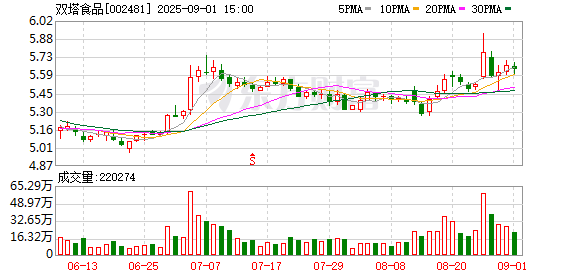
双塔食品:欧盟对中国豌豆蛋白启动反倾销调查,公司积极应对
Bei Jing Shang Bao· 2025-09-01 13:50
Core Viewpoint - The company is facing a potential anti-dumping investigation by the EU regarding its pea protein products, which may impact its sales and operations in the European market [1][3]. Group 1: Sales and Revenue Impact - In 2024, the sales revenue from pea protein with over 65% protein content exported to the EU accounted for approximately 3.92% of the company's total revenue [1]. - For the first half of 2025, this proportion increased to 6.48%, indicating a growing reliance on the EU market for high-protein pea products [1]. Group 2: Investigation Details - The EU Commission has initiated an anti-dumping investigation based on a complaint from a temporary alliance of EU pea protein producers, focusing on high-protein pea protein products with over 65% protein content [3]. - The investigation will cover all types of pea-derived products, including yellow and green peas, in various forms such as powder and solution [3]. - The investigation period is set from July 1, 2024, to June 30, 2025, with a damage assessment review period from January 1, 2022, until the end of the investigation [3]. Group 3: Company Response - The company has established a special task force and hired a professional legal team to actively respond to the ongoing investigation [1]. - The company plans to expand into emerging international markets, strengthen domestic market development, and accelerate the construction of overseas factories [1]. - The company will closely monitor the situation and fulfill its information disclosure obligations based on the developments of the EU anti-dumping matter [1].

双塔食品:积极应对欧盟对中国豌豆蛋白反倾销调查
Zheng Quan Shi Bao Wang· 2025-09-01 12:32
Core Viewpoint - The European Union has initiated an anti-dumping investigation into Chinese pea protein, prompting the company to actively respond to the situation [1] Group 1: Company Overview - The company, Double Tower Foods, primarily engages in the production of pea protein, vermicelli, and dietary fiber, focusing on strengthening its core business and optimizing product structure [1][2] - In the first half of 2025, the company reported revenue of 1.047 billion yuan, a year-on-year increase of 6.18%, and a net profit of 54.36 million yuan, up 0.89% year-on-year [1] Group 2: Pea Protein Business - The company's pea protein business involves extracting pea protein as a byproduct from starch production for vermicelli, enhancing it to feed-grade and food-grade pea protein through technological advancements [2] - The company possesses industry-leading extraction technologies and collaborates with several universities for research in pea protein and peptide fields [2] - Pea protein offers advantages over other plant proteins, such as being non-GMO, allergen-free, cholesterol-free, and low in fat, with applications in various sectors including solid beverages, plant-based meat, energy bars, breakfast cereals, baked goods, and pet food [2] Group 3: Impact of Anti-Dumping Investigation - The investigation covers high-protein pea protein with over 65% protein content, with the investigation period set from July 1, 2024, to June 30, 2025 [1] - In 2024, the sales revenue of pea protein with over 65% protein content exported to the EU is expected to account for approximately 3.92% of the company's total revenue, while in the first half of 2025, this figure is projected to be around 6.48% [2] - The company has established a special task force and hired a professional legal team to address the investigation, while also planning to expand into new international markets and accelerate the construction of overseas factories [3]
新世纪期货交易提示(2025-9-1)-20250901
Xin Shi Ji Qi Huo· 2025-09-01 01:54
Report Summary 1. Report Industry Investment Ratings - Iron ore: High-level oscillatory adjustment [2] - Coking coal and coke: High-level oscillation [2] - Rebar: Oscillatory and weak [2] - Glass: Oscillatory and weak [2] - CSI 50: Upward [2] - CSI 300: Oscillatory [2] - CSI 500: Oscillatory [2] - CSI 1000: Upward [2] - 2-year Treasury bond: Oscillatory [3] - 5-year Treasury bond: Oscillatory [3] - 10-year Treasury bond: Declining [3] - Gold: Oscillatory and strong [3] - Silver: Oscillatory and strong [3] - Pulp: Consolidation [6] - Logs: Range-bound oscillation [6] - Soybean oil: Oscillatory [6] - Palm oil: Oscillatory [6] - Rapeseed oil: Oscillatory [6] - Soybean meal: Rebound [6] - Rapeseed meal: Rebound [6] - Soybean No. 2: Rebound [7] - Soybean No. 1: Rebound [7] - Live pigs: Oscillatory and strong [7] - Rubber: Oscillatory [9] - PX: Wait-and-see [9] - PTA: Oscillatory [9] - MEG: Reverse spread [9] - PR: Wait-and-see [9] - PF: Wait-and-see [9] 2. Core Views of the Report - The steel industry's stable growth policy from 2025 - 2026 does not restrict steel production, which affects the raw material market. The short - term fundamentals of iron ore have limited contradictions, and it is expected to follow the finished products in high - level oscillatory adjustment. The fundamentals of coking coal and coke are weakening, and the market is in high - level oscillation. Rebar is in a weak fundamental pattern, with supply remaining high and demand difficult to show counter - seasonal performance [2]. - The stock index market shows different trends, and the market as a whole rebounds. It is recommended to increase risk appetite and the long positions of stock index futures. The bond market is affected by market interest rate fluctuations, and Treasury bond bulls should hold light positions. The gold market is affected by multiple factors such as currency, finance, and geopolitics, and is expected to be oscillatory and strong [2][3]. - The pulp market has a pattern of weak supply and demand, and prices are expected to consolidate. The log market has limited supply pressure in the short term, and prices are expected to be range - bound oscillatory. The oil and meal market is affected by factors such as production, demand, and weather, with oil prices oscillating and meal prices rebounding [6]. - The live pig market is affected by factors such as supply and demand structure and weight reduction strategies. The price is expected to rise slightly. The rubber market has positive fundamentals, and prices are expected to be oscillatory and strong. The PX, PTA, MEG, PR, and PF markets in the polyester industry are affected by factors such as production, cost, and demand, showing different trends [7][9]. 3. Summary by Related Catalogs Iron Ore - Policy: The steel industry's stable growth policy from 2025 - 2026 does not restrict steel production, boosting raw material sentiment [2]. - Supply and demand: The global iron ore shipment decreases slightly, and there is no obvious inventory accumulation pressure under high port throughput. The terminal demand is weak, and the blast furnace hot metal output decreases slightly. The steel mills' profit ratio drops from a high level, and the probability of negative feedback is low [2]. - Price trend: The short - term fundamentals have limited contradictions, and it is expected to follow the finished products in high - level oscillatory adjustment [2]. Coking Coal and Coke - Supply: Upstream mines are still increasing production, and the import volume is also increasing, with the total supply of coking coal rising [2]. - Demand: The daily average hot metal output is expected to decrease by about 30,000 tons this week, and the coking coal demand reaches a new low since the second quarter [2]. - Price trend: The fundamentals are weakening, and the market is in high - level oscillation. To break through the previous high, continuous supply reduction is needed to cause a shortage in the spot market [2]. Rebar - Supply: The supply will remain relatively high as the policy does not restrict steel production [2]. - Demand: The building material demand rebounds slightly, but the overall demand is difficult to show counter - seasonal performance, forming a pattern of high in the front and low in the back [2]. - Price trend: The traditional peak season has arrived, but the spot demand is still weak, and the futures price breaks below the 60 - day line and continues to run weakly [2]. Glass - Supply and demand: The market sentiment cools down, the downstream is in the stage of digesting inventory, and the restocking demand weakens. The short - term supply - demand pattern has no obvious improvement [2]. - Cost: Frequent accidents in the coal supply end may cause fluctuations in cost expectations [2]. - Price trend: The long - term demand is difficult to recover significantly. The short - term spot is weak, and the disk price focuses on the 60 - day line support [2]. Stock Index Futures/Options - Market performance: The previous trading day, the CSI 300 Index rose 0.74%, the SSE 50 Index rose 0.53%, the CSI 500 Index rose 0.47%, and the CSI 1000 Index fell 0.11% [2]. - Industry trends: Funds flow into the electric power grid and automobile sectors, and flow out of the aviation and shipping sectors. The official manufacturing PMI, non - manufacturing PMI, and composite PMI in August all increased month - on - month [2][3]. - Investment advice: The market as a whole rebounds, and it is recommended to increase risk appetite and the long positions of stock index futures [3]. Treasury Bonds - Market factors: The yield of the 10 - year Treasury bond decreases by 1bp, FR007 decreases by 5bps, and SHIBOR3M remains flat. The central bank conducts a large - scale reverse repurchase operation, with a net investment of 421.7 billion yuan [3]. - Price trend: Affected by market interest rate fluctuations, Treasury bond bulls should hold light positions [3]. Gold - Pricing factors: The pricing mechanism is shifting from real interest rate - centered to central bank gold - buying - centered. It is affected by currency, finance, geopolitics, and other factors [3]. - Market data: The US non - farm payroll data shows a weak labor market, the unemployment rate rises to 4.2%, and the inflation data slows down [3]. - Price trend: The logic of the current gold price increase has not completely reversed, and it is expected to be oscillatory and strong [3]. Pulp - Supply and demand: The pulp market has a pattern of weak supply and demand. The paper mills' inventory pressure is large, and the acceptance of high - price pulp is low. The demand improvement expectation needs to be verified [6]. - Price trend: The current price is at a key point, and prices are expected to consolidate [6]. Logs - Supply: The arrival volume is expected to remain low in August, and the supply pressure is not large. The cost - side support is strengthening [6]. - Demand: The processing plants' willingness to stock up increases, and the daily average outbound volume is relatively strong [6]. - Price trend: The spot market price is stable, and prices are expected to be range - bound oscillatory [6]. Oil and Meal - Supply: The supply of oilseeds is relatively loose, but the soybean meal production increases, and the port inventory remains at a high level [6]. - Demand: The demand for biodiesel and high - end oilseeds increases, and the domestic demand for oil and meal is affected by factors such as consumption and production [6]. - Price trend: The oil prices oscillate, and the meal prices rebound, with the price increase of meal limited by the production increase expectation [6]. Live Pigs - Supply: The average transaction weight of live pigs continues to decline slightly, and the supply of large pigs is tight [7]. - Demand: The opening rate of key slaughtering enterprises increases slightly, and the school - opening procurement demand is expected to increase [7]. - Price trend: The price is expected to rise slightly, with cost support at the bottom [7]. Rubber - Supply: The raw material supply in Yunnan and Hainan is affected by weather, and the raw material prices in Thailand and Vietnam are rising [9]. - Demand: The capacity utilization rate of semi - steel tires decreases slightly, and that of all - steel tires increases slightly [9]. - Inventory: The inventory in Qingdao Port decreases, and the inventory is expected to further decline [9]. - Price trend: The price is expected to be oscillatory and strong, but the early - September domestic parade may affect downstream operations [9]. Polyester Industry - PX: The oil price is under pressure, the PTA load weakens, and the polyester load rebounds. The short - term supply - demand pressure is not large, and the price follows the oil price [9]. - PTA: The cost - side support is general, the supply decreases, the downstream load rebounds, and the price follows the cost [9]. - MEG: The port inventory may continue to decline, the supply pressure increases, and the mid - term supply - demand is in a wide balance. The low inventory supports the price [9]. - PR: The demand is for rigid restocking at low prices, and the market is weak under the supply - demand game [9]. - PF: The self - supply and demand of polyester staple fiber is weak, but it may be strong under the background of PTA supply reduction, and the price is expected to oscillate [9].
纳入关键矿产范围,美国接下来要“抢银”了?
Hua Er Jie Jian Wen· 2025-08-28 02:46
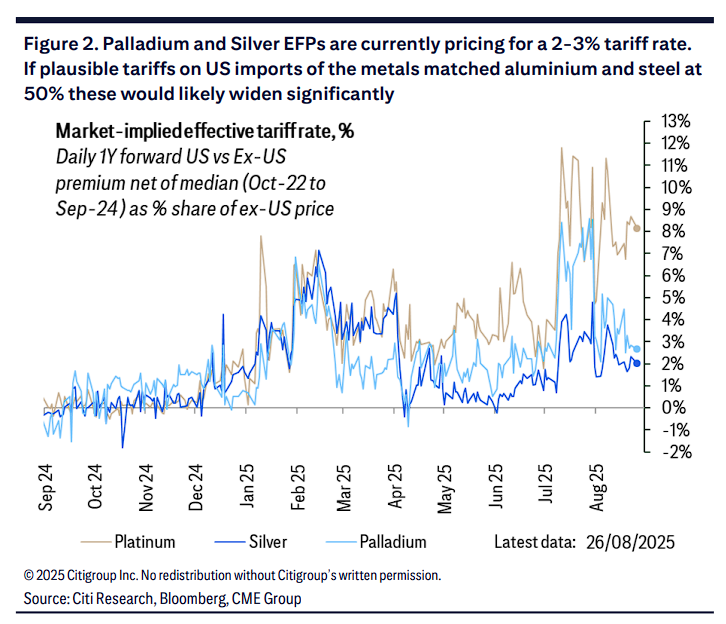
Core Viewpoint - The U.S. Geological Survey (USGS) has proposed adding silver and five other minerals to the 2025 critical minerals list, which could lead to the imposition of import tariffs on silver, potentially up to 50% [1][4]. Group 1: Proposal and Implications - The USGS's draft proposal includes copper, silicon, silver, and potassium, stating these resources are vital for the U.S. economy and national security [1]. - The proposal is open for public comment for 30 days following its publication in the Federal Register [1]. - Citigroup notes that this expands the scope of the Section 232 investigation to 56 metals and minerals, indicating a significant regulatory shift [1][5]. Group 2: Market Impact and Price Forecast - Citigroup's analysts believe that if the U.S. imposes tariffs of up to 50%, the price spread for silver will significantly widen, with a bullish price target of $43 per ounce in the next 6-12 months [3][5]. - The current exchange for physical silver and palladium futures is undervalued at a premium of only 2-3%, not reflecting the potential tariff risks adequately [1][5]. Group 3: Strategic Position of Silver - Silver's strategic importance is increasing due to dual demand from industrial and investment sectors, reinforcing its price support as the U.S. seeks to reduce import dependency [4]. - The U.S. currently relies on imports for 64% of its silver, and the potential tariffs could create significant arbitrage opportunities in COMEX silver futures [5]. Group 4: Broader Implications for Other Metals - Palladium is also facing dual tariff risks due to an anti-dumping investigation and the critical minerals Section 232 inquiry, which could impact its pricing [6]. - Other industrial metals like nickel, zinc, tin, and lead are also at risk of rising premiums due to tariff concerns, as U.S. importers may rush to procure supplies to avoid tariffs [6].

巴西终止对华雾化器反倾销调查
Jing Ji Guan Cha Wang· 2025-08-26 11:37
Core Points - The Brazilian Ministry of Foreign Trade announced the termination of the anti-dumping investigation on nebulizers imported from China, effective from August 18, 2025 [1] Group 1 - The decision was published in the official daily as announcement number 64 for the year 2025 [1] - No measures will be taken against the imports of nebulizers from China following the investigation [1]
加拿大反对党领袖放话:面对中美,我们太软弱
Sou Hu Cai Jing· 2025-08-22 04:08
Group 1 - The Conservative Party leader Pierre Poilievre criticized Prime Minister Justin Trudeau for being "too weak" in dealing with the U.S. and China, claiming that Canada should adopt a "strong stance" [1][3] - Poilievre accused Trudeau of failing to protect Canadian interests, highlighting that despite concessions made to the U.S., such as the cancellation of the digital services tax, Canada still faced increased tariffs [1][3] - The Canadian government stated that the average tariff rate imposed by the U.S. on Canadian goods remains one of the lowest among its trade partners, despite significant impacts from tariffs on specific sectors like lumber, steel, aluminum, and automobiles [1][4] Group 2 - China has imposed significant tariffs on Canadian products, including a 100% tariff on canola oil and oilseed meal, and a 25% tariff on Canadian seafood and pork [3][4] - The Chinese Ministry of Commerce initiated an anti-dumping investigation into Canadian pea starch, citing a significant increase in imports at prices below domestic sales, which has harmed local industries [4] - The Canadian government is discussing support measures for farmers affected by the trade tensions, as China is a major market for Canadian canola, accounting for over 50% of its exports [4][5]

中方在WTO起诉加拿大钢铁等产品进口限制措施,商务部回应
第一财经· 2025-08-16 10:08
Core Viewpoint - China has filed a lawsuit against Canada in the WTO regarding import restrictions on steel and other products, claiming that Canada's actions violate WTO rules and disrupt global supply chains [3][5]. Group 1: WTO Lawsuit Against Canada - On August 15, China initiated a lawsuit in the WTO against Canada's import restrictions on steel products [3]. - The Chinese Ministry of Commerce criticized Canada's unilateral and protectionist measures, which include discriminatory tariffs on products containing "Chinese steel components" [3][5]. - China urges Canada to correct its actions to maintain a rules-based multilateral trading system and improve Sino-Canadian economic relations [3][5]. Group 2: Canada's Steel Tariffs - On July 16, Canada announced expanded import steel tariff quotas and additional taxes on imports exceeding these quotas, effective August 1 [5]. - The Canadian government imposed a 25% additional tax on products containing Chinese steel components imported from countries other than the U.S. [5]. - The Chinese Ministry of Commerce stated that Canada's measures are an attempt to shift the blame for its domestic steel industry issues onto other trade partners, including China [5]. Group 3: Anti-Dumping Investigations - The Chinese Ministry of Commerce has also initiated anti-dumping investigations into Canadian imports of canola seeds and halogenated butyl rubber [7]. - Preliminary evidence indicates that these products are being dumped, causing substantial harm to the domestic industry [7][8]. - The preliminary ruling on August 12 determined a dumping margin of 75.8% for canola seeds and between 26.2% to 40.5% for halogenated butyl rubber from Canadian companies [7][8].

中方在WTO起诉加拿大钢铁等产品进口限制措施,商务部回应
Di Yi Cai Jing· 2025-08-15 14:04
Group 1 - China has filed a lawsuit against Canada in the WTO regarding import restrictions on steel and other products, urging Canada to correct its actions and maintain a rules-based multilateral trade system [1][3] - The Chinese Ministry of Commerce criticized Canada's unilateral and protectionist measures, which include imposing tariffs on products containing "Chinese steel components," claiming these actions violate WTO rules and disrupt international trade [1][3] - The Ministry of Commerce emphasized that the main issue affecting Canada's steel industry is the unilateral tariffs imposed by the United States, and accused Canada of shifting the blame to other trade partners, including China [3] Group 2 - The Ministry of Commerce has initiated anti-dumping investigations into imported canola seeds and halogenated butyl rubber from Canada, citing evidence of dumping and substantial harm to domestic industries [5][6] - Preliminary rulings indicate that the dumping margin for Canadian companies in the canola seed case is 75.8%, while the margin for halogenated butyl rubber ranges from 26.2% to 40.5% [5][6] - Temporary anti-dumping measures will be implemented, requiring importers to provide corresponding guarantees to customs based on the determined rates starting from August 14, 2025 [6]