
智驾平权

Search documents
地平线余凯:智能辅助驾驶收严是好事,有轨道火车才能跑得快
Nan Fang Du Shi Bao· 2025-06-06 13:29
Group 1 - The year has been dramatic for the automotive industry, with a shift from enthusiasm for "intelligent driving equality" to stricter regulations following several high-profile accidents [1] - The founder of Horizon, Yu Kai, believes that regulations will lead to healthier industry development, comparing it to how high-speed trains operate on tracks [1] - The initial wave of "intelligent driving equality" saw major companies like BYD and Changan Automotive promoting advanced driving features, but this enthusiasm has since cooled due to regulatory pressures [1] Group 2 - Yu Kai acknowledges that while intelligent driving features are not yet deeply ingrained in consumer consciousness, he remains optimistic about their future adoption within the next few years [2] - The real-world testing of vehicles like the M8 and M9 by Seres demonstrated the limitations of intelligent driving systems on unstructured roads, yet also highlighted their improved adaptability [2] Group 3 - Chinese automotive companies are recognized for their leading position in intelligent driving, with increasing market share in Europe, as noted by Audi China’s president [3] - The challenges of expanding intelligent driving systems internationally include complex data management and regulatory requirements, which may increase costs for companies [3] - Horizon is actively working with OEMs to meet the diverse requirements of future target markets, indicating a commitment to overcoming these challenges [3] Group 4 - Changan Automotive is heavily investing in intelligent technology, with a commitment of 600 billion yuan and plans to expand its software team significantly [4] - The company views intelligent technology as the true future of the automotive industry, beyond just new energy vehicles [4] - Changan's SDA platform is not only for internal use but is also open to international car manufacturers, emphasizing the importance of technology sharing [4]
公司深度 | 地平线机器人:国产智驾方案龙头 迈向高阶新征程【民生汽车 崔琰团队】
汽车琰究· 2025-06-05 01:09
Core Viewpoint - Company has transformed into a leading supplier of intelligent driving solutions over the past decade, focusing on full-scene intelligent driving solutions and achieving significant revenue growth with a CAGR of 72.2% from 2021 to 2024 [2][36]. Company Overview - Company has established a comprehensive technology stack covering algorithms, dedicated processing architecture (BPU), and development toolchains, positioning itself as a "chip + software" system-level intelligent driving company [4][9]. - The company has formed a complete layout of intelligent driving chip solutions covering levels L2 to L4, with over 310 models targeted by the end of 2024 [4][12]. - The company has built a large and high-quality customer base, including over 40 cooperative automakers and covering more than 290 models [4][36]. Business Segments - The company's revenue is primarily derived from automotive solutions, which accounted for 97% of total revenue in 2024, with product solutions contributing 27.9% and authorized service business contributing 69.1% [28][36]. - Non-automotive solutions, which focus on smart home applications, accounted for 3% of total revenue in 2024 [28][36]. Financial Performance - The company's revenue increased from 467 million RMB in 2021 to 2.384 billion RMB in 2024, with a CAGR of 72.2% [36][41]. - The gross margin has remained stable around 70%, increasing to 79% in 2024 due to the higher contribution from high-margin authorized service business [36][41]. - Operating losses have been controlled, with losses around 2 billion RMB, and the company is expected to achieve breakeven in the coming years as revenue increases and costs are managed [37][41]. Industry Trends - The intelligent driving market is expected to accelerate penetration, with 2025 anticipated to be a pivotal year for "intelligent driving equality," as traditional automakers ramp up their intelligent driving strategies [3][54]. - The price of high-level intelligent driving packages is decreasing, making advanced driving features more accessible to consumers [3][54]. - The integration of intelligent driving technology into mainstream vehicles is expected to become a standard feature, with major automakers like BYD and Xpeng leading the charge [3][54].


地平线机器人-W:深度报告:国产智驾方案龙头 迈向高阶新征程-20250604
Minsheng Securities· 2025-06-04 14:23
Investment Rating - The report maintains a "Buy" rating for the company, indicating a positive outlook on its future performance [4][6]. Core Insights - The company is positioned as a leading provider of domestic intelligent driving solutions, having undergone significant transformation over the past decade. It has established a comprehensive product portfolio that includes both automotive and non-automotive solutions, with a strong focus on intelligent driving technology [1][15]. - The intelligent driving industry is expected to accelerate its penetration into mainstream markets, with 2025 projected to be a pivotal year for "intelligent driving equality." Major automotive manufacturers are increasingly adopting intelligent driving strategies, which will create opportunities for leading suppliers [2][48]. - The company has built a robust ecosystem that empowers partners in the intelligent driving space, leveraging its complete technology stack that spans algorithms, specialized processing architectures, and development tools [3][4]. Summary by Sections Company Overview - The company has evolved into a key player in the intelligent driving sector, providing comprehensive advanced driver assistance systems (ADAS) and high-level autonomous driving (AD) solutions. It has a significant market share in the domestic market, exceeding 40% in the advanced driving assistance segment [15][18]. - The company has established a large and high-quality customer base, with over 310 models targeted for production by the end of 2024, reflecting its strong market presence [29][39]. Industry Insights - The intelligent driving market is witnessing a shift towards affordability, with traditional manufacturers like BYD and Geely launching strategies to democratize intelligent driving technology. This trend is expected to reshape the industry landscape [2][48]. - The report highlights the importance of third-party suppliers in the intelligent driving ecosystem, as they can provide scalable solutions to traditional manufacturers, thereby accelerating the adoption of advanced driving technologies [12][13]. Financial Performance - The company has experienced significant revenue growth, with a compound annual growth rate (CAGR) of 72.2% from 2021 to 2024, increasing from 467 million RMB to 2.384 billion RMB. The automotive solutions segment accounts for 97% of total revenue, with a strong contribution from licensing and service fees [39][46]. - The gross margin has remained stable, with an increase to 79% in 2024, driven by the higher proportion of high-margin licensing and service revenues [39][46]. Future Outlook - The company is expected to continue expanding its market share in the intelligent driving sector, with projected revenues of 3.603 billion RMB, 5.264 billion RMB, and 7.645 billion RMB for 2025, 2026, and 2027, respectively [4][5].
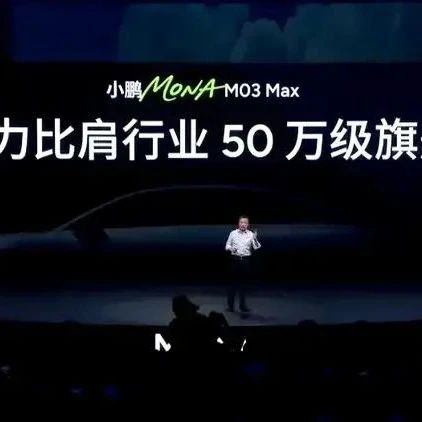
上市一小时大定破万,小鹏MONA M03 Max想延续爆款神话
雷峰网· 2025-06-03 07:17
Core Viewpoint - Xpeng Motors is positioning the MONA M03 Max as a significant step towards becoming a "global AI automotive company" by targeting the young consumer market with enhanced features and competitive pricing [1][13]. Group 1: Product Launch and Sales Performance - The MONA M03 Max was officially launched on May 28, featuring two versions: a 502 km range version priced at 129,800 yuan and a 600 km range version priced at 139,800 yuan [3]. - The MONA M03 series has seen strong sales, with over 12,566 pre-orders within the first hour of the Max version's launch, and 83% of these orders were for the Max version [3][4]. - Since its launch in September 2024, the MONA model has achieved over 100,000 units produced and delivered in just 216 days, making it one of the fastest-selling electric vehicles in its category [7][8]. Group 2: Target Market and Consumer Preferences - The primary consumer base for the MONA series consists of young individuals, particularly those born in the 1990s and 2000s, with nearly 50% of buyers being female [8]. - The appeal of the MONA M03 Max lies in its combination of aesthetics and cost-effectiveness, which resonates with the preferences of younger consumers [9]. Group 3: Product Features and Competitive Edge - The Max version retains the design of the standard model while significantly upgrading features, particularly in advanced driver-assistance systems (ADAS), with a computing power of 508 TOPS, four times that of competitors in the same price range [9][10]. - The Max version includes additional hardware for enhanced ADAS capabilities, such as an extra millimeter-wave radar and additional cameras, supporting various driving assistance functions [10]. - The pricing strategy for the MONA M03 Max was well-received, with the starting price set at 129,800 yuan, only 10,000 yuan higher than the standard version, reflecting a balance between market conditions and consumer expectations [12]. Group 4: Financial Performance and Market Position - Xpeng Motors has reported a significant reduction in average vehicle price from 254,000 yuan to 153,000 yuan year-on-year, while maintaining a gross profit margin of 1,600 yuan per vehicle, which has increased by 15% year-on-year [12][13]. - The company aims to establish a strong competitive position in the 100,000 to 150,000 yuan market segment by offering high-level intelligent driving capabilities typically found in more expensive models [13].

新势力系列点评十九:5月车市稳步向上,新势力自研芯片落地
Minsheng Securities· 2025-06-02 03:26
Investment Rating - The report maintains a positive investment outlook for the electric vehicle (EV) sector, particularly for companies with strong autonomous driving capabilities and competitive pricing strategies [13][14]. Core Insights - The overall automotive market showed steady growth in May 2025, with a year-on-year increase of 8.5% and a month-on-month increase of 5.4%, driven by a surge in consumer demand during the "May Day" holiday [5][6]. - New energy vehicle (NEV) penetration rate reached approximately 52.9%, with total NEV retail sales estimated at 980,000 units in May [5]. - The report highlights the significant growth in deliveries for several new energy vehicle manufacturers, with notable increases in year-on-year and month-on-month figures for companies like Li Auto and Xiaopeng [4][6][10]. Summary by Relevant Sections Market Overview - In May 2025, the total retail market size for narrow passenger vehicles was approximately 1.85 million units, with NEV sales contributing significantly to this growth [5]. - The report indicates that the automotive market is stabilizing, with various promotional strategies being employed by companies to boost sales [5]. Company Performance - **Leap Motor**: Delivered 45,067 units in May, a year-on-year increase of 148.1% and a month-on-month increase of 9.8%. The growth is attributed to strong product offerings in the 200,000 yuan price range [6][15]. - **Li Auto**: Reported 40,856 units delivered in May, reflecting a year-on-year increase of 16.7% and a month-on-month increase of 20.4%. The growth is linked to the launch of new models and an expanding charging network [7][9]. - **Xiaopeng**: Achieved 33,525 units in May, a year-on-year increase of 230.4% but a month-on-month decrease of 4.3%. The performance is driven by the popularity of the MONA M03 model [9][11]. - **NIO**: Delivered 23,231 units in May, with a year-on-year increase of 13.1% but a month-on-month decrease of 2.8%. The report notes the introduction of new models and upgrades in autonomous driving technology [10][12]. - **ZEEKR**: Reported 18,908 units delivered in May, a year-on-year increase of 1.6% and a month-on-month increase of 37.7% [11]. - **Xiaomi**: Delivered over 28,000 units in May, with the new SUV YU7 expected to launch in July 2025, targeting a competitive price range [11]. Technological Advancements - The report emphasizes the acceleration of end-to-end technology applications in autonomous driving, marking the beginning of a new era in smart driving capabilities [12]. - Companies like Xiaopeng and those associated with Huawei are leading the charge in the iterative development and promotion of smart driving technologies [12]. Investment Recommendations - The report suggests a focus on companies with advanced smart driving capabilities and strong product cycles, recommending stocks such as Geely, BYD, Xiaopeng, Li Auto, and Seres, while also advising to pay attention to Xiaomi [13][14].



新势力系列点评十九:5月车市稳步向上 新势力自研芯片落地
Minsheng Securities· 2025-06-02 03:23
Investment Rating - The report maintains a positive investment outlook for the electric vehicle (EV) sector, particularly for companies with strong autonomous driving capabilities and competitive pricing strategies [13]. Core Insights - The overall automotive market showed steady growth in May 2025, with a year-on-year increase of 8.5% and a month-on-month increase of 5.4%, driven by a surge in consumer demand during the "May Day" holiday [5]. - The penetration rate of new energy vehicles (NEVs) reached approximately 52.9%, indicating a recovery in market interest and adoption [5]. - New energy vehicle deliveries from key players in May 2025 demonstrated significant growth, with companies like Li Auto and Xiaopeng achieving notable year-on-year increases [4][6][9]. Summary by Relevant Sections New Energy Vehicle Deliveries - Leap Motor delivered 45,067 units in May, a year-on-year increase of 148.1% and a month-on-month increase of 9.8% [4]. - Xiaopeng delivered 33,525 units, marking a year-on-year increase of 230.4% but a month-on-month decrease of 4.3% [9]. - Li Auto's deliveries reached 40,856 units, up 16.7% year-on-year and 20.4% month-on-month [7]. - Aion's deliveries fell to 26,777 units, down 33.2% year-on-year and 5.4% month-on-month [4]. - NIO delivered 23,231 units, reflecting a year-on-year increase of 13.1% but a month-on-month decrease of 2.8% [10]. - Zeekr delivered 18,908 units, with a slight year-on-year increase of 1.6% and a month-on-month increase of 37.7% [11]. - Xiaomi delivered over 28,000 units, with expectations for its new SUV YU7 to be competitive in the market [11]. Market Trends and Technology - The report highlights the acceleration of autonomous driving technology, with companies like Xiaopeng and Huawei leading the charge in promoting and iterating on smart driving capabilities [12]. - The anticipated advancements in autonomous driving technology are expected to lower hardware costs and expand applications in the mainstream market [12]. - The report emphasizes that the smart driving capabilities will become a critical competitive factor for automotive companies, with a focus on those that are leading in technology and product cycles [13]. Investment Recommendations - The report recommends investing in companies that are well-positioned in the smart driving and electric vehicle sectors, specifically highlighting Geely, BYD, Xiaopeng, Li Auto, and Seres as key players to watch [13][14]. - It also suggests monitoring Xiaomi for its potential in the competitive EV market [13].
知行科技(1274.HK):控股小工匠机器人 推进“汽车+AI+机器人”产业化落地
Ge Long Hui· 2025-05-31 17:48
Core Viewpoint - The company has acquired a majority stake in Suzhou Xiaogongjian Robot Co., enhancing its development capabilities for robotic joint components, which are expected to be applied in scenarios such as smart charging, further promoting the industrialization of "automobile + AI + robotics" [1][2] Event - On May 12, the company invested to acquire a majority stake in Suzhou Xiaogongjian Robot Co., becoming the controlling shareholder. Xiaogongjian, established in 2018, specializes in smart integrated joints and customized robotic arms, allowing the company to gain design and development capabilities for key components such as motors, reducers, and drivers, accelerating the industrialization process of robotics [1][2] Industry Insights - The integrated joints represent a significant portion of the total cost in humanoid robots, potentially accounting for 50%, making them one of the highest value components in the robotics field. The company’s driving algorithms and robotics share commonalities, allowing for horizontal expansion of application scenarios, such as smart charging robotic arms that can autonomously charge vehicles through visual detection and positioning [2][3] Business Outlook - The company is expected to see a turning point in its main business, with the gradual phase-out of the Supervision solution and an increase in self-developed domain controllers like iFC and iDC, which will improve gross margins. Revenue from automatic driving solutions is projected to reach 1.193 billion yuan in 2024, a year-on-year increase of 5.5%, with domain controller revenue at 1.135 billion yuan and front-view integrated machine revenue at 58 million yuan [2][3] Financial Performance - The company’s comprehensive gross margin is reported at 7.28%, a decrease of 2.66 percentage points year-on-year. The increase in R&D expense ratio is attributed to the hiring of over 100 high-level algorithm and mass production delivery team members, which is expected to strengthen collaboration with Chery on smart driving projects [4][5] Future Projections - The company is anticipated to benefit significantly from the trend of democratizing smart driving, with multiple products like iFC and iDC expected to see increased volume. The operating philosophy of "Smart Mobility For Everyone" aligns with the current trend of smart driving accessibility. Revenue forecasts for 2025-2027 are projected at 1.79 billion, 2.84 billion, and 3.54 billion yuan, respectively, with corresponding net profits of -113 million, 87 million, and 221 million yuan [5][6]

韦尔股份:汽车CIS需求高速增长-20250528
CSC SECURITIES (HK) LTD· 2025-05-28 08:23
Investment Rating - The report assigns a "Buy" rating to the company, with a target price of 155.00 CNY [1][7]. Core Insights - The company is experiencing rapid growth in the automotive CIS (Camera Image Sensor) demand, with a 15% increase in revenue and a 55% increase in net profit in Q1 2025. This growth is attributed to the optimization of the product structure and the expansion of market share in the automotive sector [7][11]. - The company plans to issue overseas listed shares (H shares) to accelerate its international strategy and enhance overseas financing capabilities. Additionally, it will change its name to "豪威集团" to better reflect its industry layout [7]. - The company is expected to benefit from the increasing demand for image sensors in wearable devices and the Internet of Things (IoT) sectors, indicating significant future growth potential [7]. Financial Summary - For the fiscal year ending December 31, 2025, the company is projected to achieve a net profit of 4.344 billion CNY, representing a year-over-year growth of 30.7%. The earnings per share (EPS) is expected to be 3.57 CNY, with a price-to-earnings (P/E) ratio of 35.5 [9][11]. - The company’s revenue is forecasted to grow from 31.271 billion CNY in 2025 to 49.424 billion CNY by 2027, with corresponding net profits of 5.574 billion CNY and 6.631 billion CNY in 2026 and 2027, respectively [9][16]. Market Position - The company holds a market share of nearly 30% in the domestic CIS market, benefiting from high-resolution, small sensor sizes, strong low-light performance, and low power consumption [11]. - The introduction of the industry’s first 12-megapixel automotive sensor by the end of 2024 is expected to further strengthen the company's competitive position [11].

韦尔股份(603501):汽车CIS需求高速增长
CSC SECURITIES (HK) LTD· 2025-05-28 07:03
Investment Rating - The report assigns a "Buy" rating to the company, with a target price of 155.00 CNY [1][7]. Core Insights - The company is experiencing rapid growth in the automotive CIS (Camera Image Sensor) demand, with a 15% increase in revenue and a 55% increase in net profit in Q1 2025. This growth is attributed to the optimization of the product structure and the expansion of market share in the automotive sector [7][11]. - The company plans to issue overseas listed shares (H shares) to accelerate its international strategy and enhance overseas financing capabilities. Additionally, it will change its name to "豪威集团" to better reflect its industry layout [7]. - The company is expected to benefit from the increasing demand for image sensors in wearable devices and the Internet of Things (IoT) sectors, indicating significant future growth potential [7]. Financial Summary - For the fiscal year ending December 31, 2025, the company is projected to achieve a net profit of 4.344 billion CNY, representing a year-over-year growth of 30.7%. The earnings per share (EPS) is expected to be 3.57 CNY, with a price-to-earnings (P/E) ratio of 35.5 [9][11]. - The company’s revenue is forecasted to grow from 31.271 billion CNY in 2025 to 49.424 billion CNY by 2027, with corresponding net profits of 5.574 billion CNY and 6.631 billion CNY in 2026 and 2027, respectively [16][11]. - The company’s gross margin for Q1 2025 was reported at 31%, showing an increase of 2.1 percentage points quarter-over-quarter and 3.1 percentage points year-over-year [11].
【私募调研记录】泰舜资产调研四维图新
Zheng Quan Zhi Xing· 2025-05-28 00:13
Group 1: Company Insights - Siwei Map introduced the trend of equal driving rights, with mid-to-high level assisted driving functions penetrating into lower-end models, creating market opportunities [1] - The data compliance business showed significant growth, with the Intelligent Cloud segment expected to generate revenue of 2.254 billion in 2024, representing a year-on-year increase of 28.96% [1] - The world model has been applied in behavior prediction and trajectory generation, targeting OEMs and Tier 1 suppliers [1] - The company needs to achieve a certain sales volume to realize profitability, focusing on improving labor efficiency and controlling costs [1] - Strengthened regulatory policies are promoting high-quality development in the industry, with the company holding advantages in mapping and data compliance [1] Group 2: Technology and Product Development - Jiefa Technology specializes in automotive electronic chip design, with stable mass production of SoC and MCU chips, and the launch of the C8025E integrated chip for cabin and parking [1] - The cost of integrated products is primarily driven by computing chips, with the company reducing costs through large-scale procurement [1] - The expected labor efficiency ratio for 2024 is approximately 1.68 million in revenue per employee, an increase of over 50% year-on-year [1] - The company won a bid for the high-level autonomous driving demonstration zone project in Beijing and is actively following up on various vehicle-road-cloud projects in multiple cities [1] - Revenue growth is projected to exceed 12% in 2024, with an additional 3 million sets of basic driving fixed-point products and 600,000 sets of integrated parking products expected in Q1 2025, with confidence in significantly reducing losses [1]
