经济转型

Search documents
以扩内需和产能治理带动价格修复
2 1 Shi Ji Jing Ji Bao Dao· 2025-09-11 00:09
Group 1: Price Data Overview - The August price data from the National Bureau of Statistics shows significant structural differentiation, with a slight year-on-year decline in CPI, but positive signals regarding economic transformation and structural optimization are evident [1][4] - CPI decreased by 0.4% year-on-year, primarily due to last year's high base and lower seasonal food prices, with food prices dropping by 4.3% year-on-year [1][2] - The decline in food prices reflects the strengthening of domestic agricultural supply capabilities, indicating support from the supply side rather than a contraction in demand [1] Group 2: Core CPI and Consumer Demand - The core CPI, excluding food and energy prices, rose by 0.9% year-on-year, marking the fourth consecutive month of growth, indicating a steady recovery in domestic consumption demand [2] - Service consumption, particularly in healthcare, education, and tourism, has shown significant price increases, contributing to the core CPI's rise [2] - Upgraded consumption remains robust, with notable price increases in gold and platinum jewelry, as well as household appliances, reflecting a growing pursuit of high-quality living among consumers [2] Group 3: Industrial Price Trends - Industrial prices are showing positive changes, with PPI stabilizing after eight months of decline, and the year-on-year decline narrowing by 0.7 percentage points [3] - The structural improvement in industrial prices indicates a marginal improvement in supply-demand relationships within certain industries, alongside ongoing optimization of industrial structure and growth of new drivers [3] - Key industry capacity governance measures are yielding results, leading to price increases in traditional raw material sectors like coal and steel, while new drivers are enhancing prices in high-tech and green industries [3] Group 4: Policy Implications and Future Outlook - Current price data reflects a significant structural characteristic of "supply optimization in traditional sectors and demand expansion in emerging sectors," highlighting the accelerated transition of China's economic drivers [4] - Macro policies need to remain precise and patient, ensuring stable supply and prices for essential goods while enhancing the internal driving force through improved consumption environments and high-quality supply [4] - Continued support for consumption and the construction of a unified national market are expected to promote steady recovery in consumer demand and stabilize low CPI levels, while industrial price recovery is anticipated to continue [4]
21评论丨以扩内需和产能治理带动价格修复
2 1 Shi Ji Jing Ji Bao Dao· 2025-09-10 22:49
Group 1 - The August price data from the National Bureau of Statistics shows significant structural differentiation, with a slight year-on-year decline in CPI, but positive signals regarding economic transformation and structural optimization are evident [1][4] - The CPI decreased by 0.4% year-on-year, primarily due to a high base from the previous year and lower seasonal food prices, with food prices dropping by 4.3% year-on-year [1][2] - Non-food prices are showing a continuous recovery, with the core CPI (excluding food and energy) rising by 0.9% year-on-year, indicating a steady recovery in domestic consumption demand [2][3] Group 2 - Industrial prices are showing positive changes, with PPI turning stable after eight months of decline, and the year-on-year decline narrowing by 0.7 percentage points, signaling improved industrial economic stability [3][4] - The structural improvement in industrial prices reflects better supply-demand relationships in certain sectors and ongoing optimization of industrial structure, with traditional industries like coal and steel seeing price increases [3][4] - The ongoing expansion of new demand in emerging sectors is driving price increases in high-tech and green industries, indicating a shift towards higher value-added products [3][4]
越南启动大规模基建项目
Jing Ji Ri Bao· 2025-09-07 22:12
Core Viewpoint - The Vietnamese government has launched 250 large-scale infrastructure projects with a total investment of approximately 500 billion USD, aimed at achieving annual economic growth targets and transforming the economy over the next 10 to 20 years [1][5]. Group 1: Infrastructure Projects Overview - The 250 projects include 89 that have been completed ahead of schedule and 161 new projects, covering key areas such as transportation, urban development, and technology research [1]. - Notable transportation projects include the Rach Mieu 2 Bridge in the Mekong Delta, Long Thanh International Airport, and the T3 terminal at Tan Son Nhat Airport, which will significantly enhance Vietnam's transportation network and regional economic integration [1]. Group 2: Investment Structure - Of the 250 projects, 129 are government-funded with an investment of about 180 billion USD, while 121 projects are supported by private and foreign capital, totaling approximately 305 billion USD [2]. - Private and foreign direct investment accounts for 63% of the total investment, indicating Vietnam's success in mobilizing private and international capital [2]. Group 3: Economic Impact and Strategic Goals - The infrastructure improvements are expected to lower logistics costs, accelerate the flow of goods and services, and enhance overall economic efficiency [3]. - The projects emphasize social inclusivity, covering affordable housing, smart cities, healthcare, education facilities, and tourism development [3]. - The Vietnamese government aims for public investment disbursement to exceed 350 billion USD by 2025, with a year-on-year growth of about 40% [4]. Group 4: Regional and Global Integration - The infrastructure projects will strengthen economic ties with neighboring countries like Laos and Cambodia, promoting regional economic integration [4]. - Vietnam is actively incorporating international advanced technologies and services into its infrastructure projects, providing significant market opportunities for international companies [4]. - The overall infrastructure investment is expected to account for 18% to 20% of GDP by 2025, enhancing Vietnam's integration into regional and global value chains [5].
杨德龙:A股慢牛长牛行情更利于投资者做好投资!拉动消费最好的手段就是启动一轮牛市,这是提振投资者信心最直接方式
Sou Hu Cai Jing· 2025-09-05 10:28
Market Overview - The recent market rally that began in late June has shown strong momentum, with trading volume increasing significantly, reaching historical highs from 2 trillion to over 3 trillion [1] - The margin trading balance surpassed 2 trillion for the first time on August 5, marking a ten-year high, and has since increased by 300 billion [1] - Compared to ten years ago, the current market's circulating market value has significantly increased, with the margin trading balance accounting for less than 3% of the circulating market value, compared to approximately 4.27% a decade ago [1] Market Dynamics - Despite the strong short-term surge, concerns among investors have arisen, leading some to consider profit-taking or withdrawal [4] - A recent adjustment in the market has occurred, but it is viewed as a normal correction within the ongoing bull market rather than a trend reversal [4] - Key drivers of the bull market include supportive policies aimed at economic growth and continuous capital inflow [4] Capital Inflow - Six main sources of capital inflow into the stock market have been identified: 1. Institutional funds, particularly from insurance companies, driving large-cap blue-chip stocks [4] 2. Household savings moving into the market due to low deposit rates, with household deposits increasing by 60 trillion over the past five years [4] 3. Funds flowing out of the bond market as investors shift to equity assets [4] 4. Capital from the real estate market due to a fundamental change in housing price expectations [4] 5. Capital exiting traditional industries, especially those with overcapacity [4] 6. Foreign capital inflow, which reached 10.1 billion in the first half of the year [4] Economic Impact - The current bull market is expected to act as a catalyst for economic growth, potentially becoming the fourth engine alongside investment, consumption, and exports [7] - A strong capital market can enhance wealth effects, leading to increased consumer spending and reduced overcapacity pressures [7] International Context - The U.S.-China trade tensions, particularly the tariff war initiated by the U.S., have had a limited impact on China's economy, with a shift in export structure reducing reliance on U.S. markets [6] - China's exports grew by 7% in the first half of the year despite a complex external environment [6] Future Outlook - The market is anticipated to experience a slow bull market rather than a rapid surge, with potential for multiple adjustments along the way [5] - The focus for future economic growth will be on consumption, finance, and technology sectors, with opportunities arising from adjustments in the market [9]

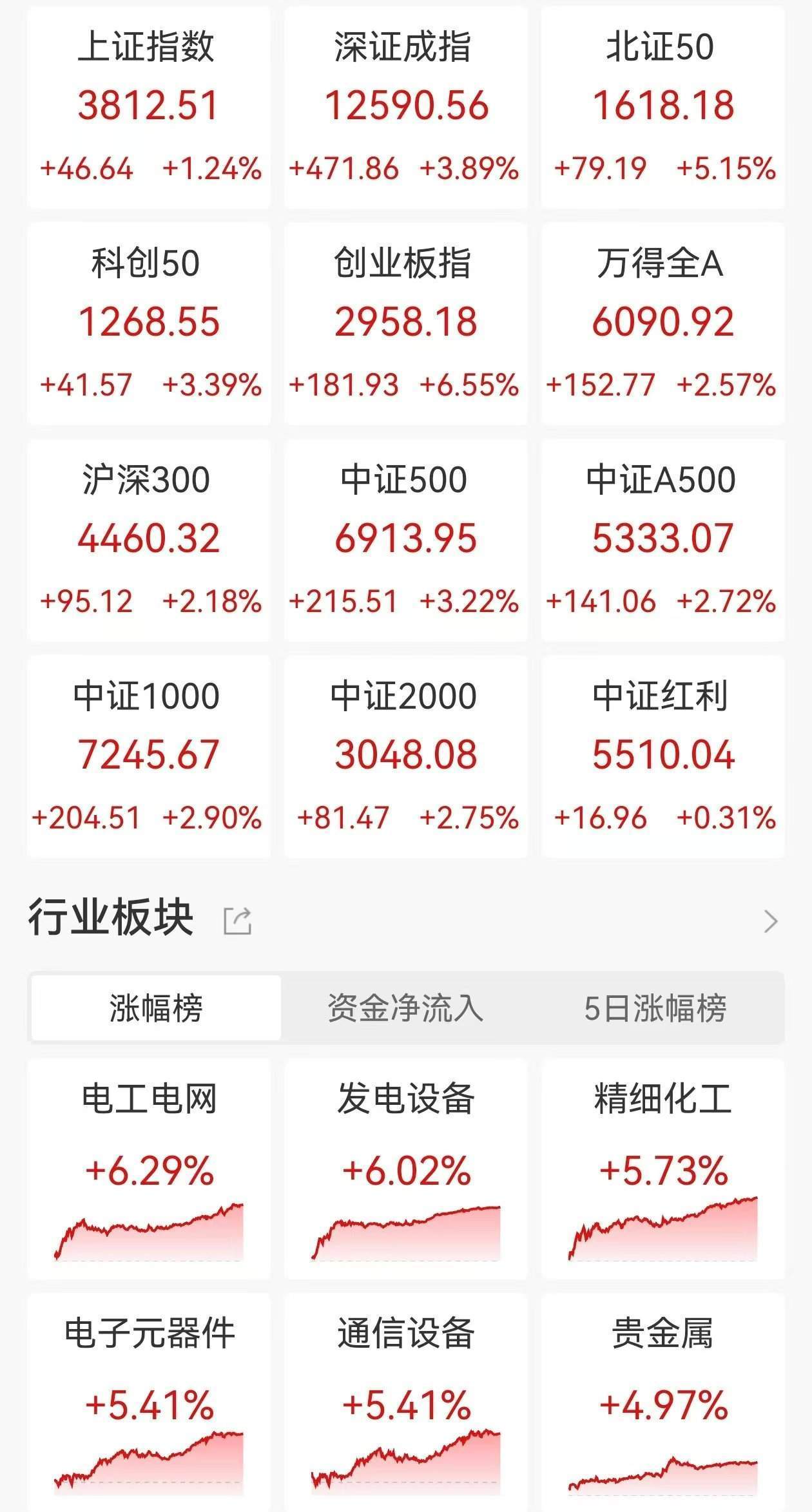
杨德龙:慢牛长牛行情更利于投资者做好投资
Xin Lang Ji Jin· 2025-09-05 10:02
Market Overview - The recent market rally that began in late June has shown strong momentum, with trading volume increasing significantly, surpassing 3 trillion, marking a historical high in daily trading volume [1] - The margin financing balance broke 2 trillion for the first time on August 5, reaching a ten-year high, and has since increased by 300 billion [1] - The current market's margin financing balance accounts for less than 3% of the circulating market value, compared to approximately 4.27% a decade ago, indicating a relatively low leverage level [1] Investor Sentiment - Despite the strong market performance, short-term volatility has raised concerns among cautious investors, leading some to consider withdrawing or taking profits [2] - The market has experienced a correction since approaching the historical high of 3.45 trillion in trading volume from October last year, but this adjustment is viewed as a normal part of the bull market rather than a trend reversal [2] Capital Inflows - Six main sources of capital inflow into the stock market have been identified: institutional funds, household savings reallocating due to low deposit rates, funds flowing out of the bond market, capital from the real estate market, funds exiting traditional overcapacity industries, and foreign investment [2] - Institutional funds, particularly from insurance companies, have played a significant role in driving the rise of large-cap blue-chip stocks [2] Economic Impact - The current bull market is expected to act as a catalyst for economic growth, potentially becoming the fourth engine alongside investment, consumption, and exports [5] - A strong capital market can enhance wealth effects, leading to increased consumer spending and alleviating overcapacity pressures in various industries [5] International Trade and Policy - The ongoing U.S.-China trade tensions have had a limited impact on China's economy, with a strategic shift in export structures reducing reliance on U.S. markets [4] - China's exports to the U.S. are projected to decrease from 19.2% in 2018 to 14.7% by 2024, indicating a diversification of trade relationships [4] Sector Focus - Future economic growth is expected to concentrate on consumption, finance, and technology sectors, with technology showing the most promise this year [7] - Consumer staples, particularly premium brands, may attract attention in the fourth quarter, while the financial sector, especially brokerage firms, is anticipated to benefit from market breakthroughs [7]
【环球财经】多元突围与韧性生长——科特迪瓦经济转型的密码
Xin Hua She· 2025-09-04 13:51
Economic Growth and Recovery - Côte d'Ivoire has achieved an average economic growth rate of 7% over the past decade, emerging from the devastation of civil wars to become a leading economy in Sub-Saharan Africa [1] - Following the end of conflicts in 2011, the government implemented a national development plan that led to an average GDP growth of approximately 9.6% from 2012 to 2015 [5][6] Agricultural Sector and Cocoa Industry - Côte d'Ivoire is the world's largest cocoa producer, contributing 40% of global cocoa beans, but has historically been trapped in low-value raw material exports [7] - The government aims to achieve 100% local processing of cocoa beans by 2030, with current local conversion rates at about 33% [10] - A new state-owned cocoa processing plant, capable of processing 50,000 tons annually, has recently commenced operations [10] Infrastructure Development - Côte d'Ivoire is the second-largest economy in the West African Economic Community and is actively enhancing its infrastructure to become a regional economic hub [13] - The country has a total road length of 82,500 kilometers, accounting for 50% of the total road length in the West African Economic and Monetary Union [16] - The Abidjan port, the largest container port in West Africa, has increased its annual throughput from 1.2 million to 2.5 million standard containers after upgrades [16] Private Sector Activation - The government has adopted a "flooding the market" approach to stimulate the private economy through policy relaxation and market opening [17] - In 2023, over 25,000 new businesses were registered in Côte d'Ivoire, reflecting a vibrant entrepreneurial environment [17] - The collaboration between public and private sectors has resulted in an average economic growth rate of 6.5% from 2021 to 2023, despite global challenges [17]

房地产这次真急了!9月新一轮救市政策潮开启了
Sou Hu Cai Jing· 2025-09-03 14:32
Core Viewpoint - The new round of real estate rescue policies in China, initiated in September 2025, aims to stabilize the market amid severe challenges, reflecting a strong commitment from policymakers to address the industry's difficulties and the broader macroeconomic context [1][3][15]. Group 1: Urgency of Policy Implementation - The real estate market is under significant pressure, with a projected decline in investment growth of around 7% in 2025, despite ongoing policy efforts [2][3]. - High inventory levels, substantial homebuyer burden, and persistent credit risks for some developers are major constraints hindering market recovery [2][3]. - In major cities like Beijing, recent policy changes have led to a surge in demand for certain property types, but the overall market remains challenged, particularly for entry-level housing [2][3]. Group 2: Macroeconomic Implications - The real estate sector contributes approximately 20% to China's GDP and is crucial for employment, making its downturn a significant concern for the overall economy [3][15]. - A continued decline in the real estate market could adversely affect consumer spending, with retail sales growth projected at 4-5% in 2025, facing uncertainty if the housing market remains weak [3][15]. Group 3: Policy Features and Innovations - The new policies represent a shift from "single-point breakthroughs" to a "systematic collaboration" approach, focusing on demand stimulation, supply optimization, and financial coordination [6][9]. - Demand-side measures include differentiated policies in major cities, allowing for more targeted interventions that avoid overheating the market while addressing specific needs [6][9]. - Financial innovations include enhanced public housing fund policies and the removal of interest rate differentials for first and second homes, significantly reducing monthly repayment burdens for buyers [7][9]. Group 4: Long-term Strategic Reforms - The current policies emphasize both "revitalizing existing stock" and "improving quality," marking a departure from solely stimulating demand [9][10]. - Local governments are supported through special bonds to acquire existing properties for affordable housing, while new construction standards are being promoted to enhance quality [9][10]. - This dual approach aims to address inventory issues while fostering a transition towards higher quality developments in the real estate sector [9][10]. Group 5: Market Response and Challenges - Initial market reactions to the policies have shown promise, with new home purchases in certain areas increasing by over 50%, indicating a potential recovery during the traditional sales peak [10][11]. - However, long-term challenges persist, particularly in lower-tier cities facing high inventory and population outflows, which may delay recovery despite policy support [11][12]. - The complexity of resolving developer credit risks remains a significant hurdle, with over 500 billion yuan in debts maturing in 2025, impacting overall market confidence [11][12]. Group 6: Balancing Act in Policy Implementation - Policymakers must balance short-term stimulus with long-term transformation, ensuring that market interventions do not hinder the transition to a new housing model [12][15]. - There is a need to manage market vitality alongside risk prevention, particularly regarding rising non-performing loans in the housing sector [12][15]. - Regional policy disparities must be addressed to prevent irrational market behaviors in lower-tier cities as a result of policies in major urban centers [12][15].
企业重视研发投入,长期主义必会带来更多增量
2 1 Shi Ji Jing Ji Bao Dao· 2025-09-02 23:25
Core Insights - The article emphasizes the importance of R&D investment for companies, suggesting that a long-term focus on innovation will yield greater incremental growth [1][4][5] Group 1: R&D Investment Trends - In the first half of the year, the total revenue of listed companies in China reached 35.01 trillion yuan, with R&D investment amounting to 745.69 billion yuan, reflecting a year-on-year growth of 2.68% [1] - Many leading companies, particularly in strategic emerging industries, have maintained double-digit growth in R&D spending despite challenges such as demand fluctuations and rising costs [1][2] - The shift towards increased R&D investment is seen as a response to the limitations of traditional growth models that rely solely on scale expansion and cost advantages [1][4] Group 2: Structural Changes in Economic Growth - The article notes a structural shift in China's economic growth drivers, moving away from population dividends, urbanization, and globalization towards innovation and R&D as key growth engines [2] - The urgency for companies to invest in R&D is driven by national strategic guidance and the need for survival and development in critical sectors facing bottleneck issues [2][4] Group 3: Market Reactions and Valuation Models - Capital markets are adapting to this shift, with investors increasingly valuing companies based on their long-term R&D investments rather than short-term profits [3] - The traditional price-to-earnings (PE) valuation model is becoming less effective for high R&D companies, as investors focus more on future value creation [3][5] Group 4: Implications for Companies - Companies that prioritize R&D investment are seen as essential for sustainable growth and are expected to play a crucial role in navigating economic cycles [5] - The collective increase in R&D spending among A-share listed companies is viewed as a significant step towards upgrading China's manufacturing label to one of innovation [4][5]
成绩单出来了,看看真实的数据!
Sou Hu Cai Jing· 2025-09-02 14:08
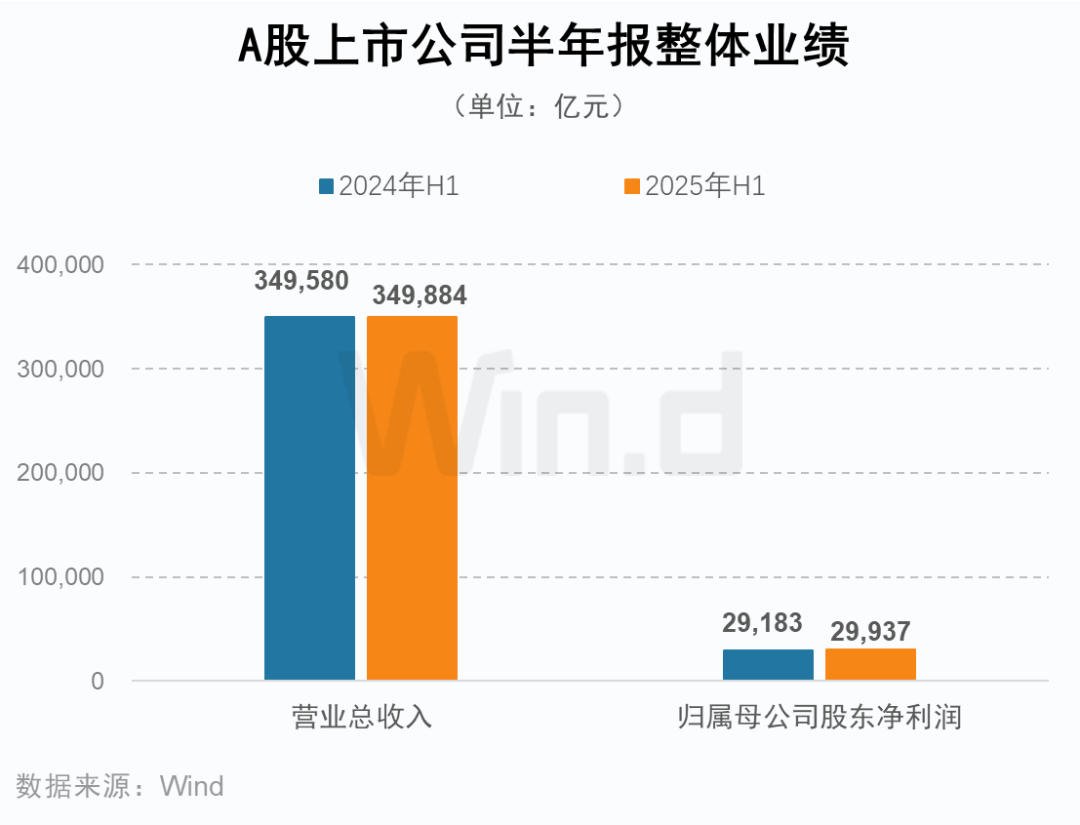
很多人体感都跟数据对不上,工作不好找,钱不敢花,信心这玩意儿好像越来越稀缺。 正好,上市公司的半年报最近都出来了。 这些数据不说谎,它们默默记录着生意到底好不好做、钱到底难不难赚。 这两年有个怪现象:宏G数据看起来都挺漂亮,但为啥我们普通人没感觉? 其实不是你一个人这么想。 今天我们就抛开宏观大词,从上市公司的半年报里面,看看经济真实的温度。 整体来看,一个很明显的现象就是,结构性分化愈加明显。 根据wind数据显示,上半年,A股5427家上市公司,共5424家上市公司披露了数据,上半年共实现营业收入34.99万亿元,同比增长0.02%,归母公司净利 润2.99万亿元,同比增长2.45%。 其中4178家实现盈利,占比约77%。去年上半年占比约78.5%,整体盈利公司占比略有下滑。 尽管增速不高,但营收由负转正、利润保持正增长,好像是个好的信号。 但我们再看细分数据,非金融企业营收增速为-0.48%,仍处于负增长区间;非金融石油石化企业净利润增速仅为2.45%,较一季度回落3.07个百分点。在 个股净利润排名里面,靠前的一半都是跟金融行业相关的。 个股净利润TOP10公司有7家来自金融行业,四大行稳居前四,上 ...




以史为鉴,3800点的A股该如何操作?
雪球· 2025-09-01 13:00
Core Viewpoint - The article discusses the recent surge in the A-share market, reaching 3800 points, while highlighting the phenomenon of "index bull market, individual stock bear market" where many stocks are declining despite the index rising [3][4]. Historical Context of 3800 Points - The A-share market has reached 3800 points three times historically, with the previous instances occurring in 2007 and 2015, each with different market backgrounds and outcomes [7]. - In 2007, the market was driven by the stock split reform, which aligned the interests of major and minor shareholders, leading to a significant bull market fueled by rapid economic growth and foreign investment [8][9]. - The peak of the 2007 bull market was 6124.04 points, followed by a drastic decline due to the global financial crisis, resulting in a drop of over 70% [10]. - The 2015 bull market was characterized as a "leveraged bull," with margin trading and speculative investments driving prices up, culminating in a crash when regulatory measures were introduced [11][12]. - The 2015 market crash taught the lesson that leverage can amplify both gains and losses [13]. Current Market Analysis - The current market rally is marked by a "divided" nature, driven not by leverage or policy interventions, but by the necessity of economic transformation [15][16]. - Key factors include a clear policy focus on long-term investments, a pressing need for economic transition, and a more rational market sentiment with a significant portion of new investors entering through funds and ETFs [16][17]. - The market is experiencing significant stock price disparities, indicating a structural and rotational bull market [18]. Investment Recommendations - Investors are advised to allocate assets based on their risk tolerance, diversifying across different asset classes and markets to mitigate risks [20][21]. - It is recommended to focus on sectors benefiting from policy support, particularly in technology and innovation, such as artificial intelligence and semiconductors [23]. - Regular investment strategies, such as dollar-cost averaging, are suggested to manage market volatility and reduce the risk of investing at market peaks [24]. - The future market trend is anticipated to shift towards a "slow bull" pattern, emphasizing the importance of maintaining rationality during market fluctuations [25].