
自研芯片

Search documents
雷军称YU7大定表现超预期,正在为自研芯片上车做准备
2 1 Shi Ji Jing Ji Bao Dao· 2025-06-27 02:18
Core Insights - Xiaomi's Yu7 SUV received over 200,000 pre-orders within 3 minutes of its launch, exceeding expectations and demonstrating strong market demand [1][2] - The Yu7 is positioned as a luxury high-performance SUV, directly competing with Tesla's Model Y, with a price range from 253,500 to 329,900 CNY [2] - Xiaomi aims to enhance product quality and accelerate delivery times for the Yu7, with initial deliveries set to begin in August [3] Product Performance - The Yu7's standard version offers a range of 835 km, while the Pro and Max versions provide a range of 730 km [2] - The company has seen a positive trend in orders for its previous model, the SU7, with expectations for monthly new orders increasing from 10,000 to 13,000-14,000 [3] Strategic Direction - Xiaomi's CEO emphasized the importance of technological innovation and quality over price competition, aiming to advance into the high-end market [3] - The company is preparing to implement its self-developed chips in vehicles, with the first generation of the SoC chip performing better than anticipated [3] Regional Development - Xiaomi is expanding its research and development presence in Wuhan, targeting a team of 10,000, with current staffing at 4,000-5,000 [4] - The company prioritizes local suppliers in the Beijing-Tianjin-Hebei region for its automotive supply chain, aiming for 60-70% local sourcing including battery suppliers [5]
东吴证券晨会纪要-20250627
Soochow Securities· 2025-06-27 01:49
Macro Strategy - The current market is entering a risk-off phase, with a potential shift back to growth after a period of risk-on behavior. The rotation pattern resembles that of early 2024 and late 2024, with initial strength in the TMT sector, followed by a rotation to upstream resources and finance, and then a short-term rebound in consumption and manufacturing sectors [1][10][11] - The macroeconomic fundamentals have not fundamentally changed compared to late 2024 and March 2025, suggesting that future industry rotation may continue to be driven by capital behavior. A defensive mode is recommended in the short term, focusing on stable sectors such as banks, utilities, and leading home appliance companies [1][11] Industry Insights - QuantumScape (QS) has successfully integrated its advanced Cobra membrane technology into its baseline battery production, marking a significant step towards scaling production capacity. The Cobra process improves thermal treatment speed by approximately 25 times and allows for more efficient production, representing a major advancement in ceramic membrane manufacturing [3][14] - QS's QSE-5 B solid-state battery cells have recently entered small-scale production, with deliveries to select automotive customers. The introduction of the Cobra membrane is expected to accelerate the trial and adoption of QS's B1 samples [3][14] - Domestic lithium battery equipment manufacturers have a significant first-mover advantage in the solid-state battery equipment sector, with several companies successfully covering the entire manufacturing process. In 2024, multiple equipment manufacturers have received orders exceeding 100 million yuan, positioning them to benefit from the industrialization of solid-state batteries [5][14] Company Recommendations - The report recommends focusing on solid-state battery equipment suppliers such as XianDao Intelligent, laser welding equipment manufacturers like LianYing Laser, and formation and capacity equipment providers like HangKe Technology. Attention is also drawn to dry/wet electrode equipment manufacturers and other related companies [5][14] - For ZhongAn Online, the company has initiated an H-share placement to enhance its capital base and support growth in its insurance and technology sectors. The expected net proceeds from the placement are approximately 39.96 billion HKD, which will bolster its financial strength and support its growth trajectory [7][17][18] - Xiangcai Co., Ltd. is undergoing a transformation into wealth management and financial technology, with significant growth expected in net profit from 2025 to 2027. The company is leveraging its acquisition of Dazhihui to enhance its competitive edge in the financial services market [9][19]
雷军聊玄戒O1芯片:考虑第二代自研芯片上车
news flash· 2025-06-26 15:42
Core Viewpoint - Xiaomi's founder Lei Jun stated that the experience with the Xuanjie O1 chip has exceeded expectations, and the company is considering applying the second generation of self-developed chips in vehicles [1] Group 1: Chip Development - The self-developed chip requires a research and development cycle of three to four years [1] - The first generation of the chip was focused on technology validation, resulting in a limited production quantity [1] - The next step involves fully self-developing a four-in-one domain controller to prepare for future applications of Xiaomi's self-developed chips in vehicles [1]

小米15S Pro全面评测:国产旗舰、亮点不止自研
3 6 Ke· 2025-06-18 13:17
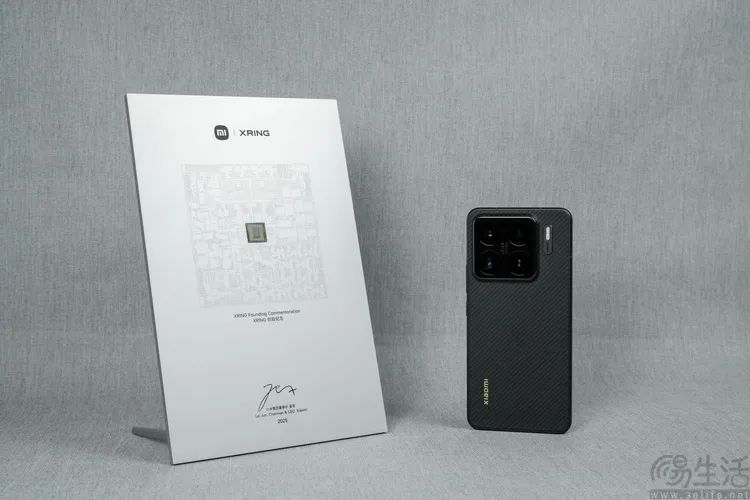
Core Insights - Xiaomi has launched its first self-developed flagship processor, the "Xuanjie O1," with the new Xiaomi 15S Pro smartphone, marking a significant milestone in its technological advancement [5][24][115] - The Xiaomi 15S Pro is positioned as a high-performance device, featuring a starting price lower than its predecessor, the Xiaomi 15 Pro, while still showcasing advancements in domestic supply chain capabilities [3][115] - The device is equipped with a 6100mAh battery and supports 90W wired and 50W wireless fast charging, emphasizing longevity and stability in performance [57][115] Design and Build - The Xiaomi 15S Pro maintains a similar design to the Xiaomi 15 Pro, with slight modifications in thickness and weight, making it a "half-generation update" [9][11] - It features a unique "Dragon Scale Fiber" back cover, distinguishing it from previous models and enhancing its aesthetic appeal [12][16] Display and Audio - The device boasts a 2K "low-power sunlight display" with peak brightness of 3200 nits and is the first to come with an AR anti-reflective film pre-installed [17][19] - It includes high-end audio hardware, featuring dual coaxial speakers, making it potentially the best audio playback device in Xiaomi's lineup [22] Performance - The "Xuanjie O1" processor is built on a 3nm process and features a 10-core CPU, achieving a maximum frequency of 3.9GHz, positioning it as a true flagship product [24][26] - Performance tests indicate that the Xiaomi 15S Pro outperforms many competitors, with benchmark scores exceeding those of devices using other flagship processors [28][30] Gaming and Optimization - The device has been optimized for gaming, achieving high frame rates and low power consumption across various popular titles, demonstrating its capability as a gaming smartphone [41][47] - It maintains performance stability under high load conditions, showcasing effective thermal management [34][53] Battery Life and Charging - The Xiaomi 15S Pro's battery life is impressive, lasting over 21 hours with mixed usage, indicating strong efficiency [65][115] - The charging speed, while stable, reflects a focus on battery longevity rather than maximum speed, aligning with industry trends towards sustainable battery technology [57][64] Camera and Imaging - The camera system includes a third-generation ISP capable of handling high pixel throughput, although it lacks some AI-enhanced features seen in competitors [68][70] - The imaging algorithms prioritize natural color reproduction and noise reduction, with a focus on traditional multi-frame processing techniques [90][114] Conclusion - Overall, the Xiaomi 15S Pro represents a high level of completion and potential for future upgrades, with its self-developed processor and robust features setting a strong foundation for Xiaomi's future in the smartphone market [115][119]

弘则科技-小米新品玄戒O1芯片和yu7汽车怎么看
2025-06-18 00:54
Summary of Xiaomi's Conference Call Industry and Company Overview - The conference call discusses Xiaomi's advancements in technology and product offerings, particularly focusing on self-developed chips and their impact on the high-end smartphone and automotive markets [1][3][5]. Key Points and Arguments 1. **Self-Developed Chips**: Xiaomi has launched its self-developed chips to enhance core technology, improving competitiveness against brands like Apple, Samsung, and Huawei, especially in the high-end smartphone market [1][3]. 2. **Product Performance**: The Xiaomi 15S Pro, equipped with the new chip, has met performance expectations, indicating a successful initial attempt at optimizing hardware performance [5]. 3. **Automotive Expansion**: Xiaomi plans to release a new SUV in 2025, targeting users of high-end brands like Apple and BBA (Benz, BMW, Audi), focusing on aesthetics, performance, and technology [1][9]. 4. **Market Recovery**: Following significant events such as stock market declines and tariff issues, Xiaomi's stock has shown recovery due to better-than-expected financial results, indicating a return to fundamental trends [2]. 5. **Production Capacity**: The first phase of Xiaomi's automotive factory is fully operational, with an expected annual output of 28,000 to 29,000 vehicles. Future phases could increase total capacity to 900,000 to 1,000,000 vehicles [3][10]. 6. **High-End Market Strategy**: Xiaomi's strategy includes a focus on high-end products, with significant growth potential in overseas markets, while domestic competition remains intense [11]. 7. **Long-Term Investment in Technology**: Despite facing potential sanctions, Xiaomi's investment in chip technology is seen as a long-term strategy to overcome technological bottlenecks and enhance product competitiveness [7][8]. 8. **Future Product Launches**: The upcoming SUV is positioned similarly to the previously launched sedan, with a price range of 250,000 to 300,000 yuan, competing primarily with Tesla in the electric vehicle market [9]. Other Important Insights - **Technological Integration**: Xiaomi aims to integrate its self-developed chips across various devices, including wearables and vehicles, to create a seamless smart ecosystem [5][6]. - **Global Competitiveness**: By enhancing its core technology and product offerings, Xiaomi is positioning itself to compete more effectively on a global scale, particularly in the high-end segment [6][11]. - **Market Dynamics**: The automotive market in China is still evolving, presenting both challenges and opportunities for Xiaomi as it seeks to establish itself in this competitive landscape [11].
力源信息(300184) - 300184力源信息投资者关系管理信息20250612
2025-06-12 12:20
Group 1: Company Performance and Products - The company launched a new low-power microcontroller product CW32L011 on May 7, 2025, based on Huahong Semiconductor's 90nm LP eFlash technology, expected to have more models released in the second half of the year [2][4] - The company has consistently performed well, with stock buybacks totaling approximately ¥180 million since 2019, including ¥59.98 million in 2019, ¥69.99 million in 2021, ¥42.08 million in 2022, and ¥8.02 million in 2023 [3] - The company’s stockholders have reduced their holdings, with the last major reduction occurring in December 2019, which is attributed to personal financial needs rather than a lack of confidence in the company’s future [5][8] Group 2: Investor Relations and Confidence - The company aims to enhance long-term investor confidence through stable performance, transparent information disclosure, clear strategic planning, and timely stock buybacks [4] - As of June 10, 2025, the company has approximately 125,000 shareholders [8] - The company is considering potential mergers and acquisitions in the semiconductor sector as opportunities arise [8] Group 3: Competitive Position and Collaborations - The company differentiates itself from competitors like Shenzhen Huaqiang by having distinct upstream product line resources and a broader industry coverage [6] - The company continues to collaborate with Huawei HiSilicon, providing components and promoting related chips and design solutions to its customer base [6][8] - The listing of the company’s associate, Yunhan Xincheng, is expected to enhance the company's asset value [7]

【太平洋科技-每日观点&资讯】(2025-06-12)
远峰电子· 2025-06-11 13:32
Market Performance - The main board led the gains with notable stocks such as Chutianlong (+10.03%), Honghe Technology (+10.00%), and Dianhun Network (+9.99%) [1] - The ChiNext board saw significant increases with stocks like Chengtian Weiye (+17.02%) and Xiongdi Technology (+14.77%) [1] - The Sci-Tech Innovation board was led by Sanfu New Technology (+11.84%) [1] - Active sub-industries included SW Games III (+2.83%) and SW Marketing Agency (+1.91%) [1] Domestic News - Gree's board secretary announced the successful construction of a process platform for SiC SBD and MOS chips, with 30% of self-developed applications in home air conditioning products [1] - Zhilian An completed a multi-hundred million D+ round financing to accelerate the development of satellite communication chips and cellular communication chips [1] - Major Chinese automotive companies have committed to maintaining supplier payment terms not exceeding 60 days, with Beiqi Group announcing the cancellation of commercial acceptance bills [1] - Laofengxiang's AI glasses, targeting the elderly, will be powered by a large model and support various functions such as photography and navigation [1] Company Announcements - Hongli Zhihui announced that its subsidiary obtained two LED-related invention patents [3] - Changdian Technology announced a cash dividend of 0.12 yuan per share, totaling 214.73 million yuan [3] - Jiangsu Cable announced a plan for a major shareholder to reduce holdings by up to 18.8 million shares [3] - Pengding Holdings announced a cash dividend of 10.00 yuan for every 10 shares, totaling approximately 2.32 billion yuan [3] Overseas News - Counterpoint Research reported a 1% decline in global smartphone manufacturing output expected in 2025 due to tariffs and industry slowdown, while a 4% growth is anticipated in 2024 [2] - Mercury Research indicated AMD's server chip shipment share increased to 27.2% in Q1 2025, with revenue share rising to 39.4% [2] - IDC reported a 10.5% year-on-year growth in global wearable device shipments, driven by market recovery and trade impacts [2] - Qualcomm introduced the AR1+ Gen1 chip for AI glasses, reducing size and power consumption compared to its predecessor [2]

雷军,挺住!
Guan Cha Zhe Wang· 2025-06-04 12:18
Core Viewpoint - Xiaomi has made significant strides in self-developed chip technology, showcasing its "玄戒 O1" chip, positioning itself as the fourth global company capable of designing 3nm SoC chips, following Apple, Qualcomm, and MediaTek [1][28]. Group 1: Xiaomi's Development Journey - Xiaomi's journey in chip development has spanned 11 years since the establishment of Pinecone Electronics, contrasting with Huawei's 22-year timeline [1][28]. - The company has leveraged its manufacturing advantages and internet thinking to disrupt high-value markets dominated by Apple and Samsung, creating a "catalyst effect" in the Chinese tech ecosystem [1][12]. - Xiaomi's approach integrates supply chain resources and fosters close partnerships with suppliers, ensuring product quality and stability [12][13]. Group 2: Market Position and Strategy - Xiaomi's strategy emphasizes high cost-performance, targeting young consumers and ordinary families, while Huawei focuses on the mid-to-high-end market with a premium pricing strategy [20][25]. - The competition between Xiaomi and Huawei is not merely adversarial; both companies contribute to a robust consumer electronics ecosystem that drives innovation and product iteration [25][18]. - Xiaomi's expansion into smart home products and other categories reflects its commitment to building a comprehensive smart ecosystem, with over 1 billion connected IoT devices [19][20]. Group 3: Industry Impact and Future Outlook - The collaboration between Xiaomi and Huawei in supporting suppliers like OFILM Group demonstrates their influence and bargaining power within the supply chain [16][18]. - The evolution of the Chinese consumer electronics industry showcases a shift from OEM and imitation to self-branded products, driven by local market demands [18][30]. - The need for more companies like Xiaomi is emphasized, as they play a crucial role in making technological advancements accessible to the general public [30].

全年利润指引、汽车出海、自研汽车芯片.……一文读懂小米投资者日说了什么
Hua Er Jie Jian Wen· 2025-06-04 03:25
Core Viewpoint - Xiaomi's Investor Day revealed optimistic growth projections for 2025, including over 30% revenue growth and over 40% net profit growth year-on-year, supported by multiple business segments [2][3]. Group 1: Financial Performance - Xiaomi expects its 2025 revenue to grow by more than 30% year-on-year, with adjusted net profit anticipated to exceed 40% growth [2]. - The smartphone segment is projected to see an average selling price (ASP) increase of 3-5% and maintain a gross margin of 12-12.5% [2]. - The AIoT business is also expected to grow over 30% year-on-year, with a gross margin expansion of 2.0-2.5 percentage points [2]. Group 2: Electric Vehicle Business - Xiaomi's smart electric vehicle (EV) business is expected to achieve profitability starting in Q3 2025, aligning with Deutsche Bank's previous expectations [3]. - The company anticipates a net loss of 69 million RMB in Q2 2025, followed by net profits of 400 million RMB and 2.63 billion RMB in Q3 and Q4, respectively [3]. - Projected delivery volumes for 2025 are 86,600 units in Q2, 100,000 units in Q3, and 137,500 units in Q4, totaling 400,000 units for the year, surpassing the previous guidance of 350,000 units [3][4]. Group 3: Global Expansion Plans - Xiaomi plans to enter overseas markets for smart electric vehicles starting in 2027, significantly expanding its retail network [5]. - The number of Xiaomi Mi stores is expected to grow from approximately 500 in 2025 to 3,000 in 2026, aiming for a total of 10,000 stores by 2030 [5]. Group 4: Semiconductor Development - Xiaomi is accelerating its self-research in automotive semiconductors, with plans to begin production of automotive semiconductor products soon [6]. - The company has committed to investing 50 billion RMB in chip development over ten years, with 13.5 billion RMB already invested by February 2025 and an expected 6 billion RMB in R&D for 2025 [6][7].
小米集团-W(01810.HK):持续成长 持续创新
Ge Long Hui· 2025-06-04 01:53
Group 1: Financial Performance - In Q1 2025, Xiaomi Group achieved total revenue of 111.3 billion yuan, a year-on-year increase of 47.4%, setting a new historical high [1] - The adjusted net profit for the quarter was 10.7 billion yuan, reflecting a year-on-year growth of 64.5%, also a record high [1] Group 2: Mobile Business - Xiaomi's mobile revenue reached 50.6 billion yuan in Q1 2025, with a gross margin of 12.4% [1] - Global smartphone shipments totaled 41.8 million units, marking a 3% year-on-year increase, with a global market share of 14.1% [1] - In the Chinese market, Xiaomi regained the top position with a market share of 18.8% [1] Group 3: IoT and Home Appliances - Xiaomi's IoT revenue for Q1 2025 was 32.3 billion yuan, with a gross margin of 25.2%, both figures reaching historical highs [2] - The company is focusing on high-end and international strategies for its IoT business, with plans to establish 10,000 Xiaomi Home stores overseas from 2025 to 2029 [2] Group 4: Automotive and AI Innovations - Revenue from Xiaomi's automotive and AI innovation business was 18.6 billion yuan in Q1 2025, with a gross margin of 23.2% [2] - The company launched the luxury high-performance SUV model YU7, equipped with advanced technology, and anticipates strong market performance upon pricing announcement [2] Group 5: AI and Chip Development - Xiaomi officially released its self-developed chip, Xuanjie O1, in May 2025, utilizing second-generation 3nm technology [3] - The chip features a 10-core CPU and a 16-core GPU, and will be used in the Xiaomi 15S Pro smartphone and Pad 7 Ultra tablet [3] Group 6: Future Projections - Revenue projections for Xiaomi from 2025 to 2027 are estimated at 486.7 billion yuan, 634.5 billion yuan, and 764.8 billion yuan, with year-on-year growth rates of 33%, 30%, and 21% respectively [3] - Adjusted net profit for the consumer electronics segment is projected to be 41.9 billion yuan, 52.0 billion yuan, and 61.1 billion yuan for the same period, with growth rates of 25%, 24%, and 18% respectively [3]