存款搬家

Search documents
存款搬家去哪了?
Jing Ji Ri Bao· 2026-01-21 05:32
尽管多家券商机构的统计口径存在差异,但测算结果普遍显示,2026年定期存款到期规模高于2025年。 随着存款利率的持续下行,集中到期的定期存款将搬家去哪里,成为市场近期关注的焦点。 2026年居民定期存款到期规模高于2025年 居民存款的去向除了进入股市外,还有银行理财、保险、基金等多种渠道。 以中金公司最新测算为例,居民定期存款2026年到期规模约75万亿元,其中1年期及以上存款到期约67 万亿元;相比2025年,预计2026年居民全部和1年期以上定期存款到期分别增长12%和17%,同比增加8 万亿元和10万亿元。 存款搬家等于存款入市吗 所谓存款搬家,是居民根据资产回报率的变化,把银行里的储蓄存款转换成其他资产的现象,本质上是 居民资产重新配置的一种表现。而且根据不同市场形势变化,这种资金流动也是双向动态变化的。 南开大学金融学教授田利辉分析,过去居民财富配置基本集中在房地产和银行存款,如今二者的吸引力 都在减弱,资金需要寻找新的出口。而且,随着我国资管产品不断丰富,企业和居民配置理财、基金等 金融资产会更加多元化。 "存款搬家现象对银行理财的发展形成了一定影响,同时也是驱动银行理财行业规模增长的动力之 ...
多家银行和理财公司掀起降费潮
Jing Ji Ri Bao· 2026-01-21 01:08
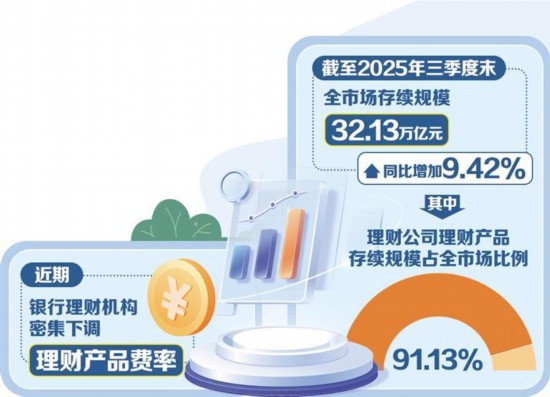
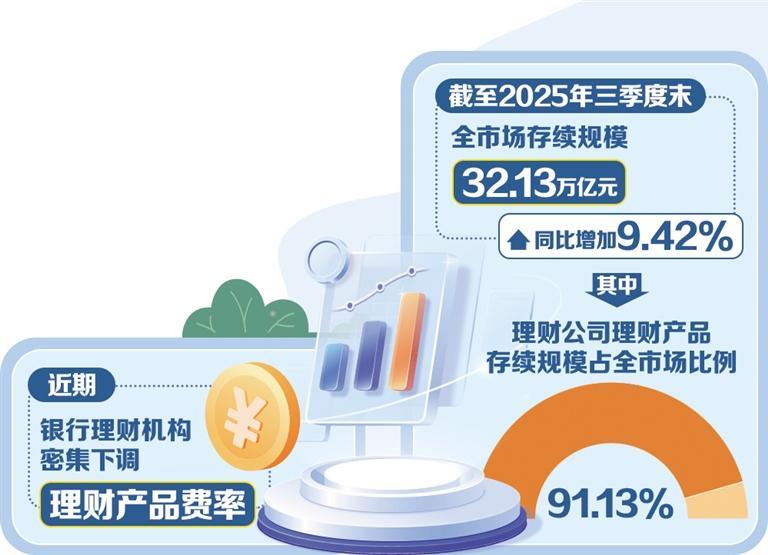
Group 1 - The core viewpoint of the articles highlights a trend among banks and wealth management institutions to lower management and sales fees for financial products to attract investors and increase market share during a competitive low-interest-rate environment [2][3]. - Multiple banks, including Nanyin Wealth Management and Zhongyuan Bank, have announced fee reductions for their financial products, indicating a phase of competitive pricing strategies aimed at retaining and attracting funds amid a "deposit migration" trend [2][3]. - The reduction in fees is seen as a response to the overall downward pressure on the yield of financial products, reflecting a shift in the wealth management market from rapid growth to a focus on maintaining or expanding market positions through pricing strategies [2][3]. Group 2 - As of Q3 2025, the total number of financial products in the market reached 43,900, with a total scale of 32.13 trillion yuan, marking a year-on-year increase of 10.01% and 9.42% respectively [3]. - Experts suggest that fee reductions should be targeted rather than uniform, focusing on specific customer segments or time periods to enhance effectiveness [3]. - The industry is advised to move beyond simple price competition by developing core competencies that exceed pricing, such as improving investment research capabilities and creating differentiated products that meet diverse investor needs [3].

50万亿定存到期潮来袭,分红险争当“存款搬家”热选 ?
Nan Fang Du Shi Bao· 2026-01-21 00:04
Core Viewpoint - The article discusses the impending maturity of a significant amount of fixed-term deposits in China, estimated to reach around 50 trillion yuan by early 2026, and the potential shift of these funds towards insurance products, particularly dividend insurance, as a stable investment option amid declining interest rates [2][3][4]. Group 1: Deposit Maturity and Market Impact - A substantial amount of fixed-term deposits, estimated at 50 trillion yuan, will mature by early 2026, with state-owned banks holding the largest share [3]. - The surge in savings began in 2020 due to weak performance in stock and real estate markets, leading to a high demand for fixed-term deposits with attractive interest rates [3][4]. - The current interest rates for short-term large deposits have dropped below 1%, marking a significant decline from the previous rates above 3% in 2023 [2]. Group 2: Shift to Insurance Products - The demand for "wealth migration" has increased, with dividend insurance products becoming a primary choice for residents seeking stable returns [2][4]. - Insurance products are seen as capable of meeting the dual goals of risk management and wealth growth, especially in the context of long-term savings and retirement planning [4][8]. - The insurance industry is expected to adapt by offering better products and services to capture this flow of funds, supporting both the economy and national strategies [3][4]. Group 3: Growth of Bancassurance - Bancassurance is experiencing a resurgence, with new premium income from this channel surpassing individual insurance sales, indicating a strong recovery in the insurance market [5]. - The first half of 2025 saw significant growth in bancassurance premiums, with a year-on-year increase of 10% in the life insurance sector [5]. - The natural advantages of banks, such as stable customer flow and targeted marketing, are driving the growth of bancassurance [5][6]. Group 4: Dividend Insurance as a Key Product - Dividend insurance is highlighted as a core product in the insurance sector, offering guaranteed returns combined with floating dividends, making it attractive during a declining interest rate environment [7]. - The expected yield for dividend insurance products is between 2.5% and 2.9%, appealing to consumers looking for stable returns [7]. - The insurance sector is increasingly viewed as a vital channel for wealth management and risk protection, especially in light of demographic changes and economic conditions [8].

低利率环境下理财行业竞争加剧——多家银行和理财公司掀起降费潮
Xin Hua Wang· 2026-01-20 23:40
新年伊始,银行理财机构密集下调理财产品费率。南银理财近日发布公告,下调旗下悦稳系列产品固定 管理费与销售费率。与此同时,中原银行也公告调整旗下3款理财产品费率。苏商银行特约研究员薛洪言介 绍,多家银行和理财公司掀起阶段性降费潮,通过主动调降产品的相关费率,让利于投资者,旨在关键时间 窗口提升产品的吸引力,以吸引资金流入并扩大市场份额。 在现阶段银行"存款搬家"的背景下,费率下调正成为承接储蓄资金的重要抓手。业内专家指出,理财公 司下调理财产品费率,是低利率环境下行业竞争加剧,为了吸引客户投资承接"存款搬家"资金,以及冲刺"开 门红"业绩的综合体现。 银行理财公司密集降费动作,背后是多重因素的共同驱动。薛洪言认为,直接原因是为了在年初资金充 裕的时期,积极争取投资者进行资产再配置的资金。更深层次看,这是在理财产品整体收益率面临下行压力 的环境中,机构为维持产品相对竞争力而采取的一种策略。同时,这也反映了理财市场从高速增长进入更加 注重存量竞争的阶段,机构通过价格手段来稳固或拓展自身市场地位。 需求的差异化产品;更为长远的是,应建立以客户为中心的服务体系,通过提供专业的资产配置建议和全流 程陪伴,提升客户信任与黏 ...
50万亿存款大迁徙 谁将承接“泼天富贵”
Nan Fang Du Shi Bao· 2026-01-20 23:11
Core Insights - A significant amount of fixed deposits, estimated at 50 trillion yuan, is set to mature this year, prompting discussions on where these funds will be allocated in a low-interest-rate environment [3][8][10] Group 1: Deposit Maturity Trends - Multiple brokerages estimate that the total amount of fixed deposits maturing this year will reach tens of trillions of yuan, with projections varying among institutions [8][9] - Guotai Junan Securities estimates that 38% of the total deposits at the six major state-owned banks will mature within the next year, with a significant portion concentrated at the end of 2025 and early 2026 [8] - CITIC Securities predicts that the scale of fixed deposits maturing in 2026 could reach 45 trillion yuan, with over 35 trillion yuan being from three-year products initiated in 2023 [9] Group 2: Investment Preferences - As depositors face declining interest rates, there is a noticeable shift towards alternative investment options, including funds and insurance products [10][11] - The demand for insurance products, particularly dividend insurance, is expected to increase due to their stable return characteristics, which are becoming scarce in the current market [10] - The report suggests that the funds released from maturing deposits will likely flow into investment areas, with a preference for stable and low-risk products in the short term [10][11] Group 3: Individual Investor Behavior - Individual investors exhibit varied responses to maturing deposits, with some opting to reinvest in fixed deposits for security, while others are exploring more aggressive investment strategies [4][5][6] - Investors like Mr. Wang are transitioning from fixed deposits to funds and securities, driven by the desire for higher returns, despite experiencing anxiety over market fluctuations [4][6] - Conversely, conservative investors like Mr. Yu prefer to maintain their funds in fixed deposits, valuing simplicity and security over potential higher returns [5][6]


50万亿存款到期是“笼中虎”?
Sou Hu Cai Jing· 2026-01-20 14:09
Core Viewpoint - The upcoming maturity of over 50 trillion yuan in residential time deposits in 2026 is raising concerns and speculation about potential shifts in wealth allocation and its impact on the stock market [3][4]. Group 1: Scale of Maturing Deposits - The total scale of maturing time deposits in 2026 is estimated to be around 50 trillion yuan, with various estimates suggesting figures between 59 trillion and 75 trillion yuan [5][6]. - The high volume of maturing deposits is attributed to a significant increase in precautionary savings during 2022-2023, driven by weak performance in the stock and real estate markets [4][5]. - The current low interest rate environment, with one-year deposit rates falling below 1%, is prompting residents to consider reallocating their deposits [5][6]. Group 2: Wealth Reallocation and Market Impact - The concept of "deposit migration" has gained traction, with analysts suggesting that the large volume of maturing deposits could lead to significant liquidity impacts across asset markets [6][9]. - However, historical context indicates that large-scale withdrawals have not occurred in the past, as residents tend to prioritize safety and stability in their savings [8][9]. - Most residents are expected to keep their deposits within the banking system, with a retention rate historically around 90% [9]. Group 3: Potential Directions for Reallocated Funds - The primary destinations for reallocated funds are expected to be consumption, housing purchases, and loan repayments, with consumption accounting for approximately 68% of disposable income [9][10]. - Other potential allocations include low-risk financial products such as bank wealth management, insurance, and mutual funds, with a small percentage directed towards the stock market [9][10]. - Analysts suggest that while direct investment in the stock market may be limited, indirect investments through mutual funds and other financial instruments could increase [15][16]. Group 4: Future Asset Allocation Strategies - The low interest rate environment is likely to drive a shift from long-term deposits to more flexible financial products, reflecting a need for liquidity and better returns [11][15]. - Residents are encouraged to adopt a diversified asset allocation strategy, balancing between stable core assets and growth-oriented satellite assets [15][16]. - The transition towards a more diversified investment approach is seen as a gradual process, with a focus on risk management and long-term perspectives [15][16].

流动性周报1月第2期:ETF资金由宽基切行业主题-20260120
Guohai Securities· 2026-01-20 13:35
Group 1 - The overall macro liquidity environment is balanced and slightly loose, with the central bank conducting a net release of 812.8 billion yuan through 7-day reverse repos and a total net injection of 1.7128 trillion yuan during the week [1][8] - The stock market's funding supply is primarily characterized by outflows from broad-based ETFs, while equity fund issuance is on the rise, and the financing balance continues to hit historical highs [2][10] - The net outflow from stock ETFs reached 141.643 billion yuan, with significant inflows into the Sci-Tech 100 and Shanghai Composite Index, while the CSI 300 and Sci-Tech 50 experienced notable outflows [11][17] Group 2 - The stock market's funding demand shows a differentiated pressure structure, with equity financing rebounding to 111.342 billion yuan, while the scale of locked-up shares being released decreased to 52.42 billion yuan [3][19] - The number of newly established active equity funds increased, with a total issuance of 4.597 billion units, reflecting a recovery compared to the previous week [10][12] - The net reduction in industrial capital increased to 20.449 billion yuan, with significant reductions observed in the electronics, communication, and basic chemical industries [21][28]
专访大摩徐然:全面降息弊大于利,2026年中国金融体系将逐步回归正循环
第一财经· 2026-01-20 13:16
Core Viewpoint - The article emphasizes that comprehensive interest rate cuts are more harmful than beneficial and should not be seen as a panacea for stimulating the economy [2][4]. Monetary Policy and Structural Adjustments - On January 15, the People's Bank of China announced a policy package with eight measures focused on structural monetary policy tools, including interest rate cuts and increased quotas to support key areas like private small and micro enterprises and technological innovation [2][3]. - Xu Ran believes that the implementation of structural interest rate cuts indicates that broad monetary policy will not arrive soon, as financial products rely on layered interest rate risks, and lowering rates will not stimulate consumption and credit [2][4]. Credit Market Dynamics - By the end of 2025, the total social financing stock is projected to reach 442.12 trillion yuan, with a year-on-year growth of 8.3%, and over 50% of new financing will come from non-loan sources like bonds [7]. - Xu Ran points out that the key to driving credit demand lies in addressing existing stock issues rather than merely pursuing incremental growth, indicating a shift towards higher quality credit [7]. Deposit Trends - In 2025, non-bank financial institutions' RMB deposits increased by 6.41 trillion yuan, a significant rise of 147% year-on-year, while household deposits grew by 14.64 trillion yuan, only 3% more than the previous year [8]. - Xu Ran argues that the notion of "deposit migration" is inaccurate, as the overall deposit growth rate remains high at 8.7%, reflecting a diversification in residents' financial asset allocation rather than a reduction in deposits [8]. Future Outlook for Financial Sector - Xu Ran anticipates that by 2026, the financial system will gradually return to a positive cycle, supported by multiple favorable factors, including adjustments in interest rate pricing mechanisms and a rebound in net interest margins [9][10]. - The banking sector's net interest margin is expected to stabilize and begin to rebound in the second half of 2026, contributing to a substantial increase in bank revenues [11].

专访大摩徐然:全面降息弊大于利,2026年中国金融体系将逐步回归正循环
Di Yi Cai Jing· 2026-01-20 10:17
Core Viewpoint - The comprehensive interest rate cut is deemed more harmful than beneficial and should not be viewed as a panacea for stimulating the economy [1][3] Monetary Policy - On January 15, the People's Bank of China announced a policy package with eight measures, focusing on structural monetary policy tools to support key areas such as private small and micro enterprises and technological innovation [1] - A structural interest rate cut indicates that a broad monetary policy is unlikely to arrive soon [1][3] Credit Market Dynamics - The current economic pain points are structural imbalances rather than insufficient total demand, and targeted support for key areas is necessary for effective empowerment [3] - By the end of 2025, the social financing scale is projected to reach 442.12 trillion yuan, with a year-on-year growth of 8.3% [8] - The growth of medium- and long-term loans in manufacturing and infrastructure sectors is expected to be 6.6% and 6.9%, respectively, while the service sector (excluding real estate) is projected to grow by 9.4% [8] Financial Asset Yield - The further decline in financial asset yields may lead to various adverse consequences, including reduced risk appetite among banks and lower credit availability [3] - The practice of zero interest rates in other countries has shown that excessively low rates can hinder market competition and become a short-term fix [3] Deposit Trends - In 2025, non-bank financial institutions' deposits increased by 6.41 trillion yuan, a significant rise of 147% compared to the previous year, while household deposits increased by 14.64 trillion yuan, only 3% more than the previous year [9] - The notion of "deposit migration" is deemed inaccurate; the increase in non-bank deposits reflects a diversification in residents' financial asset allocation rather than a reduction in total deposits [9] Future Outlook - By 2026, the financial system is expected to gradually return to a positive cycle, supported by the resolution of historical risks and continuous optimization of credit structure [10] - The banking sector's net interest margin is anticipated to stabilize and rebound in the second half of 2026, contributing to a substantial increase in bank revenues [12] - The macroeconomic environment is expected to remain stable or slightly improve, providing a favorable backdrop for the development of the financial industry [11]

国盛宏观熊园:“天量”居民存款到期,影响几何?
Xin Lang Cai Jing· 2026-01-20 08:35
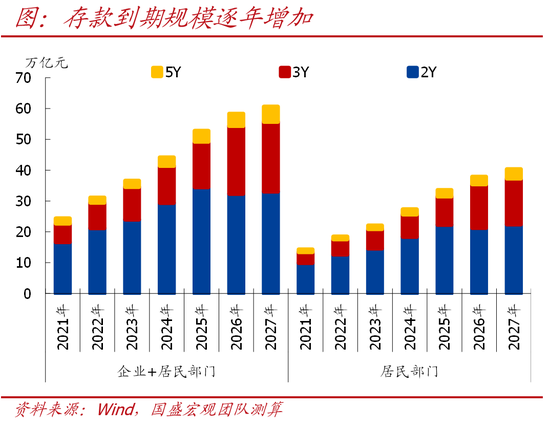
Core Viewpoint - The gradual reduction of deposit rates is leading to a significant maturity of time deposits accumulated by households and enterprises, with a notable increase in the scale of maturing deposits expected in 2026, which will impact asset pricing significantly [1][20]. Group 1: Scale - The estimated scale of maturing medium- and long-term deposits for households and enterprises in 2026 is projected to reach 58.3 trillion, an increase of 5.6 trillion compared to 2025, with household deposits alone expected to reach 37.9 trillion, marking a 4.3 trillion increase and the highest level in five years [9][24]. - The proportion of time deposits in the total deposits of households and enterprises has increased from 65% in 2021 to 73% in 2024, indicating a clear trend towards longer deposit durations [22][30]. Group 2: Timing - The majority of maturing time deposits in 2026 will occur in the first quarter, accounting for 54% of the total, with over 60% of household time deposits maturing in this period [20][31]. - The estimated quarterly distribution of maturing deposits shows that 60.7% of household deposits will mature in the first quarter, highlighting a concentrated timing effect [30][31]. Group 3: Impact - The repricing of maturing time deposits is expected to alleviate pressure on bank interest margins, potentially reducing banks' liability costs by approximately 550 billion and lowering interest rates by 31 basis points [2][31]. - However, the reallocation of maturing deposits may disrupt the stability of bank liabilities, necessitating close monitoring of the restructuring of deposits [15][31]. Group 4: Asset Allocation - The large-scale maturity of household deposits in 2026 is anticipated to bring incremental funds to the equity market, positively impacting stock prices, particularly given the concentration of maturing deposits in the first quarter, which may lead to an unexpected "spring rally" in the market [16][32]. - The actual impact on the bond market remains to be observed, with potential changes in purchasing power and yield spreads depending on the reallocation of funds from deposits [17][33].