自动驾驶

Search documents
如祺出行(09680):三角协同构筑商业闭环,开放平台加速L4落地
Soochow Securities· 2026-03-15 13:44
Investment Rating - The report assigns a "Buy" rating for the company, marking its first coverage [1]. Core Insights - The company is positioned as a leading mobile travel platform in the Guangdong-Hong Kong-Macao Greater Bay Area, accelerating the large-scale commercialization of Robotaxi services [15]. - The company benefits from a strong shareholder structure, including GAC Group and Tencent, which creates a synergistic ecosystem combining vehicle manufacturing, internet traffic, and intelligent driving technology [19]. - The revenue growth is driven by the expansion of ride-hailing services and the commercialization of Robotaxi, with projected revenues of 53 billion, 105 billion, and 158 billion yuan for 2025, 2026, and 2027 respectively [9]. Summary by Sections 1. Business Model and Market Position - The company has established a mixed operation model that integrates human-driven and Robotaxi services, becoming the first in the world to commercialize this hybrid operation [16]. - The company has a robust operational network with over 300 Robotaxi vehicles and more than 10,000 operational stations, aiming to expand its infrastructure to cover 100 cities [16][15]. 2. Financial Performance - The company's revenue is expected to grow from 2.16 billion yuan in 2023 to 15.8 billion yuan in 2027, with a compound annual growth rate (CAGR) of 50.74% [1]. - The net profit is projected to improve from a loss of 692.79 million yuan in 2023 to a profit of 20.42 million yuan in 2027, indicating a significant turnaround [1]. 3. Market Trends and Opportunities - The report highlights the shift in the ride-hailing market from rapid growth to a more regulated and efficient model, with Robotaxi expected to be a core growth driver [9]. - The overall ride-hailing market in China is projected to reach 850.79 billion yuan by 2030, with a compound annual growth rate of 19.1% from 2025 to 2030 [34]. 4. Competitive Landscape - The company is positioned well against competitors due to its unique shareholder structure and operational model, which allows it to leverage resources from GAC Group and Tencent effectively [19]. - The report notes that the ride-hailing market is becoming increasingly competitive, with a significant share held by major players like Didi, but also highlights opportunities for second-tier platforms [34][43].


如祺出行:三角协同构筑商业闭环,开放平台加速L4落地-20260315
Soochow Securities· 2026-03-15 12:34
Investment Rating - The report assigns a "Buy" rating for the company, marking its first coverage [1]. Core Insights - The company is positioned as a leader in the Greater Bay Area's mobility market and is accelerating the large-scale commercialization of Robotaxi services. It leverages strong partnerships with major stakeholders like GAC Group and Tencent to enhance its operational capabilities and market reach [15][19]. - The company has shown significant revenue growth, with projections indicating a rise from 2.16 billion CNY in 2023 to 15.8 billion CNY by 2027, reflecting a compound annual growth rate (CAGR) of 50.74% [1][25]. - The report highlights the company's strategic shift towards an open Robotaxi operating platform, integrating various autonomous driving technologies and expanding its service offerings across multiple sectors [9][16]. Summary by Sections 1. Company Overview - The company was established in 2019 and has rapidly developed into a leading mobility platform in the Greater Bay Area, focusing on the commercialization of Robotaxi services [15]. - It has formed a strong collaborative ecosystem with GAC Group and Tencent, enhancing its operational efficiency and market penetration [19][22]. 2. Financial Performance - Revenue is expected to grow significantly, with a forecast of 5.32 billion CNY in 2025 and 10.48 billion CNY in 2026, driven by the expansion of its ride-hailing and Robotaxi services [1][25]. - The company is on track to improve its gross margin from -24.2% in 2021 to a positive margin in 2025, indicating enhanced operational efficiency [25][31]. 3. Market Dynamics - The report anticipates the Chinese ride-hailing market to reach 850.79 billion CNY by 2030, with a projected annual growth rate of 19.1% from 2025 to 2030 [34][38]. - The market is evolving towards a more diversified structure, with the emergence of Robotaxi services expected to drive significant growth and reshape competitive dynamics [9][34]. 4. Strategic Initiatives - The company has launched the "Robotaxi+" strategy, focusing on integrating various autonomous driving technologies and expanding its operational capabilities through partnerships [9][16]. - It aims to build a comprehensive operational infrastructure network to support the large-scale deployment of Robotaxi services across 100 key cities [16][19].
“美版台积电”要来了?马斯克称7天内启动
华尔街见闻· 2026-03-15 10:37
Core Viewpoint - Tesla is taking a significant step towards self-controlling its AI chip supply chain with the upcoming launch of its AI chip wafer factory project, codenamed "Terafab," which is expected to start within seven days. This move is crucial for its autonomous driving strategy and reflects the company's shift from chip design to in-house production [4][5]. Group 1: Project Overview - The Terafab project signifies Tesla's response to the limitations of external suppliers' chip production capacity, which CEO Elon Musk has previously highlighted as insufficient to meet the company's needs [8]. - The project aims to support the mass production of Tesla's fifth-generation AI chip (AI5), which is essential for the company's full self-driving (FSD) software and autonomous driving systems [10]. - The establishment of Terafab will enable Tesla to achieve vertical integration in AI chip production, aligning with its established strategies in battery and vehicle manufacturing [10]. Group 2: Market Implications - The shift towards in-house chip production indicates that Tesla's capital expenditures will increasingly focus on hardware infrastructure, potentially reshaping the competitive landscape of the AI chip foundry market [5]. - The construction of a wafer factory typically involves hundreds of billions in capital expenditure, a multi-year construction timeline, and complex supply chain considerations, raising questions about Tesla's ability to support this ambitious plan without diluting investments in its existing electric vehicle and energy storage businesses [10]. - The market is keenly awaiting further details regarding the project's scale, location, and investment amount, which have not yet been disclosed [6].



滴滴出行:25Q4财报点评:中国出行增速及利润保持稳健,巴西外卖业务加大投入
CMS· 2026-03-15 07:57
Investment Rating - The report maintains a "Strong Buy" rating for Didi Chuxing, indicating a positive outlook on the company's stock performance [1][3]. Core Insights - Didi Chuxing reported a revenue of 58.4 billion yuan for Q4 2025, representing a year-on-year increase of 10.5%, while adjusted net profit decreased by 6% to 530 million yuan [1]. - The company's domestic ride-hailing business showed stable growth, with a Gross Transaction Value (GTV) of 87.2 billion yuan in Q4 2025, up 11.2% year-on-year, and a projected EBITA margin improvement from 3.7% in 2025 to 4.2% in 2026 [1][3]. - Internationally, Didi's food delivery business in Brazil is expected to incur larger losses in 2026, although quarterly losses are anticipated to improve [1][3]. - The report highlights the potential for long-term profit growth in Didi's ride-sharing market, supported by operational efficiencies and reduced user subsidies [1][3]. Financial Performance Summary - For the fiscal year 2024, the main revenue is projected at 206.8 billion yuan, with a year-on-year growth of 7% [2]. - Adjusted net profit is expected to rise significantly by 804% in 2024, reaching 5.6 billion yuan, before declining in subsequent years [2]. - The earnings per share (EPS) is forecasted to be 0.26 yuan in 2024, decreasing to 0.05 yuan in 2026, before rebounding to 5.52 yuan by 2028 [2][8]. - The company's total assets are projected to grow from 143.9 billion yuan in 2024 to 205.5 billion yuan by 2028 [4]. Market and Operational Insights - Didi's international business GTV reached 36.59 billion yuan in Q4 2025, marking a 47.1% increase year-on-year, with a significant rise in order volume [3]. - The report notes that Didi's other business segments experienced a revenue decline of 7.9% year-on-year, with an adjusted EBITA loss of 1.29 billion yuan [3]. - The company has initiated a share buyback program, reflecting confidence in its operational performance, with a total of 3.436 billion yuan repurchased between November 2025 and February 2026 [3].
任泽平带你看前沿科技:2026研学计划
泽平宏观· 2026-03-14 16:04
Core Viewpoint - The article emphasizes the importance of practical learning experiences in cutting-edge technology sectors, highlighting the value of direct engagement with leading companies and experts in the field [12][24]. Schedule Overview - The schedule for 2025 includes visits to major technology companies such as Huawei, BYD, Tencent, and more, focusing on sectors like artificial intelligence, new energy, and biotechnology [23][24]. - Specific events are planned, including closed-door research meetings and thematic explorations in various cities, showcasing the commitment to in-depth industry insights [8][9][10]. Learning Experience - Participants will engage in deep explorations of technology companies, gaining insights into the full chain of technology development from laboratory to industrialization [12]. - The program aims to empower entrepreneurs by focusing on three dimensions: cutting-edge technology trends, emerging industry ecosystems, and business model exploration [12]. Participant Feedback - Feedback from participants highlights the transformative impact of the program, noting improvements in business insights and strategic thinking through direct interactions with industry leaders [46][47]. - Participants express appreciation for the practical approach to learning, which combines theoretical knowledge with real-world applications in leading companies [44][46].

奇瑞增程SUV iCAR V27上市, 搭载地平线HSD全场景辅助驾驶系统;蘑菇车联“琴澳医线”自动驾驶巴士正式开启运营丨汽车交通日报
创业邦· 2026-03-14 10:25
Group 1 - Honda is expected to pay up to 1.06 billion USD (1.7 trillion JPY) to suppliers due to the abandonment of three electric vehicle projects, part of a reassessment of its electric vehicle strategy, which could lead to losses of 2.5 trillion JPY [2] - The "Qin-Ao Medical Line" autonomous bus service has officially launched in the Hengqin Guangdong-Macao Deep Cooperation Zone, marking the first autonomous micro-circulation route in China for cross-border medical services, supported by MOGOX and autonoma [2] - Chery's new energy brand iCAR has launched its flagship model, the iCAR V27, with a price range of 169,800 to 196,800 CNY, featuring a range of over 1200 km and equipped with the Horizon HSD full-scene assisted driving system [2]

2025年,滴滴的稳与快
3 6 Ke· 2026-03-14 09:36
Core Insights - Didi's Q4 and full-year 2025 financial report highlights significant growth in both domestic and international markets, showcasing the company's evolution into a global mobility and lifestyle service platform [2][22]. Domestic Business Performance - In the past year, Didi's core platform order volume reached 18.24 billion, a year-on-year increase of 14%, with a peak daily order volume exceeding 65 million [2]. - In Q4, Didi's domestic ride-hailing order volume grew by 10.1% year-on-year to 3.578 billion, with an annual growth of 10.8% to 13.735 billion [6]. - The Gross Transaction Value (GTV) for domestic ride-hailing in Q4 increased by 11.2% year-on-year to 87.2 billion, with an annual GTV growth of 10.7% to 333.8 billion [7]. - Didi's Adjusted EBITA for domestic ride-hailing in Q4 was 2.618 billion, maintaining a stable profit margin of 3% [9]. International Business Expansion - Didi's international business saw a remarkable order volume growth of 24.5% year-on-year in Q4, reaching 1.265 billion, with an annual growth of 24.7% to 4.505 billion [11]. - The GTV for international operations in Q4 surged by 47.1% year-on-year to 36.6 billion, with an annual GTV growth of 28.2% to 117 billion [11]. - Didi has established a significant presence in Brazil and Mexico, with 55 million active users in Brazil and over 30 million in Mexico, expanding its services to over 3,300 towns in Brazil [12][14]. Future Growth and Technological Advancements - Didi is investing in autonomous driving and AI technologies, preparing for the potential widespread adoption of Robotaxi services by 2026 [16]. - The company has secured significant funding for its autonomous driving division, indicating a commitment to technological advancement [19]. - Didi is also exploring AI integration into its services, enhancing user experience through personalized travel assistance [21]. Conclusion - Didi's consistent double-digit growth in domestic order volume over 12 consecutive quarters and its rapid international expansion reflect its robust business model and adaptability [22][23]. - The company is positioned to continue evolving as a global service platform, integrating mobility and lifestyle services while leveraging technological innovations [22].

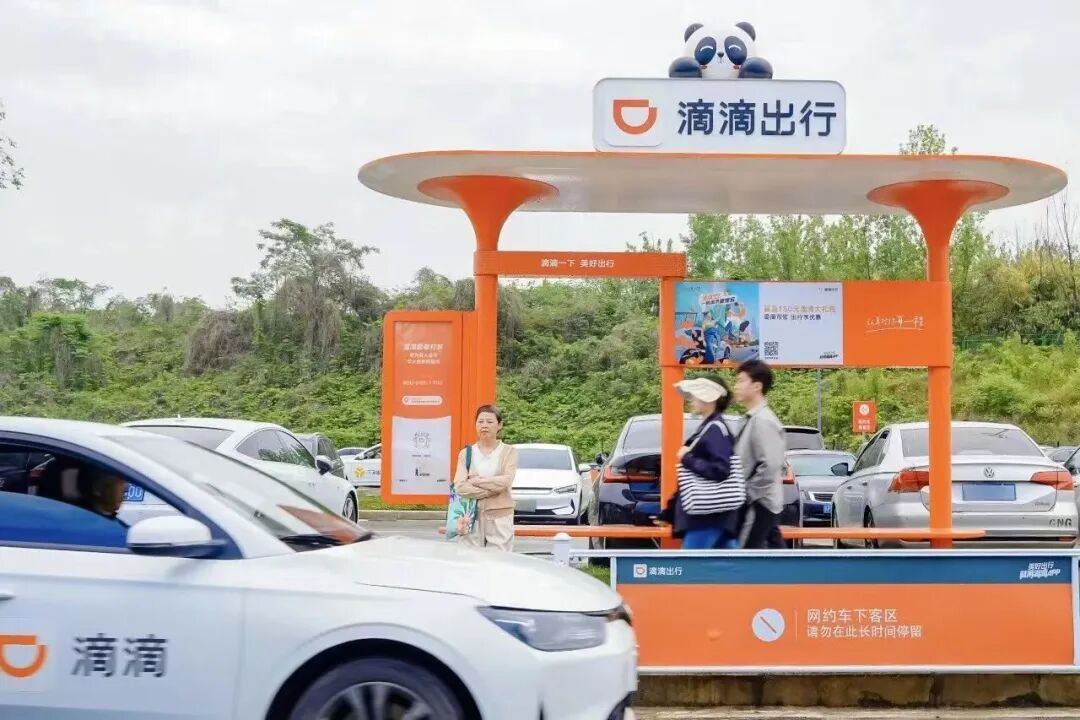
滴滴国际出行业务连续两年盈利
2 1 Shi Ji Jing Ji Bao Dao· 2026-03-13 14:31
Core Insights - Didi's Q4 2025 performance shows steady growth, with core platform order volume increasing by 13.5% year-on-year to 4.844 billion orders, and a peak daily order volume exceeding 65 million [1] - The total transaction value (GTV) for the core platform in Q4 rose by 19.9% year-on-year to 123.8 billion yuan, while the annual GTV reached 450.8 billion yuan, marking a 14.8% increase [1] - Didi's CEO highlighted the strong performance in both domestic and international markets, with a focus on strategic investments in overseas new businesses [1] Domestic Business Performance - In Q4 2025, Didi's domestic ride-hailing orders grew by 10.1% year-on-year to 3.578 billion, with an average daily order volume of 38.9 million [2] - The GTV for domestic services in Q4 increased by 11.2% year-on-year to 87.2 billion yuan, while the annual GTV reached 333.8 billion yuan, up 10.7% [2] - Didi has been diversifying its service offerings to meet personalized user demands, introducing various products and features to enhance user experience [2] User Engagement and Membership - Didi's core membership count increased by over 15% year-on-year in Q4, with more than 20 membership benefits launched, including partnerships with major brands [3] - The company is enhancing user experience through improved technology and service facilities across 165 cities, including major transportation hubs [3] International Business Growth - Didi's international business saw a 24.5% year-on-year increase in Q4 order volume, reaching 1.265 billion orders, with an annual growth of 24.7% to 4.505 billion orders [4] - The GTV for international operations surged by 47.1% in Q4 to 36.6 billion yuan, with a yearly increase of 28.2% to 117 billion yuan [4] - Didi's international services are now available in 14 countries and regions, serving over 100 million users [4] Expansion in Brazil - Didi's food delivery service in Brazil has expanded to over 60 cities, with plans to reach 100 cities by mid-2026 [5] - The company is also advancing its autonomous driving technology, with new Robotaxi models entering production and ongoing road tests [5]
国内稳底盘,海外拓增量,滴滴交出一份稳健答卷
Feng Huang Wang Cai Jing· 2026-03-13 14:19
Core Insights - Didi's Q4 2025 financial report shows a 13.5% year-on-year increase in core platform order volume, reaching 4.844 billion orders, with a peak daily order volume exceeding 65 million [1] - The total transaction value (GTV) for Q4 2025 increased by 19.9% year-on-year to 123.8 billion yuan, while the annual GTV for 2025 grew by 14.8% to 450.8 billion yuan [1] Domestic Business Performance - In Q4 2025, Didi's domestic ride-hailing orders grew by 10.1% year-on-year to 3.578 billion, with an average daily order volume of 38.9 million [2] - The annual order volume for domestic ride-hailing increased by 10.8% to 13.735 billion [2] - Didi's domestic GTV for Q4 rose by 11.2% to 87.2 billion yuan, with a 10.7% increase for the full year to 333.8 billion yuan [2] - The company attributes its growth to enhanced efficiency and a focus on user needs, driver income, and user retention [2][3] International Business Expansion - Didi's international business saw a 24.5% year-on-year increase in Q4 orders, totaling 1.265 billion, with GTV rising by 47.1% to 36.6 billion yuan [4] - For the full year 2025, international orders reached 4.505 billion, up 24.7%, with a compound annual growth rate of 32% over three years [4] - Didi's strategy includes significant investments in new overseas markets, focusing on delivery services, user acquisition, and local fulfillment capabilities [4][5] Unique Approach to International Markets - Didi's international strategy emphasizes local adaptation rather than direct replication of domestic models, focusing on technology and system output [5][6] - The company has successfully integrated its safety capabilities into local markets, as seen in Brazil, where it has become a leading ride-hailing platform [6] - Didi's international operations now cover 14 countries and regions, with over 100 million global users, moving towards a comprehensive local life app ecosystem [7] Investment in Autonomous Driving - Didi is strategically investing in autonomous driving technology, maintaining a low-profile yet focused approach [8][9] - The company has initiated all-weather, fully unmanned passenger testing in select areas, marking a significant advancement in its autonomous driving capabilities [9][10] - Didi plans to increase investment in autonomous driving research and operations, aiming to promote its technology globally [10] Conclusion - Didi's domestic market remains robust with steady growth in orders and users, while its international business is in a phase of investment and expansion, showing long-term potential [11] - The ongoing investment in autonomous driving provides a broad space for future development amid the AI wave [11]
国内稳底盘,海外拓增量,滴滴交出一份稳健答卷
凤凰网财经· 2026-03-13 14:08
Core Insights - Didi's Q4 2025 financial report shows a 13.5% year-on-year increase in core platform order volume, reaching 4.844 billion orders, with a peak daily order volume exceeding 65 million [1] - The total transaction value (GTV) for Q4 2025 increased by 19.9% year-on-year to 123.8 billion yuan, while the annual GTV reached 450.8 billion yuan, marking a 14.8% increase [1] - Didi's growth strategy focuses on deepening domestic operations while gradually expanding internationally, showcasing a clear development trajectory [1] Domestic Business Performance - In Q4 2025, Didi's domestic ride-hailing orders grew by 10.1% year-on-year to 3.578 billion, with an average daily order volume of 38.9 million [3] - The annual order volume for domestic ride-hailing reached 13.735 billion, reflecting a 10.8% year-on-year growth [3] - The GTV for domestic ride-hailing in Q4 increased by 11.2% to 87.2 billion yuan, with an annual GTV growth of 10.7% to 333.8 billion yuan [3] Growth Drivers - Didi's ability to achieve 10% year-on-year growth in a mature market is attributed to efficiency improvements and a focus on user needs, driver income, and user retention [5] - The company has diversified its service offerings, including options for group rides, pet transportation, and women-friendly services, enhancing user experience and driver earnings [5] - Didi's core membership has increased by over 15% year-on-year, with more than 20 member benefits launched, creating a comprehensive membership ecosystem [7] International Expansion - Didi's international business saw a 24.5% year-on-year increase in Q4 2025 order volume, totaling 1.265 billion orders, with a GTV growth of 47.1% to 36.6 billion yuan [8] - The annual international order volume reached 4.505 billion, reflecting a 24.7% year-on-year growth, with a three-year compound growth rate of 32% [8] - Didi's international strategy emphasizes technology export and deep localization, adapting to local markets rather than simply replicating the domestic model [9][12] Autonomous Driving Initiatives - Didi is strategically investing in autonomous driving, viewing it as a long-term growth area, with ongoing testing and development of Robotaxi services [17][20] - The company has partnered with GAC Aion to produce a new generation of Robotaxi vehicles and established a research lab with Tsinghua University to enhance AI applications in autonomous driving [22] - Didi's autonomous driving division is also developing capabilities for long-haul logistics, demonstrating a commitment to integrating advanced technology into its service offerings [22] Conclusion - Didi's domestic market remains robust with steady growth in orders and memberships, providing a solid foundation for future development [23] - The international business is in a phase of investment and expansion, with long-term growth potential becoming increasingly evident [23] - Continuous investment in autonomous driving positions Didi to leverage AI advancements, ensuring a broad scope for future growth [23][25]