高端制造

Search documents
多空激战!指数巨震背后,资金正疯狂抢筹这些方向?
Sou Hu Cai Jing· 2026-01-21 00:45
Market Overview - The A-share market continues to show a volatile trend, with funds shifting from large-cap blue chips to small and mid-cap growth stocks [1][2] - The market experienced a collective decline in the three major indices, with the ChiNext Index dropping over 2% at one point [1][2] - The total trading volume in the Shanghai and Shenzhen markets reached 2.78 trillion yuan, an increase of 69.4 billion yuan compared to the previous trading day [1][2] Sector Performance - Strong performance was noted in resource and consumption upgrade sectors, while some previously popular growth sectors faced corrections [1][2] - The chemical sector saw a counter-trend surge, with over ten constituent stocks hitting the daily limit [1] - The real estate sector was active, and AI application stocks showed localized gains [1][2] Policy Developments - The Ministry of Finance and the National Development and Reform Commission (NDRC) issued multiple policies covering consumption and investment, establishing high-end manufacturing and technology innovation as long-term priorities [2][4] - The Ministry of Finance plans to implement a more proactive fiscal policy in 2026, focusing on increasing total fiscal expenditure and optimizing expenditure structure [4] - The NDRC is set to develop a strategic implementation plan for expanding domestic demand from 2026 to 2030, aiming to strengthen domestic circulation [5] Investment Strategy - Investors are advised to focus on cyclical sectors and traditional consumption areas that are experiencing a rebound [3][4] - The emphasis is on sectors with strong fundamentals and policy support, moving away from a broad-based rally to more structural opportunities [2][3] Future Outlook - The current market fluctuations are seen as a normal reaction to policy adjustments, with the slow bull market logic remaining intact [2] - The core logic of the slow bull market is supported by positive macro policies, the trend of household funds entering the market, and long-term benefits from industrial upgrades [2]
埃科光电:TDI相机与3D相机产品可应用于需要高速、高精度、高稳定性的工艺环节
Zheng Quan Ri Bao Wang· 2026-01-20 14:10
Core Viewpoint - The company, Eko Optoelectronics, emphasizes that its TDI and 3D camera products are designed for high-speed, high-precision, and high-stability applications, with their suitability depending more on detection requirements than on specific process nodes [1] Group 1: Product Development and Competitive Advantage - The focus of product iteration is on enhancing speed, precision, and overall system stability [1] - Although domestic products currently lag behind international leaders, the company has established a leading position in optical design, thermal design, and materials science within China [1] - By closely aligning with customer scenarios and continuously iterating on technology, the company is gradually building a competitive advantage [1] Group 2: Future Development Plans - The company plans to continue improving its products across all metrics, including speed, precision, and reliability, to meet the evolving demands of high-end manufacturing [1]

人口对我国一级市场的影响
叫小宋 别叫总· 2026-01-20 09:46
Core Viewpoint - The article discusses the impact of declining population on both primary and secondary markets in China, highlighting the challenges and opportunities that arise from this demographic shift [1][2]. Group 1: Negative Aspects - Fundraising pressure is increasing as the population concentrates in a few large cities, putting financial strain on many smaller cities [4]. - Local governments are facing survival pressures, especially those relying on fundraising from smaller cities, as traditional fundraising methods may no longer be effective [5]. - The number of high-net-worth individuals around the age of 50 is rapidly declining, which poses challenges for wealth management institutions that rely on this demographic for fundraising [6]. - The decline in population will affect growth expectations across various industries, leading to a decrease in market valuations for listed companies. Investors are shifting their focus from growth expectations to cash flow security [7]. - Labor-intensive and traditional businesses will face multiple challenges regarding revenue, profit, cash flow, and valuation, necessitating a long-term adjustment across the industry [7]. - There may be an increase in preventive savings among residents, leading to a significant shift of funds from the secondary market back to banks [8]. - Overall demand growth is slowing, putting pressure on consumer sectors, which will see reduced growth potential and no longer command valuation premiums [9][10]. Group 2: Positive Aspects - Certain sectors are expected to benefit from demographic changes, including the silver economy, health care, single economy, self-care economy, innovative pharmaceuticals, and international expansion [11][12]. - The decline in population may lead the primary market to focus more on hard technology and high-end manufacturing, with products and services that can replace human labor being favored [14]. - The article suggests looking at Japan's aging population for insights into potential business changes and new market opportunities [12]. Group 3: Recommendations for Investment Managers - Investment managers in institutions affected by population decline should consider updating their resumes and exploring new job opportunities [16]. - Those not currently focused on hard technology should consider transitioning to this sector unless their current field has a strong competitive advantage [16]. - Utilizing AI tools can significantly enhance information collection and work efficiency, helping investment managers adapt to the changing landscape [17][18].



首单!这家“新船厂”进军国际高端特种船市场
Sou Hu Cai Jing· 2026-01-20 06:45
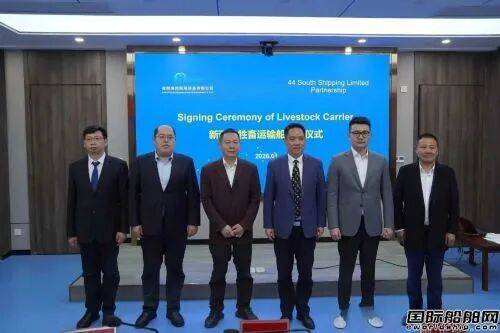
Group 1 - The signing of the livestock transport ship construction order between Anhui Port and Shipping Land-Sea Equipment Company and New Zealand's 44 South Shipping Limited marks the first international order of its kind for the company [2] - This order is a significant achievement for Tongling Port and Shipping Group in promoting high-end manufacturing and international development [2] - The New Zealand shipowner expressed confidence in choosing Tongling Port and Shipping Group as a partner, aiming to create a safe, efficient, and high-standard livestock transport ship [2] Group 2 - The successful landing of this order opens up the high-end special ship market in New Zealand and Oceania for Anhui Port and Shipping Land-Sea Equipment Company [2] - The company is focused on optimizing product structure and accelerating brand internationalization, which holds strategic significance [2] - Anhui Port and Shipping Land-Sea Equipment Company is a modern high-end equipment manufacturing enterprise formed by a joint venture between Tongling Port and Shipping Investment Construction Group and Shandong Port Group [2] Group 3 - The company is leveraging the construction scale and location advantages of the former Congyang Shipyard to promote the shipyard project in the Anhui Port Economic Industrial Park [3] - The shipyard primarily engages in shipbuilding, repair, and dismantling, while also enhancing the functional layout of Tongling Port [3] - Last year, the Congyang Shipyard received its first international order for four 12,000-ton self-propelled deck barges from Singapore's Weili International Group, valued at 170 million yuan [3]
湖南飞沃科技预计2025年度业绩扭亏为盈 深耕高端制造开辟新赛道
Zheng Quan Ri Bao Wang· 2026-01-20 06:12
Core Viewpoint - Feiwo Technology (301232) is expected to achieve an annual revenue of 2.5 billion yuan and a net profit attributable to shareholders of 32 million to 45 million yuan for the year 2025, marking a significant turnaround from a loss of 157 million yuan in the previous year, contributing positively to the development of high-end equipment manufacturing in Hunan [1] Group 1: Company Performance - Feiwo Technology has successfully turned around its net profit and net profit after deducting non-recurring gains and losses, achieving profitability for the first time [1] - The company specializes in the research and manufacturing of high-strength fasteners, primarily for the wind power sector, and has expanded its product offerings to other high-end equipment fields such as aerospace and nuclear power [1][2] Group 2: Market Position and Growth - The company is recognized as a national-level "specialized and innovative" small giant enterprise, positioning itself as a hidden champion in the fastener industry, with products widely used in key sectors like wind power and aerospace [2] - Feiwo Technology's main products in the wind power sector are experiencing strong demand, with high capacity utilization, leading to significant improvements in performance due to increased sales, higher prices, and reduced costs [2] Group 3: Strategic Initiatives - In 2025, Feiwo Technology signed a strategic cooperation agreement with German aerospace component giant Heggemann to enter the aerospace core component market, leveraging technical collaboration in precision manufacturing [2] - The company also signed a memorandum of understanding with GEVernova, a leader in the energy sector, marking a significant step in collaboration for gas turbine equipment manufacturing [2] Group 4: Financial Strategies - Feiwo Technology announced a stock incentive plan for 2025, planning to grant a total of 1.55 million restricted shares at a price of 13.73 yuan per share to 64 key personnel [3] - The company received support from China Bank's Changde branch for a stock repurchase loan, with a total repurchase fund of no less than 25 million yuan and not exceeding 50 million yuan, optimizing its financial structure and ensuring liquidity for future business expansion [3]
北京首次开设机器人职称评审专业
Xin Lang Cai Jing· 2026-01-19 17:08
Group 1 - The core viewpoint of the news is the introduction of a new professional title evaluation method for the robotics sector in Beijing, aimed at matching talent evaluation needs with industry demands, which will officially implement in 2026 and start its first evaluation in July 2023 [1][2] - The robotics industry in Beijing is experiencing significant growth, with over 940 related companies and approximately 30,000 employees, highlighting the need for a specialized title evaluation system to support the career development of high-tech talent [1][3] Group 2 - The new evaluation method establishes a comprehensive and multi-level title evaluation system, covering four main areas: core components, algorithms and software, complete machine design and manufacturing, and system integration and application, ensuring that professionals in all segments of the robotics industry can find suitable evaluation pathways [2] - The title levels are clearly defined, including junior (assistant engineer), intermediate (engineer), senior (senior engineer), and top-level (chief engineer), providing a clear career development ladder for technical talent in the robotics field [2] - The evaluation criteria emphasize innovation capability, quality, effectiveness, and contribution, focusing on actual performance in technological breakthroughs, innovation achievements, and industry contributions, while also recognizing achievements in national robotics competitions for advanced title applications [3]

百元股数量创新高!这一板块扎堆
Xin Lang Cai Jing· 2026-01-19 11:47
Core Insights - The A-share market has reached a historic milestone with the number of stocks closing above 100 yuan reaching 222, driven primarily by the technology sector [1][6] - The surge in hundred-yuan stocks is attributed to market structure optimization, with funds concentrating on high-quality assets, particularly in AI, semiconductors, and high-end manufacturing [1][3] Group 1: Market Trends - The technology sector, especially companies in AI computing and semiconductors, has become the new focus of the A-share market, indicating a shift in core market drivers [2][7] - The top ten hundred-yuan stocks predominantly consist of technology companies, with only Kweichow Moutai being an exception, highlighting a concentration of "new tech" firms [2][7] Group 2: Company Performance - Companies like Cambricon Technologies, a leader in AI chips, reported a staggering revenue of 4.607 billion yuan for the first three quarters of 2025, marking a year-on-year increase of 2386.38% [3][8] - Source Code Technology, a leader in optical chips, achieved a revenue of 383 million yuan in the same period, reflecting a year-on-year growth of 115.09% [3][8] Group 3: Future Outlook - Experts predict that the expansion of hundred-yuan stocks is a sign of market maturity, with companies possessing core competitiveness likely to continue receiving valuation premiums [4][9] - The ongoing trend of long-term capital inflow and the continuation of technological industry trends suggest that the hundred-yuan stock group may continue to grow, although structural differentiation is expected to become more pronounced [3][4][9]



呼和浩特综保区2025年进出口总值达107.88亿元
Zhong Guo Xin Wen Wang· 2026-01-19 11:14
Core Insights - The Hohhot Comprehensive Bonded Zone is projected to achieve a total import and export value of 10.788 billion RMB by 2025, marking a year-on-year growth of 25.85% and setting a historical record [1] Group 1: Import and Export Performance - In 2025, the Hohhot Comprehensive Bonded Zone will be the first in Inner Mongolia to surpass the 10 billion RMB mark in annual import and export value [1] - The processing trade value is expected to reach 8.718 billion RMB, accounting for 80.8% of the total import and export value [1] - The total industrial output value is projected to be 4.784 billion RMB, reflecting a year-on-year increase of 306% [1] Group 2: Transportation and Logistics - The zone plans to dispatch 55 China-Europe and Central Asia freight trains throughout the year [1] - The "zone-port linkage" model will facilitate the transportation of 393 standard containers [1] - There will be 30 cross-border TIR (Transports Internationaux Routiers) truck trips, with bonded logistics import and export value reaching 862 million RMB [1] Group 3: Future Development Plans - In 2026, the zone aims to build a complete industrial chain for precious metals and cultivate a cluster for deep processing of specialty agricultural and livestock products [2] - The zone will optimize cross-border e-commerce models and expand bulk commodity trade while developing high-end manufacturing and new digital trade formats [2] - Plans include enhancing the layout of China-Europe (Asia) freight trains and upgrading the TIR cross-border road transport network [2]
竞逐科技与高端制造,公募ETF发行大爆发
Huan Qiu Wang· 2026-01-19 06:28
Core Viewpoint - The A-share market has entered a new round of structural trends in 2026, with sectors like commercial aerospace, new energy, and artificial intelligence (AI) applications showing strong performance, leading to a significant increase in the issuance of thematic ETFs and their net asset values [1] Group 1: Thematic ETF Performance - The Satellite ETF managed by Yongying Fund has achieved a return of 17.92% year-to-date and a 99.10% increase over the past six months, with its scale rising from 2.4 billion to 17 billion yuan, making it the first satellite-themed ETF to exceed 10 billion yuan in size [1] - The Huaan Gold ETF has surpassed 100 billion yuan in scale, becoming the first gold ETF in China to enter the "billion club" due to rising gold and silver prices [1] Group 2: Fund Company Activities - Multiple fund companies are actively launching thematic ETFs focused on "pan-technology + high-end manufacturing," targeting investment directions such as electric utilities, sub-sectors of the Sci-Tech Innovation Board, and battery themes that are not yet overcrowded [2] - The Invesco Great Wall Fund's electric utility ETF raised 1.667 billion yuan in just 7 days, indicating strong investor interest in the electric sector [2] - The Tianhong Fund's chip design thematic ETF raised 607 million yuan in 8 days, while the Southern Fund's AI ETF raised 514 million yuan in only 6 days [2] Group 3: New Energy and Resource ETFs - In the new energy sector, battery-themed ETFs are experiencing "same-topic competition," with the Dacheng Fund's battery ETF raising 442 million yuan in just 4 days, the shortest subscription period in the market [4] - Several fund companies have reported new ETFs focused on industrial metals, indicating a strong interest in upstream resource sectors [4] Group 4: ETF Issuance Trends - The number of new ETFs issued has surged from 281 in 2021 to 363 in 2025, with technology, new energy, and pharmaceutical thematic ETFs showing remarkable performance [5] - The Huaxia Hang Seng Internet Technology ETF's shares have increased from 7.555 billion at issuance to 66.869 billion, an expansion of nearly 8 times [5] - However, there is a notable trend of divergence within thematic ETFs, with some products experiencing a rapid decline in scale, highlighting the importance of long-term sector attractiveness and product differentiation [5] Group 5: Market Outlook - Analysts suggest that the recent surge in thematic ETF issuance is closely linked to the structural trends in the A-share market in 2026, with institutional investors quickly positioning themselves in popular sectors [6] - If the related industries maintain their growth, these ETFs may become a significant direction for capital inflow, but fund companies must focus on lifecycle management and market demand to avoid resource wastage [6]
2026年全球及中国钼金属行业背景、发展现状、市场供需、竞争格局及未来发展趋势研判:供需紧平衡凸显价值,高端转型开拓新局[图]
Chan Ye Xin Xi Wang· 2026-01-19 01:09
Core Insights - Molybdenum is a critical transition metal with high melting point and strength, categorized into four main forms: pure molybdenum, molybdenum alloys, molybdenum compounds, and molybdenum products [1][2][3] - The global molybdenum market is characterized by a long-term tight balance, with a projected demand gap of 0.39 million tons in 2024, which may expand in the future [1][7] - China holds a significant advantage in molybdenum reserves, becoming the core support for global molybdenum industry development, with production and consumption both leading globally [1][9] Industry Overview - The molybdenum industry is divided into three main segments: upstream (exploration and mining), midstream (smelting and processing), and downstream (deep processing and end applications) [5][6] - Upstream is dominated by major enterprises that control core resources, while midstream is characterized by high industry concentration but relies on imported high-end technologies [5][6] - Downstream applications are primarily in the steel industry, with rapid growth in emerging fields such as renewable energy and aerospace [1][6] Policy and Strategic Importance - Recent policies from the Chinese government aim to regulate resource management and promote industry upgrades, including export controls and support for green mining technologies [6][7] - Molybdenum is classified as a strategic mineral due to its scarcity and concentrated global distribution, with China, the US, and Peru being the top three countries in terms of reserves [6][7] Supply and Demand Dynamics - Global molybdenum production is expected to remain between 262,100 tons and 290,200 tons from 2020 to 2024, with consumption fluctuating between 247,600 tons and 294,100 tons [7][8] - In 2024, China's molybdenum production is projected to reach 133,700 tons, with consumption also on the rise, reflecting a compound annual growth rate of 6.78% from 2020 to 2024 [10][11] Competitive Landscape - The Chinese molybdenum industry is characterized by an oligopolistic structure, with leading companies like Jinduicheng Molybdenum Co., Ltd. and Luoyang Molybdenum Co., Ltd. controlling approximately 70% of the market share [11][12] - The competition is intensifying as smaller firms focus on niche markets, while larger firms leverage their resources and technology to maintain a competitive edge [11][12] Future Development Trends - The industry is expected to shift towards green and intelligent resource development, with a focus on efficient utilization of low-grade and associated molybdenum ores [12][13] - There will be a transition from traditional raw material output to high-end manufacturing, with an emphasis on domestic production of high-purity molybdenum products and specialized alloys [12][13] - Demand for molybdenum is anticipated to grow in both traditional sectors and emerging fields, with strategic support from policies aimed at enhancing the high-potential areas of the industry [12][14]