战略自主

Search documents
想拿中国当挡箭牌?欧洲27国通告美国,联手断中方后路,话音刚落,特朗普先向中国献礼
Sou Hu Cai Jing· 2025-11-29 07:10
Core Viewpoint - The EU's strategy to leverage its relationship with the US by sacrificing Chinese interests has backfired, leading to an embarrassing situation as the US unexpectedly resumed trade negotiations with China, undermining the EU's efforts [1][4][10] Group 1: EU's Economic Strategy - The EU submitted a memorandum to the US, attempting to gain concessions on steel and aluminum tariffs by emphasizing a "common competitor" in China [1] - Since the beginning of the year, EU investments in the US have surged by over €150 billion, and the share of US liquefied natural gas imports in the EU has increased from 45% to 60% [1] - The EU's reliance on digital regulations as a key asset is threatened by US demands to reconsider its digital market laws, which could undermine the EU's regulatory authority [3][6] Group 2: US Response and Implications - The US showed little interest in the EU's overtures and instead focused on requiring the EU to align its digital regulations with US interests, suggesting that a balanced regulatory framework could attract up to $1 trillion in investment [3] - The US's quick shift to a friendlier stance towards China after the EU's negotiations indicates a strategic move to counter the EU's attempts to leverage China against the US [4][8] - The US's insistence on digital regulations highlights its concern over the EU's policies that threaten the dominance of American tech giants [6] Group 3: Geopolitical Miscalculations - The EU's attempt to use China as a bargaining chip reflects a significant misreading of the geopolitical landscape, as the world moves towards a multipolar order [6][10] - The EU's strategy risks alienating China, which is a crucial trade partner, and could lead to long-term economic disadvantages for European companies [4][7] - The EU's contradictory approach of trying to suppress China economically while seeking defense cooperation illustrates a lack of coherent strategy [7] Group 4: International Reactions - ASEAN countries have expressed their intention not to follow unilateral sanctions or trade restrictions, emphasizing the importance of maintaining normal trade relations with China [8] - The African Union has openly opposed trade protectionism, reinforcing the idea that the EU's actions diverge from global expectations for cooperation and mutual benefit [8] - The EU's approach has been criticized as short-sighted, risking its strategic autonomy in favor of immediate gains [10]

27国通告美国,联手断中方后路,话音刚落,特朗普要向中国献礼
Sou Hu Cai Jing· 2025-11-27 09:11
11月24日,欧盟27国在关税谈判桌上合力,企图用"共同遏制中国"的姿态换取美国的贸易让步,本以为这招够聪明,结果却遭遇当头一棒。 美国不仅不为所动,反而转身向中国递出橄榄枝,考虑送上"高端芯片出口放宽"的政策,特朗普还计划亲自访华。 看起来,欧洲想联美制华,但特朗普这回显然是不想接招了。 本来是美国计划扩大对欧洲钢铝产品征收关税,引发欧盟强烈反弹,特别是对德国和法国这些传统制造业大国来说,这种关税压力无异于釜底抽薪。 眼看谈判气氛紧张,欧盟代表们临时打出一个"牌",希望在对待中方的立场上与美国协调一致,以换取美方的贸易让步。 他们更关心的是欧洲数字市场的管制问题,尤其是欧盟对美国科技巨头设下的种种限制,美国提希望欧盟放宽数字监管规则,为美国科技企业打开更大市 场。 这意味着,美方更关注的是经济账,而不是战略姿态,欧盟拿中国当筹码,但特朗普只认得见真金白银的利益,这场"对等交换"从一开始就是一厢情愿。 美国这边的反应非常直接,卢特尼克在会谈中强调,欧洲如果想避免更高的关税,就得在数字规则上"寻求平衡"。 从这个角度看,欧盟在布鲁塞尔的表现更像是误判形势,他们以为只要在对中方的问题上站边,美国就会在贸易上"感恩 ...
日媒:印度想实现战略自主,并非易事
Huan Qiu Shi Bao· 2025-11-26 22:55
Core Viewpoint - India has been attempting to modernize its economy while maintaining control and independence, but this pursuit of strategic autonomy often leads to bureaucratic defensiveness, hindering necessary foreign investment and technology input [1][2]. Group 1: Strategic Autonomy and Bureaucracy - The concept of strategic autonomy is not inherently problematic, but India's approach has resulted in a refusal to coordinate interdependence with other nations, leading to delays in securing rights and investments [2][4]. - The Jaitapur nuclear power project, intended to be the world's largest civilian nuclear reactor complex, has been stalled for 15 years due to disputes over liability and regulatory issues, exemplifying the pitfalls of India's defensive strategy [2][3]. - The automotive sector has seen major withdrawals from companies like Ford and General Motors, attributed to regulatory uncertainty, indicating that the lack of a flexible environment is a significant barrier to attracting foreign investment [2][4]. Group 2: Economic Challenges and Foreign Investment - India's foreign direct investment (FDI) dropped by 47% in 2023, with the manufacturing sector's contribution to GDP stagnating at around 14% for a decade, highlighting the challenges in capital and technology flow [4][5]. - The contradiction in India's foreign policy, such as purchasing discounted Russian oil while seeking Western capital, has slowed its integration into Asian supply chains and created economic fragmentation [4][5]. Group 3: Proposed Solutions and Future Directions - India needs a "clear dependency" model, which includes stable investment and technology transfer rules, effective regulatory execution, and confidence-building measures to attract foreign participation [5][6]. - Successful examples, like the digital payment revolution, demonstrate that strategic autonomy can be achieved through collaboration rather than isolation, emphasizing the need for political coordination to align government goals with market capabilities [6][7].
美国巨头垄断引发担忧,马克龙放话欧洲不能沦为“附庸”
Huan Qiu Shi Bao· 2025-11-19 22:51
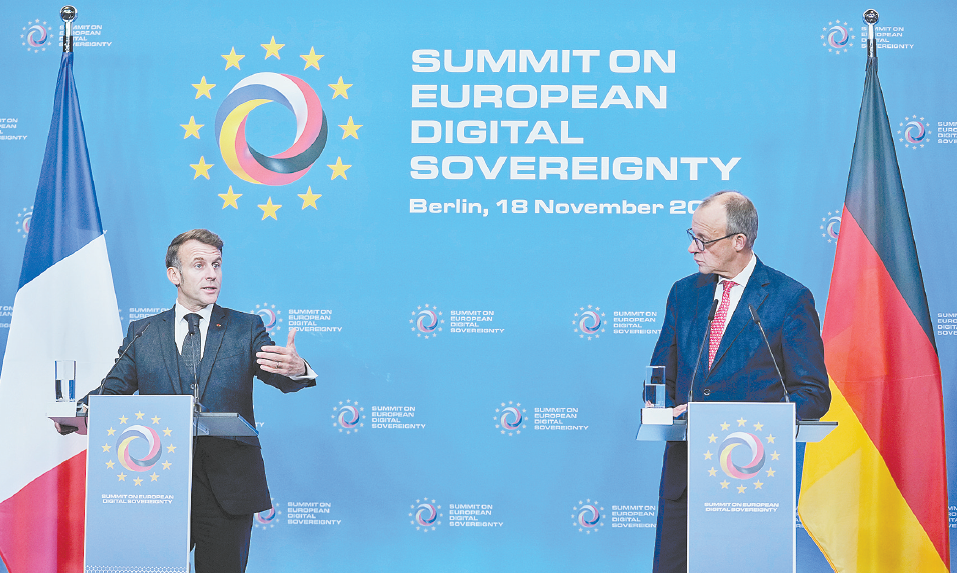
Core Viewpoint - The "European Digital Sovereignty Summit" held in Berlin emphasized the need for Europe to achieve independence in key digital technologies like artificial intelligence, as leaders from France and Germany called for a "Europe First" policy to avoid becoming subservient to the US or China [1][2][4]. Group 1: European Leaders' Calls for Action - French President Macron and German Chancellor Merz urged for stronger autonomy in technology sectors, particularly in AI, to prevent the dominance of US and Chinese tech giants [4][5]. - Macron criticized the reliance on the "Seven Giants" of the tech industry, which include Google, Amazon, Apple, Meta, Microsoft, Nvidia, and Tesla, stating that it is unacceptable to depend on them for economic and democratic functions [2][5]. Group 2: Current Market Dynamics - A report indicated that US companies hold approximately 70% of the European cloud computing market, with European efforts to establish a "European Cloud" failing to make significant progress [5][6]. - The financial loss due to reliance on US tech giants is estimated to exceed €260 billion annually, highlighting the economic impact of this dependency [7]. Group 3: Political and Strategic Implications - The summit discussions included the need for a simplified and innovation-friendly regulatory framework for AI and the establishment of a sovereign European cloud computing center [4][6]. - Experts noted that the core issue of achieving digital sovereignty lies not in technical capabilities but in the political will to act decisively [7].





给印度上眼药?课税500%,美国总统:制裁与俄罗斯贸易往来的国家
Sou Hu Cai Jing· 2025-11-18 15:45
Core Points - The article discusses the contrasting treatment of countries by the United States regarding trade with Russia, highlighting a proposed 500% tariff on nations maintaining such trade, particularly targeting India [1][3][5] Group 1: U.S. Sanctions and Tariffs - The U.S. has a history of inconsistent policies, recently emphasizing sanctions against countries trading with Russia, proposing a 500% tax [1][3] - In 2025, the U.S. government granted Hungary a one-year exemption from energy sanctions, allowing continued imports of Russian oil, while simultaneously pushing for tariffs on other nations [3][5] - The U.S. has implemented over 15,000 sanctions against Russia since the onset of the Ukraine conflict, with more than 3,500 led by the U.S. [6][8] Group 2: India's Oil Trade with Russia - India has significantly increased its imports of Russian oil, which constituted 35% of its total oil imports by Q3 2025, up from 4.2% in 2022 [10] - Indian refineries process Russian crude oil, with approximately 20% of the refined products exported to Europe and the U.S., generating substantial profits due to lower prices [11] - The U.S. has accused India of profiting from low-priced Russian oil, while India has been exploring alternative payment mechanisms to mitigate the impact of U.S. sanctions [18][20] Group 3: U.S. Double Standards - The U.S. imports significant amounts of Russian goods, including 22% of its nuclear fuel and 18% of titanium, while maintaining a narrative of sanctions against Russia [13][15] - The effectiveness of U.S. sanctions has been questioned, with reports indicating that Russia's economy grew by 2.3% in 2024 despite sanctions [15][16] - The U.S. sanctions policy appears to favor allies who comply with its demands, as seen in Hungary's exemption due to energy agreements, contrasting with India's refusal to accept similar conditions [20][24] Group 4: Global Economic Implications - The article suggests that the U.S. approach to sanctions is fostering a trend towards de-dollarization, with countries like India, Turkey, and Brazil seeking non-dollar trade settlements with Russia [22][24] - The share of regional currency settlements in global trade has increased from 12% in 2022 to 18% in 2025, indicating a shift towards a multipolar economic landscape [22] - The U.S. unilateral sanctions are perceived as undermining its credibility and may lead to a decline in its hegemonic status in global affairs [24]
一文读懂荷兰“半导体劫案”
Zhong Guo Jing Ji Wang· 2025-11-17 03:31
Group 1 - The Dutch government attempted to seize control of the Chinese-controlled company Nexperia, causing global supply chain disruptions [1][5][6] - After a series of escalations, the Netherlands announced it would abandon its takeover plans and send a high-level delegation to China for discussions [1][2][24] - The incident reflects a broader geopolitical struggle involving the US and Europe against China, particularly in the semiconductor industry [1][12][46] Group 2 - Nexperia, a major semiconductor manufacturer, was previously part of NXP Semiconductors and was acquired by Chinese company Wingtech Technology in 2019 [5][28] - The company is crucial for the automotive and consumer electronics sectors, supplying over 1 trillion chips annually [28][29] - The Dutch government's actions were justified under the guise of national security, citing the need to prevent sensitive technology from leaking to China [7][10][45] Group 3 - The Dutch Minister of Economic Affairs, Karremans, expressed no regret over the decision, despite international backlash and criticism from the Chinese government [2][12] - The incident has raised concerns within the European automotive industry, with potential production disruptions reported by major manufacturers like BMW and Volkswagen [27][30] - The geopolitical implications of the event highlight the fragility of global supply chains and the risks of politicizing economic relations [20][49][50] Group 4 - China's swift countermeasures included halting exports from Nexperia, which significantly impacted the global semiconductor supply chain [20][21][22] - The situation has led to a reduction in Nexperia's global chip supply by 60%, affecting various industries worldwide [21][31] - The incident underscores the importance of Nexperia in the European automotive supply chain, with potential ramifications for millions of vehicles and electronic devices [29][31] Group 5 - The event has sparked discussions about the need for Europe to achieve "strategic autonomy" in technology and supply chains, moving away from reliance on external powers [46][50] - The Dutch government's actions have been criticized as undermining the principles of commercial credibility and contract enforcement, which have historically been a strength of the Dutch economy [32][40] - The ongoing negotiations and potential resolutions will determine the future of Nexperia and its role in the global semiconductor landscape [51]
欧洲又出了个默克尔,拒绝跟随美国反华,给欧洲指明了出路
Sou Hu Cai Jing· 2025-11-16 07:17
Core Viewpoint - The article highlights the emergence of Spanish Prime Minister Pedro Sánchez as a rational leader in Europe, reminiscent of former German Chancellor Angela Merkel, advocating for pragmatic diplomacy and cooperation rather than military escalation in the current geopolitical climate [1][10]. Group 1: Sánchez's Diplomatic Approach - Sánchez is one of the few European leaders not willing to be led by the U.S. in military confrontations, urging Europe to avoid a fully militarized future by promoting calm and rational decision-making [3][10]. - He emphasizes that security should rely on diplomacy and development on cooperation, a stance increasingly rare in Europe today [5][10]. Group 2: Spain-China Relations - Despite rising tensions in Europe towards China post-Russia-Ukraine conflict, Spain has maintained and even expanded its cooperation with China, showcasing an alternative approach to European relations [5][12]. - Sánchez's administration has taken concrete steps to foster collaboration with China, including significant investments from Chinese renewable energy companies in Spain, which have bolstered employment and industry upgrades [12][14]. Group 3: Comparison with Merkel's Era - The article draws parallels between Sánchez's current diplomatic strategies and Merkel's past approach, where Germany maintained stability through pragmatic relations with both China and Russia while keeping a measured distance from the U.S. [8][10]. - The shift in European dynamics post-Merkel's tenure has led to increased military spending and a decline in strategic autonomy, making Sánchez's calm and cooperative stance particularly noteworthy [10][15]. Group 4: Future Implications for Europe - Sánchez's actions signal a potential reevaluation of Europe's future direction, moving from conflict to cooperation, and may inspire other European nations to adopt similar diplomatic strategies [15]. - The article posits that while Sánchez may not be a savior, he represents a significant step towards restoring rationality in European diplomacy, echoing the stability experienced during Merkel's leadership [15].

中美谈妥后,印度懵了,50%关税成最高,莫迪成关税战最大冤种
Sou Hu Cai Jing· 2025-11-06 14:43
Core Viewpoint - The recent trade agreement between China and the U.S. has left India in a precarious position, as it has become a victim of the U.S.-China trade war, with significant repercussions for its economy and exports [1][2]. Group 1: India's Trade Dynamics - Modi's strategy of balancing relations with both Russia and the U.S. has backfired, leading to increased tensions and punitive tariffs from the U.S. [3][5]. - India is now the world's largest buyer of Russian oil, importing 1.9 million barrels per day in 2024, which has drawn the ire of the U.S. [4]. - The U.S. has imposed a 50% punitive tariff on Indian exports, severely impacting India's competitive position in the global market [6][11]. Group 2: Economic Impact - The punitive tariffs have led to a collapse in India's exports to the U.S., particularly in key sectors such as textiles, jewelry, and seafood, with orders evaporating by nearly 40% [11][13]. - The economic situation has forced the Indian government to reconsider its diplomatic approach, with the foreign minister making multiple visits to Washington in a short period [13]. Group 3: India's Global Standing - While the U.S. and China have reached a consensus, India finds itself sidelined, lacking the leverage to negotiate favorable terms [14][16]. - India's aspirations to become the "world's factory" and replace China are challenged by its infrastructural and logistical shortcomings, as well as a lack of trust from both the U.S. and China [18][19]. Group 4: Conclusion - The recent developments highlight India's miscalculations in foreign policy, as it has not emerged as a winner in the ongoing trade disputes, but rather as an unintended casualty [20][21].
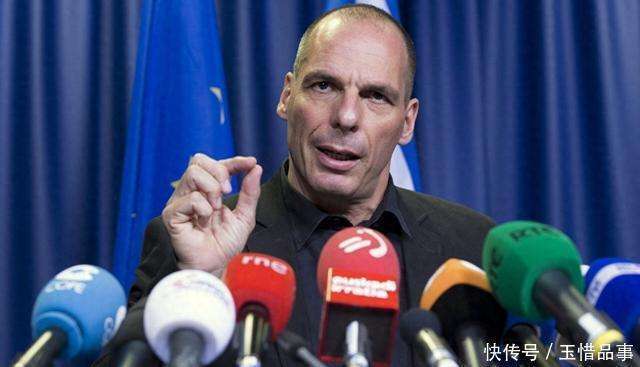
希腊前财长感叹:中国甩掉的“百年耻辱”,如今砸到了欧洲头上
Sou Hu Cai Jing· 2025-11-06 09:42
Core Points - The article discusses the implications of a recent economic cooperation agreement signed between the EU and the US, likening it to historical concessions made by China in the 19th century [1][4][12] - The agreement is viewed as a one-sided resource transfer from Europe to the US, with significant financial commitments from the EU, including a promise to invest $600 billion and purchase $750 billion worth of US shale oil and gas [3][4] - The deal is expected to negatively impact the EU's GDP, with estimates suggesting a reduction of 0.2% to 0.8%, particularly affecting export-dependent countries like Germany and Italy [4][6] Economic Implications - The agreement allows US goods to enter the European market tariff-free, while EU goods face tariffs of up to 15%, with some products like steel and aluminum seeing tariffs tripled [1][3] - The EU's commitment to invest $600 billion in the US over the next three years indicates a significant financial outflow from Europe [3] Strategic Context - The article highlights a long-term structural dependency of Europe on the US, rooted in post-World War II security arrangements and economic ties [6][8] - Cultural influences from the US have permeated European society, leading to a mindset where compromise is seen as cooperation, and concessions are viewed as strategic balance [6][8] Comparison with China - The article contrasts Europe's current situation with China's historical experience, emphasizing that while China broke free from Western dependency, Europe has chosen to remain tied to US interests [8][12] - The lack of a unified strategic vision in Europe is identified as a critical issue, hindering its ability to assert independence and develop its own strategic goals [11][12] Future Considerations - The article posits that Europe is at a crossroads, needing to decide whether to continue seeking a foothold within the US-dominated framework or to redefine its strategic positioning [12] - The potential for Europe to regain agency and control over its destiny is highlighted, drawing parallels to China's historical journey from subjugation to empowerment [12]
彻底不装了?欧盟考虑对华实施“实物”关税,供应链是建出来的,不是抢出来的!
Sou Hu Cai Jing· 2025-11-05 07:32
Core Viewpoint - The EU's new "physical tariff" policy, requiring Chinese exporters to provide key raw materials alongside customs duties, is seen as an absurd and regressive approach to international trade [1][3]. Group 1: Policy Implications - The policy shifts the burden of tariffs from importers to Chinese exporters, likening it to a feudal system where merchants must pay tribute for market access [1]. - This approach underestimates the complexity of global supply chains and China's role as a processor rather than a mere supplier of raw materials [3]. Group 2: Economic Consequences - The EU's confrontational stance could lead to a detrimental outcome for both parties, particularly if China reduces its exports to the EU, which could severely impact European manufacturing [5][6]. - The current state of European manufacturing is precarious, and shortages of critical materials could further destabilize the industry [5]. Group 3: Strategic Misalignment - The EU's strategy reflects a misunderstanding of its position in the global economy, as it attempts to achieve "strategic autonomy" through impractical trade policies [3][6]. - A more effective approach would involve fostering dialogue and cooperation to build a stable international trade system, rather than resorting to aggressive tactics [8].