
扩大内需战略

Search documents
国家发改委:坚定实施扩大内需战略
财联社· 2025-12-16 02:00
Core Viewpoint - The article emphasizes the importance of implementing a strategy to expand domestic demand, highlighting the need to enhance consumer willingness and capability to stimulate economic growth and stability [3][4][5]. Group 1: Importance of Expanding Domestic Demand - Expanding domestic demand is crucial for economic stability and security, serving as a strategic move rather than a temporary measure [4]. - It is essential for addressing the main social contradictions in China, which involve the growing needs for a better life and unbalanced development [6]. - The domestic market is seen as a key driver for economic growth, especially in the context of global uncertainties and external pressures [5][11]. Group 2: Enhancing Consumer Willingness - The strategy includes actions to boost consumer willingness, such as implementing consumption promotion initiatives and stabilizing major consumption sectors [16]. - Policies will focus on creating new consumption scenarios and supporting emerging economic sectors like e-commerce and event economies [16]. - There will be a push for urban renewal projects and improvements in consumer services, particularly in areas like elderly care and health [16]. Group 3: Strengthening Consumer Capability - The strategy aims to enhance consumer capability by prioritizing employment and income growth, particularly for key demographic groups [16]. - There will be an increase in government spending on social welfare to support consumer spending [16]. - The plan includes measures to improve the social security system and promote equal access to public services [16]. Group 4: Current Economic Landscape - Domestic demand has become the main driver of economic growth, contributing an average of 93.1% to economic growth from 2013 to 2024 [11][12]. - The contribution of final consumption expenditure and gross capital formation to economic growth is 55% and 38.1%, respectively [12]. - The service sector is expected to account for 46.1% of per capita consumption expenditure by 2024, indicating a shift towards service-oriented consumption [6][8]. Group 5: Challenges and Opportunities - Despite the potential for expanding domestic demand, challenges such as low consumer rates and investment dynamics exist [13]. - The article highlights the need for a complete domestic demand system that includes consumption, investment, and supply chain optimization [10]. - There is significant potential for consumption upgrades and effective investment in infrastructure and technology sectors [14]. Group 6: Strategic Implementation - The strategy will involve a comprehensive approach to enhance domestic demand, focusing on both consumption and investment [15]. - It emphasizes the importance of creating a unified national market to eliminate barriers and improve market efficiency [20]. - The government will work on reforming investment mechanisms to ensure that funds are effectively utilized for economic growth [21].


国家发改委:着力释放居民消费潜力
Zheng Quan Shi Bao Wang· 2025-12-16 01:53
Core Viewpoint - The article emphasizes the importance of implementing a strategy to expand domestic demand, focusing on enhancing consumer spending potential and capability [1] Group 1: Enhancing Consumer Spending Potential - The government aims to significantly boost residents' willingness to consume through targeted actions [1] - Initiatives include stabilizing major consumption sectors and promoting policies like trade-in for consumer goods [1] - There is a focus on creating new consumption scenarios through brand leadership, standard upgrades, and new technology applications [1] - Support will be provided for emerging economies, event economies, and e-commerce development [1] - Key projects will be implemented in areas such as elderly care, childcare, health, and cultural tourism to meet the needs of consumption upgrades and population aging [1] - Urban renewal projects will be prioritized, including updates to parking facilities and old elevators [1] - Efforts will be made to expand inbound consumption and improve convenience levels [1] Group 2: Enhancing Consumer Capability - The government will strengthen employment-first policies to stabilize and expand job opportunities through multiple channels [1] - There will be an emphasis on optimizing the entrepreneurial environment to promote employment [1] - A plan to increase income for urban and rural residents will be implemented, aiming to raise the share of residents' income in national income distribution [1] - The government will work to ensure that labor remuneration increases in tandem with economic growth and productivity [1] - Policies aimed at direct consumer benefits will be enhanced, with increased government funding for social welfare expenditures [1] - The social security system will be improved, and efforts will be made to promote equal access to basic public services [1] - Support for childbirth and parenting will be increased [1]
国家发改委:积极拓展有效投资空间
Zheng Quan Shi Bao Wang· 2025-12-16 01:53
Core Viewpoint - The article emphasizes the importance of expanding effective investment space and outlines strategies for enhancing government and private sector investments to stimulate economic growth [1] Group 1: Government Investment - The article advocates for optimizing the structure of government investments, increasing the proportion of investments in public welfare, and advancing high-quality "two重" construction [1] - It highlights the need for a systematic integration of "hard investments" and "soft construction" to improve the effectiveness of government investments [1] - The focus is on implementing significant flagship projects in new energy systems, major water conservancy projects, and national major scientific infrastructure, aligning with national development needs [1] Group 2: Private Investment - The article calls for further promotion of private investment development by improving mechanisms for private enterprises to participate in major project construction [1] - It suggests leveraging government investment funds to guide and stimulate private investment, ensuring the coordination of various resources for private projects [1] - The article emphasizes the continuous promotion of a new mechanism for public-private partnerships (PPP) to enhance market-driven effective investment growth [1]
国家发改委:大力提升居民消费意愿。深入实施提振消费专项行动
Sou Hu Cai Jing· 2025-12-16 01:49
来源:金融界AI电报 国家发改委在《求是》杂志发表文章《坚定实施扩大内需战略》中指出,着力释放居民消费潜力。一方 面,大力提升居民消费意愿。深入实施提振消费专项行动。加力稳定大宗消费,实施好消费品以旧换新 政策。强化品牌引领、标准升级、新技术应用,打造一批带动面广、显示度高的消费新场景。支持首发 经济、赛事经济、电子商务等发展。顺应消费升级、人口老龄化、促进出生人口增长等需要,在养老、 托育、健康、文旅等消费配套设施领域实施一批重点项目。大力实施城市更新,抓好停车场、老旧电梯 更新等民生微项目。进一步拓展入境消费,提升便利化水平。另一方面,切实增强居民消费能力。强化 就业优先政策,多渠道稳定和扩大就业,优化创业促进就业政策环境,支持重点群体就业。实施城乡居 民增收计划,提高居民收入在国民收入分配中的比重,提高劳动报酬在初次分配中的比重,努力实现居 民收入和经济增长同步、劳动报酬提高和劳动生产率提高同步。加大直达消费者的普惠政策力度,增加 政府资金用于民生保障支出。健全社会保障体系,稳步推进基本公共服务均等化,加大生育养育支持力 度。 ...
湖北系统施策加快建设贸易强省 1至11月进出口突破7500亿元
Chang Jiang Shang Bao· 2025-12-14 23:49
"十四五"以来,湖北坚定不移扩大对外开放,双循环枢纽功能不断增强,对外贸易实现量质齐升,加速迈向新时 代九州通衢、九州通商、九州通融。 展望"十五五",湖北将强化支点意识,继续坚定不移实施扩大内需战略与扩大高水平对外开放,推动外贸事业再 上新台阶,为经济高质量发展注入更强劲的动力,在全国对外开放大局中书写荆楚新篇章。 新质生产力成外贸增长引擎 12月8日,鄂州花湖国际机场越南河内海外仓揭牌投运。这是继意大利米兰海外仓、阿联酋阿布扎比海外货站后, 花湖国际机场海外战略的又一重要里程碑,标志着机场在东南亚市场搭建了前沿阵地和核心节点,进一步提升了 全球航空物流的辐射力和影响力。 外贸增长的强劲势头背后,离不开物流通道的坚实支撑 ——作为亚洲第一、全球第四、全国唯一的专业货运枢纽 机场,鄂州花湖国际机场已开通国际货运航线50条,直连51个全球重要城市,年国际货运航班破万架次,形成全 球"8小时交通圈",为湖北加快建成中部地区崛起的重要战略支点插上发展的"金翅膀",也为我国持续打造更具竞 争力的内陆开放高地打开一个便捷的"空中出海口"。 长江商报消息 ●长江商报记者 李璟 2025年收官进入倒计时,荆楚大地对外开放的 ...

人民日报评论员:着眼全局把握明年经济工作的总体要求和政策取向
Xin Hua She· 2025-12-14 11:20
人民日报12月15日刊发评论员文章,题目为《着眼全局,把握明年经济工作的总体要求和政策取向—— 论学习贯彻中央经济工作会议精神》。全文如下: 会议明确明年经济工作的政策取向,指出"坚持稳中求进、提质增效,发挥存量政策和增量政策集成效 应,加大逆周期和跨周期调节力度",这将有力引导经济社会发展预期,有助于充分释放和提升宏观政 策效能。对明年财政政策和货币政策定调,要求继续实施更加积极的财政政策,继续实施适度宽松的货 币政策,这与今年的政策取向一以贯之,体现了宏观政策的连续性、稳定性,是不断巩固拓展经济稳中 向好势头的重大决策部署。 今年以来,从安排1.3万亿元超长期特别国债加力支持"两重""两新",到创设和实施多项结构性货币政 策工具为科技创新、提振消费等提供助力,再到强化宏观政策民生导向、使更多资金资源"投资于 人"……一项项政策因时酝酿、因势推出、协同发力,激发出经济高质量发展的强劲动能。实践充分证 明,有效的宏观政策、精准的宏观调控,对于促进我国经济平稳健康发展至关重要。 把握明年经济工作的政策取向,一个重要方面就是"提质增效"。既坚持积极务实的目标导向,把握好政 策实施的力度、节奏和时机,发挥"集成效应 ...
谋篇布局“十五五”·热点问答|为何内需是经济发展“稳定锚”?
Zhong Guo Jing Ji Wang· 2025-12-03 01:57
Group 1 - The core viewpoint emphasizes the importance of domestic demand as a "stabilizing anchor" for economic development, advocating for a shift towards an economy driven by consumption and endogenous growth [2][4]. - The current economic situation in China is characterized by a strong supply but weak demand, with insufficient domestic effective demand, particularly in consumption, identified as a significant shortcoming that needs to be addressed [2][3]. - Implementing a strategy to expand domestic demand is crucial for stimulating internal growth potential, promoting supply-demand balance, and transitioning economic growth from factor-driven to innovation-driven [3][5]. Group 2 - Insufficient consumer demand is a major bottleneck in the domestic circulation, which restricts the expansion of domestic demand and the improvement of people's living standards, highlighting the need to enhance consumer capacity [4]. - Strengthening the domestic market and enhancing the role of domestic demand can mitigate the negative impacts of external shocks, thereby improving resilience and risk management capabilities in the economy [5].
消费提质扩容引领新供给
Jing Ji Ri Bao· 2025-11-27 21:43
Core Insights - Consumption is identified as the main engine for economic growth and a key indicator of public well-being, with significant policies implemented during the "14th Five-Year Plan" period to boost domestic demand [1][2] Group 1: Consumption Market Growth - The total retail sales of consumer goods in China increased from 39.1 trillion yuan in 2020 to 48.3 trillion yuan in 2024, solidifying its position as the world's second-largest consumer market [1] - The average contribution rate of final consumption to economic growth over the past four years reached 56.2%, an increase of 8.6 percentage points compared to the "13th Five-Year Plan" period [1] - By 2024, the per capita disposable income is projected to be 41,314 yuan, and per capita consumption expenditure is expected to reach 28,227 yuan, showing significant improvement since 2020 [1] Group 2: Policy Impact and Consumption Potential - The "old-for-new" policy has effectively driven sales, generating 2.9 trillion yuan in sales and benefiting approximately 400 million people with subsidies [2] - The number of new energy vehicles is expected to grow 5.4 times from 2020 to 2024, indicating a strong trend towards green consumption [2] - New consumption formats such as live streaming sales and virtual reality are rapidly emerging, with online retail sales maintaining the top position globally [2] Group 3: Consumption Structure and Quality - Service consumption is leading in growth, with an average annual increase of 9.6% in service expenditure from 2020 to 2024 [2] - There is a notable shift towards quality and personalized consumption, with smart health products, smart accessories, and educational toys showing annual compound growth rates of 115%, 131%, and 189% respectively [2] - Emerging sectors like the ice and snow economy are expected to exceed 1 trillion yuan this year, while the silver economy is projected to reach 12.3 trillion yuan in the future, highlighting new growth areas in consumption [2]
两年新开1000家门店 必胜客:希望品牌成长与中国经济发展同频共振
Zhong Guo Xin Wen Wang· 2025-11-23 02:31
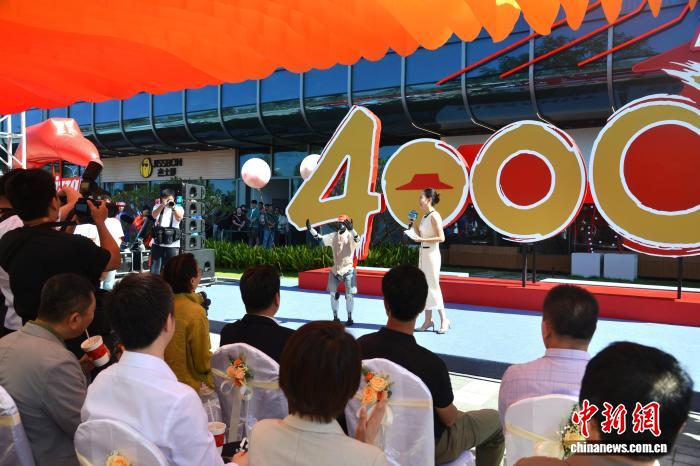
中新网三亚11月22日电(张月和)"从1990年进入中国市场到2023年,必胜客在33年间开了3000家餐厅, 而增长到4000家门店,我们仅用了两年多一点时间。"11月22日,必胜客中国第4000店在三亚开业,必 胜客中国品牌总经理蒯俊回顾了必胜客进入中国市场35年的发展历程。 中国城市化进程的加速为国际餐饮品牌发展提供了广阔市场空间。必胜客近年来的快速扩张,印证了中 国餐饮市场的机遇。 中国商务部等9部门2024年3月出台的《关于促进餐饮业高质量发展的指导意见》提出鼓励大型连锁餐饮 企业下沉发展、推进餐饮数字化赋能、创新餐饮消费场景等发展方向,叠加国家扩大内需战略的深化, 中国餐饮市场正迎来结构性机遇。 "我们希望品牌成长能与中国经济发展同频共振。"蒯俊说。(完) 市民刘东研是必胜客近二十年的忠实消费者。"作为知名的连锁餐饮品牌,必胜客的食品安全有保障, 出餐的速度也非常快。"刘东研说,从西餐到价格更接地气的快餐,除了新品的推出,个性化服务也是 她带孩子继续选择必胜客的原因之一。 随着中国经济的快速发展,消费者的消费观念和消费能力不断提升,对餐饮品质的要求也越来越高。据 公开数据,今年前三季度,中国餐饮消 ...
郑栅洁详解“十五五”扩内需举措,实施一批重大标志性工程项目
2 1 Shi Ji Jing Ji Bao Dao· 2025-11-07 10:33
Group 1: Core Strategy on Domestic Demand - The article emphasizes the importance of expanding domestic demand as a strategic foundation during the 14th Five-Year Plan period, focusing on enhancing consumer spending and optimizing the consumption environment [1][4] - Key measures include removing unreasonable restrictions in the consumption sector and improving mechanisms for paid leave to address the issue of "difficulties in taking leave" [1][4] - The long-term goal is to increase residents' consumption capacity and raise the proportion of residents' income in national income distribution [1][4] Group 2: Investment Expansion - The article outlines the need to actively expand effective investment, optimizing the investment structure to stimulate private investment and enhance government investment's role [2][7] - It highlights the importance of improving investment efficiency and addressing issues of "heavy investment, light returns" in certain sectors [2][9] - The focus is on deepening investment and financing system reforms, utilizing new policy financial tools, and enhancing the role of public-private partnerships [2][9] Group 3: Investment in People and Infrastructure - The article discusses the integration of investment in physical assets and human capital, emphasizing the need for investment in education, healthcare, and skills training to enhance human capital [3][4] - It points out that while there is still significant potential for investment in physical assets, the urgency of investing in human capital is increasing due to declining returns on physical capital investments [4][6] - The article stresses the necessity of addressing the needs of a diverse population and improving the quality of life through targeted investments in services like elderly care and healthcare [4][5] Group 4: Government and Private Investment Dynamics - The article calls for a clear delineation between government and private investment roles, aiming to enhance the effectiveness of both [7][9] - It suggests that government investment should focus on public service shortfalls and strategic areas, while also stimulating private investment through improved market conditions [8][12] - The need for a supportive environment for private enterprises is highlighted, including fair competition and risk management assistance [11][12]