新能源

Search documents
华润电力:2025年年报点评:火电业绩优异弥补风光下滑,业绩仍增长-20260320
GUOTAI HAITONG SECURITIES· 2026-03-20 02:45
Investment Rating - The report maintains a rating of "Buy" for the company [6] Core Insights - In 2025, the company achieved a net profit attributable to shareholders of HKD 14.52 billion, representing a year-over-year increase of 0.9%. The proposed total dividend for 2025 is HKD 1.1 per share, with a payout ratio of 40.2% [2][10] - The company’s total revenue for 2025 was HKD 102.01 billion, reflecting a year-over-year decrease of 3.1% [10] - The report forecasts earnings per share (EPS) for 2026-2028 to be HKD 2.09, HKD 2.20, and HKD 2.41 respectively, with a target price of HKD 25.08 based on a 12x PE ratio [10] Financial Summary - **Revenue and Profit**: - Total revenue for 2025: HKD 102,010 million, down 3.1% from 2024 - Net profit for 2025: HKD 14,519 million, up 0.9% from 2024 - Core profit from thermal power: HKD 7,640 million, up from HKD 4,640 million in 2024 - Core profit from renewable energy: HKD 7,600 million, down from HKD 9,200 million in 2024 [5][10] - **Profitability Metrics**: - PE ratio for 2025: 6.94 - PB ratio for 2025: 0.90 [5][10] - **Future Projections**: - Expected revenue for 2026: HKD 93,685 million - Expected net profit for 2026: HKD 10,839 million, a decrease of 25.3% year-over-year [5][10] Market Data - Current share price: HKD 19.44 - Market capitalization: HKD 100,642 million - 52-week price range: HKD 17.09 - 21.30 [7][10]

以产业洞见驱动产品力:广发基金ETF业务的差异化突围
券商中国· 2026-03-19 23:28
Core Viewpoint - The domestic ETF market has shown a clear division, with a large number of homogeneous products competing closely on one side, while a few players have established a coherent product array that secures market share and funds recognition on the other side [1][2]. Group 1: Product Strategy - The competition in the ETF market has shifted from merely sales channels or occasional hits to a deeper understanding of product capabilities driven by industry insights, leading to a more sustainable product layout [2]. - GF Fund has established a product advantage in the ETF field by creating a product system that aligns with market competition logic, achieving differentiation [2]. - GF Fund's cross-border ETF scale exceeds 120 billion yuan, with five products exceeding 10 billion yuan, ranking first in the industry [2][22]. Group 2: Chain Layout - The focus on ETF product strength has evolved from individual product sharpness to constructing an ecosystem that connects isolated products into a complete value chain [3]. - GF Fund's energy chain product line provides a clear investment map for capturing cyclical rotations in the energy sector, which is driven by technology, policy, and global climate agendas [4][6]. - The energy chain layout includes upstream resources like lithium and cobalt, midstream operations like power generation and transmission, and downstream core components like batteries, creating a dynamic allocation scheme that aligns with the industry lifecycle [6][7]. Group 3: Artificial Intelligence Investment - AI investment has transitioned from thematic to fundamental-driven, with two clear trends: the rigid growth of computing power demand and the strategic depth of domestic substitution [9][11]. - GF Fund's ETFs in the AI sector cover essential components such as chips and communication, forming the physical foundation for AI operations [11][12]. Group 4: Cross-Market Opportunities - GF Fund captures China's advantages in the new economy through cross-market layouts, particularly in sectors like innovative pharmaceuticals and digital economy [13]. - The Hong Kong Innovation Drug ETF focuses on biotech companies with international perspectives, while the Hong Kong Technology ETFs gather leading internet and SaaS service providers [13]. Group 5: Unique Product Offerings - GF Fund has strategically launched products in "unmanned zones" where market consensus is lacking, such as the Hong Kong Innovation Drug ETF and the Hong Kong Non-Bank Financial ETF, which are unique in their respective categories [14][16][17]. - The fund has also introduced the first or only ETFs in various sectors, including power, infrastructure, and food, to fill gaps in market understanding and execution strategies [18]. Group 6: Comprehensive Product Matrix - GF Fund has built a diverse ETF product matrix with 75 products and a total scale exceeding 280 billion yuan, covering major asset classes and strategy directions [19][22]. - The fund's wide-ranging ETF offerings include broad-based, dividend, cross-border, and other asset categories, providing investors with a comprehensive toolkit for asset allocation [21][22]. Group 7: Systematic Capability - The evolution of the ETF industry has shifted towards a high-level competition based on professional depth and systematic capabilities, where the value of tools increasingly depends on the quality of underlying insights and their precise transformation [23][24]. - GF Fund's product strength is characterized by a complete closed loop, starting from forward-looking industry insights to systematic chain layouts and a comprehensive product matrix [24][25].

天富期货碳酸锂、多晶硅、工业硅日报-20260319
Tian Fu Qi Huo· 2026-03-19 13:22
Report Industry Investment Rating - Not provided Core Views - The short - term lithium carbonate market lacks unilateral driving factors and is expected to fluctuate weakly. After the release of macro - risks, low - buying opportunities can be considered, but it may be difficult to return to previous highs [2]. - In the short term, the polysilicon market is dominated by weak demand and high inventories. Prices may continue to decline, and the market needs to achieve a new balance through price - driven supply adjustment [7]. - The industrial silicon market will maintain a short - term pattern of weak supply and demand, with the disk lacking trend drivers, and it is expected to oscillate within the range of (8100, 8900) [10]. Summary by Related Categories Carbonate Lithium - **Market Trend**: The main 2605 contract of lithium carbonate weakened, closing at 142,600 yuan/ton, a 5.01% decline from the previous trading day's closing price [1]. - **Core Logic**: Affected by macro and geopolitical risks, funds flow to safer sectors. In the short term, the market trades on the expectation of an economic recession, and some lithium - battery companies worry about insufficient growth in energy - storage demand. Weekly production increased by 760 tons, and inventory decreased by 86 tons, with the de - stocking rate narrowing. In the long term, high oil prices will increase the demand for lithium carbonate [2]. - **Technical Analysis**: The 5 - minute cycle of the main 2605 contract is a green line with a blue ribbon and a green ladder. The overnight 2 - hour cycle is a weak green ladder line, with the long - short dividing water level at 159,620 yuan/ton [2]. - **Strategy Suggestion**: Wait for the release of macro risks and then consider low - buying opportunities. Use "First K Breakthrough Method" or "Three - Line Resonance Method" for intraday trading [2][3]. - **Key Focus**: Macro - market sentiment, mining - end news disturbances, and energy - storage - related policy directions [3]. Polysilicon - **Market Trend**: The main 2605 contract of polysilicon weakened, closing at 38,550 yuan/ton, a 3.88% decline from the previous trading day's closing price [5]. - **Core Logic**: In the short term, the market is under the dual pressure of weak demand and high inventories. The social inventory of polysilicon is about 480,000 tons, at a historical high, and is still slightly increasing. After the cancellation of export tax rebates in April, downstream orders decreased, and the pattern of supply exceeding demand in the second quarter is clear [7]. - **Technical Analysis**: The 5 - minute cycle of the main 2605 contract is a red line with a blue ribbon and a red ladder. The overnight 2 - hour cycle is a weak green ladder line, with the long - short dividing water level at 43,275 yuan/ton [7]. - **Strategy Suggestion**: In the short term, the price of silicon materials may continue to decline. The market needs to see inventory reduction, demand recovery, or effective industry governance for a stable rebound [7]. Industrial Silicon - **Market Trend**: The 2605 contract of industrial silicon continued to oscillate weakly, closing at 8,285 yuan/ton, a 1.07% decline from the previous trading day's closing price [10]. - **Core Logic**: In March, the supply increase of industrial silicon is expected to be greater than the demand increase. The industry's oversupply pattern remains unchanged, with high inventory and slow de - stocking, suppressing prices. However, it is expected to maintain an oscillating pattern under cost support [10]. - **Technical Analysis**: The 5 - minute cycle of the main 2605 contract is a red line with a blue ribbon and a red ladder. The overnight 2 - hour cycle is a weak green ladder line, with the long - short dividing water level at 8,730 yuan/ton [10]. - **Strategy Suggestion**: The short - term pattern of weak supply and demand will continue, and the disk will oscillate within the range of (8100, 8900). Pay attention to the resumption of production, inventory de - stocking progress, and energy - cost fluctuations. Use the Band Winner indicator for intraday trading [10].
奇瑞交出上市后首份完整年度财报
第一财经· 2026-03-19 12:08
Core Viewpoint - Chery Automobile has reported strong financial performance for its first full fiscal year since listing on the Hong Kong stock market, with significant growth in both revenue and profit driven by its new energy and overseas markets [3][4]. Financial Performance - In 2025, Chery achieved total revenue of 300.29 billion yuan, a year-on-year increase of 11.3%, marking its first time surpassing the 300 billion yuan threshold [3]. - The net profit reached 19.51 billion yuan, up 36.1% year-on-year, with the net profit margin improving from 5.3% to 6.5% [3]. - Research and development (R&D) investment rose by nearly 40% to 14.715 billion yuan [3]. Growth Drivers - Chery's sales of self-owned passenger vehicles reached 2.6314 million units, a 14.6% increase year-on-year, with new energy vehicle sales soaring by 72.5% to 826,500 units, accounting for approximately 31.4% of total sales [4]. - Revenue from new energy vehicles was 98.023 billion yuan, a 66.3% increase, contributing to 32.6% of total revenue, up from 21.9% [4]. - The overseas market significantly contributed to growth, with exports of 1.2944 million vehicles, a 33.2% increase, making up 49.2% of total sales [4]. Market Position and Challenges - Chery has become a company that relies on overseas sales for half of its revenue, with overseas revenue reaching 157.42 billion yuan, a 56% increase, and accounting for 52.4% of total revenue [4][5]. - The average selling price of vehicles in overseas markets is significantly higher at 121,600 yuan compared to 103,500 yuan domestically [5]. - Despite growth, challenges remain in the domestic market, where profitability is under pressure due to a focus on lower-priced models [5][6]. Strategic Initiatives - Chery is transitioning its overseas strategy from "China design, regional manufacturing, regional sales" to "regional R&D, regional manufacturing, regional sales" to mitigate geopolitical risks [5]. - The company is investing heavily in R&D, with a focus on electric and intelligent vehicle technologies, and plans to maintain R&D investment intensity in 2026 [6]. - Key technologies such as advanced driver assistance systems and hybrid technology have been successfully implemented, contributing to improved margins in the new energy sector [6].
锂电铜箔加工费首轮上调落地
经济观察报· 2026-03-19 10:36
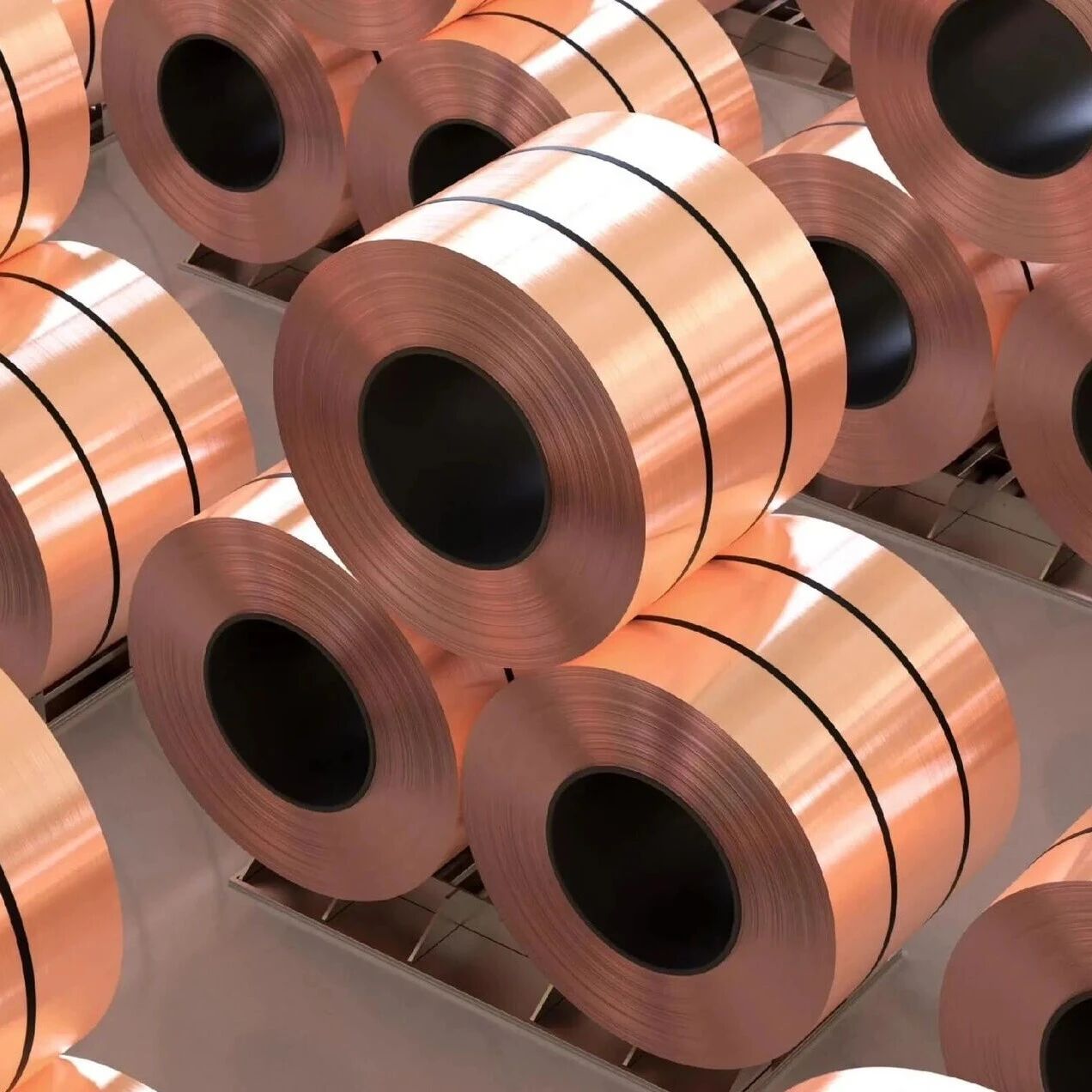
Core Viewpoint - The lithium battery copper foil industry is transitioning from "order preservation and production maintenance" to "price negotiation and profit recovery," indicating a critical point in the industry's recovery cycle driven by changes in supply-demand dynamics and bargaining power [1][6]. Group 1: Price Adjustments - Defu Technology (301511.SZ) has announced price increases for its lithium battery copper foil products due to strong downstream market demand, marking the first public confirmation of price hikes in the industry since 2026 [2][3]. - Other leading companies such as Zhongyi Technology (301150.SZ) and Jiayuan Technology (688388.SH) have also reported increases in average processing fees for copper foil products in their 2025 annual performance forecasts, benefiting from the industry's recovery [4][9]. - The price adjustments reflect a shift in market sentiment, with expectations for processing fee increases moving from potential to reality, as evidenced by Defu Technology's actions [8][11]. Group 2: Supply-Demand Dynamics - The copper foil industry faced challenges from mid-2023 to early 2025, with low processing fees and some companies experiencing losses due to weak demand and high production capacity [13]. - Since the fourth quarter of 2025, the supply-demand relationship has begun to reverse, with leading companies regaining pricing power and improving utilization rates, which rose to 72% [13][14]. - The demand for lithium battery copper foil is projected to reach 1.15 to 1.2 million tons in 2026, driven by the transition to thinner copper foils and the growth of AI-related applications [13][14]. Group 3: Industry Outlook - The copper foil industry is expected to see a significant increase in processing fees due to a combination of high demand for high-value products and limited supply capacity, particularly for high-end products [14][15]. - The current pricing mechanism, which typically follows a "copper price + processing fee" model, indicates that increases in processing fees will have a substantial impact on profitability, with potential annual profit increases of 1 billion yuan for leading companies based on processing fee adjustments [15]. - Analysts suggest that the recovery in processing fees is not a short-term phenomenon but a necessary outcome of the changing supply-demand landscape, with expectations for a broader price increase cycle if demand remains strong in the second quarter of 2026 [14][15].
地缘因素扰动情绪,碳酸锂价格度震荡
Hua Tai Qi Huo· 2026-03-19 08:03
1. Report Industry Investment Rating - Not provided in the given content 2. Core View of the Report - The domestic lithium carbonate destocking trend continues. Although the lithium carbonate spot market has not shown significant looseness, recent macro disturbances are frequent. Geopolitical wars have impacted the non - ferrous metals sector, and capital has rotated among sectors. The lithium carbonate market is driven by sentiment, and prices are in wide - range fluctuations. However, the trends of industry inventory destocking and tight supply - demand have not reversed. Future attention should be paid to supply changes, downstream stocking rhythms, and the atmosphere of the commodity market. In the short term, interval operations are recommended, and short - term unilateral operations should be mainly on the sidelines [3] 3. Summary by Related Catalogs Market Analysis - On March 18, 2026, the main lithium carbonate contract 2605 opened at 155,000 yuan/ton and closed at 150,120 yuan/ton, with a - 4.43% change in the closing price compared to the previous day's settlement price. The trading volume on that day was 205,889 lots, and the open interest was 307,422 lots (the previous day's open interest was 308,842 lots). According to SMM spot quotes, the current basis is 4,020 yuan/ton (average price of electric carbon - futures). The lithium carbonate warehouse receipts on that day were 35,769 lots, a change of - 696 lots from the previous trading day [1] - According to SMM data, the price of battery - grade lithium carbonate is quoted at 151,000 - 160,000 yuan/ton, a change of - 2,500 yuan/ton from the previous trading day; the price of industrial - grade lithium carbonate is quoted at 148,000 - 157,000 yuan/ton, a change of - 2,000 yuan/ton from the previous trading day. The price of 6% lithium concentrate is 2,180 US dollars/ton, a change of - 45 US dollars/ton from the previous day [1] - According to the latest SMM data statistics, the weekly domestic lithium carbonate output is reported at 23,426 tons, a month - on - month increase of 3.7%. In February 2026, the domestic lithium carbonate output was 83,090 tons, a month - on - month decrease of 15.1% and a year - on - year increase of 29.7%. The output from January to February increased by 43.0% year - on - year [1] - The energy storage sector still maintains a good growth expectation, but the growth rate expectation of new energy vehicle sales has slowed down. This downward transmission has led to a weakened willingness of cathode material manufacturers and battery enterprises to replenish inventory, shifting from "replenishing inventory at low prices" to "purchasing on demand" [1] Inventory Analysis - According to the latest SMM statistics, the spot inventory is 98,959 tons, a month - on - month decrease of 414 tons. Among them, the smelter inventory is 16,292 tons, a month - on - month decrease of 1,184 tons; the downstream inventory is 45,647 tons, a month - on - month increase of 1,890 tons; other inventories are 37,020 tons, a month - on - month decrease of 1,120 tons. The downstream inventory has increased, while the smelter and other inventories have decreased, and the overall destocking pattern is still maintained [2] Strategy - Unilateral: Mainly on the sidelines in the short term - Inter - period: None - Cross - variety: None - Spot - futures: None - Options: None [3]
光伏行业周报(20260309-20260313)
Guoxin Securities Co., Ltd· 2026-03-19 05:45
Investment Rating - The report maintains a positive outlook on the photovoltaic industry, suggesting a focus on companies benefiting from supply-side reforms and technological advancements [3]. Core Insights - The photovoltaic equipment sector index increased by 6.86% during the week of March 9-13, 2026, outperforming the broader market index [12][14]. - Key companies in the photovoltaic equipment sector that showed significant gains include Airo Energy, Hengdian East Magnetic, and Sunshine Power, while companies like Maiwei and Zhonglai experienced notable declines [18][20]. - The report highlights the importance of monitoring policy implementation and technological order fulfillment in the short term, while advocating for long-term investments in high-efficiency technologies and leading companies [3]. Summary by Sections Market Performance - The Shanghai and Shenzhen 300 index rose by 0.19%, with the electric power equipment index up by 4.55%, ranking second among 31 industry indices [12]. - The photovoltaic equipment industry index's performance was notably strong, with a 6.86% increase, while other related sectors showed mixed results [14]. Industry Chain Price Trends - As of March 11, 2026, the prices for key materials in the photovoltaic supply chain are as follows: silicon material at 46 CNY/kg (down 2 CNY), silicon wafers at 1.15 CNY/piece (down 0.03 CNY), battery cells at 0.42 CNY/W (down 0.02 CNY), and modules at 0.84 CNY/W (unchanged) [21]. Industry News - The National Energy Administration announced plans to double the installed capacity of renewable energy by 2035, emphasizing the need for market mechanisms to support sustainable growth in the sector [28]. - The "14th Five-Year Plan" outlines the establishment of ten clean energy bases, including solar and wind energy projects, to enhance energy security and transition to a low-carbon economy [29]. - Yibin City aims to strengthen its photovoltaic industry chain, targeting a scale of 40 billion CNY by 2026 [30].
观点与策略:国泰君安期货商品研究晨报-绿色金融与新能源-20260319
Guo Tai Jun An Qi Huo· 2026-03-19 03:21
Report Industry Investment Ratings No information provided in the given content. Core Views - Nickel: The combination of smelting inventory accumulation and macro - sentiment, with the shortage at the ore end providing support at the bottom [2][4]. - Stainless steel: Pressured by fundamentals and the macro - environment, but supported by the current cost [2][4]. - Lithium carbonate: Attention should be paid to the impact of macro - commodity fluctuations [2][12]. - Industrial silicon: In a weak pattern [2][17]. - Polysilicon: Spot prices are falling [2][18]. Summaries by Related Catalogs Nickel and Stainless Steel - **Fundamental Data**: The closing price of the Shanghai nickel main contract was 135,200, down 740 from the previous day; the closing price of the stainless - steel main contract was 14,020, down 75. The trading volume of the Shanghai nickel main contract was 260,586, a decrease of 82,221; the trading volume of the stainless - steel main contract was 126,426, a decrease of 17,805 [4]. - **Macro and Industry News**: The Indonesian Nickel Miners Association (APNI) revealed that the Ministry of Energy and Mineral Resources (ESDM) will revise the benchmark price formula for nickel ore commodities in early 2026. The Solway Investment Group plans to restart its nickel mine business in Guatemala. The approved nickel ore production quota in 2026 is between 2.6 billion and 2.7 billion tons. Some nickel - mining companies in Indonesia were sanctioned [4][5][9]. - **Trend Intensity**: Nickel trend intensity is 0; stainless - steel trend intensity is 0 [11]. Lithium Carbonate - **Fundamental Data**: The closing price of the 2605 contract was 150,120, down 5,200 from the previous day. The trading volume was 205,889, an increase of 32,450. The spot - 2605 basis was 5,380 [14]. - **Macro and Industry News**: The Ningde Times' Jinchui Phase I project in Ningde City, Fujian Province, is planned to be completed and delivered by the end of April 2026. Nandu Power signed an 117MWh energy - storage project in the Northern Territory of Australia [15][16]. - **Trend Intensity**: Lithium carbonate trend intensity is - 1 [16]. Industrial Silicon and Polysilicon - **Fundamental Data**: The closing price of the Si2605 contract was 8,375, down 185 from the previous day; the closing price of the PS2605 contract was 40,105, down 1,565. The industrial - silicon social inventory was 55.2 million tons, a decrease of 0.1 million tons compared to a week ago [18]. - **Macro and Industry News**: Sanyou Chemical's annual production capacity of silicone monomers has reached 400,000 tons/year, and the silicone industry's supply - side has a rigid contraction and demand - side has a structural growth [18]. - **Trend Intensity**: Industrial silicon trend intensity is 0; polysilicon trend intensity is - 1 [20].
每日晨讯-20260319
ZHONGTAI INTERNATIONAL SECURITIES· 2026-03-19 03:10
Market Overview - The Hong Kong stock market continued its upward trend, with the Hang Seng Index and the Hang Seng China Enterprises Index closing at 26,025.42 points and 8,835.50 points, respectively, up by 0.6% and 0.1% [1] - Market turnover was HKD 240.4 billion, a decrease of 10.4% from the previous day's HKD 268.3 billion, indicating cautious sentiment among some investors [1] - In sector performance, composite enterprises, industrial, and financial indices rose by 2.0%, 1.7%, and 1.1%, while telecommunications, consumer staples, and energy sectors fell by 0.1%, 0.2%, and 0.7% [1] U.S. Market Performance - The U.S. stock market saw a decline, with the Dow Jones Industrial Average closing at 46,225 points, down by 1.6% [2] - The Hang Seng Index futures closed at 25,479 points, indicating a discount of 546 points, suggesting pressure on the Hong Kong market today [2] Macroeconomic Dynamics - The U.S. Federal Funds Rate remains unchanged at 3.5%-3.75%, aligning with market expectations [3] - The U.S. Producer Price Index (PPI) for February increased by 3.4% year-on-year, surpassing January's 2.9% and market forecasts of 2.9% [3] - Factory orders in the U.S. rose by 0.1% month-on-month in February, an improvement from January's -0.4%, consistent with market predictions [3] Automotive Sector Insights - Geely Automobile (175 HK) reported a 39.0% year-on-year increase in sales for 2025, with total revenue up by 25.1% and a core net profit of RMB 14.41 billion, reflecting a 36% increase [4] - The company plans a dividend payout ratio of approximately 29%, with a year-on-year increase of 51% in the dividend per share [4] - Geely's sales target for 2026 is set at 3.45 million units, a 14% increase year-on-year, with capital expenditure expected to decrease from RMB 17.9 billion to RMB 16 billion [4] Healthcare Sector Developments - The Hang Seng Healthcare Index rose by 1.1%, with Rongchang Biopharmaceutical (9995 HK) seeing a 7.4% increase in stock price following the announcement of multiple original research results at the 2026 EAU [4] - Junshi Biosciences (1877 HK) also experienced a stock price increase of 5.8% after reporting a reduction in losses for 2025 [4] New Energy and Utilities Sector Performance - The new energy and utilities sector generally saw gains, except for photovoltaic and nuclear energy [5] - Electric equipment stocks performed well, with Weisheng Holdings (3393 HK) rising by 8.6% after securing a supply contract worth approximately RMB 180 million with Brazil's CEMIG [5] - The thermal power sector also experienced increases, with Huaneng International (902 HK), Datang Power (991 HK), and Huadian International (1071 HK) rising between 0.5% and 2.3% [5]
吉利汽车20260318
2026-03-19 02:39
Summary of Geely Automobile Conference Call Company Overview - **Company**: Geely Automobile - **Industry**: Automotive, specifically focusing on electric vehicles (EVs) and smart technology Key Financial Performance - **Total Revenue**: 345.2 billion CNY (+25%) in 2025, marking a historical high [2][4] - **Core Net Profit**: 14.41 billion CNY (+36%), with a core net profit margin of 4.2% [2][4] - **Sales Volume**: 3.025 million vehicles (+39%), with a market share increase to 10.05% [4] - **Gross Margin**: Maintained at 16.6%, with a slight increase in the second half of 2025 [8][26] - **Cash Reserves**: Reached 68.2 billion CNY (+46%), a record high [9] Sales and Market Dynamics - **New Energy Vehicles (NEVs)**: Sales reached 1.688 million units (+90%), with a penetration rate of 55.8% [2][4] - **Brand Performance**: - **Galaxy Brand**: 1.236 million NEVs sold (+150%) [5] - **Lynk & Co**: 350,000 units sold (+23%), with NEV sales at 228,000 units (+36%) [5] - **Zeekr**: 224,000 units sold, with significant growth in the luxury segment [5] - **Export Performance**: Total exports reached 420,000 units, with NEV exports increasing by 240% [7] Strategic Initiatives - **Integration and Cost Reduction**: Completed integration of Lynk & Co and Zeekr, aiming for significant cost savings in 2026 [2][18] - **R&D Investment**: Increased to 21.9 billion CNY (+8.3%), with a focus on enhancing technology leadership [8] - **Smart Technology Development**: Plans to achieve L3 level autonomous driving and scale up Robotaxi operations by 2026 [2][14] Sustainability and ESG Efforts - **Carbon Reduction**: Exceeded 5-year carbon reduction goals, achieving a 25.5% reduction in lifecycle emissions compared to 2020 [10] - **Safety Initiatives**: Established the world's largest automotive safety center, emphasizing safety as a core value [16] Future Outlook - **2026 Sales Target**: Aiming for 3.45 million units, with specific targets for each brand [12] - **Export Goals**: Targeting 640,000 units in exports, with a focus on European and ASEAN markets [12][13] - **Technological Advancements**: Plans to enhance AI capabilities and smart driving technologies, with a goal to lead in the global smart vehicle market [14][27] Challenges and Market Conditions - **Geopolitical Risks**: Acknowledged potential impacts from geopolitical tensions and raw material price fluctuations [22] - **Market Competition**: Recognized the need to maintain competitive pricing and product quality amidst rising costs [22] Conclusion - **Investment Confidence**: Management expresses confidence in future growth and profitability, anticipating continued record-breaking performance in core net profit [31]