硬科技

Search documents
科创板开板六周年:588 家上市公司绘就“硬科技”图鉴,多家企业年度收入突破千亿元大关
Hua Xia Shi Bao· 2025-06-13 14:06
Core Viewpoint - The Shanghai Stock Exchange's Sci-Tech Innovation Board (STAR Market) has successfully supported "hard technology" companies since its launch in June 2019, contributing positively to China's innovation-driven development strategy and the growth of enterprises [1][6]. Group 1: Performance and Growth - The number of listed companies on the STAR Market reached 588 by June 2025, showcasing its role in promoting high-level technological self-reliance and new productivity development [1]. - Revenue for STAR Market companies has shown a steady increase, with total revenues reaching 1,348.99 billion yuan in 2022, 1,420.46 billion yuan in 2023, and 1,426.07 billion yuan in 2024 [2]. - Notable companies like JinkoSolar and Trina Solar have reported significant revenue growth, with JinkoSolar's revenue increasing from 82.68 billion yuan in 2022 to 118.68 billion yuan in 2023, and Trina Solar's revenue rising from 85.05 billion yuan in 2022 to 113.39 billion yuan in 2023 [2][3]. Group 2: Research and Development Investment - STAR Market companies have demonstrated exceptional innovation vitality, with R&D investments of 137.40 billion yuan in 2022, 158.15 billion yuan in 2023, and 167.99 billion yuan in 2024 [4]. - In 2024, 315 companies had R&D expenses exceeding 100 million yuan, with 63 companies exceeding 500 million yuan, and 28 companies surpassing 1 billion yuan [4]. - BeiGene has shown a strong commitment to R&D, with expenditures of 11.15 billion yuan in 2022, 12.81 billion yuan in 2023, and 14.14 billion yuan in 2024 [4]. Group 3: Institutional Innovation and Market Reforms - The STAR Market has focused on institutional innovation, implementing a registration system and market-oriented pricing mechanisms to enhance liquidity and investor protection [3][5]. - The recent "STAR Market Eight Measures" introduced by the China Securities Regulatory Commission aims to strengthen the board's focus on "hard technology" and support high-quality, unprofitable tech companies in going public [6]. - Future reforms are suggested to include policy coordination with relevant ministries, product innovation through new financial instruments, and the establishment of innovation funds to support early-stage projects [7].



一周产业基金|全国首只养老科创产业基金来了;国家中小企业发展基金再出资
Mei Ri Jing Ji Xin Wen· 2025-06-13 12:42
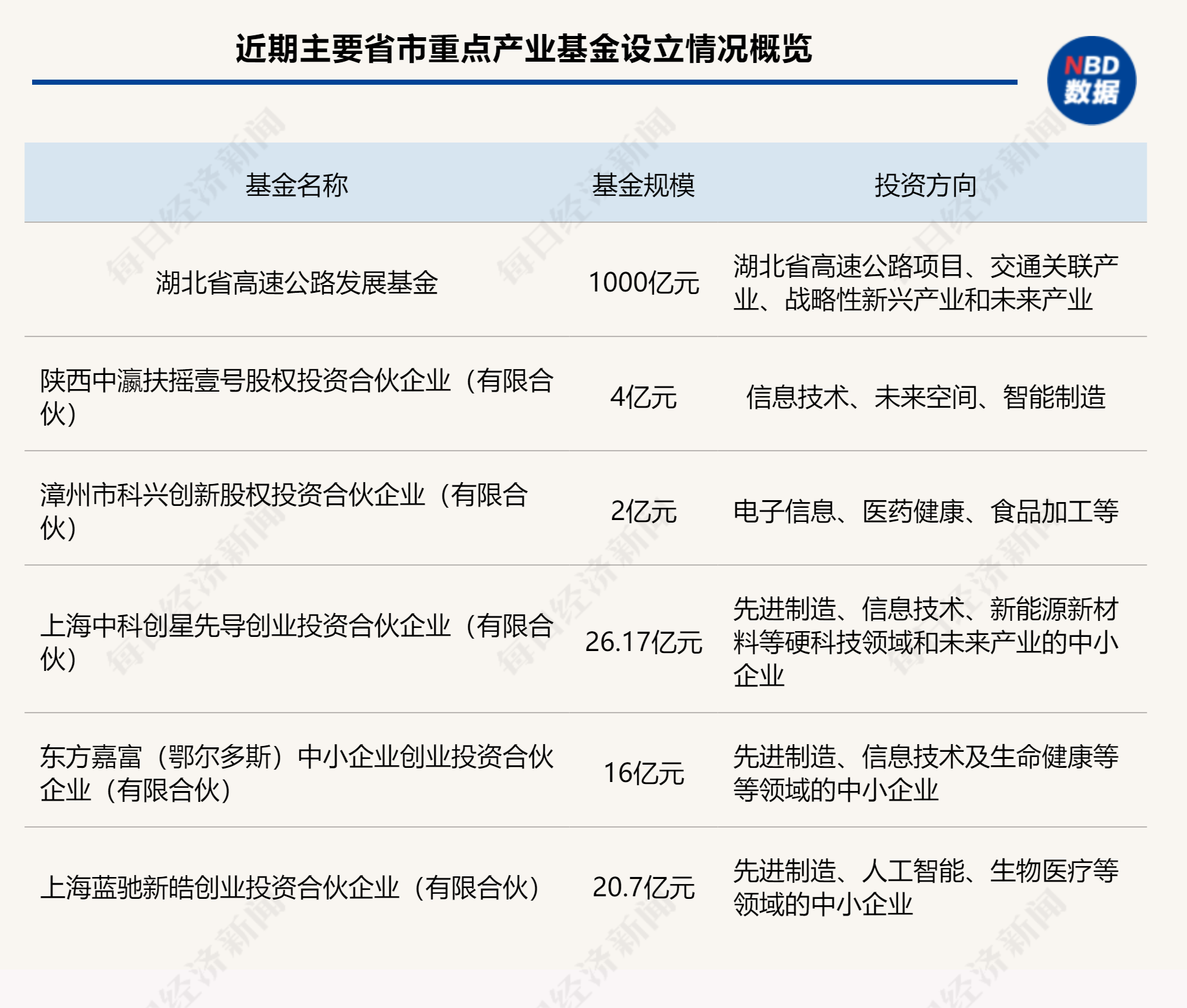
Group 1 - The first national pension science and technology innovation fund has been established in Shanghai, focusing on supporting hard technology research and smart medical applications in the elderly care sector [2][1] - The fund is a collaboration between China Construction Bank's subsidiary and Shanghai Dalinghao Bay Investment Development Group, utilizing a "government-bank-enterprise linkage" model to integrate resources [2][1] - The National SME Development Fund has completed the establishment of its seventh batch of sub-funds, which will invest in advanced manufacturing, information technology, and new energy materials [3][1] Group 2 - The Hubei Provincial Expressway Development Fund has been signed, with a total scale of 100 billion yuan, making it the largest private equity fund in Hubei [5][11] - The fund will allocate 80% of its total scale to expressway project construction and 20% to related industries and emerging strategic industries [5][11] - A new AIC equity investment fund has been established in Shaanxi, focusing on new generation information technology and intelligent manufacturing, with a total scale of 4 million yuan [6][11] Group 3 - A 100 billion yuan service trade innovation development guiding fund has been launched, focusing on health technology and advanced manufacturing combined with digital economy [4][11] - The Shandong Province has approved the establishment of a 10 billion yuan integrated circuit artificial intelligence industry fund, targeting hard technology sectors [9][11] - The Zhangzhou municipal "拨改投" fund has been registered, with a total scale of 2 million yuan, focusing on key industries such as electronic information and health [7][8][11]
“国家队”LP再出资!已累计设立46只子基金,投资企业超1800家
Zheng Quan Shi Bao Wang· 2025-06-13 12:12
近日,国家中小企业发展基金完成第七批子基金签约设立工作,继今年4月与深创投签约后,又分别与 中科创星、东方嘉富、蓝驰创投三家投资机构签约,至此第七批子基金全部设立,总规模达82.87亿 元,重点投向硬科技领域中小企业,这是国家重量级LP在创投领域的重要布局。 上海蓝驰新皓创业投资合伙企业(有限合伙)同样注册于上海市,管理机构为嘉兴蓝驰投资管理有限公 司,基金规模20.7亿元,聚焦先进制造、人工智能、生物医疗等领域的中小企业。 至此,国家中小企业发展基金第七批四只子基金全部完成设立,子基金总规模达82.87亿元,在硬科技 领域的投资布局进一步扩大。 累计设立46只子基金,子基金规模超1200亿元 国家中小企业发展基金是创投行业最活跃的国家级母基金之一。其设立背景可追溯到2015年9月,当时 按照《中小企业促进法》要求,国务院常务会议决定设立该基金。 随后2020年5月,由中央财政与上海国盛、中国烟草等社会出资人共同发起成立国家中小企业发展基金 有限公司(母基金),注册资本357.5亿元,通过投资设立子基金等方式,使基金总规模达到1000亿元以 上,重点解决创新型中小企业的中长期股权融资问题。 从资金来源看,该基 ...
有效引导金融“活水”流向“硬科技”领域 科创板ETF产品总规模超2500亿元
Zheng Quan Ri Bao Wang· 2025-06-13 12:09
Core Viewpoint - The implementation of the "Eight Measures for Deepening the Reform of the Sci-Tech Innovation Board" has effectively guided financial resources towards "hard technology" sectors, optimizing resource allocation and providing strong capital support for cultivating new productive forces [1]. Group 1: ETF Development - The "Eight Measures" explicitly state the need to enrich the categories of Sci-Tech Innovation Board ETFs and ETF options, as well as to optimize the registration mechanism for broad-based index products [2]. - As of June 6 this year, 51 new Sci-Tech Innovation Board ETFs have been listed, bringing the total to 80, which is nearly three times the number before the implementation of the "Eight Measures" [2]. - The total scale of Sci-Tech Innovation Board ETFs has exceeded 250 billion yuan, representing a nearly 60% increase since the "Eight Measures" were announced [2]. Group 2: Market Expansion and Coverage - The Sci-Tech Innovation Board has become the segment with the highest proportion of index-based investment in the A-share market, with 27 fund companies now involved in Sci-Tech Innovation Board ETFs, an increase of 13 companies since the "Eight Measures" [2]. - The Shanghai Stock Exchange has developed a comprehensive ecosystem of Sci-Tech Innovation Board indices and ETF products, covering broad-based, industry themes, and strategies [2]. - The introduction of the Sci-Tech 200 ETF and the Sci-Tech Comprehensive Index ETF has significantly enhanced the broad-based index product system, playing a crucial role in attracting new capital and supporting key technological innovations [2]. Group 3: Thematic ETFs and Sector Coverage - The investment targets of broad-based Sci-Tech Innovation Board ETFs now cover the Sci-Tech 50, 100, 200, and Comprehensive Index, forming a complete product chain that meets diverse investor needs [3]. - The thematic ETFs have expanded to cover key sectors such as artificial intelligence, new energy, chip design, semiconductor materials and equipment, and industrial machinery [3]. - The total scale of the Sci-Tech Chip ETF has exceeded 30 billion yuan, while the six upcoming artificial intelligence ETFs are expected to grow over three times their initial issuance size by 2025 [3].
“科创板八条”赋能指数化投资 ETF市场助推“硬科技”发展
Zheng Quan Shi Bao Wang· 2025-06-13 11:51
Core Insights - The implementation of the "Eight Measures for Deepening the Reform of the Sci-Tech Innovation Board" has effectively guided financial resources towards "hard technology" sectors, optimizing resource allocation and providing strong capital support for cultivating new productive forces [1][2] - The number and scale of Sci-Tech Innovation Board ETF products have significantly increased, with 51 new ETFs launched, bringing the total to 80, nearly tripling the number before the "Eight Measures" [1] - The total scale of Sci-Tech Innovation Board ETFs has exceeded 250 billion yuan, marking a nearly 60% increase since the introduction of the "Eight Measures" [1] Investment Product Development - A comprehensive ecosystem of indices and ETFs covering broad-based, industry themes, and strategies has been established on the Sci-Tech Innovation Board [2] - The total scale of broad-based ETFs on the Sci-Tech Innovation Board has surpassed 200 billion yuan, effectively directing social funds towards the development of new productive forces [2] - The investment targets of broad-based ETFs now include the Sci-Tech 50, 100, 200, and comprehensive indices, fulfilling diverse investor needs [2] Thematic ETF Expansion - The thematic ETFs on the Sci-Tech Innovation Board have expanded to cover key sectors such as artificial intelligence, new energy, chip design, semiconductor materials and equipment, and industrial machinery [2] - The total scale of chip industry ETFs has exceeded 30 billion yuan, while the scale of artificial intelligence ETFs has grown over three times since their issuance [2] - The first batch of innovative drug ETFs is set to be approved soon, with plans for the Shanghai Stock Exchange to continue enriching the index and ETF offerings on the Sci-Tech Innovation Board [2]
上次在这个点发文,好像是因为喝了点酒
叫小宋 别叫总· 2025-06-13 10:48
Core Viewpoint - The article discusses the evolving dynamics of consumer behavior and company management, particularly focusing on the importance of "private domain" operations in businesses like Pang Donglai, as well as the shifting preferences of younger generations in the market [11][12]. Group 1: Pang Donglai's Business Model - Pang Donglai allocates a significant portion of profits to employees, which is a notable aspect of its business model [5]. - The markup rate of Pang Donglai is lower compared to other supermarkets, indicating that its products may have higher costs but also better quality, leading to increased customer loyalty and repurchase rates [6][8]. - Pang Donglai can be viewed as a large private domain operator, where all employees and customers are considered private domain users [9]. Group 2: Market Trends and Consumer Behavior - The article raises questions about the changing preferences of younger consumers, particularly regarding alcohol consumption, suggesting that younger generations may reject traditional values associated with drinking [13]. - The recent stock market trends show a decline in liquor stocks while companies like Pop Mart are reaching new highs, indicating a shift in market sentiment towards brands that resonate with younger consumers [13][14]. - Investment strategies, especially in the primary market, are increasingly focused on aligning with the preferences of younger generations [14][16]. Group 3: Industry Insights - The article highlights the growing importance of founders' abilities to manage young customers and employees, suggesting that this will become a critical evaluation criterion in the investment landscape over the next decade [11]. - There is a noticeable trend in business proposals increasingly including social media links, reflecting the changing landscape of how companies engage with younger audiences [15].

无为福城股权投资母基金招GP
FOFWEEKLY· 2025-06-13 10:32
Group 1 - The announcement from Wuwei Fucheng Equity Investment Mother Fund indicates the launch of a call for sub-fund management institutions, focusing on supporting technology innovation and investing in hard technology [1] - Sub-funds categorized as technology innovation funds must invest at least 70% of their capital in early-stage enterprises [1] - Other types of sub-funds will focus on industries such as new energy vehicle components, green food, high-end equipment manufacturing, and next-generation information technology, with a similar investment requirement of at least 70% [1] Group 2 - The fund mandates that investments in enterprises registered in Wuwei City must be at least 1.0-1.5 times the amount contributed by the mother fund [1] - Sub-funds registered in Wuwei City are required to have a return ratio of at least 1.0-1.2 times, with technology innovation sub-funds needing a minimum return ratio of 1.0 times [1] - For industry-specific sub-funds, the return ratio must be at least 1.2 times, while sub-funds registered outside Wuwei City must achieve a return ratio of at least 1.5 times [1]

影石刘靖康谈上市:从开荒者到守擂者,如何长久留在牌桌?
Nan Fang Du Shi Bao· 2025-06-13 09:49
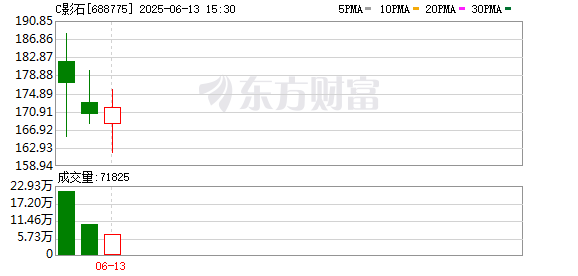
Core Insights - Insta360, a Shenzhen-based smart imaging company, experienced a significant stock market debut, with its share price soaring nearly threefold and market capitalization exceeding 70 billion yuan, establishing itself as the "first stock in smart imaging" on the A-share market [2][3] - Founder Liu Jingkang, a notable figure in the tech industry, emphasizes responsibility and commitment in the face of market excitement, recognizing that the real challenges lie ahead as industry giants and AI trends emerge [3][4] Company Strategy - The company chose to list on the Sci-Tech Innovation Board five years ago, which is more favorable for tech companies focused on long-term growth rather than immediate profitability [5] - Liu acknowledges the market's expectations as a double-edged sword, serving as both pressure and motivation for the company to meet heightened standards [5][6] Competitive Landscape - DJI is identified as a significant competitor in the action camera market, with concerns about its potential impact on Insta360's market position [6][10] - Liu compares the imaging market to the gaming industry, suggesting that it is less prone to homogenization and offers opportunities for unique experiences, allowing for coexistence and collaboration with competitors like DJI [8][9] Innovation and Development - The company focuses on a dual strategy of "fast variables" (product and technology innovation) and "slow variables" (brand, channel, and user perception) to maintain a competitive edge [11][12] - Liu categorizes innovation into three levels: pure software innovation, soft-hard integration, and soft-hard-chip innovation, each with varying timelines for market impact [12] Organizational Philosophy - The company prioritizes employee development, believing that a well-trained and motivated team will ultimately lead to better customer value and shareholder returns [18] - Liu emphasizes the importance of curiosity as a key quality for talent, which drives innovation and improvement within the organization [13][18]
影石A股上市再现造富神话:IDG资本账面回报超700倍 苏宁提前“清仓”失之交臂
Xin Lang Zheng Quan· 2025-06-13 09:21
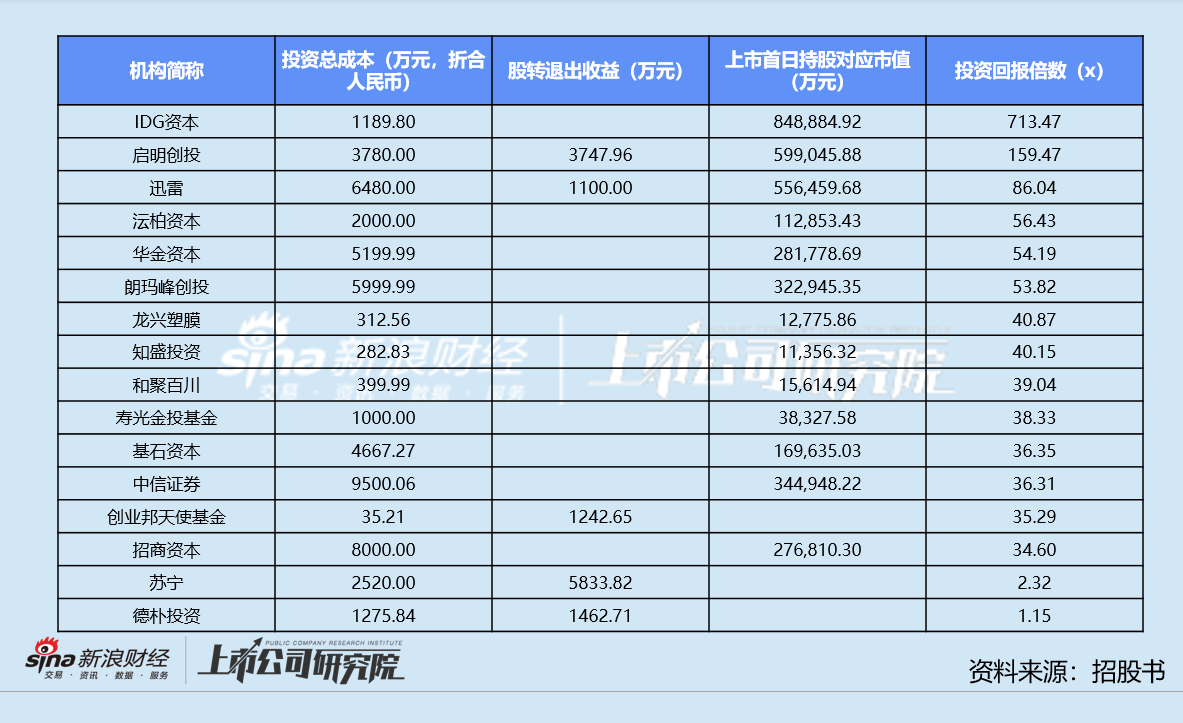
Core Viewpoint - The successful listing of Yingshi Innovation on the Sci-Tech Innovation Board marks a significant milestone for the company, which has shown impressive growth in market share and financial performance since its establishment in 2015 [1] Company Overview - Yingshi Innovation, founded in 2015, specializes in panoramic cameras, holding the largest market share for six consecutive years, with a global market share of 67.2% in 2023 [1] - The company's total revenue is projected to grow from 159 million yuan in 2018 to 5.574 billion yuan in 2024, with a compound annual growth rate (CAGR) of 66.2% [1] - Net profit is expected to increase from less than 6.5 million yuan to 999.5 million yuan during the same period, with a CAGR of 106.6% [1] - Yingshi maintains a gross margin above 50% and a net margin around 20% over the past four years, significantly outperforming established competitors like GoPro [1] Investment and Financing History - Prior to its IPO, Yingshi completed six rounds of equity financing and three equity transfers, initially planning to list overseas [2] - The first round of investment in March 2015 included IDG Capital and Chuangyibang Angel Fund, with investments of 652,500 USD and 48,900 USD respectively [2] - Subsequent funding rounds saw participation from various investors, including significant contributions from companies like Xunlei and Suning [2][3] Investor Returns - Post-IPO, IDG Capital's shares are valued at approximately 8.489 billion yuan, yielding a return of 713.47 times its initial investment [4] - Other notable returns include 159.47 times for Qiming Venture Partners and 86.04 times for Xunlei [4] - The investment performance of other institutions also exceeded 50 times, with several achieving returns between 35 to 40 times [4][5]
企业负责人回顾“科八条”,未盈利“潜力股”交出亮眼成绩单
2 1 Shi Ji Jing Ji Bao Dao· 2025-06-13 07:09
Core Viewpoint - The article emphasizes the importance of hard technology companies in supporting national strategies and achieving high-level technological self-reliance, particularly for quality unprofitable enterprises that can transform with quality capital empowerment [1][2]. Group 1: Policy Support and Market Dynamics - The China Securities Regulatory Commission (CSRC) released the "Eight Measures for Deepening the Reform of the Sci-Tech Innovation Board" on June 19, 2024, which supports unprofitable enterprises with key core technologies and significant market potential to go public [1][2]. - As of May 2025, the Sci-Tech Innovation Board has supported 54 unprofitable companies in their IPOs, covering emerging industries such as innovative pharmaceuticals, chip design, and artificial intelligence, with a total revenue of 174.48 billion yuan in 2024, a 24% year-on-year increase [1][5]. - The implementation of new regulations allows for different lock-up ratios or periods for offline investors in unprofitable companies, shifting the investment logic from short-term profit to long-term value [4]. Group 2: Financial Performance and Growth - In 2024, the 54 unprofitable companies on the Sci-Tech Innovation Board achieved a total revenue exceeding 170 billion yuan, with a 24% year-on-year growth, while their net losses decreased by 36% [5][10]. - Notable companies like SMIC and Kingsoft Office reported revenue and net profit growth of 21.2% and 24.3% respectively in 2024, showcasing significant development since their IPOs [5][10]. - The total R&D investment of the 54 unprofitable companies reached 45.944 billion yuan in 2024, marking a 5.86% increase, with a median R&D investment-to-revenue ratio of 37.74%, significantly higher than the board's median of 12.64% [6]. Group 3: Case Studies of Successful Companies - Baile Tianheng, a notable unprofitable company, has seen its stock price rise from 24.7 yuan at IPO to 338 yuan, demonstrating successful growth and a robust pipeline of innovative drugs [6][7]. - Tianyue Advanced, another unprofitable company, utilized its IPO proceeds to enhance its production capacity in silicon carbide semiconductor materials, showcasing effective capital market utilization for technological advancement [7][8]. Group 4: Future Outlook and Investor Engagement - Companies are focusing on sustainable profitability and balancing technological investments to enhance market value and investor confidence [11]. - The number of Sci-Tech themed ETFs has doubled since the release of the "Eight Measures," indicating growing investor interest and potential in the sector [10].