绿色转型

Search documents
【会场酒店---青山宾馆】2025年中国硅业大会
中国有色金属工业协会硅业分会· 2025-08-12 06:17
Core Viewpoint - The article highlights China's competitive edge in the global green industry, particularly in photovoltaic products, new energy vehicles, and lithium batteries, while also addressing the challenges of "involution" competition within the industry [2]. Group 1: Industry Overview - China's manufacturing sector has excelled in the green industry due to advanced technologies and innovative products, especially in the "new three items": photovoltaic products, new energy vehicles, and lithium batteries [2]. - The importance of silicon-based materials in the photovoltaic industry chain is emphasized, as they are crucial for maintaining supply chain stability and addressing low-price disorderly competition [2]. Group 2: Upcoming Conference - The China Nonferrous Metals Industry Association is organizing the "2025 China Silicon Industry Conference" from September 10-12, 2025, in Baotou, Inner Mongolia, focusing on technological innovation and industry self-discipline [2]. - The conference aims to provide a platform for representatives to enhance communication, negotiate cooperation, and promote the sustainable and stable development of China's silicon industry [2].


新华社权威速览·非凡“十四五”丨五个维度,看税收这样支撑高质量发展
Xin Hua Wang· 2025-08-12 06:10
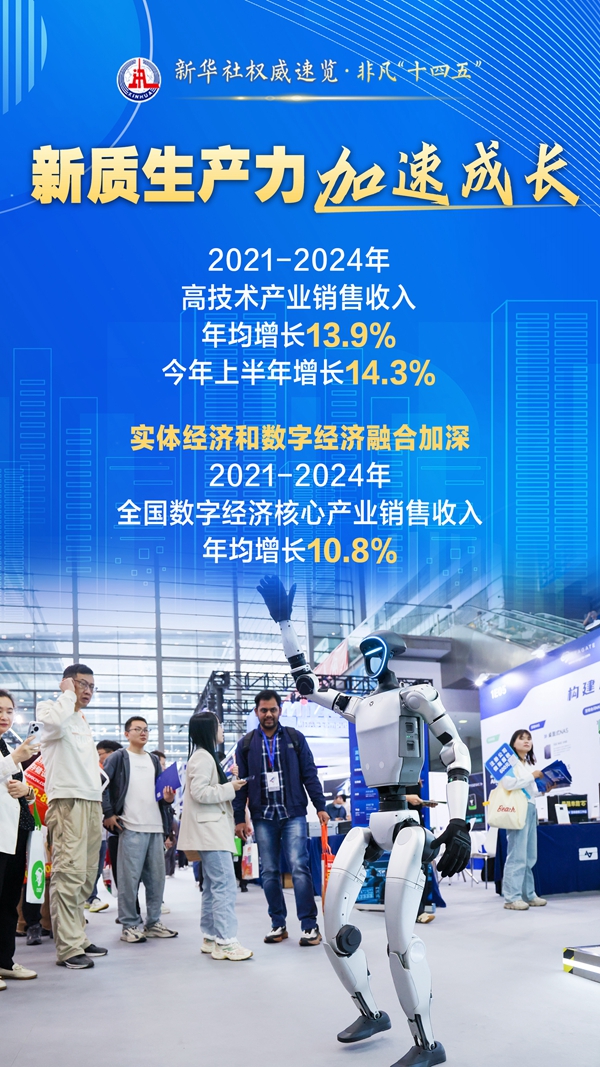
Group 1: Economic Development Indicators - Tax revenue data serves as a barometer for economic and social development, highlighting the role of tax policies in supporting high-quality growth during the "14th Five-Year Plan" period [1] - The three major economic regions—Beijing-Tianjin-Hebei, Yangtze River Delta, and Pearl River Delta—account for over 50% of national sales revenue, with respective growth rates of 4.2%, 6.2%, and 5.6% in the first half of this year [3] - The proportion of county-level economic sales revenue in the national total increased from 22.8% in 2020 to 24.3% in the first half of this year [3] Group 2: Green Transition - The clean energy generation sector is projected to grow at an average annual rate of 13.1% from 2021 to 2024, with its share of total electricity sector revenue rising from 30.3% to 33.8% [5] - Revenue from ecological protection-related industries is expected to grow at an average annual rate of 26% during the same period [5] Group 3: Openness and Foreign Investment - As of June this year, the number of foreign-invested tax-related entities has increased by 12.7% compared to 2020, indicating a stable growth in foreign enterprise sales revenue [6] - The average annual growth rate of export tax rebates processed by national tax authorities is projected to be 6.6% from 2021 to 2024, with a further increase to 7.1% in the first half of this year, reflecting strong resilience in China's foreign trade exports [6] Group 4: Social Welfare and Consumption - From 2021 to 2024, the government is implementing tax relief policies in areas such as pension, childcare, healthcare, and education, with an average annual tax reduction growth of 11.7% [7] - National commodity consumption is expected to grow at an average annual rate of 6.8%, with a growth rate of 7.7% in the first half of this year [7]
通讯|双向奔赴 互利共赢——中非经贸合作持续升温
Xin Hua Wang· 2025-08-12 05:50
Group 1 - The core viewpoint of the articles highlights the increasing momentum of China-Africa economic and trade cooperation, with significant growth in various sectors, particularly in agriculture and green technology [1][2][3] - The import of coffee from Africa to China has surged, with a year-on-year increase of 70.4% in the first quarter of this year, indicating a strong demand for African agricultural products [1] - Chinese exports of new energy vehicles, lithium batteries, and photovoltaic products to Africa have seen substantial growth, with increases of 291%, 109%, and 57% respectively [2] Group 2 - The e-commerce sector in Africa is experiencing rapid growth, with platforms like Kilimall attracting over 10,000 daily viewers through live streaming, showcasing the potential of the African market [3] - The total trade volume between China and Africa reached 963.21 billion yuan in the first five months of this year, marking a year-on-year growth of 12.4% and setting a historical record for the same period [3] - The establishment of trade companies and the introduction of Chinese products in Africa, such as solar energy products and consumer goods, are contributing to the expansion of trade relations [2][3]
夏季达沃斯论坛丨中国仍是投资与合作的热土——访世界经济论坛执行董事梁锦慧
Xin Hua Wang· 2025-08-12 05:49
Core Viewpoint - China remains a hotbed for international investment and cooperation, continuing to inject strong momentum into global development as a key engine of world economic growth and innovation [1][2]. Group 1: Investment Environment - The upcoming World Economic Forum's Summer Davos Forum is expected to attract a record number of participants, reflecting strong interest from international businesses and investors in the Chinese and Asian markets [2]. - Key areas of collaboration sought by investors include artificial intelligence, advanced manufacturing, and healthcare [2]. - Factors influencing a country's investment environment include policy consistency, accessibility of human capital, and technological readiness, with China and the Asian region showing strong factor matching [2]. Group 2: Economic Contributions - As the world's second-largest economy and the largest goods trading nation, China has maintained a contribution rate of approximately 30% to global economic growth for several consecutive years [2]. Group 3: Innovation and Sustainability - China is recognized for its long-term investments in technology and talent development, particularly in green energy and industrial transformation [5]. - The country has successfully addressed the challenges of energy security, accessibility, and environmental protection, turning climate change challenges into opportunities for industrial upgrading [5]. Group 4: Entrepreneurial Spirit - The theme of the forum emphasizes the importance of entrepreneurial spirit in solving problems and fostering hope and optimism amid global economic recovery challenges [5].

多项指标领先全球 中国船舶制造业正乘风远航
Xin Hua Wang· 2025-08-12 05:47
Core Insights - The launch of China's first domestically built large cruise ship "Aida·Modu" marks a significant milestone in the country's shipbuilding capabilities, indicating a shift from being a shipbuilding power to a strong shipbuilding nation [1][2][3] Shipbuilding Capacity Improvement - "Aida·Modu" is 323.6 meters long, 37.2 meters wide, and has a total tonnage of 135,500 tons, featuring 2,125 cabins and the capacity to carry 5,246 passengers, comparable to European-built cruise ships [2] - In 2023, China's shipbuilding completion volume, new orders, and hand-held orders accounted for 50.1%, 65.9%, and 53.4% of the global total, respectively, ranking first in the world [3] - Chinese shipyards secured 59% of the global new ship order volume in 2023, with a total of 24.46 million compensated gross tons (CGT) [3] Deepening Cooperation in Related Fields - China's shipbuilding industry is positively impacting the global shipping market, with increasing cooperation in trade, ports, and shipping with other countries [4] - By August 2023, the fleet size of Chinese shipowners reached 249.2 million gross tons, holding a market share of 15.9%, making China the largest shipowning nation [4] - Greece has accelerated cooperation with China in shipping infrastructure, with a significant portion of new ships being built in China [4] Prosperity in Related Industries - The rapid development of China's shipbuilding industry is accompanied by a booming shipping sector, with Chinese shipyards receiving over 86% of global orders for new car carriers in 2022 [5] Green Transformation and Quality Upgrade - China's shipbuilding industry is focusing on green transformation, with a goal to produce over half of the world's clean energy-powered ships by 2025 [6] - The "Green Development Action Plan for Shipbuilding Industry (2024-2030)" aims to promote the construction of ships powered by liquefied natural gas, methanol, and other low-carbon fuels [6] - The industry is also accelerating the research and development of new transport vessels powered by liquid ammonia, liquid hydrogen, and liquid carbon dioxide [6] Government Support and Competitive Edge - The restructuring of major Chinese shipbuilding companies in 2019 has positioned them as the largest shipbuilding enterprise globally, enhancing production capacity and competitiveness [7] - The combination of reasonable pricing and improving quality has contributed to China's leading position in new ship orders globally [7]


智库策论丨日本“资源外交”对关键矿产国际布局的启示
Sou Hu Cai Jing· 2025-08-12 03:39
Core Insights - The article emphasizes the increasing importance of resource and energy security in national strategies amid evolving global geopolitical dynamics, particularly focusing on critical minerals essential for strategic industries like new energy and semiconductors [1] Group 1: Evolution and Characteristics of Japan's Resource Diplomacy - Japan's resource diplomacy has evolved through three stages: initial establishment, strategic and systematic development, and globalized fine-tuning since the 1960s [2] - The initial phase (1960s-1980s) involved establishing organizations to secure metal and oil supplies, leading to international cooperation with resource-rich countries [3] - The strategic phase (1990s-2009) saw the formation of JOGMEC, which developed a comprehensive resource supply assurance system and emphasized the importance of resource diplomacy [4] - The globalization phase (2010-present) has Japan enhancing economic and technical assistance to resource-rich countries and integrating critical minerals into its resource diplomacy strategy [5] Group 2: Comprehensive Policy Layout of Japan's Resource Diplomacy - Japan deepens cooperation with key resource countries like Australia and Canada, focusing on the entire supply chain from exploration to production [6][7] - Japan participates in multilateral mineral security networks, joining partnerships to enhance cooperation on investment, environmental standards, and recycling [8] - Japan leads the formulation of deep-sea mineral resource rules, leveraging its technological advantages in deep-sea exploration [9] Group 3: Implications for China - China is encouraged to strengthen strategic cooperation with resource-rich countries while optimizing overseas mineral asset layouts [12] - The article suggests enhancing resource collaboration within existing regional frameworks like the Shanghai Cooperation Organization and RCEP [12] - China should increase its influence in international resource supply chains and promote the internationalization of key commodity futures trading [13]

转型金融赋能化工产业绿色蝶变
Jin Rong Shi Bao· 2025-08-12 02:34
Group 1: Core Insights - Chongqing's Changshou District is a significant chemical industry base in Western China, facing financing challenges due to its "high energy consumption, high pollution" label during the green transition [1] - The People's Bank of China (PBOC) Changshou Branch is actively promoting transformation finance to support the local chemical industry's green transformation through policy guidance and product innovation [2] Group 2: Policy Standards - In 2024, the Central Committee of the Communist Party of China and the State Council issued guidelines for accelerating the green transformation of the economy, emphasizing the need for transformation finance standards [2] - The PBOC Changshou Branch has developed transformation finance standards for the organic chemical raw materials manufacturing industry, collaborating with local environmental departments and financial institutions [2] Group 3: Activation of Green Development - Chongqing Xinxin Fine Chemical Co., Ltd. faced financing difficulties for process improvements but received a tailored financial support plan from local banks, securing a credit of 120 million yuan and a carbon-linked transformation loan of 31 million yuan [3] - The company can save approximately 300,000 yuan annually in financial costs by achieving carbon reduction targets and benefiting from interest rate discounts [3] Group 4: Financial Support for Transformation - Changfeng Chemical Industry Co., Ltd., the world's largest benzophenone producer, received a 10 million yuan transformation credit loan linked to its carbon account, facilitating its green transformation efforts [4] - The company has reduced carbon emissions by 2,000 tons annually and saved 330,000 yuan in wastewater treatment costs through technological upgrades [4] Group 5: Industry Green Revitalization - Chongqing Enliji Investment Co., Ltd. faced challenges in upgrading its high-energy gas boiler system but successfully obtained a 35 million yuan transformation loan to initiate the project [6] - The project not only significantly reduced carbon emissions but also improved energy utilization and met the energy demands of the industrial park [6] Group 6: Transformation Finance Impact - As of June 2025, a total of 279 million yuan in transformation loans have been issued in the region, with green loan balances increasing at a rate of over 20% [6] - More chemical companies in the Changshou District are transitioning towards a low-carbon future, shedding their "gray-black" image for a "green" one [6]
研判2025!中国造船板行业产业链、产量及价格分析:政策驱动技术突破,市场需求攀升与产能升级并进[图]
Chan Ye Xin Xi Wang· 2025-08-12 01:19
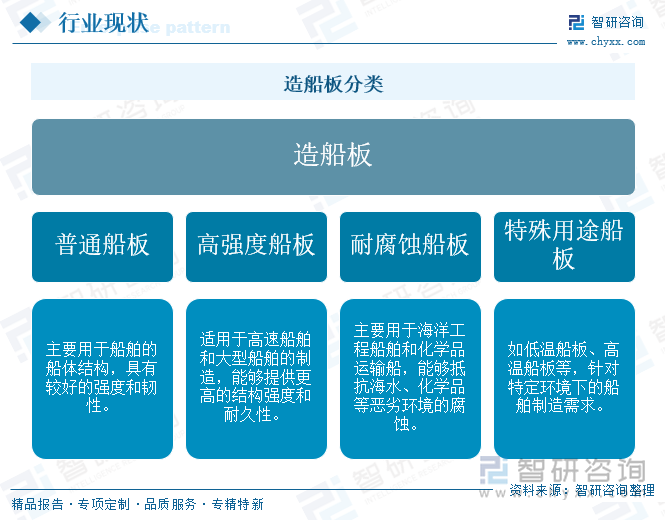
Core Insights - The Chinese shipbuilding industry is experiencing robust growth, significantly driving the demand for shipbuilding plates, with domestic production capacity fully covering demand [1][8] - In the first half of 2025, the production of shipbuilding plates by key enterprises in China reached 10.81 million tons, a year-on-year increase of 26.73% [1][8] - Policies such as the "Green Development Action Plan for Shipbuilding Industry" are accelerating low-carbon technology research and industrial transformation, providing directional guidance for industry upgrades [1][8] - Breakthroughs in production processes, including optimized techniques like controlled rolling and cooling, have significantly enhanced the mechanical properties and corrosion resistance of plates [1][8] - The application of 5G and industrial internet in shipyards has improved production efficiency by 30% and reduced product error rates to below 0.12% [1][8] Industry Overview - Shipbuilding plates are specialized structural steel used for constructing vessels for ocean, coastal, and inland navigation, requiring high strength, good low-temperature impact toughness, and excellent welding performance [2] - The industry is categorized into ordinary ship plates, high-strength ship plates, corrosion-resistant ship plates, and special-purpose ship plates [2] Industry Supply Chain - The upstream of the shipbuilding plate industry includes raw materials such as iron ore, coal, and alloy elements, as well as production equipment like blast furnaces and rolling mills [4] - The midstream involves the manufacturing of shipbuilding plates, while the downstream primarily focuses on shipbuilding [4] Current Industry Status - In the first half of 2025, China's shipbuilding completion volume was 24.13 million deadweight tons, a year-on-year decrease of 3.56%, while new orders were 44.33 million deadweight tons, down 18.24% [6] - Despite these declines, China maintains a leading global market share in core ship types, leveraging technological breakthroughs and cost advantages [6] - The demand for high-strength ship plates has surged due to the increasing proportion of green ship orders driven by the IMO's 2050 net-zero emissions target [6] Key Enterprises Performance - The shipbuilding plate industry in China is highly concentrated, with leading companies like Baowu Steel and Ansteel Group dominating the market through technological and policy advantages [12] - Baowu Steel is solidifying its position as the world's largest steel producer, while Ansteel has made significant breakthroughs in high-end products [12] - Jiangsu Shagang has developed thick standard shipbuilding and marine engineering steel plates, further strengthening its market position [16] Industry Development Trends - Technological innovation is the core driver of the shipbuilding plate industry, focusing on high-strength, lightweight, corrosion-resistant, and environmentally friendly materials [18] - The industry is increasingly prioritizing energy conservation and environmental protection, with a shift towards low-emission production processes and recyclable materials [19][20] - The development of smart manufacturing will enhance production efficiency and product quality, with over 80% of large shipyards expected to adopt intelligent production lines by 2025 [21]



《豆制品产业升级行动计划武冈宣言》发布
Zhong Guo Chan Ye Jing Ji Xin Xi Wang· 2025-08-12 00:38
Core Viewpoint - The "Wugang Declaration" was officially released during the China Soy Products Industry Innovation Development Seminar, emphasizing the importance of the soy products industry in ensuring quality plant protein supply, optimizing national dietary structure, and contributing to rural revitalization and economic growth [1][2]. Group 1: Declaration Overview - The "Wugang Declaration" outlines four key areas: strengthening the foundation of the soy products industry, driving innovation for value enhancement, integrating to build a prosperous ecosystem, and ensuring sustainable development through green transformation [2][4][5]. - The total output value of the Wugang soy (braised) products industry cluster is projected to reach 7.89 billion yuan in 2024, with the city aiming for a target of 10 billion yuan this year [2][3]. Group 2: Industry Development - Wugang City, known as the "Capital of Braised Dishes in China," has a long-standing history in the soy products industry, which has been supported by local government initiatives to promote high-quality economic development [3]. - The city has established a comprehensive ecological green food industry chain covering soybean planting, deep processing, and diversified sales, with 38 large-scale enterprises and several recognized agricultural leading enterprises [3]. Group 3: Technological and Market Innovations - The declaration emphasizes the need to break through core technology bottlenecks and expand product diversification, including the development of health foods and new materials based on soybean protein [5][6]. - Wugang City has successfully integrated online and offline sales channels, with annual online sales exceeding 1.5 billion yuan and products reaching over 30,000 offline stores and more than 20 countries [3]. Group 4: Green Transformation and Consumer Awareness - The declaration promotes a full-chain green production approach, advocating for the resource utilization of by-products and the reduction of energy consumption and emissions [7]. - There is a focus on raising consumer awareness regarding the nutritional and environmental benefits of soy products, aiming to foster a sustainable consumption trend [7].

“为全球合作树立典范”
Ren Min Ri Bao· 2025-08-11 22:01
Core Insights - China's role in global affairs is increasingly prominent, as it strives to provide high-quality international public goods [2] - The country's economic growth is projected to exceed 130 trillion RMB in 2024, with a steady growth rate of 5% [2] - China's electric vehicle production and sales have seen significant growth, with a year-on-year increase of 41.4% and 40.3% respectively, and exports surging by 75.2% [2][3] Economic Performance - International organizations, including the IMF and Morgan Stanley, have raised their economic growth forecasts for China following impressive half-year results [3] - China is recognized as one of the leading countries in future industry investments, particularly in electric vehicles, battery technology, solar panels, and wind turbines [3] Global Sustainability Efforts - China is actively addressing climate change and promoting the implementation of the Paris Agreement, contributing to the reduction of renewable energy product prices [3] - The country is enhancing bilateral and regional economic cooperation, expanding its high-standard free trade zone network, with 23 free trade agreements signed with 30 countries and regions [3] Regional Cooperation - The Belt and Road Initiative is seen as a means to assist developing countries in modernizing their infrastructure and achieving development opportunities [3] - Asian countries, represented by China and ASEAN nations, are encouraged to strengthen dialogue and cooperation through multilateral platforms to promote regional development [4]