
人民币国际化

Search documents
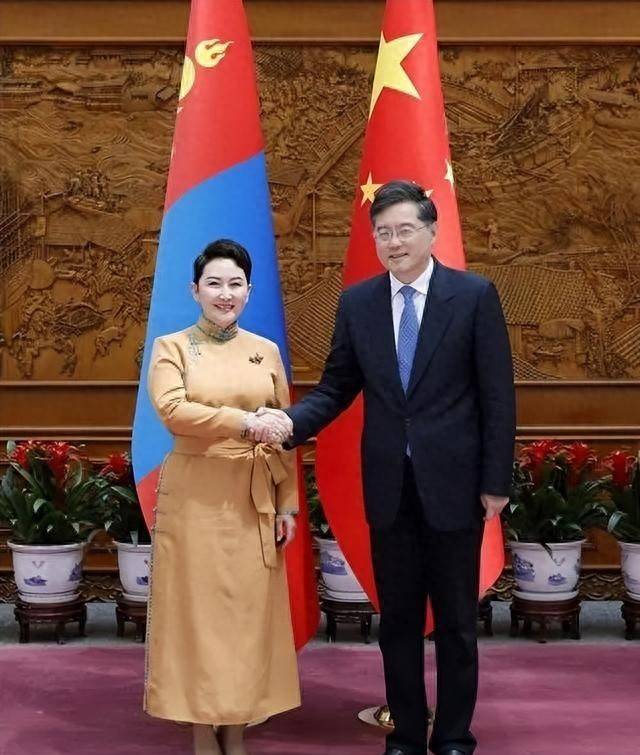
这一次美国失算了,沉寂六天的蒙古终于签字,中蒙结合美再没机会
Sou Hu Cai Jing· 2025-09-21 07:47
Core Viewpoint - The U.S. debt crisis is exacerbated by political divisions between the Republican and Democratic parties, leading to a precarious financial situation and increasing risks of default [2][5][13]. Group 1: U.S. Debt Situation - As of early 2023, the U.S. national debt reached $31.4 trillion, prompting the Treasury to implement temporary measures to maintain operations [2]. - Interest payments on the debt amounted to $659 billion in 2023, a record high, primarily due to pandemic-related stimulus and military aid to Ukraine [2][4]. - The debt ceiling was temporarily suspended until January 1, 2025, following multiple delays and political negotiations [2][4]. Group 2: Political Dynamics - The ongoing conflict between the two parties has led to repeated adjustments of the debt ceiling, with nearly 80 adjustments since its establishment in 1917 [5]. - Treasury Secretary Janet Yellen has repeatedly warned Congress about the risks of default, emphasizing the potential chaos in financial markets [4][13]. - The political stalemate has resulted in significant public discontent, with protests against rising prices and demands for wage increases [4][7][13]. Group 3: Economic Implications - The Federal Reserve's interest rate hikes, aimed at controlling inflation, have led to a stronger dollar and capital outflows from emerging markets, increasing their economic pressures [4][7]. - The U.S. debt has surpassed $33 trillion, with interest payments consuming a larger portion of the budget, raising concerns about long-term fiscal sustainability [7][15]. - The rising debt levels and interest rates could potentially trigger a global financial crisis, affecting countries reliant on foreign investment and international borrowing [7][9][15]. Group 4: International Relations and Trade - The U.S. has been providing substantial aid to Ukraine, which has strained its internal resources and led to decreased public trust in the government [7][13]. - Mongolia's decision to renew a currency swap agreement with China reflects a strategic move to reduce reliance on the U.S. dollar amid rising economic instability [9][11][15]. - The U.S. faces challenges in maintaining its influence in global trade as countries like Mongolia prioritize financial stability and partnerships with China [11][15].

中国抛售257亿美债,美财长对人民币夸上了:兑换美元更强了
Sou Hu Cai Jing· 2025-09-20 17:02
风起云涌:中国减持美债,全球资产配置重塑格局 2025年7月,中国抛售257亿美元美国国债的举动,不仅令华尔街的心弦为之一紧,更标志着一个长达十五载的金融版图正在悄然重塑。曾经中国稳坐美国国 债最大海外持有国宝座,峰值时持有量一度突破1.3万亿美元,然而如今,这一数字已骤降至7307亿美元,创下2009年以来的历史新低,不足巅峰时期的三 分之二。 与此同时,全球资本市场的另一番景象则引人瞩目。在日本悄然增持38亿美元美国国债之际,英国却以413亿美元的惊人增幅,创下历史新高,这与中国的 大幅减持形成了鲜明对比,让全球投资者不禁为之侧目。 在中国减持美债的同时,另一项资产的增持则显得尤为突出——黄金。中国人民银行已连续10个月增持黄金,截至2025年8月末,黄金储备已攀升至7402万 盎司。作为一种非主权信用储备资产,黄金不受单边制裁的影响,能够有效地对冲美元单一货币风险,成为中国优化外汇储备结构的重要选择。 事实上,中国减持美债并非一日之寒。自2022年4月持仓量跌破万亿美元大关以来,中国便开启了持续性的"瘦身"模式:2022年累计减持1732亿美元,2023 年减少508亿美元,2024年则减少了573亿美 ...
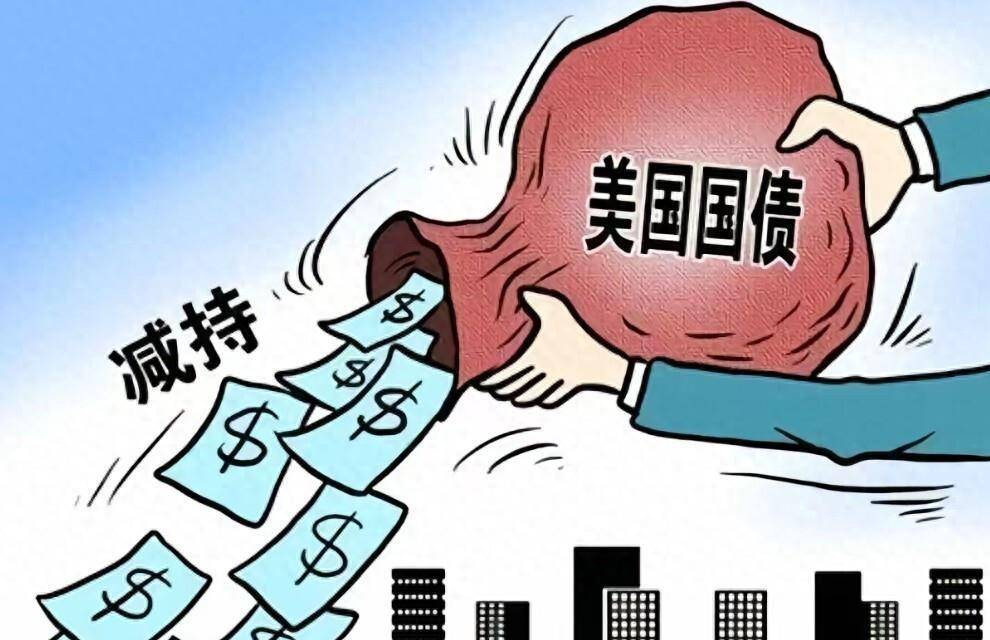
中国大规模减持美债,一个月抛了超1800亿元!央行已连续10个月买入黄金
Mei Ri Jing Ji Xin Wen· 2025-09-20 14:46
Group 1 - The core point of the news is that China has significantly reduced its holdings of U.S. Treasury bonds, with a notable decrease of $25.7 billion in July 2025, bringing its total holdings to $730.7 billion, the lowest level since 2009 [1][2] - This reduction marks the fourth time China has decreased its U.S. Treasury holdings in 2025, continuing a trend that began in April 2022 when holdings fell below $1 trillion [2] - The overall trend shows that China has reduced its U.S. Treasury holdings by $173.2 billion in 2022, $50.8 billion in 2023, and $57.3 billion in 2024, indicating a consistent pattern of divestment [2] Group 2 - In contrast to China's actions, Japan and the UK have increased their holdings of U.S. Treasury bonds, highlighting China's unique position in the current market [3] - Analysts attribute China's reduction in U.S. Treasury holdings to concerns over U.S. fiscal policies, including tariffs and the rising national debt, which has reached $37 trillion [3][4] - The Federal Reserve's monetary policy and the potential for a weakened dollar are also cited as factors influencing China's decision to reduce its U.S. Treasury exposure [4] Group 3 - Concurrently, the People's Bank of China has been increasing its gold reserves for ten consecutive months, with a total of 74.02 million ounces as of the end of August 2025, reflecting a strategic shift towards gold as a non-sovereign credit reserve asset [7] - The increase in gold reserves is seen as a way to hedge against the risks associated with a single currency, particularly the dollar, and to enhance the credibility of the Chinese yuan in international markets [7][8] - China's gold reserves currently account for 7.3% of its official international reserve assets, which is significantly lower than the global average of around 15%, indicating room for further increases [7][8]
辽宁发现世界级巨型金矿,对岸专家:国运好,就是没办法
Sou Hu Cai Jing· 2025-09-20 14:09
Group 1 - The discovery of a world-class gold mine in Liaoning, with an estimated reserve of nearly 1,500 tons, represents about half of China's total gold reserves, valued at approximately $178 billion, highlighting its significance in the context of national resource security and currency internationalization [1] - The recent mineral discoveries, including the "Asian Lithium Belt" and additional gold and rare earth resources, indicate a strategic push for resource self-sufficiency in response to high import dependency, particularly in oil and iron ore [3] - Technological advancements and significant investments, totaling 450 billion yuan over five years, have facilitated these discoveries, marking a shift in resource exploration capabilities [5] Group 2 - The geopolitical context emphasizes the importance of resource security, as reliance on imports exposes vulnerabilities, particularly in maritime supply chains, necessitating a diversified resource strategy [7] - The ongoing exploration efforts are not only driven by technological progress but also by favorable circumstances, suggesting a combination of innovation and luck in recent mineral discoveries [5] - The potential for future energy solutions, such as "artificial sun" technology, could further alleviate resource dependency, allowing for the re-exploitation of previously unviable mineral deposits [7]

中国大规模减持美债,一个月抛了超1800亿元!央行连续10个月买入黄金
Mei Ri Jing Ji Xin Wen· 2025-09-20 07:28
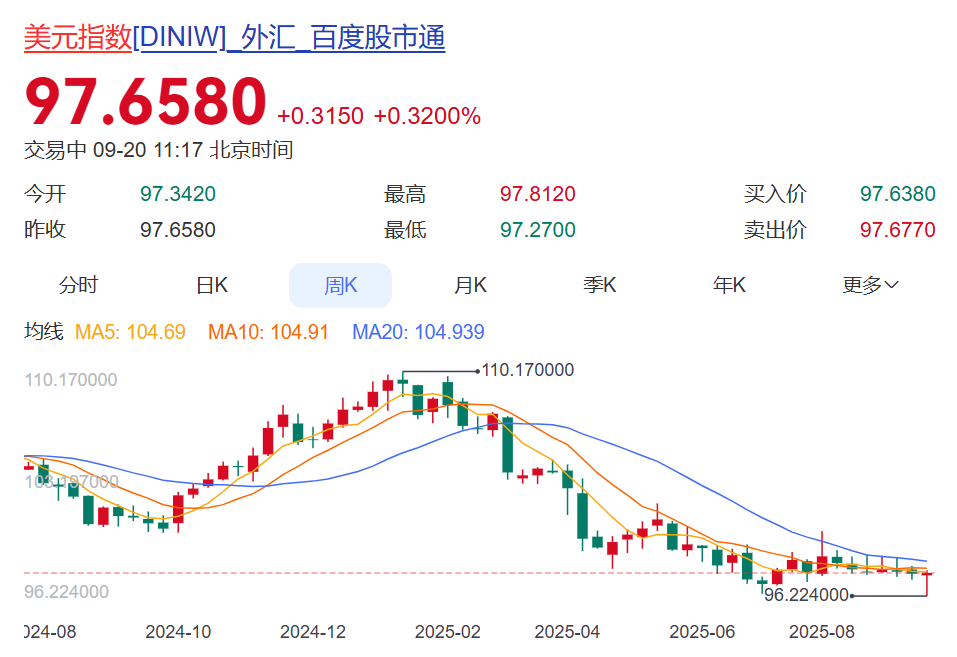
美元指数自特朗普上任已跌超10% 这是中国2025年以来第四次减持美债。从美债持仓变动来看,中国减持趋势已延续多年。自2022年4月持仓跌破1万亿美元后,减持步伐 持续,2022年、2023年、2024年分别减持1732亿美元、508亿美元、573亿美元。 2025年以来,中国减持美债力度有所加大,年内各月持仓呈"增减持交替、减持为主"态势,1月增持18亿美元、2月增持235亿美元,3月 至5月分别减持189亿美元、82亿美元、9亿美元,6月小幅增持1亿美元,7月则大幅减持257亿美元,持仓规模再创新低。 值得注意的是,7月美债前三大海外债主中,日本、英国选择增持,中国的减持动作尤为突出。 据第一财经报道,中国民生银行首席经济学家温彬表示,今年以来,美国关税政策引发市场恐慌,且美国财政状况也受到国际社会广泛 担忧,美债尤其是长债存在被抛售的现象,同时欧洲长债被抛售也对美债市场有所波及。 每日经济新闻消息,近日,美国财政部公布的2025年7月国际资本流动报告显示,中国当月减持257亿美元(约合人民币1829亿元)美国 国债,持仓规模降至7307亿美元,创2009年以来新低。 与此同时,中国央行已经连续10个月增 ...
降息25基点,特朗普没料到,中方找准时机,对美下一道“封杀令”
Sou Hu Cai Jing· 2025-09-20 07:20
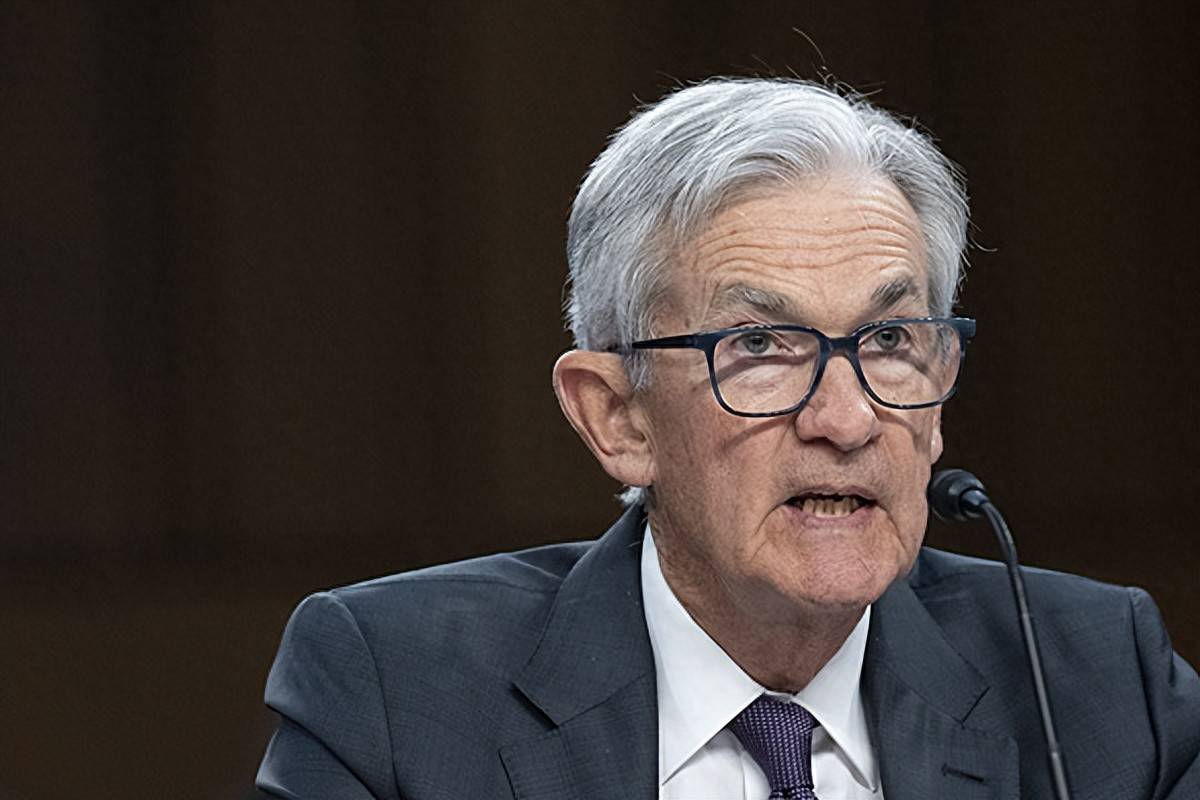
Group 1 - The Federal Reserve Chairman Jerome Powell announced a 25 basis point cut in the federal funds rate target range from 4.25%-4.5% to 4%-4.25%, which was expected by the market but led to significant volatility in global financial markets [1][3] - Following the announcement, the Dow Jones Industrial Average briefly rose before falling back, closing up 0.57%, while the dollar index dropped 0.4% [3] - There is a significant divide among 19 U.S. officials regarding future rate cuts, with 9 expecting two more cuts totaling 50 basis points, while others believe no further cuts are necessary [5][10] Group 2 - Trump's influence is evident as he pushes for a more aggressive rate cut of 50 basis points to reduce government debt costs and stimulate economic growth [5][11] - The U.S. tech giant Nvidia faced a sudden ban from Chinese authorities, halting procurement of its AI chips, which has significant implications for U.S. companies [6][17] - The Chinese government's actions against Nvidia are seen as a counter to U.S. technology restrictions, indicating a shift towards self-reliance in semiconductor technology [20] Group 3 - The Chinese yuan's internationalization is gaining momentum, with recent agreements aimed at reducing reliance on the U.S. dollar and enhancing currency sovereignty [21][23] - The People's Bank of China has initiated frameworks for local currency settlements with Indonesia and renewed currency swap agreements with several European central banks, totaling 540 billion yuan [23] - The ongoing geopolitical tensions and economic strategies will continue to shape the future of U.S.-China relations and the global financial landscape [25]

万亿美元、决战香港!惊心动魄的人民币保卫战
Sou Hu Cai Jing· 2025-09-20 07:20
Core Viewpoint - The Federal Reserve's interest rate hike has triggered a return of global capital to the U.S., adversely impacting emerging market currencies, particularly the Chinese yuan [1][3]. Group 1: Impact of U.S. Federal Reserve's Actions - The Federal Reserve raised interest rates by 25 basis points on December 16, 2015, marking the first increase in nearly a decade, aimed at stabilizing the U.S. economy while making the dollar more attractive [1]. - The interest rate hike led to a significant capital outflow from emerging markets, with international speculators targeting the yuan, which was already under pressure due to declining exports and capital outflows from China [3]. Group 2: Speculative Activities and Market Reactions - Speculators, including notable figures like George Soros, began shorting the yuan, betting on further depreciation, which caused the offshore yuan to drop to over 6.6 against the dollar [3][7]. - The situation escalated as the offshore yuan market became a battleground, with daily trading volumes in Hong Kong reaching thousands of millions of dollars [3]. Group 3: China's Response and Market Stabilization - In response to the speculative attacks, the Chinese government took decisive actions, including raising interbank lending rates dramatically and intervening in the currency market to stabilize the yuan [9][11]. - The People's Bank of China utilized its foreign exchange reserves, which exceeded $3 trillion, to support the yuan, ultimately consuming about $500 billion in reserves to maintain stability [9][11]. Group 4: Long-term Implications and Lessons Learned - The events highlighted the importance of financial stability and the effectiveness of rapid policy responses in mitigating the impact of external shocks [11][13]. - Following the crisis, China strengthened its financial regulations and improved its exchange rate mechanisms to prevent extreme volatility in the future [13].
中国人民银行厦门市分行:厚植“本币优先”理念,护航跨境贸易投资
Sou Hu Cai Jing· 2025-09-19 21:24
Core Insights - The event in Xiamen marks the 15th anniversary of cross-border RMB policies in Fujian Province, promoting the use of RMB in cross-border trade and investment through policy advocacy and collaboration [1] Group 1: Cross-Border RMB Business Development - Since the pilot launch in 2010, Fujian Province has seen a robust development of cross-border RMB business, with a total business volume exceeding 7 trillion yuan, averaging a growth rate of 27.4% annually [1] - Over 19,000 enterprises have engaged in cross-border RMB business, with Xiamen leading in RMB payment amounts related to current accounts and direct investments [1] - From January to July 2025, Xiamen's cross-border RMB payment amount reached 260.4 billion yuan, reflecting a year-on-year growth of 5.2% [1] Group 2: Policy and Infrastructure Initiatives - The People's Bank of China (PBOC) Xiamen Branch has introduced a "two libraries and one center" scheme to enhance cross-border RMB services for the real economy, including a database of enterprises and a cross-border RMB expert consultation service [2] - A digital trade platform for cross-border RMB services was established in collaboration with local governments and banks, successfully processing its first cross-border RMB transaction on December 5, 2024 [2] - A reward policy for cross-border RMB transactions was implemented, leading to an increase of 21.3 billion yuan in cross-border RMB settlements in 2024 [2] Group 3: Business Process Optimization - The PBOC Xiamen Branch has optimized cross-border RMB business processes, allowing enterprises to benefit from a "pre-approval exemption" policy, facilitating seamless transactions [3] - By July 2025, the number of quality enterprises in Xiamen's cross-border trade and investment expanded to 1,065, with a total of 94.6 billion yuan in facilitated transactions [3] Group 4: Tailored Financial Services - The PBOC Xiamen Branch has tailored cross-border RMB services to meet the specific needs of enterprises, offering a range of financial products including cross-border financing and RMB funding pools [5] - By July 2025, local banks had issued 17.2 billion yuan in RMB loans to overseas entities, enhancing the overall cost efficiency of enterprises [5] - The branch has also focused on providing unique cross-border RMB services for Taiwanese enterprises, expanding service points from 28 to 140 by early 2024 [5]
系列信号释放 人民币国际化进程加快
Zhong Guo Zheng Quan Bao· 2025-09-19 20:18
Core Viewpoint - The recent actions by the People's Bank of China (PBOC) indicate a significant acceleration in the internationalization of the Renminbi (RMB), with initiatives such as the launch of a cross-border QR code unified gateway and bilateral currency settlement frameworks with Indonesia and other central banks [1][2]. Group 1: RMB Cross-Border Settlement Expansion - The PBOC has initiated a bilateral currency settlement framework with Indonesia and a cross-border QR code interoperability project, which are expected to enhance the use of RMB in cross-border trade and investment [1]. - As of June, under the bilateral currency swap agreements, foreign monetary authorities utilized RMB balances amounting to 80.7 billion yuan, while the PBOC used foreign currency balances equivalent to approximately 400 million yuan, positively impacting bilateral trade and investment [1]. Group 2: Support for Internationalization Acceleration - The global payment currency ranking by SWIFT shows that as of August 2025, RMB remains the sixth most active currency globally, accounting for 2.93% of the total [2]. - The PBOC's Governor highlighted that the RMB's international status is steadily rising, ranking third in global trade financing currencies and as the third-largest payment currency according to the International Monetary Fund (IMF) Special Drawing Rights (SDR) basket [2]. - The RMB cross-border payment system (CIPS) now covers 189 countries and regions, processing 4.0295 million transactions worth 90.19 trillion yuan in the first half of 2025, serving as a crucial support for RMB internationalization [2]. Group 3: Economic Confidence and Future Prospects - The active role of RMB in global payments reflects the confidence of domestic and international economic entities in China's economy, bolstered by a series of incremental policies that have shown positive effects [3]. - As China's GDP share of the global economy increases, the attractiveness of RMB is expected to rise, further promoting its internationalization [3]. - The demand for asset diversification in emerging markets is anticipated to open doors for accelerated RMB internationalization in the coming years [3].
上海发展绿色金融的优势与挑战——基于与新加坡、香港比较的视角
Shang Hai Zheng Quan Bao· 2025-09-19 18:25
Group 1 - The article emphasizes the need for Shanghai to enhance its green finance development through various measures, including strengthening institutional standards and certification systems, improving external funding participation, expanding trading platforms, and driving innovation in green and digital finance [1][2][3][4][5][6][9][10][11][12][13][14][15][16][19][20][21][22][23] Group 2 - Shanghai has a solid policy foundation for green finance, being the first country to establish a systematic green finance policy framework, supported by various national and local initiatives aimed at promoting green transformation [9][10][11] - The city possesses significant advantages in green industries, with a strong demand for financing and settlement, particularly in sectors like new energy vehicles and photovoltaics, supported by a robust technological and talent base [11][12] - Shanghai's financial infrastructure is well-developed, housing numerous national trading exchanges and a high concentration of licensed financial institutions, which enhances its capacity for green finance [13][14] - The city leads in green finance practices domestically, with various platforms and innovative financial products being developed to support green initiatives [14][15] Group 3 - Shanghai faces challenges in green finance, including insufficient construction of green recognition standards, a lack of specialized coordinating institutions, and underdeveloped offshore market capabilities [16][17][18] - The article suggests several policy recommendations to address these challenges, such as enhancing information disclosure requirements, establishing unified standards, and improving the convenience for external funding participation [19][20][21][22][23]