
人民币国际化

Search documents
巩固香港债券中心地位 下周“固定收益及货币论坛”或公布路线图
Xin Hua Cai Jing· 2025-09-17 14:04
Core Viewpoint - The Hong Kong government aims to establish an internationally leading bond market, as outlined in the Chief Executive's Policy Address, with plans to enhance the city's bond trading activities and infrastructure [1] Group 1: Bond Market Development - The Hong Kong Monetary Authority (HKMA) and the Securities and Futures Commission (SFC) will present a roadmap at the inaugural "Hong Kong Fixed Income and Currency Forum" on September 25 [1] - The roadmap includes plans to unify trading platforms and strengthen bond market trading activities, leveraging Hong Kong's mature bond settlement and clearing capabilities [1] Group 2: Enhancing Hong Kong's Bond Center Status - The government is exploring various avenues to elevate Hong Kong's status as a bond center, including encouraging bond issuance in Hong Kong and facilitating secondary market transactions such as repos [1] - Initiatives to promote the internationalization of the Renminbi (RMB) and attract financial talent are also part of the roadmap [1] Group 3: RMB Business Funding Arrangements - The HKMA plans to utilize its currency swap agreement with the People's Bank of China to establish a new "RMB Business Funding Arrangement" to support the real economy's use of RMB [1] - The HKMA holds a quota of 800 billion RMB, with 100 billion RMB earmarked for "RMB trade financing liquidity arrangements," aiming to meet the increasing demand from enterprises [1] - The anticipated demand for the "RMB Business Funding Arrangement" is expected to extend beyond import-export companies to include businesses planning to expand internationally [1]
金融护航新动能|《财经》社评
Sou Hu Cai Jing· 2025-09-17 11:36
Group 1 - The core viewpoint emphasizes that China's economic stability relies on the transition from old to new driving forces, particularly through technological innovation and emerging social demands [2] - The financial industry is crucial in supporting new industries driven by technologies like AI, which require significant capital investment and innovative financing solutions [2][3] - The financial sector can leverage new technologies to enhance its own operations while providing necessary support for the rapid implementation of these technologies [2][3] Group 2 - The resilience of foreign trade is highlighted as a key factor in China's economic response to downward pressures, with new outbound trade models requiring robust financial support [3] - The financial industry has accumulated substantial experience in cross-border and supply chain finance, which can be utilized to support the evolving foreign trade landscape [3][4] - The development of technologies such as AI and blockchain is expected to enhance the financial sector's ability to provide tailored services for new outbound trade models [4] Group 3 - New social trends, such as an aging population, present both challenges and opportunities for the financial industry, particularly in the area of pension finance [4] - The pension finance sector is still in its early stages in China, indicating significant growth potential that can contribute to the economy by addressing various financial needs related to aging [4][5] - The transition of old and new driving forces, along with market consolidation through mergers and acquisitions, will create new demand for financial services [5] Group 4 - The financial industry is expected to play a vital role in facilitating the high-quality development of China's economy by empowering new driving forces and demands [5]


特朗普剧透,美联储大幅度降息?外资蜂拥至中国,人民币大涨4000点
Sou Hu Cai Jing· 2025-09-17 11:28
不仅怼上了鲍威尔,还把美联储的"独立性"当成了可以随手撕扯的标签。就在这场口水仗愈演愈烈的时候,美国的经济数据也不给力,制造业、就业、消费 全线发虚。 市场立马嗅到了风向变了,纷纷赌美联储要转弯。 而资本市场的反应也没多含蓄,美元开始走低,资金开始找退路,眼光一下子投向了东方。人民币趁着这个机会,一路往上冲,外资也像久旱逢甘霖一样往 中国市场扎堆。 特朗普又一次把市场搅得天翻地覆。这位2025年重返白宫的"老朋友",最近在公开场合频频对美联储开炮,一副"降息你还不动手"的架势。 眼下这场"东升西降"的节奏,已经让全球金融格局的天平开始向另一侧偏移。 谁都知道美联储手里有调控利率的"遥控器",但现在看来,这只手似乎已经被政治力量"借用"了一下。特朗普再次上台后,态度变得比上次任期更直接。 他不再拐弯抹角,而是摆明了要美联储配合白宫的经济计划。降息,是目前他最想看到的动作。对他来说,低利率是救股市、压债务、冲经济的"三合一"法 宝。 反观美联储这边,虽然嘴上还在讲数据导向、政策独立,但动作明显慢了半拍。面对总统连番施压,内部也开始出现摇摆。 美国的通胀虽然回落了一些,但经济基本面已经出现不小的裂缝。制造业的下行、 ...

信息量超大!李家超重磅发声
中国基金报· 2025-09-17 10:50
Financial Market Development - The Hong Kong government aims to enhance the financial system, targeting a return to the third position in the Global Financial Centers Index [5] - Plans include strengthening the stock market, developing a leading bond market, and establishing an international gold trading market [7] - Initiatives to improve offshore RMB market liquidity and explore diverse cross-border funding channels are also highlighted [7][8] Industry Development - The government is focused on transforming the industrial structure by consolidating traditional industries while fostering emerging sectors such as advanced manufacturing, life sciences, renewable energy, and AI [11][12] - Specific strategies include attracting top pharmaceutical companies, promoting renewable energy, and establishing an AI research institute by 2026 with a budget of 1 billion HKD [13] Integration with National Development - The government plans to fully integrate into national strategies, leveraging Hong Kong's unique advantages to support mainland enterprises in expanding into new markets [15] - A dedicated task force will be established to facilitate mainland companies using Hong Kong as a platform for international expansion, including optimizing tax measures and establishing regional headquarters [15][16] Infrastructure and Governance - The establishment of the "Northern Metropolis Development Committee" aims to accelerate the development of the Northern Metropolis area, focusing on administrative efficiency and innovative construction methods [19][21] - The government will implement a package of incentives to attract high-value industries and enterprises to settle in Hong Kong [22]

中企出海求新,金融叙事改写
3 6 Ke· 2025-09-17 09:32
Core Viewpoint - The article discusses the increasing importance and benefits of cross-border RMB settlement for Chinese foreign trade enterprises, highlighting the resilience of China's foreign trade amidst external pressures and the evolving landscape of cross-border financial services. Group 1: Cross-Border RMB Settlement - A Zhejiang foreign trade enterprise found that using cross-border RMB settlement significantly reduced exchange rate risks and improved operational efficiency compared to traditional USD settlements [1] - The People's Bank of China has been actively promoting the convenience of cross-border RMB settlement, enhancing cooperation with foreign central banks [1][9] - The RMB's global payment function has strengthened, with its internationalization level steadily increasing, supported by policy and market forces [3][12] Group 2: Financial Institutions' Role - Chinese financial institutions are evolving from single service providers to ecosystem hubs, responding to the diverse needs of enterprises in cross-border financial services [2][15] - The establishment of the Cross-Border Interbank Payment System (CIPS) has optimized payment pathways, reducing transaction times and costs [6][10] - Banks are increasingly offering tailored financial solutions, such as currency risk hedging and supply chain financing, to meet the specific needs of enterprises [16][19] Group 3: Market Trends and Challenges - The shift in trade flows towards Southeast Asia and other emerging markets has led to a growing demand for multi-currency settlement options among foreign trade enterprises [9][10] - Despite the progress, challenges remain, including the need for improved financial infrastructure in certain regions and the complexities of international regulations [22][32] - The competitive landscape in cross-border financial services is intensifying, with institutions needing to innovate to maintain a competitive edge [35] Group 4: Future Outlook - The article emphasizes the necessity for banks to enhance their cross-border financial ecosystems and to integrate data systems with customs, tax authorities, and logistics providers for better service delivery [34] - There is a call for more supportive policies to facilitate cross-border financing and to lower barriers for small and medium-sized enterprises in accessing financial products [35]

人民币坚挺的突破了多个重要关口
Sou Hu Cai Jing· 2025-09-17 08:30
Core Viewpoint - The recent appreciation of the Renminbi (RMB) against the US dollar, surpassing the 7.10 mark, reflects the market's response to diverging monetary policies between China and the US, showcasing the resilience of the Chinese economy and the effectiveness of policy adjustments [3][9]. Group 1: Factors Driving RMB Appreciation - The expectation of interest rate cuts by the Federal Reserve is a primary driver of short-term RMB appreciation, with a 93.4% probability of a 25 basis point cut in September [4]. - China's economic fundamentals show resilience, with a 34.52% year-on-year increase in trade surplus in August and a 165% year-on-year surge in new energy vehicle exports, enhancing the attractiveness of RMB assets [4][5]. - The People's Bank of China (PBOC) has signaled a "stronger" direction in its daily midpoint rate adjustments, which has positively influenced market sentiment and increased demand for currency conversion [5]. Group 2: Impact on Financial Markets - The RMB appreciation has led to a surge in foreign capital inflows, with over $2.2 billion net purchases of A-shares in August and a total of $10.1 billion in domestic stocks and funds held by foreign investors [6]. - The stock market has responded positively, with the Shanghai Composite Index rising by 7.97% in August, further attracting foreign investment and supporting the RMB's strength [6]. Group 3: Challenges for Export Enterprises - Export-oriented industries face structural adjustment pressures due to RMB appreciation, which may lead to exchange rate losses and decreased price competitiveness [7]. - Experts recommend that companies shift from price competition to technological barriers, enhancing product value to mitigate risks associated with exchange rate fluctuations [7]. Group 4: Future Outlook and Policy Recommendations - The current RMB strength is a result of multiple factors, but caution is advised regarding potential market overheating and the historical lack of a fixed pattern in RMB movements following Fed rate cuts [8]. - Strengthening policy coordination is essential for maintaining exchange rate stability, including measures to guide industrial upgrades and expand domestic demand [8]. - The ongoing international monetary system transformation presents opportunities for the RMB, with a notable decline in dollar dominance and an increase in RMB internationalization [8].
李家超:把握重置资产机遇 巩固国际金融中心地位
Xin Hua Cai Jing· 2025-09-17 08:06
Group 1: Hong Kong's Financial Market Developments - The Hong Kong government aims to seize opportunities from global investors reallocating assets to strengthen its position as an international financial center [1] - The Hang Seng Index has risen over 20% since the beginning of the year, with an average daily trading volume close to HKD 250 billion, nearly doubling from last year [1] - New stock fundraising has reached over HKD 130 billion by the end of August, marking a nearly sixfold year-on-year increase, making Hong Kong the top global market for new stock offerings [1] Group 2: Support for Technology and Innovation - The government plans to assist mainland technology companies in raising funds in Hong Kong through a "Tech Enterprise Line" and enhance financial support for national technological development [1] - Initiatives include optimizing the main board listing and structured product issuance mechanisms, and exploring the shortening of the stock settlement cycle to T+1 [1] Group 3: Bond and Currency Market Enhancements - The government will work to solidify Hong Kong's status as a bond center and enhance financial infrastructure, including discussions on launching offshore national bond futures [1] - The Hong Kong Monetary Authority (HKMA) will establish a new "Renminbi Business Fund Arrangement" to provide long-term RMB financing to support the real economy [2] - More RMB bonds will be issued, and the government will explore using RMB for government expenditures in suitable scenarios [2] Group 4: Gold Market Development - The government aims to develop a regional gold reserve hub, targeting over 2,000 tons of gold storage within three years [2] - Initiatives include establishing a central clearing system for gold in Hong Kong and promoting the development of gold investment tools and funds [2] Group 5: Wealth Management and Insurance Sector Growth - Hong Kong is expected to become the largest cross-border wealth management center globally, with plans to optimize tax incentives for funds and family offices [3] - The government will revise regulations to lower capital requirements for infrastructure investments and promote the development of the local self-insurance and reinsurance industry [3]
恒丰银行获准“CIPS直接参与者”资格 跨境服务基石再加固
Qi Lu Wan Bao· 2025-09-17 06:40
9月15日,恒丰银行正式获批成为人民币跨境支付系统(CIPS)直接参与者。该资格获批标志着恒丰银 行跨境支付清算体系建设取得关键进展,成功接入人民币国际化进程的"核心枢纽"。恒丰银行可依托该 渠道为全球客户提供更加直达、高效、安全的人民币跨境支付清算服务。 当前,在全球经贸格局深刻变革、人民币国际化面临重大战略机遇的背景下,恒丰银行将以CIPS直接 参与者资格为新起点,持续深化产品创新,扩展国际合作网络,全面提升跨境服务质效,致力于为构建 高水平对外开放新格局贡献金融力量,助力人民币国际化进程迈向新阶段。 作为首批获得中国人民银行"南向通"业务资格的境内投资者,2024年恒丰银行通过"南向通"渠道投资离 岸人民币债券余额同比增长245%。恒丰银行还积极利用上海自贸区平台参与自贸债、离岸债等投资, 有效拓展人民币跨境使用场景,持续助力离岸人民币市场流动性提升与体系完善。 恒丰银行始终将服务人民币国际化作为战略重点,积极顺应高水平对外开放趋势,推动跨境人民币业务 实现跨越式发展。2024年,通过CIPS系统处理的人民币结算量同比大幅增长223%。 在跨境金融服务方面,恒丰银行持续强化科技赋能,构建交易银行智能化A ...
真金白银加仓!外资为何偏爱中国ETF?
Sou Hu Cai Jing· 2025-09-17 01:20
Core Insights - Foreign capital is increasingly optimistic about Chinese assets, with significant net inflows into A-shares and H-shares observed this year [2][4] - The valuation of A-shares and H-shares is considered reasonable, with expected P/E ratios of approximately 11 times and 14 times, respectively, indicating that Chinese assets remain relatively cheap compared to historical highs [2] Market Sentiment - Multiple foreign financial institutions have expressed positive expectations for the Chinese stock market, noting that the current valuations are still below previous bull market peaks [2] - As of mid-year, foreign investors held A-shares worth 3.07 trillion yuan, reflecting a strong interest in the market driven by economic recovery and improving corporate profitability [2] Investment Strategies - Foreign investors are not only purchasing stocks but are also increasingly using ETFs for their investments in Chinese assets, with significant growth in the number of ETFs held by major foreign institutions [3] - Barclays increased its ETF holdings from 135 to 200, with a notable investment in the Huaxia Hang Seng Internet Technology ETF valued at 1.19 billion yuan [3] Sector Focus - There is a strong emphasis on technology sectors, with foreign capital focusing on internet leaders in Hong Kong and innovation-driven companies in A-shares [3] - The preference for ETFs is attributed to their high transparency, liquidity, and suitability for large capital allocations, aligning with the investment logic of seeking long-term growth industries [3] Structural Changes - The interest from foreign capital is seen as a structural change rather than a short-term phenomenon, with the internationalization of the renminbi providing additional incentives for increased investment in China [4]

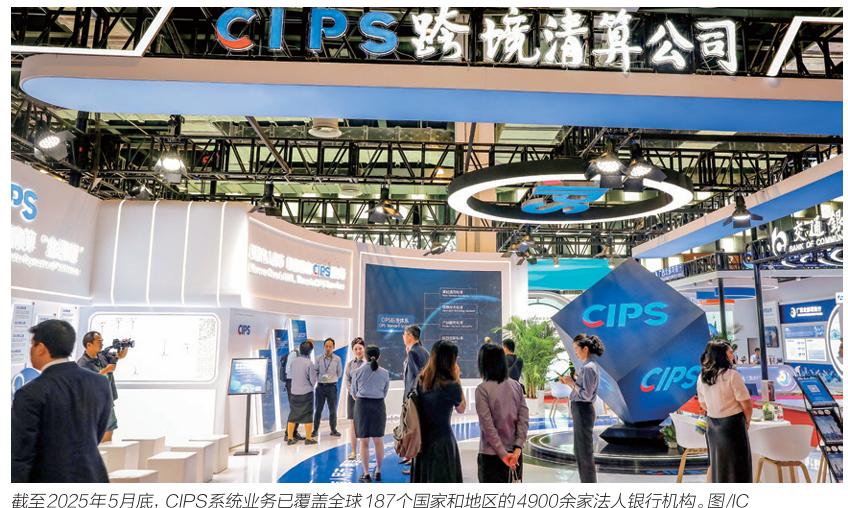
CIPS业务覆盖189个国家和地区
Ren Min Ri Bao· 2025-09-16 23:06
本报北京9月16日电(记者吴秋余)中国人民银行副行长陆磊9月16日在第十四届中国支付清算论坛上表 示,经过产业各方不懈努力,支付服务实体经济质效进一步提升,行业治理持续深入,金融基础设施支 撑有力,高水平开放不断推进,现代支付体系建设取得新成效。目前,人民币跨境支付系统(CIPS) 业务覆盖全球189个国家和地区,2025年上半年,共处理业务笔数402.95万笔、业务金额90.19万亿元, 成为人民币国际化的重要支撑。 陆磊介绍,为推动外籍来华人员支付服务便利化工作,今年,人民银行指导支付清算协会和中国银联建 设了跨境二维码统一网关,已于7月底上线试运行,有效解决了"外包内用"多头连接等问题。统一网关 作为跨境支付基础设施,坚持公共性、包容性、普惠性原则,支持符合条件的市场机构接入开展跨境二 维码支付业务。截至9月11日,统一网关办理业务198.1万笔,金额4.27亿元。同时,中国银联、网联清 算公司积极推进与泰国、越南、印尼等多国二维码网络互联,通过双向开放二维码受理网络,推动跨境 支付合作成果更多惠及中外民众。 ...