即时零售

Search documents
闪购大战第二场:小蓝小红小黄,药不能停
Hu Xiu· 2025-07-13 07:08
Core Viewpoint - The second round of the flash purchase battle has officially begun, with significant promotional activities from major players like Taobao and JD, highlighting the competitive landscape in the instant retail sector [1][8]. Group 1: Competitive Strategies - Taobao has adopted a more strategic approach in the flash purchase battle, focusing on targeted subsidies rather than blanket promotions, which were less aggressive compared to previous weeks [2][5]. - The industry leader reported a significant increase in daily instant retail orders, reaching 150 million, a 30 million increase from the previous week, reinforcing its dominance in the market [4][12]. - Taobao's strategy includes offering zero-cost subsidies to new users while charging existing users, aiming to reduce costs and improve order quality [5][6]. Group 2: Market Dynamics - The flash purchase battle is not just about food delivery but represents a broader competition for the future of e-commerce in China, with major players like Taobao, JD, and Pinduoduo vying for market share [8][9]. - Pinduoduo is preparing to enter the instant retail space with its own delivery service, indicating a growing competition among the top e-commerce giants [8][9]. - The battle is characterized by a focus on operational efficiency and organizational strength, with companies needing to balance aggressive marketing with sustainable practices [10][11]. Group 3: Consumer Behavior and Impact - The flash purchase event has led to a surge in orders for participating merchants, with some brands experiencing up to sixfold increases in delivery orders [20]. - The event has created a win-win situation for platforms, merchants, users, and delivery personnel, with all parties benefiting from increased activity and revenue [15]. - The popularity of milk tea among younger consumers has been highlighted as a key driver of sales during the promotional period, reflecting changing consumer preferences [23][24].


没有外卖大战,是美团单挑所有电商
半佛仙人· 2025-07-13 05:44
Core Viewpoint - The article discusses the intense competition between traditional e-commerce platforms and instant retail, emphasizing that Meituan is the aggressor in this battle, aiming to redefine consumer expectations regarding time and space in shopping [3][4][5][6]. Group 1: Competition Dynamics - The competition is not merely about winning or losing but is a life-and-death struggle for survival between traditional e-commerce and instant retail [4][5]. - Meituan's aggressive push into instant retail, particularly through its Xiaoxiang supermarket initiative, has put significant pressure on traditional e-commerce platforms [5][6]. - Other e-commerce platforms are now forced to respond to Meituan's advances to protect their market share and customer base [7][8]. Group 2: Concept of Time in E-commerce - Instant retail addresses the immediate consumer need for products, which traditional e-commerce struggles to fulfill due to longer delivery times [11][12][16]. - Consumers often prefer to pay a premium for immediate access to products rather than wait for delivery, highlighting the limitations of traditional e-commerce [15][20]. - The convenience of 30-minute delivery from instant retail can lead to a permanent shift in consumer behavior, making traditional e-commerce less appealing [21][22]. Group 3: Concept of Space in E-commerce - Instant retail can change consumers' perceptions of space, as it allows for the immediate acquisition of goods without the need to store them at home [23][25]. - Traditional e-commerce requires consumers to occupy physical space with products, while instant retail offers the possibility of freeing up that space [28][30]. - The shift towards instant retail could lead to a significant reduction in the need for consumers to stockpile goods, fundamentally altering the e-commerce landscape [29][32]. Group 4: Market Implications - The potential loss of customers to instant retail could destabilize traditional e-commerce platforms, as these customers help to dilute operational costs [36][38]. - The article draws parallels between the fragility of large systems and the potential impact of losing even a small percentage of customers on traditional e-commerce platforms [39][42]. - Meituan's determination to dominate the market is evident, as it consolidates resources to focus on its instant retail strategy, indicating a serious threat to traditional e-commerce [43][44].


热搜不断!美团发布战报:骑手收入翻倍,订单1.5亿单!
Zheng Quan Shi Bao· 2025-07-13 04:34
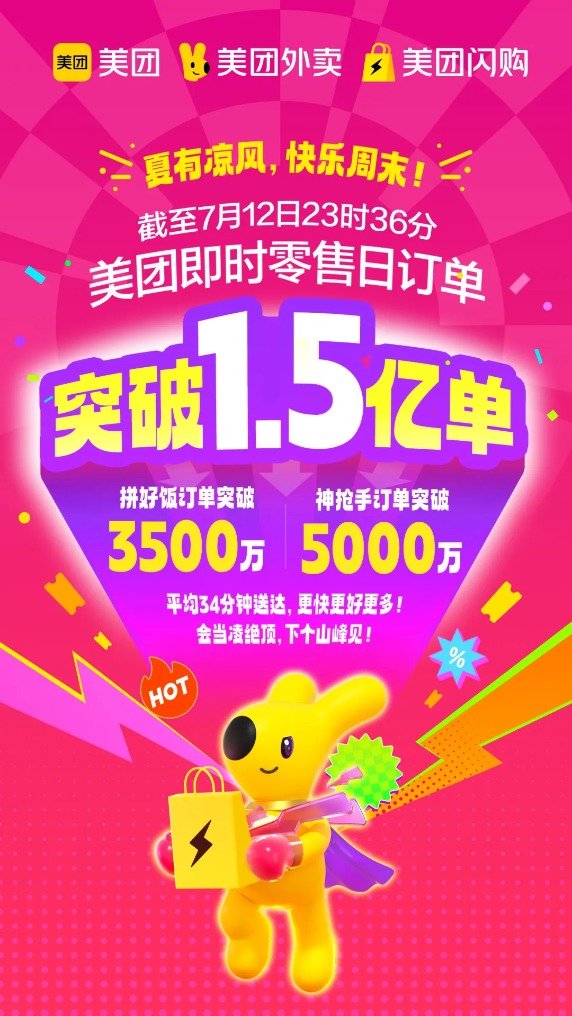
Core Insights - The ongoing "subsidy war" among major delivery platforms has led to a significant increase in order volumes and rider incomes, with Meituan reporting a record 1.5 billion orders as of July 12, 2023 [1][3] - The competition is intensifying as platforms like JD.com and Alibaba's Taobao have entered the market, with substantial user engagement and order numbers reported [3][4] Summary by Category Order Volume and Rider Income - Meituan's instant retail order volume reached 1.5 billion, with over 50 million "hot orders" and 35 million "meal orders" [1] - Rider daily income increased by 111% and daily order volume grew by 33% from June 5 to July 5 [2] - The average monthly income for high-frequency riders exceeded 10,000 yuan, with over 400,000 riders earning more than 500 yuan daily [2][3] Competitive Landscape - The competition among Meituan, Ele.me, and JD.com has created a "three-way battle" in the delivery market, with each platform employing aggressive subsidy strategies [4] - JD.com launched its delivery service with a "zero commission" strategy, prompting Alibaba to enhance its Taobao service to compete [3][4] Consumer Behavior and Market Trends - Consumers have reported experiencing significant discounts, with some orders costing as low as zero yuan due to heavy subsidies [3] - However, there are indications that the intensity of subsidies may be decreasing, with some platforms limiting coupon usage to specific brands and locations [4] - Industry experts predict a shift in focus from "traffic + subsidies" to "supply + experience," emphasizing the importance of quality in the delivery service [4]

热搜不断!美团发布战报:骑手收入翻倍,订单1.5亿单!
证券时报· 2025-07-13 04:26
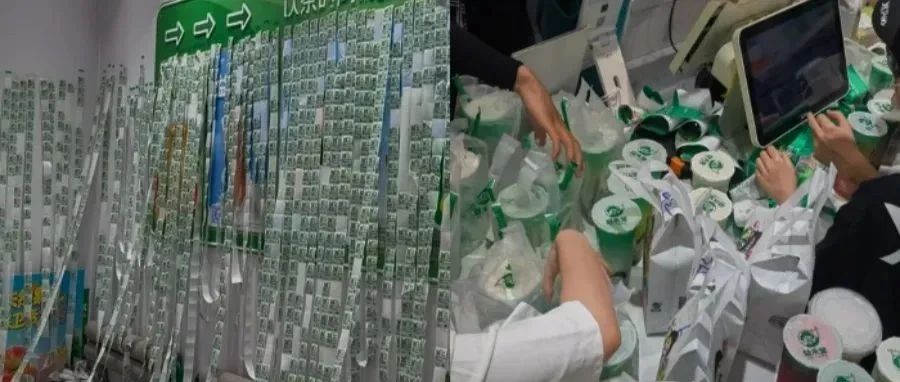
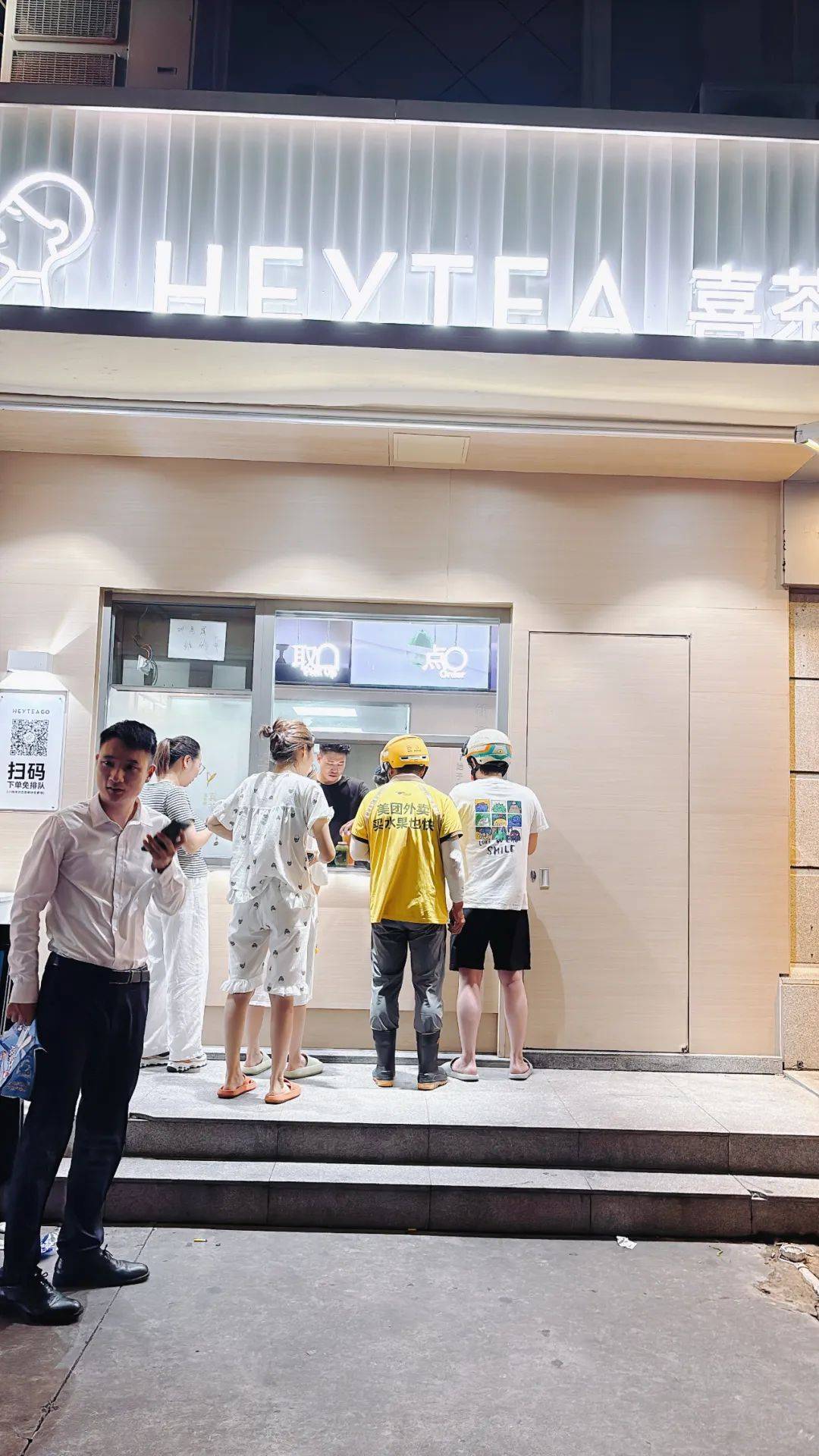
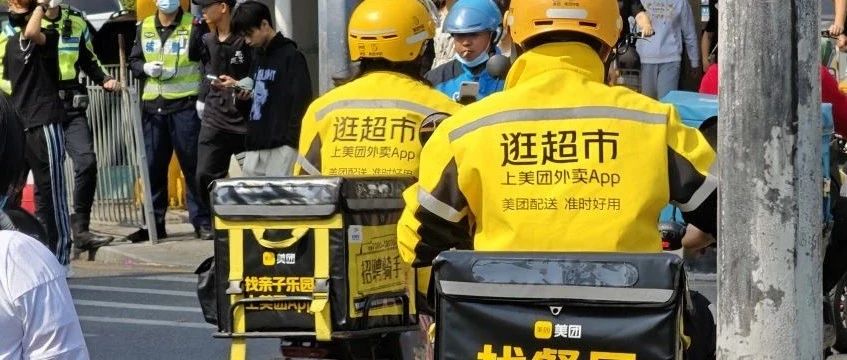
"这两天你叫外卖了吗?" "免费奶茶真香" 这个周末,各大平台的外卖"补贴大战"继续。而在社交媒体上,"杭州一奶茶店忙到现场点单有啥给啥""百米 远的单子外卖员能赚十几块"等外卖"补贴大战"相关话题热搜不断。 早在7月7日,淘宝闪购、饿了么就联合宣布,7月5日淘宝闪购日订单数已超8000万单,非餐饮订单超1300万 单,日活跃用户超过2亿。此外,京东外卖正式上线4个月,已有近200个餐饮品牌在京东外卖上销量突破百 万。 最近几个周末,各大平台不断放出大额减免券,许多商家从早上开始便订单爆满,不少网友晒图称喝到了"0元 奶茶"。记者尝试在其中一家平台下单,商家表示没有骑手可以及时送货,只好商家自己送货,需时会比较 久。"最近每到周末,订单量就比平日接近翻倍,根本忙不过来。"这位商家表示。 有骑手表示,为了让骑手尽快接单配送,平台在周末的补贴都很高。"最近深圳的天气一会儿暴雨一会儿暴 晒,但我也舍不得休息,周六一天我就跑了80多单。" 记者从美团获悉,截至7月12日23点36分,美团即时零售订单量再创新高,达到1.5亿单。其中,神抢手订单量 超5000万单,拼好饭订单量超3500万单。 ...... 在订单量增长 ...
科技周报|智元、宇树中标中国移动旗下公司1.2亿元人形机器人采购订单;美团加码“0元购”,沪上阿姨忙到闭店
Di Yi Cai Jing· 2025-07-13 04:03
Group 1: Robotics Industry - Zhiyuan Robotics and Yushu Technology won a humanoid robot procurement order worth 120 million yuan from China Mobile's subsidiary [1] - The order is the largest publicly disclosed humanoid robot order in China, with Zhiyuan winning the full-size robot package and Yushu winning the small-size robot package [1] Group 2: E-commerce and Delivery Services - Morgan Stanley downgraded Alibaba's target price from $180 to $150, citing significant investments in food delivery and flash purchase businesses that may pressure short-term profitability [2] - The competitive landscape in the instant retail sector is intensifying, particularly in the food delivery segment, with ongoing subsidy wars among Alibaba, Meituan, and JD [2] Group 3: Food and Beverage Sector - Meituan's "0 Yuan Purchase" strategy led to overwhelming demand at a local milk tea shop, causing it to close early due to excessive orders [3] - The competitive strategies among platforms are diversifying, with Meituan focusing on promotional channels while others like Taobao and JD adopt different approaches [3] Group 4: Technology and Materials - Zhiyuan Robotics acquired a controlling stake of at least 63.62% in the listed company Aowei New Materials, marking a significant capital operation [4] - Aowei New Materials has established production lines and cash flow in the environmental and composite materials sectors, which may synergize with Zhiyuan's operations [4] Group 5: Semiconductor Industry - Changxin Technology initiated its listing guidance with the support of China International Capital Corporation and CITIC Securities, aiming to enhance its market presence in the DRAM sector [5] - Changxin holds a 6% market share in the DRAM market, with expectations to grow to 7.5% by the fourth quarter of this year [5] Group 6: Display Technology - TCL Technology projected a net profit increase of over 80% for the first half of the year, driven by strong performance in its semiconductor display business [6] - The growth in profit is attributed to increased sales of large-size panels and stable prices, alongside contributions from the acquisition of LGD's Guangzhou LCD panel project [7] Group 7: AI and Video Technology - PixVerse, a subsidiary of Aishi Technology, launched a new multi-keyframe generation feature, allowing users to create coherent videos from multiple images [8] - This advancement in video generation technology signifies a shift from technical validation to industrial application, enhancing creators' control over video narratives [8]


外卖大战再掀高潮:“免费奶茶”热搜第一 有商家周六爆单10倍 骑手凌晨送货忙
Zhong Guo Jin Rong Xin Xi Wang· 2025-07-13 03:25
Core Viewpoint - The competition in the food delivery market is intensifying, with major players like Meituan, Taobao, and Ele.me launching aggressive promotional campaigns, leading to record-high order volumes despite concerns over profitability [1][6]. Group 1: Promotional Activities - Meituan initiated a promotional campaign offering free drinks from popular brands, resulting in a significant increase in order volume, with over 1.5 billion orders on July 12, surpassing 1.2 billion from the previous week [2][6]. - Many users shared their experiences of redeeming free drinks on social media, creating a viral effect that boosted Meituan's visibility and engagement [2]. - The store manager of a popular tea brand reported an order volume exceeding 2,000 on July 12, compared to the usual 200 on weekends, indicating a substantial impact from the promotions [2][5]. Group 2: Competitive Landscape - Ele.me and Taobao are expected to respond with their own promotional activities, indicating a competitive back-and-forth in the market [3][5]. - Despite the entry of JD.com into the food delivery sector, its presence is perceived as weak compared to Meituan's market dominance [5]. - The overall order volume for major brands in the market has significantly increased, with one tea brand reporting 800 orders on July 12, up from 400 the previous week [5]. Group 3: Financial Implications - Meituan's delivery riders reported a 111% increase in daily income during weekends, with many earning over 500 yuan, despite the challenges posed by increased order volumes [6]. - Analysts express concerns that aggressive subsidies in the competitive landscape may impact profitability for leading platforms [7]. - Despite record-high order volumes, stock prices for Alibaba, Meituan, and JD.com have declined, reflecting investor concerns about profitability in the face of rising competition [6].
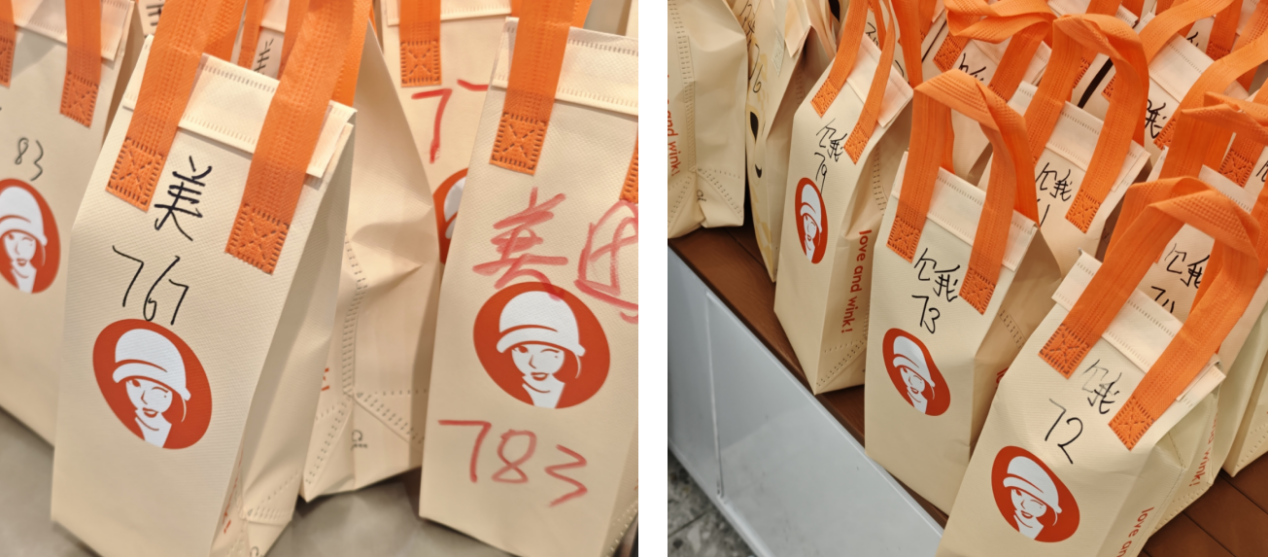
0元购!外卖"大战"继续
Wind万得· 2025-07-12 22:16
Core Viewpoint - The article discusses the ongoing competition among major food delivery platforms in China, highlighting aggressive subsidy strategies and promotional campaigns aimed at increasing user engagement and market share. Group 1: Promotional Strategies - Meituan and Taobao Flash Sale are actively distributing various discount coupons to attract consumers, with prices for many beverages dropping below 10 yuan after coupon application [2][3] - Taobao Flash Sale has launched a "Super Saturday" campaign, offering consumers a total of 188 yuan in delivery consumption red envelopes over the next 100 days, aiming to create a new promotional holiday [3] - Meituan is employing strategies like "0 yuan for milk tea" and "25 yuan off 20 yuan" to stimulate order volume significantly [5][6] Group 2: Market Dynamics - The food delivery market in China has surpassed 1 trillion yuan, with over 5.92 million users expected by the end of 2024, indicating a strong growth trajectory [11] - The competition is intensifying with the entry of JD.com into the market, leading to a "three-legged" competitive landscape alongside Meituan and Ele.me [11] - The current market is characterized by a "dual oligopoly" structure, with Meituan and Ele.me holding the majority of market share [11] Group 3: Financial Implications - High investment levels in subsidies are expected to lead to significant losses for the major platforms, with projections indicating losses of 410 billion yuan for Alibaba, 260 billion yuan for JD.com, and a reduction of 250 billion yuan in EBIT for Meituan over the next 12 months [15] - The recent surge in daily order volume for Taobao Flash Sale increased from over 10 million orders on May 2 to over 80 million orders by July 5, showcasing the effectiveness of subsidy strategies [5][8] Group 4: Consumer Behavior and Market Trends - The current subsidy war is primarily targeting low-priced items, particularly in the beverage and fast food categories, which are expected to benefit from increased consumer spending [16] - The platforms are focusing on enhancing operational efficiency and brand influence while competing for user and market share [7]

京东(JD):核心零售延续增势,坚定投入外卖协同主业
Shenwan Hongyuan Securities· 2025-07-12 14:35
Investment Rating - The report maintains a "Buy" rating for JD [1][13][25] Core Views - JD's core retail business continues to show growth, with a strong focus on food delivery to synergize with its main operations [6][13] - The company is expected to achieve a revenue of RMB 335.7 billion in FY2Q25, representing a 15.2% year-over-year increase, with an adjusted net profit forecast of RMB 4.32 billion [7][8] - JD is expanding its overseas business in Europe, launching the Joybuy brand in London and enhancing its logistics capabilities [12][13] Financial Data and Profit Forecast - Revenue projections for JD are as follows: - 2023: RMB 1,084,662 million - 2024: RMB 1,158,819 million - 2025E: RMB 1,309,433 million (13.0% YoY growth) - 2026E: RMB 1,420,217 million (8.5% YoY growth) - 2027E: RMB 1,493,471 million (5.2% YoY growth) [5][16] - Non-GAAP net profit estimates: - 2025E: RMB 23,538 million - 2026E: RMB 42,638 million - 2027E: RMB 55,403 million [5][16] - The report anticipates JD's retail revenue to grow 14.7% YoY to RMB 294.9 billion in FY2Q25 [8][9] Business Expansion and Strategy - JD's food delivery service has seen a peak of over 25 million daily orders, with a focus on high-frequency consumption scenarios [9][11] - The company is investing in on-demand retail and exploring new business areas such as travel and hospitality [11][13] - JD's market share in the premium food delivery segment is 45%, indicating strong competitive positioning [9][12]
马云刘强东杀入2万亿赛道,京东阿里绝不能输,美团则想赢更多
Sou Hu Cai Jing· 2025-07-12 11:31
Group 1 - JD.com officially entered the food delivery market on February 11, 2025, with a recruitment plan for "quality dining merchants" and introduced three key strategies: quality merchants, zero commission, and social security for delivery riders [1][4] - By April 2025, JD.com’s food delivery service achieved over 10 million daily orders, and by June 1, this number increased to over 25 million [2][3] - JD.com has established a significant presence with 120,000 full-time delivery riders and 1.5 million restaurant partners, maintaining daily orders above 25 million during the 618 shopping festival [3][4] Group 2 - Meituan's response to JD.com's entry was relatively subdued, focusing on providing new insurance for riders and announcing the independent launch of Meituan Flash Purchase, which aims for "30-minute delivery of everything" [5][6] - Meituan's strategic shift includes optimizing its operations by exiting unprofitable areas while expanding its focus on instant retail, including Flash Purchase and small supermarkets [11][12] - By July 5, 2025, Meituan reported over 120 million daily orders, with over 100 million coming from food delivery, indicating a strong market position [15][28] Group 3 - Alibaba's entry into the market with Taobao Flash Purchase in April 2025, which quickly surpassed 60 million daily orders, indicates a significant competitive threat to both JD.com and Meituan [8][9] - The integration of Ele.me and Fliggy into Alibaba's e-commerce group reflects a strategic move to enhance its instant delivery capabilities [8][25] - The competition has intensified, with Meituan, JD.com, and Alibaba all vying for dominance in the instant retail space, leading to a significant increase in daily order volumes across platforms [15][29] Group 4 - Meituan's concept of "instant retail" was first introduced in 2021, predicting a market size exceeding 1 trillion yuan within five years, with a focus on meeting immediate consumer needs [20][21] - Meituan Flash Purchase has achieved a scale of 175 billion yuan in the past year, with expectations to exceed 400 billion yuan by 2026 [21][22] - The competition is characterized by a shift from traditional food delivery to a broader instant retail model, with all three companies focusing on enhancing their logistics and delivery capabilities [29][30] Group 5 - The ongoing battle for market share in instant retail is marked by aggressive strategies from JD.com and Alibaba, who view Meituan as a significant competitor [30][32] - Meituan's strategy of "30-minute delivery of everything" poses a direct challenge to traditional retail models, potentially disrupting the market for JD.com and Alibaba [32][33] - The competition is expected to be prolonged and intense, with all players aiming to secure their positions in the rapidly evolving instant retail landscape [30][33]
外卖大战又爆了!0元奶茶点到爆单,小龙虾一口价16.18元,上海点午饭3.4元吃饱
21世纪经济报道· 2025-07-12 11:23
Core Viewpoint - The article discusses the resurgence of the "takeaway war" in China, highlighting significant discounts and promotions offered by major platforms like Meituan and Taobao Flash Purchase, which have led to a surge in consumer orders and impacted delivery riders and merchants [1][26][30]. Group 1: Promotions and Consumer Behavior - On July 12, platforms like Meituan and Taobao Flash Purchase issued large discount coupons, leading to a spike in consumer interest and orders [1][13]. - Consumers reported paying as little as 0.01 yuan for drinks due to these promotions, with some transactions showing discounts of up to 22.4 yuan [5][9]. - The hashtag FreeMilkTea trended on social media, indicating widespread consumer engagement with these promotions [2]. Group 2: Impact on Delivery Riders - Delivery riders experienced a significant increase in order volume, with some reporting daily earnings exceeding 1,000 yuan due to the high number of orders generated by the promotions [25][26]. - The influx of orders led to reports of riders completing up to 200 deliveries in a day, showcasing the intense demand created by the promotional activities [26][27]. Group 3: Merchant Challenges - While consumer orders surged, many merchants struggled to keep up with the demand, leading some to temporarily remove items from their menus due to overwhelming order volumes [27]. - Reports indicated that some merchants faced operational challenges, with long wait times for customers and overwhelmed staff [27][29]. Group 4: Competitive Landscape - The article notes that the competition among platforms has intensified, with Meituan and Taobao Flash Purchase both launching aggressive promotional strategies to capture market share [30][31]. - Alibaba announced a plan to inject 50 billion yuan into consumer and merchant subsidies over the next 12 months, indicating a strong defensive strategy against Meituan [31]. - Analysts predict that the ongoing competition will pressure overall industry profitability, with platforms needing to balance high delivery costs against consumer incentives [34][36]. Group 5: Future Outlook - The article suggests that the future of instant retail will depend on the platforms' ability to integrate supply chains and enhance delivery capabilities, particularly for non-standard products [37][38]. - The market for instant retail in China is projected to reach 1.2 trillion yuan by 2024, with the top three players' market share declining from 82% in 2020 to 67% [38].