
人民币国际化

Search documents
试析上海建立全球离岸人民币中心
Sou Hu Cai Jing· 2025-09-11 02:21
Core Viewpoint - Shanghai is poised to establish itself as a global offshore RMB center, supported by its financial infrastructure, policy backing, and market development, although challenges remain in international recognition and product offerings [1][2][3]. Group 1: Conditions for Establishing Offshore RMB Center - Shanghai is the only international financial center in China outside of Hong Kong, with 1,782 licensed financial institutions, one-third of which are foreign [2]. - The city ranks first in national cargo throughput and cross-border trade volume, hosting the highest number of multinational company headquarters in China [2]. - Shanghai's financial market transaction volume is projected to reach 36.503 trillion yuan in 2024, placing it among the top globally [2]. - The city has established a robust cross-border payment system (CIPS) and maintains close cooperation with financial institutions in Hong Kong and Singapore [2]. Group 2: Policy Support - The central government has prioritized the development of Shanghai's offshore RMB market, issuing supportive policies since 2021 [3]. - Recent initiatives include the "Action Plan for Further Enhancing Cross-Border Financial Services" aimed at promoting RMB's cross-border use [3]. Group 3: Market Development Achievements - In 2024, Shanghai accounted for 47% of the national cross-border RMB settlement volume [4]. - The offshore bond issuance has exceeded 1 trillion USD, with innovative products like free trade offshore bonds [4]. - The "Shanghai-Hong Kong Stock Connect" and "Shanghai-London Stock Connect" have facilitated direct RMB investments in domestic stock markets [4]. - The number of FT accounts in Shanghai has surpassed 170,000, with balances in the trillion yuan range [4]. Group 4: Current Challenges in Offshore RMB Market - The international recognition and acceptance of RMB remain limited, with only 29.3% of cross-border payments in RMB from January to August 2024 [5]. - There is a lack of sufficient cross-border RMB financial products and services, particularly in hedging tools and long-term products [6]. - The absence of a mature RMB internationalization repatriation mechanism hampers the smooth return of RMB used internationally [7]. - Regulatory constraints and insufficient market-driven interest rate mechanisms limit the growth of the offshore RMB market [8]. Group 5: Recommendations for Developing Offshore RMB Center - Explore the establishment of an "offshore economic function zone" in Shanghai, with a legal framework that aligns with international standards [10]. - Leverage Shanghai's financial market advantages to develop offshore insurance, bonds, and other financial services [11]. - Enhance RMB repatriation channels and hedging tools to facilitate cross-border transactions [12]. - Implement policies to allow offshore RMB to be used as the primary currency in offshore banking operations [13]. - Strengthen infrastructure for RMB transactions, including payment systems and trading platforms [14]. - Optimize legal and tax frameworks to improve the global competitiveness of offshore RMB [15]. - Transition foreign exchange policies towards a more open platform-based approach to enhance RMB asset trading [16].


奏响服务贸易金融强音 中国银行再赴“服贸之约”
Jin Rong Shi Bao· 2025-09-11 02:19
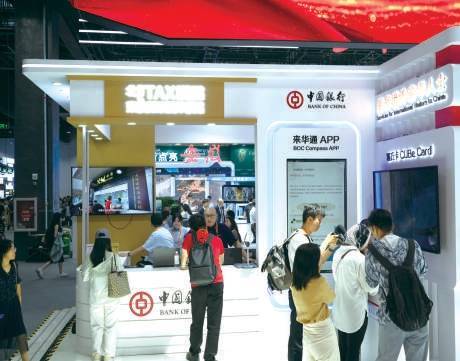
Core Viewpoint - The 2025 China International Service Trade Fair (CIFTIS) opened in Beijing, highlighting the growing importance of service trade in international economic cooperation and China's commitment to enhancing service trade through innovation [1][2]. Group 1: Event Overview - The CIFTIS took place at Shougang Park, transforming the site into a vibrant venue for international exchange, with significant attendance [1]. - Service trade in China has reached a new milestone, surpassing one trillion USD, reflecting rapid growth in recent years [1]. Group 2: Role of Bank of China - Bank of China has been the exclusive global partner for the banking industry at CIFTIS for five consecutive years, actively participating in the event's preparation and execution [2]. - The bank organized various activities during the fair, including "Sydney Day" and the launch of cross-border financial services, showcasing its commitment to supporting international trade [2][3]. Group 3: Financial Services and Innovations - Bank of China presented its theme "Digital Intelligence Leading Global Services" at the fair, emphasizing its role in providing high-quality financial services to support economic development [3]. - The bank has developed innovative products like the "Mifang Card" and "Laihua Tong" app to enhance the experience of foreign visitors in China, integrating payment, communication, and transportation services [8][9]. Group 4: Support for International Trade - The bank has strengthened its global service capabilities through a network of branches in 64 countries, facilitating cross-border financial services and supporting China's "Belt and Road" initiative [4][5]. - Bank of China has launched various action plans to stabilize foreign trade growth and enhance trade facilitation, contributing to the construction of a trade powerhouse [4]. Group 5: Enhancing Travel Services - The travel service sector has seen significant growth, with a 12.3% increase in imports and exports, and a remarkable 68.7% growth in travel service exports in the first half of 2025 [7]. - The bank has implemented measures to improve payment services for foreign visitors, creating a comprehensive service ecosystem to facilitate travel and shopping in China [7][8]. Group 6: Contributions to Beijing's Development - Bank of China Beijing Branch has played a crucial role in supporting the city's high-level opening-up initiatives, launching innovative financial products to attract investment [10][11]. - The bank's participation in the CIFTIS showcased its commitment to enhancing Beijing's service trade capabilities and supporting the city's economic development [12].


汇丰孙鸿志:中国债券市场外资持仓比例翻番并非不切实际
券商中国· 2025-09-10 23:28
Core Viewpoint - The international influence and attractiveness of China's bond market have significantly increased, with foreign institutions holding nearly 4.28 trillion yuan in Chinese bonds as of June 2025, marking a nearly 400% growth since the launch of the Bond Connect in 2017. However, foreign investors' share in the total bond market remains low at only 2.3% [1][4]. Group 1: Growth Drivers for Foreign Investment - The primary factors driving foreign investment in Chinese bonds include attractive yields, particularly after adjusting for USD, which saw a surge in investment last year [4]. - The demand for portfolio diversification is another key factor, as RMB bonds have a low correlation with financial assets from other countries, making them an important addition to investment portfolios [4]. - Passive funds tracking Chinese bond indices also contribute to the increase in foreign holdings of Chinese bonds [5]. Group 2: Role of Bond Connect - The Bond Connect mechanism has been deemed very successful, particularly for asset owners like central banks and pension funds, while overseas asset management firms and hedge funds prefer this mechanism for its familiarity with Hong Kong's infrastructure and rules [6]. - This mechanism has enhanced foreign investor participation, interest, and market liquidity [6]. Group 3: Future Outlook and Potential Growth - There is a belief that the foreign holding ratio in China's bond market could realistically double to 5% or even 7% in the medium to long term, given the potential for growth compared to other major markets [10]. - Current foreign investment levels in China's bond market are significantly lower than those in markets like the UK (over 30%), France (over 25%), and the US (around 10%) [9][10]. Group 4: Recommendations for Market Improvement - To achieve higher foreign investment ratios, further policy measures are needed to deepen market innovation, such as allowing international investors to re-mortgage collateral and enhancing the ecosystem for comprehensive trading and hedging tools [11][12]. - The introduction of more RMB risk management tools and the establishment of mechanisms for foreign investors in credit derivatives could enhance confidence and encourage greater investment in China's credit bond market [13]. Group 5: Panda Bonds and Dim Sum Bonds - The expansion of the Panda bond market is expected to continue, driven by the attractive yield advantage of these bonds and regulatory relaxations that allow funds to be used both domestically and internationally [14]. - The offshore RMB bond market, known as Dim Sum bonds, has also seen accelerated growth, with issuance exceeding 1.6 trillion yuan last year, tripling from 2021, and contributing to the internationalization of the RMB [14].

中国银行再赴“服贸之约”
Sou Hu Cai Jing· 2025-09-10 22:30
Core Viewpoint - The 2025 China International Fair for Trade in Services (CIFTIS) commenced on September 10 in Beijing, showcasing the vitality and potential of global service trade with participation from over 70 countries and nearly 2000 enterprises, including around 500 Fortune Global 500 companies [1][5]. Group 1: Event Overview - The CIFTIS transformed the former Shougang Industrial site into a vibrant platform for international cooperation, highlighting the dynamic nature of global service trade [1]. - China Bank has been the exclusive global partner for the banking industry at CIFTIS for five consecutive years, actively supporting various promotional activities and ensuring smooth event execution [5]. Group 2: China Bank's Role - China Bank organized multiple activities during the fair, including "Sydney Day," and provided comprehensive financial services such as account opening, deposits, loans, and cross-border remittances [6][10]. - The bank's exhibition theme, "Digital Intelligence Leading the Way, Global Services," emphasized its commitment to high-quality financial services that support economic development and international cooperation [6][10]. Group 3: International Trade and Financial Services - China Bank is enhancing its global service capabilities through its network in 64 countries, focusing on cross-border financial services and supporting international trade [10][11]. - The bank is actively involved in the Belt and Road Initiative, facilitating infrastructure projects and promoting the internationalization of the Renminbi [11]. Group 4: Services for Foreign Visitors - The inbound tourism market in China is experiencing growth, with travel service exports increasing by 68.7% year-on-year in the first half of 2025 [13]. - China Bank has developed innovative services for foreign visitors, including the "Mifang Card" and "Laihua Tong" app, to enhance their experience in China [14]. Group 5: Support for Local Development - China Bank's Beijing branch is contributing to the city's high-level opening-up and service trade innovation, launching various financial products and services to attract global investment [15][16]. - The bank's participation in the CIFTIS showcases its commitment to supporting the capital's economic development and enhancing the "Beijing Service" brand [16][17].
中国银行四川省分行积极打造“一站式”跨境金融服务——县域外汇服务直联点
Sou Hu Cai Jing· 2025-09-10 10:52
Group 1 - The core viewpoint of the articles emphasizes the establishment of "one-stop" cross-border financial service points by Bank of China Sichuan Branch to enhance foreign exchange service convenience in county areas, supporting high-quality economic development in Chengdu [1][4] - The foreign exchange service points are designed to provide consultation, guidance, training, and policy promotion for local market entities, thereby improving the accessibility and efficiency of foreign exchange services [1][4] - The initiative is part of a broader effort to optimize the local business environment and facilitate cross-border financing for enterprises, as demonstrated by a technology company's successful engagement with the service point for foreign debt processing [2][3] Group 2 - The establishment of the first batch of 12 county-level foreign exchange service points in Chengdu, with five operated by Bank of China Sichuan Branch, aims to assist local enterprises in handling foreign exchange operations efficiently [4] - These service points have already provided services to 141 county-level foreign exchange clients, facilitating cross-border transactions totaling $254 million, thereby supporting the development of foreign-related business entities in the region [4] - The Bank of China Sichuan Branch plans to continue innovating in foreign exchange services under the guidance of the Sichuan Provincial Foreign Exchange Administration, enhancing the convenience of cross-border trade and investment for foreign-related enterprises [4]
特朗普施压落空,美联储维持利率不变,中方大手一挥抛 82 亿美债
Sou Hu Cai Jing· 2025-09-10 10:42
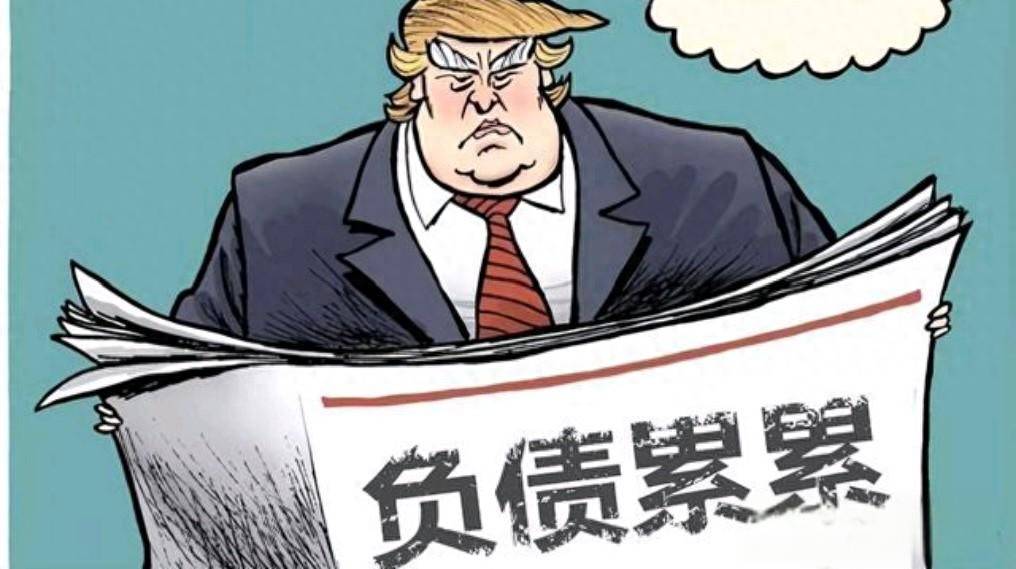
曾被视为全球经济"稳定器"的美国,正面临美国国债总额触及法律规定的上限情况,政府随时可能陷入"技术性违约"。 中国作为曾大量持有美国国债的国家,减持82亿美元至7570亿美元,持仓连续两年低于1万亿美元。 与此同时,白宫与美联储在货币政策上的对立持续升级,特朗普施压无效,美联储按兵不动,面对中方持续抛售美债的行为,美国会不会用战争方式 "赖 账"? 特朗普自上任以来,就一直试图通过施压美联储来实现其经济目标,他多次公开批评美联储主席鲍威尔,要求美联储立即降息。 在他看来,降息可以降低企业的融资成本,刺激经济增长,同时减轻政府的债务负担,然而,美联储并没有按照特朗普的意愿行事。 美联储在 6 月 18 日的会议中维持利率不变,并预计年内降息两次,美联储的政策声明和鲍威尔的新闻发布会要点显示,美联储更关注通胀和经济数据,而 非政治压力。 对于这种情况,美国政府也需要看清现象本质,是什么原因导致这样的情况发生。 对此美国国会吵得不可开交,但仍然阻止不了触发"技术性违约"的条令,这词听着挺专业,说白了就是:欠钱不还。 而且债务本身已经够吓人了,更要命的是窟窿还在加速变大,光是去年十月到今年五月,短短八个月,财政支出就 ...
整整5400亿!中国一口气签了三个货币互换大单!
Sou Hu Cai Jing· 2025-09-10 06:16
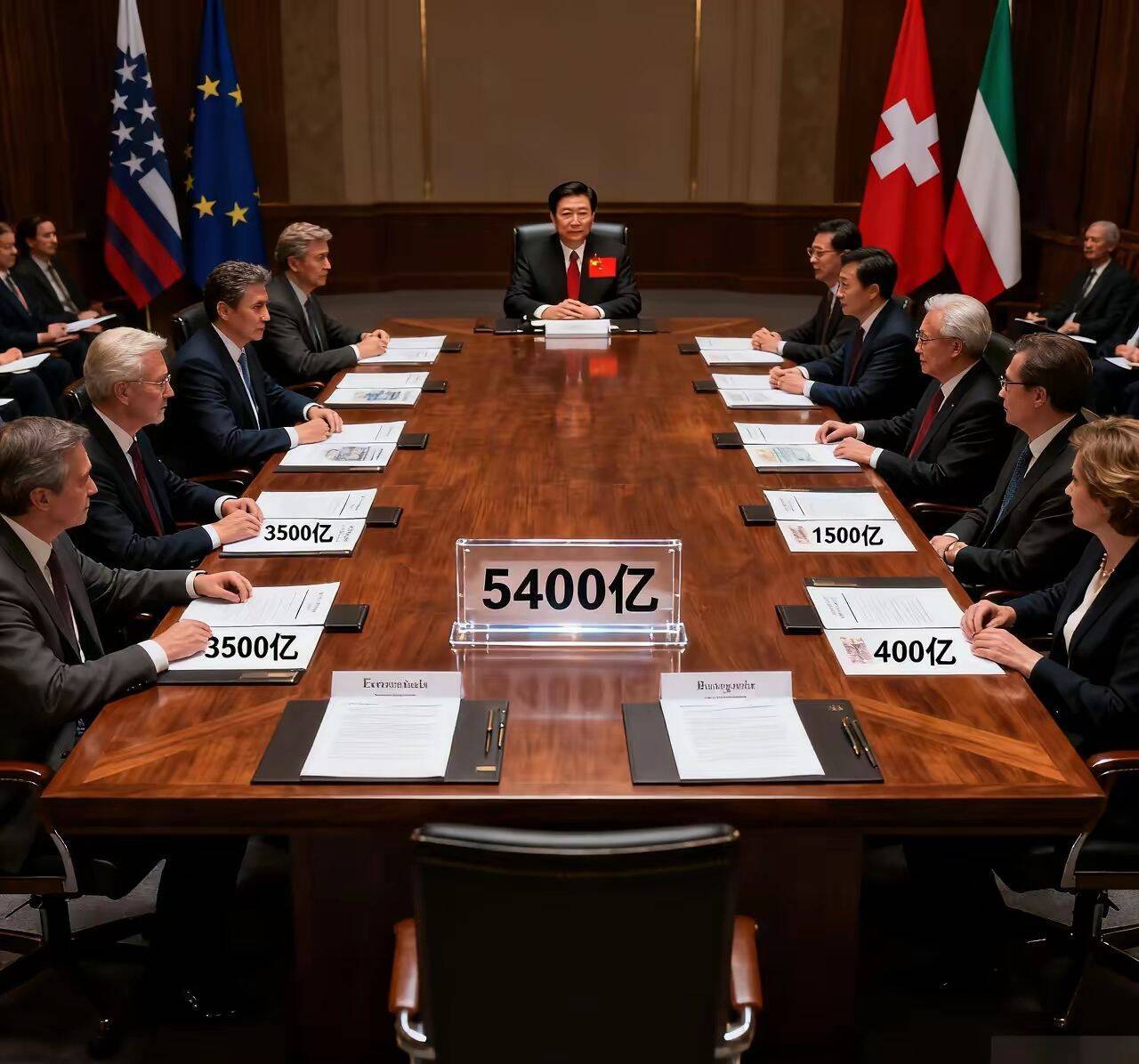
Group 1 - China has signed three major currency swap agreements with Western countries, totaling 540 billion yuan, indicating the increasing international recognition of the renminbi [1] - The agreements include swaps of 350 billion yuan with Europe, 150 billion yuan with Switzerland, and 40 billion yuan with Hungary, marking a significant shift in China's currency strategy [1] Group 2 - The dominance of the US dollar is supported not only by military and financial power but also by global demand for Chinese goods, which are primarily traded in dollars [3] - Currently, renminbi settlements account for 20% of global trade, and the currency is gaining traction in the SWIFT system, which is crucial for international transactions [3] - The US earns approximately $700 million annually from transaction fees in the SWIFT system, highlighting the financial benefits of dollar dominance [3]
人民币国际化:这次会不同吗?Asia Economics Analyst_ China’s RMB Internationalization_ Could This Time Be Different_ (Shan_Song)
2025-09-08 04:11
Summary of Key Points on RMB Internationalization Industry Overview - The report discusses the internationalization of China's Renminbi (RMB) and its current status in global finance, highlighting the contrast between China's economic significance and the RMB's limited global use [3][4][8]. Core Insights and Arguments 1. **Current Status of RMB**: Despite China's growing economic power, the RMB's share in global finance remains low, at just 2.6 in an index of international currency usage compared to 66.6 for the USD [4][36]. 2. **Internationalization Process**: The typical steps for currency internationalization include increased trade settlement, broader use in trade financing, and higher central bank reserve allocations. The RMB is seeing growth in trade invoicing and financing, but its overall financial market presence remains limited [3][17][30]. 3. **Geopolitical Influences**: Recent geopolitical shifts, such as the sanctions on Russia, have increased the desire among emerging market (EM) central banks to diversify away from the USD, potentially accelerating RMB internationalization [13][49]. 4. **Challenges to RMB Internationalization**: Major challenges include balancing government control with the need for openness in financial markets, as well as the impact of innovations like stablecoins on traditional currency systems [78][79]. 5. **Unique Features of RMB Internationalization**: The Chinese government may focus on expanding the offshore CNH market while maintaining the onshore CNY market, and foreign direct investment (FDI) may play a more significant role compared to portfolio investment due to strict capital controls [69][70]. Additional Important Insights 1. **China's Economic Growth**: China's GDP share in the global economy has increased significantly, from 6% to 19% since 2000, while the US and Euro area shares have declined [8][12]. 2. **Trade Dynamics**: China has become the largest contributor to global goods trade, with 33% of global manufacturing value-added, indicating a strong position for RMB in trade [8][12]. 3. **Historical Context**: The transition to a dominant currency is rare and typically takes a long time, as seen in the historical shift from the British Pound to the USD [53][54]. 4. **Central Bank Reserve Management**: Central banks prioritize factors like economic size, market depth, and geopolitical stability when allocating reserves, which currently favors the USD [36][49]. 5. **Future Outlook**: If China can continue to grow its economy and promote RMB use in trade, there is potential for the RMB's share in official reserves to increase significantly from its current level [60][61].
央行连续第10个月增持黄金,8月末我国黄金储备为7402万盎司
Sou Hu Cai Jing· 2025-09-08 02:24
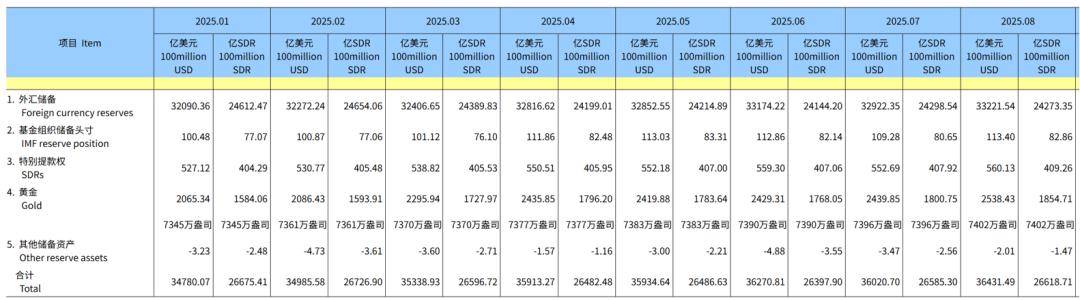
Group 1 - As of the end of August, China's foreign exchange reserves reached $332.22 billion, an increase of $29.9 billion from the end of July, marking a growth rate of 0.91% [1][2] - The increase in foreign exchange reserves is attributed to the depreciation of the US dollar index and the overall rise in global financial asset prices [2][3] - China's gold reserves increased by 60,000 ounces to 7.402 million ounces, marking the 10th consecutive month of gold accumulation by the central bank [1][3] Group 2 - The value of China's gold reserves rose by $9.9 billion to $253.8 billion, with the proportion of gold reserves to total foreign exchange reserves increasing by 0.23 percentage points to 7.64%, a historical high [3] - Analysts suggest that the current level of foreign exchange reserves is adequate and can provide important support for maintaining the RMB exchange rate at a reasonable equilibrium [2][3] - The steady increase in foreign exchange reserves reflects China's enhanced ability to withstand various economic shocks [2]
中国资产“价值重估”“共振上行”,“我们要成为在不同市场周期下均能创造价值的长期主动管理者”
Zhong Guo Ji Jin Bao· 2025-09-08 00:37
Core Viewpoint - The Chinese stock market is entering a long-term "value re-rating" cycle supported by three long-term factors, with both A-shares and Hong Kong stocks moving in sync based on the same fundamental and expected logic [1][4][5]. Group 1: Market Dynamics - The Shanghai Composite Index reached 3,800 points in August 2025, driven by policy and capital [1]. - Allianz Fund's first public fund, Allianz China Select Mixed Securities Investment Fund, was established in September 2024 and has shown outstanding performance due to its proactive management approach [1]. - The current market is characterized by a "slow bull" foundation, with significant changes in financial market regulation, valuation logic, and asset pricing mechanisms [11]. Group 2: Long-term Factors Supporting Value Re-rating - The three core factors supporting the value re-rating cycle are: 1. Improvement in the long-term competitiveness of Chinese enterprises 2. Mitigation of systemic risks 3. Strong policy support [4][6]. - These factors are considered "constant variables" that will continue to exert influence over the coming years [4]. Group 3: Asset Allocation Trends - There is a noticeable shift in residents' asset allocation from debt to equity, indicating a recovery in confidence across society [7][8]. - The upcoming maturity of high-interest three-year deposits is expected to drive funds towards more attractive investment options, creating positive feedback for the market [9]. Group 4: Foreign Investment Perspective - Foreign capital is gradually shifting towards a "Stand Alone" strategy for Chinese assets, indicating a fundamental change in market positioning [10]. - Although foreign investment in A-shares has not yet surged, there is strong confidence in the Chinese market, with foreign investors waiting for clearer geopolitical signals before making significant moves [10]. Group 5: Investment Strategy - Allianz Fund maintains a strategy of "enhanced GARP" (Growth at a Reasonable Price), focusing on a balanced allocation between dividend and quality technology assets [11]. - The fund is currently positioned with a high allocation towards quality technology assets, anticipating significant excess returns as the fundamentals improve [11].