产品创新

Search documents
股价大跌,一度冲上热搜!有人称“喝了一晚上睡不着”,霸王茶姬发长文回应“咖啡因”争议
新浪财经· 2025-12-28 14:49
Core Viewpoint - Bawang Chaji is facing public scrutiny due to concerns over caffeine content in its beverages, leading to significant stock price fluctuations and discussions on social media platforms [2][4][21]. Group 1: Caffeine Controversy - A social media post claimed that high-caffeine drinks like Bawang Chaji's are akin to "quasi-drugs," sparking widespread debate among consumers [2]. - Bawang Chaji's stock fell over 15% on December 26, reaching a record low, before closing down 2.54% at $11.90 per share, with a total market value of $22.1 billion [4][22]. - The company responded to the controversy, asserting that the claims are malicious and have initiated legal action to protect its reputation [4]. Group 2: Product Information and Adjustments - Bawang Chaji disclosed that a large cup of its "Boya Juexian" drink contains 117.2 mg of caffeine, while the "Light Caffeine Boya Juexian" variant has 55.4 mg, significantly lower than the 184.4 mg in "Wanli Mulian" and 175.8 mg in "Yiqi Hongchen" [21]. - The company emphasizes that its tea drinks contain natural caffeine and are rich in other beneficial compounds, promoting a balanced consumption experience [14][17]. Group 3: Financial Performance - In Q3 2025, Bawang Chaji reported a total GMV of 79.3 billion yuan and net revenue of 32.08 billion yuan, with a net profit of 5.03 billion yuan [22]. - Despite the growth in overseas business, domestic same-store sales declined by 27.9%, attributed to increased competition and high base effects from the previous year [23]. - The company plans to focus on product innovation and strategic brand investments to enhance market share and operational efficiency [23].


从舆论漩涡到全球抢单!金龙鱼45亿瓶爆款背后的破局密码
Sou Hu Cai Jing· 2025-12-27 06:10
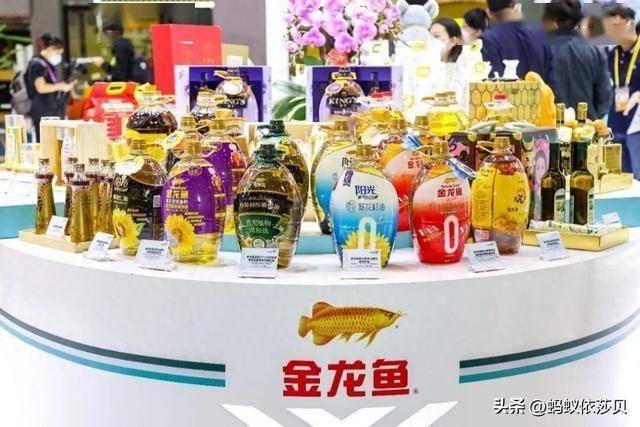
Core Insights - The company, Jinlongyu, has successfully turned around its fortunes after facing a significant public relations crisis and declining market performance, achieving a remarkable profit increase of 92.06% year-on-year in the first three quarters of 2025, with a net cash flow from operating activities reaching 27.597 billion yuan [1][3]. Group 1: Product Innovation - Jinlongyu's strategy focuses on classic product iteration and technological breakthroughs, exemplified by the 1:1:1 blended oil, which has sold over 4.5 billion bottles globally since its launch in 2002, maintaining its position as the top-selling oil worldwide [3][4]. - The company has also innovated in other core categories like rice and flour, introducing products such as low GI rice and black quinoa noodles, enhancing both quality and value [5]. Group 2: Health-Oriented Products - Jinlongyu has capitalized on the growing health consciousness among consumers by launching a new health brand, Fengyitang, which includes products like glycerol ester oil and plant sterol protein milk, targeting the high-end health food market [7][8]. - The introduction of these health-focused products aligns with national health initiatives and has significantly contributed to revenue growth, with high-end cooking oil now accounting for 12% of total sales [8]. Group 3: Customized Collaborations - The company has established strategic partnerships with major retailers like Costco and Sam's Club, creating customized products that meet specific consumer demands, such as black bean soy sauce and various oils [9][10]. - This approach has allowed Jinlongyu to enhance its market share and ensure rapid product delivery to targeted consumer groups, demonstrating effective supply chain management [10]. Group 4: Brand Resilience and National Commitment - Jinlongyu's recovery is attributed to its commitment to continuous innovation and consumer-centric strategies, reflecting a deep-rooted national sentiment and dedication to food security in China [13][14]. - The brand's evolution from a crisis to a global player serves as a lesson for national brands, emphasizing that true competitive advantage lies in product quality rather than marketing alone [14].
伊利股份20251225
2025-12-26 02:12
Company and Industry Summary Company Overview - The company discussed in the conference call is Yili Group, a leading dairy producer in China, focusing on liquid milk, milk powder, and other dairy products. Key Points Industry and Market Dynamics - The dairy industry is expected to see growth driven by improved supply-demand dynamics in raw milk and a recovery in consumer demand, particularly for liquid milk in 2026 [2][5] - The liquid milk channel inventory is currently below 20 days, indicating a healthy level [7] - The competition in the market is easing due to improved supply-demand relationships and the introduction of high-quality products by the company [8] Financial Performance - In the first three quarters of 2025, the company achieved a revenue of 90.56 billion yuan, a year-on-year increase of 1.7% [3] - The liquid milk market share remained stable, with the ambient yogurt market share increasing to 70% [3] - The company aims for double-digit growth in its infant formula business in 2025, with an increase in market share [4][20] Product Strategy - The company is adjusting its product mix, with basic white milk performing better than high-end products, although there is still a market for functional and organic high-end products [2][9] - Low-temperature yogurt is experiencing growth through product innovation and expansion into new consumption scenarios [10] - The company plans to introduce higher-end products such as cheese yogurt and Greek yogurt to cater to mid-to-high-end consumer demands [10][11] Deep Processing Business - The deep processing business is in its early stages but has significant potential for high-value products [13] - The company aims to achieve 10 billion yuan in revenue from deep processing within five years, focusing on products like milk powder and dairy fats [13] Future Outlook - The company expects the raw material supply-demand situation to improve further, which will benefit large dairy enterprises by enhancing sales efficiency and gross margins [12] - The company is committed to maintaining a cash dividend ratio of no less than 75% of net profit [5] Channel and Sales Strategy - The company is addressing channel fragmentation by diversifying its approach and enhancing online-offline integration [23] - New emerging channels, such as discount stores and membership stores, are growing faster than traditional channels, with new channels accounting for about 30% of liquid milk sales [24] Adult Nutrition and Infant Formula - The adult nutrition segment, particularly adult milk powder, is projected to grow, with plans to expand into other nutritional products [22] - The infant formula business has seen double-digit growth, driven by new product introductions and market share gains [21] Strategic Planning - The company has outlined a five-year strategic plan focusing on maintaining strong performance in core businesses while expanding into high-growth areas such as adult nutrition, cheese, and international markets [27] Additional Insights - The company is leveraging digital tools to optimize inventory and respond flexibly to demand changes, particularly in preparation for the upcoming Spring Festival [6] - The company is also exploring opportunities in the high-end market segment, driven by increasing consumer health awareness [9] This summary encapsulates the key insights from the conference call, highlighting the company's strategic direction, market dynamics, and financial performance.

乳饮2025|剥离、坚守、卷上游,新势力的“三盘棋”
Bei Jing Shang Bao· 2025-12-25 13:37
Core Insights - The Chinese food and beverage industry is undergoing significant transformation in 2025, with traditional companies facing challenges such as channel restructuring, product upgrades, and public opinion crises, while emerging brands are rapidly rising through differentiated positioning and digital marketing [1] Group 1: Yuanqi Forest - Yuanqi Forest has completed a strategic "slimming" by spinning off its dairy brand Beihai Pasture to focus on its core beverage categories, including sparkling water, electrolyte water, health water, iced tea, and milk tea [3][4] - In 2025, Yuanqi Forest achieved a 26% year-on-year growth in overall performance, significantly exceeding the fast-moving consumer goods (FMCG) industry average growth rate of 4.8% [4] - The company has invested 7.25 billion yuan in building six large factories, achieving an annual production capacity of 6.5 billion bottles of beverages by the end of 2024 [6] Group 2: Guozi Shule - Guozi Shule has maintained "resilient growth" in the competitive no-sugar tea market and plans to focus on this segment while also promoting electrolyte water starting in 2026 [9][10] - The no-sugar tea market has shown a slowdown in growth, with sales growth rates declining compared to the previous year, indicating a shift towards a more mature market phase [9][10] - Guozi Shule has diversified its product offerings, including no-sugar tea, electrolyte drinks, and various other beverage categories, supported by its self-built factories [11] Group 3: Renyang Yitou Niu - Renyang Yitou Niu is leveraging product innovation and deep market penetration to build a multi-layered product matrix targeting children, families, and young consumers [13] - The company has launched differentiated products, including lychee-flavored fermented milk and A2-type children's milk, while maintaining a high self-sufficiency rate of 95% for its milk sources [14] - The dairy industry is experiencing a structural adjustment, with a decline in liquid milk sales, highlighting the need for continuous product innovation to meet evolving consumer demands [15]
桃李面包:在原有明星单品的基础上,公司不断加强新产品的开发和推广
Zheng Quan Ri Bao Zhi Sheng· 2025-12-25 11:40
Core Viewpoint - The company is focusing on enhancing product development and promotion, aiming to accelerate product updates and improve product differentiation in the market [1] Group 1: Product Development - The company is continuously strengthening the development and promotion of new products based on its existing star products [1] - It introduces advanced production equipment and modifies its unique production processes every year [1] - The company combines new raw materials to launch products that have significant differentiation from those available in the market, thereby increasing product added value [1]

让“小玉”敢创业、“老何”稳经营,沪上阿姨近万店的启示
Xin Jing Bao· 2025-12-25 10:13
Core Viewpoint - The ready-to-drink tea market is rapidly growing, particularly among Generation Z consumers, leading to increased interest in entrepreneurship within this sector [1][3]. Group 1: Market Dynamics - Generation Z shows a strong consumption frequency for ready-to-drink beverages, with 72.6% purchasing them weekly, and 32.1% consuming them every 2-3 days [3]. - The high frequency of consumption makes the new tea beverage sector a preferred choice for many aspiring entrepreneurs [3][4]. - Challenges for new entrants include high initial investment costs, lack of operational experience, and the need for stable profitability post-launch [3][4]. Group 2: Support for Franchisees - To alleviate the financial burden on franchisees, the brand has introduced several promotional policies, including a reduction in franchise fees by 15,000 yuan or 49,800 yuan depending on prior experience [4][5]. - Comprehensive support is provided, including site selection, store design, marketing strategies, and operational guidance, ensuring a smoother startup process for new franchisees [5][6]. - The brand's commitment to supporting franchisees is evident in its willingness to share profit margins during the initial stages of operation [5][6]. Group 3: Product and Supply Chain Innovation - The brand emphasizes product innovation, having launched 136 new products in the first half of 2025, focusing on health and nutrition [7][8]. - A robust supply chain network supports the brand's operations, featuring 13 logistics bases and a comprehensive management system that enhances product quality and operational efficiency [8][9]. - The brand's initiatives aim to create a sustainable and healthy product offering, aligning with market demands for quality and wellness [7][9]. Group 4: Franchisee Ecosystem - The relationship between the brand and franchisees is evolving towards a collaborative model, moving from a management-focused approach to a mutually beneficial partnership [12][13]. - The brand's support system has led to over 5,700 franchisees operating more than 9,400 stores, indicating a successful model for market expansion and brand growth [9][12]. - This ecosystem fosters a positive cycle where franchisees benefit from established operational models and continuous product updates, while the brand gains market penetration and scale [12][13].
关店1500家的“肯德基邻居”,栽在一个鸡腿上
3 6 Ke· 2025-12-25 09:44
Core Viewpoint - The article discusses the decline of the fast-food chain 德克士 (Dicos), highlighting its significant reduction in store numbers and market position, as well as its struggles to compete with rivals like 肯德基 (KFC) and 麦当劳 (McDonald's) [3][19][40] Group 1: Company Performance - 德克士 has closed over 1,500 stores from 2022 to 2024, leaving only around 2,400 stores, a significant drop from its peak of over 3,000 stores [3][19] - The brand has fallen to eighth place in the Western fast-food market, lagging behind competitors like 华莱士 (Wallace) and 塔斯汀 (Tasting) [3][19] - The company has experienced a net closure of 1,582 stores against 1,053 new openings from 2022 to 2024, indicating a severe operational challenge [19] Group 2: Market Position and Competition - 德克士's market presence has diminished, especially in lower-tier cities where it once thrived, with reports of franchisees facing significant losses [12][17] - The brand's marketing efforts have been lackluster compared to competitors, failing to resonate with consumers [12][14] - The pricing strategy has backfired, with a significant increase in menu prices that does not align with consumer expectations in a price-sensitive market [24][25] Group 3: Product and Innovation - The product lineup has not evolved significantly, with many offerings dating back to the 1990s, leading to consumer dissatisfaction [15][30] - Recent attempts at product innovation have been poorly received, with new items criticized for quality and appeal [27][30] - The company has struggled to keep pace with competitors in terms of new product launches, introducing significantly fewer new items annually compared to KFC and McDonald's [36][40] Group 4: Strategic Missteps - 德克士's strategy of targeting lower-tier cities initially succeeded but has since led to a "模仿者困境" (imitator dilemma), where it has failed to establish a unique identity [32][40] - The company has attempted to expand into first-tier cities but has faced repeated failures, indicating a lack of clear strategic direction [32][39] - The reliance on franchise models has resulted in inconsistent quality and service across locations, further damaging the brand's reputation [37][39]

将湘超IP热度化为业绩动能 企业需四维创新
Zheng Quan Ri Bao· 2025-12-24 16:25
Core Insights - The 2025 Hunan Province Football League (湘超) has demonstrated strong regional sports IP appeal since its launch in September, driving a surge in cultural and tourism consumption, with core products from related companies continuing to sell well [1][2] Group 1: Concept Innovation - Companies need to move away from traditional marketing methods focused on "exposure at the venue" and instead explore the unique value of regional IP, integrating "sports + local culture + consumption" to create a differentiated competitive advantage [1] Group 2: Product Innovation - Simple "event-customized packaging" is insufficient; companies should infuse products with authentic Hunan characteristics, such as using local embroidery and dyeing techniques, and develop exclusive product categories that reflect Hunan's spicy flavor [1][2] Group 3: Marketing Innovation - Marketing efforts should aim to evoke deep emotional resonance, leveraging the regional emotional cohesion of 湘超. This can include performances that incorporate local cultural elements and campaigns that collect fan stories to create engaging marketing content [2] Group 4: Technological Innovation - Companies can utilize artificial intelligence for precise marketing and improved efficiency, analyzing fan consumption habits to offer targeted promotions and adjusting marketing strategies based on real-time factors like weather and game progress [2] Group 5: Long-term Value Creation - The popularity of 湘超 presents opportunities for companies to transform short-term excitement into long-term brand value by rooting their concepts in local culture, highlighting Hunan characteristics in products, conveying regional emotions in marketing, and leveraging smart technology [2]
葵花药业的“创新”样本:理念顺应产业重塑,产品驱动治疗升级
Huan Qiu Wang· 2025-12-24 13:11
Core Viewpoint - The pharmaceutical industry is crucial for public health and is a key focus of national policy, with companies like Kew Flower Pharmaceutical leading innovation and high-quality development in traditional Chinese medicine and modern pharmaceuticals [2][10]. Group 1: Company Overview - Kew Flower Pharmaceutical is a large brand pharmaceutical group primarily focused on traditional Chinese medicine, with a dual focus on chemical drugs, biological drugs, and health products [2][10]. - The company has shifted from a marketing-driven approach to a dual-driven strategy that emphasizes both marketing and product innovation, ensuring steady and high-quality development [2][10]. Group 2: Product Innovation - Kew Flower Pharmaceutical has introduced innovative products such as polyethylene glycol (PEG) for treating chronic constipation, which is based on a unique physical mechanism that does not involve metabolic participation or stimulation of intestinal nerves [4][5][7]. - The application of PEG in the treatment of constipation is still in the early stages in China, and Kew Flower Pharmaceutical is the first to introduce this technology domestically, aiming to improve the quality of life for patients [7][8]. Group 3: Industry Trends - The pharmaceutical industry is undergoing a transformation driven by policy support and technological breakthroughs, with a focus on high-quality value competition rather than low-level price competition [10][9]. - Kew Flower Pharmaceutical is committed to integrating traditional Chinese medicine with modern medical practices, focusing on the elderly, children, and women's health, which are key growth areas in the market [13]. Group 4: Digital Transformation - The company is actively investing in digitalization and smart technology to enhance operational efficiency and accelerate the innovation cycle in drug development, viewing digital transformation as a key driver for innovation [11][12]. - Kew Flower Pharmaceutical has developed a new digital work hub that integrates business processes, data interaction, and collaborative workflows, enhancing overall management capabilities [11]. Group 5: Future Outlook - The company plans to focus on core products and potential leading products, ensuring they meet quality standards and regulatory requirements to provide consumers with more choices [12]. - Kew Flower Pharmaceutical aims to leverage brand recognition and product quality to gain a competitive edge in the evolving pharmaceutical landscape [12].


用品牌“含新量”提升高质量发展“含金量” 青岛啤酒品牌价值与创新实践再获权威认证
2 1 Shi Ji Jing Ji Bao Dao· 2025-12-24 06:48
Core Insights - Qingdao Beer has been awarded the "Annual Brand Case" at the 2025 New Consumption Conference, highlighting its brand value and market performance [1] - The company is undergoing a transformation from product exportation to cultural integration, aiming to enhance its global brand presence [1] Group 1: Brand Value and Market Performance - Qingdao Beer has received authoritative recognition for its brand influence and market competitiveness, showcasing its status as a leading consumer brand in China [1] - The company has a 122-year history and is committed to enhancing its brand through quality, innovation, openness, and cultural integration [1] Group 2: Product Quality and Innovation - The company emphasizes product quality as the lifeline of its brand, with a mission to "create happiness for life" [2] - Qingdao Beer has developed over 100 new products across nine series, leading the industry in new product launches and sales revenue [2] - The introduction of non-pasteurized, unfiltered, and undiluted "Qing Beer Original" has been well-received by consumers, enhancing their quality of life [2] Group 3: Quality Management - Qingdao Beer has shifted its quality management focus from product-centered to consumer perception-centered, implementing a digital quality management model [3] - The company has the highest number of representatives (52 out of 109) in the national beer tasting committee, demonstrating its commitment to quality [3] Group 4: Consumer Experience and Engagement - The company has implemented a "three-product strategy" focusing on product variety, quality, and brand creation, enhancing consumer engagement through immersive experiences [4] - Qingdao Beer has created various experiential venues and events, such as the Qingdao Beer Museum and Qingdao International Beer Festival, to connect with consumers [4] Group 5: Global Expansion and Cultural Integration - Qingdao Beer has showcased its products at international events, emphasizing its commitment to global market integration and cultural representation [5] - The company has launched traditional Chinese New Year products in overseas markets, incorporating cultural elements to attract consumers [5][6] - Qingdao Beer aims to enhance its brand image on the global stage, participating in high-profile international events and promoting Chinese craftsmanship [6] Group 6: Future Outlook - The company is positioned for steady growth and high-quality development through continuous product structure optimization and technological innovation [6] - With ongoing consumer upgrades, Qingdao Beer is expected to leverage its brand heritage and market insights to further enhance consumer experiences [6]