
好房子

Search documents
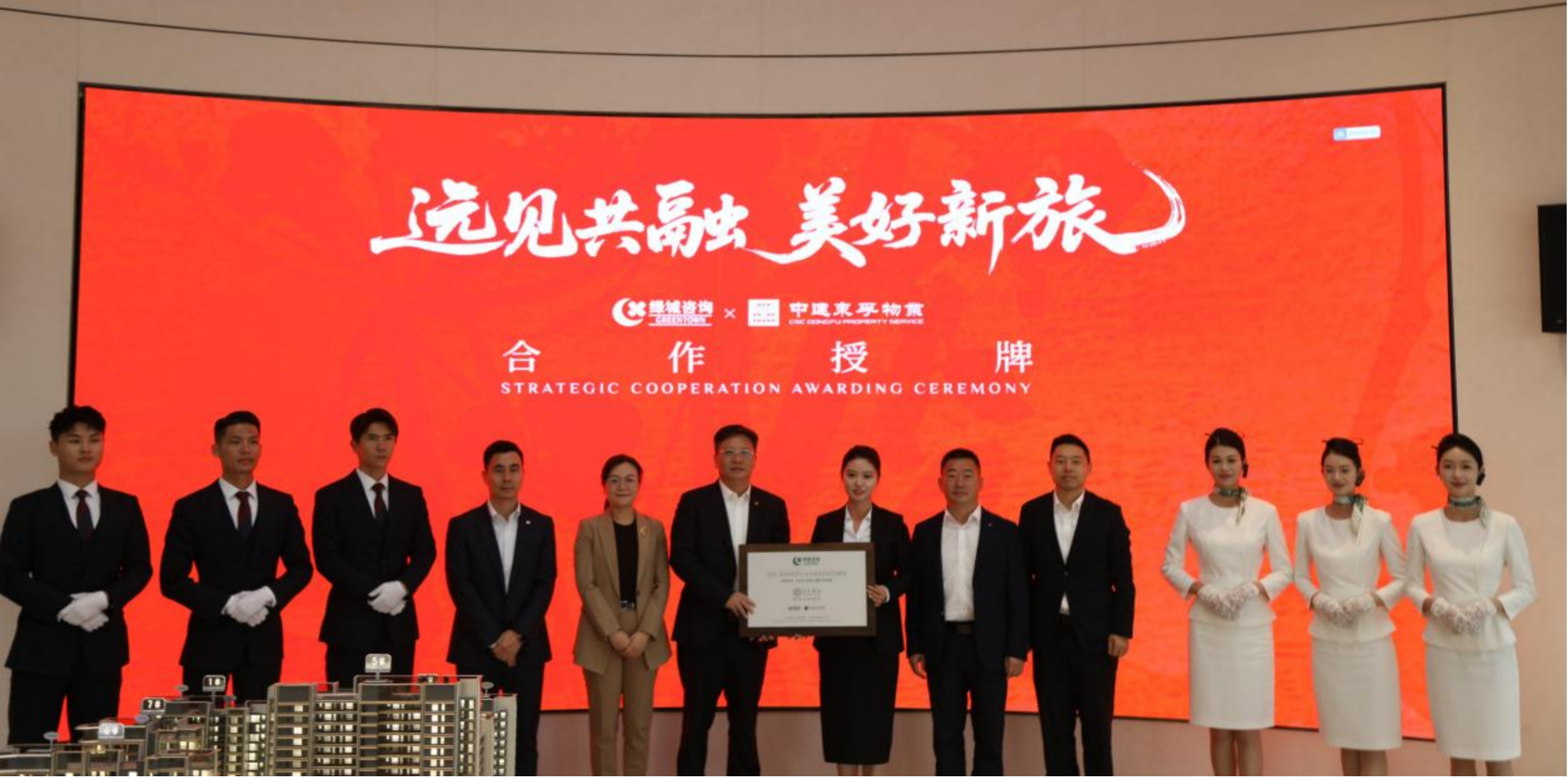
中建东孚好房子Joylife体系落地 中环麓岛引领人居变革
Bei Ke Cai Jing· 2025-11-04 14:55
Core Viewpoint - The Ministry of Housing and Urban-Rural Development emphasizes the integrated development of "good houses," "good communities," "good neighborhoods," and "good urban areas" in urban renewal efforts, indicating that "good houses" encompass more than just the physical structure [1] Group 1: Strategic Collaborations and Projects - China State Construction East Group (CSCEG) signed a strategic cooperation agreement with Greentown Real Estate Consulting Group to enhance the service quality of the Zhonghuan Luyuan project by implementing advanced property service standards [3] - The Zhonghuan Luyuan project is positioned as a strategic showcase for CSCEG's "good house" system, representing a new approach to urban renewal in Shanghai [5][12] Group 2: Good House Value System - CSCEG launched the Joylife Good House Value System, which addresses 101 basic needs, 59 enhancement needs, and 27 customized needs, significantly improving residential comfort and functionality [8] - The Joylife system is built on the principles of safety, comfort, green living, and intelligence, creating a four-tier value system that includes technology empowerment, healthy living, spatial scenarios, and smart living [10] Group 3: Innovative Design and Features - Zhonghuan Luyuan incorporates innovative design elements such as a "full-domain rain and wind corridor" to create a seamless homecoming experience [13] - The project features a three-dimensional viewing experience by connecting underground, ground, and aerial spaces, enhancing natural light and airflow [15] - A unique "three balcony" design maximizes space usage and sunlight, creating a park-like living atmosphere [27] Group 4: Location and Community Integration - Located in the South University Town area, Zhonghuan Luyuan benefits from strategic positioning within a rapidly developing urban zone, enhancing its value proposition [20][22] - The project includes approximately 20,000 square meters of commercial facilities and is surrounded by 16 prestigious schools, providing a robust foundation of transportation, commercial, educational, and ecological advantages [23] Group 5: Market Response and Expectations - The project has already seen over 100 groups participating in the pre-sale registration, indicating strong market interest and anticipation for the upcoming launch [30]

国家为楼市发展定调,刚需终于等来好消息!
Sou Hu Cai Jing· 2025-11-04 10:47
Core Insights - The "14th Five-Year Plan" indicates a significant shift in the real estate sector, moving from an economic driver to a focus on housing and livelihood [1][3][12] Group 1: Real Estate Positioning - Real estate is now categorized under "increasing security and improving people's livelihoods," signaling a return to its fundamental role as a place for living rather than an economic stimulus [3][4] - The focus is on creating "safe, comfortable, green, and smart" housing, reflecting a shift in public demand from mere availability to quality and community environment [4][5] Group 2: Quality and Safety Standards - The plan emphasizes the establishment of a "lifecycle safety management system" for housing, addressing past issues of rapid construction leading to quality and safety concerns [5][6] - Initiatives like "housing health checks" and "housing insurance" are being introduced to ensure long-term safety and maintenance of properties [5][6] Group 3: Regulatory Changes - The plan calls for a new real estate development model, focusing on improving regulations around property development, financing, and sales to mitigate risks [5][6] - There will be a push for current housing sales and stricter regulations on pre-sale funds to protect buyers [5][6] Group 4: Housing Supply Dynamics - The plan aims to optimize the supply of affordable housing and increase the supply of improved housing based on local needs [6][7] - This dual approach targets both low-income workers and families seeking better living conditions, indicating a significant market segmentation [7][8] Group 5: Market Segmentation and Future Outlook - The real estate market is expected to experience significant differentiation, with price disparities between affordable housing, regular market housing, and high-end properties [10][11] - The notion that "buying a house guarantees profit" is over, and future purchases will require careful selection based on quality [11][12]
时代聚焦“好房子”,绿城这个板块抢占先机
Sou Hu Cai Jing· 2025-11-03 21:15
Core Viewpoint - The real estate industry in China is undergoing a significant transformation from "scale expansion" to "quality enhancement," with a focus on the core elements that support the concept of "good houses" [1] Group 1: Industry Transformation - The event "Working Together for Quality Construction" highlighted the importance of collaboration across the entire industry chain to achieve high-quality housing [1][3] - Traditional real estate development often suffers from high management costs and low coordination efficiency due to parallel contracting models, which can lead to quality fluctuations [3] - The introduction of a general contracting model by Greentown Living Technology aims to optimize efficiency, quality, and costs by having a single entity manage all construction tasks [3][5] Group 2: Project Implementation - The projects "Xiaofeng Langyue Bay" and "Zhihaitang" exemplify the success of the general contracting model, achieving rapid completion of demonstration areas in 65 and 70 days, respectively, outperforming the average within the system [3] - The upgraded EPC model extends collaboration throughout the project lifecycle, allowing for integrated management and streamlined processes [5] Group 3: Quality Delivery - Greentown Living Technology emphasizes the importance of not just delivering high-quality spaces but also enriching them with complete living experiences [7] - The "H.E.A.R.T value system" integrates aesthetics, functionality, safety, global sourcing, and efficient delivery, ensuring a commitment to quality and human-centered design [8] Group 4: Competitive Advantage - The complexity of the real estate industry necessitates precise collaboration and system integration to deliver high-quality outcomes, which is a core strength of Greentown Living Technology [11] - The company has achieved significant milestones, including annual revenue exceeding 10 billion and recognition as one of China's top 100 construction decoration enterprises for nine consecutive years [15] Group 5: Future Outlook - Greentown Living Technology is positioned as a key player in the future of the real estate sector, embodying the principles of collaboration, meticulous focus, and a commitment to quality [16]

十五五规划明确推动房地产高质量发展,商务部等五部门支持商业地产发行REITs:地产及物管行业周报(2025/10/25-2025/10/31)-20251102
Shenwan Hongyuan Securities· 2025-11-02 05:37
Investment Rating - The report maintains a "Positive" rating for the real estate and property management sectors, highlighting optimism for the "Good House" policy and the revaluation of shopping center values [3][24][28]. Core Insights - The "14th Five-Year Plan" emphasizes promoting high-quality development in real estate, aiming to establish a new development model and improve the basic systems for property development, financing, and sales [3][24]. - Recent data shows a 9.8% week-on-week increase in new home transactions across 34 key cities, with a total of 2.835 million square meters sold [3][4]. - The report identifies a significant decline in year-on-year sales, with October's total transactions down 26.8% compared to the same month last year [6][7]. - The report notes that the average monthly inventory turnover for residential properties in 15 cities is 23.8 months, indicating a slight decrease [20][22]. Industry Data Summary New Home Transactions - New home sales in 34 cities reached 2.835 million square meters last week, a 9.8% increase from the previous week [3][4]. - Year-on-year, October's new home sales totaled 9.261 million square meters, reflecting a 26.8% decline compared to October of the previous year [6][7]. Second-Hand Home Transactions - Second-hand home sales in 13 cities totaled 1.152 million square meters last week, a 1.1% decrease from the previous week [12]. - Cumulatively, second-hand home sales in October were down 22.2% year-on-year [12][13]. Inventory Levels - The total available residential inventory in 15 cities was 89.296 million square meters, with a week-on-week decrease of 0.5% [20][21]. - The sales-to-new inventory ratio was 1.59, indicating a healthy turnover rate [20]. Policy and News Tracking - The report highlights the issuance of the "Urban Commercial Quality Improvement Action Plan" by the Ministry of Commerce and other departments, which supports the issuance of REITs for commercial real estate [24][25]. - The People's Bank of China announced a credit relief policy aimed at assisting the housing market [27]. - Local governments are implementing various housing subsidies, such as a maximum of 15,000 yuan in Yunnan and a combination of housing and consumption vouchers in Hangzhou [27][28]. Company Performance Overview - Several real estate companies reported their Q3 2025 results, with notable declines in net profits for many firms, such as New Town Holdings (9.7 billion yuan, -33.1%) and China Overseas Development (25 billion yuan, -4.0%) [28][30]. - The report mentions the successful listing of a commercial REIT by China Overseas Development, with underlying assets from a shopping center in Foshan [28][30].




地产及物管行业周报:十五五规划明确推动房地产高质量发展,商务部等五部门支持商业地产发行REITs-20251102
Shenwan Hongyuan Securities· 2025-11-02 02:44
Investment Rating - The report maintains a "Positive" rating for the real estate and property management sectors [4][27]. Core Views - The "15th Five-Year Plan" emphasizes promoting high-quality development in real estate, aiming to establish a new development model and integrate real estate into the social security system [4][27]. - The report highlights a rebound in new home sales, with a week-on-week increase of 9.9% in 34 key cities, while second-hand home sales saw a slight decline [4][5]. - The report identifies potential investment opportunities in the "Good House" policy and the revaluation of commercial real estate [4][27]. Industry Data Summary New Home Sales - New home sales in 34 key cities totaled 2.835 million square meters, up 9.9% week-on-week, with first and second-tier cities increasing by 12.5% [4][5]. - Year-on-year, new home sales in October decreased by 26.8%, with first and second-tier cities down 25.4% and third and fourth-tier cities down 41.2% [4][7]. Second-Hand Home Sales - Second-hand home sales in 13 key cities totaled 1.152 million square meters, down 1.1% week-on-week, and down 22.2% year-on-year for October [4][13]. Inventory and Supply - In 15 key cities, 770,000 square meters were launched for sale, with a sales-to-launch ratio of 1.59, indicating a healthy demand [4][22]. - The total available residential area in these cities was 89.296 million square meters, down 0.5% week-on-week [4][22]. Policy and News Tracking - The report notes that the Ministry of Commerce and other departments support the issuance of REITs for commercial real estate, providing long-term financing support [4][27]. - Various local governments have introduced measures to stimulate housing demand, including purchase subsidies and adjustments to rental withdrawal ratios [4][30]. Company Performance - Several real estate companies reported weaker performance in Q3 2025, with notable declines in net profits for companies like New Town Holdings and China Overseas Development [4][33]. - The report highlights the successful listing of China Overseas Development's commercial REIT, which raised 1.58 billion yuan [4][33].


“十五五”规划建议中,关于房地产的内容有这些,看看能悟出点啥
Sou Hu Cai Jing· 2025-10-31 20:40
Group 1 - The core viewpoint emphasizes the promotion of high-quality development in the real estate sector, highlighting its role in improving people's livelihoods [1] - A new model for real estate development is being established, which includes the implementation of current housing sales, reducing the risk of paying mortgages before properties are completed [1] - The supply of affordable housing is being optimized to meet the basic housing needs of urban wage earners and various struggling families, expanding coverage beyond just low-income groups [1] - Policies will be tailored to increase the supply of improved housing, moving away from a one-size-fits-all approach to more targeted development [1] - The initiative aims to construct safe, comfortable, green, and smart homes, with a focus on enhancing housing quality and property service standards [1] Group 2 - Policies related to mergers, bankruptcies, and land use are being improved to activate low-efficiency land, idle properties, and existing infrastructure [3] - There is a push for the efficient use of rural collective construction land and the activation of idle land and housing to support rural development [3] - The promotion of consumption mechanisms is being refined, indicating potential easing of restrictions on housing and automobile purchases to stimulate market activity [3] - A coordinated approach is being taken to address risks in real estate, local government debt, and small financial institutions to prevent systemic risks [3] Group 3 - The focus is on advancing a people-centered new urbanization strategy, facilitating the integration of agricultural migrants into urban areas [4] - Efforts are being made to modernize governance in mega cities and promote coordinated development among cities and towns [4] - The initiative aims to enhance urban infrastructure and public services while promoting sustainable and resilient urban development [4] - There is a commitment to advancing border town construction as part of the urbanization strategy [4]
2025国际(武汉)智能建造产业博览会开幕 多项智能建造前沿成果亮相
Yang Shi Wang· 2025-10-31 15:26
Core Insights - The 2025 International (Wuhan) Smart Construction Industry Expo showcases nearly 20,000 square meters of exhibition space, featuring participants from 13 countries and regions, and 1,300 innovative products, highlighting the industry's cutting-edge achievements and future trends [1][3] - The expo focuses on the theme of "developing the industrial internet and co-building 'good houses'," addressing key pain points and hot topics in the construction industry, while promoting a global smart construction ecosystem [1][3] Industry Developments - Technology is deeply integrated into the entire lifecycle of construction, driven by policy guidance and industry transformation needs [3] - Key innovations presented include: - The Green Health Indoor Air Intelligent Monitoring Device, developed in collaboration with Tsinghua University, which can accurately monitor over ten harmful substances with a detection accuracy of 96% [3] - The Amic modular building product, achieving a construction precision of ±2mm and a prefabrication rate of 96%, significantly reducing construction time and waste [3] - Magnesium composite panels and mobile energy storage solutions that provide green and low-carbon options, lowering construction costs and enhancing efficiency [3] - Technologies such as non-destructive testing systems and drone inspection systems address safety detection challenges in high-rise building facades, with related services already applied in nearly 100 projects [3] Collaborative Efforts - The expo is co-hosted by 25 organizations, including China State Construction Engineering Corporation, Huawei, and Tsinghua University, showcasing the latest achievements in smart construction and fostering collaborative innovation within the industry [3]

专访松下中山正春:期待在中国推广“好房子”的日本经验
2 1 Shi Ji Jing Ji Bao Dao· 2025-10-31 11:48
Group 1 - The core idea of the articles emphasizes the shift in China's real estate market from merely having properties to focusing on the quality of housing, termed as "good houses" [1][2][3] - The Chinese government has introduced policies aimed at promoting high-quality housing, including the "good house" concept, which encompasses safety, comfort, sustainability, and intelligence [1][2] - The demand for high-quality residential spaces in China is expected to evolve in three major trends: moving from "single product intelligence" to "whole-house intelligence," transitioning from "green certification" to demonstrable "health outcomes," and upgrading from "standardized solutions" to "personalized customization" [3][4] Group 2 - The real estate sector is transitioning from a focus on sales to long-term operational and service-oriented models, which presents challenges such as information silos and a lack of operational experience among developers [4][5] - The introduction of artificial intelligence (AI) in the real estate industry is anticipated to optimize design and construction processes, reduce material waste, and enhance customer engagement through data collection [5][6] - The concept of "green premium" is being addressed as a necessary investment for sustainable living, with companies like Panasonic committing to environmentally friendly practices and technologies [6][7] Group 3 - Panasonic's WS flagship store in Shanghai represents a strategic move to tap into the growing demand for health-oriented living solutions in the Chinese market, leveraging its extensive experience in building healthy communities [7][8] - The company aims to integrate Japanese design principles into the Chinese market, focusing on creating comfortable living spaces that align with the "good house" philosophy [8]
政策、金融双轨并进 住房租赁行业廓清产业边界
Zhong Guo Jing Ying Bao· 2025-10-31 07:48
Core Insights - The housing rental industry is experiencing a revitalization due to a series of policy initiatives, including the incorporation of "good housing" into the government work report and the implementation of the Housing Rental Regulations in September [1][4] - The industry is transitioning from a focus on quantity to quality, moving towards a more standardized, industrialized, and sustainable development phase [1][4] Group 1: "Good Housing" Concept - The "good housing" concept has become a core guiding principle for the industry, emphasizing not only construction standards but also a lifestyle philosophy that clarifies the framework for long-term value and sustainable development in the housing rental market [2] - The implementation of "good housing" projects has led to significant operational benefits, with average renovation costs decreasing by 15% to 20%, renovation cycles shortened by 35% to 40%, and maintenance costs reduced by 25% [2] - The average lifespan of assets has increased by 20% to 30%, and net operating income has improved by 3% to 5%, indicating that "good housing" enhances living experiences while ensuring sustainable asset returns [2] Group 2: Service and Brand Development - Standardized and systematic operational models are becoming central to brand building, transforming detailed services into replicable brand value and encouraging tenants to shift from short-term stays to long-term residency [3] - The proportion of family-type tenants has increased from less than 10% in 2018 to 25% by 2025, with average rental periods extending from 9.8 months in 2022 to 11.2 months by 2025, reflecting a structural upgrade in rental demand [3] Group 3: Industry Transformation - The implementation of the Housing Rental Regulations marks a new era for the housing rental industry, establishing a legal framework that enhances the economic status of the industry and increases public trust in rental housing [4] - The industry is evolving from a temporary arrangement to an independent industry, with a focus on differentiated resource allocation and systematic financial support [4] Group 4: Investment Opportunities - The maturity of REITs for affordable rental housing has enhanced the investability of rental housing assets, transitioning the market from a focus on initial offerings to a combination of initial offerings and expansions [5][6] - The REITs market is characterized by a trend of bundling multiple projects within the same city, improving management efficiency and asset diversification, with a focus on major cities like Beijing, Shanghai, and Suzhou [6] - Despite overall rental pressure, the unit monthly rent for affordable rental housing REITs increased by 1.6% in Q2, while the rental index for 16 key cities decreased by 3.5%, demonstrating the resilience and long-term value of these assets [6] Group 5: Future Outlook - The housing rental industry is poised for growth driven by policies, products, and financial innovations, shifting the focus from mere availability to quality and sustainability of investments [7]
租住行业加速发展“好房子”“好资产”“好服务”的路已经铺好了
3 6 Ke· 2025-10-31 02:03
Core Insights - The housing rental market is becoming a long-term choice as home buying decreases, making the stability of the rental market crucial for millions of people [1] - The implementation of the Housing Rental Regulations marks a significant step in establishing a systematic legal framework for the rental market, promoting a healthier development of the sector [1] - The rental market is transitioning from a temporary tool to an independent industry, gaining importance in urban governance and housing security [1] Market Dynamics - The rental housing market is experiencing a shift from "temporary short-term choices" to "stable long-term choices," with the proportion of family-type tenants increasing from less than 10% in 2018 to 25% by 2025 [2] - The average rental period is expected to extend from 9.8 months in 2022 to 11.2 months by 2025, indicating a growing demand for rental housing [2] - New generations are driving market diversification and innovation, seeking better value, a sense of belonging, and enhanced living experiences [2] Service Quality and Brand Development - Service quality is becoming a core competitive factor in the rental housing industry, with companies needing to focus on refined operations and innovative services to enhance brand value [5] - The differentiation of public spaces based on tenant characteristics is a strategy being adopted by some long-term rental brands, enhancing tenant experience and loyalty [5][6] Financial Innovations and Market Recognition - The introduction of financial products like REITs and ABS for rental housing is making the sector more attractive to capital markets, enhancing its investment potential [4] - The first domestic REITs for affordable rental housing completed expansion in June, indicating a growing recognition of rental housing as a viable asset class [4] - The rental market is transitioning towards a model that emphasizes sustainability and stable returns, supported by policy backing and asset market entry [6]