
美国例外论

Search documents
市场持续否定“美国例外论”,美国资产仍面临海外买家抵制
Sou Hu Cai Jing· 2025-04-29 07:29
德银原本估计欧洲投资者持有的美国资产占比将增加到20%。日本投资者持有的美国资产占比将增加至 16%。日本是美国国债最大外国持有者。但自4月初特朗普宣布计划对主要贸易伙伴实施所谓的"对等关 税"以来,美元与美国股债市场一同下挫。 萨拉维洛斯认为特朗普的关税政策削弱了外国投资者为美国的贸易和预算赤字融资的意愿,因此下调了 美元预测,预计到2027年欧元兑美元汇率将从1.14美元跌至1.30美元,美元兑日元将从142日元升至115 日元。 今年迄今,标普500指数已累计下跌了10%,而除美国以外的MSCI全球指数上涨了4.4%。4月22日,美 国三大股指集体暴跌,科技巨头市值集体蒸发超5万亿美元,险些跌入熊市,与今年早些时候连创新高 的景象形成了鲜明对比。美银全球策略师Michael Hartnett据此在研报中直言:"市场正从'美国例外论'转 向'美国否定'。" 德银报告还指出,在海外注册的ETF数据中持续抛售现象最为突出,投资者尤其在债券市场方面呈现激 烈抛售的态势。美债长期以来"借新还旧",债务增速远超经济承载能力,引发外界的迫切担忧。 来源:视觉中国 美国总统特朗普摇摆不定的贸易政策持续引发资本市场动荡, ...



特朗普怂了,美股又能 “KTV” 了?
海豚投研· 2025-04-28 15:50
大家好,我是海豚君! 舞完了大棒的特朗普,先是来一个90天的休止符,接着这两天突然跟"换魂"了一样,开始对包括中国在内的国家频频示好,市场原本预期平均税率都要到20%上 下,现在似乎川普温和之后,觉得最终关税税率可能也就是5-10%之间。 这种情况下,市场从Risk-off模式又重新进入了Risk-on模式,但这一波特朗普政府的神操作之后,美股市场会一笑泯恩仇,接着4月2日解放日之前的节奏继续"蹦 迪"吗? 一、4月2日之前 vs之后,到底什么变了? 但这次特朗普的极限操作,让市场意识到了,疫情以来美国的繁荣主要是联邦政府的加杠杆,现在这个杠杆在美国国债收益率高企的情况下,继续加杠杆已经很 困难了。 在特朗普这波难得一见的"抽象"操作中,从叙事角度,最大的变化恐怕就是"美国例外论"信仰了。在全球资金超配美国资产的过程中,除了美国作为成熟市场,稳 定的股东回报和理性的资本配置之外,一个很大的原因,相信美元资产持续向上。 从美国的宏观杠杆率变化可以看出: a. 美国经济总体的杠杆率目前仍然有258%,比疫情前的251%(2019年四季度)还高出7个百分点; b. 但分部门来看,杠杆是集中给到了联邦政府,企业和居民 ...
大摩逆势看涨美股:美元走软将提振企业盈利
智通财经网· 2025-04-28 12:26
智通财经APP获悉,摩根士丹利首席美国股票策略师Michael Wilson表示,疲软的美元将支撑美国企业盈利,帮助美国股市跑赢全球其他市场。 Michael Wilson预计,标普500指数将维持在5000-5500点区间。他补充称,美国股市要实现更大幅度的上涨,需要美国与中国达成关税协议、盈利预期出现 明显反弹,以及美联储可能放松货币政策。 与Michael Wilson不同的是,摩根大通策略师Mislav Matejka则是那些倾向于看好国际股票而非美股的人之一。在最新的一份报告中,Mislav Mate表示,非美 股的风险回报更具吸引力,尤其是在美国总统特朗普不断在关税政策上反复且经济衰退风险依然较高的情况下。 在华尔街众多策略师纷纷宣告"美国例外论"时代即将结束之际,Michael Wilson以其相对看好美国股市的观点显得格外突出。Michael Wilson指出,盈利增长 波动性较小、以及美国公司被视为质量更高的事实是他看好美国股市的原因。他在周一的一份报告中写道:"我们仍处于周期后期的背景下,优质股和大盘 股的相对强势应该会持续。" Mislav Matejka并不是唯一一个对美股持谨慎态度的 ...


“逢高卖美股,逢低买黄金!”美银:历史性转折点到来
美股研究社· 2025-04-28 10:03
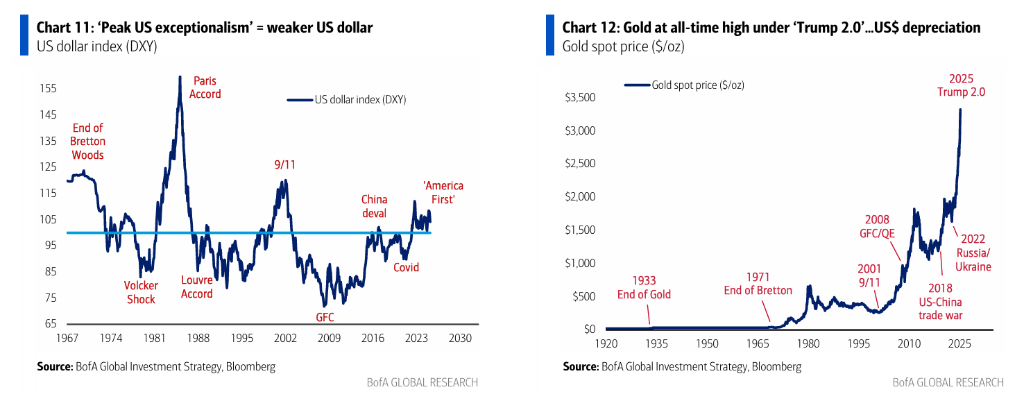
市场正从"美国例外论"转向"美国否定",美银全球策略师Michael Hartnett建议投资者 逢高卖出美股,逢低买入国际股票与黄金。 Hartnett在其24日发布的研报中表示,近期资金流向显示, 美国股票录得8亿美元流出,而黄金流入33亿美元, 表明市场对黄金的偏好正在增 加。 随着全球经济的再平衡,资金从美国市场流向其他地区,尤其是新兴市场和欧洲, 这种资金流动趋势对黄金价格形成支撑。 来源 | 华尔街见闻 Hartnett建议, "Stay BIG, sell rips" ,即做多债券(Bonds)、国际股票(International Stocks)和黄金(Gold)。投资者应该在美股市场反弹 时逢高卖出,而不是盲目追涨。 H a r t n e t t : 市 场 正 处 于 历 史 性 转 折 点 Hartnett表示,年初至今,金融资产表现显示出明确趋势: 黄金领涨(+26.2%),债券表现良好(政府债券+5.6%,投资级债券+3.9%),而美股 (-3.3%)和美元(-8.5%)显著下跌。 近期资金流向显示, 所有地区股票市场均录得流入 (欧洲34亿美元,新兴市场10亿美元,日本10亿美元 ...

投资美股就血亏14%,外国投资者被特朗普“坑惨”!
Jin Shi Shu Ju· 2025-04-28 09:59
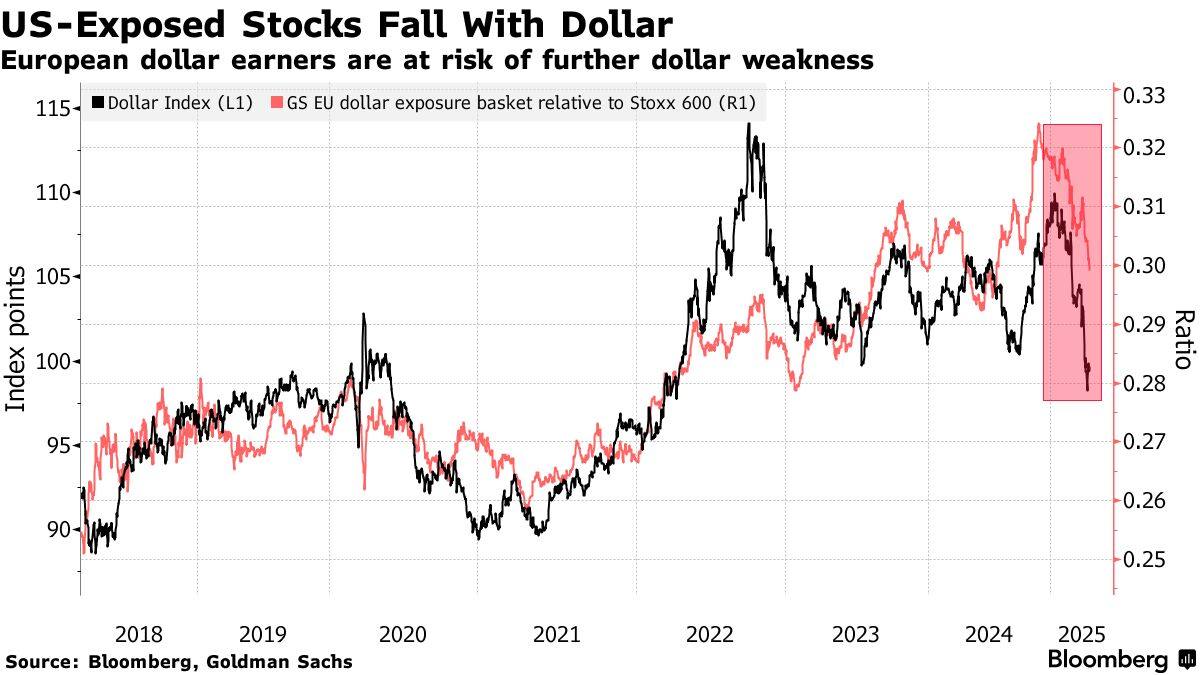
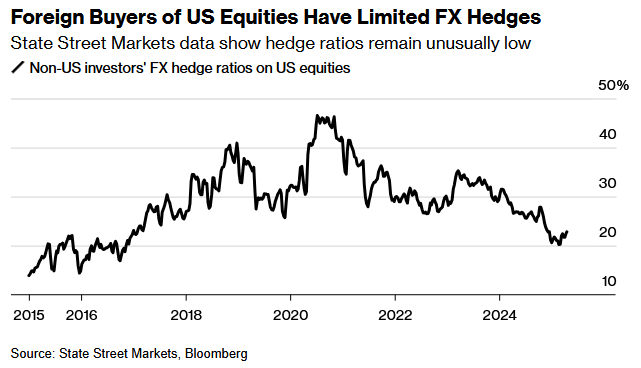
Core Viewpoint - The previously reliable strategy of investing in U.S. stocks while holding dollars has failed, with foreign investors suffering greater losses than domestic investors, highlighting the risks associated with currency fluctuations and market volatility [2][3]. Group 1: Investment Strategy and Market Performance - The S&P 500 index has declined by 6% this year, leading to a 14% loss for investors measuring returns in euros and yen [2]. - Foreign investors are now seeking to hedge their U.S. stock investments, which were valued at approximately $18 trillion as of last December, nearly one-fifth of the total U.S. stock market capitalization [2]. - The overall currency hedging ratio for foreign investors in U.S. stocks is currently at 23%, significantly lower than nearly 50% in 2020 [3]. Group 2: Hedging Costs and Strategies - The cost of hedging against currency depreciation has increased, with three-month hedging costs for investors in Swiss francs or yen at about 4% annualized, and over 2% for eurozone investors [3][4]. - The trading volume of euro-to-dollar options has reached record highs, indicating a growing interest in hedging strategies amid increased volatility [4]. - Some investors, like those at Prevoir Asset Management, have experienced significant losses, with their funds down approximately 18% this year due to unpredictable currency fluctuations [4]. Group 3: Market Outlook and Predictions - Analysts predict that the trend of a stronger euro and weaker dollar may persist for several years, with Deutsche Bank forecasting the euro-to-dollar exchange rate to reach 1.30 by the end of 2027 [5]. - Allianz economists warn that even a small outflow of international investment from the U.S. could lead to significant distortions in exchange rates and global asset prices [5]. - Group Richelieu's strategy of hedging against currency risks has helped mitigate some losses in the U.S. stock market, with the euro rising from approximately 1.05 to over 1.15 against the dollar [5].

美元、美股“双杀” 外国投资者急寻外汇对冲保护
智通财经网· 2025-04-28 06:49
Core Viewpoint - The long-standing strategy of foreign investors buying US dollars and investing in the S&P 500 and Nasdaq indices has faced significant challenges due to the recent trade war initiated by the Trump administration, leading to substantial losses in both stock and currency investments [1] Group 1: Market Performance - The S&P 500 index has declined by 6% this year, while returns for investors using euros and yen have dropped by 14% [1] - The rapid deterioration of this trading strategy has caused anxiety among foreign investors who previously viewed the US as a safe haven for returns [1] Group 2: Currency Hedging - Many foreign investors are now eager to increase currency hedging in their US stock portfolios, with current foreign investment assets in the US stock market amounting to approximately $18 trillion, nearly one-fifth of the total market capitalization [1][5] - The overall currency hedging ratio for foreign investors in US stocks is currently at 23%, significantly lower than the nearly 50% level seen in 2020 [5] Group 3: Hedging Costs and Strategies - The cost of hedging for investors based on currencies like the Swiss franc or yen is approximately 4% annualized for three-month hedges, while for euro-based investors, it exceeds 2% [6] - The demand for options trading as a hedging method has surged, with the trading volume of euro-dollar options reaching new highs, although increased volatility has also raised hedging costs by about 15% this year [7] Group 4: Market Outlook - Despite the current challenges, some market participants remain cautious about predicting the dollar's future movements, citing unpredictability in exchange rate fluctuations [11] - Analysts suggest that even a small outflow of international investment from the US could lead to significant market impacts, given that international investors hold approximately $28 trillion in US assets [11]
美银Hartnett:逢高卖出美股、逢低买入黄金
Hua Er Jie Jian Wen· 2025-04-27 03:33
Group 1 - The market is shifting from "American exceptionalism" to "American denial," with a recommendation to sell U.S. stocks on rallies and buy international stocks and gold on dips [1][3] - Recent fund flows indicate an outflow of $800 million from U.S. stocks and an inflow of $3.3 billion into gold, suggesting a growing preference for gold [1][3] - Year-to-date performance shows gold leading with a gain of 26.2%, followed by government bonds at 5.6% and investment-grade bonds at 3.9%, while U.S. stocks have declined by 3.3% [1][3] Group 2 - The relationship between Wall Street and Main Street is undergoing a rebalancing, with U.S. household stock wealth shrinking by approximately $6 trillion this year [3] - The current market correction is driven by three key factors, referred to as "3B" factors [9] - A significant trend is the depreciation of the dollar, which is expected to benefit commodities, emerging markets, and international assets [11] Group 3 - The U.S. Treasury yield has seen its fastest increase of 50 basis points since May 2009 [15] - Consumer spending in the U.S. remains resilient despite economic challenges [16] - The average price-to-earnings (P/E) ratio for the 2020s may establish a new ceiling at 20 times, compared to historical averages [16]
重磅!全球资管巨头考虑转向中国市场
新浪财经· 2025-04-24 01:04
骏利亨德森投资资产管理规模为3790亿美元。Dibadj表示,"如果美国例外论破灭,大量 资金可能会从美国资产中转移。即使转移的比例很小,也意味着资金会大量流向其他地 方。" 他补充称,与此同时,中国与美国脱钩并推动科技领域的自力更生,这也给中国资产带来了 一些投资机会。许多全球投资者目前已对特朗普在关税和美联储独立性等问题上的反复无常 感到厌倦。 最新消息显示,当地时间周二,特朗普承认美国目前对自中国进口商品的关税过高,预计税 率将大幅降低。 对此,Dibadj还表示,在关税争端获得持久性解决方案前,不确定性可能持续高企。今年 迄今为止,标普500指数已累计下跌了10%,而除美国以外的MSCI全球指数上涨了4.4%。 如果这一趋势持续下去,这将是这一美国基准指数32年来相对海外股市最大的年度跑输幅 度。同时,彭博美元指数在今年也已下跌了逾6%。 据彭博社报道,全球资管巨头骏利亨德森投资公司目前正考虑减少其对美国资产的敞口,中 国是其资金转向目的地之一。 减仓10%美国资产 资金可以转移到欧洲、中国、 中东和拉丁美洲 骏利亨德森首席执行官Ali Dibadj在本周对媒体的邮件中表示,"鉴于美国例外论出现了裂 ...
重磅!全球资管巨头考虑转向中国市场
Zhong Guo Ji Jin Bao· 2025-04-23 13:39
【导读】全球资管巨头骏利亨德森投资公司目前正考虑减仓10%美国资产 据彭博社报道,全球资管巨头骏利亨德森投资公司目前正考虑减少其对美国资产的敞口,中国是其资金 转向目的地之一。 减仓10%美国资产 资金可以转移到欧洲、中国、中东和拉丁美洲 骏利亨德森首席执行官Ali Dibadj在本周对媒体的邮件中表示,"鉴于美国例外论出现了裂痕的迹象,我 们可能会看到10%的客户风险敞口或管理资产从美国资产中退出并重新配置。资金可以转移到欧洲、中 国、中东和拉丁美洲。" 骏利亨德森投资资产管理规模为3790亿美元。Dibadj表示,"如果美国例外论破灭,大量资金可能会从 美国资产中转移。即使转移的比例很小,也意味着资金会大量流向其他地方。" 他补充称,与此同时,中国与美国脱钩并推动科技领域的自力更生,这也给中国资产带来了一些投资机 会。许多全球投资者目前已对特朗普在关税和美联储独立性等问题上的反复无常感到厌倦。 对此,Dibadj还表示,在关税争端获得持久性解决方案前,不确定性可能持续高企。今年迄今为止,标 普500指数已累计下跌了10%,而除美国以外的MSCI全球指数上涨了4.4%。如果这一趋势持续下去,这 将是这一美国 ...
顶级宏观大佬重量级对谈:“美国例外论”走向终结,未来五年美国资产将跑输全球
Hua Er Jie Jian Wen· 2025-04-23 09:06
Core Viewpoint - The discussion highlights the potential end of the "American exceptionalism" narrative, suggesting that U.S. assets may no longer outperform global counterparts, leading to a shift in investment strategies towards other regions and asset classes [1][2][3]. Group 1: Economic and Market Trends - The decline of the dollar and the peak of dollar assets began in January, coinciding with the bond market's reaction to U.S. legislators [2][3]. - U.S. fiscal spending is a significant factor in the potential end of "American exceptionalism," with global capital seeking new investment destinations [2][3]. - The U.S. market may enter a five-year cycle of underperformance compared to global markets, with the perception of "oversold" conditions needing reevaluation [2][3][4]. - The U.S. asset performance is increasingly resembling that of emerging market countries, indicating a transition into a weak dollar era [2][3][4]. Group 2: Geopolitical and Policy Implications - The current geopolitical landscape is characterized as multipolar rather than binary, challenging the "pseudo-Cold War model" that investors often rely on [2][3]. - The U.S. government's focus on bond yields over stock performance suggests a strategic approach to managing economic downturns [2][3]. - Trade negotiations with countries like Japan and South Korea may be too late to restore confidence and mitigate impacts on capital and consumer behavior [2][3][4]. Group 3: Investment Opportunities - Future market winners are expected to include Canada, Europe, Japan, non-aligned countries, and commodities, while the U.S. is likely to be a significant loser [3][4]. - There is a growing optimism towards Latin American assets, which are currently undervalued and exempt from recent tariffs [3][4]. - The discussion emphasizes the need for investors to diversify away from overexposed U.S. assets and consider emerging markets and commodities as viable alternatives in a weak dollar environment [3][4].