
GDP增长

Search documents
美国经济暴雷!GDP虚涨3.8%,就业少91万,钱去哪儿了?
Sou Hu Cai Jing· 2025-10-05 19:13
Group 1 - The U.S. economy appears strong with a reported GDP growth rate of 3.8% for Q2, but this may be misleading as it relies heavily on a significant drop in imports, which decreased by 29.3% [1][6] - Consumer spending showed resilience, increasing from 0.6% in Q1 to 2.5% in Q2, surpassing government forecasts, particularly in services which grew at an annualized rate of 2.6% [2][3] - Private investment is weak, with residential investment down by 5.1% and business inventories continuing to shrink, contributing to a GDP growth reduction of over 3.4 percentage points [2][3] Group 2 - Government spending has also declined, with federal expenditures decreasing by 5.6% in Q1 and 5.3% in Q2, which raises concerns about overall economic growth [3][8] - The trade policies of the Trump administration, which imposed high tariffs on imports, have created uncertainty for businesses, affecting their willingness to invest and hire [5][8] - Employment data has shown signs of weakness, with a significant downward revision of previously reported job gains, indicating a slowdown in hiring activity [6][10] Group 3 - The Federal Reserve's recent interest rate cuts aim to stimulate job growth while managing inflation concerns, but the strong GDP figures complicate this strategy [6][10] - The upcoming release of the personal consumption expenditures (PCE) price index will be crucial for the Fed's decision-making regarding future rate cuts [6][10] - The anticipated Q3 GDP growth rate of 1.5% suggests that the previously reported 3.8% growth may not be sustainable, highlighting potential underlying economic issues [11]


无视GDP:AI的任性崛起
Hu Xiu· 2025-10-03 13:33
Core Viewpoint - OpenAI's Sora App has generated significant excitement in the market, but its ability to disrupt the film industry remains questionable, as it may serve more as a showcase of future potential rather than a productivity tool [1][2]. Group 1: AI's Impact on Business - Over the past two years, AI applications have primarily focused on cost-saving measures [3]. - While AI has helped businesses reduce costs, it has not created new demand, which is essential for GDP growth [5]. - The economic growth logic relies on increased labor, capital, or efficiency improvements, but current AI applications have not led to noticeable GDP changes [6]. Group 2: Current AI Utilization - Companies are using AI to cut labor costs in customer service, sales, and office tasks, leading to reduced workforce and budget cuts [7][8]. - The majority of enterprises are leveraging AI for downsizing rather than for growth or innovation [8]. Group 3: Market Reactions and Future Concerns - The stock market has reacted positively to AI advancements, with companies like Nvidia and Microsoft seeing significant stock price increases [15]. - However, if AI remains primarily a cost-saving tool in five years, the substantial investments made may not yield expected returns, leading to potential market corrections [17][18]. - Historical parallels are drawn to past technological revolutions, suggesting that initial excitement may not translate into immediate economic benefits [16][19]. Group 4: Conclusion on AI's Role - While AGI is not a scam, it is viewed more as a sophisticated preview of the future rather than a current engine for economic growth [20][21]. - Genuine economic growth relies on real consumption, investment, and productivity improvements, which are not guaranteed by current AI technologies [22]. - The market may be overly optimistic about AI's potential, and as the hype fades, there could be significant disappointment [23].



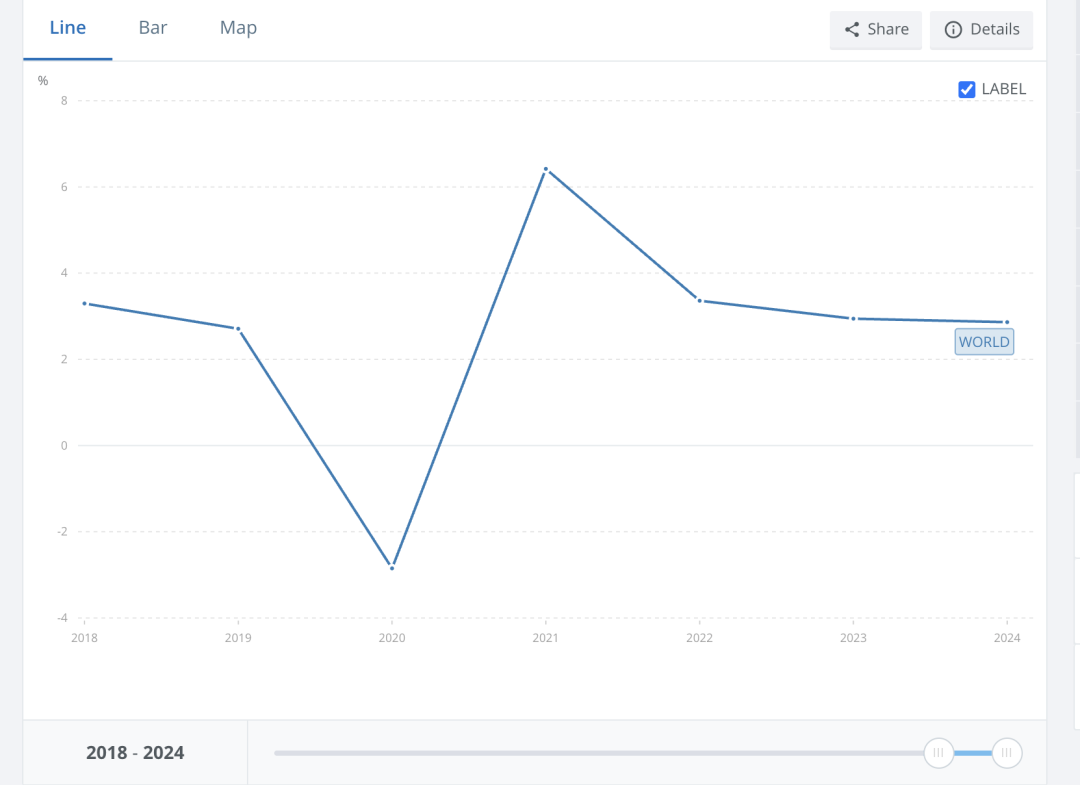
标普:美政府停摆每周或拖累GDP 0.1—0.2个百分点
Yang Shi Xin Wen· 2025-10-02 06:29
Core Viewpoint - The recent U.S. federal government shutdown is expected to have only a slight impact on GDP growth, but it is increasing economic uncertainty due to reduced discretionary spending and declining market sentiment [1] Economic Impact - Economic estimates suggest that for each week the government shutdown continues, economic growth could decline by 0.1 to 0.2 percentage points [1]
穆迪发布科特迪瓦国别评估报告 维持对科Ba2和展望稳定评级
Shang Wu Bu Wang Zhan· 2025-09-30 17:00
Core Insights - Moody's has maintained Côte d'Ivoire's sovereign rating at Ba2 with a stable outlook, reflecting confidence in the country's economic and fiscal development trajectory ahead of the presidential elections [2] Economic Outlook - Moody's forecasts a GDP growth rate of 6.6% for Côte d'Ivoire in 2025-2026, driven by the effective implementation of national development plans, increased private investment in strategic sectors (oil, minerals, air transport), and improved government governance [2] - Public fiscal revenue is expected to reach 18% of GDP by 2025, supported by high gold prices and increased oil production, with the fiscal deficit projected to decrease to 2.5% [2] Regional Context - The security situation in West Africa is expected to stabilize as three Sahel countries officially exit the West African Economic and Monetary Union (WAEMU) in 2024 [2] Risks - Despite positive economic indicators, Côte d'Ivoire faces ongoing political and social risks, including high youth unemployment, increasing regional development disparities, and weak education and healthcare social safety nets, which could lead to social unrest [2] - Moody's indicated that a further upgrade in the rating could be considered if Côte d'Ivoire continues to improve social indicators without increasing the fiscal deficit [2]

英国第二季度GDP终值同比增长1.4%,预估为增长1.2%,前值为增长1.2%
Mei Ri Jing Ji Xin Wen· 2025-09-30 06:10
Group 1 - The final GDP growth rate for the UK in the second quarter is 1.4% year-on-year, surpassing the forecast of 1.2% and matching the previous value of 1.2% [1]
关于美国政府关门,这是市场“不想知道”的一切
Hua Er Jie Jian Wen· 2025-09-29 00:58
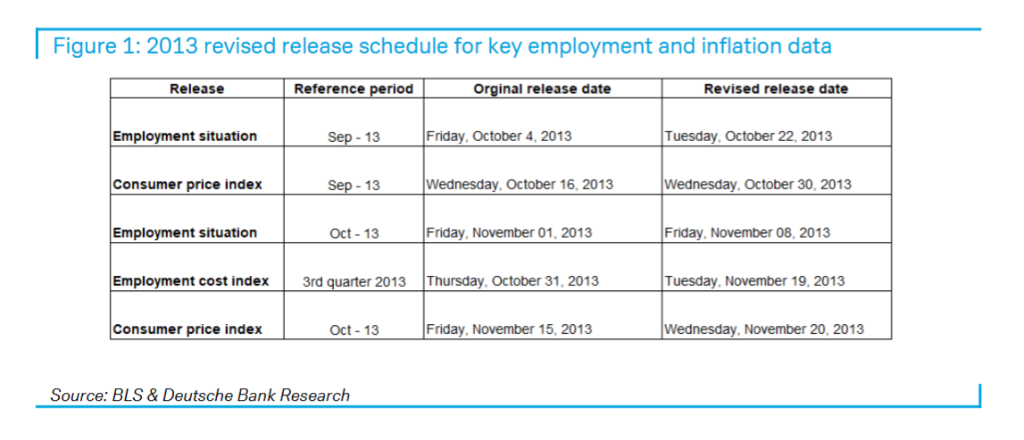
Core Insights - The potential government shutdown in the U.S. poses "invisible risks" to economic growth, key economic data, and specific financial instruments, although it does not present a systemic risk of default as seen in 2013 [1][2][8] Economic Impact - A comprehensive government shutdown could lead to 800,000 federal employees being furloughed, resulting in a weekly reduction of approximately 0.2 percentage points in annualized real GDP growth [1][5] - The previous shutdown in 2013 resulted in a $8 billion decline in annualized federal consumption expenditure, which ultimately reduced the fourth-quarter GDP growth by 30 basis points (0.3%) [5] - Even without a shutdown, federal government spending has already been a drag on GDP growth, contributing to an average reduction of about 40 basis points for the first half of 2025 [7] Data Release Delays - The shutdown would delay the release of critical economic data such as employment reports and the Consumer Price Index (CPI), as employees from the Bureau of Economic Analysis (BEA) and the Bureau of Labor Statistics (BLS) may be furloughed [3][4] - Historical data from the 2013 shutdown indicates that the release of employment and CPI data was significantly delayed, leading to a chaotic data release schedule [3][4] Financial Instruments Impact - The delay in CPI data will have specific implications for financial instruments such as Treasury Inflation-Protected Securities (TIPS) and inflation swaps, affecting their valuation and cash flows [9][11] - TIPS payments will be calculated using a backup index based on the most recent annualized inflation rate if the September CPI report is not released on time [11] - Inflation swaps will follow a different protocol, using actual data if released within five business days of the payment date; otherwise, a backup calculation will be employed [11]
东南亚消费行业8月跟踪报告:各市场股指纷纷收涨,印尼泰国及新加坡通胀放缓
Haitong Securities International· 2025-09-28 13:56
Investment Rating - The report provides a positive outlook on the Southeast Asia consumer sector, indicating a general upward trend in consumer valuations across various markets [2][5]. Core Insights - Inflation rates have shown a decline in Indonesia, Thailand, and Singapore, while Vietnam continues to experience robust retail growth [3][4][25]. - Consumer confidence in Indonesia has slightly decreased, reflecting gradual adjustments rather than a sharp decline, with the index at 117.2 in August 2025 [17]. - The retail sales in Vietnam have demonstrated strong growth, with a year-on-year increase of 10.6% in August 2025 [39]. Economic Data Summary - **Indonesia**: The GDP growth rate for Q2 2025 was 5.1%, with manufacturing as a key driver [13]. The CPI in August 2025 increased by 2.31% year-on-year, indicating a slowdown in inflation across various categories [14]. - **Thailand**: The GDP growth for Q2 2025 was 2.8%, with a notable decline in the CPI by 0.79% in August, marking the lowest level since January 2024 [21][19]. - **Singapore**: The GDP growth for Q2 2025 was 4.3%, with the CPI falling to 0.5% in August, the lowest since January 2021 [28][25]. - **Vietnam**: The GDP growth rate for the first half of 2025 reached 7.52%, with a strong manufacturing sector contributing significantly [34]. Market Performance Summary - In August 2025, major market indices in Southeast Asia showed positive performance, with Vietnam's market rising by 12.5% [11][12]. - Consumer sectors in Indonesia outperformed the overall index, with essential and discretionary consumption rising by 14.9% and 15.7%, respectively [5][11]. - Valuation levels for consumer sectors have generally increased, with Indonesia's essential consumption PE at 2% and discretionary at 70% historical percentiles [5].
“十四五”前四年,我国居民人均可支配收入与GDP增长同步
Xin Jing Bao· 2025-09-28 12:24
Core Insights - The report from the National Bureau of Statistics indicates that from 2021 to 2024, the per capita disposable income of residents in China has grown at an average annual rate of 5.5%, in line with GDP growth [1] - In 2024, the per capita disposable income is projected to be 41,314 yuan, an increase of 9,125 yuan compared to 2020 [1] - The per capita disposable income for urban and rural residents in 2024 is expected to be 54,188 yuan and 23,119 yuan, respectively, with annual growth rates of 4.5% and 6.9% [1] Income Composition - The composition of the per capita disposable income includes wage income (56.5%), operating net income (16.7%), property net income (8.3%), and transfer net income (18.5%) [1] Consumption Trends - In 2024, the per capita consumption expenditure is expected to reach 28,227 yuan, an increase of 7,017 yuan from 2020, with an average annual real growth rate of 6.5% from 2021 to 2024 [1] - The Engel coefficient for residents has decreased from 30.2% in 2020 to 29.8% in 2024, indicating an optimization and upgrading of consumption structure [1] Sector Growth - Expenditures on development-oriented consumption, such as education, culture, entertainment, transportation, communication, and healthcare, are projected to grow at an average annual rate of 10.0% from 2021 to 2024 [1] - Service consumption expenditures are expected to grow at an average annual rate of 9.5%, outpacing the growth of goods consumption by 3.8 percentage points [1] Income Disparity - In 2024, the actual growth rate of per capita disposable income for rural residents is expected to exceed that of urban residents by 2.4 percentage points, with the urban-rural income ratio at 2.34, a decrease of 0.22 from 2020 [2] - The income ratio between residents in the eastern and western regions is projected to be 1.59, down 0.03 from 2020, indicating a gradual narrowing of income disparities [2]
美国第二季度GDP增速终值上调至3.8%,增速创近两年来最快
Sou Hu Cai Jing· 2025-09-27 08:47
Core Insights - The U.S. economy has unexpectedly shown strong growth in Q2, with GDP increasing by 3.8% year-on-year, surpassing economists' expectations of 3.3% [1][4] Economic Growth Factors - The growth is attributed to increased consumer spending and a significant decline in imports, while investment and exports have decreased [4] - Personal consumption expenditure, which accounts for about 70% of the U.S. economy, grew by 2.5% in Q2 [4] - Non-residential fixed investment rose by 7.3%, while residential fixed investment fell by 5.1% [4] - Government consumption and investment decreased by 0.1%, and exports declined by 1.8%, with imports dropping sharply by 29.3% [4] Contribution to Economic Growth - Personal consumption expenditure contributed 1.68 percentage points to the economic growth for the quarter [4] - Net exports contributed 4.83 percentage points, while government consumption and investment had a negligible negative impact of 0.01 percentage points [4] - Private inventory investment negatively impacted growth by 3.44 percentage points [4] Economic Imbalance - The current economic situation reflects a "strong consumption, weak investment" and "warm domestic demand, cold external demand" imbalance, which poses risks for sustained economic recovery [4] Employment Market and Federal Reserve Actions - Despite the strong economic growth, the U.S. job market has shown signs of weakness, with new job creation falling short of expectations [8] - In response, the Federal Reserve recently lowered the benchmark interest rate for the first time since December, bringing it to a range of 4.0% to 4.25% [8] - The Fed aims to find a compromise solution amid rising inflation and risks in the job market [10]

1-8月阿塞拜疆GDP同比增长1%
Shang Wu Bu Wang Zhan· 2025-09-27 03:23
Core Insights - Azerbaijan's GDP reached 830.4 billion manats (approximately 488.5 billion USD) in the first eight months of 2025, reflecting a year-on-year growth of 1% [1] - The oil and gas sector experienced a decline in output by 2.1%, while the non-oil sector saw an increase in output by 2.6% [1] Sector Contributions to GDP - The industrial sector accounted for 34.9% of GDP [1] - Trade and automotive repair contributed 10.3% to GDP [1] - Transportation and storage represented 7.1% of GDP [1] - Agriculture, forestry, and fishing made up 6.3% of GDP [1] - Construction also accounted for 6.3% of GDP [1] - The tourism, accommodation, and catering sector contributed 2.8% to GDP [1] - Information and communication sector represented 1.8% of GDP [1] - Other industries collectively accounted for 20.7% of GDP [1]