人工智能(AI)

Search documents
Optical Cable (OCC) - 2025 Q3 - Earnings Call Transcript
2025-09-11 21:17
Financial Data and Key Metrics Changes - Net sales increased by 22.8% in Q3 FY2025 to $19.9 million compared to $16.2 million in Q3 FY2024, and increased by 12.8% to $53.2 million for the first nine months of FY2025 compared to $47.2 million in the same period last year [5][8] - Gross profit rose by 61.2% to $6.3 million in Q3 FY2025 from $3.9 million in Q3 FY2024, with gross profit margin increasing to 31.7% from 24.2% [9][10] - Net income for Q3 FY2025 was $302,000 or $0.04 per share, compared to a net loss of $1.6 million or $0.20 per share in Q3 FY2024 [11] Business Line Data and Key Metrics Changes - Sales increases were noted in both enterprise and specialty markets, contributing to overall net sales growth [8][9] - SG&A expenses increased to $5.7 million in Q3 FY2025, but as a percentage of net sales, it decreased to 28.8% from 32.3% in the prior year [10][11] Market Data and Key Metrics Changes - The sales order backlog at the end of Q3 FY2025 was $7.1 million, slightly down from $7.2 million at the end of Q2 FY2025, indicating a leveling off rather than a significant decrease [9][20] Company Strategy and Development Direction - The company entered a strategic collaboration with Lightera to expand product offerings in the enterprise and data center sectors, with Lightera holding a 7.24% stake in OCC [6][28] - The focus remains on disciplined execution and capitalizing on growth opportunities to drive shareholder value [7] Management's Comments on Operating Environment and Future Outlook - Management expressed optimism about the recovery in the industry and strength in targeted markets, particularly in data centers [41] - The company is not currently planning significant investments in additional capacity but is filling open positions to meet anticipated demand [24][25] Other Important Information - The gross profit margin is heavily influenced by product mix and operating leverage, which has improved due to higher sales volumes [10][49] - The company is in the process of improving its website to better promote its data center products [59] Q&A Session Summary Question: Can you comment on what you are seeing in your traditional markets? - Management noted strength in targeted markets, benefiting from a strong market position reflected in top-line results [15] Question: Can you comment on the impact of AI? - AI is positively impacting the industry, particularly in hyperscale data centers, although OCC's products are more suited for tier two and tier three data centers [17] Question: Does the decline in backlog indicate weaker demand? - Management described the backlog decline as minimal and not indicative of weaker demand, with strength still observed in target markets [20][21] Question: Why was the gross margin lower despite higher sales? - The gross profit margin varies based on product mix, which impacted the comparison between quarters [22][23] Question: Will Lightera's collaboration drive more volume? - The collaboration is expected to create more production volume, with current capacity utilization around 50% [53][54]

围绕AI科技主线 挖掘更具性价比方向
Zhong Guo Zheng Quan Bao· 2025-09-11 20:17
Core Viewpoint - The A-share market is experiencing a surge in artificial intelligence (AI) investments, but there are concerns about the sustainability of this trend due to rapid valuation increases in leading companies and segments like optical modules and optical communications [1] Investment Strategy - The focus is on identifying growth sectors with high potential and reliable management that can deliver on performance, while dynamically assessing cost-effectiveness based on future growth and current valuations [2] - The investment strategy emphasizes the importance of performance exceeding expectations, as many stocks that are fundamentally strong may not show significant price increases [2] AI Industry Segmentation - The AI industry chain is divided into three segments: upstream (computing power), midstream (data and large models), and downstream (applications) [3] - Downstream applications include software-related AI in education, office, and taxation, as well as hardware like robots, smart driving, AI phones, and AI glasses [3] Investment Opportunities - Current investment opportunities are concentrated in the computing power sector and downstream applications like robotics and certain hardware areas, which are seen as having relatively high investment value [3] - The robotics sector is viewed as a promising investment direction, particularly for companies that can participate in the Tesla supply chain and related domestic industries [3] AI Applications - AI applications are a focal point for investment, with companies that can turn "impossible into possible" through AI technology, such as humanoid robots and smart driving, being particularly attractive [3] - Companies that deepen their competitive advantages, such as those controlling channel access, are also seen as valuable long-term investments in the AI application space [3]
科技股再爆发!这波能持续多久?
Guo Ji Jin Rong Bao· 2025-09-11 16:00
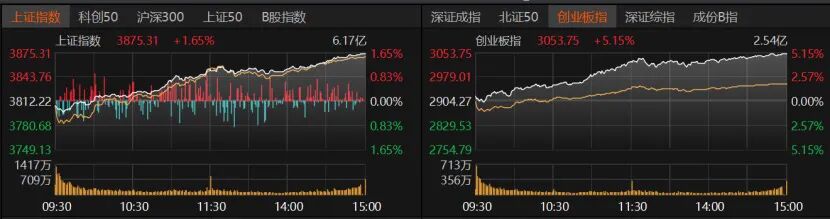
Market Overview - A-shares continued their rebound with a significant increase in trading volume, reaching a daily turnover of 2.46 trillion yuan, up by over 460 billion yuan from the previous day [5][6][17] - The technology sector, particularly communication and electronics stocks, experienced substantial gains, contributing to overall market sentiment [3][5][16] Sector Performance - The ChiNext Index rose over 5%, while the Shanghai Composite Index increased by 1.65% to 3875.31 points [4][5] - The communication sector surged by 7.39%, with notable stocks like Zhongji Xuchuang, Tianfu Communication, and Xinyi Sheng seeing increases of 14.28%, 13.53%, and 13.42% respectively [7][8][12] - The electronics sector also performed well, with a nearly 6% increase and multiple stocks hitting the daily limit [9][10] Key Drivers - The market rally was partly fueled by Oracle's record-breaking quarterly earnings report, which significantly boosted investor confidence in technology stocks [3][17] - Anticipation of a potential interest rate cut by the Federal Reserve is expected to attract more capital into the A-share market, enhancing the overall investment sentiment [16][17] Investment Opportunities - Analysts are optimistic about sectors such as AI hardware, robotics, AI applications, and innovative pharmaceuticals, which are expected to benefit from ongoing technological advancements and policy support [21][22] - The AI computing industry is projected to see a fivefold increase in global demand over the next five years, indicating a strong growth trajectory [21] Market Sentiment - The overall market sentiment has improved, with 4221 stocks closing higher and 94 stocks hitting the daily limit [6][11] - The current market structure shows a tendency for rapid rotation between high and low valuation sectors, suggesting a cautious approach for investors [19][26]




美银重磅报告:AI “卖水人”正在胜出!全球资金下一步可能流向哪里?
Zhi Tong Cai Jing· 2025-09-11 14:19
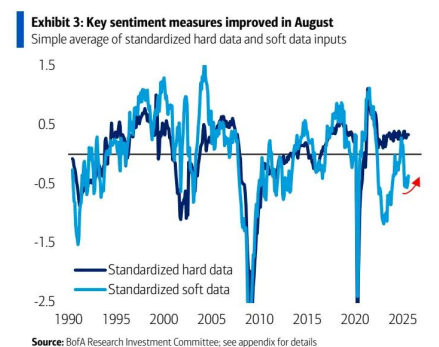
Macro Background - The Federal Reserve is expected to cut interest rates twice this year and three more times by 2026, bringing rates down to around 3.25% [1] - U.S. households currently hold $19 trillion in cash, which is 30% higher than pre-pandemic levels, and this cash is being eroded by inflation and taxes, necessitating better investment options [1] - Economic indicators show a "weak recovery but not recession" trend, with soft data slightly improving and hard data remaining stable [1] AI Enablers - "AI enablers" refer to sectors that provide foundational support for the AI industry, including utilities, industrials, nuclear energy, and pipeline MLPs [4] - Over the past two years, these sectors have outperformed the Nasdaq 100, with significant absolute returns and better risk-adjusted returns in some areas [4] - However, the correlation between these "AI enablers" and tech stocks has reached new highs, indicating potential risks if AI spending slows [7][4] Sector Analysis Energy - Natural gas is experiencing a "double benefit" with increased demand from data centers and the lifting of LNG export bans, leading to a reevaluation of natural gas sector valuations [8] - The construction of LNG export facilities is accelerating, creating a second growth curve for the natural gas sector over the next five years [8] - Government policies are becoming more favorable towards the energy sector, with recent approvals for pipeline projects in the Appalachian region [9] Industrials - The industrial sector is driven by AI and manufacturing reshoring, with record order growth expected in the next 2-3 years, particularly in semiconductors, pharmaceuticals, and defense [10] - AI contributes approximately 20-25% to the increase in electricity demand, with the majority coming from electrification policies and the rise of electric vehicles [10] Utilities - The utility sector is projected to grow at 6-8%, driven by increased industrial electricity demand and aging infrastructure [11] - Regulated utility companies are expected to see growth rates rise from 2-4% to 6-8%, with a total annualized return potential of 10% [11] Nuclear Energy - Nuclear energy is favored for its low correlation with tech stocks and long-term growth potential, especially in the context of carbon neutrality goals [13] - The market for small modular reactors (SMRs) is expected to reach $1 trillion by 2050, meeting about 25% of global electricity demand [13] Investment Recommendations - Two core ETFs are highlighted for investors: AIRR (small-cap industrials) and PAVE (infrastructure), both offering high returns with lower volatility [16] - For nuclear energy, URA (uranium ETF) and NLR (nuclear ETF) are recommended due to their low correlation with tech stocks and strong performance metrics [17]
摩根大通 2025 美股策略:AI 仍是核心引擎,短期需警惕通胀与估值风险
Zhi Tong Cai Jing· 2025-09-11 13:58
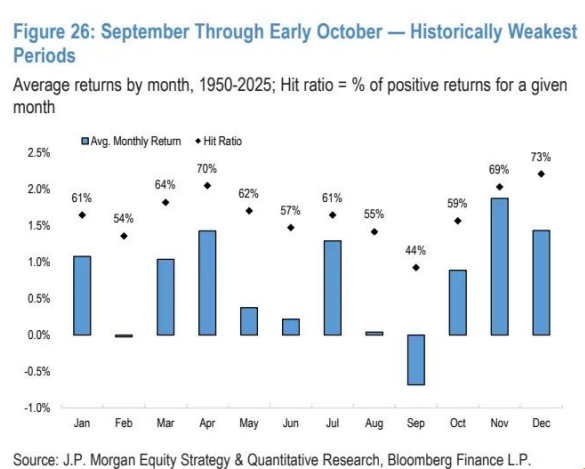
Group 1 - The core viewpoint of the report emphasizes that despite short-term pressures, U.S. equities are supported by strong earnings growth driven by AI adoption, robust capital expenditures, and resilient consumer spending [1][2][31] - The report identifies four key drivers of U.S. stock performance: accelerated AI implementation, strong capital expenditures, resilient consumer spending with a 4.1% year-over-year increase as of August 29, and a weaker dollar benefiting export companies [2][3] - The "Inflation Reduction Act" (OBBBA) is noted for its early spending, which helps mitigate growth obstacles posed by tariffs and immigration issues [3][27] Group 2 - Short-term risks highlighted include high investor positioning and valuations, inflation rebound pressures, and seasonal weakness in the market during September and October [4][25] - The report suggests that investors can hedge against CPI risks using options strategies, with a potential leverage of nearly six times [6][28] Group 3 - AI stocks dominate the S&P 500, accounting for approximately 43% of its market capitalization, and have contributed nearly all of the index's gains since the launch of ChatGPT in November 2022 [7][11] - AI-related companies have invested around $800 billion in capital expenditures and R&D over the past year, with a projected 33% increase in investment spending over the next 12 months [11][29] Group 4 - U.S. consumers are in a strong financial position, with the debt-to-asset ratio at its lowest since the 1960s, potentially releasing about $2 trillion in incremental credit if it returns to historical averages [15][18] - Stock buybacks have reached a record $958 billion year-to-date, significantly exceeding the average of $644 billion over the past three years, which supports U.S. stock valuations [20][24] Group 5 - The report warns of inflation risks due to tariffs affecting durable goods, with the upcoming August CPI data being a critical risk point [25][26] - The OBBBA Act is expected to generate an additional $373 billion in deficit spending from 2025 to 2026, focusing on AI, data centers, electrification, and defense, providing direct benefits to these sectors [27][29] Group 6 - The investment strategy suggests a defensive approach in the short term, favoring low-volatility and inflation-benefiting stocks, while maintaining a long-term focus on AI and quality growth stocks [28][29] - The S&P 500 is projected to reach 7,000 points by early 2026, driven by AI's continued impact on earnings, policy support, and structural high valuations [29][30]

联合国环境规划署首席数据官:AI助力应对全球环境挑战
Zhong Guo Xin Wen Wang· 2025-09-11 13:19
Group 1 - The core viewpoint is that digital technologies, especially artificial intelligence (AI), are fundamentally transforming the global approach to environmental challenges [1][2] - The United Nations Environment Programme (UNEP) emphasizes the importance of integrating digital technology and AI into clean air and climate action strategies, as demonstrated in countries like Indonesia, Malaysia, and the Philippines [1] - Beijing serves as a model for improving air quality through strong leadership, technological innovation, and long-term planning, achieving 290 days of good air quality by 2024 [1] Group 2 - UNEP is committed to exploring the opportunities presented by digital technology and AI in addressing environmental crises while also monitoring the environmental impacts of these technologies [2] - The statement highlights the necessity of international cooperation in combating air pollution, which transcends national borders [2] - The future vision includes ensuring that digital transformation aligns with environmental sustainability to create cleaner air, a more stable climate, and a more resilient world [2]
Best Moves For Income Investors As Rate Cuts Loom
Investors· 2025-09-11 11:00
Core Insights - The Federal Reserve is likely to begin lowering interest rates due to weak job growth, with Wall Street predicting a high probability of rate cuts in upcoming meetings [1][4][5] - Current borrowing costs are at 4.25% to 4.5%, and a significant reduction in rates could occur by next year, potentially lowering them to a range of 2.75% to 3% [2][5] - The implications of rate cuts will affect savers, retirees, and bond investors, leading to lower yields on savings accounts and CDs [6][7][10] Impact on Savers - Rate cuts will lead to immediate reductions in interest earned on savings accounts and CDs, with current yields potentially dropping from around 4% to 3.25% by year-end [8][11] - Savers are advised to lock in higher rates by purchasing CDs before the Fed cuts rates further [10][11] Impact on Bond Investors - Bond prices are expected to rise as interest rates fall, allowing investors to lock in higher yields and benefit from capital appreciation [13][16] - Investors are encouraged to diversify into intermediate-term bonds and consider investment-grade bonds or bond funds with durations of six to seven years [15][16] Impact on Borrowers - Fed rate cuts will lower rates on variable debt like HELOCs, but fixed-rate mortgages may not see significant reductions due to their ties to the 10-year Treasury note [22][24] - Homeowners are advised to wait for more substantial rate cuts before refinancing or taking out new loans [27][28] Impact on Stock Investors - While the S&P 500 yields about 1.25%, investors seeking income may consider higher-paying dividend stocks, particularly in the utilities sector, which is expected to benefit from structural growth [30][31]
前瞻全球产业早报:我国首个海上二氧化碳封存项目封存量破1亿立方米
Qian Zhan Wang· 2025-09-11 10:42
Group 1: Short Drama Industry - China's short drama products have reached over 200 countries and regions, becoming a new growth point in the global digital content sector [3] - There are two main methods for short dramas to go overseas: direct translation into foreign languages for overseas platforms and local adaptations produced in China for export [3] - The number of short dramas going abroad is rapidly increasing, covering dozens of countries in Europe, the Middle East, Japan, South Korea, and Southeast Asia [3] - Current data shows that over 300 short drama applications have been launched overseas, with a total download exceeding 470 million [3] - In Q1 of this year, global in-app purchase revenue for short dramas approached $700 million, projected to increase nearly fourfold by Q1 2024 [3] - The total market scale for short dramas going abroad is expected to reach $10 billion in the short term [3] Group 2: Carbon Capture Project - China's first offshore carbon dioxide storage project has surpassed a cumulative storage volume of 100 million cubic meters [4] - This milestone indicates the maturity of China's offshore carbon capture technology, equipment, and engineering capabilities [4] - The project is significant for accelerating the achievement of the national "dual carbon" goals and facilitating a green and low-carbon economic transition [4] Group 3: Oil and Uranium Exploration - Major breakthroughs in oil, gas, and uranium exploration have been reported, with deep basins and deep-water areas becoming key sites for resource accumulation [5] - The production of oil is supported at a stable rate of 200 million tons, while natural gas production has exceeded 240 billion cubic meters [5] - New discoveries of large uranium deposits have effectively enhanced the security of uranium resource supply [5] Group 4: Aviation Industry - The successful inaugural flight of the domestic C909 aircraft on the Nanchang-Macau route marks a significant milestone for Chinese regional aviation [6][8] - The route will operate three times a week, establishing a convenient air passage between Jiangxi and Macau [8] Group 5: Telecommunications - China Mobile has announced support for eSIM mobile services, with further details to be provided upon service launch [6][7] - China Unicom plans to leverage the Apple iPhone Air to initiate eSIM card services, with China Telecom and China Mobile expected to follow suit [7] Group 6: Technology and Gaming - The official launch of the Hongmeng version of the game "Genshin Impact" supports cross-platform progress synchronization, enhancing user experience across multiple devices [11] - The introduction of the "Gao De Street Ranking" by Gao De Map aims to create a credible ranking system based on user behavior and credit [10] Group 7: Market Trends - JD.com reported that the reservation volume for the iPhone 17 series exceeded 2 million within 6 hours of opening [9] - The stock market showed positive trends, with major indices in both A-shares and US markets experiencing collective gains [18][19]


高盛对冲基金主管:AI“一次又一次”推动市场,争议愈演愈烈,但“不要对抗牛市,也别追”
硬AI· 2025-09-11 08:58
Core Viewpoint - The report emphasizes that the current AI-driven U.S. stock market is supported by two main pillars: technology giants and loose monetary and fiscal policies, but warns against blindly chasing high valuations as the market may need to consolidate in the short term [2][4]. Group 1: Macroeconomic and Corporate Earnings - Goldman Sachs predicts that U.S. GDP growth will slow to 1.3% by 2025, significantly lower than recent years, particularly as the labor market is in a "stalling state" [3]. - However, the economy is expected to return to trend growth levels of 1.8% and 2.1% in 2026 and 2027, respectively, supported by a loose financial environment, strong fiscal support, deregulation, and a surge in capital expenditure in the AI sector [4]. - Despite uncertainties such as tariffs, Goldman Sachs forecasts a steady 7% growth in S&P 500 earnings per share (EPS) for the next two years, reaching $262 and $280, respectively [4][5]. Group 2: Valuation and Capital Flows - The report highlights two warning signals for the short-term outlook of U.S. stocks: market valuation and capital flows [6]. - The S&P 500 index currently has a price-to-earnings ratio of 22 times based on expected earnings for the next 12 months, placing it in the 96th percentile since 1980, indicating a "harsh" valuation [7][8]. - The report notes that high valuations serve more as a "roadmap" for future returns rather than a short-term sell signal, as sustained high valuations have not prevented significant market gains in the past [9]. - Systematic trading funds are reported to be "quite saturated," and stock buybacks are expected to be limited in the coming months, suggesting that capital will not be the primary market driver in the short term [10]. Group 3: Key Variables - The report identifies three significant variables that could impact the market: the Federal Reserve, AI, and the law of large numbers [12]. - Goldman Sachs anticipates approximately five interest rate cuts by the Federal Reserve from now until mid-2026, which historically has been favorable for the S&P 500 index, advising not to go against the Fed, especially without an economic recession [14][15]. - AI is highlighted as a major swing factor, with ongoing debates about whether the market is in the early stages of a new era or experiencing significant capital misallocation since the tech bubble [16]. - The report acknowledges the exceptional performance of U.S. tech stocks but raises concerns about sustaining high growth rates at such large scales, using Nvidia as an example of the challenges faced [17][18].


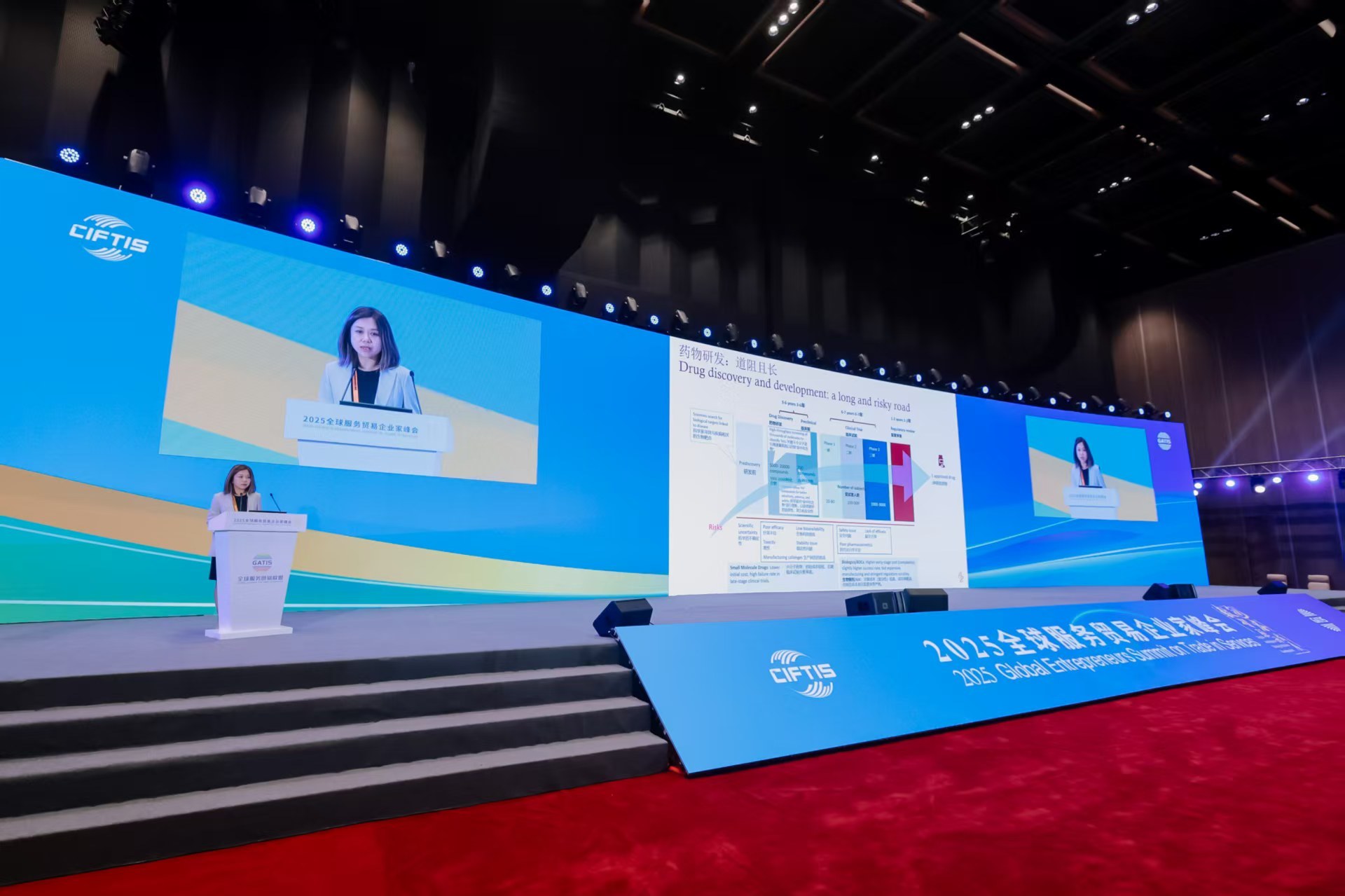
阿斯利康陈梦:AI不是外挂工具,而是嵌入到药物研发每个环节
Feng Huang Wang Cai Jing· 2025-09-11 08:08
Group 1 - The 2025 Global Service Trade Entrepreneurs Summit was successfully held on September 11, attracting over 500 high-level representatives from government departments, embassies, international organizations, and leading enterprises [1] - This summit is the fourth since the establishment of the Global Service Trade Alliance in 2022, indicating the growing importance of service trade on a global scale [1] Group 2 - AstraZeneca's Vice President of Global R&D in China, Chen Meng, highlighted the integration of AI across the entire drug development process, from discovery to clinical trials and commercialization [3] - Drug development typically takes 10-15 years and requires an investment of around $1 billion, with less than 10% of drug molecules entering clinical trials eventually receiving approval [3] - AstraZeneca aims to embed AI into every stage of the R&D process to enhance decision-making quality [3] Group 3 - The first main line involves integrating wet and dry laboratories, allowing experimental results to directly inform model outputs, creating a feedback loop for trial design [4] - The second main line focuses on optimizing drugs through multi-omics and multi-modal data to identify patient responders and expand indications using disease models and quantitative pharmacology [4] - The third main line aims to revolutionize clinical trials by using algorithms for patient recruitment, computer vision for quality control, and digital biomarkers for objective endpoint assessment [4] Group 4 - The convergence of these main lines is expected to transform traditional drug development methods, positioning China as a potential leader in AI-ready R&D paradigms [5]