
十五五规划

Search documents
现实格局偏弱,螺纹钢承压运行
Bao Cheng Qi Huo· 2025-11-04 11:21
Report Summary 1. Investment Rating The provided content does not mention the industry investment rating. 2. Core View Thanks to positive market sentiment and strong cost support, the price of rebar has rebounded from a recent low. However, there is no substantial improvement in the fundamentals under the situation of both supply and demand increasing, and the sustainability of the upward driving force is not strong. Once the market operation logic switches to the industrial side, the steel price is likely to be under pressure in the weak reality pattern. Attention should be paid to the demand performance [6]. 3. Summary by Related Content Price Trend in October - In October, the futures and spot prices of rebar showed a trend of first falling and then rising. The lowest price of the futures main contract dropped to 3,021 yuan/ton, and then rose to a maximum of 3,143 yuan/ton. The spot price of rebar mainly followed the futures trend, with a slightly lower price fluctuation range and a weakening basis [2]. - The rebound of rebar price at the end of October was mainly due to the short - term fermentation of positive factors, including a favorable macro - atmosphere (the release of the "15th Five - Year Plan" and the smooth progress of Sino - US trade tariff negotiations), production restrictions in Tangshan due to heavy pollution weather, and cost support from strong raw materials [2]. Supply Situation - The recent upward trend of ferrous metal prices is mainly driven by optimistic sentiment, and the industrial support is limited, with questionable sustainability. The supply and demand of rebar are both increasing. The production of construction steel mills has increased, and the production has reached a relatively high level, with high inventory and increasing supply pressure [3]. - As of the week ending October 31, the weekly output of rebar was 2.1259 million tons, an increase of 55,700 tons compared with the end of September. The increase in rebar production was mainly due to the increase in long - process steel mills, while the production of short - process steel mills was relatively stable and remained at a high level. It is expected that the production of short - process steel mills will maintain a high - level and stable operation in the future [3]. - Although the rebar inventory has decreased recently, the decline is limited, and the inventory level is still at a high level in recent years. The total inventory is 6.0252 million tons, with a slight increase of 270 tons compared with the previous period. The inventory pressure is relatively large [4]. Demand Situation - The demand for rebar has seasonally recovered, but the downstream industries have not improved. As of the week ending October 31, the weekly apparent demand for rebar was 232,190 tons, lower than the pre - holiday level and the lowest in the same period in the past five years. The total demand in October was 927,270 tons, significantly lower than the same period in previous years [5]. - The daily trading volume data is weaker. The average daily trading volume of construction steel by major national traders in October was 101,300 tons, with a month - on - month decrease of 1.13% and a year - on - year decrease of 16.51%. Although some downstream observation indicators such as cement and concrete have increased, the improvement in building material demand is limited and unsustainable due to poor project funds and the approaching off - season [5][6]. - Overall, during the "Silver October", the demand for rebar showed a seasonal improvement but was still at a low level in recent years. Considering the weak real - estate fundamentals and the decline in infrastructure investment growth, the demand for rebar is expected to weaken in the off - season, which will suppress the steel price [6].
学习贯彻党的二十届四中全会精神丨凝心聚力 同向而行 为谱写中国式现代化新篇章贡献力量——中共二十届四中全会精神在各民主党派中央、全国工商联和无党派人士中引发热烈反响
Yang Guang Wang· 2025-11-04 11:05
Core Points - The article emphasizes the importance of unity and collaboration among various political parties and organizations in China to implement the spirit of the 20th Central Committee's Fourth Plenary Session, focusing on the "15th Five-Year Plan" for modernization [1][2][3] Group 1: Achievements and Future Plans - The "14th Five-Year Plan" period has seen significant achievements, which are attributed to the leadership of Xi Jinping and the guidance of Xi Jinping's Thought on Socialism with Chinese Characteristics for a New Era [1][2] - The "15th Five-Year Plan" is viewed as a critical period for solidifying the foundation for achieving socialist modernization, with a focus on six important principles and seven main goals for economic and social development [3] Group 2: Political Responsibilities and Actions - Various political leaders express their commitment to learning, promoting, and implementing the spirit of the plenary session as a major political task [2][3] - The emphasis is placed on gathering consensus and showcasing new contributions in policy advice to support the realization of the "15th Five-Year Plan" [2][3] Group 3: Sector-Specific Focus Areas - The article highlights specific areas of focus for different political parties, such as promoting health, advancing green transformation, and enhancing high-level opening-up [3][4][5] - The need for high-level technological self-reliance and the development of new productive forces is underscored as a strategic task [4]
国家为楼市发展定调,刚需终于等来好消息!
Sou Hu Cai Jing· 2025-11-04 10:47
Core Insights - The "14th Five-Year Plan" indicates a significant shift in the real estate sector, moving from an economic driver to a focus on housing and livelihood [1][3][12] Group 1: Real Estate Positioning - Real estate is now categorized under "increasing security and improving people's livelihoods," signaling a return to its fundamental role as a place for living rather than an economic stimulus [3][4] - The focus is on creating "safe, comfortable, green, and smart" housing, reflecting a shift in public demand from mere availability to quality and community environment [4][5] Group 2: Quality and Safety Standards - The plan emphasizes the establishment of a "lifecycle safety management system" for housing, addressing past issues of rapid construction leading to quality and safety concerns [5][6] - Initiatives like "housing health checks" and "housing insurance" are being introduced to ensure long-term safety and maintenance of properties [5][6] Group 3: Regulatory Changes - The plan calls for a new real estate development model, focusing on improving regulations around property development, financing, and sales to mitigate risks [5][6] - There will be a push for current housing sales and stricter regulations on pre-sale funds to protect buyers [5][6] Group 4: Housing Supply Dynamics - The plan aims to optimize the supply of affordable housing and increase the supply of improved housing based on local needs [6][7] - This dual approach targets both low-income workers and families seeking better living conditions, indicating a significant market segmentation [7][8] Group 5: Market Segmentation and Future Outlook - The real estate market is expected to experience significant differentiation, with price disparities between affordable housing, regular market housing, and high-end properties [10][11] - The notion that "buying a house guarantees profit" is over, and future purchases will require careful selection based on quality [11][12]

稳中有进,持续改善——三季报看,军工如何布局?
Sou Hu Cai Jing· 2025-11-04 10:22
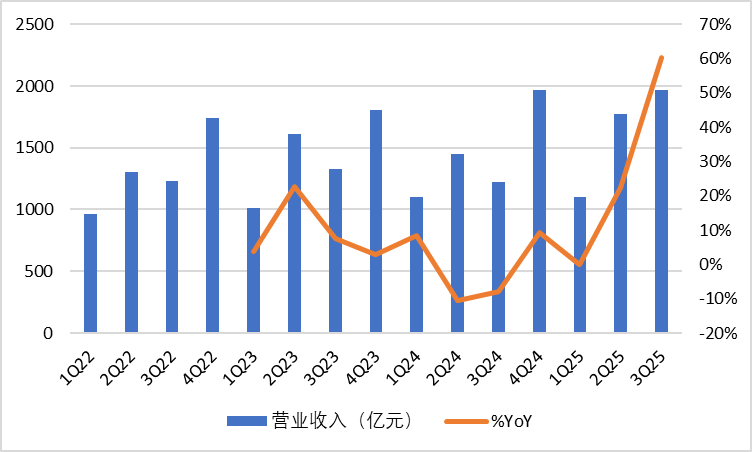
Industry Overview - The military industry shows overall stability, with potential turning points emerging. Future growth is expected to be driven by the 14th Five-Year Plan and the 2027 centenary goal for military strength [1] - Key sectors such as nuclear fusion and commercial aerospace are rapidly growing, presenting investment opportunities [1] Military Industry Performance - In Q3 2025, the military industry achieved a revenue of 196.53 billion yuan, a year-on-year increase of 60.3% [4] - The net profit for the same quarter was 10.686 billion yuan, reflecting a year-on-year growth of 88.8% [5] - The gross profit margin and net profit margin for Q3 2025 were 16.70% and 5.44%, showing a year-on-year decrease of 3.31 percentage points and an increase of 0.81 percentage points, respectively [6] Naval Equipment - Naval equipment generated a revenue of 73.96 billion yuan in Q3 2025, up 84.8% year-on-year [10] - The net profit for this segment was 4.839 billion yuan, marking a significant year-on-year increase of 230.3% [10] - The gross profit margin and net profit margin were 13.49% and 6.54%, with year-on-year increases of 0.83 percentage points and 2.88 percentage points, respectively [10] - Contract liabilities at the end of Q3 2025 stood at 155.897 billion yuan, a year-on-year increase of 7.2% [10] Aerospace Equipment - Aerospace equipment reported a revenue of 57.787 billion yuan in Q3 2025, reflecting an 11.1% year-on-year increase [15] - The net profit for this segment was 3.078 billion yuan, down 4.3% year-on-year [15] - The gross profit margin and net profit margin were 17.59% and 5.33%, with year-on-year decreases of 1.17 percentage points and 0.86 percentage points, respectively [15] - Contract liabilities at the end of Q3 2025 were 33.128 billion yuan, a decrease of 5.7% year-on-year [18] Aerospace Equipment - Aerospace equipment achieved a revenue of 5.975 billion yuan in Q3 2025, a year-on-year increase of 80.1% [20] - The net profit for this segment was 247 million yuan, down 40.6% year-on-year [20] - The gross profit margin and net profit margin were 15.86% and 4.13%, with year-on-year decreases of 16.53 percentage points and 8.4 percentage points, respectively [20] - Contract liabilities at the end of Q3 2025 were 4.430 billion yuan, up 8.0% year-on-year [20] Military Electronics - Military electronics reported a revenue of 52.738 billion yuan in Q3 2025, a significant year-on-year increase of 142.5% [25] - The net profit for this segment was 2.313 billion yuan, reflecting a year-on-year increase of 312.7% [25] - The gross profit margin and net profit margin were 19.96% and 4.39%, with year-on-year decreases of 14.98 percentage points and an increase of 1.81 percentage points, respectively [25] - Contract liabilities at the end of Q3 2025 were 15.831 billion yuan, a substantial year-on-year increase of 140.4% [25] Ground Armaments - Ground armaments achieved a revenue of 6.071 billion yuan in Q3 2025, a year-on-year increase of 10% [30] - The net profit for this segment was 209 million yuan, showing a remarkable year-on-year increase of 808.8% [30] - The gross profit margin and net profit margin were 19.82% and 3.44%, with year-on-year increases of 0.98 percentage points and 3.02 percentage points, respectively [30] - Contract liabilities at the end of Q3 2025 were 3.724 billion yuan, a year-on-year increase of 17.4% [31]
国务院国资委:中央企业要努力开辟增长“第二曲线”
Zheng Quan Ri Bao Wang· 2025-11-04 09:15
Core Insights - The State-owned Assets Supervision and Administration Commission emphasizes the importance of advancing China's modernization and economic development over the next five years, aligning with the goals set by the 20th National Congress of the Communist Party of China [1][2] Group 1: Industrial Upgrading and Development - The focus is on promoting quality development through industrial upgrading, emphasizing intelligent, green, and integrated approaches to enhance traditional industries and foster emerging sectors [1] - The aim is to establish a modern industrial system centered on advanced manufacturing to support the foundation of the real economy and ensure sustainable economic growth [1] Group 2: Technological Independence and Innovation - There is a call for enhancing technological self-reliance by increasing research and development investments and focusing on original innovations and key technologies [2] - The integration of technological and industrial innovation is crucial for significantly improving the level of technological independence and developing new productive forces [2] Group 3: Reform and Governance - The need for deep reforms to establish a modern corporate governance mechanism with Chinese characteristics is highlighted, focusing on data-driven insights and long-term value thinking [2] - The promotion of entrepreneurial spirit and improvement of total factor productivity are essential for developing a high-level socialist market economy [2] Group 4: Cooperation and Development - The importance of mutually beneficial cooperation is stressed, advocating for development through openness and competition while leveraging strengths and avoiding internal competition [2] - Emphasis is placed on practical cooperation in technology, industry, and talent to jointly undertake major projects and participate in global competition [2]
稳好基盘 扩大优势 再谱新篇 ——8位专家寄望汽车业“十五五”
Zhong Guo Qi Che Bao Wang· 2025-11-04 09:15
Core Viewpoint - The "14th Five-Year Plan" aims to boost China's automotive industry, targeting an overall sales volume of 40 million vehicles and a penetration rate of new energy vehicles (NEVs) reaching 70%-80% during the "15th Five-Year Plan" period [3][4]. Group 1: Industry Growth and Market Dynamics - The automotive market in China has stabilized at 30 million units, with retail sales exceeding 5 trillion yuan in the previous year [3]. - Experts predict that during the "15th Five-Year Plan," the automotive industry must focus on expanding domestic demand and exports to achieve high-quality development [3][4]. - The export target for the automotive industry is set at 10 million vehicles by 2030, with a projected annual growth rate of 8% starting from 6.4 million exports in 2024 [4][7]. Group 2: Technological Innovation and Quality Improvement - The industry must prioritize technological innovation, particularly in battery, chip, and AI technologies, to maintain its leading position in smart NEVs [3][4][10]. - There is a need for a comprehensive policy framework that transitions from production management to usage management, ensuring a healthy and stable domestic market [7][10]. - The focus on quality and safety is essential, as past growth has led to issues in safety and product quality that need to be addressed for high-quality development [11][12]. Group 3: Globalization and Competitive Strategy - The automotive industry must enhance its global competitiveness by leveraging China's supply chain advantages and establishing itself as a production and export base [7][15]. - A strategic approach to international markets is necessary, including tailored strategies for different regions and enhancing service quality in overseas markets [15][16]. - The industry should aim to transition from merely exporting products to exporting technology and brand value, enhancing its global influence [15][16]. Group 4: Green Transformation and Sustainability - The automotive sector is crucial for achieving carbon neutrality goals, with a focus on low-carbon design, advanced manufacturing technologies, and sustainable supply chains [16][17]. - The industry must deepen supply-side structural reforms to expand the market for NEVs and support the electrification of commercial and specialized vehicles [17][18]. - A comprehensive approach to infrastructure development, including charging stations and battery recycling, is essential for promoting NEV adoption [17][18].

策略观点:无风区行船更需定力-20251104
China Post Securities· 2025-11-04 08:33
Market Performance Review - The major stock indices showed mixed performance in October, with the Shanghai Composite Index rising by 1.85% while the Shenzhen Component Index and ChiNext Index fell by 1.10% and 1.56% respectively [3][12] - By style, stable style increased by 3.40%, financial style by 2.44%, while consumer style decreased by 0.83% and growth style fell by 1.56% [3][12] - The market experienced increased volatility due to internal and external political factors, with a technical correction in early October followed by a rebound due to favorable political developments [4][12] Industry Insights - Resource sectors led the gains, with coal rising by 10.02%, steel by 5.16%, and non-ferrous metals by 5.00%. Conversely, the media and automotive sectors saw declines of -6.04% and -3.58% respectively [16][17] - The market rotation was evident, with funds shifting from the previously leading TMT sectors to resource sectors, driven by supply disruptions in coal and steel production [16][17] Future Outlook and Investment Views - The report anticipates a "windless zone" for the A-share market in November, with limited political support and a focus on macroeconomic fundamentals and corporate earnings [4][30] - Investment strategies should focus on policy themes and high-performing stocks, particularly in sectors like commercial aviation and low-altitude economy, as previous leaders face pressure [5][31] High-Frequency Data Tracking - The dynamic HMM timing model indicates a current market correction risk, suggesting a re-entry signal for investors [18][20] - Personal investor sentiment showed slight recovery, with the sentiment index at -3.51% as of October 31, indicating significant volatility without a clear trend [22][26] Dividend Yield Analysis - The analysis of dividend yield suggests that bank stocks, which have seen significant price increases, may now offer less attractive value due to high previous gains [27][29] - The current bank dividend yield is under scrutiny, with a necessary increase in cash dividend payout to maintain adequate compensation for risk [27][29]
中兵红箭(000519) - 000519中兵红箭投资者关系管理信息20251104
2025-11-04 08:32
Group 1: Company Strategy and Planning - Each subsidiary has developed a 1.0 version of the 14th Five-Year Plan, with ongoing improvements expected [1] - The special equipment sector will focus on systematic, intelligent, unmanned, remote, software-based, and cost-effective product development [2] - The superhard materials sector aims to accelerate technological innovation and upgrade production lines in three main areas: industrial, consumer, and functional applications [2] Group 2: Market Conditions and Pricing - The future price increase of superhard materials depends on market supply and demand, with short-term price increases unlikely [4] - The company will enhance its core competitiveness through technological innovation and cost-reduction measures [4] Group 3: Military Trade and Growth Expectations - Military trade operations are progressing according to orders, showing significant growth compared to the previous year [5] - Anticipated increases in military trade demand due to complex international situations, with plans to improve management systems and seek new market opportunities [5] Group 4: Financial Performance and Projections - Revenue for the first three quarters accounted for 40% of the annual expected income, with efforts to meet the remaining targets in Q4 [6] - The company recorded significant asset impairment in Q3, primarily related to inventory write-downs for Zhongnan Diamond products [7] Group 5: Business Development and Future Plans - The special equipment business is expected to grow due to new opportunities arising from the complex international landscape [8] - Currently, there are no plans for equity incentives or capital operations, which will be considered based on the group's overall strategy [8]

金元证券周晔:立根基而强寰宇 从“高水平自立”迈向“高质量自强”的“十五五”征程
Zheng Quan Shi Bao Wang· 2025-11-04 08:16
Core Viewpoint - The transition from the "14th Five-Year Plan" to the "15th Five-Year Plan" represents a significant leap in China's modernization, focusing on enhancing technological self-reliance and quality self-strengthening [1][5]. Summary by Sections 14th Five-Year Plan Achievements - The "14th Five-Year Plan" positioned innovation at the core of China's modernization, emphasizing technological self-reliance as a strategic support for national development [2]. - It recognized the profound changes in international circumstances and technological landscapes, necessitating the mastery of key technologies and core capabilities through independent innovation [2][3]. - Major achievements in various fields such as manned spaceflight, lunar exploration, and quantum information reflect a significant enhancement in China's technological capabilities [4]. Transition to the 15th Five-Year Plan - The "15th Five-Year Plan" aims to significantly improve the level of technological self-reliance and self-strengthening, enhancing the overall effectiveness of the national innovation system [5][6]. - The focus will shift from merely having capabilities to evaluating the quality and strength of these capabilities, aiming for leadership in more sectors [5][6]. - The plan emphasizes the need for a new growth model driven by original innovation and high-value-added technologies, moving away from traditional resource inputs [6][10]. Key Areas of Focus - Quantum technology is highlighted as a critical area for observing the transition from self-reliance to self-strengthening, with significant investments and advancements in quantum computing and communication [7][8]. - The plan outlines the need to explore future industries such as quantum technology, biomanufacturing, and hydrogen energy, aiming to transform cutting-edge technologies into new economic growth points [8][9]. Collaborative Mechanisms - A comprehensive mechanism integrating education, technology, and talent is proposed to cultivate high-level talent aligned with national strategic needs [9]. - The role of enterprises in technological innovation will be strengthened, encouraging them to lead national technological challenges and enhance their investment in basic research [9][10]. Future Directions - The "15th Five-Year Plan" is seen as a new chapter in China's modernization, requiring a balance between maintaining safety through self-reliance and enhancing global competitiveness through quality self-strengthening [10][11]. - The plan aims to transform foundational achievements from the "14th Five-Year Plan" into comprehensive national competitiveness, focusing on controllable key areas and autonomous core technologies [11].
“十五五”关键部署·双碳目标的实现与美丽中国建设如何联动?
Yang Shi Wang· 2025-11-04 07:04
Core Viewpoint - The "14th Five-Year Plan" emphasizes accelerating the comprehensive green transformation of economic and social development to build a beautiful China, with green development as a distinctive feature of Chinese modernization [1] Group 1: Green Transformation and Carbon Goals - The plan aims to leverage carbon peak and carbon neutrality goals to promote carbon reduction, pollution control, green expansion, and economic growth [3][5] - The "14th Five-Year Plan" period is crucial for achieving significant improvements in ecological and environmental conditions, focusing on pollution prevention and ecosystem optimization [4][8] Group 2: Energy and Innovation - Accelerating the green and low-carbon energy transition is identified as a key driver for comprehensive green transformation, with China having established the world's largest and fastest-growing renewable energy system [5][7] - Since 2016, China has accounted for 37% of the world's new green low-carbon patents, and when including overseas applications, this figure rises to 58%, indicating a robust innovation environment supporting a burgeoning new industry [6] Group 3: Structural Transformation - The transition from controlling total energy consumption to precise management of carbon emission quality is expected to respond more effectively to carbon reduction targets [8] - By 2035, the goal is to have a fundamentally built beautiful China, with the carbon peak and carbon neutrality targets set as new national contributions [8]
