
产业升级

Search documents
焦作万方: 中国银河证券股份有限公司关于焦作万方铝业股份有限公司发行股份购买资产暨关联交易之独立财务顾问报告
Zheng Quan Zhi Xing· 2025-08-22 16:48
Core Viewpoint - The report outlines the independent financial advisory opinion regarding the share issuance for asset acquisition by Jiaozuo Wanfang Aluminum Industry Co., Ltd., emphasizing the transaction's compliance with legal regulations and its potential impact on the company's business structure and market position [1][2]. Group 1: Transaction Overview - Jiaozuo Wanfang plans to acquire 99.4375% equity of Kaiman Aluminum (Sanmenxia) Co., Ltd. through share issuance, with a transaction price of approximately 3,194.93 million yuan [3][10]. - The transaction aims to enhance the company's upstream business capabilities, creating a complete aluminum material industry chain from alumina to electrolytic aluminum and aluminum processing [10]. Group 2: Financial and Operational Impact - The target company, Sanmenxia Aluminum, has an alumina production capacity of 10.28 million tons per year, ranking fourth in China and sixth globally, along with over 1 million tons of electrolytic aluminum capacity [10]. - The acquisition is expected to improve Jiaozuo Wanfang's profitability and financial status, strengthening its market position and operational performance in the aluminum industry [10]. Group 3: Shareholding Structure Changes - Post-transaction, the controlling shareholder will change to Jinjiang Group, while the actual controller remains the same, ensuring no change in the company's control structure [10][11]. - The shareholding distribution will see significant changes, with new shareholders including Jinjiang Group and others acquiring substantial stakes in the company [12].


湖南天雁: 湖南天雁机械股份有限公司投资管理办法(2025年8月修订)
Zheng Quan Zhi Xing· 2025-08-22 16:24
Core Viewpoint - The investment management measures of Hunan Tianyan Machinery Co., Ltd. aim to standardize investment behavior, allocate resources effectively, enhance investment returns, and control investment risks in alignment with the company's strategic development needs [1][2]. Investment Definition and Scope - Investment refers to fixed asset investment, long-term equity investment, and private equity fund investment, including fixed assets like buildings, equipment, and intangible assets [1][2]. - Major investment projects require approval from the company's shareholders' meeting or board of directors [4]. Investment Principles - Investment activities must adhere to new development concepts, support industrial transformation, and focus on high-end, intelligent, low-carbon, and green development [8][9]. - Emphasis on strategic planning, innovation-driven development, digital transformation, and green development is crucial [8][9][10]. Investment Management Structure - The company's shareholders' meeting is the highest decision-making body for investment decisions, with the board of directors authorized to manage and decide on annual investment plans [10][11]. - The investment management department is responsible for the overall management of the investment system, including planning and project feasibility studies [6][7]. Decision-Making Process - Investment decisions are based on approved long-term development plans and annual budgets, with a clear classification of decision-making authority [18][19]. - Projects requiring significant investment must undergo expert evaluations and adhere to a strict decision-making process [23][24]. Risk Management - The company is responsible for managing investment risks, with a focus on identifying and assessing risks at all stages of the investment process [37][38]. - A comprehensive risk management framework is established to monitor and control risks dynamically [41][42]. Project Implementation and Supervision - Projects must be implemented according to approved plans, with strict controls on changes to project scope and budget [43][44]. - Regular evaluations and audits are conducted to ensure compliance and assess project outcomes [49][50]. Evaluation and Accountability - The investment management department conducts annual evaluations of investment activities, which influence personnel assessments and compensation [52][53]. - A mechanism for accountability is established to address violations and ensure responsible management of investment activities [56][57].

商务部:前7个月新设外商投资企业同比增14.1%
Zheng Quan Ri Bao· 2025-08-22 16:07
Core Insights - The number of newly established foreign-invested enterprises in China from January to July 2025 reached 36,133, marking a year-on-year increase of 14.1%, while the actual utilized foreign capital amounted to 467.34 billion RMB, a decrease of 13.4% [1] - The growth in newly established foreign-invested enterprises indicates strong foreign investment interest in the Chinese market, driven by high-level opening-up policies, improved business environment, and opportunities in high-end manufacturing and digital economy sectors [1][2] Industry Analysis - From January to July, the actual utilized foreign capital in the manufacturing sector was 121.04 billion RMB, while the service sector attracted 336.25 billion RMB. High-tech industries received 137.36 billion RMB, with significant growth in e-commerce services (146.8%), aerospace manufacturing (42.2%), chemical pharmaceuticals (37.4%), and medical equipment manufacturing (25.5%) [2] - Investment from ASEAN countries grew by 1.1%, while Switzerland, Japan, and the UK saw increases of 63.9%, 53.7%, and 19.5% respectively, indicating a diversification of foreign investment sources [2] Future Outlook - To attract and utilize foreign investment more effectively, the Ministry of Commerce suggests enhancing the foreign investment policy framework, optimizing the business environment, and promoting the "Invest in China" brand with tailored strategies for different investment sources [3] - The long-term outlook for foreign investment in China remains positive due to the country's economic resilience, large market potential, and ongoing improvements in the business environment, particularly in the service and high-tech sectors [3]
北交所上市公司整体盈利韧性强 75家已披露半年报的企业中,69家公司归母净利润为正,占比超九成
Zheng Quan Ri Bao· 2025-08-22 16:04
Core Insights - The report highlights that 75 companies listed on the Beijing Stock Exchange (BSE) have disclosed their semi-annual reports, with 54 companies showing year-on-year revenue growth and 69 companies reporting positive net profits, indicating strong resilience and growth potential in the BSE market [1][2] Group 1: Company Performance - Among the BSE companies, notable performers include Zhuozhao Adhesive, which achieved revenue of 156 million yuan, a year-on-year increase of 207.46%, and a net profit of 26.78 million yuan, recovering from a loss of 12.02 million yuan in the previous year [2] - Haineng Technology reported total revenue of 136 million yuan, a year-on-year growth of 34.87%, with a net profit of 5.47 million yuan, recovering from a loss of 14.01 million yuan [2] - Several companies, including Jinfeng Biological and Mingyang Technology, are planning mid-term dividends to reward investors, reflecting their strong financial performance [4] Group 2: Industry Trends - The BSE companies are increasingly focusing on high-value, high-growth emerging sectors, such as computing services and new energy materials, benefiting from the digital economy and energy transition [2][3] - The report indicates that the companies are characterized by significant innovation, with R&D investments translating into technological advantages and core competitive barriers [2] - The ongoing policy support and market dynamics are expected to provide a broad space for growth, particularly in sectors like new energy, high-end manufacturing, and the digital economy [4] Group 3: Future Outlook - Analysts believe that the BSE has a promising future, driven by continuous policy benefits, deepening reforms, and the increasing presence of state-owned enterprises in the AI sector [4] - The BSE is home to many "little giant" companies that focus on niche markets and possess core technologies, which are likely to benefit from domestic substitution and industrial upgrades [4] - Investors are advised to focus on companies with strong R&D investments, high customer recognition, and clear management strategies while being cautious of overvaluation and competitive risks [4]
地方国资凶猛:从加码投资到筹设基金,并购成产业升级新引擎
2 1 Shi Ji Jing Ji Bao Dao· 2025-08-22 10:12
Core Insights - Local governments in China are increasingly establishing provincial-level merger and acquisition (M&A) funds to support technological innovation and facilitate capital exit channels [2][4] - The trend indicates a growing involvement of local state-owned assets in M&A activities, utilizing both direct acquisitions and fund-based approaches to consolidate capital and resources [2][4] - The M&A market is entering a new development phase, driven by supportive policies and a strong desire from local governments to integrate industries and resources [4][5] Provincial Initiatives - Zhejiang province is preparing a 10 billion yuan M&A mother fund, reflecting its early and effective engagement in government industry funds [1][4] - Fujian and Zhejiang have joined other provinces like Shenzhen and Shanghai in promoting the establishment of provincial-level M&A funds [2][4] - The establishment of these funds is seen as a key measure to enhance the quality of venture capital and support the development of new productive forces [11][12] Market Dynamics - In the first half of 2025, Chinese enterprises completed 1,397 M&A transactions, a year-on-year increase of 10.09%, with disclosed amounts totaling 888.70 million USD, up 31.07% [4][5] - Local state-owned enterprises are actively leading M&A activities across various sectors, including energy, mining, and chemicals, indicating a strong intent to reshape regional industrial landscapes [4][5] Fund Management and Strategy - The combination of "state-owned asset acquisition + industry integration" aims to create regional industrial clusters or industry leaders [5][9] - Local state-owned assets are increasingly participating in the establishment of M&A funds, with significant contributions from various stakeholders, including private equity firms and listed companies [7][8] - The operational model of M&A funds requires adeptness in capturing acquisition opportunities and managing post-acquisition integration to realize synergies [8][9] Exit Strategies - The establishment of M&A funds is also viewed as a strategy to diversify exit channels for private equity investments, with 171 private equity funds successfully exiting through M&A, amounting to 43.065 billion yuan, a historical high [11][12] - Policies are being developed to support technology-driven companies in utilizing various financing mechanisms, including M&A and bond issuance, to facilitate effective capital exits [11][12] - The evolution of M&A funds from policy-driven initiatives to market-driven developments is positioning them as a core component of high-quality growth in the private equity sector [12]
“大伙儿的精气神提起来了!”——来自三省七县脱贫村的调研之二
Ren Min Ri Bao· 2025-08-22 08:43
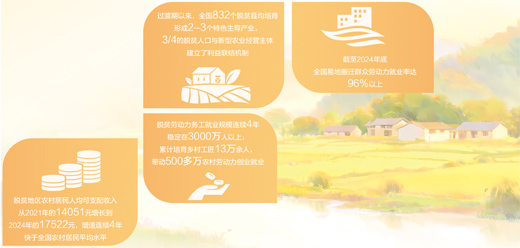
Core Viewpoint - The article emphasizes the transformation of poverty-stricken areas and their residents from merely surviving to actively pursuing development, highlighting the importance of internal motivation and capabilities for sustainable growth in rural revitalization [1][2]. Group 1: Changes in Mindset - Residents have shifted from "waiting for food" to "striving for the future," with significant improvements in their living conditions and aspirations [2][4]. - The establishment of a complete education system in areas like the Baijiawan settlement has led to improved educational outcomes, with students achieving higher academic performance [2][5]. Group 2: Economic Development - The article illustrates how individuals like Li Guozhi have expanded their agricultural practices, leading to increased income and community engagement in farming [4][5]. - The establishment of cooperatives and the introduction of new agricultural practices have transformed local economies, as seen in places like Hebei's Dajingzi Village, where potato farming has become profitable [4][5]. Group 3: Skills and Capabilities - There is a notable shift from merely having jobs to excelling in them, with local talent and skills becoming crucial for rural industry development [6][7]. - Training programs and local initiatives have empowered residents to enhance their skills, leading to better job performance and entrepreneurship [8][9]. Group 4: Industry and Innovation - The development of new industries, such as the silver ear mushroom industry in Tongjiang County, showcases how local resources can be leveraged for economic growth [9][10]. - The integration of tourism and agriculture in places like Yunnan's Baozang Village demonstrates the potential for creating diverse revenue streams and enhancing local economies [10][11]. Group 5: Overall Impact - The cumulative effect of these changes is a significant reduction in the gap between impoverished and other regions, with rural revitalization efforts gaining momentum [11].

“大抓工业 强镇富民”激发镇域发展动能
Qi Lu Wan Bao Wang· 2025-08-22 04:59
Group 1: Economic Development Strategy - Tax Guo Town in Zaozhuang City focuses on "industrial development and wealth creation" as its strategic goal, aiming for high-quality economic growth through the integration and innovation of five leading industries: textiles and apparel, new building materials, iron concentrate deep processing, intelligent manufacturing, and warehousing logistics [1] Group 2: Textile and Apparel Industry - The textile industry in Tax Guo Town has 192 enterprises, forming a complete supply chain from spinning to garment processing, with an annual output of 8,000 tons of yarn and 175 million knitted garments [4] - In the first seven months, the textile industry achieved an output value of 750 million yuan [2] Group 3: New Building Materials - The quartz stone slab industry in Tax Guo Town has implemented a strategy to transition from small to large slabs and from domestic sales to foreign trade, achieving an output value of 1.08 billion yuan with exports exceeding 110 million yuan [5] - The town has developed 16 quartz stone slab enterprises, accounting for over 36% of the national standard board output [5] Group 4: Iron Concentrate Deep Processing - The iron concentrate processing sector has a production capacity of 2 million tons annually, with leading enterprises achieving an output value of 1.44 billion yuan and sales of 960 million yuan [7] - A new 200,000-ton material processing project is under construction, with 76% of the annual investment completed [7] Group 5: Intelligent Manufacturing - Tax Guo Town is fostering intelligent manufacturing by supporting key enterprises and establishing an industrial park for intelligent equipment manufacturing, which includes over 10 leading enterprises [8] Group 6: Warehousing and Logistics - The town has developed 12 large-scale logistics enterprises and established 16 warehousing logistics stations, leveraging its geographical advantages to enhance logistics capabilities [10] - In the first seven months, the town's retail sales of consumer goods reached 68.54 million yuan, a year-on-year increase of 25% [10]

“一口激活味蕾 !”黔东南百香果X方思泡茶,共赴美好“黔”程
Nan Fang Nong Cun Bao· 2025-08-22 04:36
Core Viewpoint - The collaboration between Qiandongnan Passion Fruit and Fangsi Tea has resulted in a unique beverage that combines the flavors of passion fruit and traditional tea, aiming to enhance the brand recognition and market presence of Qiandongnan's agricultural products [4][5][41]. Group 1: Product Innovation - The joint beverage showcases flavor innovation, with passion fruit being the core ingredient, known for its sweet and sour taste, which appeals to consumers [9][20]. - The product utilizes Fangsi Tea's instant cold brew technology and sterile preservation methods to capture the original flavor of passion fruit, resulting in a rich and refreshing taste experience [16][19]. - The beverage's flavor profile includes a refreshing acidity, elegant tea notes, and a long-lasting sweetness, making it versatile for pairing with various drinks [20][21]. Group 2: Market Strategy - The launch event featured a fashion show that presented the passion fruit beverage in a stylish and artistic manner, aiming to elevate the perception of passion fruit from a simple agricultural product to a trendy lifestyle symbol [30][36]. - The collaboration reflects a shift from traditional agricultural roles to a more integrated approach involving processing, branding, and marketing, enhancing the value and appeal of Qiandongnan passion fruit [39][40]. - The marketing strategy targets the younger generation in the Greater Bay Area, leveraging the region's extensive distribution networks to boost brand awareness and sales [41][36]. Group 3: Economic Impact - The deep processing of Qiandongnan passion fruit has led to a diversified product matrix, effectively addressing sales challenges and increasing profit margins [39][41]. - The projected cumulative output value of Qiandongnan passion fruit is expected to reach 515 million yuan in 2024, indicating significant growth potential for the industry [41].

为什么说这次是慢牛?
雪球· 2025-08-22 04:26
Core Viewpoint - The article discusses the establishment of a bull market in A-shares, characterizing it as a "slow bull" driven by structural improvements in the economy and long-term capital inflows [2][6]. Historical Bull Markets - The article reviews past bull markets in A-shares: - 1999-2001: A leveraged bull market followed by adjustments, driven by speculative trading and lessons learned [4]. - 2005-2007: A comprehensive bull market supported by institutional reforms and macroeconomic prosperity, with blue-chip stocks leading the rally [4]. - 2008-2009: A fundamental bull market driven by economic recovery post-global financial crisis, led by cyclical industries [4]. - 2014-2015: A liquidity-driven bull market characterized by high expectations for reforms but lacking fundamental support, leading to significant corrections [5]. Current Bull Market Characteristics - The current bull market is described as a "systematic slow bull" due to several factors: - The macroeconomic environment has changed, with a focus on structural improvements rather than rapid stimulus [6]. - The nature of capital has shifted from speculative to long-term investments, with state-owned and institutional investors providing stability [7]. - There is a significant reallocation of household assets, with a large amount of savings seeking new investment avenues, particularly in the stock market [7]. - Ongoing industrial upgrades are evident, with advancements in AI, innovative pharmaceuticals, and renewable energy sectors contributing to economic growth [8]. Investment Directions - The article identifies two main investment directions: - **Hardcore High Technology**: Focus on new economy sectors such as AI, innovative pharmaceuticals, robotics, renewable energy, and semiconductors, which are expected to be core assets for the next decade [11]. - **Super High Dividends**: Investment in traditional sectors like finance, machinery, and cyclical industries, which have potential for valuation recovery as long as the economy remains stable [12]. - The overall market logic suggests a "systematic bull market" driven by China's rise and advantages, emphasizing the importance of finding personal wealth opportunities within this "slow bull" environment [12].

“两新”政策持续显效促进经济良性循环
Jing Ji Wang· 2025-08-22 02:51
Core Insights - The large-scale equipment upgrade and consumer product trade-in policies have shown positive effects over the past year, promoting transformation, boosting consumer demand, and facilitating economic circulation [2][7]. Group 1: Industry Transformation and Upgrading - From April 2024 to July 2025, the amount spent by enterprises on machinery and equipment increased by 7.3% year-on-year, with industrial enterprises seeing a 9.8% increase [3]. - The policies have effectively transformed tax incentives into new momentum for industrial upgrading, enhancing production efficiency and product quality [3][4]. - The data indicates that equipment updates are not merely about replacing machines but signify a systematic upgrade across the entire industrial chain [3]. Group 2: Consumer Demand and Market Dynamics - The trade-in policy has significantly reshaped consumer expectations, with sales of household appliances and audiovisual equipment increasing by 44.5% and 22.8% respectively from April 2024 to July 2025 [5]. - The sales of service robots surged by 51.1%, indicating a strong demand for advanced consumer products [5]. - The policy has lowered the cost of purchasing new products for consumers, thus meeting their demand for high-quality and feature-rich products [5][6]. Group 3: Economic Circulation and Resource Optimization - The "Two New" policies have created a virtuous cycle, with retail demand growth positively impacting supply, leading to a 5.8% year-on-year increase in manufacturing sales revenue [7]. - The interaction between equipment upgrades and consumer demand has optimized resource allocation and improved economic efficiency [7]. - The policies are seen as a strategic lever to address the dual challenges of insufficient effective demand and supply structure imbalance [8].