贸易战

Search documents
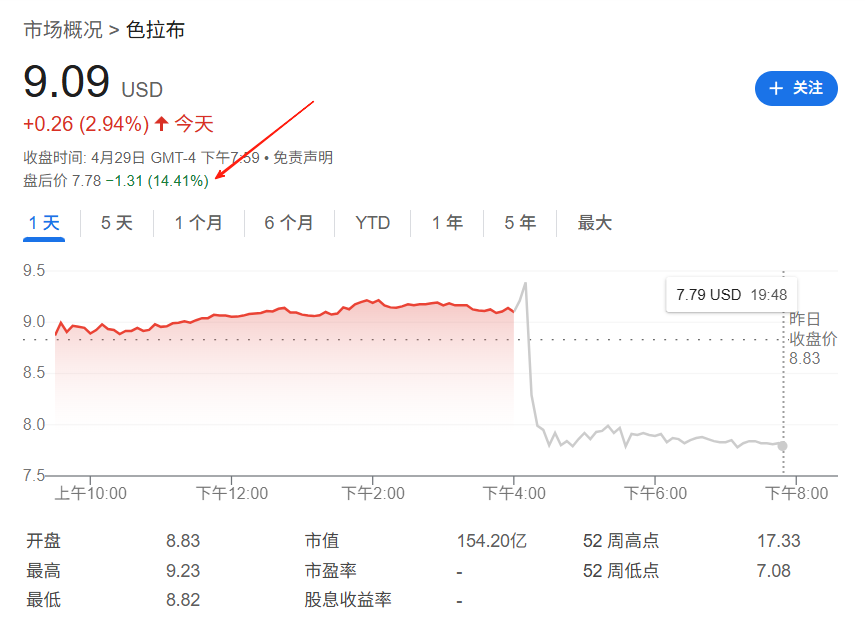
关税冲击广告,社交网站Snap撤回二季度收入指引,股价盘后重挫
Hua Er Jie Jian Wen· 2025-04-30 00:56
Core Viewpoint - Despite exceeding market expectations in Q1, Snap has withdrawn its Q2 revenue guidance due to economic fluctuations caused by tariff policies impacting advertising demand [1][3]. Group 1: Q1 Performance - Snap reported Q1 revenue of $1.36 billion, slightly above the analyst average expectation of $1.35 billion [5]. - The total number of advertising clients increased by 60% year-over-year, with direct response ads accounting for 75% of Snap's advertising revenue, marking a historical high [5]. - The net loss for Q1 was $140 million, which is more than a 50% reduction compared to the same period last year [5]. - Snap's subscription product, Snapchat+, has reached 15 million paid users, a 59% year-over-year increase, while monthly active users have reached 900 million, moving closer to the target of 1 billion [5]. Group 2: Q2 Outlook and Economic Impact - Snap has declined to provide a revenue forecast for Q2, citing macroeconomic "headwinds" affecting its advertising business [1][3]. - The CFO, Derek Andersen, indicated that some advertisers are reducing spending due to changes in the tariff exemption rules for small packages under $800, which are impacting advertising demand [3]. - The modification of the tariff rules is expected to affect not only Snap but also other major companies like Google and Meta Platforms, which are likely to confirm similar impacts on their advertising businesses [4]. Group 3: Cost Management and Future Plans - In addition to withdrawing the Q2 revenue guidance, Snap has lowered its full-year adjusted operating expense target by $50 million, from a range of $2.65 billion to $2.7 billion [5]. - Andersen mentioned that this adjustment may influence the company's hiring plans for the remainder of the year, as approximately two-thirds of the annual adjusted operating expenses are related to personnel costs [5].


【环球财经】投资者担忧供需前景 国际油价29日明显下跌
Xin Hua Cai Jing· 2025-04-30 00:20
Group 1 - International oil prices have declined significantly due to concerns over supply and demand in the oil market, with WTI crude oil futures dropping by $1.63 to $60.42 per barrel, a decrease of 2.63%, and Brent crude oil futures falling by $1.61 to $64.25 per barrel, a decrease of 2.44% [1] - Ole Hansen from Saxo Bank highlighted that ongoing trade wars are likely to harm demand, increasing downward pressure on oil prices, as the market seeks a new equilibrium amid weakening demand and reduced supply from high-cost producers, particularly in the U.S. [1] - Barclays has revised its forecast for the average price of Brent crude oil futures in 2025 from $74 per barrel to $70 per barrel, anticipating a global oil supply surplus of 1 million barrels per day this year [1] Group 2 - Phil Flynn from Price Futures Group noted that oil prices are struggling as the market assesses the likelihood of OPEC increasing production, with a slowdown in oil demand potentially leading to lower U.S. crude production expectations [2] - Rystad Energy has cut its forecast for U.S. onshore crude production growth by more than half, predicting an increase of less than 150,000 barrels per day by the end of the year, down from an earlier estimate of around 300,000 barrels per day [2] - Analysts from S&P Global indicated that U.S. commercial crude oil inventories are expected to have increased by 200,000 barrels, while gasoline and distillate inventories are projected to decrease by 1.2 million barrels and 600,000 barrels, respectively [2]
价格暴跌!订单取消!美国这一行业陷“全面危机”→
新浪财经· 2025-04-30 00:18
货运数据公司统计,截至4月14日,中美之间船舶运输量急剧下降,周环比下降超过22%,同比 下降44%。有美国农产品出口商警告称,中国市场难以被取代,目前由于中美两国贸易下降, 美国农产品的价格已经受到影响,一些产品的价格已经下降超过了20%。 美国媒体当地时间28日报道称,由于全球多国对美国特朗普政府实施的关税政策予以强烈反 击,尤其中国暂停进口美国农产品的一系列措施,美国农业部门已遭受巨大损失。 美国农产品运输联盟负责人更是直言,美国农产品行业的全面危机已经到来。 据美国消费者新闻与商业频道援引美国农产品运输联盟的报告称,美国关税政策所引发的贸易 战已导致其会员公司遭受了"巨额"财务损失。该联盟执行董事弗里德曼直言,鉴于目前美国农 产品订单遭取消的情况,该行业已不再是"接近危机",而是已经面临"全面危机"。 报道称,一家主营木浆和纸板的出口商表示,其仓库中有6400吨的货物目前因订单取消而被迫 滞留,并产生巨额费用。另有9000吨的货物原定于5月中旬到达中国,鉴于中国对美加征关税 采取反制措施,届时该批货物将不得不在保税仓库滞留或转口贸易,相应成本难以估量。 美国华盛顿州中部的一家草料出口商表示,由于中国客 ...
贸易战的“牌”已经出完,黄金迎来大级别调整
Hua Xia Shi Bao· 2025-04-29 23:50
Group 1: Gold Market Dynamics - The spot price of gold in London surged above 350 billion yuan, followed by a significant sell-off, leading to a sharp decline the next day, with the U.S. gold ETF experiencing a record single-day redemption of -1.3 billion USD, surpassing the panic triggered by the Swiss National Bank's intervention in 2011 [2] - Despite the sell-off, there is a strong buying force from Asia, particularly from Chinese investors, which is stabilizing the bottom of the gold market. In Q1, China increased its gold holdings by 12.75 tons, and domestic gold ETF holdings grew by 23.47 tons, a year-on-year increase of 327.73% [2] - As gold prices corrected rapidly, long positions in gold futures were significantly reduced, with hedge fund managers cutting net long positions to the lowest level in over a year [2] Group 2: Economic and Market Context - The recent surge in gold prices was primarily driven by the chaos in the global economic order due to Trump's trade war, which led to a decline in the credibility of U.S. bonds and the dollar, prompting a flight to gold as a safe haven [3] - Adjacent markets have stabilized, with the dollar index remaining above 99 and U.S. stock indices gradually recovering, while the yield on the 10-year U.S. Treasury bond has decreased from 4.425% [3] - The relationship between gold and the dollar/stock market is viewed as inversely correlated, suggesting that as the dollar and stock markets stabilize, a significant adjustment in gold prices is anticipated [3] Group 3: Trade Policy Developments - Trump announced a significant reduction in the 145% tariffs on China, while maintaining that they would not drop to zero, and he will suspend the implementation of reciprocal tariffs for 90 days [4] - Various countries, particularly in Southeast Asia, have begun negotiations to mitigate the impact of U.S. tariffs, with Vietnam and Indonesia making commitments to increase imports of U.S. goods [6] - The semiconductor equipment manufacturing sector in the U.S. is facing substantial losses due to tariffs, with major companies projected to lose over 1 billion USD collectively, impacting small businesses significantly [7]
贵金属日评-20250430
Jian Xin Qi Huo· 2025-04-29 23:37
行业 贵金属日评 日期 2025 年 4 月 30 日 宏观金融团队 研究员:何卓乔(宏观贵金属) 021-60635739 hezhuoqiao@ccb.ccbfutures.com 期货从业资格号:F3008762 研究员:黄雯昕(国债集运) 021-60635739 huangwenxin@ccb.ccbfutures.com 期货从业资格号:F3051589 研究员:聂嘉怡(股指) 021-60635735 niejiayi@ccb.ccbfutures.com 期货从业资格号:F03124070 请阅读正文后的声明 2024 年 12 月 18 日美联储鹰派降息利空落地之后,金价在中国印度年底节日 消费旺季预期、特朗普 2.0 新政不确定性引发避险需求、美国经济短期滞涨风险 上升、特朗普交易热潮降温等因素影响下重新开始新一轮上涨,并重返 2024 年 3 月份以来的中级上涨通道;4 月初特朗普对等关税远超市场预期,金融市场大幅 波动导致投资者抛售包括黄金在内的金融资产,伦敦黄金一度在三个交易日内从 3168 美元/盎司调整至 2956 美元/盎司;而在市场波动性以及金融市场抛压逐步 减弱之后,来自全 ...
【环球财经】加拿大自由党缘何胜选
Xin Hua She· 2025-04-29 17:16
加拿大大选实行单一选区相对多数制。在每个选区,得票最高的候选人将赢得众议院的一个席位,并代 表该选区成为议会议员。候选人当选无需获得绝对多数票。总理卡尼首次作为一名议员候选人参与了其 所代表的选区选举,不仅赢得了众议院席位,而且作为自由党领袖连任总理。而保守党领袖普瓦列夫尔 和新民主党领袖辛格没有在各自的选区竞选到席位,后者已经辞去新民主党领袖职务。 自由党胜选关键因素是什么? 新华社渥太华4月29日电(记者林威)加拿大第45届联邦众议院选举28日举行。加拿大自由党再次击败 保守党,成为众议院第一大党,加拿大自由党领袖马克·卡尼连任总理。加拿大各政党议席数量发生了 怎样的变化?自由党胜选的关键因素是什么?自由党在胜选后需要兑现哪些承诺? 各政党议席数如何变化? 根据加拿大法律,联邦众议院选举每4年举行一次。按正常程序,第45届联邦众议院选举应在2025年10 月举行。3月23日,加拿大总理卡尼宣布解散议会并提前举行联邦众议院选举。在解散前的议会中,自 由党拥有152席,保守党120席,魁北克集团33席,新民主党24席,绿党2席,另有3名独立议员和4个空 缺席位。 加拿大选举委员会公布的初步统计结果显示,自由党 ...
订单报价走低!贸易战下,这些“销冠”老板这样闯关
第一财经· 2025-04-29 15:52
2025.04. 29 本文字数:3780,阅读时长大约6分钟 导读 :观察今年的广交会不难发现,传统制造业正在通过技术创新与品牌建设向价值链上游攀升,产品差异化成为 破局关键。 作者 | 第一财经 缪琦 客流依然不少,但普遍对于价格更加敏感,这是今年广交会上给人留下的直观印象。 "今年来的客商报价大概比以前压低了30%以上。"一名来自广东的参展商这样告诉第一财经,这不仅 仅是因为来自新兴市场的客户更多了,也因为贸易战和经济下行叠加,竞争愈加激烈,让大家对于价 格的要求更加严苛。另一家来自浙江的参展商也对第一财经表示,以欧洲为主要市场的他们并未受到 美国关税的直接影响,但已能感受到,随着越来越多中国商品转战欧洲,这将让欧洲客户更大力度地 议价。 与此同时,"既要好价格,也要好品质"越来越成为全球客商的共识。 在印度经营着一家墨镜电商平台的29岁客商普拉奈(Pranay)是第一次来到中国。"在中国可以用中 等价格买到高品质。"他对第一财经表示,之前都是通过贸易商帮忙采购,今年第一次来到广交会"如 获至宝",可以直接找到源头工厂下单,相较之前能够多赚40%左右,同样的采购价格可以获得质量 更高的产品。 在浙江外贸 ...
特朗普要求中国让步,华尔街大咖:中国赢不了,时间在美国这一边
Sou Hu Cai Jing· 2025-04-29 15:23
Group 1 - Trump's attitude towards China has changed multiple times, indicating a lack of consistency in his approach to trade negotiations [1][5][14] - On April 25, Trump stated that unless China makes substantial concessions, the tariffs imposed on Chinese goods will not be lifted [5][12] - The U.S. government initially imposed high tariffs to pressure other countries into negotiations, but China's strong countermeasures have led to a stalemate [7][9] Group 2 - Bill Ackman, a hedge fund manager, emphasized that time is on the side of the U.S. and warned that high tariffs could force companies to relocate their supply chains away from China [11][12] - The ongoing trade war is causing significant economic strain on both countries, with American consumers feeling the impact of rising prices [9][18] - The U.S. manufacturing sector faces challenges in relocating production back to the U.S. due to higher labor costs and worker reluctance [20][24] Group 3 - Apple has been attempting to shift its supply chain from China to Southeast Asia, but has encountered issues with production quality and labor attitudes in countries like India and Vietnam [22][24] - The Chinese government has maintained a firm stance, urging the U.S. to correct its course and cease unilateral tariff measures [26]

翁富豪:4.30黄金宽幅震荡待催化,黄金晚间操作策略
Sou Hu Cai Jing· 2025-04-29 14:59
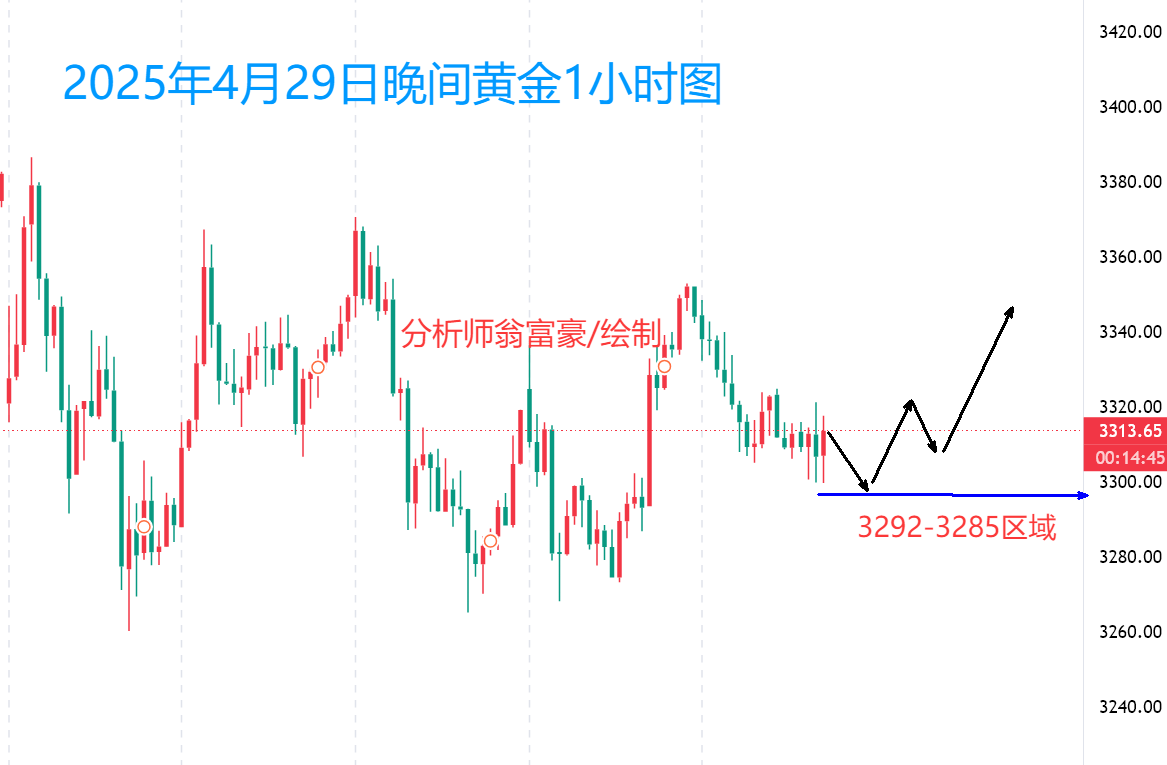
Group 1 - Trump's hardline stance in financial markets has faced setbacks, including a 90-day delay in implementing reciprocal tariff policies after significant turmoil in the bond market [1] - The withdrawal of Trump's statement to dismiss Federal Reserve Chairman Jerome Powell indicates a shift in strategy due to the simultaneous decline of U.S. stocks, bonds, and the dollar [1] - The "maximum pressure" strategy against major Asian countries has encountered strong resistance, leading to signals from Trump about potentially lowering tariffs on goods from these countries [1] Group 2 - Gold prices have retreated after approaching the $3500 per ounce mark, currently stabilizing around $3260 per ounce, with a pattern of alternating price movements observed [3] - The 4-hour chart indicates a slight consolidation in gold prices, with Bollinger Bands showing signs of contraction, reinforcing the current oscillating market condition [3] - Key resistance for gold is identified at $3350 - $3360 per ounce, while support is at $3290 - $3285 per ounce, suggesting a strategy of buying on dips [4]
订单报价走低,贸易战下,这些“销冠”老板的闯关之道
Di Yi Cai Jing· 2025-04-29 12:24
Core Insights - Traditional manufacturing is climbing up the value chain through technological innovation and brand building, with product differentiation becoming key to breaking through market challenges [1][16] - There is a noticeable increase in price sensitivity among customers, with quotes reportedly lowered by over 30% compared to previous years due to intensified competition and economic downturns [1][5] - Global customers are increasingly seeking both good prices and high quality, reflecting a shift in purchasing behavior [1] Industry Trends - The foreign trade market is experiencing changes, with small and micro enterprises facing both challenges and opportunities amid a tough environment [5][12] - Companies are diversifying their markets and optimizing supply chains to mitigate risks, with a focus on high-value products [16] - The demand for modular construction products is rising in various regions, driven by reconstruction needs and the growth of the tourism industry [12] Company Strategies - Companies are investing in factory expansions and advanced equipment to enhance production efficiency and quality [14][15] - There is a trend of companies shifting focus from traditional markets to emerging markets, with significant increases in orders from regions like Russia and the Middle East [12][17] - Effective cash flow management is becoming a core competitive advantage for companies navigating the complexities of the global trade environment [16] Market Dynamics - The structure of China's foreign trade market is evolving, with a significant increase in local collection accounts in emerging markets, reflecting a shift in trade dynamics [16] - Trade with traditional markets remains resilient, with notable growth in imports and exports with countries like Germany and the UK [17]