
降本增效

Search documents
鲜奶与奶酪成新引擎,中国奶业迎来“微增长”时期
Huan Qiu Wang· 2025-08-28 08:16
Core Insights - The Chinese dairy industry is undergoing a fundamental shift from macro policy-driven growth to micro-consumer innovation, focusing on cost reduction and product innovation to address challenges such as high raw milk costs and slowing consumption growth [1][2] Group 1: Cost Reduction and Efficiency - The average production cost of raw milk in China is approximately 3.8 to 4.2 yuan per kilogram, which is 30% to 40% higher than the global average of 2.5 to 3.0 yuan per kilogram, leading to higher retail prices for domestic liquid milk products [1] - Experts suggest that the increasing price ratio between processed dairy products and fresh milk indicates that high-end products should not be the development trend; instead, affordable and quality products should dominate the market [1][2] Group 2: Policy and Industry Collaboration - The Ministry of Agriculture and Rural Affairs has issued a notice aimed at stabilizing the dairy supply chain and ensuring reasonable earnings for farmers through financial support, technical promotion, and fiscal assistance [2] - Analysts emphasize that dairy companies must focus on strengthening supply chain foundations and transitioning to functional and nutritional dairy products to alleviate price pressures [2] Group 3: Product Innovation - The market for low-temperature fresh milk and cheese is emerging as a new growth area, with companies innovating around fresh, healthy, and immediate consumption models to engage younger consumers [5] - The cheese market is experiencing explosive growth, driven by national guidelines promoting snackification and local flavor adaptations, with leading companies actively expanding their cheese offerings [5] Group 4: Channel Innovation - The sales channels for dairy products are evolving from traditional supermarkets to more accessible locations such as hospitals, communities, high-speed rail stations, airports, and schools, enhancing product availability [6] - Companies are implementing targeted strategies, such as vending machines in hospitals and customized products for hotels and events, to ensure dairy products are easily accessible to consumers [6] Group 5: Future Outlook - The Chinese dairy industry is entering a "micro-growth" era, characterized by comprehensive reforms in cost, product, and channel strategies, marking a significant transition from policy-driven growth to consumer-driven innovation [6]


电科网安:公司一直致力于构建和完善治理体系
Zheng Quan Ri Bao Wang· 2025-08-28 08:14
Core Viewpoint - The company is focused on cost reduction and efficiency improvement, aiming for a 7.61% year-on-year decrease in total sales, management, and financial expenses by the first half of 2025 [1] Group 1 - The company is actively working on enhancing its governance system through continuous optimization of its operational management and governance structure [1] - The efforts are aimed at ensuring stability in operations and continuous improvement in operational quality [1]

山东能源柴里煤矿:幸福是奋斗出来的
Qi Lu Wan Bao· 2025-08-28 08:14
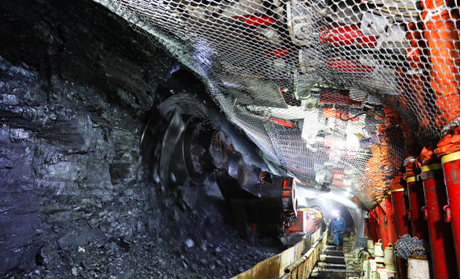
Core Viewpoint - The article emphasizes the dedication and hard work of the workers at the Chaili Coal Mine, highlighting that happiness and success are achieved through effort and perseverance rather than waiting for fortune to come [11]. Group 1: Safety and Work Ethic - Safety is regarded as the top priority in the workplace, with workers emphasizing that any negligence could lead to serious consequences [3]. - New employees are trained to prioritize safety above all else, reflecting the high-risk nature of the coal mining industry [5]. - Female workers demonstrate their strength and resilience, proving that attention to detail and determination are equally important in their roles [6]. Group 2: Efficiency and Productivity - Workers in the washing and selection process focus on maintaining optimal conditions to ensure the quality of the coal produced, especially in a declining market [7]. - The machine repair team emphasizes the importance of precision in their work, as even minor errors can lead to significant delays in operations [9]. - The overall productivity of the coal mine is enhanced through careful monitoring and efficient practices, contributing to cost reduction and improved outcomes [7][9]. Group 3: Community and Family - The article illustrates the strong sense of community among workers, with family members supporting each other and sharing moments of joy and concern [10]. - The cultural activities in the mining area foster a sense of belonging and connection among workers and their families, reinforcing the importance of safety and well-being [10]. - The narrative concludes with a reflection on the value of hard work and the happiness derived from fulfilling responsibilities, both at work and at home [11].
百诚医药:2025年上半年,公司调整和优化了人员结构
Zheng Quan Ri Bao· 2025-08-28 08:13
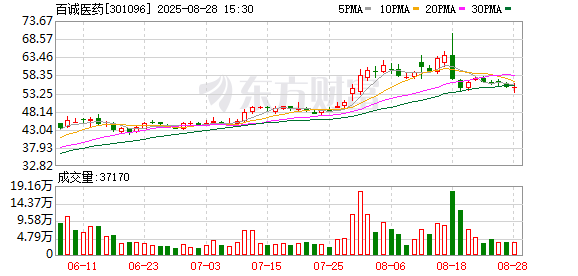
Core Viewpoint - Baicheng Pharmaceutical is focusing on optimizing its personnel structure and resource allocation to enhance operational efficiency by mid-2025, in line with its business development plan and industry trends [2] Group 1 - The company is implementing cost control measures and efficiency improvement initiatives to boost operational performance [2] - Baicheng Pharmaceutical maintains a high level of investment in research and development, particularly in talent and technology strategies, as part of its long-term planning [2]
业绩会直击|青瓷游戏(6633.HK):长线运营显韧性,新游蓄势、全球化布局谋增长
Ge Long Hui· 2025-08-28 07:25
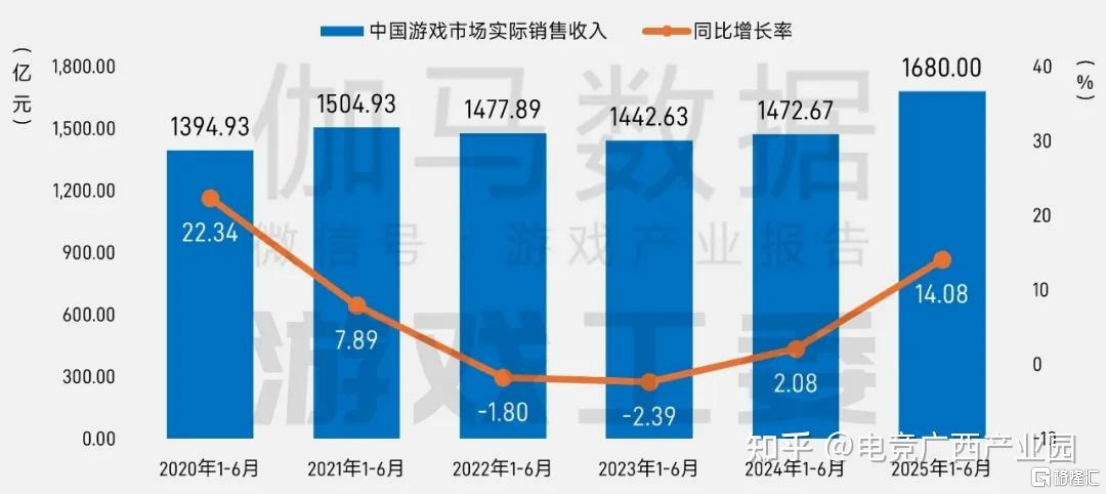
Core Insights - The domestic gaming market in China achieved actual sales revenue exceeding 168 billion yuan in the first half of 2025, marking a year-on-year growth of 14.08%, while self-developed games' overseas revenue reached 9.501 billion USD, up 11.07%, both setting historical highs for the industry [1] Company Performance - In the first half of 2025, the company reported a revenue of 247 million yuan and a net profit of 72.67 million yuan, reflecting a significant year-on-year increase of 90.2% [3] - Sales and marketing expenses were reduced by 58.3% to 55.04 million yuan, while R&D expenses were optimized by 10.8% to 42.02 million yuan [3] - The company surpassed 100 million registered players, with an average revenue per paying user (ARPPU) of 289.79 yuan, indicating strong business competitiveness and growth potential [3] Product Strategy - The flagship product "The Strong Snail" celebrated its fifth anniversary, introducing new characters and storylines, which significantly boosted user engagement and ARPPU from approximately 200 yuan to nearly 300 yuan, a 50% increase [4] - The diversified product matrix, including "Ares Virus 2" and "Fat Goose Gym," contributed to revenue stability, with "Ares Virus 2" generating 29.85 million yuan during the reporting period [5] - The classic IP "Incredible Maze" achieved notable success on the Steam platform, generating 3.91 million yuan in revenue and ranking sixth among popular free games globally [5] Global Expansion - The company is focusing on global expansion, with overseas market revenue accounting for 40.9% of total income, remaining stable compared to the previous year [6] - Upcoming releases include the Korean version of "The Strong Snail" and "Cardcaptor Sakura: Key to Memories" for the Vietnamese and Japanese markets, aiming to replicate previous successes [6] Future Growth Initiatives - The company plans to launch the nurturing casual game "God Golden Goose" on the Steam platform, targeting younger players, and is developing the strategic flagship "Project E," which has received positive feedback from core players [6][8] - The company is preparing for the release of several new titles, including "Project W," based on the "Great Master" IP, expected to launch in 2026 [9] Financial Health - The significant profit growth in the first half of the year is attributed to cost reduction and efficiency improvements, with a notable decrease in sales and marketing expenses [10] - The company maintains a solid cash flow and plans to invest in key projects while considering dividend distribution to shareholders in the future [12]

上市公司高管集体自愿降薪,董事长降50%,曾年薪超1600万元
Bei Jing Shang Bao· 2025-08-28 07:13
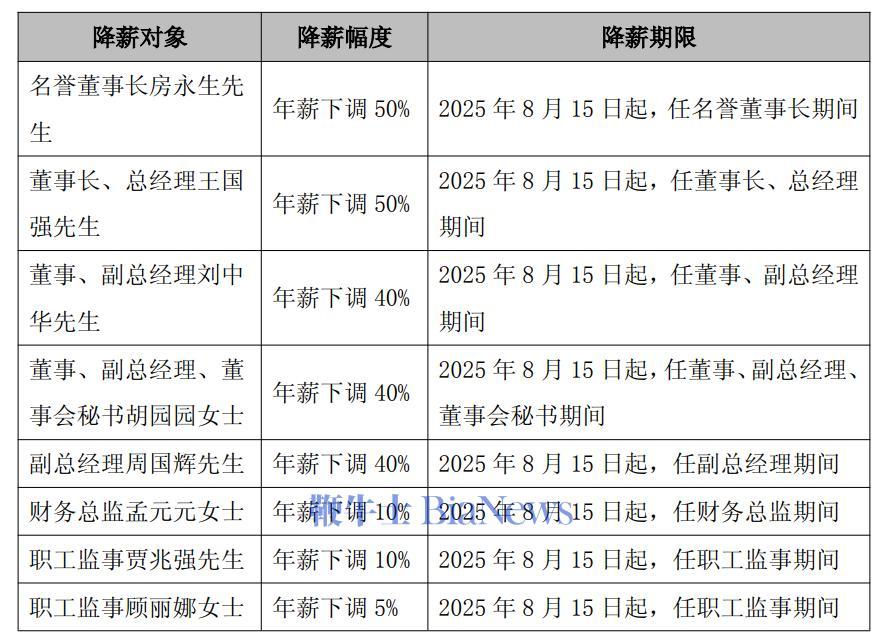
Core Viewpoint - The company, Shuoshi Biotechnology, is implementing significant salary reductions for its top executives in response to ongoing financial challenges, including consecutive years of net losses and declining revenues [1][5][6]. Salary Adjustments - The honorary chairman, Fang Yongsheng, and the chairman and general manager, Wang Guoqiang, will have their salaries reduced by 50% starting from August 15, 2025 [2]. - Other executives, including Liu Zhonghua (40% reduction), Hu Yuanyuan (40% reduction), and Zhou Guohui (40% reduction), will also see significant salary cuts [2]. - The financial director, Meng Yuanyuan, will have a 10% salary reduction, while employee supervisors Jia Zhaoqiang and Gu Lina will see reductions of 10% and 5%, respectively [1][2]. Financial Performance - Shuoshi Biotechnology reported revenues of approximately 403 million yuan and 350 million yuan for 2023 and 2024, respectively, with corresponding net losses of approximately 374 million yuan and 2 million yuan [5]. - The company's half-year report for 2025 indicated a revenue of about 176 million yuan, a year-on-year decrease of 1.05%, and a net profit of approximately 399 million yuan, down 86.35% year-on-year [6][7]. - The decline in net profit is attributed to price pressures from national procurement policies in the in vitro diagnostics industry and changes in tax rates affecting product margins [7]. Business Overview - Shuoshi Biotechnology focuses on the research, production, and sales of in vitro diagnostic reagents and related testing instruments, expanding into in vitro testing services [8]. - The company operates an integrated business model that includes reagents, instruments, and services, supported by various modern biological technology platforms [8].

大全能源:上半年实现营收14.7亿元 三季度继续践行减产策略
Zhong Zheng Wang· 2025-08-28 06:54
中证报中证网讯(记者何昱璞)大全能源8月27日发布2025年半年报,数据显示,公司上半年实现营业收 入14.7亿元,归属于上市公司股东的净利润亏损11.47亿元。公司表示,业绩下降主要因多晶硅市场价格 同比下跌33.63%(单位销售价格从47.01元/公斤降至31.20元/公斤),叠加公司主动减产导致销量同比减少 52.47%(销量从9.71万吨降至4.61万吨)。 报告期内,大全能源通过主动减产、降本增效、技术创新等多维度发力,以短期"阵痛"换取长期健康发 展。 在光伏行业深度调整的浪潮中,大全能源以主动变革的姿态,不仅实现了自身的韧性生长,更以龙头企 业的担当助推行业破浪向前。 面对行业供需失衡的困境,大全能源积极响应"反内卷"倡议,主动推行减产策略。2025年上半年,公司 多晶硅产量为5.08万吨,同比下降约60%。这一战略性调整虽对短期产出造成影响,却有效缓解了市场 供给压力,规避了同质化恶性竞争。 大全能源表示,2025年第三季度将继续落实减产策略,根据市场价格和下游需求灵活调整发货计划,控 制合理库存水平。公司预计第三季度多晶硅产量为2.7万吨-3万吨,全年产量为11万吨-13万吨。面向未 来,大 ...

佩蒂股份(300673):海外业务短期承压 毛利率稳步提升
Xin Lang Cai Jing· 2025-08-28 06:42
Core Viewpoint - The company reported a decline in revenue and net profit for the first half of 2025, attributed to tariff impacts and increased operational costs, but showed improvement in gross margin through cost reduction and product optimization [1][2]. Financial Performance - In H1 2025, the company achieved revenue of 728 million yuan, a year-on-year decrease of 13.94%, and a net profit attributable to shareholders of 79 million yuan, down 19.23% year-on-year [1]. - The gross margin improved to 31.98%, an increase of 5.63 percentage points compared to the same period last year, indicating a trend towards high-quality development [1]. Product Performance - The gross margins for key product categories increased, with specific improvements in H1 2025: - Livestock skin chew: +5.28 percentage points - Plant-based chew: +3.12 percentage points - Nutritional meat snacks: +6.75 percentage points - Main food and wet food: +11.04 percentage points [1]. Cost Structure - The company's expense ratio rose to 17.60%, an increase of 5.31 percentage points year-on-year, partially offsetting the gross margin improvement [1]. - The increase in sales expenses was due to higher investments in proprietary brands, while management expenses rose due to operational costs from New Zealand production [2]. Market Strategy - The company is focusing on developing its proprietary brands in the domestic market, targeting the mid-to-high-end pet owner demographic with new product launches [3]. - The "Jueyan" brand introduced several new freeze-dried products for small dogs and a beef bone soup canned series, while the "Haoshijia" brand filled market gaps in the mid-price range with various new products [3]. Future Outlook - The company anticipates gradual improvement in management expense ratios as New Zealand production capacity is released [3]. - The forecast for net profit attributable to shareholders for 2025-2027 is 199 million, 234 million, and 286 million yuan, respectively, with EPS projected at 0.79, 0.92, and 1.13 yuan, and PE ratios at 23, 19, and 16 times [3].

大全能源(688303):精细化管理有效降本,资金充足+低负债运营助力公司穿越周期
Minsheng Securities· 2025-08-28 06:33
Investment Rating - The report maintains a "Recommended" rating for the company, indicating a positive outlook based on its ability to navigate through industry cycles [4][7]. Core Insights - The company's performance is under pressure primarily due to supply-demand imbalances in the photovoltaic industry, leading to lower product prices [1]. - The company has actively implemented production cuts in response to national initiatives, resulting in a significant decrease in polysilicon production and sales in the first half of 2025 [2]. - Despite the reduction in production, the company has managed to lower its cash costs, demonstrating effective cost control and management strategies [2]. - The company has a strong financial position with a cash reserve of 12.09 billion and a low debt ratio of 8.04%, which provides a solid foundation for navigating industry cycles [3]. Financial Projections - Revenue projections for 2025, 2026, and 2027 are estimated at 3.85 billion, 8.48 billion, and 12.21 billion respectively, with corresponding net profits of -1.53 billion, 0.79 billion, and 1.51 billion [4][6]. - The company is expected to achieve a significant revenue growth rate of 120% in 2026 and 44% in 2027, following a decline in 2025 [6][12]. - The price-to-earnings (PE) ratios for 2026 and 2027 are projected to be 79x and 42x, respectively, indicating potential for future profitability [4][12].
宝钢股份(600019):业绩稳步增长 分红维持高位
Xin Lang Cai Jing· 2025-08-28 06:25
Group 1 - The company reported its 2025 semi-annual results, with revenue of 151.37 billion yuan, a year-on-year decrease of 7.28%, and a net profit attributable to shareholders of 4.88 billion yuan, a year-on-year increase of 7.36% [1] - In Q2 2025, the company achieved a net profit of 2.44 billion yuan, a year-on-year decrease of 6.63%, but a quarter-on-quarter increase of 0.44% [1] - The company maintained stable production with a steel output of 25.46 million tons, a year-on-year decrease of 0.62%, and sales of 25.31 million tons, a year-on-year decrease of 0.8% [1] Group 2 - The company achieved a gross profit per ton of steel of 271 yuan, a year-on-year increase of 56.53%, due to effective cost reduction measures [1] - Total expenses for the period were 4.82 billion yuan, a year-on-year increase of 1.6%, with R&D expenses at 1.68 billion yuan, a year-on-year increase of 7.8% [1] - The company reported a significant increase in core product sales, with "2+2+N" products achieving sales of 16.58 million tons, a year-on-year increase of 9.9% [2] Group 3 - The company is actively expanding its overseas market, with export orders totaling 3.32 million tons, a year-on-year increase of 9.4% [2] - The company plans to distribute cash dividends of 0.12 yuan per share, with a dividend payout ratio of approximately 52.58%, exceeding its commitment of 50% [2] - The company maintains its net profit forecasts for 2025-2027 at 9.97 billion, 10.99 billion, and 11.93 billion yuan, with corresponding PE ratios of 15, 14, and 13 times [2]
