商业航天

Search documents
一键精准布局卫星全产业链——招商中证卫星产业ETF投资价值分析:基金投资价值分析
Guoxin Securities· 2026-01-18 07:10
- The CSI Satellite Industry Index (931594.CSI) selects no more than 50 listed companies involved in satellite manufacturing and launching, satellite ground equipment manufacturing, satellite navigation, satellite communication, and other technology R&D and application sectors to reflect the overall performance of listed companies in the satellite industry[29][64] - The index's industry distribution is mainly concentrated in the national defense and military industry, accounting for 59.26% of the weight, with electronic and computer industries accounting for 11.94% and 11.49%, respectively[31][64] - The index's constituent stocks have a higher R&D expenditure ratio compared to the overall market and the CSI Commercial Satellite Communication Industry Index, with 38% of constituent stocks having an R&D expenditure ratio exceeding 20%[37][64] - The CSI Satellite Industry Index's revenue growth rate for 2024 is 18.12%, with projected growth rates of 11.23%, 15.9%, and 20.76% for 2025, 2026, and 2027, respectively. The net profit growth rates for 2025, 2026, and 2027 are expected to be 222.01%, 48.86%, and 32.34%, respectively[41][64] - Over the past year, the CSI Satellite Industry Index achieved a return of 121%, with a 1-month return of 53%, outperforming the CSI Commercial Satellite Communication Industry Index. It also demonstrated lower drawdown levels and better risk-return characteristics[50][64] - The index's compilation scheme explicitly requires that the combined weight of the "satellite manufacturing + launch infrastructure sectors" should not be less than 50%, aligning with the current stage of industry development, especially with the recent favorable developments in rocket launches and satellite manufacturing[54][64]


华金证券:春季行情未完 继续聚焦成长
Xin Lang Cai Jing· 2026-01-18 06:33
Group 1 - The core viewpoint is that the A-share market may continue to strengthen after a volume increase in the spring market, influenced by policies, external events, liquidity, and sentiment [1][8] - Historical data shows that in the past 16 spring markets since 2010, there were 11 instances where the total A-share trading volume increased by over 100% from the low to the high, and in 9 of those instances, the Shanghai Composite Index continued to rise [1][8] - Key factors affecting whether A-shares can continue to rise after a volume increase include policies and external events, liquidity, and sentiment of leading sectors prior to the volume increase [1][8] Group 2 - Currently, the A-share market is expected to continue a strong but volatile trend, with the spring market not yet over [2][9] - Short-term policies remain positive, with a dual easing of fiscal and monetary policies, and external risks are relatively limited, particularly in US-China relations and Middle Eastern geopolitical risks [2][9] - Short-term liquidity expectations are still loose, with the macro liquidity likely to remain accommodative, and the central bank has already implemented structural interest rate cuts [2][9] Group 3 - In the spring market, sectors that are likely to outperform include technology growth and certain cyclical industries, with historical trends indicating that sectors with low valuation sentiment may experience a rebound after a volume increase [3][10] - Current sectors expected to perform well include pharmaceuticals, machinery, and new energy, while media, military, and electronics may experience slight corrections before continuing to rise [3][10] - The ongoing trends in AI and commercial aerospace are expected to support the upward movement of related sectors such as TMT and military [3][10] Group 4 - Short-term recommendations suggest accumulating positions in technology growth and certain cyclical sectors that are currently undervalued [4][11] - Sectors such as machinery (robots), electronics (semiconductors, AI hardware), and pharmaceuticals (innovative drugs) are highlighted for their positive policy and industry trends [4][11] - Non-bank financials and consumer sectors (food, retail, and services) are also suggested for potential rebound and marginal improvement in fundamentals [4][11]
机械行业周报:航天科技集团推进商业航天进展,核聚变能科技与产业大会顺利召开-20260118
GUOTAI HAITONG SECURITIES· 2026-01-18 05:56
Investment Rating - The industry investment rating is "Overweight" [4] Core Insights - The report highlights significant advancements in commercial aerospace led by China Aerospace Science and Technology Corporation, with a focus on reusable rocket technology and the development of new industries such as commercial aerospace and low-altitude economy [5][6] - The 2026 Nuclear Fusion Technology and Industry Conference successfully took place, resulting in major procurement projects and the establishment of a fusion financial institution alliance to enhance the integration of industry and capital [5][6] - The report indicates a strong performance in the engineering machinery sector, with December 2025 excavator sales reaching 23,095 units, a year-on-year increase of 19.2%, and loader sales increasing by 30.0% [5][6] Summary by Sections Market Overview - From January 12 to January 16, 2026, the mechanical equipment index increased by 2.10%, outperforming the CSI 300 index, which decreased by 0.86% [7] - The mechanical equipment sector ranked 6th among 31 industries in terms of performance during this period [7] Sub-Industry Data - Engineering Machinery: December 2025 excavator sales were 23,095 units (+19.2% YoY), with exports of 10,331 units (+10.9% YoY). Loader sales were 12,236 units (+30.0% YoY), with exports of 6,945 units (+41.5% YoY) [5][6] - Industrial Robots: The report recommends companies such as Hengli Hydraulic and Changying Precision for investment [5] - AI Infrastructure: Companies like Ice Wheel Environment and Hanzhong Precision are highlighted for their potential in the liquid cooling sector [5] Company Profit Forecasts - The report provides a detailed valuation summary for key mechanical companies, indicating a positive outlook for companies like Hengli Hydraulic and Sany Heavy Industry, with recommendations to "Overweight" these stocks based on their projected earnings growth [5][6][81]
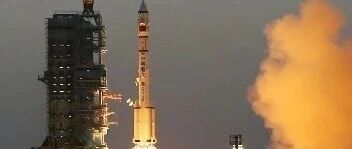
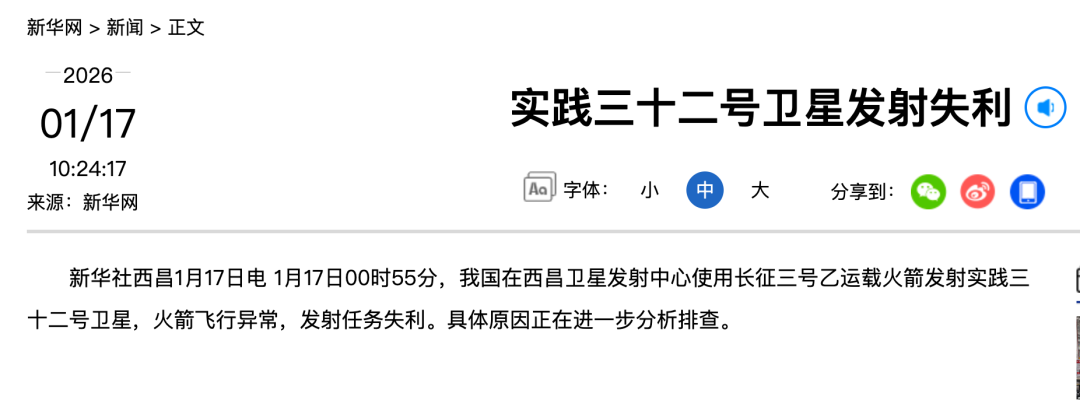
一天两枚火箭发射失利 中国航天科技集团、星河动力两家公司发文:具体原因正排查
Mei Ri Jing Ji Xin Wen· 2026-01-18 05:26
Group 1: Rocket Launch Failures - On January 17, two rocket launch failures were reported, including the Long March 3B rocket and the private company Star River's Gushen II rocket [1][2] - The Long March 3B rocket experienced an anomaly during its third stage, leading to mission failure, while the Gushen II rocket also faced flight anomalies during its first test flight [4][6] Group 2: Long March 3B Rocket Overview - The Long March 3B rocket is China's first rocket model to exceed 100 launches, with a total of 115 launches, 110 successful and 3 failures [6] - It is primarily used for launching heavy satellites into geosynchronous transfer orbits and is a key player in China's commercial launch services [4][5] Group 3: Star River Company Profile - Star River, established in 2018, is the first private company in China to achieve mass production and high-density launches of rockets [8] - The company has raised over 5.3 billion yuan through multiple funding rounds, with a post-investment valuation of 15-16 billion yuan after a recent 2.4 billion yuan Series D financing [8][9] Group 4: Industry Context and Challenges - The Chinese commercial space industry is transitioning from technology validation to large-scale operations, facing challenges such as low rocket supply and high launch costs [12][13] - The industry is experiencing a downturn following a surge in stock prices, with significant declines in commercial space concept stocks observed recently [14][16]


“大起”被防住后 下周A股怎么走?
Mei Ri Jing Ji Xin Wen· 2026-01-18 05:22
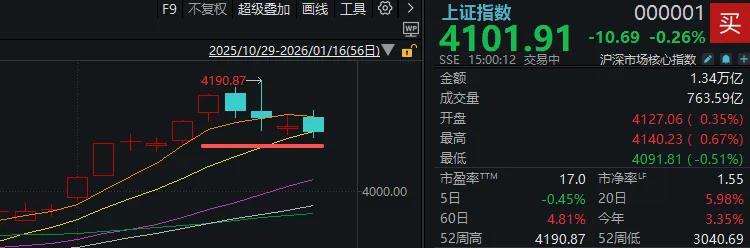
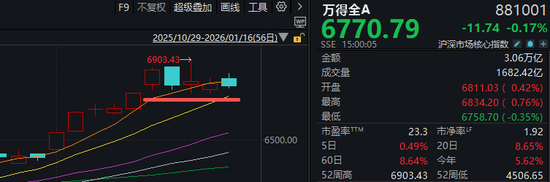
刚过去的交易周(1月12日至16日),A股市场放出巨量,日均成交额超3万亿元;但在监管出手影响下, 整周呈冲高回落的走势。 开年以来连续站上4000点、4100点的沪指,波动尤其明显。 (不过截至发稿,陈小群相关"小作文"未见官方通报实锤,也非本文重点,下面不再讨论) 此外,本周宽基指数ETF遭遇超千亿元的资金净流出(主要集中在周四、周五),也被部分敏感的投资者 注意到,并将其解读为大资金出手"降温""压指数"。 综合以上因素,这个周末,在一些投资交流平台上,偏悲观的后市预期有所蔓延,仿佛本轮上涨行情已提 前宣告结束。 这是大可不必的。我们给出两大理由: 一是,监管警惕的始终是"过热",而非阻止"慢牛"。 周三午间,提高融资保证金比例的措施或许最具代表性,但监管动作并不止于此。 一方面,贯穿本周,热门板块的热门个股主动公告降温(如提示风险、停牌等)的情况层出不穷。 另一方面,周五盘后,沪深交易所公布监管动态显示,两大交易所本周共计出手800余次,对异常交易、 问题信披等密集出手监管。 1月15日,证监会召开的2026年系统工作会议也强调,坚持稳字当头,巩固市场稳中向好势头。"全方位加 强市场监测预警,及时做好 ...
“大起”被防住后,下周A股怎么走?
Mei Ri Jing Ji Xin Wen· 2026-01-18 05:05
Core Viewpoint - The A-share market experienced significant fluctuations during the week of January 12-16, with an average daily trading volume exceeding 3 trillion yuan, but ultimately showed a trend of rising and then falling due to regulatory interventions [1][5]. Market Performance - The Shanghai Composite Index has shown notable volatility, having crossed the 4000 and 4100 points at the beginning of the year [2]. - The overall average stock price in the A-share market increased by 2.46% over the week, marking six consecutive weeks of gains [9]. Regulatory Actions - Regulatory measures included raising the margin requirements for financing, which was a significant action taken during the week [4]. - The China Securities Regulatory Commission (CSRC) emphasized the need for market stability and fair trading, with over 800 regulatory actions taken against abnormal trading and information disclosure issues [5][8]. Sector Trends - The commercial aerospace sector faced a continuous decline, with notable scrutiny on prominent investors like Chen Xiaoqun, indicating a targeted regulatory approach towards "pseudo-leaders" lacking fundamental support [5][8]. - Certain hot sectors, particularly in AI applications and commercial aerospace, saw significant declines, with indices related to these sectors dropping between 6.16% and 10.52% [12]. Investment Sentiment - Despite the regulatory "cooling" signals, the overall market response has been positive, with some investors interpreting the outflow of over 100 billion yuan from broad-based ETFs as a sign of "cooling" or "index suppression" [6][8]. - There is a shift in investment focus towards sectors that align better with regulatory expectations, indicating a potential reallocation of hot money [12]. Future Outlook - Analysts suggest that the commercial aerospace sector may continue to experience fluctuations similar to the new energy sector, driven by policy support and industry trends [14]. - The market is expected to remain resilient due to favorable liquidity conditions and ongoing positive policy stances, with potential for continued upward movement in the spring [15].
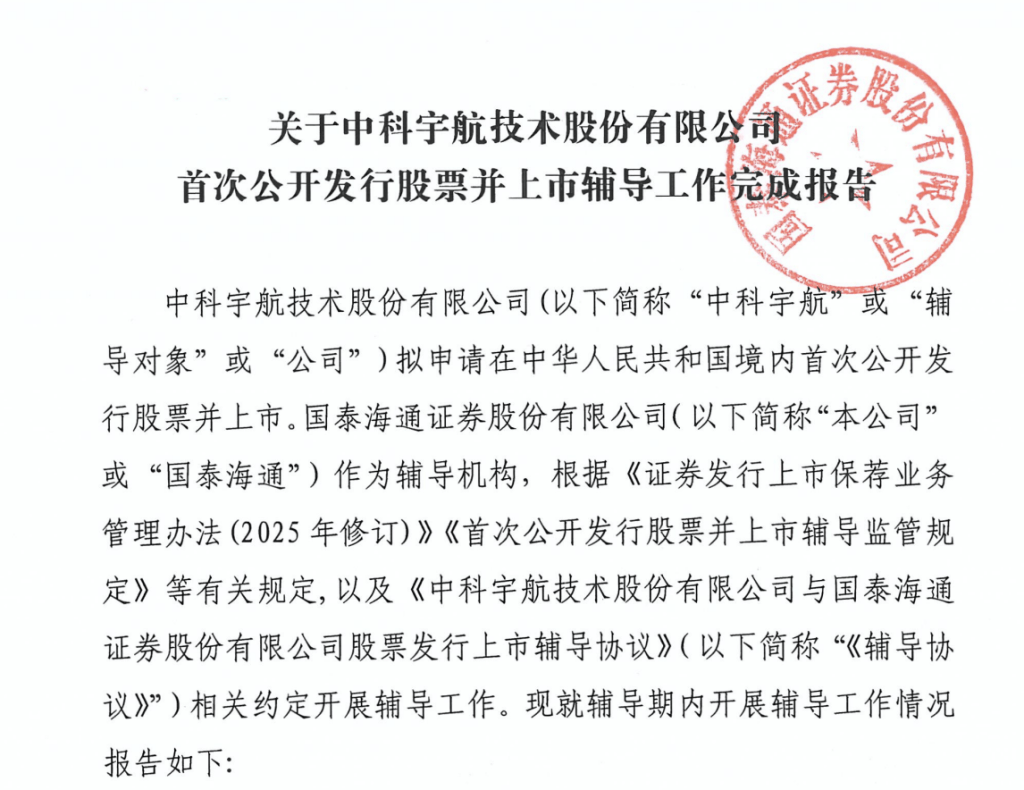
商业航天企业IPO迎新进展:中科宇航完成IPO辅导,估值超110亿
Sou Hu Cai Jing· 2026-01-18 04:11
Core Viewpoint - Zhongke Aerospace Technology Co., Ltd. has completed its IPO counseling and is preparing for its initial public offering, marking a significant step in its journey to become a publicly listed company [1][4]. Group 1: IPO Progress - Zhongke Aerospace's IPO counseling status has been changed to acceptance as of January 17, 2025, after completing two phases of counseling by Guotai Junan Securities [1]. - The company is now among the fastest in the commercial aerospace sector to progress towards an IPO, following Blue Arrow Aerospace [4]. Group 2: Company Overview - Founded in December 2018 and headquartered in Guangzhou, Zhongke Aerospace focuses on the development of medium to large rockets, customized space launches, suborbital scientific experiments, and space tourism [4]. - The company's key project, the Lijian series rockets, includes the Lijian-1, which successfully completed its maiden flight in July 2022 and is now in mass production [4]. Group 3: Financial Performance - In 2024, Zhongke Aerospace reported revenues of 243.29 million yuan and a net loss of 747.85 million yuan [7]. - For the first half of 2025, the company achieved revenues of 36.24 million yuan with a net loss of 31.10 million yuan [6][7]. - As of June 30, 2025, the total assets of Zhongke Aerospace were 2.07 billion yuan, with total liabilities of 1.27 billion yuan and owner’s equity of 800.51 million yuan [6][7]. Group 4: Management and Ownership - The controlling shareholder of Zhongke Aerospace is Beijing Pengyi Junlian Space Technology Center, holding a 27.75% stake, with Yang Yiqiang as the actual controller and founder [5]. - Yang Yiqiang, aged 58, has a notable background as the chief commander of China's first solid rocket, Long March 11, and is currently a doctoral supervisor at the University of Chinese Academy of Sciences [5]. Group 5: Market Position and Challenges - Zhongke Aerospace is actively expanding into new areas such as space manufacturing and experiments, aiming to create a virtuous cycle of high-reliability launches and large-scale orders [4]. - The company faces challenges with its current low launch frequency and the inability to fully utilize payload capacity, leading to higher unit costs and unfulfilled economic benefits from contracts [9].
民营商业航天发射失利致歉,估值150亿元,二级市场炒作已过度
Xin Lang Cai Jing· 2026-01-18 02:02
Core Viewpoint - The recent failure of Beijing Xinghe Power Aerospace Technology Co., Ltd. in a launch mission has led to an apology from the company, emphasizing the high-risk nature of the aerospace industry and the need for continued efforts despite setbacks. The market speculation surrounding commercial aerospace has been deemed excessive, with investors needing to bear the consequences of overvaluation [1][9]. Company Overview - Beijing Xinghe Power Aerospace Technology Co., Ltd. was established on February 6, 2018, with a registered capital of 43.287 million yuan. The company is primarily focused on commercial aerospace launch services, particularly in the development and launch of rockets [7][16]. - The company has successfully launched its "Gushenxing" series of small solid launch vehicles 20 times, deploying 85 satellites. The "Zhishenxing" series, a medium reusable liquid launch vehicle, has also made progress with successful testing of its second-stage propulsion system [8][17]. Financing and Valuation - As of September 2025, the company completed a D-round financing of 2.4 billion yuan, with total financing exceeding 5.3 billion yuan since its inception. The current valuation stands at approximately 15 billion yuan, placing it in the second tier of commercial aerospace companies, following Tianbing Technology and Blue Arrow Aerospace, which are valued at 22.5 billion and 22 billion yuan, respectively [8][17]. Industry Context - The commercial aerospace sector is experiencing a surge in IPO activities, with several companies, including Xinghe Power, initiating or advancing their listing guidance. Recent regulatory measures have been introduced to ensure transparency and prevent speculative practices in the market [10][18]. - The China Securities Regulatory Commission has expanded the application of the fifth set of standards for the Sci-Tech Innovation Board to support companies in the commercial aerospace sector, indicating a favorable policy environment for industry growth [7][10].

山东海上新年首“箭”升空,商业航天迎来“开门红”!
Feng Huang Wang Cai Jing· 2026-01-18 00:22
Core Viewpoint - The successful launch of the Vesta-1 maritime rocket marks a significant achievement for China's commercial space sector, indicating a strong start to 2026 with multiple successful launches already recorded [3][10]. Group 1: Launch Details - The Vesta-1 maritime rocket was launched from the Yantai Haiyang Dongfang Spaceport, successfully deploying four satellites of the Tianqi constellation into their designated orbits [1]. - This launch is the first maritime launch in Shandong for the year 2026, contributing to China's "four victories" in space launches at the beginning of the year [3][10]. Group 2: Rocket Specifications and Performance - The Vesta-1 maritime rocket is a four-stage solid commercial launch vehicle, approximately 20 meters long, with a launch mass of about 33 tons and a payload capacity of 300 kilograms [4]. - The rocket has demonstrated advantages such as technical maturity, low cost, high reliability, and quick response, making it suitable for launching various small satellites into low Earth orbit [4]. Group 3: Launch Support and Preparation - The launch was supported by the "DeFu 15001" vessel due to scheduling conflicts with the usual launch ship, ensuring a reliable launch environment [6]. - The preparation for the launch took approximately two weeks, showcasing the efficiency of the launch team and the maturity of the equipment and technology involved [6]. Group 4: Satellite Constellation and Services - The Tianqi constellation is China's first low-Earth orbit IoT communication constellation, designed to provide global coverage and enhanced signal stability for users [7]. - The successful deployment of the Tianqi-06 satellites will enhance the constellation's service capabilities, promoting the large-scale application of new satellite communication services in China [7]. Group 5: Industry Trends and Future Prospects - The year 2026 is expected to see a variety of new rocket models, including the upcoming Vesta-2 medium-lift rocket and the liquid rocket ZhiShen-1, which is anticipated to make its maiden flight this year [11]. - The industry is also focusing on breakthroughs in reusable rocket technology, with several companies planning to introduce new reusable rocket models throughout the year [11][12]. - As of January 16, 2026, a total of 11 rocket launches have been completed globally, with China contributing four successful launches, indicating a competitive landscape in the space industry [12].
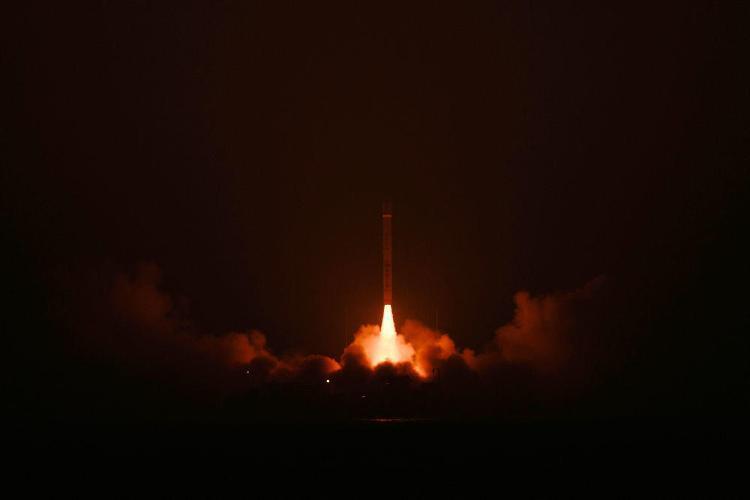
一天两发失利,火箭发射扩容并非易事
第一财经· 2026-01-17 16:31
Core Viewpoint - The article discusses the recent failures of two rocket launches in China's aerospace sector, highlighting the challenges faced by both state-owned and private companies in achieving reliable and cost-effective space missions [3][4]. Group 1: Rocket Launch Failures - On January 17, 2026, two rocket launches failed: the Long March 3B rocket carrying the Shijian-32 satellite and the private Ceres-2 rocket from Beijing Xinghe Power Aerospace Technology Co., both experiencing flight anomalies [3][4]. - The Long March 3B rocket is a key player in China's high-orbit satellite launches, known for its high success rate and numerous missions [3]. - The Ceres-2 rocket is still in the preparatory phase for public listing and has issued an apology for the failure, committing to investigate the issues and ensure future success [4]. Group 2: Industry Challenges - The aerospace sector's development is uneven, with the rocket launch segment identified as a significant bottleneck due to low supply, insufficient payload capacity, and high costs [5]. - The industry is facing a "few and expensive" launch situation, with expectations that private rocket companies can effectively supplement the national team to meet high-frequency launch demands [5]. - Achieving high-frequency launches and reducing costs is crucial for the commercialization of the aerospace sector, but it remains a challenging goal [5]. Group 3: Factors Influencing Development - Key factors affecting the development of commercial aerospace include the maturity of technology and launch success rates, particularly for reusable rocket technology [6]. - The cadence of satellite internet constellation projects, such as GW and G60, is a direct driver of rocket demand [6]. - Continuous policy support and safety regulations are essential for the industry's growth, with a focus on high-quality and safe development [6].