中国制造升级

Search documents
瑞银大中华研讨会之媒体会直播预告:“聚焦2026”中国股票市场、宏观经济及热门行业
中国基金报· 2026-01-08 11:14
Core Viewpoint - UBS is committed to providing diverse financial products and services to various clients, emphasizing a customer-first philosophy, and aims to help clients achieve their investment goals [2]. Group 1: UBS Greater China Conference - The 26th UBS Greater China Conference will be held in Shanghai from January 12, 2026, focusing on the theme "New frontiers: Growth in a transforming world" [5]. - The conference will discuss China's 14th Five-Year Plan, economic and policy dynamics, global positioning and strategic transformation, financial and industry development, technological advancements, and sustainable development [5]. - The event is expected to attract over 3,600 participants, including more than 2,300 global institutional investors, sovereign wealth funds, family offices, and private investors, with participating companies having a combined market value of approximately $4.3 trillion [5]. Group 2: Insights from UBS Executives - Sergio P. Ermotti, CEO of UBS Group, highlighted China's resilience and innovation in advanced manufacturing and artificial intelligence, presenting new opportunities for global investors [6]. - Hu Zhizhe, President of UBS China, noted a 32% year-on-year increase in international investor participation from the US, Europe, the Middle East, and Africa, reflecting a growing interest in the Chinese market [6]. - UBS has over 35 years of experience in the mainland Chinese market and 60 years in Hong Kong, positioning itself at the intersection of domestic and international capital market demands [6]. Group 3: Conference Activities - UBS will host a series of media events during the conference, featuring senior UBS executives, economists, and industry analysts discussing key topics [6]. - On January 13 and 14, 2026, the focus will be on the outlook for the Chinese stock market, macroeconomic trends, the AI industry, and the international expansion of Chinese enterprises [9][8].



从一家企业的AI转型,看中国制造的“新铠甲”
Zhong Guo Xin Wen Wang· 2025-12-26 11:55
Core Viewpoint - In 2025, China's manufacturing sector is undergoing a significant transformation driven by emerging technologies like artificial intelligence, which are enhancing industrial upgrades and shifting the focus from scale advantages to quality and system advantages [1][2][3]. Group 1: Transformation of Manufacturing - The transformation is characterized by the emergence of 17,600 national "little giant" enterprises leading innovation, 140,000 specialized and innovative small and medium-sized enterprises laying the foundation for the industrial ecosystem, and 600,000 technology and innovation-oriented SMEs growing rapidly [3]. - The shift from "manufacturing" to "intelligent manufacturing" is evident, with companies like Changhong enhancing their AI strategies, resulting in a rise in their global brand rankings [3][5]. - Changhong's comprehensive AI strategy includes "AI + manufacturing, AI + products, and AI + operations," which has led to the development of smart appliances that understand consumer needs [5][6]. Group 2: Systemic Empowerment - The new development momentum is leading to a change in the path of industrial upgrades, moving from single product breakthroughs to systemic empowerment through platforms and ecosystems [8]. - Changhong's establishment of the first national "dual-cross" industrial internet platform in Sichuan exemplifies this systemic approach, enabling data-driven operations and enhancing collaboration among enterprises [9][10]. - The platform facilitates data sharing and operational integration for nearly 3,000 SMEs, significantly improving efficiency and reducing barriers to digital transformation [10]. Group 3: Technological Self-Reliance - The core strength of China's manufacturing transformation lies in the strategy of technological self-reliance, focusing on overcoming key technological challenges and nurturing "invisible champions" [11]. - Changhong has achieved significant milestones, such as being the global leader in compressor production and developing advanced technologies in various sectors, including rail and aviation [11][12]. - The dual-driven innovation system, combining internal and external collaboration, is crucial for breaking through technological barriers and fostering a robust industrial foundation [12].


人民币要变得更值钱了?黄奇帆预言:今后十年人民币将逐步升值至6.0左右
Sou Hu Cai Jing· 2025-12-22 17:22
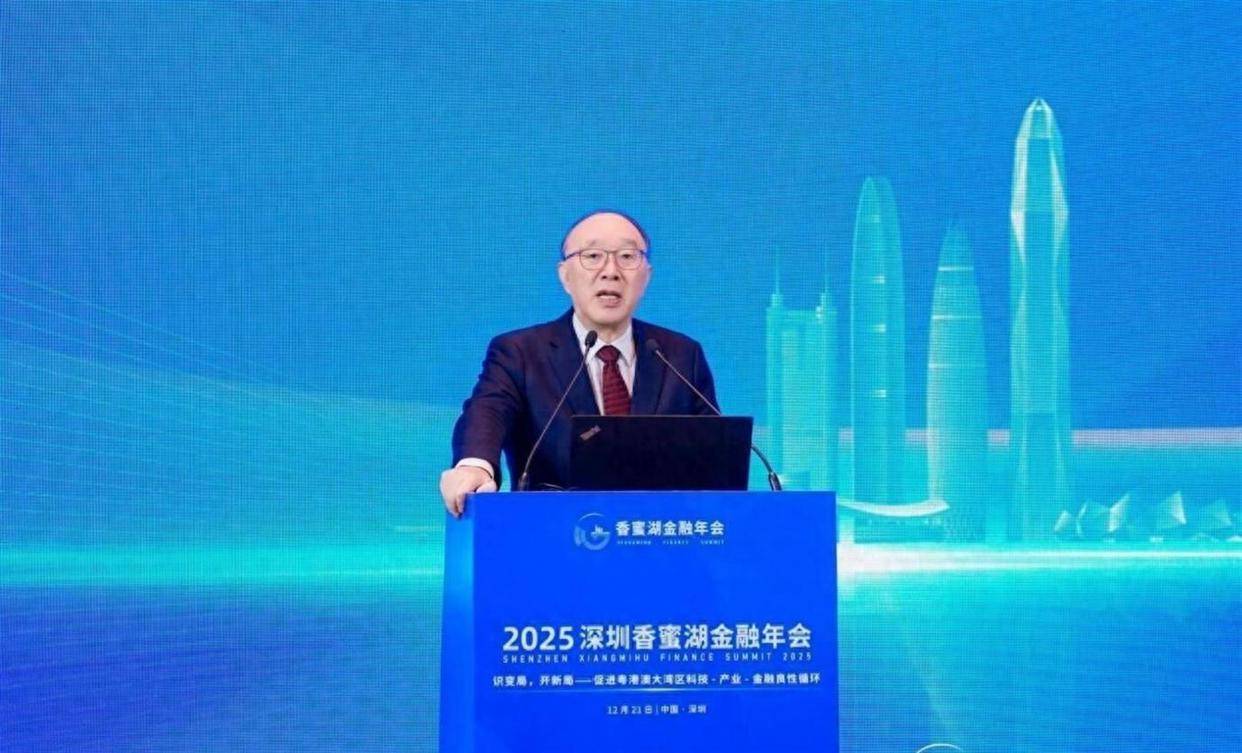
Core Viewpoint - The former mayor Huang Qifan predicts that the RMB may appreciate from around 7.0 to approximately 6.0 against the USD over the next decade, indicating that the same amount of RMB will exchange for more USD internationally, which will lower costs for consumers and businesses [1][12]. Group 1: Manufacturing Industry Transformation - Over the past decade, China's manufacturing sector has undergone a significant transformation, with its industrial added value accounting for 32% of the global total, establishing a "one-third" global structure [3]. - The nature of export goods has changed, with 60% of China's exports now being high-end equipment and electronic products, and industrial manufactured goods making up 90% of total exports [3]. - China has developed global competitive advantages in five key sectors: automotive, shipbuilding, high-speed rail, power equipment, and renewable energy, particularly in photovoltaics [3]. Group 2: Foreign Investment Trends - China has maintained an average of $120 billion in actual foreign investment annually over the past decade, doubling the total from ten years ago, with a trend of fewer projects but larger individual investments in high-tech and capital-intensive fields [3][5]. - Foreign enterprises contribute approximately 30% of China's export value, with a 50% share in high-value-added equipment and electronic product exports [5]. Group 3: Domestic Industry Chain Completeness - China is the only country with a complete industrial classification across all categories, allowing for a robust domestic supply chain that enhances resilience and cluster effects [5]. - The proportion of processing trade in exports has decreased to below 20%, with over 80% of export products now having a domestic value-added share exceeding 80% [5][6]. Group 4: Currency and Trade Dynamics - The shift from low-value processing to high-value embedded exports is a core indicator of the strengthening of China's foreign trade, providing fundamental support for the RMB exchange rate [6]. - A strategic choice to promote moderate appreciation of the RMB is seen as beneficial for enhancing purchasing power and balancing domestic and international markets [8]. - The People's Bank of China aims to maintain a stable RMB exchange rate while promoting internationalization, which will enhance the currency's attractiveness as a reserve and pricing currency [8][10]. Group 5: Future Trade Structure - China aims to reduce price competition in exports and enhance brand value, focusing on high-quality rather than low-cost products [10]. - The goal is to develop a balanced trade structure, with services trade expected to account for 20% of total trade by 2040, aligning with global averages [10]. - The RMB's exchange rate is expected to exhibit "two-way fluctuations," with the central bank equipped with various tools to manage excessive market volatility [10].
中国制造正在进行一场升级
Di Yi Cai Jing· 2025-12-17 15:44
Group 1 - The core viewpoint is that Chinese companies face uncertainties in both domestic and global markets, necessitating internal strategic restructuring and deeper integration of responsibility into their business models [2] - The manufacturing sector is fundamental to China's economy, with significant improvements in competitiveness against multinational brands, yet governance issues have emerged, particularly regarding consumer rights and safety [2][3] - There have been alarming incidents in the automotive industry, where quality defects in electric vehicles have led to accidents, highlighting the need for companies to prioritize consumer safety and product reliability as a basic social responsibility [2] Group 2 - Chinese manufacturing has a solid hardware infrastructure, with new automotive factories equipped with advanced automation surpassing European manufacturers, indicating that the issues lie not in hardware but in a lack of respect for life and basic corporate social responsibility [3] - There is substantial potential for upgrading Chinese manufacturing, focusing on improving manufacturing standards and corporate governance rather than just hardware enhancements, which could enhance domestic supply quality and international competitiveness [3] - The Ministry of Industry and Information Technology and other departments have proposed a plan to optimize the supply structure of consumer goods by 2027, aiming to create three trillion-level consumption fields and ten hundred-billion-level consumption hotspots [3] - The plan emphasizes the need to update safety, performance, and environmental standards for consumer goods, particularly for vulnerable groups, and to enhance the consistency of domestic standards with international ones [4]
国产超三成:2025Q3三坐标测量仪中标103台
仪器信息网· 2025-12-10 09:08
Core Viewpoint - The total bid amount for coordinate measuring machines in Q3 2025 reached 68.8365 million yuan, with a total of 103 units awarded, indicating a significant dominance of imported brands, particularly Hexagon, which won 40 units, showcasing a clear head effect in the market [1][3][8]. Summary by Sections Bidding Information - In Q3 2025 (July 1 to September 30), 87 bids related to coordinate measuring machines were published, with a total bid amount of 68.8365 million yuan [3]. - The monthly breakdown shows that 32, 39, and 32 units were awarded in July, August, and September respectively, with August having the highest total bid amount of 30.0199 million yuan [4]. Brand Distribution - The bidding results reveal a significant concentration among leading brands, with Hexagon leading by a wide margin with 40 units, followed by Carl Zeiss with 8 units. Other brands like Xi'an Edward, APEI, and others averaged around 3 units each [8]. - The market remains dominated by imported brands, while domestic brands like Xi'an Edward and others have a smaller market share, indicating a diverse but less competitive local presence [10]. Market Share - In terms of bid quantity and amount, domestic and imported brands have an equal share of 38% and 62% respectively. Despite the lower number of bids from domestic brands, they have shown a diversified presence in the market [10]. - The primary purchasers of these measuring instruments are universities and industrial enterprises, accounting for over 75% of the market demand, highlighting a strong investment in educational and industrial upgrades [12]. Industry Demand - The automotive and parts sector represents 43% of the industrial enterprise purchases, indicating a robust demand for measurement and testing equipment in this field. Strategic emerging industries like semiconductors and aerospace account for 29% of the demand [15]. - The purchasing trends reflect a clear direction in China's manufacturing upgrade, focusing on high-end automotive production, expansion in strategic industries, and automation in basic equipment manufacturing [15].


中国出口暴涨、服务业爆发、消费升级:2026年普通人翻身希望倍增
Sou Hu Cai Jing· 2025-12-05 02:33
Group 1 - The core viewpoint is that while 2025 may be challenging, 2026 is expected to be a pivotal year for China's economy, with potential growth of 6% and a new profit cycle beginning [5][9] - Major global financial institutions, such as Goldman Sachs, are recognizing China's resilience and the strength of its exports, prompting a reevaluation of global growth engines [7][8] - The article emphasizes that ordinary individuals will have significant opportunities in 2026, as economic growth often precedes public awareness [7][9] Group 2 - Three major trends are identified as driving China's economic growth: the second upgrade of manufacturing, the rise of the service industry, and the emergence of new urban growth areas [9][14][23] - The manufacturing sector is expected to see a second wave of upgrades, particularly in areas like renewable energy, electric vehicles, and robotics, making Chinese products more competitive globally [9][11] - The service industry is shifting from goods consumption to service consumption, with significant growth expected in healthcare, education, and entertainment sectors [14][20] Group 3 - The article highlights the importance of urban areas beyond first-tier cities, with emerging cities like Hefei, Qingdao, and Changsha expected to see significant growth [23][24] - Talent and industry migration towards these emerging urban areas will create new opportunities, as the value of cities will increasingly depend on industry and employment rather than real estate [25][24] - The article suggests that individuals should focus on sectors with the highest growth potential, such as new manufacturing and service industries, to capitalize on these trends [29][32] Group 4 - The article outlines actionable steps for individuals to take advantage of the upcoming opportunities in 2026, including selecting the right direction, investing in the right assets, and engaging in the right activities [28][39] - Key investment areas include sustainable growth assets, personal development, and joining growth-oriented industries, emphasizing that industry trends outweigh individual effort [40][43] - The final advice stresses the importance of aligning personal skills with emerging trends to achieve significant economic mobility [47][49]

经济观察丨民企出海“各显身手” 全球市场焕新中国印象
Zhong Guo Xin Wen Wang· 2025-11-24 01:26
Group 1 - The core viewpoint of the articles highlights the transformation of "Made in China" into "Created in China," driven by the increasing global presence of innovative Chinese private enterprises [1][3] - Chinese private enterprises are expanding their international reach beyond simple product exports, integrating into various sectors such as trendy toys, new-style tea drinks, smart home devices, and electric vehicles [1] - The research report from the All-China Federation of Industry and Commerce indicates that by 2025, the top 500 Chinese private enterprises are expected to report a total R&D expenditure of 1.13 trillion RMB, with an average R&D intensity of 2.77% [1] Group 2 - The proliferation of digital technology has facilitated easier pathways for Chinese enterprises to go global, with platforms like SHEIN and Alibaba International connecting personalized demands with efficient Chinese supply chains [2] - As of now, there are over 120,000 cross-border e-commerce entities in China, and the number of overseas warehouses has surpassed 2,500 [2] - Local market penetration and cultural understanding are essential for Chinese companies' internationalization, as demonstrated by the localized strategies of brands like Bubble Mart and OPPO [2] Group 3 - Chinese enterprises are deepening their local connections through establishing overseas R&D centers, production bases, and supply chain systems, as well as hiring and training local employees [3] - This deep connection allows companies to respond more accurately to differentiated market demands while also driving local employment and industrial upgrades [3] - The shift in global consumer perception of Chinese brands is moving from a focus on "price" to "value," reflecting a deeper integration of Chinese enterprises into the global market [3]
(经济观察)民企出海“各显身手” 全球市场焕新中国印象
Zhong Guo Xin Wen Wang· 2025-11-23 12:56
Group 1 - The core viewpoint is that Chinese private enterprises are increasingly reshaping the global perception of "Made in China" through innovative products and services, moving from simple product exports to deeper market integration [1][2] - The report indicates that by 2025, the top 500 Chinese private enterprises are expected to report a total R&D expenditure of 1.13 trillion RMB, with an average R&D intensity of 2.77% [1] - The rise of digital technology and cross-border e-commerce platforms, such as SHEIN and Alibaba International Station, has facilitated easier access for Chinese manufacturers to global consumers [2] Group 2 - Chinese companies are adopting localization strategies, such as understanding local cultures and tailoring products to meet regional preferences, which is becoming essential for their internationalization efforts [2][3] - The establishment of overseas R&D centers, production bases, and supply chains, along with hiring and training local employees, allows Chinese enterprises to connect deeply with local markets [3] - This deep connection leads to a shift in global consumer perception of Chinese brands from being price-focused to value-oriented, reflecting a more innovative and open image of China [3]
逐渐死去的双十一,才是真正中国制造的开始!
Sou Hu Cai Jing· 2025-11-22 11:08
Core Viewpoint - The decline of "Double Eleven" is seen as a positive transformation for Chinese manufacturing, marking the beginning of a new era focused on product quality, design, and cultural value rather than low prices and promotional gimmicks [1][12]. Group 1: Historical Context of Double Eleven - Double Eleven started in 2009 and saw explosive growth, with platforms reporting record sales figures until 2025, when such high-profile announcements have diminished [3]. - The previous model relied heavily on promotional tactics and inflated sales figures, leading to a culture of unsustainable practices within the industry [12]. Group 2: Changes in Market Dynamics - Tax reforms and increased data transparency have made it difficult for e-commerce platforms to manipulate sales figures through practices like "brushing" and data fabrication, leading to a more honest marketplace [4][10]. - Consumers have become more discerning, moving away from price-driven purchases to valuing product quality and brand integrity [6][13]. Group 3: The Shift in Consumer Behavior - Younger consumers are now seeking independent design brands that offer aesthetic and cultural depth, indicating a shift in purchasing priorities [8]. - The previous consumer behavior, characterized by a focus on discounts and promotions, is being replaced by a preference for products with meaningful stories and cultural significance [12][13]. Group 4: Future of Chinese Manufacturing - The decline of Double Eleven signifies the end of an era dominated by low-cost competition and the rise of a new phase where Chinese manufacturing is evolving from "Made in China" to "Designed by China" [10][12]. - The industry is expected to focus on innovation, understanding consumer needs, and integrating cultural elements into product design, which will enhance the global perception of Chinese brands [10][13].
生活观察|好锅,既要千锤百炼,也要求新求变
Xin Hua Wang· 2025-11-05 08:12
Core Viewpoint - The article highlights the significance of durable cookware, particularly stainless steel and traditional hand-forged iron pots, in everyday cooking, emphasizing their safety, longevity, and the cultural value they hold for families [1][3][6]. Group 1: Stainless Steel Cookware - Stainless steel cookware, particularly those made from 304 or 316 food-grade stainless steel, is praised for its corrosion resistance, durability, and ease of cleaning [4]. - The article notes that while stainless steel has poor thermal conductivity, modern techniques often incorporate aluminum layers to enhance heat distribution [4]. - Consumers express concerns about non-stick cookware, particularly regarding the wear and tear of coatings, which can lead to health risks if not used properly [4]. Group 2: Traditional Iron Cookware - Hand-forged iron pots, known for their excellent heat conduction, are made through a labor-intensive process that includes multiple forging steps, resulting in a unique texture that enhances cooking [6]. - The craftsmanship involved in creating traditional iron pots is highlighted as a key aspect of their appeal, with a focus on the meticulous techniques passed down through generations [6]. - The popularity of traditional iron cookware has surged, reflecting a broader appreciation for artisanal manufacturing in China [6]. Group 3: Innovations in Cookware - The cookware industry is experiencing a shift towards new materials and technologies, such as titanium and high-temperature nitriding, which improve the performance and durability of pots [8]. - Innovations in cookware production are seen as essential for the future of Chinese manufacturing, emphasizing quality, technological advancement, and accessibility for consumers [8]. - The integration of advanced materials and processes is transforming the cookware market, aligning with consumer demands for better quality and functionality [8].