
产业结构优化升级

Search documents
何立峰发表署名文章
财联社· 2025-11-10 23:23
Core Viewpoint - The article emphasizes the importance of developing new quality productivity tailored to local conditions, as outlined in the 15th Five-Year Plan, to promote high-quality development and modernization in China [2][3]. Group 1: Significance of Developing New Quality Productivity - Understanding the significance of developing new quality productivity is crucial for enhancing social productivity and achieving modernization [3]. - Historical trends show that the development of new quality productivity has historically led to significant advancements in social productivity, with each technological revolution marking a leap in productivity levels [4]. - The development of new quality productivity reflects the advantages of the socialist system, enabling faster and better productivity growth compared to capitalist systems [5]. Group 2: Tasks and Measures for Implementation - Strengthening technological innovation is identified as the core driver for developing new quality productivity, with a focus on original and disruptive innovations [7]. - Optimizing and upgrading industrial structures is a primary pathway for developing new quality productivity, emphasizing the transformation of traditional industries and the cultivation of emerging industries [8]. - Promoting a comprehensive green transition in economic and social development is essential, with a focus on resource efficiency and cleaner production processes [9]. - Building a strong domestic market is fundamental, leveraging the scale of the market to support the development of new quality productivity [10]. - Advancing common prosperity and comprehensive human development is a key value orientation, ensuring that technological progress benefits all citizens [11]. - Establishing production relations that align with new quality productivity is necessary for institutional support [12]. Group 3: Basic Requirements for Development - A unified national strategy is essential for coordinating major productivity layouts and addressing the relationship between reform and development [13]. - Leveraging regional comparative advantages is important, encouraging localities to identify their roles in the national development framework [14]. - Tailored policies for different industries are necessary, focusing on key sectors that drive long-term economic growth [15]. - Strengthening the role of enterprises as the main force in technological innovation and productivity development is critical [16]. - Expanding high-level openness is vital for optimizing resource allocation and enhancing market space for new quality productivity [16].


何立峰:因地制宜发展新质生产力
Ren Min Ri Bao· 2025-11-10 23:04
Core Insights - The article emphasizes the importance of developing new quality productivity tailored to local conditions as a significant directive from the 20th Central Committee of the Communist Party of China, aimed at promoting high-quality development and modernization in China [1] Historical Context - The development of new quality productivity has historically driven comprehensive improvements in social productivity, representing the most innovative and technologically advanced segment of productivity [2] - Since the 18th National Congress, China has effectively enhanced overall social productivity by seizing opportunities from the new round of technological revolutions and industrial transformations [2] Theoretical Framework - Developing new quality productivity reflects the advantages of the socialist system, which can overcome contradictions in capitalist production and promote faster and better productivity growth [3] - By 2024, the value added from new industries, new business formats, and new models is expected to account for 18% of GDP, showcasing China's leading capabilities in sectors like new energy vehicles and 5G technology [3] Practical Implications - The development of new quality productivity is essential for achieving high-quality growth and gaining strategic advantages in global competition [4] - New quality productivity emphasizes innovation and the introduction of new factor combinations, impacting various sectors including agriculture, industry, and services [4] Major Tasks and Initiatives - Strengthening technological innovation is identified as the core driver for developing new quality productivity, with a focus on original and disruptive innovations [6] - Optimizing and upgrading industrial structures is crucial, with an emphasis on enhancing traditional industries and fostering emerging sectors [7] - Promoting a comprehensive green transition in economic and social development is highlighted as an important direction for new quality productivity [8] - Building a strong domestic market is essential for supporting the development of new quality productivity, leveraging the scale and economic effects of China's vast market [9] - Ensuring common prosperity and comprehensive human development is the value orientation behind developing new quality productivity [10] - Adjusting production relations to align with new quality productivity is necessary for its formation and development [11] Implementation Strategies - A unified national strategy is required to enhance the overall effectiveness of developing new quality productivity [13] - Encouraging local regions to leverage their comparative advantages is vital for identifying optimal development paths [14] - Tailored policies for different industries are necessary to address their unique stages and demands [15] - Strengthening the role of enterprises, particularly state-owned and private firms, is crucial for driving innovation and productivity [16] - Expanding high-level openness is important for optimizing resource allocation and promoting industrial upgrades [16]
因地制宜发展新质生产力(学习贯彻党的二十届四中全会精神)
Ren Min Ri Bao· 2025-11-10 22:41
Core Insights - The article emphasizes the importance of developing new quality productivity tailored to local conditions as outlined in the 20th Central Committee's Fourth Plenary Session [1][2] Group 1: Historical and Theoretical Context - The development of new quality productivity has historically driven comprehensive improvements in social productivity, representing the most innovative and forward-looking aspects of productivity evolution [3] - The socialist system's advantages facilitate faster and better productivity development, with significant advancements in key technologies and industries since the 18th National Congress [4] Group 2: Current Economic and Strategic Implications - Developing new quality productivity is essential for achieving high-quality development and gaining strategic advantages in global competition, focusing on creating a modern industrial system that meets people's needs [5] - The emphasis is on innovation as the primary driver, with strategic emerging industries and traditional sectors being vital for fostering new quality productivity [5] Group 3: Major Tasks and Initiatives - Strengthening technological innovation is identified as the core driver for developing new quality productivity, with a focus on original and disruptive innovations [6][7] - Optimizing and upgrading industrial structures is crucial, with initiatives to enhance traditional industries and foster emerging sectors [8] - Promoting a comprehensive green transformation in economic and social development is highlighted as a key direction for new quality productivity [9] Group 4: Market and Social Considerations - Building a strong domestic market is essential for supporting new quality productivity, leveraging the scale of the domestic market to stimulate demand and innovation [10] - Ensuring common prosperity and comprehensive human development is a fundamental value orientation for developing new quality productivity, emphasizing the importance of investing in human capital [11] Group 5: Institutional and Policy Framework - Adjusting production relations to align with new quality productivity is necessary, focusing on enhancing the market-oriented allocation of resources and improving the financial system [12] - The article stresses the need for a unified national strategy while allowing local regions to leverage their comparative advantages in developing new quality productivity [14][15] - Encouraging enterprises to play a leading role in innovation and productivity development is crucial, with support for both state-owned and private enterprises [16][17]
湖南怀化国际陆港今年班列量破千 高附加值产品成“新常客”
Zhong Guo Xin Wen Wang· 2025-11-05 06:29
Core Insights - The Huaihua International Land Port has achieved significant growth in freight volume, surpassing 1,000 trains this year, with a notable increase in high-value products [1][2] - The logistics network has expanded to cover 69 countries and regions, with 196 international and domestic routes established [1] - The shift from low-value bulk commodities to high-value goods is evident, with the proportion of low-value products expected to drop from 55% in 2023 to 16% by 2025 [1] Group 1 - Huaihua International Land Port has dispatched 1,002 trains as of November 2, 2023, marking an early achievement compared to the previous year [1] - The port has developed a logistics network that includes 216 ports and stations globally, with seven major international logistics corridors in regular operation [1] - The local industries, including bag manufacturing, bamboo and wood products, and agricultural processing, are rapidly integrating into the global market, with significant export growth reported [1] Group 2 - The development of cold chain transportation has been a focus, with 3,038 cold chain containers of fruits and vegetables dispatched [2] - Regular operation of cold chain trains on the Xiang-Dian-Lan-Mekong route has been established, targeting specific products for expansion [2] - Future plans include enhancing cold chain services for products like dragon fruit, durian, and longan, aiming to create a distribution center for cold chain products in the Southwest region [2]
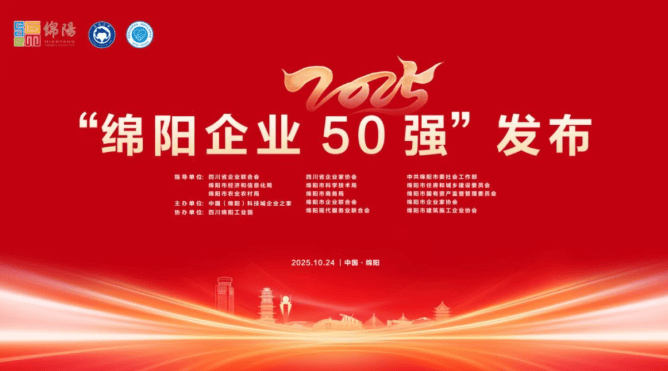
2025绵阳企业50强发布!附完整榜单
Sou Hu Cai Jing· 2025-10-25 21:05
Core Insights - The 2025 Mianyang Top 50 Enterprises list was released, showcasing the resilience and growth of local companies despite a complex external environment [4][6] - The total revenue of the top 50 enterprises reached 492.57 billion, with total assets exceeding 1.1 trillion, reflecting a year-on-year growth of 4.99% [4] - The report highlights the dominance of the secondary industry, with 72% of enterprises and 84.91% of revenue coming from this sector, particularly in electronics, food and beverage, and advanced materials [4][6] Summary by Category Overall Performance - The top 50 enterprises achieved a net profit of 7.47 billion, showing a slight increase of 0.23% [4] - There are 2 enterprises with revenues exceeding 100 billion and 7 with revenues over 10 billion, indicating strong leadership within the sector [4] Industry Structure - The secondary industry comprises 72% of the enterprises, contributing 84.91% of total revenue, underscoring the industrial dominance [4] - The electronics industry alone generated 236.57 billion, making it a key driver of regional economic development [4] Ownership Structure - State-owned enterprises account for 52% of the total number, contributing 65.1% of revenue and 84.84% of tax revenue, highlighting their significant role [6] - Private enterprises make up 48% of the total, contributing 34.9% of revenue, showcasing their vitality [6] Regional Distribution - The majority of the top 50 enterprises are concentrated in Fucheng District, Science City New District, Anzhou District, and Jiangyou City, which together account for 66% of the top enterprises and 93.54% of total revenue [6] Future Outlook - The Mianyang Enterprise Home and the Mianyang Enterprise Federation aim to enhance services to address challenges in financing, labor, and market expansion, fostering a supportive environment for growth [15]




专家建议加严空气质量标准,驱动产业结构优化升级
Di Yi Cai Jing· 2025-10-24 11:49
Core Viewpoint - The article emphasizes the need for stricter air quality standards in China to drive industrial restructuring and improve public health, especially as the country transitions from the 14th Five-Year Plan to the 15th [1][4]. Group 1: Air Quality Improvement - Since the implementation of the Clean Air Action in 2013, China has seen a significant reduction in PM2.5 levels, with an overall annual average concentration decrease of 59% by 2024 compared to 2013 [3]. - The annual report highlights successful local practices in air pollution control, such as the collaborative efforts in the Beijing-Tianjin-Hebei region and Shanghai's VOCs management [2][3]. Group 2: Policy and Management Innovations - Shanghai has pioneered industrial VOCs governance since 2007, evolving from individualized solutions to standardized management approaches, enhancing regulatory efficiency [2][3]. - The establishment of a comprehensive data management system in Shanghai has improved real-time monitoring of vehicle emissions, addressing traditional regulatory challenges [3]. Group 3: Future Challenges and Recommendations - Experts indicate that as pollution characteristics evolve, there is a need for enhanced forecasting capabilities and improved regulatory effectiveness to tackle persistent pollution issues [4][5]. - Recommendations include focusing on structural adjustments in energy, industry, and transportation sectors to meet new standards and maximize health benefits while ensuring high-quality economic development [6].
韧性、活力、信心——海外人士解读中国经济“三季报”
Xin Hua Wang· 2025-10-23 00:34
Core Insights - China's GDP for the first three quarters of 2025 reached 10,150.36 billion yuan, showing a year-on-year growth of 5.2%, indicating a stable and progressive economic performance [1][2] Economic Performance - The 5.2% growth rate in GDP reflects an acceleration of 0.2 and 0.4 percentage points compared to the previous year and the same period last year, respectively, showcasing China's resilience amid various challenges [2] - The growth is attributed to effective responses to external pressures, including U.S. tariff policies and declining demand in European markets, highlighting China's robust economic capacity [2][3] International Comparison - China's economic growth rate surpasses that of major economies like the U.S. and the EU, reinforcing its role as a key driver of global economic growth [3] - The country's trade performance is notable, with record high import and export volumes in the first three quarters, particularly with ASEAN, Latin America, Africa, and Central Asia, indicating successful market diversification [3] Innovation and Transformation - The high-tech manufacturing sector saw a significant increase of 9.6% in value-added output, with specific products like industrial robots and 3D printing equipment experiencing growth rates of 29.8% and 40.5%, respectively, reflecting a shift towards innovation-driven growth [4] - The rapid advancement in technologies such as AI, electric vehicles, and quantum technology illustrates China's transition towards high-quality development [4] Policy Impact - A series of macroeconomic policies aimed at expanding domestic demand and promoting green transformation have effectively enhanced economic resilience, facilitating a shift from high-speed to high-quality growth [5] - The combination of modernization in traditional industries, a skilled labor force, and a comprehensive industrial chain supports China's steady economic progress [5][6] Global Economic Role - China's diversified trade partnerships and strong industrial output contribute significantly to achieving growth targets, while its large middle-income population and government policies create new opportunities for domestic consumption [6] - As the world's second-largest economy, China's stable growth is crucial for global economic stability, with its active participation being essential for sustained global growth [6][7]
国际观察|韧性、活力、信心——海外人士解读中国经济“三季报”
Xin Hua She· 2025-10-22 14:14
Core Viewpoint - China's GDP for the first three quarters of 2025 reached 10,150.36 billion yuan, with a year-on-year growth of 5.2%, indicating a stable and progressive economic performance despite various challenges [1][2]. Economic Performance - The GDP growth of 5.2% in the first three quarters is an acceleration compared to the previous year, showcasing China's resilience in facing domestic and international challenges [2][3]. - China's economic growth rate is significantly higher than that of major economies like the US and the EU, reinforcing its role as a key driver of global economic growth [3][6]. Trade and Export - China's import and export scale reached a historical high in the first three quarters, with notable growth in trade with ASEAN, Latin America, Africa, and Central Asia, reflecting the effectiveness of market diversification [3][4]. - Despite external pressures such as US tariffs, China's exports remained robust, indicating a strategic expansion of trade relations with other regions [3][5]. Innovation and High-Tech Manufacturing - The high-tech manufacturing sector saw a 9.6% increase in value-added output, with significant growth in industrial robots, 3D printing equipment, and industrial control systems, highlighting the transformation of innovation into economic momentum [4][5]. - The rapid development of cutting-edge technologies like AI, electric vehicles, and quantum technology underscores China's shift towards high-quality economic growth [4][6]. Policy Support and Economic Strategy - A series of macroeconomic policies aimed at expanding domestic demand and promoting green transformation have been effective in enhancing economic resilience [5][6]. - China's strategic focus on long-term development and adaptability has positioned it to transition from high-speed growth to high-quality development [5][6]. Global Economic Impact - China's steady economic growth is expected to boost global growth confidence and create new development opportunities for its trading partners [5][6]. - As the world's second-largest economy, China's active participation is deemed essential for the sustained growth of the global economy [6][7].
前三季度中国GDP同比增长5.2% 经济运行保持稳中有进态势
Yang Guang Wang· 2025-10-21 01:11
Core Insights - China's GDP for the first three quarters reached 10,150.36 billion yuan, with a year-on-year growth of 5.2%, indicating a stable and resilient economic performance [1] - The contribution of final consumption expenditure to economic growth was 53.5%, an increase of 9.0 percentage points compared to the previous year, highlighting the importance of consumer demand [2] - The industrial sector showed a positive growth trend, with industrial added value increasing by 5.8% year-on-year, contributing 1.7 percentage points to economic growth [1] Economic Performance - The GDP growth rate of 5.2% is among the highest globally, positioning China as a stable and reliable driver of global economic growth [1] - The economic increment for the first three quarters was 3,967.9 billion yuan, which is 136.8 billion yuan more than the previous year [1] - The contribution of the equipment manufacturing and high-tech manufacturing sectors to industrial added value reached 35.9% and 16.7%, respectively [1] Consumer Demand - The government has allocated 300 billion yuan in special long-term bonds to support the consumption of new products through trade-in programs, significantly boosting consumer demand [2] - The number of applications for vehicle trade-ins exceeded 8.3 million by September 10, indicating strong consumer interest in upgrading to higher-quality products [2] - Retail sales of high-efficiency and smart appliances have seen rapid growth, reflecting a shift towards higher-quality consumer goods [2] Employment and Inflation - The urban unemployment rate remained stable compared to the first half of the year, indicating a steady labor market [2] - The core Consumer Price Index (CPI), excluding food and energy, rose by 0.6%, with a notable increase of 1.0% in September, suggesting effective policies to stimulate domestic demand [2] Future Outlook - There are favorable conditions to achieve the annual economic targets, emphasizing the need for effective policy implementation and the balance between short-term growth and long-term development [3] - Continued efforts are required to facilitate the smooth transition between old and new economic drivers and to deepen reforms in key areas [3]
山西:产品走出去 资源引进来
Jing Ji Ri Bao· 2025-10-01 07:53
Core Insights - The article highlights the significant progress of Shanxi Province in establishing a robust logistics network through the China-Europe (Asia) freight trains, marking the 1000th train departure and the 110th this year [1][2]. Group 1: Logistics Development - Shanxi has developed a logistics service network with 26 main routes connecting to 48 major cities across 17 countries in Europe and Asia, utilizing multiple departure stations and five border crossings [2][3]. - The establishment of a digital booking platform for the China-Europe freight trains has enhanced customer service by integrating various logistics functions and utilizing big data for route optimization [2]. Group 2: Product Diversification - The range of goods transported by the China-Europe freight trains has expanded from industrial equipment and raw materials to include a variety of consumer products, showcasing Shanxi's local specialties such as pharmaceuticals, ceramics, and walnuts [3]. - The import side has also seen growth, with a variety of foreign luxury goods and products available in the bonded store at Taiyuan South High-speed Railway Station, indicating a two-way trade dynamic [3]. Group 3: Economic Impact - The China-Europe (Asia) freight trains have become a crucial platform for Shanxi, an inland province, to engage in international trade, facilitating the integration into global supply chains and driving industrial upgrades [3].