
人民币跨境支付

Search documents
美元霸权崩塌?三大央行政策转向引爆全球货币体系重构
Sou Hu Cai Jing· 2025-10-13 02:27
Core Viewpoint - The recent 5.4% drop in the US dollar index, marking the largest decline since 2003, signals a significant shift in the dominance of the dollar, influenced by policy changes from major central banks [1][4]. Group 1: Policy Changes and Market Reactions - The Federal Reserve's pause in interest rate hikes after 11 consecutive increases indicates a pessimistic outlook on the US economy, contributing to the dollar's decline [4]. - The European Central Bank's unexpected 25 basis point rate cut has led to a drop in the euro to a critical exchange rate of 1:1.05 against the dollar, exacerbating the dollar's liquidity surplus [4]. - Japan's termination of its negative interest rate policy has resulted in a significant capital inflow of $16 billion, further weakening the dollar index [6]. Group 2: De-dollarization Trends - Global central banks are actively reducing their dollar reserves, with gold purchases expected to exceed 1,200 tons in 2024, and China reducing its US Treasury holdings by $217 billion over 18 months [7]. - The dollar's share in global foreign exchange reserves has fallen to 58%, a sharp decline from 71% in 2000 [7]. Group 3: Economic Pressures and Trade Policies - The US fiscal deficit has surpassed $35 trillion, leading to a credit crisis, while the use of the SWIFT system for sanctions has prompted countries like Saudi Arabia and China to explore alternative settlement mechanisms [9]. - The imposition of 100% tariffs on imports by the Trump administration has negatively impacted the dollar, with the Nasdaq index dropping 3.56% in a single day and Chinese stocks falling over 9% [10]. Group 4: Systemic Risks and Future Outlook - The $19.2 billion liquidation event in the cryptocurrency market highlights systemic risks associated with the dollar's depreciation, as the failure of Bitcoin to maintain the $115,000 support level triggered a wave of forced liquidations [13]. - Warning signals indicate that the US fiscal and trade deficits are exceeding 6% of GDP, while advancements in China's 7nm chip technology threaten the "chip dollar" system [14].


移动支付国际领先,我国基本建成人民币跨境支付清算网络
Nan Fang Du Shi Bao· 2025-09-22 09:00
Core Viewpoint - The press conference highlighted the achievements of China's financial industry during the "14th Five-Year Plan" period, emphasizing the establishment of a comprehensive and efficient cross-border payment and clearing network for the Renminbi, as well as the international leadership in mobile payments [2]. Group 1 - The People's Bank of China has developed a multi-channel, widely covered, safe, and efficient cross-border payment and clearing network for the Renminbi [2]. - Mobile payment systems in China are recognized as being at the forefront of international standards [2].

研究所日报:鑫新闻-20250916
Yintai Securities· 2025-09-16 06:06
Economic Data - In August, the industrial added value above designated size increased by 5.2% year-on-year, while retail sales of consumer goods rose by 3.4% year-on-year[2] - From January to August, fixed asset investment (excluding rural households) grew by 0.5% year-on-year, and real estate development investment decreased by 12.9%[2] - CPI in August fell to -0.4% year-on-year, primarily due to weak food prices, while PPI's year-on-year decline narrowed to -2.9%[7] Trade and Investment - From January to August, national railway fixed asset investment reached 504.1 billion yuan, a year-on-year increase of 5.6%[4] - In August, new RMB loans were 590 billion yuan, down 310 billion yuan year-on-year, indicating weak credit demand in real estate and enterprises[8] - Exports grew by 4.4% in August, with exports to the U.S. declining by 33%[9] Policy and Market Outlook - The Chinese government is expected to implement counter-cyclical policies, including a 500 billion yuan new policy financial tool and early issuance of local government debt limits for 2026[2] - The recent U.S.-China trade talks have established a framework for cooperation, which may reduce uncertainties in economic relations[3] - The ongoing adjustments in the real estate market and potential policy responses could impact future economic performance[2][32]
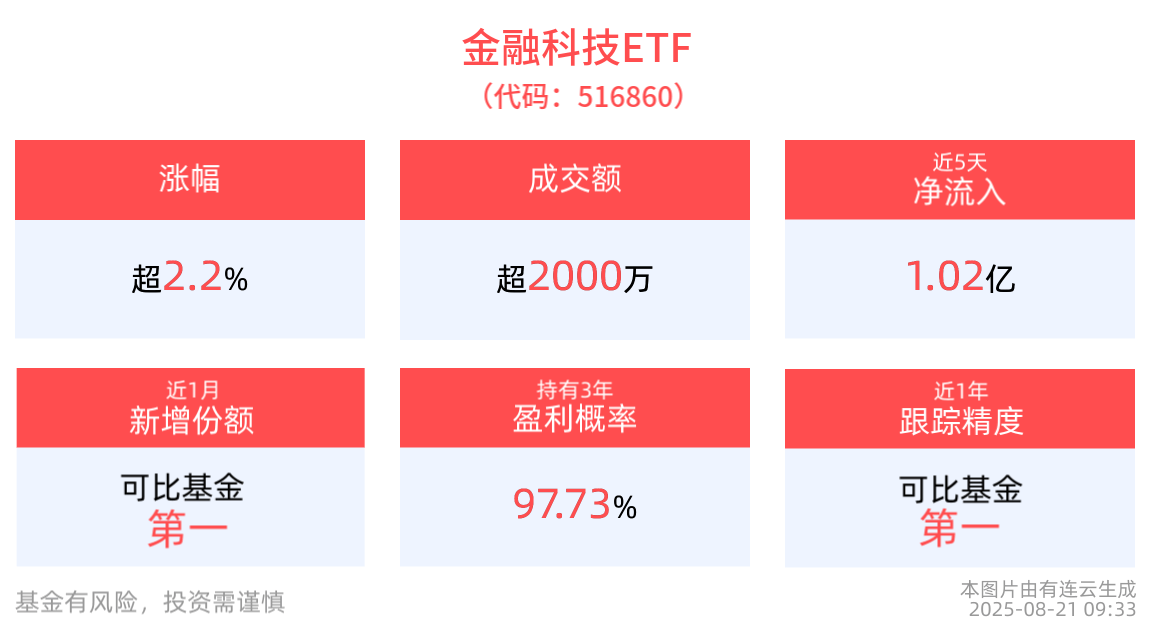
金融科技概念盘初大幅拉升,新晨科技涨停,金融科技ETF(516860)高开高走上涨2.26%,
Sou Hu Cai Jing· 2025-08-22 13:48
Core Insights - The China Banking and Huawei have signed a strategic cooperation agreement in financial technology, focusing on ICT infrastructure, cloud computing, databases, artificial intelligence, and talent development [3] - The financial technology ETF (516860) has shown strong performance, with a recent increase of 2.26% and a weekly gain of 9.71% [3][5] - The global retail cross-border payment market is projected to reach $39.9 trillion in 2024, with a compound annual growth rate of 6.2% from 2024 to 2032 [4] Industry Events - The strategic cooperation between China Banking and Huawei aims to enhance digital financial development through innovation and talent cultivation [3] - Tencent Research Institute's report indicates a shift in the financial industry's application of large models towards commercial value, enhancing efficiency and revenue generation [4] - The third-party payment institutions are expected to benefit from the growth in cross-border payment volumes, with significant roles in the payment service ecosystem [4] ETF Performance - The financial technology ETF has reached a scale of 1.814 billion yuan, with a recent net inflow of 82.75 million yuan [5] - The ETF has shown a one-year net value increase of 161.34%, ranking 4th out of 2965 index equity funds [5] - The ETF's management fee is 0.50%, and it has the highest tracking accuracy among comparable funds, with a tracking error of 0.044% [7] Market Trends - The financial technology ETF has seen a significant increase in shares, with a growth of 1.72 million shares in the past month [5] - The ETF's average daily net inflow over the past five trading days was approximately 20.36 million yuan [5] - The top ten weighted stocks in the index account for 51.26%, indicating a concentrated investment strategy [7]





人民银行:二季度人民币跨境支付系统处理业务212.12万笔
Bei Jing Shang Bao· 2025-08-19 14:16
Core Insights - The People's Bank of China released the overall operation status of the payment system for the second quarter of 2025, highlighting significant transaction volumes and values in the RMB cross-border payment system [1] Group 1: Payment System Performance - In the second quarter, the RMB cross-border payment system processed 2.1212 million transactions, amounting to 45.94 trillion yuan [1] - The average daily transaction volume was 32,100 transactions, with a total value of 696.078 billion yuan [1]
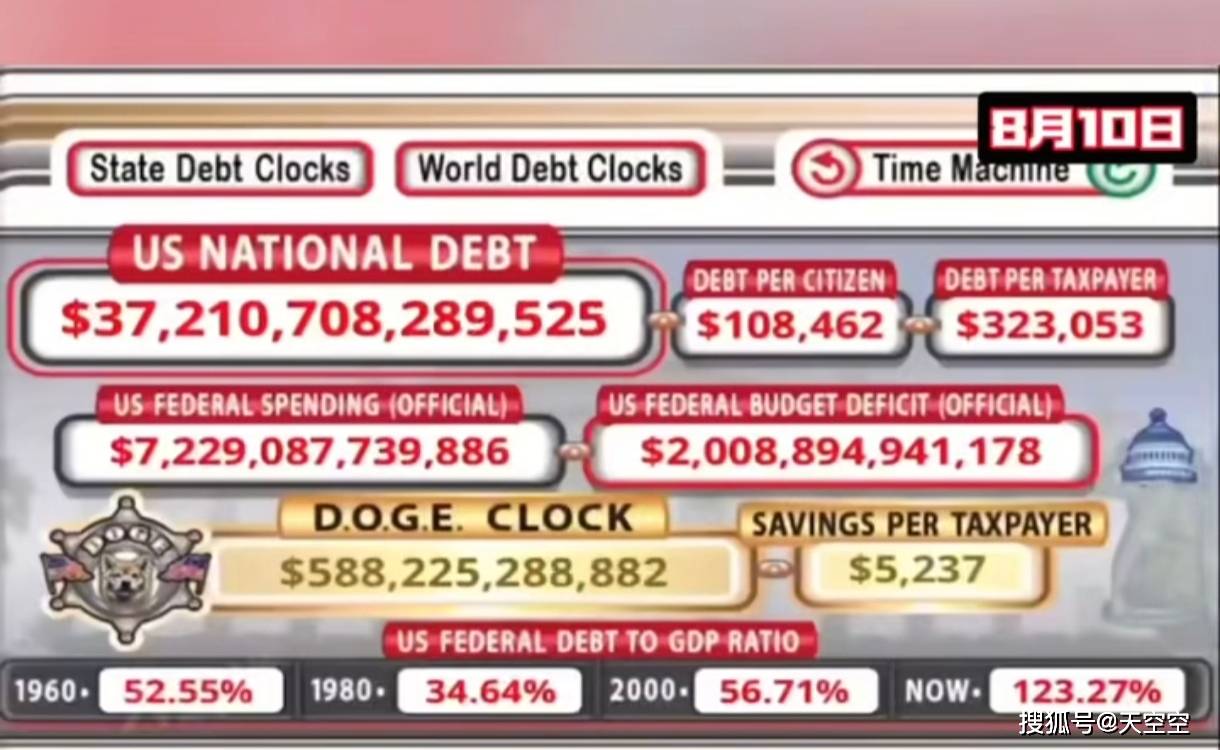
美国债务破37万亿美元,人均背债10.77万美元,利息比军费还高!
Sou Hu Cai Jing· 2025-08-10 12:54
Group 1 - The U.S. federal debt has recently surpassed $37 trillion, marking a historical high, with each American bearing approximately $107,700 in debt, which is 123% of the U.S. GDP, higher than the peak during World War II [1] - The debt has increased dramatically from $30 trillion to $37 trillion in just three years, with an average increase of $1 trillion every 100 days projected for 2025, and $9.3 trillion of debt maturing in 2025, which constitutes a quarter of the total debt [3] - Interest payments on the debt are expected to reach $1.2 trillion in 2025, surpassing military spending and becoming the second-largest federal expenditure, accounting for 17% of the federal budget [3] Group 2 - The Trump administration's policies have led to a contradiction, with tax cuts potentially increasing debt by $22 trillion over the next decade while trade deficits have not decreased, contributing to domestic inflation of 6.5% [5] - There is a growing global distrust in the U.S. dollar, with countries like China reducing their holdings to $765.4 billion and Japan reportedly transferring $200 billion in U.S. debt to tax havens, leading to a decline in the global dollar reserve share to 55%, the lowest in 30 years [10] - The U.S. economy is trapped in a "death triangle" of high debt, high interest rates, and high tariffs, creating a vicious cycle that threatens global economic stability if fiscal reforms are not implemented [10]
新版人民币跨境支付系统业务规则公开征求意见
Zhong Guo Zheng Quan Bao· 2025-08-08 07:20
Core Viewpoint - The People's Bank of China (PBOC) has released a draft for public consultation regarding the revised rules for the Cross-Border Interbank Payment System (CIPS), aimed at enhancing participant management and adapting to the system's development needs [1][2]. Group 1: Overview of the Draft Rules - The draft consists of six chapters and thirty-one articles, covering general principles, account management, business processing, settlement mechanisms, risk management, and emergency response [2]. - The rules apply to CIPS operating institutions, direct participants, and indirect participants, with operating institutions being approved by the PBOC to provide cross-border RMB clearing and settlement services [2]. Group 2: Participant Management - Operating institutions are required to establish participant management measures, detailing the management of participant entry and exit, reporting requirements, and risk management [2]. - Direct and indirect participants must conduct their business according to the management measures set by the operating institutions, which must be evaluated and approved by the PBOC [2]. Group 3: Account Management - The draft allows operating institutions to open clearing accounts with the PBOC for centralized storage of settlement funds, which must be accounted for separately from other funds [3]. - The funds in the account belong to all direct participants, who have rights based on their account balances, and the account cannot be overdrawn, with a zero balance required at the end of the day [3]. Group 4: Business Processing - Direct participants in the banking sector must process payments through CIPS based on customer instructions or on behalf of indirect participants, either individually or in batches [3]. - Financial market infrastructure participants must use CIPS for fund settlement according to their transaction systems and are prohibited from expanding service scope or business scenarios without consent [3].
中国脑机接口企业以 13 亿美元估值寻求上市前融资;海南商业航天发射场五天两捷报,实现双工位连续发射——《投资早参》
Mei Ri Jing Ji Xin Wen· 2025-08-05 23:41
Important Market News - US stock indices collectively declined, with the Dow Jones down 0.14%, Nasdaq down 0.65%, and S&P 500 down 0.49%. Major tech stocks mostly fell, including Microsoft, Meta, and Broadcom, each down over 1%, while Intel rose over 3% and Amazon nearly 1% [1] - In June, the US trade deficit was $60.2 billion, better than the expected $61 billion and down from the previous $71.5 billion. COMEX gold futures rose 0.25% to $3435 per ounce, while WTI crude oil futures fell 1.7% to $65.16 per barrel [1] Industry Insights - Chinese brain-computer interface startup BrainCo is seeking approximately $100 million in Pre-IPO funding before a potential listing in Hong Kong or mainland China, with a valuation exceeding $1.3 billion. The company focuses on bionic prosthetics and brain control technology [2] - The global market for brain-computer interface medical applications is expected to reach $40 billion by 2030 and $145 billion by 2040, indicating significant growth potential in this sector [2] - On August 4, China successfully launched a satellite using the Long March 12 rocket from Hainan, demonstrating the high-density launch capabilities of the Hainan commercial space launch site. This reflects the growing competitiveness in low Earth orbit satellite deployment [3] - The People's Bank of China and seven departments issued guidelines to enhance cross-border financial services, aiming to facilitate trade and support enterprises in international markets [4] - The global retail cross-border payment market is projected to reach $39.9 trillion by 2024, with B2B payments dominating the market share [4]
多重概念活跃,金融科技ETF(159851)拉升逾1%!香港稳定币发行“倒计时”,四方精创涨超3%
Xin Lang Ji Jin· 2025-07-28 02:30
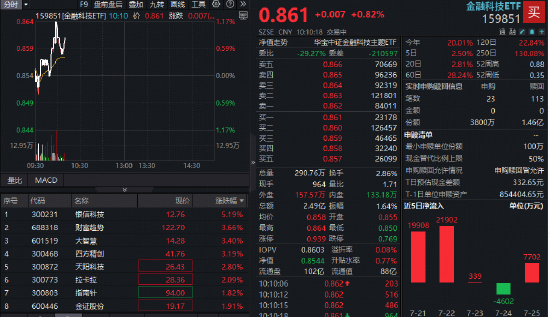
7月28日,截至9时59分,金融科技板块表现活跃,中证金融科技主题指数上涨1.11%,金融IT、稳定币 概念、互联网券商等多细分赛道活跃。成份股方面,银信科技上涨超5%,四方精创、财富趋势、大智 慧等纷纷上涨超3%。热门ETF方面,规模、流动性同类断层第一的金融科技ETF(159851)场内价格冲 高逾1%,成交额超2亿元。 多角度把握金融科技机会,建议重点关注金融科技ETF(159851)及其联接基金(A类013477、C类 013478),标的指数全面覆盖了互联网券商、金融IT、跨境支付、AI应用、华为鸿蒙等热门主题。截至 7月23日,金融科技ETF(159851)最新规模超85亿元,近6个月日均成交额超5.5亿元,规模、流动性 在跟踪同一标的指数的3只ETF中断层第一! 数据来源:沪深交易所等。 风险提示:金融科技ETF被动跟踪中证金融科技主题指数,该指数基日为2014.6.30,发布日期为 2017.6.22,该指数2020-2024年年度涨跌幅分别为:10.46%、7.16%、-21.40%、10.03%、31.54%,指数 成份股构成根据该指数编制规则适时调整,其回测历史业绩不预示指数未来表现。文 ...
央行拟修订CIPS系统业务规则,加速推广人民币跨境支付
Haitong Securities International· 2025-07-09 10:31
Investment Rating - The report assigns an "Outperform" rating for the industry, indicating an expected relative return exceeding the benchmark by over 10% in the next 12-18 months [4][21]. Core Insights - The People's Bank of China has revised the CIPS system rules to enhance the framework for cross-border RMB payments, aiming to facilitate the integration of payment channels and improve clearing efficiency [7][4]. - The updated rules expand the scope of CIPS operations to include additional activities approved by the central bank, thereby supporting the growth and functionality of the CIPS system [7][4]. - The Cross-border Pay Link, launched in Hong Kong, allows for real-time, cost-effective remittances between Mainland China and Hong Kong, significantly improving the efficiency of cross-border transactions [7][4]. Summary by Sections CIPS System Rule Updates - The People's Bank of China released a draft for public comment on the CIPS system rules, focusing on account management, business processing, settlement mechanisms, and risk management [4][7]. - The revisions aim to adapt the rules established in 2018 to current business developments and participant needs, enhancing management standards for CIPS participants [4][7]. Cross-border Payment Innovations - The Cross-border Pay Link, which became operational on June 22, connects the fast payment systems of Mainland China and Hong Kong, allowing residents to conduct cross-border remittances efficiently [4][7]. - This system reduces the remittance process time and costs by minimizing intermediary steps and directly connecting payment infrastructures [4][7]. Investment Recommendations - The report suggests focusing on cross-border payment service providers such as Newland Digital Technology, Xgd Inc, Lakala Payment, and Yeahka Limited, as well as financial IT service providers like Yusys Technologies and Sinodata [7][4].