供给侧结构性改革

Search documents
持续提升入境游服务质量
Jing Ji Ri Bao· 2026-02-24 22:12
国家移民管理局近期发布的数据显示,2025年全国各口岸出入境外国人8203.5万人次,同比增长 26.4%,其中免签入境外国人3008万人次,占入境外国人的73.1%,同比上升49.5%。入境游涉及签证、 通关、支付、消费、交通、通信、住宿等服务环节,一段时间以来,在离境退税政策优化、签证与通关 便利化、支付环境国际化改造等措施的共同推动下,我国入境旅游市场呈现稳健发展态势。 截至目前,我国已对48个国家实行单方面免签、与29个国家实现全面互免签证,过境免签政策覆盖范围 扩展至55国、政策适用口岸总数增至65个。多重政策叠加赋能,对全国旅游业高质量发展形成了有力支 撑。 入境游的快速发展,能够带来综合经济社会效益。一是入境游以国际需求倒逼供给侧结构性改革,境外 游客对多语种服务、国际支付适配的刚性需求,推动4A级景区落地多语种预约系统,文旅融合业态加 速涌现。二是入境消费通过"吃住行游购娱"全链条乘数效应,带动航空、零售等关联产业扩张,催生大 量新就业岗位,以国际消费需求激活国内经济增量,有效对冲内需增长压力。三是免签、退税等便利化 政策降低入境门槛,让入境游客成为我国和各地经济社会发展成就、营商环境的"亲身 ...
铁山港的“零碳”之路——零碳园区破局供给侧改革 广西蹚出产业升级新路径
Zhong Guo Fa Zhan Wang· 2026-02-24 08:54
引子:铁山港的"零碳"探索和实践之路,本质上是一场成功通过供给侧结构性改革——它用"绿电"这一 新要素,盘活了高耗能产业这一旧动能,最终孕育出广西工业未来的新增长极。 2025年末,在广西北部湾的浪潮中,一场深刻的供给侧结构性改革正在铁山港(临海)工业区悄然发 生。这片北部湾畔的工业热土被赋予了特殊使命——作为广西申报创建的三个国家级零碳园区之一,北 海铁山港作为北部湾深水泊位最密集港区,天然的地域禀赋和区位优势备受瞩目。如何通过制度创新与 要素重组,探索出一条"绿电直供+先进制造+循环再生"的转型之路?这不仅是广西产业园区绿色转型 实现高质量发展的"试验田",更将为撬动后发地区供给侧改革与产业升级蹚出一条新路。 破解产业园区"结构性梗阻" 长期以来,广西的产业园区发展面临着一个尴尬的"二元悖论":一方面,作为西部省份,广西拥有丰富 的风、光等可再生能源资源,但由于电网消纳能力不足,"弃风弃光"时有发生;另一方面,为了承接东 部产业转移,广西布局了大量电解铝、化工、钢铁等高能耗产业,这些产业极度依赖电力,却因电网结 构原因,长期依赖火电,面临着"高能耗、高成本、低附加值"的尴尬。 痛点即改革的起点。北海市铁山 ...
中国股市“迎接转型牛”专题系列报告三:中国股市上升的关键动力三:中国内需提振的“有力转折”
GUOTAI HAITONG SECURITIES· 2026-02-23 07:43
Group 1 - The focus of China's economic work is shifting towards domestic demand as a primary task, marking a historical turning point for expanding domestic demand [7][8] - The proportion of final consumption expenditure in GDP is expected to reach approximately 56.6% by 2024, significantly lower than the 66%-83% levels of developed economies like Japan and South Korea [7][23] - The strategic position of consumption as a "stabilizer" and "new engine" for economic growth is increasingly prominent, with service consumption becoming a core driver of consumption upgrade [7][23] Group 2 - Current domestic consumption is stabilizing at a low level, with structural recovery signals gradually emerging, supported by effective policies targeting long-standing consumption constraints [30][33] - The contribution rate of consumption to economic growth reached 52% in 2025, indicating that domestic demand is solidifying its dominant role in macroeconomic balance [33] - Service consumption is leading the recovery, with its share of total consumption rising from 41.66% to 46.15% over the past three years, indicating a strong trend towards service-oriented consumption [34] Group 3 - The real estate sector has undergone significant adjustments, entering a bottoming phase, with housing prices in first, second, and third-tier cities dropping by 22%, 30%, and 30% respectively from their peaks [7][10] - Recent policy changes are positively impacting the real estate market, with financing policies easing and urban renewal initiatives stabilizing housing price expectations [12][29] - The valuation and holding of domestic demand-related sectors are at historical lows, presenting a favorable opportunity for investment as expectations stabilize [4][38]
基于aβγδ经济动力结构模型的中国经济改革历程分析
Jing Ji Guan Cha Bao· 2026-02-16 15:34
Core Insights - The article introduces the aβγδ economic dynamic structure model, which integrates various dimensions of economic reform in China, emphasizing the need for a comprehensive analytical framework to understand the structural transformations and collaborative logic behind the reforms [1][2]. Group 1: Economic Dynamic Structure Model - The aβγδ model posits that sustainable socio-economic development results from the organic combination and dynamic evolution of four driving forces: a (production factors), β (operational mechanisms), γ (innovation systems), and δ (systemic synergy) [2]. - Successful transformation is characterized by the sequential evolution of dominant forces (a→β→γ) and the continuous support of δ coupling throughout the process [2]. Group 2: Stages of China's Economic Reform - **First Stage: Reform Initiation and Exploration (1978-early 1990s)** - The focus was on activating a dynamics by restructuring the dual link of production factors, releasing suppressed foundational vitality, with δ coupling primarily based on "mutual adaptability" [3][5]. - **Second Stage: Market Economy System Construction (early 1990s-early 2010s)** - This stage established the β framework and empowered a upgrades, with key developments including: - a dynamics: The core is the capacity for output proliferation through the combination of production factors and their relationships [4]. - β dynamics: This refers to the ability to maintain stable and efficient resource allocation through market and governance mechanisms [4]. - γ dynamics: It represents the evolutionary capacity to break path dependence and achieve qualitative leaps through diverse innovation entities [4]. - δ dynamics: This involves the synergy of the three dynamics, ensuring stability, continuity, and efficiency in the reform process [4][9]. - **Third Stage: High-Quality Development (2010s-present)** - The focus shifted to innovation-driven growth, addressing challenges of traditional growth models, with δ coupling emphasizing "systemic and contradiction transformation" [7]. Group 3: Theoretical Insights and Policy Implications - The study highlights the importance of systematic thinking and structural awareness in promoting sustainable economic development, advocating for a precise understanding of dominant dynamics (currently γ) while reinforcing a foundations and improving β environments [8]. - The sequential evolution of dynamic structures reflects the internal logic of addressing survival, development, and future challenges, while δ coupling serves as a stabilizer and amplifier for successful reforms [9].
融通基金总经理商小虎:携手跃新程,同心赴山海
Zhong Guo Ji Jin Bao· 2026-02-16 10:59
Core Viewpoint - The company has achieved significant growth and performance in 2025, marking a pivotal year in its strategic development and aligning with national economic goals [4][5][6]. Economic Context - In 2025, China's GDP surpassed 140 trillion yuan, growing at a steady rate of 5.0%, providing a solid foundation for future economic endeavors [4]. - The Shanghai Composite Index reached a nearly ten-year high, reflecting positive market sentiment [4]. Company Performance - The company's total asset management scale exceeded 336 billion yuan, demonstrating a historic leap [5]. - Three products achieved top performance in their respective categories: - Rongtong Industry Trend Fund returned 114.61%, outperforming its benchmark by 97.59 percentage points [5][10]. - Rongtong New Energy Fund returned 75.80%, exceeding its benchmark by 57.23 percentage points [5][10]. - Rongtong Stable Trust Fund achieved a return of 39.79%, surpassing its benchmark by 37 percentage points [5][10]. - The company has established a diverse product matrix, including theme ETFs, bond funds, and active equity products, enhancing its service offerings to state-owned enterprises [5]. Strategic Development - The company has undergone a significant systemic transformation over the past three years, accumulating essential institutional, talent, technological, and cultural strengths for long-term growth [6]. - The company aims to balance serving national capital operations with enhancing residents' wealth management [6]. Future Outlook - The year 2025 marks the beginning of the "15th Five-Year Plan" and the 25th anniversary of the company, with a strong belief in the recovery and enhancement of the Chinese economy and capital markets [7]. - The company is committed to sustainable investment performance and aims to contribute to the financial strength of the nation [7].


涂圣伟:当前扩大内需须在供需两侧协同发力
Sou Hu Cai Jing· 2026-02-16 04:25
Core Viewpoint - Expanding domestic demand is essential for maintaining the sustainable and healthy development of China's economy, with a focus on coordinating supply and demand sides to stimulate new demand and create new supply [2][14]. Group 1: Economic Dynamics - The dynamic balance between total supply and total demand is a prerequisite for smooth national economic circulation, influencing overall output and price levels [2]. - Historically, China's economy transitioned from a supply shortage to a demand shortage, with recent shifts indicating a structural mismatch between supply and demand [3]. Group 2: Consumption and Investment - Consumption plays a foundational role in the national economy, with current issues reflecting a persistent gap between effective demand and potential output, particularly in service consumption [5][6]. - Investment dynamics show a weakening of investment momentum and a decline in the marginal return on capital, with private investment confidence notably low [5]. Group 3: Structural Imbalances - The supply-demand imbalance is not merely a quantitative issue but also a structural mismatch, with traditional supply redundancy coexisting with a shortage of quality supply [6]. - Specific sectors, such as elderly care and childcare, exhibit significant gaps between supply and demand, highlighting the need for better alignment [6][10]. Group 4: Causes of Supply-Demand Imbalance - The supply-demand imbalance is linked to historical public resource allocation patterns that favored production capacity over consumer needs, leading to a persistent gap [10]. - The transition of China's economic development stage impacts the balance of supply and demand, with diminishing returns on traditional growth factors affecting consumer income and spending [11]. Group 5: Policy Recommendations - To address the supply-demand imbalance, it is crucial to implement coordinated efforts between supply-side and demand-side policies, enhancing the adaptability and balance of supply and demand [15][17]. - Promoting a virtuous interaction between consumption and investment is essential, with a focus on optimizing government investment structures and enhancing consumer spending [16]. Group 6: Domestic and International Circulation - Strengthening domestic demand does not imply neglecting external demand; rather, it aims to better connect domestic and international markets, leveraging China's large market size and production capacity [18].
思摩尔国际午后跌近5% 国家烟草专卖局发文全面规范电子烟产业投资与产能管理
Zhi Tong Cai Jing· 2026-02-13 05:55
Core Viewpoint - The stock of Smoore International (00669) has experienced a decline of nearly 5%, currently trading at HKD 12.18, with a transaction volume of HKD 210 million, following the announcement from the National Tobacco Monopoly Administration regarding new regulations on the e-cigarette industry [1] Group 1: Regulatory Impact - The National Tobacco Monopoly Administration issued a notice to implement e-cigarette industry policies aimed at further promoting supply-demand balance [1] - The notice emphasizes the need to regulate corporate investment behavior, prohibiting new project investments and restricting capacity increases for relocated or resumed projects [1] - The administration aims to strengthen e-cigarette capacity regulation, promoting supply-side structural reforms based on market demand and ensuring fair and orderly management of production capacity [1] Group 2: Market Dynamics - The policy intends to establish annual production targets within the approved capacity limits, addressing and preventing risks associated with market disorderly competition [1] - The approach will involve a coordinated effort between effective market mechanisms and proactive government actions to maintain market equilibrium [1]

2025年钢铁行业运行质效提升
Jing Ji Ri Bao· 2026-02-12 06:32
Core Viewpoint - The Chinese steel industry is expected to see a significant recovery in profits by 2025, with total profits for key enterprises projected to reach 115.1 billion yuan, a year-on-year increase of 140% [1] Group 1: Profit and Economic Performance - In 2025, the steel industry's main business is expected to achieve profitability of 44.5 billion yuan, marking a turnaround from previous losses [1] - The average profit margin for the industry is projected to be 1.9%, an increase of 1.13 percentage points year-on-year [1] - The total profit for key enterprises in 2021 was 345.9 billion yuan, the highest on record, but it declined to 48.3 billion yuan in 2024, a drop of 86% from 2021 [1] Group 2: Market Environment and Demand - The steel market is anticipated to maintain a strong supply and weak demand dynamic in 2025, with national crude steel production expected to be 961 million tons, a decrease of 4.4% year-on-year [1][2] - The apparent consumption of crude steel is projected to decline by 7.1% year-on-year to 829 million tons in 2025 [1] - Domestic steel demand has been decreasing for five consecutive years, with crude steel production dropping from 1.065 billion tons in 2020 to 961 million tons in 2025, a decline of 9.8% [2] Group 3: Structural Changes and Innovations - The steel industry is undergoing a long-term structural adjustment, with a notable shift in demand from construction steel, which is expected to decrease from 58% in 2020 to 49% in 2025, while manufacturing steel's share is expected to rise from 42% to 51% [2] - Major steel companies are focusing on product quality upgrades and technological innovations, with Baosteel launching over 40 new products and achieving significant technological advancements [3] - Xingtai Special Steel has become a key supplier for international bearing manufacturers, holding over 80% market share in high-end passenger vehicle bearing steel in China [3][4] Group 4: Environmental Initiatives - By the end of 2025, the steel industry is expected to complete ultra-low emission transformation projects with over 370 billion yuan invested, achieving significant emission reductions [5] - A three-year action plan for extreme energy efficiency has been initiated, involving 143 enterprises and resulting in substantial energy savings and carbon dioxide emissions reductions [5] - The industry plans to implement three major transformation projects focusing on quality improvement, energy efficiency, and digital transformation to support high-quality development in the upcoming years [5]
以有效投资为高质量发展提供坚实支撑
Ren Min Ri Bao· 2026-02-11 22:11
Group 1 - Effective investment is a key point for deepening supply-side structural reform and expanding effective demand, with a focus on increasing effective investment despite projected negative growth in fixed asset investment by 2025 [1] - Investment plays a crucial role in driving economic growth, with historical data indicating that every 1 yuan of investment can stimulate 0.55 yuan in consumption and 0.44 yuan in labor income, creating nearly 600 jobs per 100 million yuan invested [2] - The investment rate in successful economies tends to remain above 30% during critical growth phases, highlighting the need for China to maintain a necessary investment intensity to optimize structure and support economic growth [3] Group 2 - Effective investment encompasses not only economic benefits but also innovation, ecological, social, and safety benefits, contributing to high-level technological self-reliance and sustainable development [4] - The "14th Five-Year Plan" emphasizes maintaining reasonable investment growth and improving investment efficiency, with a focus on government investment in public sectors and encouraging private investment in areas where market mechanisms can be effective [5]
于无声处听惊雷——从2025年统计数据看中国未来
泽平宏观· 2026-02-10 16:00
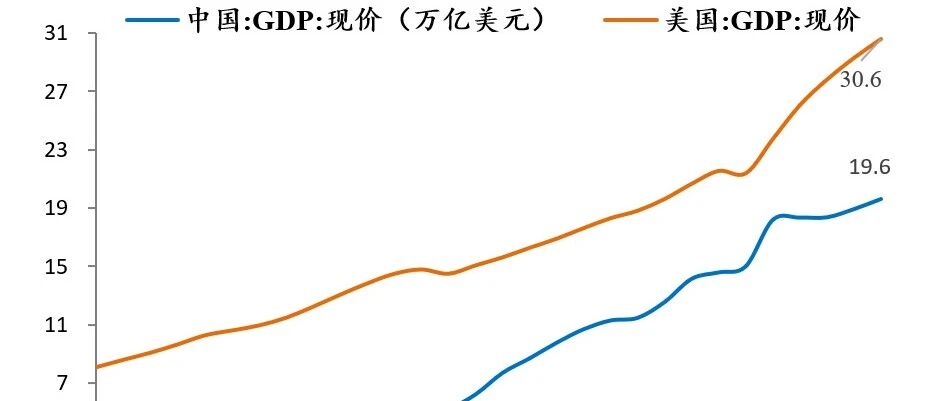
Core Viewpoints - China's economy is undergoing significant changes, with GDP approaching that of the largest economy globally and contributing over 30% to global economic growth in recent years [2][4][5] - The rise of AI and the competition for computing power are reshaping industries, necessitating breakthroughs in energy technology to meet future demands [2][21] Economic Growth and Structure - By 2025, China's GDP is projected to reach 140.2 trillion yuan (approximately 19.6 trillion USD), accounting for about 17% of the global economy, with a growth rate of 5% [4][5] - China's per capita GDP is expected to be 13,970 USD by 2025, nearing the high-income country threshold [9] - The contribution of the tertiary sector to GDP has reached a new high, with significant growth in modern service industries [9][15] Consumption Trends - Final consumption expenditure is projected to contribute 52% to GDP growth in 2025, indicating a shift towards consumer-driven growth [10][16] - The consumption market is expanding, with a focus on service and interest-based consumption, reflecting changing consumer preferences [15][19] - Policies aimed at boosting consumption are evolving from single-item incentives to comprehensive strategies that enhance income expectations and consumer environments [16][47] Infrastructure and Technology - China has a robust infrastructure, with the largest energy infrastructure globally and a rapidly growing digital economy, positioning itself as a leader in AI computing power [21][22] - The manufacturing sector remains dominant, with a projected industrial value added of 41.7 trillion yuan by 2025, maintaining its status as the world's largest manufacturing economy [22][23] Real Estate Market - The real estate sector is experiencing a bifurcation, with policies aimed at stabilizing the market and promoting urban renewal [29][30] - The urbanization rate is expected to reach 67.89% by 2025, indicating ongoing growth potential in urban development [31] Talent and Innovation - The demographic dividend is shifting towards a talent and engineering dividend, with a focus on innovation and high-quality development [34][35] - R&D investment is increasing, with a projected ratio of R&D expenditure to GDP reaching 2.8% by 2025, surpassing the OECD average [25] Policy Measures - Fiscal policies are becoming more proactive, with an emphasis on expanding domestic demand and optimizing economic structure through targeted investments [44][45] - Monetary policy is adopting a dual approach of overall easing and structural tools to support innovation and consumption [48][49]