
全自动驾驶

Search documents
特斯拉2月14日起停售FSD买断版,全面转向订阅制模式;阿维塔高管回应南宁撞车事故:排除车辆问题导致丨汽车交通日报
创业邦· 2026-01-14 10:10
Group 1 - Tesla's Cybertruck sales in the U.S. were only 20,237 units last year, nearly a 50% decline compared to 2024, with Q4 sales down 68% year-on-year, falling short of Elon Musk's annual target of 250,000 units before the vehicle's launch in 2023 [2] - Xiaomi Auto plans to conduct over 600 owner classes this year across more than 50 cities in China, with the first session's registration now open, and all classes will be free [2] - Avita Technology's VP confirmed that the recent car accident in Nanning was not caused by vehicle issues, as the vehicle was in manual driving mode during the incident, and the company is assisting the injured party with insurance claims [2] - Tesla will stop selling the FSD (Full Self-Driving) buyout version starting February 14, transitioning to a subscription-only model for this feature [2]



为实现55-60万的销量目标,小鹏准备了三手牌|36氪独家
3 6 Ke· 2026-01-14 07:54
Group 1 - Xiaopeng Motors has set a sales target of 550,000 to 600,000 units for 2026, representing a growth of approximately 28.1% to 39.7% compared to 429,400 units in 2025, requiring an average monthly delivery of over 45,800 to 50,000 units [2] - The company plans to launch seven new models with super-range configurations in 2026, including three super-range products and four new dual-energy models, with a focus on SUVs [2] - Xiaopeng's new models will emphasize upgrades in chips and AI software capabilities, with AI being highlighted as more valuable than traditional performance upgrades [3] Group 2 - The sales growth in 2025 was significantly supported by the low-priced pure electric model Mona M03, which contributed nearly a quarter of total sales, and Xiaopeng plans to enhance its product line in the mid-to-low-end market with new models [4] - The introduction of super-range versions allows Xiaopeng to lower vehicle prices, as the range extender system is cheaper than batteries, exemplified by the Xiaopeng X9 super-range version priced at 309,800 yuan, which is 50,000 yuan cheaper than the pure electric version [4] - Xiaopeng has locked in over one million units of self-developed chip capacity, transitioning existing models to the Turing chip, which offers higher computing power for intelligent driving applications [7] Group 3 - The competition in the automotive market is expected to intensify in 2026, with Xiaopeng and Leap Motor aiming for a combined sales target of 1.6 million units, indicating a need for market share to be taken from competitors like BYD and Geely [8] - Xiaopeng and Leap Motor must maintain competitive pricing while excelling in key performance indicators, with Xiaopeng focusing on the "smart driving" segment priced between 150,000 to 250,000 yuan [9] - Achieving high sales growth poses challenges in organizational and supply chain management, particularly as crossing the 500,000 sales threshold increases complexity and costs [10]

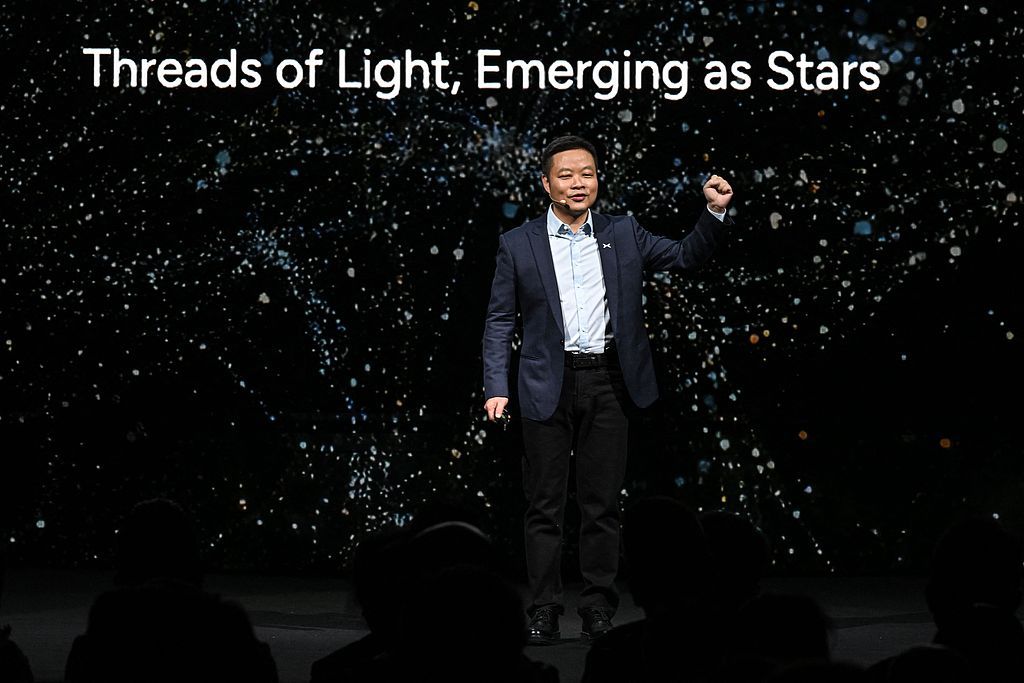
何小鹏:希望飞行汽车未来5到10年进入千家万户
Nan Fang Du Shi Bao· 2026-01-13 09:50
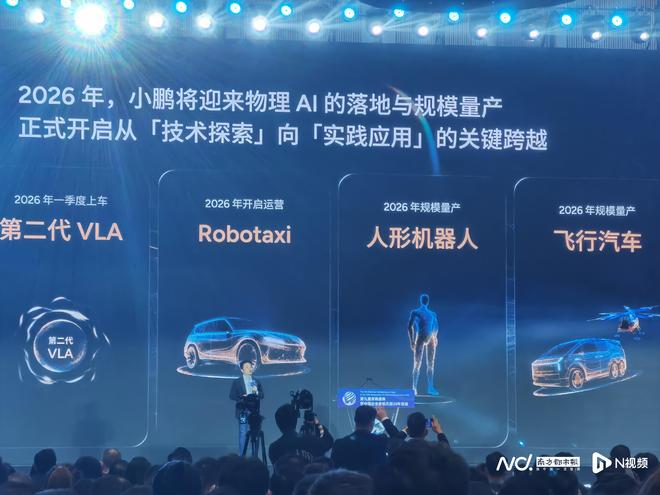
Group 1 - The core viewpoint is that 2026 will mark the year when China and the United States achieve fully autonomous driving, with XPeng Motors aiming for L4 level autonomous driving this year and initial production of Robotaxi [3][4] - XPeng Motors has invested billions of RMB in L4 development, transitioning from a software-driven model to a data and computing power-driven approach due to new AI paradigms [3] - The complexity of robotics is significantly higher than that of autonomous driving, with challenges in hardware reliability and durability being major obstacles for robots to enter commercial and household markets [3][4] Group 2 - XPeng Motors aims to achieve mass production of robots by the end of this year, initially focusing on basic roles such as sales and guidance, with the goal of fully AI-driven robots entering households in the future [4] - The company believes that the next decade for robotics could mirror the golden decade of electric vehicles from 2015 to 2025, with the market scale for robots potentially being several times larger than that of cars [4] - XPeng Motors has undergone significant leadership changes in its AI transformation, emphasizing the need for CEOs to understand and engage with AI to succeed in the industry [4][5] Group 3 - XPeng Motors is also focusing on flying cars, believing in technological equality that allows everyone to afford low-altitude flight [7] - The company has been working on flying cars for 13 years, noting that the supply chain for aircraft is 40 times more expensive than that for cars, making them particularly costly [7] - XPeng is developing two key initiatives in the flying car sector: integrating aircraft into cars and creating flying cars capable of traveling 500 kilometers or more [7]
何小鹏:未来最好的AI公司,都会自研芯片
3 6 Ke· 2026-01-12 07:10
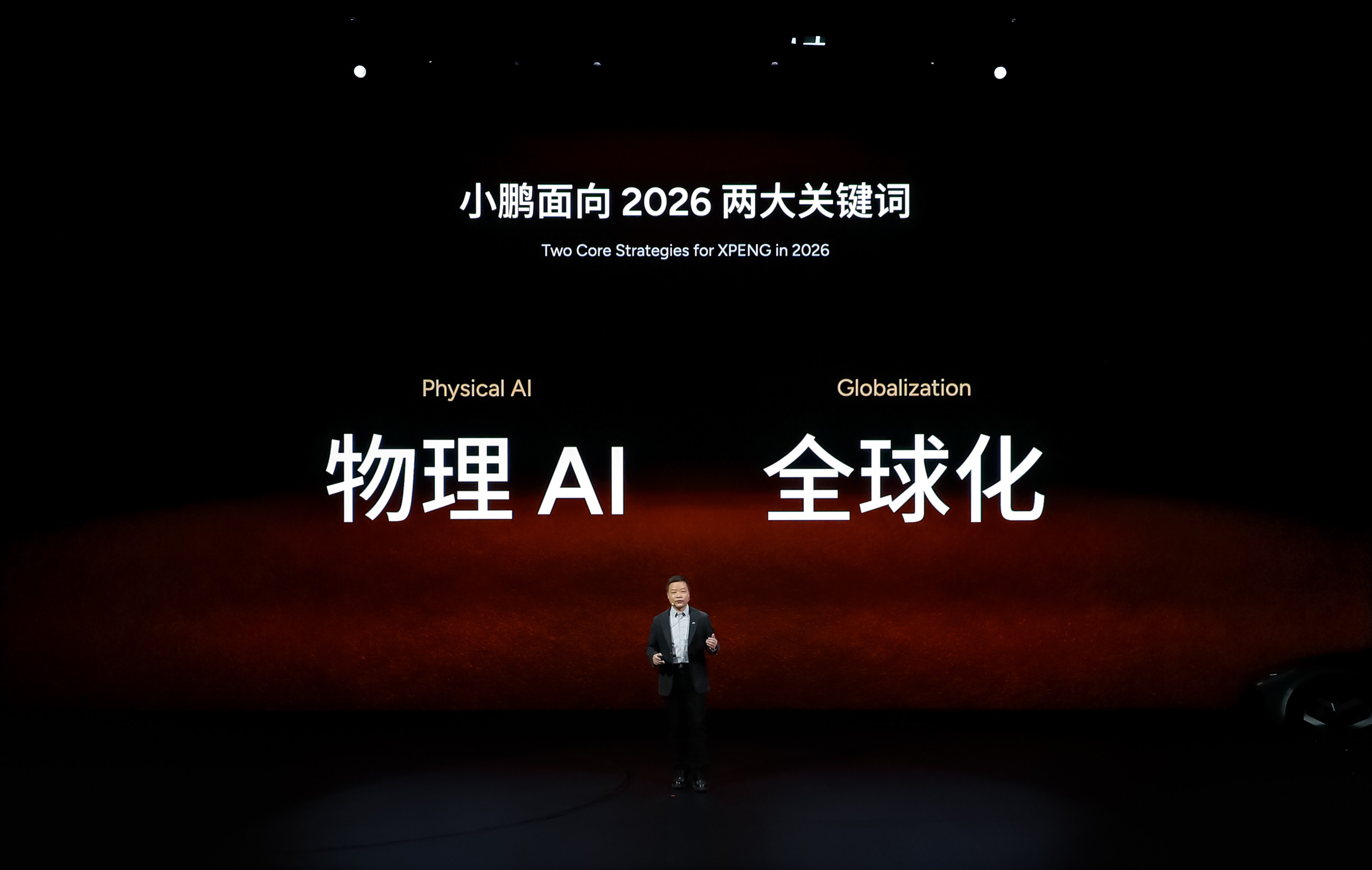
Core Viewpoint - Xiaopeng Motors is increasingly positioning itself as an AI company, focusing on software and AI capabilities rather than just hardware in its new vehicle releases [6][8]. Group 1: New Vehicle Launches - On January 8, 2026, Xiaopeng launched four new models: P7+, G7 extended range version, 2026 G6, and 2026 G9, all featuring self-developed Turing AI chips [6][7]. - The new models will utilize Xiaopeng's second-generation VLA model, enabling basic Level 4 (L4) assisted driving capabilities [6][7]. - The Turing chip in the MAX version has an effective computing power of 750 TOPS, while the Ultra SE version uses two Turing chips for intelligent driving, and the Ultra version uses three chips [7]. Group 2: Strategic Focus on AI - Xiaopeng's CEO emphasizes that the value of AI will surpass traditional performance upgrades, with software's contribution to vehicle value expected to rise from 10% to 50% over the next decade [8][14]. - The company is committed to developing both the models and the software for chips, believing that the best AI companies will choose to customize their chips [17]. Group 3: Market Position and Sales Strategy - Xiaopeng has sold over 400,000 vehicles in the past year, showing significant growth, and plans to expand its product lineup with multiple new models in 2026 [10][24]. - The company aims to enhance its global supply chain and channel management, with plans to expand into more countries and regions [9][10]. Group 4: Future Outlook and Challenges - The CEO predicts that 2026 will be a pivotal year for the automotive industry, with a significant shift towards AI integration in vehicles [14][20]. - Xiaopeng is aware of the competitive landscape in the Chinese automotive market and acknowledges the uncertainties associated with its AI strategy [7][8].
何小鹏再变策略:用增程赌现在,用AI搏未来
Xin Lang Cai Jing· 2026-01-12 04:12
Core Viewpoint - Xiaopeng Motors' CEO He Xiaopeng believes that 2026 will mark the true beginning of fully autonomous driving in both China and the U.S., positioning the company to transition from an automotive manufacturer to a physical AI enterprise [1] Group 1: Company Strategy and Performance - Xiaopeng Motors has undergone a three-year internal restructuring, focusing on cost reduction and efficiency, with a return to core automotive manufacturing principles [1] - In 2022, Xiaopeng Motors delivered 429,000 vehicles globally, a 126% year-on-year increase, surpassing competitors like Li Auto and Xiaomi, making it the second-largest among new car manufacturers [1] - The company plans to launch seven range-extended models this year, including the P7+ and G7 range-extended versions, which maintain pricing below 200,000 yuan [13] Group 2: Technological Advancements - He Xiaopeng emphasizes the rapid evolution of AI technology, predicting that software capabilities will increase from 10% to 50% of vehicle value over the next decade, significantly altering transportation methods [5] - The second-generation VLA (Vision-Language-Action) model, which eliminates the "language translation" step, is expected to enhance the vehicle's ability to respond to real-world interactions, improving decision-making in unfamiliar scenarios [6] - Xiaopeng Motors' self-developed Turing chip has begun mass production, with the new models featuring varying configurations of this chip to support advanced AI functionalities [10] Group 3: Market Challenges and Consumer Behavior - Despite advancements, the market perception of AI in vehicles has not yet aligned with the technological vision, as consumers remain focused on practical factors like range and cost-effectiveness [11] - The dual sales strategy of range-extended and pure electric vehicles may complicate the company's manufacturing and supply chain processes, potentially leading to brand confusion among consumers [14] - The market for range-extended vehicles is projected to decline, with a 1.1% drop in wholesale sales expected by 2025, indicating a shift in consumer preference towards pure electric vehicles [13]
汽车行业周报:吉利集团2025年总销量首次突破400万辆,智元机器人登顶全球人形机器人出货量榜首-20260111
KAIYUAN SECURITIES· 2026-01-11 13:47
Investment Rating - The investment rating for the automotive industry is "Positive" (maintained) [1] Core Insights - The automotive sector is experiencing significant growth, with notable performances from companies like Xpeng and Geely, which have reported substantial year-on-year increases in deliveries and sales [5][14] - The market is witnessing a shift towards electric vehicles (EVs), with a strong emphasis on autonomous driving technology and AI integration [13][14] - The overall automotive market in China is projected to continue its upward trajectory, with increasing penetration of new energy vehicles [19] Industry News - Xpeng delivered over 420,000 vehicles in 2025, marking a 126% year-on-year increase, and is focusing on full autonomous driving and physical AI production in 2026 [5][13] - Geely's total sales surpassed 4 million vehicles for the first time in 2025, achieving a 26% increase, with a 56% penetration rate for new energy vehicles [5][14] - GAC Group's sales fell by 14.06% in 2025, with GAC Toyota being the only brand to show growth [5][15] - Xiaomi's SU7 model became a bestseller in the 200,000+ yuan category, with over 360,000 units delivered [5][16] - Tesla's Shanghai Gigafactory produced its 5 millionth electric drive system, highlighting its significant role in global EV production [5][18] Market Performance - The automotive sector's performance in the A-share market showed a 2.73% increase, ranking 20th among primary industries [6][28] - The passenger vehicle index rose by 0.71%, while the commercial vehicle index increased by 3.14% [6] - The automotive parts index saw a 3.87% rise, with specific segments like electric control systems and bearings showing notable gains [6][38] Investment Recommendations - For passenger vehicles, there is a strong demand for high-end domestic luxury cars, with recommendations for companies like JAC Motors and Seres, while Geely is identified as a beneficiary [7] - In the automotive parts sector, profitability is expected to improve, with recommendations for companies such as Desay SV and Zhejiang Xiantong, and beneficiaries including Weichai Power and Fuyao Glass [7]

收官2025!全年零售超2300万辆 近八成A/H股上市车企完成销量增长
Xin Lang Cai Jing· 2026-01-09 12:01
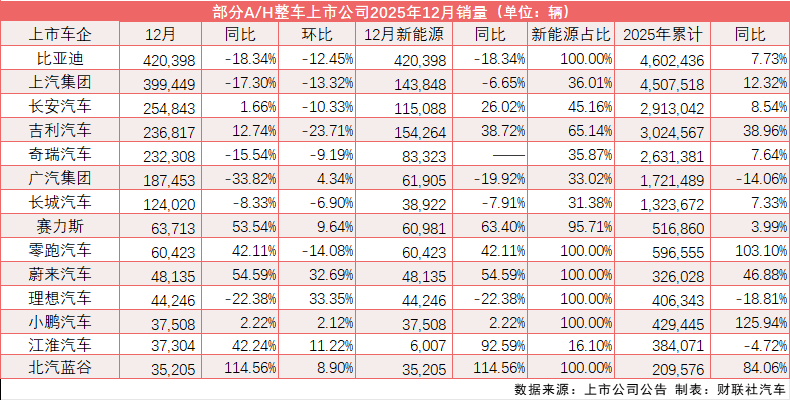
Core Insights - The overall retail sales of passenger cars in China for 2025 are projected to reach 23.744 million units, representing a year-on-year growth of 3.8% [1] - The market trend is expected to follow a "U-shaped" pattern, with a sustained demand for vehicle replacements in 2024-2025 [1] - The actual sales performance exceeded initial expectations, with a revised growth forecast for the passenger car market [1] Company Performance - BYD leads the market with a total sales volume of 4.602 million units in 2025, with overseas sales reaching 1.05 million units, a 145% increase year-on-year [3] - SAIC Motor follows closely with 4.507 million units sold, marking a 12.32% increase, driven by its transition to new energy vehicles and expansion in overseas markets [4] - Geely's total sales reached 3.025 million units, a growth of 38.96%, with new energy vehicle sales increasing by 90% [4] - Changan Automobile sold 2.913 million units, up 8.54%, benefiting from the synergy of multiple new energy brands [5] - Chery Automobile achieved sales of 2.631 million units, a 7.64% increase, with notable export performance [5] - Great Wall Motors sold 1.324 million units, a growth of 7.33%, with significant increases in new energy and overseas sales [5] New Energy Vehicle Trends - New energy vehicle sales for SAIC reached 1.643 million units, a 33.1% increase, contributing to a historical high [4] - Geely's new energy vehicle sales are projected to reach 2.22 million units in 2026, indicating a penetration rate increase from 55.8% to 64.3% [4] - New entrants like Leap Motor and Xpeng Motors are experiencing rapid growth, with Leap Motor achieving a 103.1% increase in annual deliveries [6] - Xpeng Motors delivered 429,000 units, a 125.94% increase, and plans to launch several new models in 2026 [6] Market Outlook - The passenger car market is expected to maintain a steady performance in 2026, with overall sales projected to be flat compared to 2025 [2] - Export growth for passenger vehicles is anticipated to remain above 10% [2] - The market for small electric vehicles is expected to slow down, with growth projected at around 10% due to policy impacts [8]

小鹏连发4款新车,用多线动作应对“巨大改变” | 电厂
Xin Lang Cai Jing· 2026-01-09 10:36
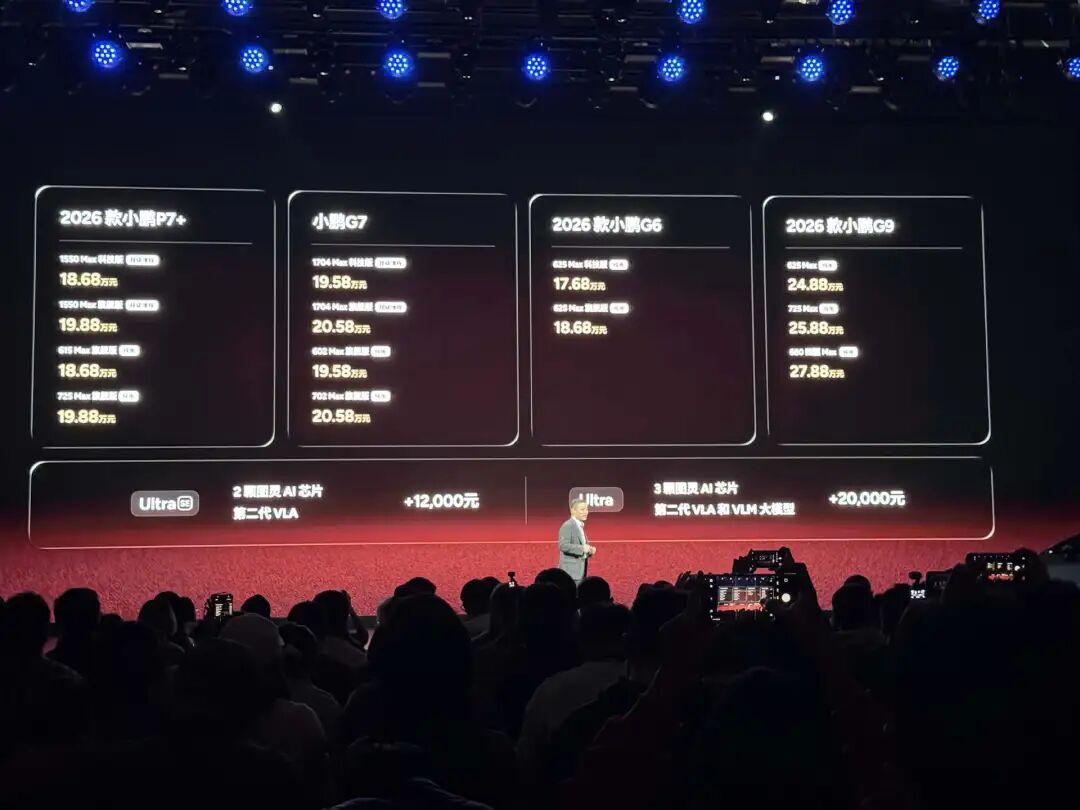
Core Insights - Xiaopeng Motors has officially entered a dual technology path of "pure electric + range extender" with the launch of multiple new models and technology updates at its 2026 Spring Product Launch, including the 2026 P7+, G7, G6, and G9 [1][2] Product Launch and Pricing - The 2026 P7+ and G7 are available in both pure electric and range extender versions, with starting prices of 186,800 RMB and 195,800 RMB respectively; the G6 starts at 176,800 RMB, and the G9 starts at 248,800 RMB [1] - The P7+ range extender version has a CLTC pure electric range of 430 km and a comprehensive range of 1,550 km, while the G7's comprehensive range reaches 1,704 km [8][10] Technological Advancements - Xiaopeng has introduced the second-generation VLA model, which eliminates the "language translation" step, allowing direct generation of control commands from visual signals, enhancing the system's ability to handle complex scenarios [2][3] - The second-generation VLA is trained on approximately 100 million real road videos, equating to thousands of years of human driving experience, and operates with a maximum computing power of 2,250 TOPS [2][3] Market Strategy and Global Expansion - Xiaopeng's "super range extender" strategy aims to expand the market reach, with the X9 super range extender achieving a record delivery of 5,424 units in December [8][12] - The company has reported a 126% year-on-year increase in global deliveries, totaling 429,400 units in 2025, and has entered 60 countries, establishing a presence in multiple European markets [12] Localization and Charging Infrastructure - Xiaopeng is focusing on local R&D and production, with nine global R&D centers and several overseas production projects underway, positioning the P7+ as the first "global car" [12] - The charging network has expanded to cover 31 countries and regions, with over 2.66 million public charging stations and a self-operated network in over 430 cities [12]
一口气发布4款新车,何小鹏向海外要增量
Xin Lang Cai Jing· 2026-01-09 10:00
Core Insights - Xiaopeng Motors launched four new models at the 2026 global product launch, including the 2026 P7+, G7, G6, and G9, expanding its range of extended-range vehicles [1][4] - The company is adopting a "large battery + large fuel tank + ultra-fast charging" strategy for its extended-range products, with the P7+ and G7 offering significant total ranges [1][3] - Xiaopeng's second-generation VLA (Virtual Large Model) technology is set to enhance its autonomous driving capabilities, with plans for public road testing of Robotaxi soon [2][3] Product Launch Details - The 2026 P7+ is priced between 186,800 to 198,800 yuan, while the G7 is priced between 195,800 to 205,800 yuan, and the G6 ranges from 176,800 to 186,800 yuan [1] - The G9 has three pure electric versions priced between 248,800 to 278,800 yuan [1] - The P7+ and G7 both have a pure electric range of 430 km, with total ranges of 1550 km and 1704 km respectively [1] Technology Advancements - The Ultra and Ultra SE versions of the new models feature self-developed second-generation VLA and advanced AI chips, enhancing their autonomous driving capabilities [2] - The second-generation VLA eliminates the "language translation" step, allowing for direct generation of action commands from visual signals [3] - The company aims to broaden the upper limits of technology while addressing the challenges faced in the past three years [3] Market Strategy - Xiaopeng's sales in overseas markets reached 45,008 units in 2025, a 96% increase, indicating a strong push for globalization [5][6] - The company has established a presence in 60 countries and regions, with local production projects in Germany, Indonesia, and Malaysia [6][7] - The strategy includes expanding into western and northern markets, as well as lower-tier markets in China [7][8] Future Plans - In 2026, Xiaopeng plans to introduce four new global SUV models and enhance its global supply chain management [7][8] - The company anticipates that its overseas growth rate will surpass domestic growth in the coming year [7]
小鹏汽车加快“纯电+增程”车型布局 Robotaxi即将开启公开道路测试
Zhong Zheng Wang· 2026-01-09 02:02
Core Viewpoint - Xiaopeng Motors is positioning 2026 as a significant year for product launches, introducing four new models and expanding its business into diverse areas such as Robotaxi operations and humanoid robots [1] Group 1: New Product Launches - Xiaopeng Motors unveiled four new vehicles at the 2026 Global New Product Launch, including the 2026 P7+, G7, G6, and G9, with the first two models available in both pure electric and range-extended versions [1] - The company plans to launch four new SUVs in 2026, emphasizing its commitment to a diverse product lineup [1] Group 2: Business Strategy - The company is accelerating its "pure electric + range-extended" strategy, having introduced its first range-extended vehicle in November 2025 [1] - Xiaopeng Motors aims to enhance its autonomous driving capabilities by upgrading driver assistance to achieve Level 4 (L4) autonomy [1][3] Group 3: Technology Development - The latest models will feature the second-generation Visual Language Action (VLA) model, which is designed to enable L4 capabilities and improve the understanding of real-world scenarios [1][2] - The second-generation VLA eliminates the "language translation" step, allowing for direct generation of action commands from visual signals, enhancing the vehicle's operational capabilities [2]