反补贴税

Search documents
欧盟委员会接受大众中国产纯电汽车价格承诺
Xin Lang Cai Jing· 2026-02-10 14:55
Core Viewpoint - The European Commission has accepted Volkswagen's price commitment for electric vehicle exports, allowing Volkswagen (Anhui) Co., Ltd. to export its CUPRA Tavascan model to the EU at or above a specified minimum import price, exempting it from previously imposed countervailing duties on electric vehicle imports from China [1] Group 1: Price Commitment and Exemptions - Volkswagen has proposed a minimum import price for the CUPRA Tavascan model, which the European Commission has deemed will not harm the EU industry, leading to the acceptance of the price commitment [1] - The price commitment is a voluntary arrangement where exporters agree to sell products at or above the minimum import price to avoid countervailing duties [1] Group 2: Export Quantity and Investment - In addition to adhering to the minimum import price, Volkswagen has committed to limiting the quantity of vehicles exported to the EU [1] - Volkswagen will invest in several significant projects related to electric vehicles in the EU, with clear milestones to support the EU's industrial strategy and climate transition goals [1] Group 3: Compliance and Consequences - The European Commission can revoke the price commitment and retroactively impose duties if Volkswagen fails to comply with the terms, including not meeting the agreed investment milestones [1]
“价格承诺”方案落地,中欧电动汽车反补贴案出结果
Sou Hu Cai Jing· 2026-01-15 12:55
Core Viewpoint - The EU has made significant progress in negotiations with China regarding anti-subsidy tariffs on electric vehicles, replacing high tariffs with a "price commitment" mechanism, which is seen as a positive signal for managing trade frictions between the two parties [1][3][12]. Group 1: Negotiation Outcomes - The "price commitment" mechanism is a major outcome of multiple rounds of negotiations between China and the EU, indicating a mutual effort to enhance cooperation in the automotive industry [3][12]. - The EU will provide general guidance for Chinese exporters of pure electric vehicles to comply with WTO rules, allowing for a more practical approach to address concerns [1][5]. - The agreement is viewed as a pragmatic breakthrough that stabilizes market access and expectations for the industry [3][4]. Group 2: Impact on Tariffs and Pricing - Previously proposed high anti-subsidy tariffs could have reached nearly 45%, significantly impacting the cost and pricing structure for Chinese electric vehicle exports to Europe [4][5]. - The EU's decision to adopt the "price commitment" mechanism aims to avoid imposing tariffs as high as 35.3%, allowing Chinese companies to maintain a competitive edge in the EU market [4][8]. - The "price commitment" will require Chinese exporters to set minimum export prices that are higher than previous levels, which may affect sales volumes but ultimately retains profits within the companies [6][7]. Group 3: Industry Implications - The new mechanism is expected to help Chinese electric vehicle manufacturers avoid the negative impacts of high tariffs, thus enhancing their profitability and market presence in Europe [7][10]. - The agreement encourages a shift away from a "low-price volume" strategy towards a focus on high-end products and local production in Europe [9][10]. - The established legal standards and evaluation processes in the guidance document are anticipated to regulate pricing behavior and reduce trade friction risks [10][11]. Group 4: Industry Associations' Reactions - Various industry associations, including the China Association of Automobile Manufacturers, have expressed strong support for the resolution of the EU's anti-subsidy case, highlighting its importance for stable economic and trade relations [11][12]. - The consensus reached is seen as a response to industry concerns and is expected to promote healthy development in China-EU economic and trade cooperation [12][13].


中国对原产于美韩的进口太阳能级多晶硅继续征收反倾销税
Zhong Guo Xin Wen Wang· 2026-01-13 17:22
Core Viewpoint - The Chinese Ministry of Commerce announced the continuation of anti-dumping duties on imported solar-grade polysilicon from the United States and South Korea, effective January 14, 2026, for a period of five years, with rates ranging from 53.3% to 57% for U.S. companies and 4.4% to 113.8% for South Korean companies [1] Group 1 - The Ministry of Commerce will conduct a final review investigation of the anti-dumping measures applicable to imported solar-grade polysilicon from the U.S. and South Korea starting January 14, 2025 [1] - The Ministry determined that if the anti-dumping measures are terminated, the dumping of solar-grade polysilicon from the U.S. and South Korea may continue or recur, potentially causing further harm to China's solar-grade polysilicon industry [1] - The Ministry also announced the continuation of countervailing duties on imported solar-grade polysilicon from the U.S., effective January 14, 2026, for five years, with rates ranging from 0% to 2.1% for U.S. companies [1] Group 2 - Solar-grade polysilicon is primarily used in the production of solar-grade monocrystalline silicon rods and directional solidification multicrystalline silicon ingots, serving as the main raw material for crystalline silicon photovoltaic cells [1]

EU guidance sets price undertaking route for Chinese EV imports
Yahoo Finance· 2026-01-13 13:04
Core Viewpoint - The European Commission has provided guidance for Chinese electric vehicle (EV) exporters to avoid EU anti-subsidy duties by submitting price undertakings based on minimum import prices [1][4]. Group 1: Guidance on Price Undertakings - The guidance outlines the structure and content required for price undertaking offers, including minimum import prices, product scope, annual sales volumes, distribution channels, and risks related to cross-compensation [2][5]. - All price undertaking offers will be evaluated under the same legal standards as per the EU's basic anti-subsidy Regulation, ensuring an objective and non-discriminatory assessment process aligned with World Trade Organization (WTO) rules [3][4]. Group 2: Assessment Criteria - Acceptable undertakings must eliminate the harmful effects of subsidization, be practical, limit cross-compensation risks, and comply with broader policy considerations [3]. - Minimum import prices can be determined by adjusting historical costs, insurance, and freight prices or by referencing sales prices of comparable non-subsidized BEVs produced in the EU [5]. Group 3: Submission and Evaluation Process - Chinese exporters can submit price undertaking offers individually or jointly, with each proposal evaluated on its own merits [6]. - The China Chamber of Commerce to the EU (CCCEU) stated that the outcome of the China-EU consultations supports trade stability and reflects business concerns, emphasizing the importance of dialogue in dispute management [6][7]. Group 4: Market Impact - CCCEU believes that the constructive outcome will enhance market confidence, create a stable environment for Chinese EV manufacturers in Europe, and foster deeper cooperation between China and the EU in market development and technological innovation [7].
中欧电动汽车案磋商达成积极成果
Cai Jing Wang· 2026-01-13 09:08
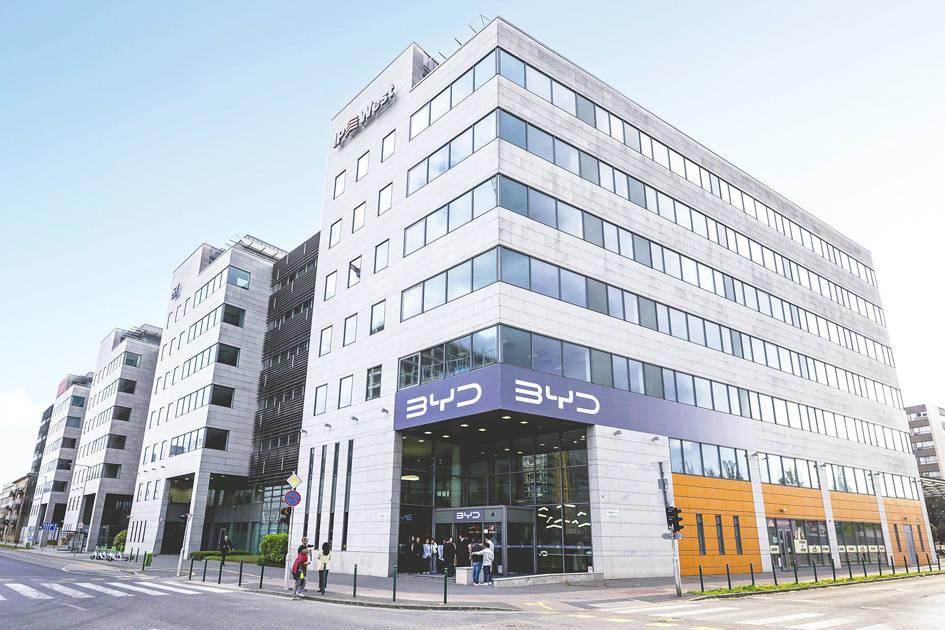
Core Viewpoint - The EU-China Electric Vehicle anti-subsidy negotiations have made significant progress, emphasizing that the competitiveness of China's electric vehicle industry stems from continuous technological innovation and market competition, rather than subsidies [1][2]. Group 1: Negotiation Progress - The EU and China have engaged in multiple rounds of negotiations to address the EU's concerns regarding electric vehicles, aiming for a "soft landing" in the anti-subsidy case [1]. - The EU has issued guidance for Chinese exporters on submitting price commitment applications, which will allow them to address concerns in a WTO-compliant manner [1][3]. - The EU-China Chamber of Commerce welcomed the dialogue-driven approach to resolving the electric vehicle case, highlighting its importance for bilateral trade and investment cooperation [1]. Group 2: Price Commitment Framework - The EU has confirmed that it will evaluate price commitment applications based on objective and non-discriminatory principles, adhering to WTO rules [5]. - Two methods for determining minimum prices have been outlined: one based on the CIF price during the investigation period plus the applicable anti-subsidy tax rate, and the other based on the sales price of similar electric vehicles produced within the EU [5]. - Exporters may also make annual export quantity commitments to mitigate cross-subsidy risks, which will further strengthen the response to subsidy damages [5]. Group 3: Impact of Anti-Subsidy Tax - Despite the anti-subsidy tax, the market share of Chinese electric vehicles in the EU has increased from 7% in 2024 to 7.6% in the first eight months of 2025 [8]. - Several Chinese automakers are establishing local production in Europe to avoid tariffs, which will be a significant factor in price commitment negotiations [9]. Group 4: Investment Commitments - Investment commitments in local manufacturing will be positively considered in the evaluation of price commitment proposals, reflecting a broader industrial policy issue rather than just a trade dispute [9]. - Chinese electric vehicle companies have announced various investment and production plans in the EU following the introduction of the anti-subsidy tax, including BYD's establishment of a European headquarters and R&D center in Budapest [9].




东兴证券晨报-20251225
Dongxing Securities· 2025-12-25 10:00
Economic News - The People's Bank of China emphasizes the continuation of a moderately loose monetary policy to promote stable economic growth and reasonable price recovery [2] - The State Administration for Market Regulation issues a plan for the special governance of the quality and safety of industrial products sold online from 2025 to 2027 [2] - In November, China's total electricity consumption reached 835.6 billion kWh, a year-on-year increase of 6.2%, with high-tech and equipment manufacturing industries seeing a 6.7% increase [2] - The Ministry of Commerce announces increased policy support for foreign trade innovation and development [2] - The Chinese Foreign Ministry firmly opposes the U.S. plans to impose tariffs on China's semiconductor industry starting in 2027 [2] - Beijing's housing authorities relax home purchase conditions for non-local families and support housing needs for families with multiple children [2] Company News - Springlight Technology receives OEM/ODM orders for "W1" and "M1" robot products from Lexiang Technology, amounting to 43.2628 million yuan [3] - Wankai New Materials' subsidiary, Qing Magnesium Smart Plastic, signs a procurement contract with Lingxin Qiaoshou for lightweight components and assembly services, totaling 10 million yuan [3] - Nanshan Aluminum establishes a wholly-owned subsidiary in Hainan with an investment of 5 million yuan to expand high-end aluminum product development and trade [3] - Sunshine Nuohuo signs a technology development contract with Zhejiang Xinghao, with a total payment of 500 million yuan, including an 8% sales share [5] - Jiaheng Home Products' controlling shareholder is planning a change in control, leading to a temporary suspension of trading [5] Industry Research Agriculture and Animal Husbandry - The Ministry of Commerce announces anti-dumping duties on EU pork imports, effective from December 17, 2025, with rates ranging from 4.9% to 19.8% [6] - EU pork imports account for 51% of China's total pork imports, but only 2.03% of total consumption, indicating a limited impact on overall supply [7] - The anti-dumping duties are expected to increase the cost of EU pork imports, leading to a decrease in import volumes and a diversification of import sources [7] - Despite the anti-dumping measures, domestic supply and demand dynamics will continue to influence pork prices, with an oversupply expected to persist [8] - The report recommends focusing on leading companies in the pig farming industry, such as Muyuan Foods, as the market dynamics improve [8] Food and Beverage - The Chinese Ministry of Commerce initiates temporary anti-subsidy measures on EU dairy products, with preliminary subsidy rates between 28.6% and 42.7% [10][11] - The affected dairy products include cream and cheese, which have significantly impacted domestic producers' profitability [12] - The average price of fresh milk in China remains low at 3.03 yuan/kg, putting pressure on dairy companies [13] - The anti-subsidy measures are expected to create market opportunities for domestic dairy processing companies, benefiting firms like Lihai and Miao Ke Landuo [13]

突发特讯!马克龙拒不接受中国反制,紧急要求欧盟27国一致对华,引发全球高度关注
Sou Hu Cai Jing· 2025-12-25 07:10
Group 1 - The core issue revolves around China's imposition of temporary anti-subsidy duties on EU dairy products, ranging from 21.9% to 42.7%, which has prompted a strong response from France and calls for a unified EU stance against China [1][3] - This action is part of an ongoing trade friction between China and the EU, mirroring the EU's previous anti-subsidy measures on Chinese electric vehicles, which were implemented to protect local industries [3][5] - The affected EU dairy products include high-value items such as cream and cheese, with varying tax rates based on cooperation levels from different companies, indicating a strategic approach to encourage compliance [5][10] Group 2 - France's rapid and strong reaction is attributed to its significant agricultural sector, which is heavily impacted by trade policies, as seen in previous investigations and tariffs on French brandy and pork [7][8] - The French government is under pressure to maintain agricultural stability and political cohesion, with President Macron advocating for a stronger EU response to trade imbalances with China [10][11] - The EU's internal divisions regarding trade dependencies and vulnerabilities complicate the formation of a unified front against China, as member states have differing interests and levels of reliance on Chinese markets [11][18] Group 3 - The ongoing trade conflict highlights the importance of technical negotiations and the potential for limited decoupling rather than a complete severance of trade ties, as both sides seek to manage their respective industries and political costs [13][16] - There is a possibility for both parties to reach a structured resolution through mechanisms like price commitments or differentiated tax rates, which could mitigate the intensity of the conflict [13][18] - The outcome of this trade dispute will depend on the ability of both sides to navigate their vulnerabilities and find common ground, with the potential for a more manageable divergence rather than outright confrontation [18][20]
道指跌超550点 比特币跌破9.2万美元;俞敏洪南极旅游发全员信引争议;联想控股CEO换人丨每经早参
Mei Ri Jing Ji Xin Wen· 2025-11-17 22:42
Market Overview - US stock markets experienced a collective decline, with the Dow Jones falling by 557 points (1.18%), the S&P 500 down by 0.92%, and the Nasdaq Composite decreasing by 0.84% [5] - Major technology stocks mostly declined, with AMD and Intel dropping over 2%, while Google saw an increase of over 3% [5] - Cryptocurrency market continued its downward trend, with Bitcoin falling to $91,700, a decrease of nearly 3% [6] Commodity Prices - International gold prices significantly decreased, with spot gold down by 0.91% to $4,044.67 per ounce [7] - International oil prices also fell, with WTI crude oil down by 0.57% to $59.75 per barrel [8] Corporate Developments - Huawei announced the launch of the Mate 80 series and other new products, with a release event scheduled for November 25 [20] - Alibaba launched the "Qianwen" app, entering the AI to C market, aiming to compete with ChatGPT [22] - JD.com announced the launch of an independent app for its food delivery service, with a commitment to keep its review platform non-commercial [23] - Xpeng Motors reported a third-quarter revenue of RMB 20.38 billion, a year-on-year increase of 101.8% [26] - Lenovo Holdings announced a leadership change, with Li Peng resigning as CEO and Yu Hao appointed as the new CEO [28] Regulatory and Economic Updates - The Ministry of Finance reported that from January to October, the national general public budget revenue reached RMB 186.49 billion, a year-on-year increase of 0.8% [13] - The Ministry of Commerce initiated a final review investigation on anti-subsidy measures for imported propanol from the US [14] International Relations - Chinese officials expressed strong opposition to US arms sales to Taiwan, emphasizing the violation of the One China principle [11] - The Chinese Foreign Ministry responded to Japanese Prime Minister's comments on Taiwan, urging Japan to adhere to its commitments regarding Taiwan [12]

商务部:对原产于美国的进口正丙醇继续征收反补贴税
Zheng Quan Shi Bao Wang· 2025-11-17 07:36
Core Points - The Ministry of Commerce announced the imposition of countervailing duties on imports of n-propanol originating from the United States, with rates ranging from 34.2% to 37.7% effective from November 18, 2020, for a period of five years [1] - A final review investigation of the countervailing measures will be conducted starting November 18, 2025, as per the provisions of the Countervailing Regulations of the People's Republic of China [1] - During the final review investigation period, the countervailing duties will continue to be applied according to the previously announced rates and product scope [1]
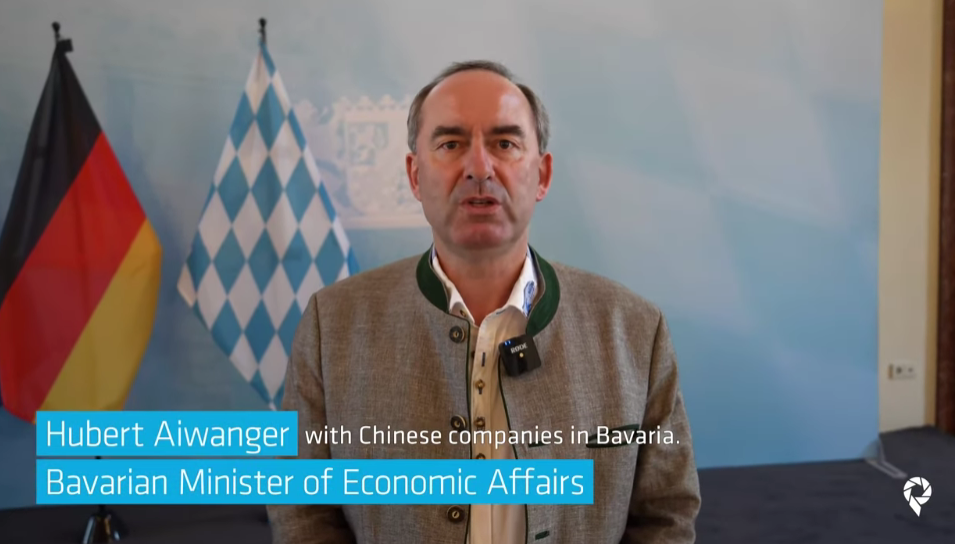
欢迎中国投资,德国巴伐利亚州副州长:既然欧洲人想买中国货,为何不让中企在这生产?
Guan Cha Zhe Wang· 2025-09-13 11:34
Group 1 - The article discusses the historical context of Bavaria's relationship with China, highlighting the first visit of a German political figure to China in 1975 and its significance in establishing economic ties [1] - Bavaria is recognized as a major economic hub in Germany, with a GDP of approximately €716.8 billion in 2022, accounting for over 18% of Germany's total GDP [4] - In 2023, trade between Bavaria and China reached €53 billion, with Bavarian exports to China at €17 billion and imports from China at nearly €36 billion [4] Group 2 - The Bavarian government, represented by Hubert Aiwanger, continues to welcome Chinese investments despite increasing tensions between China and Europe, emphasizing the need for economic resilience [1][2] - Approximately 500 Chinese companies operate in Bavaria, contributing to thousands of jobs, with investments expanding beyond the automotive sector into aerospace, energy, telecommunications, electronics, and biotechnology [5] - Aiwanger criticizes the EU's anti-subsidy tariffs on Chinese electric vehicles, advocating for a solution through negotiation rather than protectionism [6][7] Group 3 - Chinese companies like NIO and Xiaomi have established a presence in Bavaria, with NIO setting up a global design center in Munich, benefiting from the region's automotive industry cluster [8] - The recent IAA MOBILITY 2025 exhibition showcased the competitive landscape between Chinese and European automotive manufacturers, highlighting the advancements made by Chinese companies in various technologies [9] - Aiwanger expresses hope for continued bilateral cooperation between Bavaria and China, aiming for mutual benefits in economic interactions [10]