国际化拓展

Search documents
海尔生物2025年三季报发布:新产业营收占比近半 海外市场高增长持续
Zheng Quan Ri Bao Wang· 2025-10-31 02:49
Core Viewpoint - Haier Biomedical has shown significant performance recovery in Q3 2025, driven by strong revenue growth and improved profitability, indicating a positive trend in the life sciences and medical device sectors as they transition towards international expansion and technological innovation [1][2]. Group 1: Financial Performance - In Q3 2025, Haier Biomedical achieved a revenue of 566 million yuan, representing a year-on-year increase of 1.24% and a quarter-on-quarter increase of 11.68% [1]. - The net profit attributable to shareholders reached 55.65 million yuan, with a quarter-on-quarter growth exceeding 70% [1]. - The non-recurring net profit was 49.99 million yuan, showing a quarter-on-quarter increase of over 100% [1]. Group 2: Industry Trends - The life sciences sector is entering a new phase of valuation recovery and industrial upgrading after a decade of development, supported by supply clearing, demand recovery, and accelerated domestic substitution [2]. - Haier Biomedical's performance recovery is attributed to revenue growth, business structure upgrades, and enhanced product competitiveness [2]. Group 3: Business Segments - The recovery in Q3 is supported by four key industries: low-temperature storage, smart medication, blood technology, and laboratory solutions, which have begun to show stable performance [3]. - New industries, particularly smart medication and blood technology, have demonstrated significant growth, contributing to approximately 48% of total revenue [3]. - The smart medication segment has established itself among the top three in the automated medication market by addressing hospital drug management challenges [3]. Group 4: Market Position and Innovation - The low-temperature storage segment continues to maintain a leading market share in China, with steady growth in revenue [4]. - Haier Biomedical's commitment to technological innovation is evident in its AI integration and the establishment of a multi-layered AI foundation, enhancing its product offerings and market responsiveness [5][6]. - The company reported a 20.18% year-on-year increase in overseas market revenue, reaching 634 million yuan, with successful localization strategies implemented in 18 countries [6].

东方雨虹2025三季报:营收206亿元,现金流大幅改善184%,海外战略成效显现
Ge Long Hui· 2025-10-27 13:46
Core Insights - The company reported a steady overall performance with a total revenue of 20.601 billion and a net profit attributable to shareholders of 0.810 billion for the first three quarters of 2025, with a notable recovery in Q3 where revenue reached 7.032 billion, marking an 8.51% year-on-year increase [1] - The growth is driven by the company's deep engagement in multiple sectors and international expansion, focusing on areas such as construction waterproofing, building materials, mortar powder, coatings, piping, and anti-corrosion [1] - The company has effectively mitigated market fluctuations through continuous optimization of product structure, deepening channel networks, and enhancing service value across the entire supply chain, showcasing strong operational resilience and growth potential [1] Financial Performance - The net cash flow from operating activities turned positive and saw significant growth, reaching 0.416 billion for the first three quarters of 2025, with a year-on-year increase of 184.56% [2] - In Q3 alone, the net cash flow from operating activities was 0.812 billion, indicating a substantial improvement in cash flow [2] - The enhancement in cash flow is attributed to improved collection of receivables, reduced cash payments for goods and services, and lower cash payments to employees and for other operational activities, reflecting the company's solid market position and resilient business model [2]

华测检测_ 创新业务、国际化拓展、精益管理“三箭齐发”;利润或恢复到两位数增长
2025-10-23 13:28
Summary of Conference Call Records for 华测检测 (China National Testing and Certification Corporation) Company Overview - **Company Name**: 华测检测认证集团股份有限公司 (China National Testing and Certification Corporation) - **Founded**: 2003 - **Headquarters**: Shenzhen, China - **Industry**: Third-party testing, inspection, and certification (TIC) services - **Global Presence**: Over 150 laboratories in more than 90 cities worldwide - **Employee Count**: Over 11,000 Key Points and Arguments Industry and Market Position - The company is a pioneer and leader in the TIC services sector in China, being the first listed company in this industry [doc id='17'][doc id='19'] - The national testing and certification industry is projected to grow, with a revenue increase of 4.4% year-on-year to Rmb 487.6 billion in 2024 [doc id='11'] Financial Performance and Projections - **Revenue Growth**: Expected to achieve a CAGR of 12% from 2025 to 2028, driven by expansion into fast-growing and innovative sectors, international business development, and lean management practices [doc id='9'][doc id='11] - **Profitability**: Net profit margin is projected to improve from 14.2% in 2024 to 14.8% in 2027, supported by lean management and scale effects from small business growth [doc id='10] - **Earnings Forecast**: - 2025E Net Profit: Rmb 961 million - 2026E Net Profit: Rmb 1,084 million - 2027E Net Profit: Rmb 1,237 million - 2028E Net Profit: Rmb 1,570 million [doc id='7'] Strategic Initiatives - **"123" Strategy**: Focus on stabilizing mature businesses, accelerating fast-growing sectors, and incubating innovative businesses [doc id='2'] - **International Expansion**: Aiming for overseas revenue to account for 20% by 2030, with current overseas revenue at 7% [doc id='2] - **New Market Ventures**: Actively exploring opportunities in emerging markets such as food contact materials testing and humanoid robotics [doc id='2'] Recent Developments - Successful integration and restructuring of the subsidiary 蔚思博, addressing previous operational challenges [doc id='3] - Entry into the new energy vehicle testing sector through the German subsidiary 易马, establishing laboratories for battery functionality and reliability [doc id='3'] Valuation and Investment Outlook - **Target Price**: Increased from Rmb 15.30 to Rmb 17.30, based on DCF valuation method with a WACC of 7.8% [doc id='4'] - **Current Stock Price**: Rmb 14.23 as of October 20, 2025 [doc id='5'] - **Investment Rating**: Maintained as "Buy" due to expected double-digit profit growth over the next three years [doc id='1] Risks and Challenges - **Regulatory Risks**: The TIC industry is heavily influenced by government policies, which can impact the speed of industry development [doc id='19'] - **Integration Risks**: Challenges in integrating acquired companies may lead to underperformance and potential goodwill impairment [doc id='19'] - **Expansion Risks**: New business ventures in pharmaceuticals, semiconductors, and automotive sectors may not grow as quickly as anticipated, potentially diluting profitability [doc id='19'] Additional Insights - The company is focusing on enhancing operational efficiency through digital transformation and AI integration [doc id='1] - The competitive advantage lies in its leading testing capacity, comprehensive service capabilities, and advanced human resource systems [doc id='9] This summary encapsulates the essential insights from the conference call records, highlighting the company's strategic direction, financial outlook, and potential risks in the context of the TIC industry.

骨科抢眼、出海加速 医疗器械企业寻路“拐点”
2 1 Shi Ji Jing Ji Bao Dao· 2025-09-04 23:21
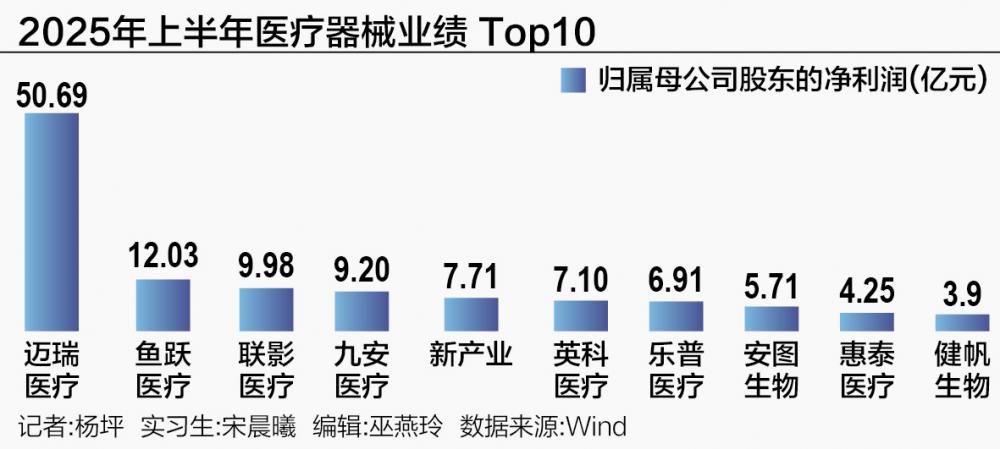
Core Viewpoint - The Chinese medical device industry faced a challenging yet opportunity-filled first half of 2025, with a decline in overall performance due to complex global macroeconomic conditions, despite signs of recovery in medical equipment procurement [1][2]. Industry Performance - In the first half of 2025, 131 A-share medical device companies reported a total revenue of 1188.17 billion yuan, a decrease of 4.29% from 1241.43 billion yuan in the previous year. Net profit fell by 17.17% to 188.12 billion yuan from 227.11 billion yuan [1]. - The in vitro diagnostics sector experienced significant downturns, with over 80% of companies reporting declining performance, including major players like Mindray Medical, which saw its first negative mid-year report since listing [1]. Growth Areas - Despite the overall decline, certain sectors such as orthopedics and cardiovascular devices showed rapid growth, with companies like Sanyou Medical and Dabo Medical achieving revenue growth rates exceeding 40% [1]. - The electrophysiology sector also performed well, with companies like Huitai Medical and Microelectrophysiology reporting net profit increases of 24.11% and 92.02%, respectively [4]. International Market Expansion - The overseas market has become a crucial growth path for leading companies, with significant revenue increases reported by companies like Ruimait and Yuyue Medical, which saw growth rates of 61.33% and 49.96% in international sales [2][9]. - A total of 89 companies reported overseas revenue of 332.47 billion yuan, marking an 8.2% increase compared to the same period in 2024 [9]. Future Outlook - There is a general expectation that the medical device industry will see a turning point in the second half of 2025, driven by improved demand and a recovery in procurement activities [13][14]. - The National Medical Products Administration reported a significant increase in the approval of innovative medical devices, with 45 new devices approved in the first half of 2025, reflecting a 87% year-on-year growth [14].


三诺生物(300298):血糖板块稳健增长 不懈推进出海进程
Xin Lang Cai Jing· 2025-08-31 08:56
Core Viewpoint - The company reported a revenue of 2.264 billion yuan for 1H25, representing a year-on-year increase of 6.12%, which aligns with expectations; however, the net profit attributable to shareholders was 181 million yuan, down 8.53% year-on-year, slightly below expectations due to fluctuations in gross margin and expense ratio [1] Financial Performance - In 1H25, the company's blood glucose monitoring segment generated revenue of 1.659 billion yuan, up 6.9% year-on-year, with the parent company's blood glucose segment revenue at 1.148 billion yuan, increasing by 5.9% year-on-year [2] - The gross margin for 1Q25 was 48.7%, which rebounded to 54.6% in 2Q25, a quarter-on-quarter increase of 5.9 percentage points; the sales expense ratio was 27.0%, up 0.9 percentage points year-on-year, while the management expense ratio remained stable at 9.6% [3] Growth Prospects - The company has expanded its blood glucose meter products to 3,800 hospitals, over 400,000 pharmacies, and more than 10,000 community and township hospitals, covering over 20 mainstream e-commerce platforms, with more than 25 million users globally across 187 countries and regions [2] - The second growth curve centered on Continuous Glucose Monitoring (CGM) has made progress, with the second-generation CGM product approved for market in China and registrations in Brazil, Iran, and Vietnam, along with MDR certification in Europe [2] Profit Forecast and Valuation - Due to the profit margin fluctuations in 1H25, the company has revised down its net profit forecasts for 2025 and 2026 by 5.5% and 3.6% to 402 million yuan and 501 million yuan, respectively; the current stock price corresponds to a P/E ratio of 29.2 times for 2025 and 23.4 times for 2026 [4] - The company maintains a leading position in the domestic blood glucose segment and is expected to continue its successful overseas expansion, with a target price of 28 yuan, indicating a potential upside of 33.7% from the current stock price [4]

嵘泰股份20250811
2025-08-11 14:06
Summary of the Conference Call Company and Industry Overview - The conference call primarily discusses **Rongtai Co., Ltd.** and its acquisition of **Aodu Electronics**. Aodu Electronics specializes in automotive electric pedals and electric tailgates, rapidly gaining market share in China and becoming a key supplier for major manufacturers like **Seres** and **Li Auto**. [2][5][10] Key Points and Arguments 1. **Investment and Acquisition Strategy** - Rongtai Co., Ltd. invested **40 million yuan** in Aodu Electronics and co-financed **100 million yuan** to mitigate risks and assess growth potential. [2][5] - The acquisition of **51%** of Aodu Electronics aims to expand market presence and achieve resource integration for technological and market synergies. [5][10] 2. **Market Performance and Projections** - Aodu Electronics is projected to achieve **800 million yuan** in sales in **2025**, a significant increase from **200 million yuan** in **2022**. [2][7] - Expected net profit for Aodu Electronics in **2025** is over **60 million yuan**, with sales anticipated to reach at least **1 billion yuan** in **2026**, reflecting a growth rate of no less than **30%** annually for the next two years. [2][10] 3. **International Market Expansion** - Aodu Electronics is actively pursuing international markets, collaborating with companies like **Mercedes-Benz** and **BMW**, with mass production expected to start in **2026**. [2][7][10] - The gross margin for international clients is projected to be **35%**, significantly higher than the domestic market's **28%**. [7] 4. **Technological Capabilities** - Aodu Electronics' motor development capabilities are bolstered by a team of retired experts from **Bosch**, focusing on innovative designs for electric motors used in robots and robotic dogs. [3][16] - Plans to eliminate outsourcing by **2026** and establish a manufacturing facility in North America to meet international demand are underway. [3][18] 5. **Synergies and Resource Integration** - The acquisition is expected to enhance competitive advantages through resource sharing, particularly in entering new markets and accelerating product development. [13][10] - Collaboration on R&D in automotive motors and robotic components is anticipated to improve product performance and reduce costs. [13] 6. **Future Growth and Development Goals** - Aodu Electronics aims to rapidly capture market share by leveraging top-tier global technology teams and establishing overseas production bases for localized service. [21] - The company plans to achieve a production capacity of **100,000 units** by **2026**, addressing both automotive and robotics sectors. [26] Additional Important Information - The acquisition process involves multiple steps, including shareholder approval and compliance with disclosure obligations, expected to be completed by the end of **August**. [14][15] - Aodu Electronics currently derives over **90%** of its revenue from the domestic market, with plans to significantly increase its international sales contribution in the coming years. [11] - The company is also exploring new applications for its products, including planetary rolling screws, with ongoing discussions with major clients like **Tesla** and **BYD**. [25][30] This summary encapsulates the critical insights from the conference call regarding Rongtai Co., Ltd.'s strategic acquisition of Aodu Electronics, market expectations, and future growth plans.

研判2025!中国冰点脱毛仪器行业发展背景、产业链、发展现状、竞争格局和发展趋势分析:在颜值经济蓬勃发展的背景下,行业市场规模不断上涨[图]
Chan Ye Xin Xi Wang· 2025-07-29 01:18
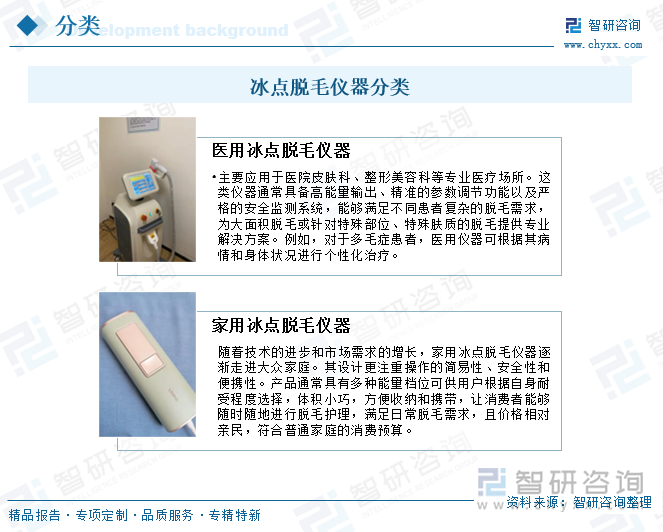
Core Insights - The demand for ice point hair removal devices is increasing due to the growing focus on skin beauty, especially among the younger generation, leading to a continuous expansion of the market [1][15] - Technological advancements have made ice point hair removal devices more efficient, safe, and convenient, enhancing treatment outcomes and consumer experience [1][15] - Government regulations and policy support for the medical beauty industry provide a favorable external environment for the development of the ice point hair removal device sector [1][15] Market Overview - The market size of China's ice point hair removal device industry has shown an upward trend since 2018, expected to reach 1.4 billion yuan in 2024, a year-on-year increase of 16.7% [1][15] - The household ice point hair removal device market is rapidly growing, projected to increase from 800 million yuan to 2 billion yuan by 2024 [16] Industry Chain - The upstream of the ice point hair removal device industry includes raw materials and component supply, such as laser emitters, filters, cooling system components, and electronic components [9] - The midstream involves the production and manufacturing of ice point hair removal devices, including R&D, design, and assembly processes [9] - The downstream consists of sales channels, including e-commerce platforms, medical beauty institutions, large shopping malls, and specialty stores [9] Competitive Landscape - The market features a diverse competitive landscape with numerous brands, including Ulike, which holds a leading position with advanced technology and extensive market promotion [19] - Domestic brands like Aucma and Konka are leveraging local market advantages through differentiated competition strategies [19] Development Trends - The future of ice point hair removal devices will see increased intelligence, with devices equipped with AI chips and sensors for personalized treatment [24] - There will be a shift towards personalized customization, allowing brands to tailor hair removal solutions based on individual skin and hair characteristics [26] - The market is expected to expand into lower-tier cities and rural areas as consumer awareness of beauty products increases [27] - Domestic brands are likely to accelerate international expansion to capture market share in emerging economies [28]
江苏独角兽联盟半年5企上市 10余家排队IPO、100家进入辅导期
Xin Hua Ri Bao· 2025-07-22 23:48
Group 1 - In the first half of 2025, the Jiangsu Province Unicorn and Gazelle Enterprise Alliance had 5 member companies successfully listed, with over 10 companies entering the IPO review process and 2 companies successfully passing the review [1] - Notable listings include Yaojie Ankang (Nanjing) Technology Co., Ltd. and Jiangsu Zhengli New Energy Battery Technology Co., Ltd. on the Hong Kong Stock Exchange, and Nanjing Sikaiqi Automotive Technology Co., Ltd. on NASDAQ [1] - As of mid-2025, over 450 companies within the alliance have completed share reform, and approximately 100 companies have entered the listing guidance period, forming a significant reserve force in the capital market [1] Group 2 - The alliance's achievements are driven by a core strategy of "chain collaboration, AI empowerment, and international expansion," conducting various industrial collaboration meetings and training activities across the province [2] - During the "New Energy Industry Co-construction Special Session" held on March 31 in Changzhou, 7 out of 15 ecological partners reached cooperation intentions [2] - The alliance has deepened the integration mechanism of "patient capital + hard technology," signing a strategic cooperation agreement with Jiangsu Province's strategic emerging industry mother fund to provide long-term capital support for alliance enterprises [2] Group 3 - The alliance aims to enhance industrial collaboration and strengthen connections with the Yangtze River Delta region, focusing on the environmental protection industry and low-altitude economy [3] - A multi-level capital network will be constructed to match the equity needs of alliance enterprises with specialized sub-funds from the new strategic mother fund [3] - The alliance plans to upgrade its international service capabilities by integrating resources to create an "outbound toolbox" and optimizing the "Unicorn Cloud" digital platform for full-chain intelligent support for member enterprises [3]
研判2025!中国米酒行业市场规模、区域分布、竞争格局及未来发展趋势分析:米酒市场扩容提质,多元趋势引领新程[图]
Chan Ye Xin Xi Wang· 2025-07-08 01:29
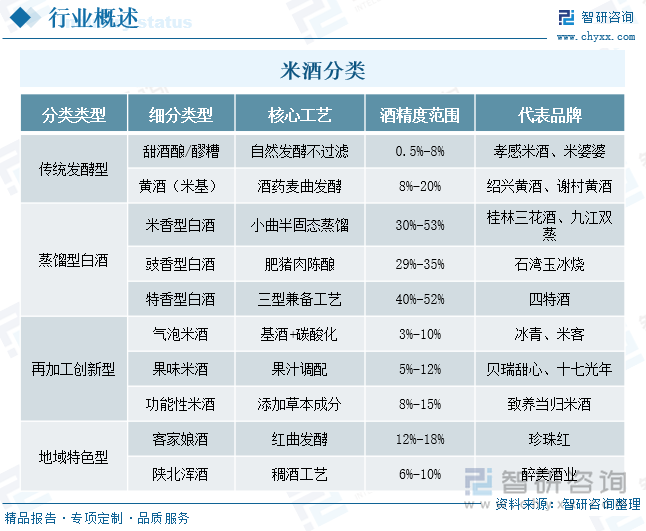
Core Insights - The Chinese rice wine industry, with a market size projected to reach approximately 33 billion yuan in 2024, is experiencing steady growth driven by health-conscious consumption trends and product innovation [11][19][20] - The market is expected to surpass 35 billion yuan by 2025, fueled by the expansion of the young consumer demographic and the introduction of new product categories such as sparkling and functional rice wines [11][19] Industry Overview - The rice wine industry in China is characterized by its production and sales of alcoholic beverages made primarily from rice and glutinous rice through fermentation, holding significant cultural importance [11][19] - Rice wine can be categorized into three main types: traditional fermented rice wine, yellow wine, and distilled rice wine, each with distinct characteristics and alcohol content [11][19] Market Dynamics - The market share of rice wine in the overall alcoholic beverage market is currently around 4%-5%, with a slight increase expected due to the rising trend of low-alcohol consumption and innovative product offerings [13][19] - The industry is witnessing a shift towards healthier consumption patterns, with rice wine's low alcohol content and nutritional benefits appealing to modern consumers [7][19] Development Background - The growth of the rice wine industry is supported by the steady increase in disposable income and consumer spending in China, with per capita disposable income reaching 41,314 yuan in 2024, a 5.3% increase from the previous year [5][19] - Food and beverage expenditures remain a dominant part of consumer spending, accounting for 29.8% of total expenditures, providing a robust market for rice wine [5][19] Competitive Landscape - The competitive landscape features a mix of traditional brands like Ta Pai and Nu Er Hong, which dominate the high-end market, and emerging brands that target younger consumers with innovative products [16][18] - Regional brands leverage local resources and unique production techniques to establish a strong market presence, while some white liquor companies are entering the rice wine sector to enhance their product lines [16][18] Future Trends - The rice wine industry is expected to accelerate product innovation, focusing on health-oriented and diverse flavor profiles to cater to evolving consumer preferences [19][20] - Digital transformation will play a crucial role in enhancing production efficiency and expanding market reach through e-commerce and social media [20][21] - International expansion and sustainable practices will be prioritized, with a focus on brand building and environmental responsibility to enhance global competitiveness [21]
安井食品港股上市首日破发,六成中小股东的预判成真?
Sou Hu Cai Jing· 2025-07-04 11:59
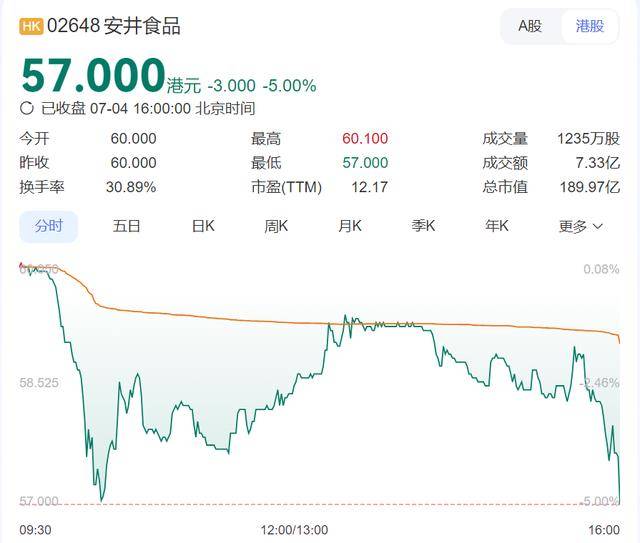
Core Viewpoint - Anjiu Food's stock price fell below its IPO price on the first day of trading, reflecting market skepticism about the company's capital raising efforts and financial health [1][6]. Group 1: IPO and Market Response - Anjiu Food officially listed on the Hong Kong Stock Exchange on July 4, with an opening price that declined nearly 5%, closing at HKD 57.00 per share, below the IPO price of HKD 60.00 [1]. - The global offering involved nearly 40 million H-shares, priced at a 30% discount compared to its A-share closing price of CNY 78.74 on July 1 [1]. Group 2: Shareholder Concerns - During the 2024 shareholder meeting, the proposal for H-share listing received 70.63% approval, but over 28% of votes were against it, with 60.51% of dissenting votes coming from minority shareholders holding less than 5% [3]. - Since reaching a peak of CNY 105.5 on October 8, 2024, Anjiu Food's A-share price has dropped to CNY 76.40, marking a cumulative decline of 19% [3]. Group 3: Financial Health - As of September 2024, Anjiu Food reported cash and cash equivalents of CNY 2.57 billion and trading financial assets of CNY 3.122 billion, with consistent net inflows from operating cash flow [3]. - The company has a low debt level, with short-term borrowings of only CNY 111 million and no long-term debt, resulting in an asset-liability ratio of 20.7%, significantly below the industry average [3]. Group 4: Performance and Management Issues - Anjiu Food's revenue growth has sharply declined from 31.39% in 2022 to 7.7% in 2024, with net profit growth plummeting from 61.37% to just 0.46% [5]. - In contrast to the declining shareholder value, executive compensation has increased significantly, with total compensation rising from CNY 12.08 million in 2022 to CNY 19.73 million in 2024, a 63.4% increase [5]. Group 5: International Expansion Challenges - Anjiu Food's international revenue remains minimal, accounting for only CNY 39.8 million in Q1, representing 1% of total revenue and a 3.1% decline year-on-year [6]. - The company faces challenges in international expansion due to varying dietary preferences and competition from domestic peers in overseas markets [6].