心价比

Search documents
国泰海通|宏观:假期消费:表现如何
国泰海通证券研究· 2025-10-09 13:05
Core Insights - The holiday economy shows a steady increase, with a daily average of 154 million people traveling across regions during the first five days of the National Day and Mid-Autumn Festival, representing a year-on-year increase of 5.4% [1] - There is a notable increase in outbound and overseas travel flights, exceeding 12% [1] - Consumer spending is driven by two main themes: "cost-performance ratio" and "emotional value" [1] Travel and Tourism - Strong demand for homecoming and tourism travel is observed [1] - Different provinces and cities show growth in tourist reception and tourism revenue, although the growth rates vary significantly [1] - Movie consumption remains subdued, influenced by film quality, with ticket prices continuing to decline [1] Consumer Goods - The automotive sector performs well due to the impending expiration of subsidies and the launch of new models [1] - Home appliance consumption is affected by high base disturbances, but smart and green categories show strong performance [1] Real Estate and Land Market - Real estate sales see a holiday decline, with year-on-year variations due to base disturbances [1] - The land market remains relatively cold [1] Economic Indicators - Infrastructure investment is ramping up, with the issuance of special bonds at the fastest pace in recent years [1] - Post-holiday restocking drives accelerated port operations [1] - Production slows down before the holiday, while consumer goods prices show significant increases, particularly in food and beverages [1] - Industrial product prices experience a slight decline [1] - Liquidity remains ample, with the US dollar index returning above 98 [1]


国内高频指标跟踪(2025 年第 40 期):假期消费:表现如何
Haitong Securities International· 2025-10-09 06:30
Travel and Tourism - During the National Day and Mid-Autumn Festival holiday, the average daily cross-regional passenger flow reached 154 million, a year-on-year increase of 5.4%[6] - Outbound and international flight executions increased by over 12% compared to the previous year[6] - The migration scale index rose significantly, with a year-on-year growth rate increasing from 12.8% before the holiday to 17.9%[8] Service Consumption - Tourist numbers and revenue in cities like Shanghai and Hubei grew by over 10%, with Shanghai leading at a 23.74% increase[12] - The average ticket price for movies dropped to 37.1 yuan, down from 40.5 yuan last year, marking a continuous decline for the second year[20] Product Consumption - National and local consumption subsidies supported retail sales, with key retail and catering enterprises seeing a 3.3% year-on-year increase in sales during the first four days of the holiday[23] - Automobile sales surged, with a 68.35% increase in vehicle scrappage in Hubei during the holiday period[23] - Sales of energy-efficient appliances grew by 19%, while smart refrigerators and home products saw increases of 20.7% and 16.8%, respectively[23] Real Estate Market - New home sales in 30 cities saw a seasonal decline, with a year-on-year drop of 15.7% by October 6, attributed to last year's policy effects[27] - The land market remained cold, with a land transaction area decline and a reduced premium rate of 0.05%[27] Consumer Trends - Consumers are increasingly focused on "cost-performance" and "emotional value," with a notable sensitivity to prices reflected in slower growth rates for tourism revenue compared to visitor numbers[29] - High-value experiences, such as cultural tourism and local experiences, are gaining popularity, with hotel search volumes in regions like Xinjiang and Inner Mongolia increasing by 60%[33]
“超级黄金周”引爆旅游市场:“心价比”取代“性价比”,“治愈系”酒店搜索热度上涨60%
Mei Ri Jing Ji Xin Wen· 2025-09-30 11:37
Core Insights - The upcoming "super golden week" during the National Day and Mid-Autumn Festival is expected to significantly boost the tourism market, with a notable increase in both domestic and international travel bookings compared to last year [1][2]. Group 1: Travel Trends - Cross-province travel orders have increased by 45% year-on-year, indicating a strong demand for long-distance travel during the holiday [2]. - The "please take 3 days off and rest for 12" strategy has led to a 26% increase in travel product bookings from September 26 to 28 [2]. - Domestic flight bookings have surpassed 11.89 million, with international flight bookings exceeding 1.79 million, reflecting a year-on-year growth of 3% and 13% respectively [2]. Group 2: Accommodation Insights - Hotel booking rates have increased by 3 percentage points compared to last year, with cities like Beijing and coastal areas such as Dalian and Qingdao showing strong performance [2]. - The search interest for "healing" hotels has surged by 60%, as travelers seek emotional connections and deeper experiences at destinations [3]. Group 3: International Travel - International travel bookings have seen a year-on-year increase of over 30%, with average spending per person rising by nearly 30% [5]. - Emerging destinations like Kazakhstan and Uzbekistan have entered the top ten international travel spots, alongside traditional favorites like Japan and Thailand [5]. Group 4: Inbound Tourism - Inbound tourism is becoming a key highlight of the cultural and tourism market recovery, with significant growth in bookings from countries like South Korea, Japan, and the United States [6]. - Tourists are interested in both iconic landmarks and unique experiences, such as exploring Beijing's hutongs and visiting the Terracotta Army in Xi'an [6].

2025中国消费人群心智地图与品牌未来战略白皮书
Sou Hu Cai Jing· 2025-09-21 07:50
Group 1 - The core viewpoint of the report is that the Chinese consumer market is undergoing a profound transformation, influenced by economic fluctuations, technological innovations, and cultural confidence, leading to a reconfiguration of consumer psychology and behavior [1][15][20] - The report highlights the dual existence of "rational consumption" and "emotional consumption," where consumers seek both value for money and emotional satisfaction, indicating a shift in consumer priorities [1][15][20] - Generational differences and regional disparities shape the market landscape, with distinct consumption values and behaviors emerging from different age groups, such as Baby Boomers, Generation X, Millennials, and Generation Z [1][24][30] Group 2 - Approximately 90% of future consumption growth is expected to come from non-first-tier cities, necessitating brands to adopt localized and refined operational strategies rather than a one-size-fits-all approach [2][26][29] - The report identifies four differentiated development models for cities: emerging hotspots, public service advantage cities, tourism-driven cities, and cities facing housing price pressures, each requiring tailored marketing strategies [2][29] - The emotional connection and cultural recognition are becoming increasingly important for consumers, particularly among Generation Z, who prioritize brands that resonate with their values and interests [1][25][30] Group 3 - Technological innovations are reshaping consumer experiences, with personalized recommendation systems evolving from "precision" to "understanding," enhancing engagement and satisfaction [3][4] - The report emphasizes the importance of brands becoming "spiritual partners" for consumers, especially during economic downturns, by focusing on cultural and emotional fulfillment rather than mere material possession [3][4] - Six brand case studies illustrate the growth logic in the new consumption era, showcasing how brands leverage emotional value, cultural empowerment, and innovative strategies to connect with consumers [4][5]

茉莉奶白联合创始人高芸晞:消费者挑选商品正在从“性价比”转向“心价比”
Sou Hu Cai Jing· 2025-09-17 10:12
Group 1 - The 21st Summer Annual Meeting of the 2025 Yabuli Forum concluded successfully, focusing on the theme "Refining and Steady Progress - Corporate Development in the New Global Situation" [1] - Hundreds of government leaders, entrepreneurs, and scholars gathered in Guangzhou to discuss how companies can respond to challenges and seize opportunities in a more complex and volatile domestic and international market environment [1] Group 2 - Gao Yunxi highlighted that all sectors are experiencing a transition where high-quality supply gradually replaces low-quality supply, and brands are continuously upgrading [3] - Consumers have shifted their focus from "cost-performance ratio" to "quality-price ratio," and now to "emotional-price ratio" products [3] - Products that meet the "emotional-price ratio" must not only provide basic functionality but also satisfy additional dimensions of consumer needs, such as health, quality, and organic materials [3] - Factors like product packaging, brand tone, and the emotional value conveyed have become significant in consumer decision-making [3]

36氪研究院 | 新型需供关系驱动下的中国AI文旅发展趋势报告2025
3 6 Ke· 2025-09-16 03:02
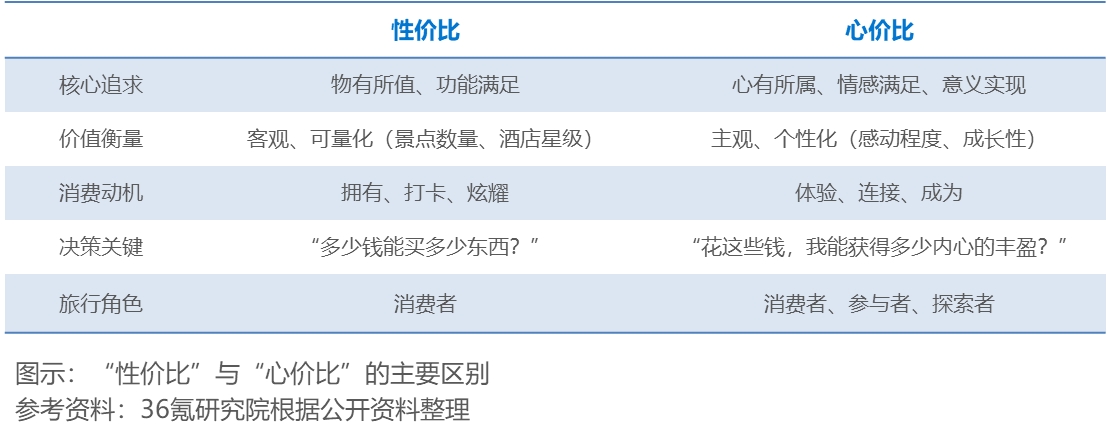
Group 1 - The Chinese cultural tourism industry is undergoing a profound transformation driven by AI technology and consumption upgrades, with domestic travel expenditure expected to reach 3.15 trillion yuan in the first half of 2025, a year-on-year increase of 15.2% [1][31] - The number of domestic travel trips is projected to be 3.285 billion, reflecting a year-on-year growth of 20.6% [1][31] - The shift in consumer demand from "cost-performance ratio" to "emotional value ratio" indicates a growing emphasis on unique experiences and emotional connections during travel [2][11] Group 2 - The "supply-demand intelligence" model proposed by the company aims to address the long-standing mismatch between supply and demand in the cultural tourism sector by leveraging AI technology for collaborative evolution between demand and supply sides [4][12] - This model focuses on creating a closed-loop system for precise demand perception and intelligent supply response, utilizing advanced AI technologies [4][12] - The integration of AI technology is moving towards a platform-based ecosystem, breaking down data silos and enhancing collaboration across the industry [5][13] Group 3 - The transition from "cost-performance ratio" to "emotional value ratio" reflects a deeper consumer desire for meaningful experiences rather than mere sightseeing [2][35] - Tourists are increasingly seeking emotional engagement and personal growth through their travel experiences, which necessitates a shift from standardized offerings to personalized, impactful experiences [2][11] - The industry's pain points include inefficient decision-making and homogenized experiences, which are exacerbated by information overload and a lack of personalized service [38][39] Group 4 - The cultural tourism industry is becoming a strategic pillar of the national economy, with significant growth in both consumer spending and industry revenue [31][28] - The market is experiencing a layered development trend, with traditional attractions maintaining strong profitability while new projects face challenges due to inadequate planning [31][28] - The overall AI application rate in the industry is 53%, with larger enterprises showing higher adoption rates compared to smaller businesses [33][34]
亚布力夏季年会闭幕,企业家探讨如何把握下一个消费浪潮
Di Yi Cai Jing· 2025-09-14 13:21
Group 1: Market Trends in Sports Products - The market potential of niche segments is increasingly recognized, particularly in the sports products sector [2] - Companies like Peak are exploring new categories such as sports wristbands, watches, and swimming products, indicating a shift towards more specialized consumer demands [2] - The outdoor market is experiencing a slowdown in growth, but competition in the existing market is intensifying as brands adapt to changing consumer preferences [3] Group 2: Consumer Preferences and Quality Demand - Consumers are transitioning from seeking "cost-performance" to "quality-price" and now to "emotional-value" products, indicating a shift in purchasing motivations [4] - Products must not only fulfill basic functions but also meet additional consumer needs such as health, quality, and emotional value [4] - The competition in the trendy toy industry is fundamentally about the ability to resonate emotionally with consumers, emphasizing the importance of understanding consumer needs [4] Group 3: Supply Chain and Product Selection - Changes in consumer channels are forcing companies to optimize product selection and adapt to new market demands [5] - The pet industry is undergoing a transformation, with a focus on improving supply chain transparency and health management to meet consumer expectations [6] - The number of pets in China is projected to grow from 120 million to 300 million in the next five years, highlighting the need for a robust supply chain to support this growth [6]
雅里数科C位亮相2025酒店品牌展,双新品分享刷新中高端酒店投资价值
Zhong Guo Chan Ye Jing Ji Xin Xi Wang· 2025-09-11 09:19
Core Insights - The 2025 Hotel Brand Expo and Investment Summit was held in Shanghai, focusing on "Breaking Boundaries, Coexistence, Innovative Breakthroughs, and Asset Restructuring" [1] - Yali Digital Technology Group showcased its two new flagship brands, Yaster 5.5 and Yasi Fei 2.0, emphasizing a strategy to create a "golden triangle" of quality, price, and aesthetics in the mid-range and high-end hotel market [1][5] - The summit gathered over 150 industry leaders and more than 1500 hotel professionals to explore development opportunities in the hotel market during a new economic cycle [1] Company Highlights - Yali Digital Technology Group's brand marketing officer, Xiao Kai, presented a speech on the "Golden Triangle of Mid-Range and High-End Hotels," addressing product design, experience upgrades, and cost control as key dimensions for breaking through in a competitive hotel industry [5][6] - The Yaster 5.5 focuses on young consumers and features innovative spaces like co-working areas and 24-hour energy stations, achieving a comprehensive room cost of 69,800, which is 20%-30% lower than the industry average while maintaining quality and investment returns [7] - The Yasi Fei 2.0 is designed around aesthetics and local culture, offering a luxurious experience with a room cost of 129,800, balancing high-end configurations with cost control [10] Industry Trends - The hotel consumption trend has shifted to a "heart-price ratio" era, where both consumers and investors demand higher standards, prompting hotel brands to innovate [6] - The roundtable discussion highlighted the importance of capturing trends and leveraging systematic capabilities for new hotel brands to succeed in a competitive market [14] - Future growth in the industry is expected to focus on "renewing existing stock, structural upgrades, and data-driven repricing," with Yali Digital Technology Group committed to providing practical cases to empower industry growth [14][15]

出海企业的Glocal生死局:中国品牌如何从“性价比”走向“心价比”
Sou Hu Cai Jing· 2025-08-01 20:56
Group 1 - The core viewpoint of the article highlights the challenges and opportunities for Chinese companies going global in 2025, emphasizing a shift from anxiety to proactive responses in the face of international uncertainties [3][5] - A report indicates that 81% of global respondents are open to considering new brands, with the figure rising to 85% in the U.S., suggesting a growing acceptance of new value propositions beyond just low prices [5][19] - The marketing landscape is evolving with AI transforming search from keyword-based to intent-based understanding, allowing for more nuanced consumer engagement [7][10] Group 2 - Google introduced three AI-driven search experiences: AI Overviews, AI Mode, and Agentic AI, which enhance user interaction and advertising effectiveness [10][11] - The Power Pack toolset, including PMax and AI Max, allows advertisers to automate audience targeting and optimize campaigns based on business goals, leading to improved conversion rates [11][14] - Case studies, such as AliExpress, demonstrate significant increases in conversion rates and return on ad spend through AI-driven insights and advertising strategies [13][14] Group 3 - YouTube is positioned as a unique platform for brands to connect with global audiences, emphasizing the importance of building emotional connections over mere visibility [17][19] - The shift from product-focused to brand-focused strategies among Chinese companies reflects a deeper understanding of the need for long-term brand equity and consumer loyalty [24][25] - Trust and authenticity are critical in creator partnerships, as highlighted by Mr. Beast's approach to brand collaborations, which emphasizes genuine product endorsement over monetary incentives [26][28]


Google中国邓辉:出海企业应从传统的性价比竞争转向心价比
Jing Ji Guan Cha Bao· 2025-07-18 10:46
Group 1 - The core viewpoint is that overseas consumers are increasingly seeking high-quality and cost-effective alternative brands, prompting Chinese companies to shift from traditional cost-performance competition to a focus on "heart-price ratio" [2] - A survey conducted by Google and BrandZ revealed that 81% of global consumers are open to considering new brands, with this figure rising to 85% in the U.S. market, indicating significant market penetration opportunities for Chinese brands [2] - Brand trust, long-term product value, and emotional connection are becoming key criteria for consumers when selecting brands, highlighting the importance of brand building for Chinese companies going abroad [2] Group 2 - Chinese companies are currently prioritizing brand awareness in overseas markets, entering a "brand-building wave" as consumers are more willing to embrace different brands in the current economic environment [3] - The emergence of new-generation overseas companies aiming to create global brands is driving this trend, necessitating quick action from companies to capture changing consumer mindsets [3] - AI technology is identified as a powerful tool for overseas companies, enhancing user demand prediction and optimizing targeting and material matching based on business goals, thus facilitating effective growth paths [3]