技术输出

Search documents
菜鸟海外仓看“中国智造”出海 3D打印机、投影仪和智能吸尘器持续海外走红
Zheng Quan Shi Bao Wang· 2026-01-19 09:17
Core Insights - Cainiao's global overseas warehouse order volume is projected to grow by 32% year-on-year by 2025, outpacing industry growth rates [1] - The increase in orders is driven by the accelerated international expansion of Chinese brands such as Tineco, XGIMI, and Ailike, which are gaining popularity in overseas markets [1] - The shift from "product output" to "technology and brand output" is evident, with high-tech product exports expected to reach 5.25 trillion yuan, growing by 13.2% [1] Group 1 - Cainiao's overseas warehouses are becoming a logistics infrastructure for "Chinese manufacturing" going global, with a growing share of smart products in addition to traditional apparel and accessories [1] - The company is expanding its global smart warehouse network and integrated solutions to facilitate easy inventory management for overseas merchants and brands [1][2] - Cainiao's fulfillment system has been refined through years of experience during major sales events, enabling merchants to effectively handle overseas promotions [2] Group 2 - Leading smart cleaning appliance brand Tineco and projector brand XGIMI have achieved triple-digit growth in order volume, while several leading 3D printer brands like Ailike have seen double-digit growth [2] - Cainiao has introduced customized warehousing and distribution services, allowing for local shipping and rapid delivery through smart sales forecasting [2] - The company plans to activate over 10 new warehouses globally by 2025 and increase investments in automation technologies to enhance order processing capabilities and efficiency [2][3] Group 3 - Cainiao operates over 40 overseas warehouses across 18 countries and regions in Europe, North America, and Asia-Pacific, providing end-to-end supply chain management solutions [3] - The company supports various industries, including automotive parts, home goods, appliances, and furniture, in accelerating their international expansion [3]
恒洁卫浴获艾瑞咨询三项全球智能马桶技术类市场地位确认,硬核诠释中国卫浴技术新高度
艾瑞咨询· 2026-01-07 00:03
Core Insights - The article highlights the confirmation of Hengjie Sanitary Ware's leading global market position in the smart toilet sector, emphasizing its innovative technologies and the competitive edge of Chinese manufacturing in the high-end sanitary ware market [1][11]. Group 1: Innovative Technologies - Hengjie has developed two core technologies that enhance user experience: the "Hengjie 3D Comfort Wash" technology and the innovative "waterless ultra-thin wall-mounted" technology [2][4]. - The "Hengjie 3D Comfort Wash" technology integrates cleanliness, antibacterial features, and intelligent flushing, focusing on user-centric design with unique features like a patented spray gun and a "single waterway, multiple water types" system [2][4]. - The "waterless ultra-thin wall-mounted" technology reduces wall thickness by 50% compared to traditional wall-mounted toilets, providing more space and simplifying maintenance without the need for wall demolition [4]. Group 2: Systematic Innovation - Hengjie’s ability to continuously produce leading technologies is supported by a robust systematic innovation capability, covering research, manufacturing, and market application [6]. - The company has established a comprehensive patent portfolio in key areas of smart toilet technology, maintaining a leading position in the industry with a significant number of patents [6][8]. - Hengjie has actively participated in the formulation of over 110 national and industry standards, showcasing its role in setting industry norms and ensuring the forward-looking nature of its technology [6]. Group 3: Market Position and Future Outlook - Hengjie’s market position reflects the rise of Chinese brands from "manufacturing output" to "technology output," with China accounting for 72% of global smart toilet production in 2024 [11]. - The company aims to continue optimizing its mature technologies and integrating them into various scenarios, promoting a shift from individual smart products to comprehensive smart space solutions [11].


多家A股上市公司频揽大单
Zheng Quan Ri Bao· 2025-12-25 16:41
Core Insights - A-share listed companies are increasingly securing large orders both domestically and internationally, indicating a shift from "product output" to "technology and standard output" in various industries [1][4] - The recognition of "Chinese solutions" by overseas clients is growing, reflecting the competitive strength of related industries in green infrastructure and high-end manufacturing [1] Group 1: Major Contracts and Orders - Baosheng Technology recently won a significant contract worth approximately 1.2 billion yuan (around 12 billion) for a power cable project from Singapore Power, marking its largest overseas order to date [2] - Nanjing Wandesi Environmental Technology announced a contract for the Wuhu Tianmenshan Wastewater Treatment Plant expansion project, valued at about 380 million yuan, which is expected to positively impact the company's business and revenue growth [1] - Ningbo Oriental Cable reported a total of 3.125 billion yuan in contracts related to green transmission and deep-sea technology, accounting for 34.37% of its audited revenue for 2024 [2] Group 2: Industry Trends and Insights - Multiple A-share companies are securing large orders across various sectors, indicating strong capabilities in technology research, product quality, and service levels [3] - The competitive advantage of Chinese infrastructure in undertaking overseas projects is attributed to the development of internationally competitive construction teams and mature supply chains [3] - The dual strategy of "stabilizing the domestic base and expanding overseas" is enhancing long-term development advantages for companies and contributing to the high-end and globalized nature of national industrial chains [4]


客车12月月报:11月内外需同环比修复,期待年底翘尾行情-20251223
Soochow Securities· 2025-12-23 06:00
Investment Rating - The industry investment rating is "Overweight," indicating an expected outperformance of the industry index relative to the benchmark by more than 5% in the next six months [55]. Core Insights - The bus industry is positioned to become a global leader in technology output, with overseas market contributions expected to replicate the scale of the Chinese market within 3-5 years [2]. - Key drivers include favorable national policies, advanced technology and product quality, and a recovering domestic market without price wars [2]. - The report recommends focusing on Yutong and King Long as preferred stocks within the bus sector, both rated as "Buy" [3][4]. Summary by Sections Industry Overview - In November 2025, the overall production of the bus industry in China reached 55,000 units, with year-on-year and month-on-month increases of 14.90% and 10.47% respectively [10][11]. - The wholesale volume for the same period was 53,000 units, reflecting a year-on-year increase of 15.78% and a month-on-month increase of 7.28% [10][11]. Company Performance - Yutong's projected net profit for 2025-2027 is expected to grow by 20% annually, reaching 4.94 billion, 5.92 billion, and 7.03 billion yuan respectively, maintaining a "Buy" rating [4]. - King Long is anticipated to show significant profit recovery, with net profits projected at 440 million, 640 million, and 830 million yuan for the same period, reflecting growth rates of 182%, 45%, and 28% respectively, also rated as "Buy" [4]. Market Dynamics - The domestic market has seen an end to price wars, which is expected to positively impact demand, driven by tourism recovery and public transport upgrades [2]. - The report highlights that the bus industry is on track to challenge previous market peaks from 2015-2017, with potential for new growth ceilings [6]. Sales and Exports - In November 2025, the total sales of buses reached 49,000 units, with significant increases in both wholesale and terminal sales across various bus types [10][13]. - Exports of large and medium buses totaled 4,294 units in November, marking a year-on-year increase of 25% and a month-on-month increase of 12% [35][36]. Regional Performance - Bus sales showed strong seasonal trends, with most regions experiencing year-on-year increases in November 2025, particularly notable in Northeast and South China [24]. - The report indicates that the market concentration remains high, with leading companies like Yutong and King Long maintaining significant market shares in both domestic and export markets [30][36].


从“成都造”到“全球销”!看三重引擎助推蓉品出海|“十四五”对账本
Xin Lang Cai Jing· 2025-12-09 03:43
Core Insights - Chengdu aims for high-level opening-up during the "14th Five-Year Plan" period, leveraging "Rongpin Going Global" as a key strategy to enhance its international trade and brand recognition [1][2] Policy, Channels, and Industry - Chengdu has established a comprehensive support system for enterprises to go global, focusing on policy empowerment, logistics channels, and industrial capabilities [2] - The city has implemented a three-dimensional policy system to facilitate international market access, including subsidies for international exhibitions and funding for key export brands, resulting in over 200 billion yuan in intended orders from various international trade events [2] - Chengdu's logistics network has expanded significantly, with 82 international flight routes and over 36,000 China-Europe freight trains, reducing shipping times and costs for local businesses [3] - Key industries such as electronics, pharmaceuticals, and renewable energy have seen substantial growth, with exports increasing by 34.6% year-on-year in the first three quarters [3][4] Technology, Brand, and Model - Chengdu enterprises are shifting from low-cost exports to value-driven approaches, achieving significant contracts in high-end markets, such as a 2.1 billion yuan deal for smart heavy trucks in Saudi Arabia [5] - Technological innovation is a priority, with companies integrating AI and smart technologies to enhance product competitiveness, leading to increased sales and international recognition [6] - Brand development is emphasized, with local firms moving from OEM to brand exports, significantly enhancing the global presence of "Chengdu-made" products [6] - Innovative business models, including the establishment of a free trade zone, are facilitating trade and attracting foreign investment, with over 5,000 foreign enterprises now based in Chengdu [9] Scale, Market, and Impact - Chengdu's foreign trade has seen remarkable growth, with a projected 2024 export value of 839 billion yuan, marking a 12.1% increase [8] - The city's market reach has expanded globally, with products being exported to 230 countries and regions, contributing to its status as the leading foreign trade city in Western China [8][9] - Chengdu's open practices are benefiting the broader Western region, creating a ripple effect that enhances logistics and trade opportunities for neighboring cities [9]

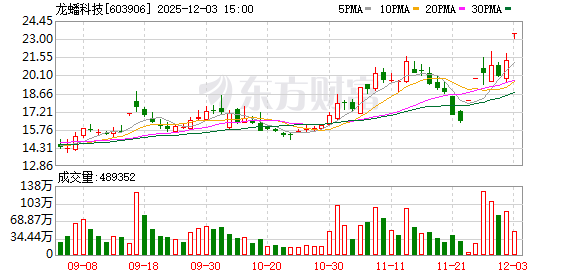
龙蟠科技再获磷酸铁锂正极材料订单
Zheng Quan Ri Bao· 2025-12-03 16:11
Core Viewpoint - Long-term procurement agreement signed between Longpan Technology's subsidiary and Sunwoda Thailand for the supply of lithium iron phosphate cathode materials, indicating strong market demand and potential revenue growth for the company [2][3]. Group 1: New Orders and Agreements - Longpan Technology's subsidiary LBM New Energy signed a long-term procurement agreement with Sunwoda Thailand to supply a total of 106,800 tons of lithium iron phosphate cathode materials from 2026 to 2030, with estimated total sales between 4.5 billion to 5.5 billion yuan [2]. - Earlier in the year, Longpan Technology secured multiple significant contracts, including a supply agreement with BlueOval for the same material, and a strategic cooperation agreement with Chuangneng New Energy, both exceeding 5 billion yuan in total sales [3]. - A procurement cooperation agreement was also signed with CATL for the supply of 157,500 tons of lithium iron phosphate cathode materials from 2026 to 2031, with expected sales exceeding 6 billion yuan [4]. Group 2: Market Impact and Strategic Positioning - The signing of the agreement is expected to help establish long-term stable relationships with downstream partners, contributing to stable sales and aligning with the company's strategic development plan [3]. - The recent orders are anticipated to enhance the company's production capacity utilization by over 10 percentage points, potentially reshaping the industry landscape and creating a new pricing benchmark for long-term contracts [4]. - Industry experts suggest that Longpan Technology's achievements demonstrate its capability to compete with international giants, indicating a shift from product export to technology output for Chinese companies, which may reshape the global new energy industry [4].

“希望污水厂尽早完工”
人民网-国际频道 原创稿· 2025-12-03 03:12
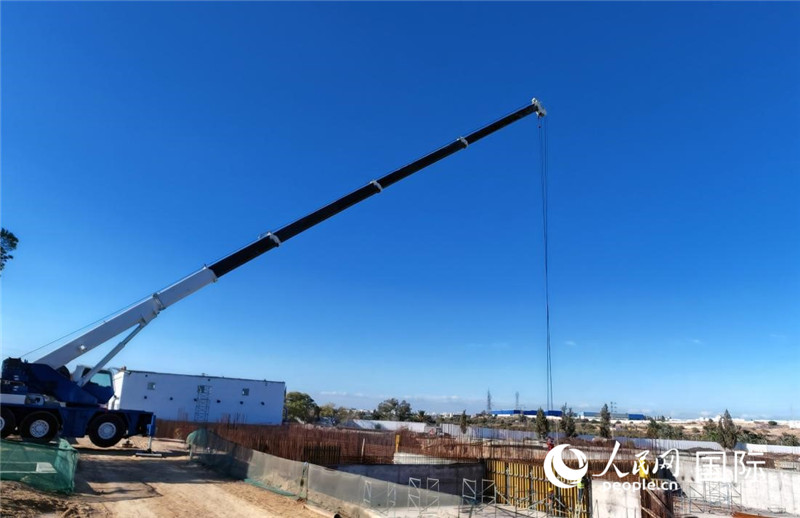
Core Viewpoint - The expansion of the Musaken wastewater treatment plant in Sousse, Tunisia, is crucial to meet the growing urban demand for wastewater management, with the current facility unable to handle the daily sewage output of 13,000 tons from approximately 200,000 residents [2]. Group 1: Project Overview - The Musaken wastewater treatment plant currently has a daily treatment capacity of 6,000 tons, which will be increased to 17,000 tons upon completion of the expansion [1]. - The project is being managed by China Electric Power Construction Group's Water and Hydropower Fifteenth Bureau, with the main construction expected to be completed by March next year [2]. Group 2: Environmental Impact - The existing wastewater treatment facility has been insufficient, leading to untreated sewage being discharged directly into local rivers, causing significant environmental damage [2]. - The successful operation of the Sousse wastewater treatment plant, which processes 53,000 cubic meters of wastewater daily, has resulted in a 40% reduction in irrigation costs for local agriculture and improved water quality in the Sousse River [2]. Group 3: Technological and Local Development - The project includes upgrades such as replacing surface aerators with bottom air diffusion plates to enhance oxygen levels in wastewater and improving sludge treatment lines for better efficiency [4]. - The project emphasizes local talent development, with an 81% localization rate and ongoing training for local employees, including multilingual safety and cultural communication courses [4]. Group 4: Stakeholder Perspectives - Local authorities, including the head of the Sousse Health Bureau, express a strong desire for the timely completion of the wastewater treatment plant to meet community expectations [7].

多家A股公司披露第四季度新签重要订单
Zheng Quan Ri Bao Zhi Sheng· 2025-11-19 16:06
Core Insights - Over 70 A-share listed companies in China have disclosed significant contracts or strategic cooperation agreements since October, indicating a broad industry impact, particularly in machinery and power equipment sectors [1][2] - The recent surge in orders is attributed to a combination of policy windows, global inventory adjustments, and technological iterations, rather than mere seasonal fluctuations [1][2] - New orders are increasingly focused on technology cooperation and supply chain collaboration, enhancing profitability and customer loyalty for related companies [1] Industry Developments - Major contracts include a 34.15 billion yuan offshore wind power project led by China Huadian Corporation, and significant contracts in energy storage and high-end equipment manufacturing, aligning with national investment plans [2] - The high-end manufacturing sector is witnessing a rise in orders related to AI computing power, energy storage, and advanced photovoltaic technologies, reflecting growing enthusiasm from downstream customers for new technologies [3] Global Expansion - Chinese companies are shifting from "product export" to "technology export," with notable contracts signed in Saudi Arabia and Peru, totaling approximately 195.54 billion yuan and 117.19 billion yuan respectively [4] - This transition signifies an upgrade in the role of Chinese enterprises within the global supply chain, with some companies achieving a leap in capabilities abroad [5]
小鹏汽车可能是又一家将盈利的新势力造车企业
Zhong Guo Qi Che Bao Wang· 2025-11-12 09:35
Core Viewpoint - Xiaopeng Motors has experienced significant stock price increases, suggesting potential profitability and interest from large capital investors, rather than retail investors alone [2] Sales Growth - Xiaopeng Motors, along with NIO and Li Auto, is part of the first wave of new energy vehicle manufacturers, previously struggling with sales but showing improvement [3] - Despite sales growth, Xiaopeng's performance remains below the industry average, indicating reliance on overall market trends rather than internal mechanisms [5] - The company aims for a sales growth rate in 2024 that is double that of 2023, with projections of over 400,000 units sold by 2025, approaching profitability [5] Financial Performance - Xiaopeng's Q2 2025 financial report shows revenue of 18.27 billion yuan, a 125.3% year-on-year increase, with a gross margin of 17.3% and a reduced net loss of 480 million yuan [7] - Cumulative revenue for the first half of 2025 reached 34.09 billion yuan, with deliveries exceeding 197,200 units, a 279% increase year-on-year [7] Technological Advancements - Xiaopeng is transitioning from a traditional car manufacturer to a technology company, with significant revenue from technology services, including a partnership with Volkswagen [8] - The introduction of AI technologies and new products, such as the AI-driven Robotaxi and humanoid robots, marks a shift in the company's focus [8][9] Market Expansion - Xiaopeng's export volume to Europe increased by 320% in the first half of 2025, with a growing presence in 28 countries through partnerships [10] - The company plans to expand its global footprint to over 60 countries by the end of 2025, with a strong focus on the European market [11] Revaluation - Given the significant changes and growth potential, Xiaopeng Motors is due for a revaluation, with its stock price reflecting optimistic market expectations [11]

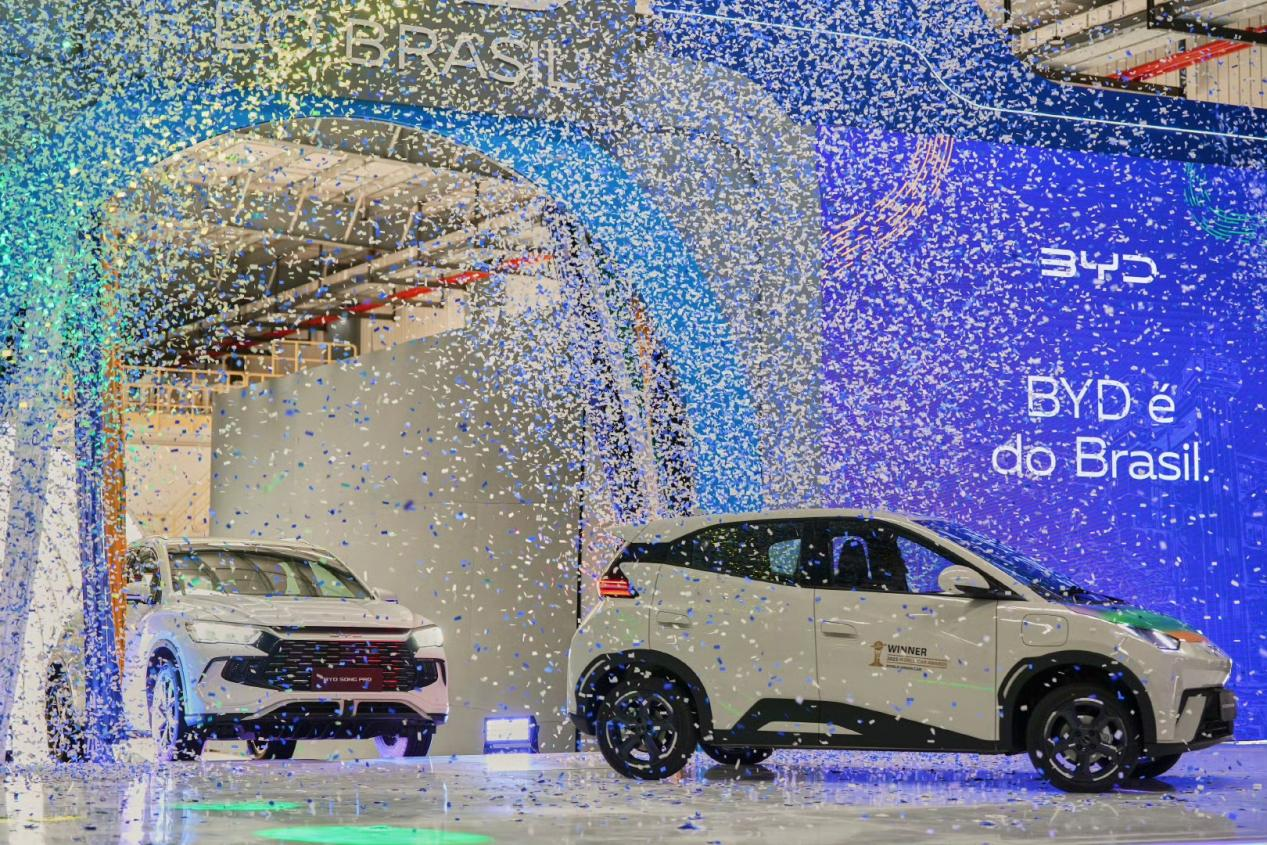
技术输出、扎根海外,“再造一个比亚迪”
Bei Ke Cai Jing· 2025-11-11 12:30
Core Insights - BYD's globalization process is advancing at an unprecedented speed [1] - BYD has surpassed traditional British automotive brands in sales within just two years, indicating a significant market penetration [2][3] - The company has established itself as the largest single overseas market in the UK, with a total sales volume of 35,604 vehicles in the first nine months of 2025, reflecting a year-on-year increase of 576.9% [3] Global Market Expansion - BYD's overseas factories are beginning production, leading to breakthrough sales in various markets including Italy, Spain, Brazil, and Thailand [4] - The company is overcoming user perception barriers and building trust in its brand and products, which is essential for its strategy of "recreating BYD" [5] Strategic Differentiation - Historically, Chinese automotive brands faced challenges in overseas markets due to consumer trust in local brands and established supply chains [6] - BYD is implementing a differentiated strategy based on local market conditions, adapting to various regional policies and competitive landscapes [8] Product and Market Adaptation - Market data shows a preference for plug-in hybrid models in Mexico, Brazil, and Turkey, while pure electric vehicles dominate in countries like Indonesia [9] - BYD's factories in Thailand and Brazil are producing both pure electric and plug-in hybrid models to cater to local preferences [11][12] Local Integration and Innovation - BYD is transitioning from merely exporting products to establishing a local presence and integrating into local markets [13] - The company plans to collaborate with local universities and suppliers in Hungary to enhance the local automotive ecosystem [18] Research and Development Investment - BYD has invested a total of 220 billion yuan in R&D, with 43.75 billion yuan spent in the first three quarters of 2025 [19] - The company’s overseas sales reached 700,000 units in the first nine months of 2025, marking a 132% year-on-year increase and accounting for 22% of total sales [19] Quality and Brand Enhancement - BYD is moving from quantity growth to quality improvement, focusing on product structure upgrades and brand value enhancement [20] - In the EU market, BYD's sales increased by 560% in the first three quarters of 2025, with significant growth in Brazil and Thailand [21] Market-Specific Strategies - At the Tokyo Motor Show, BYD launched the K-EV BYD RACCO, tailored for the Japanese market, and introduced a dual strategy of pure electric and hybrid models [22][24] - BYD is building a complete ecosystem in overseas markets, transitioning from product export to technology output and talent development [25] Conclusion - As more Chinese brands like BYD gain trust and create value, they are poised to transition from emerging players to world-class brands, marking a significant chapter in the globalization of Chinese automotive brands [26]