
数字基建

Search documents
心智观察所:AI狂奔,中国变压器成了最硬通货
Guan Cha Zhe Wang· 2026-01-27 00:43
Core Viewpoint - The article emphasizes that the real bottleneck for the future of artificial intelligence (AI) is not computational power but electrical power, specifically the availability of large power transformers (LPTs) which are critical for energy infrastructure [1][2]. Group 1: Current Situation in the U.S. - The U.S. is facing a significant shortage of large power transformers, which are essential for converting high-voltage electricity for long-distance transmission [2][3]. - The average delivery time for a standard large transformer has reached 128 weeks, while transformers for data centers can take up to 144 weeks, with some cases nearing four years [2]. - Over 80% of large power transformers in the U.S. are expected to be imported by 2025 due to the decline of domestic manufacturing capabilities [3]. Group 2: Policy and Economic Implications - The U.S. government has imposed high tariffs on Chinese transformers, yet American companies are still compelled to purchase them due to a lack of alternatives [3][9]. - The high costs associated with tariffs are ultimately borne by U.S. electricity companies and consumers, revealing the limitations of "decoupling" strategies in critical infrastructure [9]. Group 3: European Context - Europe is also experiencing a transformer shortage, which hampers the integration of renewable energy projects into the grid [4][5]. - The European Union aims to increase renewable energy to 45% by 2030, but many projects are stalled due to insufficient transformer supply [4]. - European countries are beginning to source transformers from China, despite political pressures, to avoid project delays [5]. Group 4: China's Manufacturing Advantage - China has developed a complete and efficient transformer manufacturing supply chain, from raw materials to assembly, making it a key player in the global market [6][8]. - The typical delivery time for a large transformer in China is 10 to 14 months, significantly shorter than in the U.S. and Europe [8]. - Chinese manufacturers are not only meeting domestic demands but are also exporting transformers globally, establishing themselves as a reliable supplier [6][8]. Group 5: Strategic Insights - The article highlights the importance of stable energy supply for technological advancements, asserting that without reliable electricity, ambitious AI projects remain unfeasible [9][10]. - China's sustained investment in its manufacturing base has positioned it as a strategic player in the global supply chain for critical infrastructure [10].


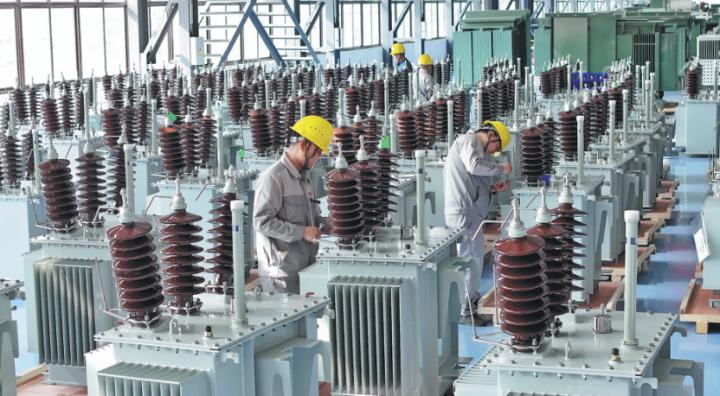
AI狂奔,中国变压器成了最硬通货
虎嗅APP· 2026-01-26 13:22
Core Viewpoint - The article emphasizes that the real bottleneck for the future of artificial intelligence (AI) is not computational power but electrical power, particularly the availability of large power transformers, which are crucial for the operation of AI data centers and energy infrastructure [4][6]. Group 1: Current Challenges in the U.S. and Europe - In the U.S., there is a significant shortage of large power transformers (LPTs), with an average delivery time of 128 weeks for standard transformers and 144 weeks for generator step-up transformers (GSUs) [6][8]. - The decline of U.S. manufacturing capabilities since the 1980s has led to over 80% of large power transformers being imported, primarily from China [7]. - European countries face similar issues, with many renewable energy projects unable to connect to the grid due to a lack of suitable transformers, highlighting a critical lag in the upgrade of transmission systems [10][11]. Group 2: The Role of China in Transformer Manufacturing - China has developed a complete and efficient transformer manufacturing supply chain, from raw materials to assembly, making it a key player in the global market [12][13]. - Chinese manufacturers can deliver large transformers in 10 to 14 months, significantly faster than their U.S. and European counterparts, which can take up to three years [13]. - The demand for Chinese transformers is increasing globally, as countries like the U.S. and those in Europe are forced to rely on Chinese imports despite political tensions and tariffs [15][18]. Group 3: Strategic Implications - The reliance on Chinese transformers reveals the limitations of "decoupling" strategies in critical infrastructure sectors, as the need for reliable electrical supply outweighs political considerations [15][18]. - The article suggests that the ability to produce essential infrastructure equipment domestically is a form of strategic deterrence in a world marked by supply chain vulnerabilities and geopolitical conflicts [18].
伟星新材:一直非常注重现金流的管理以及应收账款的管控
Zheng Quan Ri Bao Wang· 2026-01-08 12:13
Core Viewpoint - The company emphasizes a commitment to sustainable development through cash flow management and accounts receivable control, while also focusing on opportunities in urban renewal and digital infrastructure [1] Group 1: Company Strategy - The company adheres to the guiding principles of "seeking progress while maintaining stability" and "risk control first" [1] - The company has maintained a steady development trend since its listing, reflecting its focus on long-term sustainable growth [1] - The company is committed to actively returning value to investors in accordance with its articles of association and the three-year shareholder return plan [1] Group 2: Growth Opportunities - The company aims to seize opportunities in "urban renewal" and "digital infrastructure" [1] - The company plans to promote high-quality development through focusing on its core business, leading innovation, and deepening transformation [1]

中集集团加码商业航天、数据中心 双赛道布局落地见效
Ge Long Hui· 2026-01-07 10:32
在商业航天领域,集团子公司中集安瑞科已成功切入多个头部商业航天企业供应链,核心提供低温液氧 / 液氢储罐、燃料储运加注系统等关键装备,不仅与中国航天科技集团六院 165 所达成深度合作项目, 更实现航天装备业务收入超亿元,成为国内商业航天配套装备的重要供应商。 在数字基建领域,中集集团凭借模块化技术抢占全球数据中心建设高地。旗下中集建科承建的全球首个 超大型模块化数据中心 —— 马来西亚 2312 项目,已正式投入运行并斩获 "DCD 全球最佳数据中心案 例" 奖项。该项目总建筑面积达 2.93 万平方米,包含 833 个预制模块,配置 3168 个标准机柜,IT 负荷 高达 60MW,可满足东南亚地区未来 5-10 年的高密度算力需求。为解决 AI 数据中心的高能耗痛点,项 目创新采用 "风冷 + 冷冻水液冷" 双冷却方案,将全年 PUE(能源使用效率)控制在 1.4 以下,建设周 期从传统 18 个月压缩至 1 年,单瓦建造成本却与传统方案持平,实现效率、能效与成本的三重优化。 此外,中集建科还具备数据中心 "设计 - 制造 - 运输 - 调试" 全链条服务能力,目前正加速开拓国内外市 场,以模块化技术承 ...

热点思考 | 设备投资,能否“持续高增”?(申万宏观·赵伟团队)
Xin Lang Cai Jing· 2026-01-06 16:25
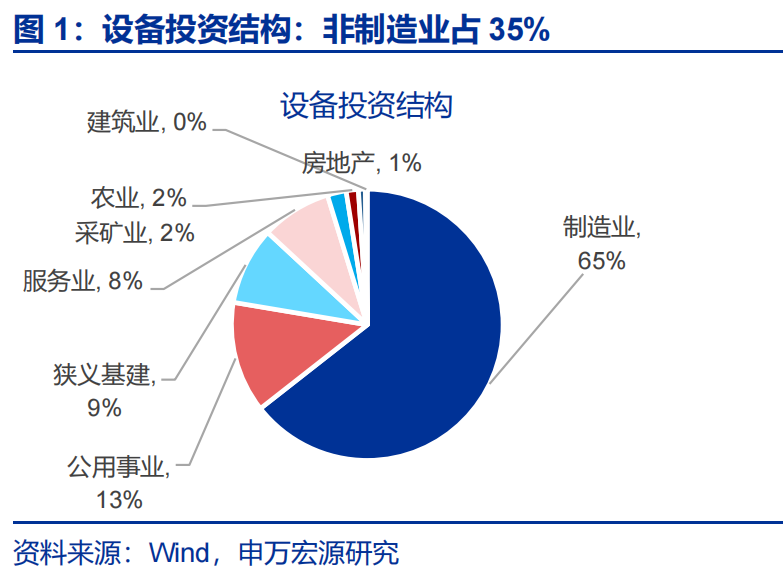
Group 1 - The core argument is that the high growth in equipment investment is not primarily driven by the "Two New" policies or the manufacturing Juglar cycle, but rather by strong investment in broad infrastructure and the service sector [1][8][69] - Equipment investment growth is significantly higher in sectors such as construction (65.5%), narrow infrastructure (46.1%), public utilities (16.5%), and services (13.9%) compared to manufacturing (6.5%), contributing an additional 8.1 percentage points to overall equipment investment [1][8][69] - In 2025, manufacturing investment growth is expected to decline to 1.9%, while equipment investment is projected to maintain high growth at 12.2%, driven by digital infrastructure and energy infrastructure [1][8][69] Group 2 - The strong growth in equipment investment is fueled by the establishment of a modern industrial system, which enhances digital infrastructure, alongside natural renewal cycles and recovering travel demand, thus boosting narrow infrastructure and construction equipment investment [3][24][69] - Key sectors such as software and computer services are experiencing growth rates of 53%, while aviation and road transport equipment investments are also high, correlating with a 17.9% year-on-year increase in civil aviation passenger transport [3][24][69] - The acceleration of energy transition and infrastructure investment in central and western regions, particularly since the intensification of the "dual carbon" policy in 2021, has led to a significant increase in public utility equipment investment [3][31][69] Group 3 - Fiscal policies have increased research spending and improved travel chain demand, leading to a notable rise in service sector equipment investment, which has outpaced construction investment since 2023 [4][40][69] - The growth rate for service sector equipment investment reached 13.9% in 2024, while construction investment only grew by 2.8% [4][40][69] - The recovery gap in service sector investment is estimated to be around 2-3 trillion yuan, indicating a strong potential for future growth in this area [4][56][69] Group 4 - Equipment investment is expected to continue its high growth into 2026, supported by both domestic and external demand chains [5][69] - Narrow infrastructure investment is anticipated to rebound significantly, particularly in digital infrastructure and hub-related investments [5][46][69] - The "dual carbon" policy is expected to further drive investment in equipment for carbon reduction, including modifications in high-energy-consuming industries and investments in renewable energy [5][51][69]
热点思考 | 设备投资,能否“持续高增”?(申万宏观·赵伟团队)
赵伟宏观探索· 2026-01-06 16:03
Core Viewpoint - The article argues that the high growth in equipment investment is not primarily driven by the "Two New" policies or the manufacturing Juglar cycle, but rather by strong investment in broad infrastructure and the service sector [2][9][71]. Group 1: Misconceptions about Equipment Investment Growth - Misconception 1: The strong equipment investment is attributed to the "Juglar cycle"; however, it is actually driven by robust growth in broad infrastructure and service sector investments. In 2024, the growth rates for equipment purchases in construction (65.5%), narrow infrastructure (46.1%), public utilities (16.5%), and services (13.9%) significantly outpaced manufacturing (6.5%), contributing an additional 8.1 percentage points to overall equipment investment [2][9][71]. - Misconception 2: The strong equipment investment is influenced by the "Two New" policies; however, the investment rhythm and structure contradict this view. Special government bonds supporting the "Two New" policies will intensify in the second half of 2024, but by February 2024, manufacturing investment and equipment purchase investment had already surged significantly [2][9][71]. - Misconception 3: The strong manufacturing investment is a result of strong equipment investment; in reality, it stems from construction and installation investments (expansion investments). Since 2024, while manufacturing and equipment purchase investments have grown simultaneously, the growth in equipment investment is not solely derived from manufacturing [3][21][71]. Group 2: Drivers of High Equipment Investment Growth - Reason 1: The establishment of a modern industrial system has driven strong digital infrastructure growth, combined with natural renewal cycles and recovery in travel demand, boosting narrow infrastructure and construction equipment investments. In 2024, narrow infrastructure equipment purchases contributed 4.3 percentage points to total equipment investment, exceeding manufacturing's contribution [4][25][77]. - Reason 2: The acceleration of energy transition and thermal power renovation investments in the central and western regions has strengthened public utility equipment investments, particularly since the intensification of the "dual carbon" policy in 2021. Public utility equipment investment has consistently outpaced construction investment by nearly 10 percentage points since 2021 [4][32][77]. - Reason 3: Increased fiscal spending on research and improvement in travel chain demand have boosted service sector equipment investments. Since 2023, service sector equipment investments have shown a trend of being stronger than construction investments, with significant growth in sectors like leasing and scientific research [5][42][77]. Group 3: Sustainability of High Equipment Investment Growth - Main Line 1: Narrow infrastructure is expected to rebound significantly, especially in digital infrastructure and hub-type investment construction. Recent policy measures, including the issuance of special bonds and financial tools, are set to support new infrastructure investments [6][48][79]. - Main Line 2: The "dual carbon" policy is expected to enhance investments in equipment for carbon reduction, including renovations in high-energy-consuming industries and investments in renewable energy [6][53][79]. - Main Line 3: Policies related to "investment in people" are likely to be significantly intensified, with service sector equipment investments related to consumer infrastructure expected to recover actively [6][58][79]. - Main Line 4: Equipment investments related to external demand are expected to remain resilient, particularly in sectors supporting the industrialization of emerging economies [6][63][79].

国内高频 | 假期提振下人流出行走强(申万宏观·赵伟团队)
赵伟宏观探索· 2026-01-06 16:03
Group 1: Industrial Production Trends - The industrial production shows a mixed trend, with an increase in high furnace operation and steel consumption. The high furnace operating rate increased by 0.7% week-on-week and rose by 1.3 percentage points year-on-year to 90% [2] - Steel apparent consumption increased by 0.9% week-on-week and rose by 4.4 percentage points year-on-year to 220 million tons [2] - The social inventory of steel continued to decline, down by 2.5% [2] Group 2: Weakness in Petrochemical and Consumer Chains - In the petrochemical chain, the soda ash operating rate decreased by 1.7% week-on-week and fell by 4.3 percentage points year-on-year to -2.4% [6] - The PTA operating rate saw a slight increase of 0.2% week-on-week but decreased by 1.8 percentage points year-on-year to -8.4% [6] - In the consumer chain, the polyester filament operating rate increased by 0.3% week-on-week and rose by 0.8 percentage points year-on-year to 1.8%, while the operating rate of automotive semi-steel tires decreased by 2.7% week-on-week and fell by 2.1 percentage points year-on-year to -9.2% [6] Group 3: Construction Industry Insights - Cement demand showed marginal improvement, with the national grinding operating rate decreasing by 3.8% week-on-week and falling by 3.9 percentage points year-on-year to 4.7% [11] - The cement shipment rate decreased by 1.1% week-on-week but increased by 0.4 percentage points year-on-year to -1.4% [11] - Cement inventory continued to decline, down by 1.7% week-on-week and up by 0.1 percentage points year-on-year to 0.5% [11] Group 4: Demand Tracking - The average daily transaction area of commercial housing in 30 major cities decreased by 26.1% week-on-week and fell by 0.5 percentage points year-on-year to -26% [20] - First and second-tier cities saw improvements in transactions, with year-on-year increases of 1% and 7.6% respectively, while third-tier cities experienced a year-on-year decline of 21.2% to -50.8% [20] - Port cargo throughput showed a recovery, with a year-on-year increase of 3.7 percentage points to 3.2% [25] Group 5: Price Trends - Agricultural product prices showed divergence, with egg and vegetable prices decreasing by 0.8% and 2.8% respectively, while fruit prices increased by 0.8% [48] - The industrial product price index increased by 0.6% week-on-week, with the energy and chemical price index decreasing by 0.2% and the metal price index increasing by 1.9% [54]

热点思考 | 设备投资,能否“持续高增”?(申万宏观·赵伟团队)
申万宏源宏观· 2026-01-06 11:19
Core Viewpoint - The article argues that the high growth in equipment investment is not primarily driven by the "Two New" policies or the manufacturing Juglar cycle, but rather by strong investment in broad infrastructure and the service sector [2][9][71]. Group 1: Misconceptions about Equipment Investment Growth - Misconception 1: The strong equipment investment is attributed to the Juglar cycle; however, it is actually driven by robust growth in broad infrastructure and service sector investments. In 2024, the growth rates for equipment purchases in construction (65.5%), narrow infrastructure (46.1%), public utilities (16.5%), and services (13.9%) significantly outpaced manufacturing (6.5%), contributing an additional 8.1 percentage points to overall equipment investment [2][9][71]. - Misconception 2: The strong equipment investment is influenced by the "Two New" policies; however, the investment rhythm and structure contradict this view. The special government bonds supporting "Two New" policies will only ramp up in the second half of 2024, while manufacturing and equipment purchase investments had already surged in February 2024 [2][9][71]. - Misconception 3: The strong manufacturing investment is a result of strong equipment investment; in reality, it stems from construction and installation investments (expansion investments). Since 2024, while manufacturing and equipment purchase investments have grown simultaneously, the growth in equipment investment is not solely derived from manufacturing [3][21][71]. Group 2: Drivers of High Equipment Investment Growth - Reason 1: The establishment of a modern industrial system has boosted digital infrastructure, combined with natural renewal cycles and recovering travel demand, driving equipment investment in narrow infrastructure and construction. In 2024, narrow infrastructure equipment purchases contributed 4.3 percentage points to total equipment investment, exceeding manufacturing's contribution [4][25][77]. - Reason 2: The acceleration of energy transition and thermal power renovation investments in central and western regions has strengthened public utility equipment investments, particularly since the intensification of the "dual carbon" policy in 2021 [4][32][77]. - Reason 3: Increased fiscal spending on research and improvements in travel chain demand have driven strong service sector equipment investments. Since 2023, service sector equipment investments have shown a trend of outpacing construction investments [5][42][77]. Group 3: Sustainability of High Equipment Investment Growth - Main Line 1: Narrow infrastructure is expected to rebound significantly, especially in digital infrastructure and hub-related investments. Recent policy measures, including a reduction in the proportion of special refinancing bonds, are anticipated to support a rebound in infrastructure investment in 2026 [6][48][79]. - Main Line 2: The "dual carbon" policy is expected to enhance investments in equipment for carbon reduction, including renovations in high-energy-consuming industries and investments in renewable energy [6][53][79]. - Main Line 3: Policies related to "investment in people" are likely to be significantly strengthened, with service sector equipment investments related to consumer infrastructure expected to recover actively [6][58][79]. - Main Line 4: Equipment investments related to external demand are expected to remain resilient, particularly in sectors supporting the industrialization of emerging economies [6][63][79].

国内高频 | 假期提振下人流出行走强(申万宏观·赵伟团队)
申万宏源宏观· 2026-01-06 11:19
Group 1: Industrial Production Trends - The industrial production shows a mixed trend, with an increase in blast furnace operation and apparent steel consumption. The blast furnace operating rate increased by 0.7% week-on-week and rose by 1.3 percentage points year-on-year to 90% [2] - The steel apparent consumption increased by 0.9% week-on-week and rose by 4.4 percentage points year-on-year to 220 million tons [2] - The social inventory of steel continued to decline, decreasing by 2.5% week-on-week [2] - The petrochemical and consumer chains are generally weak, with the soda ash operating rate decreasing by 1.7% week-on-week and down 4.3 percentage points year-on-year to -2.4% [6] - The PTA operating rate increased by 0.2% week-on-week but fell by 1.8 percentage points year-on-year to -8.4% [6] Group 2: Construction Industry Insights - In the construction sector, cement demand showed marginal improvement, with the grinding operating rate decreasing by 3.8% week-on-week and down 3.9 percentage points year-on-year to 4.7% [11] - The cement shipment rate decreased by 1.1% week-on-week but increased by 0.4 percentage points year-on-year to -1.4% [11] - Cement inventory continued to decline, with the inventory-to-capacity ratio decreasing by 1.7% week-on-week and increasing by 0.1 percentage points year-on-year to 0.5% [11] Group 3: Demand and Consumption Trends - The national commodity housing transaction remains at a low level, with the average daily transaction area in 30 major cities decreasing by 26.1% week-on-week and down 0.5 percentage points year-on-year to -26% [20] - The transaction in first and second-tier cities improved year-on-year, increasing by 1% and 7.6% respectively, while third-tier cities saw a decline of 21.2% year-on-year to -50.8% [20] - The port cargo throughput showed a rebound, with container throughput increasing by 2.4% year-on-year to 9% [25] - The intensity of human mobility increased, with the national migration scale index rising by 26 percentage points year-on-year to 35.1% [29] Group 4: Price Trends - Agricultural product prices showed differentiation, with egg and vegetable prices decreasing by 0.8% and 2.8% respectively, while fruit prices increased by 0.8% [48] - The industrial product price index increased by 0.6% week-on-week, with the energy and chemical price index decreasing by 0.2% and the metal price index increasing by 1.9% [54]

宏观专题报告:设备投资,能否“持续高增”?
Shenwan Hongyuan Securities· 2026-01-06 03:41
Group 1: Misconceptions about Equipment Investment Growth - Equipment investment growth is not primarily driven by the "Juga Cycle" but rather by strong infrastructure and service sector investments, with construction industry growth at 65.5% and narrow infrastructure at 46.1% in 2024, contributing an additional 8.2 percentage points to overall equipment investment[2] - The notion that equipment investment strength is influenced by the "Two New" policies is misleading; significant increases in manufacturing investment and equipment purchases occurred as early as February 2024, with equipment purchase investment growth reaching 17%[2] - Manufacturing equipment purchase investment growth was only 6.5% in 2024, significantly lower than the overall equipment investment growth of 15.7%[3] Group 2: Drivers of Equipment Investment Growth - The establishment of a modern industrial system has driven strong digital infrastructure investments, with software industry growth at 53% and computer services at 35%, contributing to overall equipment investment[4] - Public utility equipment investment has surged since the "dual carbon" policy was intensified in 2021, with electricity and heat equipment investment growth at 17.6%[4] - Service sector equipment investment has outpaced construction investment since 2023, with growth rates of 13.9% compared to 2.8% for construction investment in 2024[5] Group 3: Sustainability of Equipment Investment Growth - Equipment investment is expected to continue high growth in 2026, supported by a rebound in narrow infrastructure, particularly in digital infrastructure and hub-related investments[6] - The "dual carbon" policy is anticipated to further enhance investment in carbon reduction technologies, including high-energy-consuming industry upgrades and renewable energy investments[6] - Policies focused on "investing in people" are likely to increase service sector equipment investment, with a projected growth rate of around 6% in 2026, surpassing the overall fixed asset investment growth of 3%[7]