新式茶饮

Search documents
新加坡媒体:“新式”茶饮,先看舌象再喝茶
Huan Qiu Shi Bao· 2025-08-18 22:49
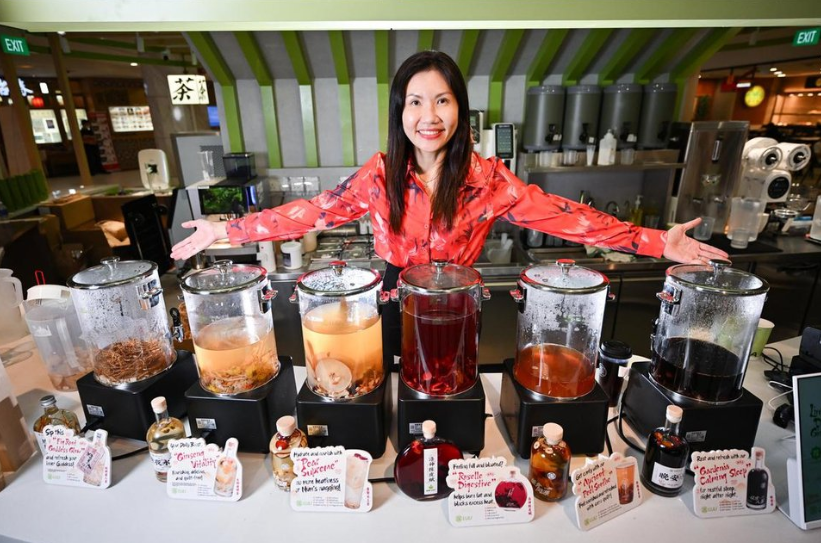
Core Insights - The new-style tea drinks are revitalizing the beverage market in Singapore, gaining popularity due to their health benefits and lifestyle attributes [1][3] - Local brands are modernizing traditional tea culture, with a rise in herbal teas, fruit teas, and tea balls over the past year [1] - New tea brands are being introduced based on traditional Chinese medicine concepts, offering healthier and functional beverages compared to sweet bubble tea [1] Market Trends - A local entrepreneur has launched 22 functional tea drinks, such as a product combining reishi mushroom and ginseng to enhance immunity and relieve fatigue, appealing to younger consumers [1] - Some stores will introduce AI smart mirrors to diagnose customers' physical conditions and recommend suitable tea drinks [1] - New tea houses are promoting tea culture and mindfulness, with offerings like high-quality oolong tea and tea-infused desserts [3] Consumer Engagement - Tea houses are providing tasting packages to cultivate appreciation for the complexity of tea flavors among both tea enthusiasts and newcomers [3] - A tea brand focuses on caffeine-free herbal and freeze-dried fruit teas, emphasizing tea's role in promoting inner peace and health [3] - Despite increasing competition, sellers view the rising visibility of tea drinks as a positive sign for the market, indicating greater influence and diversity in the tea beverage sector [3]

田野股份自曝财务造假背后:新式茶饮红利消退业绩“断崖” 私募基金陷关联交易接盘疑云
Xin Lang Zheng Quan· 2025-08-15 02:45
Core Viewpoint - Tianye Co., Ltd. is embroiled in a financial fraud scandal involving inflated revenues, manipulated costs, and misrepresented asset values, leading to significant financial restatements and potential delisting risks [1][2][3] Financial Performance - In 2024, Tianye's total profit was revised down from 34.08 million to 14.21 million, a decrease of approximately 58.3%, while net profit attributable to shareholders fell by 66.2% from 28.59 million to 9.65 million [2] - Revenue increased slightly by 7.3% compared to 2023, but net profit saw a dramatic decline of 71.5%, marking the lowest point since 2012 [2] - The company's revenue from core juice products accounted for 74.3% and 90.9% of total revenue in 2023 and 2024, respectively, but faced significant price pressures and declining margins [4][5] Client Dependency and Market Challenges - Major clients in the new-style tea beverage sector, such as Nayuki Tea and Tea Baidao, accounted for 82.9% of procurement, contributing significantly to revenue [2] - The competitive landscape has intensified, with major clients experiencing substantial losses, leading to reduced orders from Tianye [3][4] - The average price of mango juice dropped from 10,200 CNY/ton to 8,800 CNY/ton, while unit costs increased by 2%, resulting in a significant decline in gross margins [4][5] Governance and Investment Issues - Tianye established a private equity fund with Fangfu Venture Capital, but the fund's investment progress has raised concerns, with no direct project investments reported [6][7] - The fund's intended investment projects have been delayed, and there are questions regarding the legitimacy of certain transactions, including a questionable acquisition of shares in an unrelated biotech company [8][9] - Tianye has urged Fangfu to fulfill its capital contribution obligations by August 31, 2025, or risk exiting the fund [9]
宝藏之城丨这座小城的茉莉花香飘世界
Xin Hua Wang· 2025-08-09 00:53
Core Insights - Guangxi Hengzhou is renowned for its jasmine flower production, contributing over 80% of China's total jasmine flower output and more than 60% of the world's supply, earning it the title "Hometown of Chinese Jasmine" [2] - The local jasmine industry has created a diverse "1+9" industrial cluster, including flower tea, potted plants, food, tourism, and more, benefiting around 340,000 flower farmers [8] - The introduction of digital platforms and automated production lines has significantly improved efficiency in jasmine tea production, increasing flower fragrance utilization from below 50% to over 80% [12] Industry Development - The jasmine flower industry in Hengzhou has a rich historical background, with jasmine tea becoming a popular beverage since the Ming and Qing dynasties [12] - Recent years have seen a rise in new-style tea drinks, with local suppliers providing raw materials to over 70 new enterprises, contributing approximately 32% of revenue from new tea drink products in 2024 [15] - The establishment of over 170 flower tea enterprises in Hengzhou has fostered local economic growth and stability for farmers, allowing them to remain in their communities [8][6]

农业农村部:培育英德红茶等18个茶叶品牌,推动新式茶饮行业健康发展
Nan Fang Nong Cun Bao· 2025-07-03 05:35
Core Viewpoint - The Ministry of Agriculture and Rural Affairs is focusing on brand development in the tea industry, specifically highlighting the cultivation of 18 tea brands, including Yingde Black Tea, to promote the healthy development of the new-style tea beverage sector [2][6][11]. Group 1: Brand Development - A total of 226 regional public brands have been included in the cultivation plan, which features 18 tea brands such as Yingde Black Tea, Anhua Black Tea, and Laifeng Tuo Tea [3][11]. - The Ministry will collaborate with relevant departments to enhance industry regulations, strengthen quality and safety supervision, and actively develop contract agriculture [6][8]. Group 2: Industry Growth - Yingde Black Tea, known for its unique quality characteristics, has seen rapid development and was included in the "Five Major Billion-Level Modern Agricultural Industries" of Qingyuan in 2022 [16][21]. - The brand value of Yingde Black Tea has reached 5.178 billion yuan, ranking first in the national black tea category [24]. - The total planting area for Yingde tea exceeds 180,000 mu, with 880 tea enterprises operating in the region [25]. Group 3: New Product Development - Yingde tea companies are exploring new-style tea beverages through product innovation, resulting in over 30 refined processed products, including lychee black tea and lemon black tea [30][31]. - A new product featuring Yingde Black Tea, launched by the popular tea brand Heytea, achieved significant sales, with a single store selling up to 1,500 cups on the first day and national sales exceeding 800,000 cups [36][37].

茶饮店跨界卖“菜”一杯难求成新宠 解码“以茶会友”具象化“新”表达
Yang Shi Wang· 2025-07-02 05:44
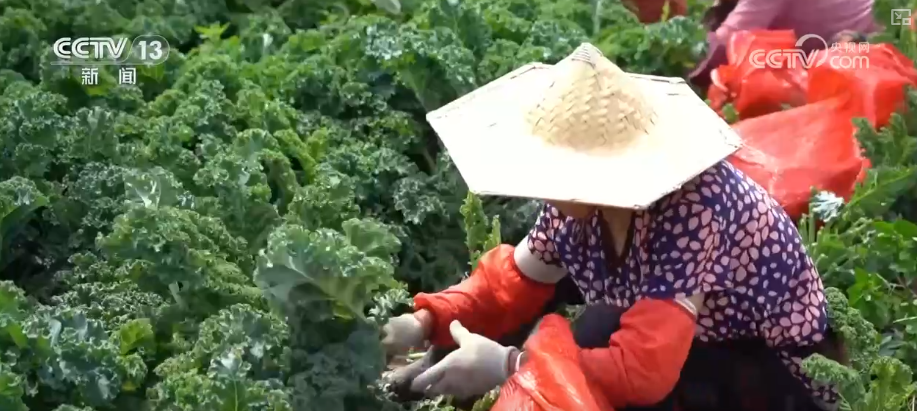
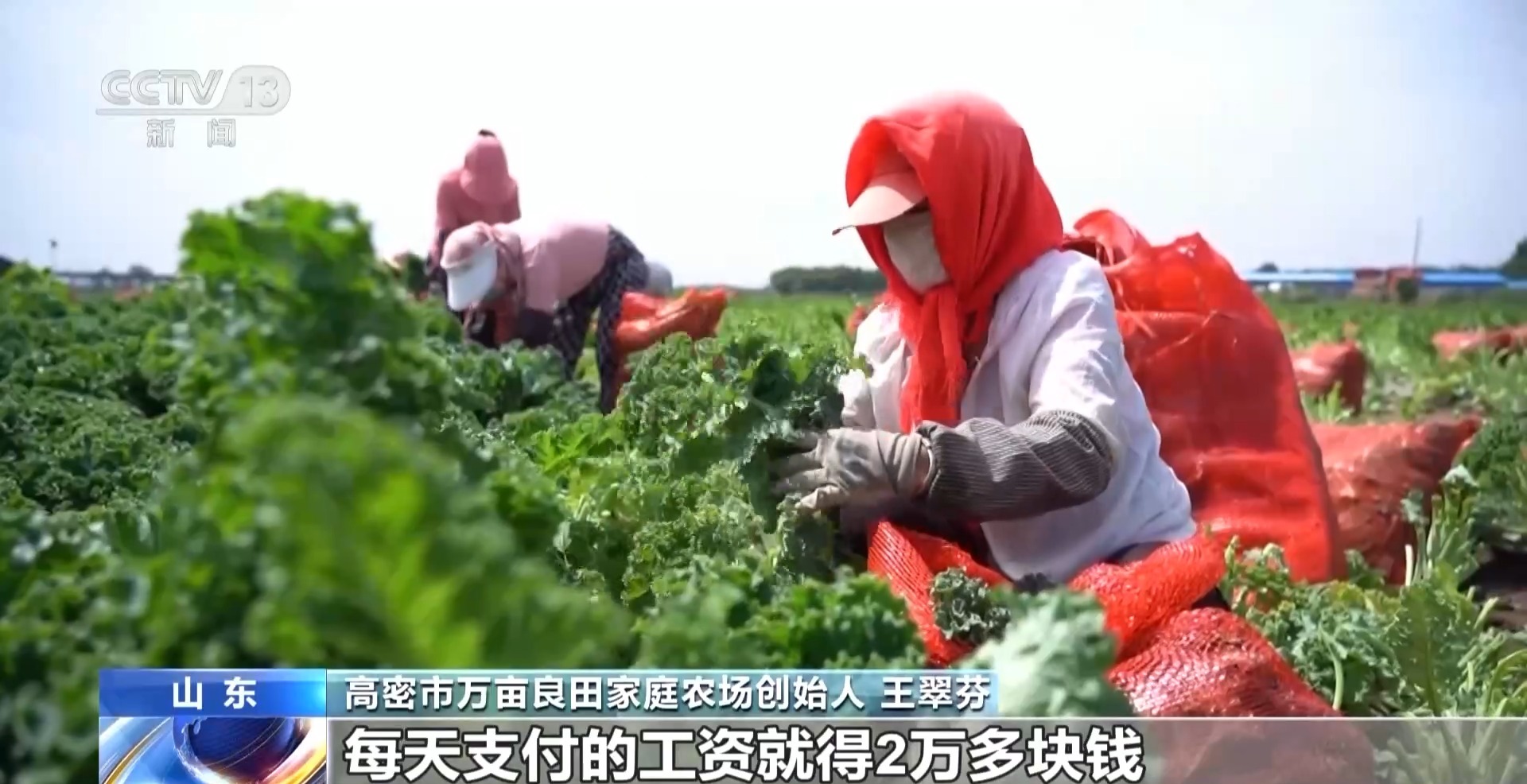
Core Viewpoint - The tea beverage market is experiencing a surge in demand for green vegetables like kale and bitter melon, leading to increased prices and new opportunities for growers [1][4]. Group 1: Market Trends - The tea beverage market is incorporating more vegetable ingredients, with kale becoming a popular choice among consumers [1]. - The market's growth has led to a significant increase in the planting and harvesting of kale, with a farm in Shandong producing over 8,000 tons annually [3]. - Major tea brands are directly partnering with farms to secure supplies, indicating a shift towards more integrated supply chains [4]. Group 2: Agricultural Innovations - To meet rising demand, local farms are enhancing their planting techniques, focusing on mechanization and standardization to improve quality and yield [5]. - In Yunnan, smart farming systems are being utilized for precise management of soil and resources, showcasing advancements in agricultural technology [7]. Group 3: Industry Development - The booming tea beverage market is fostering the growth of related industries, including packaging and equipment manufacturing, with a production capacity of around 20 million sets annually [8]. - The establishment of a tea beverage industrial park in Henan has attracted over 20 related enterprises, creating more than 4,000 jobs [10]. Group 4: International Expansion - Chinese tea brands are rapidly expanding in Southeast Asia, with significant growth in countries like Indonesia, Vietnam, and Malaysia [10][12]. - A Chinese milk tea brand in Indonesia has opened over 2,000 stores since its entry four years ago, reflecting the strong demand for these products [12]. - The successful entry of Chinese tea brands into international markets highlights the cultural appeal of tea and its role in enhancing China's soft power [19].
一杯奶茶如何重塑万亩良田?解码中国奶茶“地域密码”
Yang Shi Xin Wen· 2025-07-02 03:12
Group 1 - The tea beverage market is experiencing a trend towards incorporating green vegetables like kale and bitter melon, leading to increased demand and higher prices for these vegetables, creating new opportunities for farmers [1][5][9] - In Shandong, a kale farm has seen a surge in labor demand, employing around 150-160 workers daily and paying over 20,000 yuan in wages [3][5] - The kale farm is adopting advanced agricultural techniques, including mechanization and standardized planting methods, to enhance quality and yield, aiming for an annual production of over 8,000 tons [11][9] Group 2 - The new tea beverage trend is driving the development of a comprehensive industrial chain, with significant growth in related sectors such as coffee and jam production [14][16] - A tea beverage brand reported a sales increase of approximately 30% to 50% in the first quarter, leading to full utilization of production lines and boosting the growth of upstream and downstream enterprises [16][18] - The tea beverage industry is creating numerous job opportunities, with one county attracting over 20 related enterprises and generating more than 4,000 jobs [22] Group 3 - Chinese tea brands are rapidly expanding in overseas markets, particularly in Southeast Asia, with significant increases in store numbers and consumer demand [21][23] - A Chinese tea brand in Indonesia sold over 4,000 cups on its opening day and has expanded to five stores within four months, indicating strong market acceptance [25][27] - The success of Chinese tea brands abroad is attributed to their understanding of local consumer preferences and efficient supply chain management [29][31] Group 4 - The tea beverage market is witnessing a health trend, with a 507% increase in searches for "fruit and vegetable juice" and a 210% increase in order volume [35][39] - The demand for beverages containing kale has surged, with a 44-fold increase in delivery volume, while drinks with bitter melon have seen an 11-fold increase [37][39] - Regional specialty drinks are gaining popularity nationwide, with significant increases in search volumes for unique local ingredients [39]
新茶饮4月开店1857家,同比减少34%
Guan Cha Zhe Wang· 2025-05-29 12:58
Group 1: New Tea Beverage Industry Trends - In April 2023, 26 new tea beverage chain brands opened 1,857 new stores, a month-on-month increase of 25.05%, but a year-on-year decrease of 34.22% [1] - The total number of existing stores reached 112,252, with an increase of 1,569 stores compared to the previous month [1] - Despite the increase in store openings compared to March, many brands adopted cautious expansion strategies, with brands like Heytea and Naixue's Tea seeing a 90% reduction in year-on-year openings [1] Group 2: Expansion of Naixue's Tea - Naixue's Tea opened its 8th store in Southeast Asia at CENTRAL FESTIVAL in Chiang Mai, Thailand, generating nearly 3.5 million Thai Baht (approximately 770,000 RMB) in its first month [2] - The store is located in a prime area of a luxury shopping center, attracting over 20,000 visitors daily and offering nearly 50 types of tea and baked goods [2] Group 3: Tea Talk's International Expansion - Tea Talk's first store in Vancouver, Canada, has begun trial operations, selling nearly 1,000 cups in half a day [3] - This store is the brand's sixth in Canada, following five locations in Toronto, and features a menu similar to its domestic offerings [3] - The brand is accelerating its overseas expansion, with plans for stores in the US, Europe, Australia, and New Zealand [3] Group 4: Investment in Traditional Tea Brands - Dongshi Grandma's Handmade Tea completed a multi-million yuan Series B financing round, which will be used for supply chain development, regional market expansion, and product innovation [4] - The brand, established in October 2022, aims to promote Chinese tea culture by blending Taiwanese and Guangxi characteristics [4] Group 5: New Product Launch by Heqi Zheng - Heqi Zheng is set to launch a new series of health waters, including flavors like red date and goji berry water, red bean and barley water, and licorice and dried tangerine peel water [6] - The health water market is competitive, with major brands like Master Kong and Uni-President already established in this space [6] - The market for Chinese health waters has grown from 10 million yuan in 2018 to 450 million yuan in 2023, with expectations to exceed 10 billion yuan by 2028 [6]

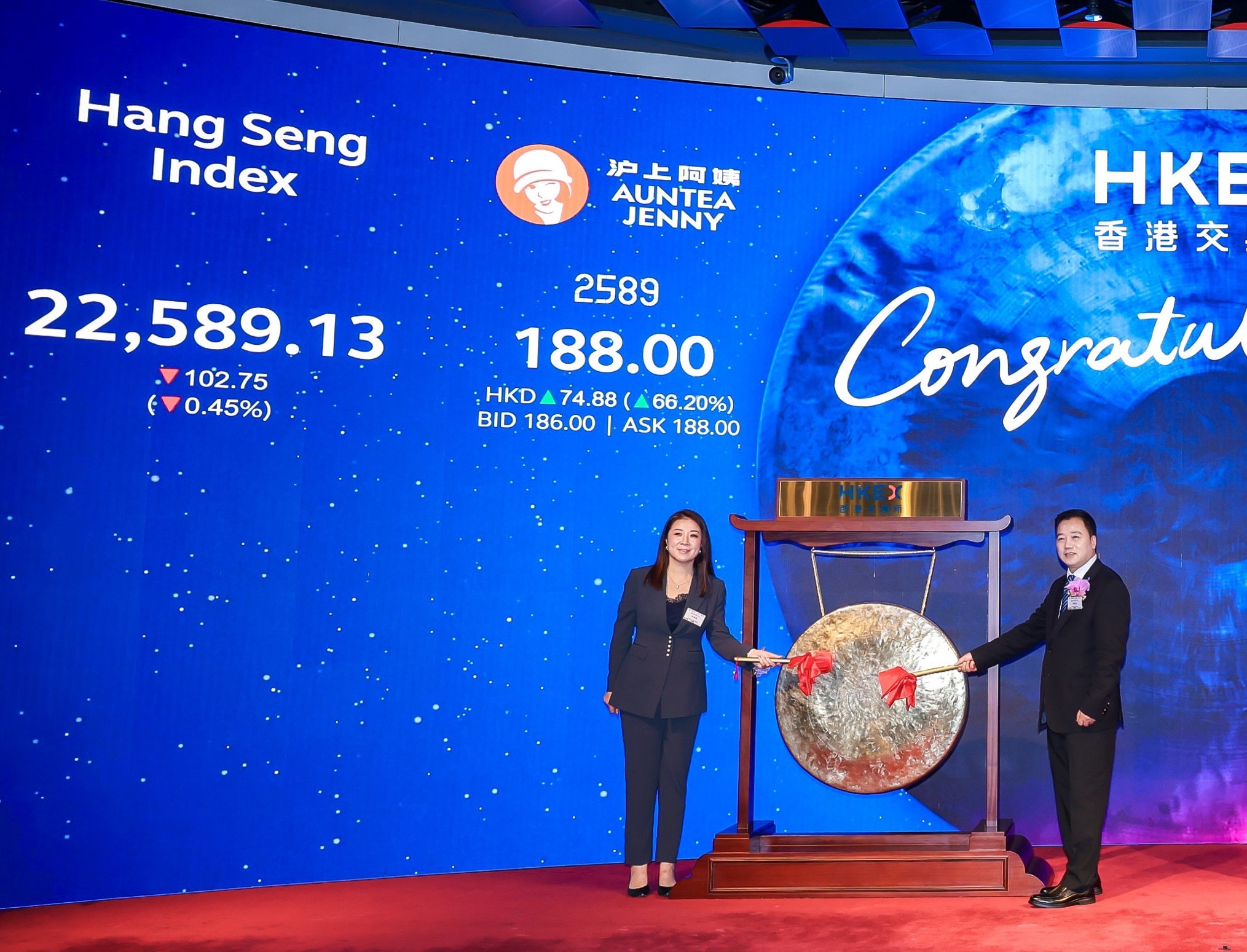
十年开出近万家门店,沪上阿姨终成新式茶饮第六股
Zheng Quan Zhi Xing· 2025-05-08 10:20
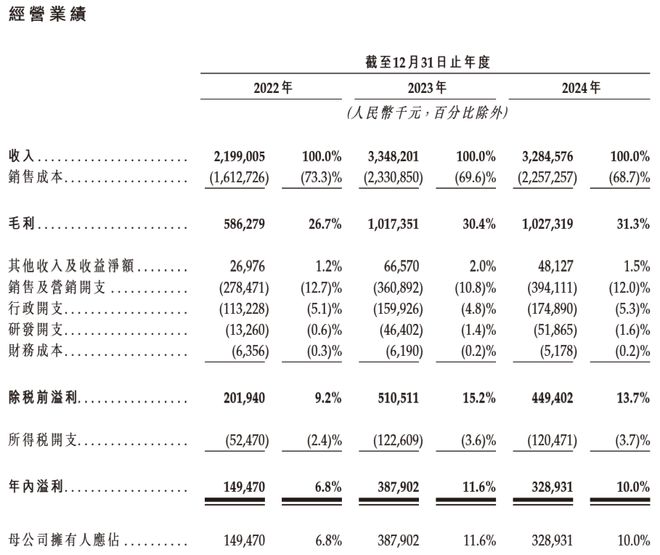
Core Viewpoint - Hu Shang A Yi (02589.HK) successfully listed on the Hong Kong Stock Exchange at an issue price of HKD 113.12, reflecting strong market optimism for the new tea beverage sector and the company's business model [1] Market Overview - The Chinese ready-to-drink beverage market has seen rapid growth, with the market size increasing from RMB 187.8 billion in 2018 to RMB 517.5 billion in 2023, representing a compound annual growth rate (CAGR) of 22.5%. It is projected to reach RMB 1,163.4 billion by 2028, growing at a CAGR of 17.6% [1] - The ready-to-drink tea market holds the largest share within this sector, accounting for 50% in 2023, with a market size expected to grow from RMB 108.5 billion in 2018 to RMB 258.5 billion in 2023, and further to RMB 573.2 billion by 2028 at a CAGR of 17.3% [2] Company Performance - As of December 31, 2023, Hu Shang A Yi operates the fourth-largest ready-to-drink tea store network in China, with revenues of RMB 21.99 billion in 2022, RMB 33.48 billion in 2023, and projected RMB 32.85 billion in 2024. Net profits were RMB 1.49 billion, RMB 3.88 billion, and RMB 3.29 billion for the same years [3][4] - The company has a strong focus on mid-range pricing, with a price range of RMB 10-20, filling the gap between lower-priced brands and premium offerings [5] Business Model - Hu Shang A Yi employs a franchise-focused business model, with 99.7% of its stores operated by franchisees, totaling 9,176 stores by the end of 2024, covering over 300 cities [5][6] - The company has a significant presence in lower-tier cities, with 50.4% of its stores located in third-tier and below cities, which is a strategic advantage due to lower investment costs and high demand [7][8] Revenue Breakdown - Franchise-related revenue accounted for 94.3% in 2022, 96.3% in 2023, and 96.5% in 2024, indicating a strong reliance on the franchise model for income generation [6] - Revenue from third-tier and below cities was RMB 9.45 billion in 2022, RMB 15.24 billion in 2023, and RMB 15.83 billion in 2024, representing 43.0%, 45.5%, and 48.2% of total revenue respectively [8] Strategic Focus - The company emphasizes product innovation, launching over 100 new products annually to meet diverse consumer needs, including seasonal offerings and new product lines [9] - Hu Shang A Yi has established a robust supply chain management system, with a nationwide cold chain logistics network to ensure product freshness and quality [10] International Expansion - Currently, Hu Shang A Yi's international business is in its early stages, with overseas revenue of RMB 6.33 million in 2024, accounting for only 0.2% of total revenue. The company plans to focus on increasing penetration in lower-tier cities while exploring niche markets through sub-brands [10]
全球门店超9000家 年销6亿杯的沪上阿姨正式登陆港股
Mei Ri Jing Ji Xin Wen· 2025-05-08 09:33
Core Viewpoint - The article highlights the remarkable growth of Hu Shang A Yi (Shanghai Auntie) from a small tea shop to a major player in the new-style tea beverage market, with over 9,000 stores and a successful IPO on the Hong Kong Stock Exchange, emphasizing its unique expansion strategy and strong consumer trust [1][5][19]. Group 1: Company Growth and Strategy - Hu Shang A Yi has achieved annual sales of 600 million cups, reflecting strong consumer trust in its product quality [5]. - The company has over 5,000 franchisees, demonstrating a 30% second-store rate, indicating confidence in the brand [5]. - The brand has expanded to over 300 cities in China, transitioning from a regional brand to a national giant through a "capillary" expansion strategy [5][19]. Group 2: Product Development and Market Position - The company has launched over 100 new products annually, enhancing its product innovation capabilities [7]. - Hu Shang A Yi has established a brand matrix covering multiple price ranges, including its main brand, a coffee sub-brand "Hu Ka," and a cost-effective "Light Enjoy" version [7]. - As of the end of 2023, Hu Shang A Yi ranked first among mid-priced tea beverage brands in Northern China and fourth overall in the industry [7]. Group 3: Financial Performance - Revenue figures for Hu Shang A Yi from 2022 to 2024 are projected at 2.199 billion, 3.348 billion, and 3.284 billion yuan, with an average annual growth rate of 14.3% [8]. - Adjusted net profits for the same period are expected to be 154 million, 416 million, and 418 million yuan, with an impressive average annual growth rate of 39.49% [8]. Group 4: Franchise Model and Market Penetration - The company operates primarily on a franchise model, with franchise-related revenue increasing from 2.072 billion to 3.169 billion yuan from 2022 to 2024, accounting for 96.5% of total revenue [12]. - The average initial investment cost for new stores is approximately 275,000 yuan, significantly lower than the industry average of 350,000 yuan [12]. - As of the end of 2024, 99.7% of Hu Shang A Yi's 9,176 stores are operated by franchisees, showcasing the effectiveness of its franchise strategy [12]. Group 5: Supply Chain and Market Focus - Hu Shang A Yi has built a robust supply chain network with 12 logistics bases and 15 cold chain warehouses, ensuring product quality and timely delivery [13]. - The company focuses on the underdeveloped market, with over half of its stores located in tier-three cities and below, capitalizing on the lower density of tea beverage shops in these areas [17][19]. - The company plans to use funds from its IPO for digital upgrades, new product development, and supply chain enhancements, aiming to deepen its market penetration [19].