新能源汽车转型

Search documents
一汽大众158万辆“销冠”背后,藏着多少焦虑?
Xin Lang Cai Jing· 2026-02-05 05:53
Core Insights - FAW-Volkswagen has faced significant challenges in the automotive market, particularly with the rise of BYD in the new energy vehicle sector, marking a shift in industry dynamics [1] - The company achieved a total vehicle sales of 1.5871 million units in 2025, with a notable performance from its Volkswagen brand, which sold 902,100 units, and Audi, which sold 567,000 units [3][4] - Despite being the only joint venture company to exceed 1.5 million annual sales, FAW-Volkswagen's total sales decreased by approximately 4.3% compared to 2024 [7] Sales Performance - In 2025, the penetration rate of new energy vehicles in China reached 47.9%, a 7 percentage point increase from the previous year, while traditional fuel vehicles still held a significant market share [3] - FAW-Volkswagen's fuel vehicle market share increased by 0.9 percentage points year-on-year, with all three major brands showing positive growth [5] - The company has been able to maintain its position in the fuel vehicle market, but faces increasing competition from new energy vehicles [10] Competitive Landscape - The automotive market is becoming increasingly polarized, with clear distinctions between leading, stable, struggling, and declining companies [5] - FAW-Volkswagen's sedan models, particularly the Sagitar and Magotan, are under pressure from competitors like BYD and Tesla, which are gaining market share in the compact and mid-size sedan segments [8][10] - The company has resorted to aggressive pricing strategies to maintain sales, with significant price reductions on models like the Sagitar and Audi A6L [10][12] Transition to New Energy - FAW-Volkswagen has recognized the need to pivot towards new energy vehicles, launching several plug-in hybrid models in response to market demands [15][21] - The company plans to introduce 13 new models in 2026, with a focus on new energy vehicles, aiming for 60% of sales to come from this segment by 2030 [19][21] - The shift towards hybrid and plug-in vehicles is part of a broader strategy to adapt to changing consumer preferences and market realities [22]

GREAT WALL MOTOR(2333.HK):4Q25 EARNINGS MISSED; DOWNGRADE TO SELL ON EARNINGS DOWNSIDE RISK AND VALUATION OVERSTRETCH
Ge Long Hui· 2026-02-02 22:46
机构:中银国际 研究员:LOU Jia/Olivia NIU/Maggie CAI Based on preliminary results, GWM's 4Q25 revenue grew 13% QoQ to RMB69.2bn, but net profit plunged 44% QoQ to RMB 1.3bn, sharply missing expectations due to seasonal bonus accruals, low sales efficiency from aggressive direct-sales set-up, and lower Russian scrap tax rebates. For 2026, the sales target of 1.8m units (1.2m domestic, 600k overseas) implies a 45%+ YoY domestic surge, driven by intensive rollouts under EC/DE platform. However, we deem the goal challengi ...
抱华为大腿逆天改命,股价缩水六成,张兴海父子迈入造车深水区
Xin Lang Cai Jing· 2026-01-30 03:17
Core Viewpoint - The partnership between Seres and Huawei has been crucial for Seres' survival, but it has come at the cost of losing its identity and independence in the automotive market [1][34]. Group 1: Financial Performance - Since its listing in Hong Kong, Seres has seen its stock price decline for three consecutive months, dropping 60% from its peak [2][35]. - Despite the stock decline, Seres' vehicle sales have reached historical highs for three consecutive months [3][36]. - Seres' revenue for 2024 is projected to reach 145.2 billion, a 305% increase year-on-year, with a 3.7% increase in the first three quarters of the current year [4][22][54]. Group 2: Relationship with Huawei - Seres has paid 75 billion to Huawei for procurement from 2022 to 2024, indicating a heavy reliance on Huawei for its operations [4][51]. - The collaboration with Huawei has led to Seres being perceived as a "contract manufacturer," with Huawei controlling key aspects of design, quality, and sales channels [14][48]. - Seres' financial struggles include a cumulative loss of 15.26 billion from 2018 to 2024, highlighting the cost of its dependence on Huawei [12][48]. Group 3: Market Position and Competition - The introduction of new competitors like SAIC, GAC, and BAIC has intensified competition for Seres, which previously enjoyed exclusive access to Huawei's resources [4][34]. - The success of the AITO brand has not translated into broader brand recognition for Seres, which remains overshadowed by Huawei's branding [14][62]. - Seres' attempts to develop its own brand, such as the Blue Electric series, have not gained market traction, indicating a lack of independent success [57][61]. Group 4: Future Challenges - As Huawei expands its automotive partnerships, Seres risks losing its unique position and may face challenges in maintaining its market share [30][65]. - The strategic importance of the AITO brand is diminishing as Huawei diversifies its partnerships, which could further complicate Seres' future [32][65]. - Seres' reliance on Huawei may limit its growth potential, as it has not successfully developed other brands to support its business [27][34].
“雷丁汽车破产重整”后续,此前创始人公开举报县委书记
Xin Lang Cai Jing· 2026-01-23 14:47
Core Viewpoint - Reading Automobile's bankruptcy restructuring plan has faced significant challenges due to investor defaults, leading to potential execution risks of the restructuring plan [1][9]. Group 1: Company Background - Reading Automobile, formerly known as Beidwen Holdings Group, was a leading player in the low-speed electric vehicle market, achieving a market share of over 30% and annual sales of 287,000 units at its peak [1][2]. - The company attempted to transition to new energy vehicles but faced difficulties, including a significant debt burden from acquisitions [3][6]. Group 2: Financial Challenges - The company reported a rapid decline in financial health, with a reported revenue of 12 billion yuan at its peak, but later faced a funding chain break and filed for bankruptcy within three months of revealing its financial troubles [2][6]. - As of May 2023, Reading was involved in 190 legal disputes, with claims exceeding 200 million yuan, indicating severe financial distress [5]. Group 3: Restructuring Efforts - The restructuring plan was initiated but has been hampered by investor defaults, with a total of 260 million yuan in investment payments not fulfilled as per the agreement [9][10]. - The restructuring management team has struggled to find willing investors, and the current investor, Yunying Group, has been criticized for lacking sufficient financial strength and industry experience [6][12]. Group 4: Legal and Government Involvement - The local government and courts are closely monitoring the situation, with the management team planning to negotiate with investors and potentially reorganize the company to protect creditor interests [10][12]. - A creditor has indicated that unless a major automotive company takes over, the restructuring is unlikely to succeed, reflecting the broader challenges in the automotive industry [7][8].
登顶3000万辆之后,一汽-大众在中国发展迎转型考验
Zhong Guo Qi Che Bao Wang· 2026-01-20 08:11
Core Insights - FAW-Volkswagen achieved total vehicle sales of 1,587,065 units in 2025, maintaining its position as the top-selling automaker and leading in fuel vehicle sales, although this figure is significantly lower than its peak sales of over 2 million units in 2018 [1] - The company faces challenges in the rapidly growing electric vehicle (EV) market, as its EV sales have declined sharply despite the overall market growth [2][3] Group 1: Sales Performance - FAW-Volkswagen's fuel vehicle market share increased by 0.9 percentage points year-on-year, reaching a historical high, but the reliance on traditional fuel vehicles poses risks as the market shifts towards EVs [1] - In contrast to the strong performance of fuel vehicles, the sales of its EV models, such as the ID.4, have seen significant declines, with ID.4 sales dropping by 39.4% year-on-year [2][3] Group 2: Challenges in EV Transition - The company has struggled with its EV transition, as evidenced by the poor sales performance of its ID series, which contrasts sharply with the strong sales of its fuel vehicle models [3] - The rapid technological advancements in the EV sector and the shift towards software-defined vehicles have made it difficult for traditional automakers like FAW-Volkswagen to keep pace with market demands [3] Group 3: Smart Technology and Innovation - FAW-Volkswagen has launched the "Oil-Electric Intelligence" strategy to enhance the smart features of its traditional fuel vehicles, but it still lags behind newer EV brands in terms of smart technology [4][5] - The company has introduced advanced driving assistance systems, but most of its models remain at Level 2 automation, while competitors are achieving higher levels of automation [5] Group 4: Management Changes and Strategic Direction - The company has undergone significant management changes, with two leadership transitions within a year, raising concerns about the continuity of its strategic direction [6][8] - New leadership is expected to address the challenges of transitioning to smart and electric vehicles, as well as adapting to the evolving automotive market in China [8] Group 5: Dealer Network and Market Adaptation - FAW-Volkswagen has a vast dealer network, but the traditional dealership model is facing pressure from new direct sales models, necessitating a transformation in its marketing approach [8] - The company must navigate the challenges of maintaining dealer profitability while adapting to new automotive sales strategies in a competitive market [8]
专访东风日产王骞:合资车企转型,要先去“爹味”
第一财经· 2026-01-19 08:30
Core Viewpoint - The article discusses the challenges and strategies of Dongfeng Nissan in the electric vehicle (EV) market, emphasizing the need for joint venture brands to adapt quickly to changing consumer preferences and market dynamics [2][3]. Group 1: Market Positioning and Consumer Engagement - Dongfeng Nissan's strategy focuses on appealing to younger consumers, with 60% of N6 buyers citing aesthetics as their primary reason for purchase [5]. - The concept of "emotional value" is highlighted as essential, where products must resonate with consumers beyond basic functionality, emphasizing co-creation with users [6]. - The N7 and N6 models have seen significant interest, with N7 having a 30% trade-in rate from fuel vehicles, while N6 attracts 60-80% new customers [8]. Group 2: Product Development and Strategy - The choice of a sedan for the N series over an SUV is strategic, as the market for compelling electric sedans is limited compared to SUVs [7]. - Dongfeng Nissan aims to break traditional barriers in product development by gaining local definition rights and speeding up decision-making processes [13][14]. - The company plans to invest 10 billion yuan by the end of 2026 to expand its R&D team to 4,000 people, indicating a long-term commitment to electrification and intelligence [22]. Group 3: Learning from New Forces - Dongfeng Nissan is adopting a project-based operational model inspired by companies like Huawei, aiming to enhance efficiency and responsiveness to market changes [28][29]. - The company acknowledges the need to learn from successful new energy vehicle brands to better meet evolving consumer demands [29]. Group 4: Future Product Plans - By 2027, Dongfeng Nissan plans to launch six new electric models, including two sedans in 2025 and a focus on SUVs with the NX8 model expected to launch in March-April 2026 [30]. - The sales target for new models is set at over 5,000 units per month to be considered successful, with 10,000 units seen as a benchmark for a "hit" product [32].
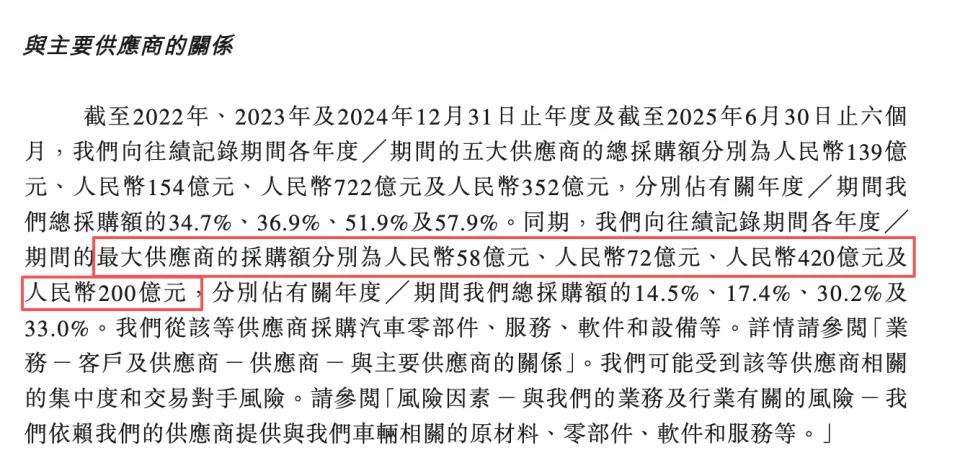
对华为猛交750亿学费,为什么赛力斯不后悔?
3 6 Ke· 2026-01-19 08:22
Core Viewpoint - The partnership between Seres and Huawei has transformed Seres from a struggling manufacturer to a leading luxury electric vehicle brand in China, with significant financial implications for both companies [1][5][12]. Group 1: Financial Transactions - Seres has disclosed that it will pay Huawei a total of 750 billion yuan in procurement fees over the years 2022, 2023, and 2024, with the total expected to exceed 1 trillion yuan by mid-2025 [1]. - On average, Huawei receives approximately 140,000 yuan for each vehicle sold by Seres, reflecting the comprehensive nature of Huawei's supply chain offerings [3]. - In 2024, Seres is projected to achieve a net profit of 5.946 billion yuan, with estimates for 2025 suggesting profits could reach between 8.3 billion and 10 billion yuan [8]. Group 2: Supplier Relationships - Huawei is identified as the primary supplier for Seres, providing critical components such as electric drive systems, smart cockpit systems, and advanced driver assistance systems, among others [3][4]. - The procurement from Huawei constitutes a significant portion of Seres' total procurement expenses, highlighting the dependency on Huawei's technology and services [4]. Group 3: Brand Development and Market Position - The AITO brand, under which Seres operates, has become the best-selling luxury brand in China, surpassing traditional competitors like BMW, Audi, and Mercedes-Benz [4][6]. - Seres' success is attributed not only to Huawei's technology but also to the management systems and manufacturing expertise that Huawei has imparted to Seres [5][6]. Group 4: Strategic Investments - Seres has invested an additional 11.5 billion yuan to acquire a 10% stake in Yingwang Technology, further solidifying its partnership with Huawei and gaining access to additional revenue streams [10]. - This strategic investment positions Seres alongside other major automotive players, enhancing its competitive standing in the industry [12].

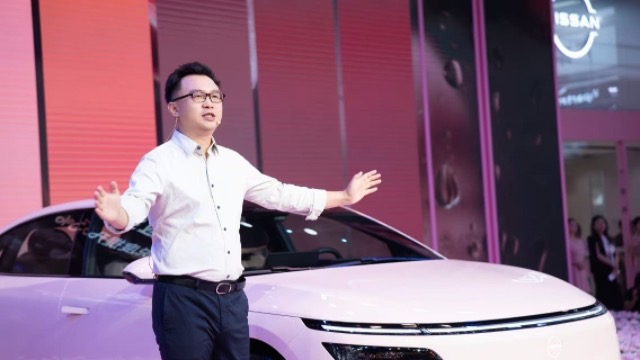
专访东风日产王骞:合资车企转型,要先去“爹味”丨合资反攻局
Di Yi Cai Jing· 2026-01-19 06:59
Core Viewpoint - The transformation of joint venture brands in the electric vehicle market is ongoing, with a focus on appealing to younger consumers and adapting to market demands [1] Group 1: Company Strategy and Market Position - Dongfeng Nissan's new energy models N7 and N6 have seen significant pre-order success, with over 20,000 orders for N7 in 50 days and over 10,000 for N6 in 10 days, but the brand still faces challenges in establishing a market-defining electric vehicle [1][2] - The company aims to enhance its appeal to younger consumers by emphasizing design, with 60% of N6 buyers citing aesthetics as their primary reason for purchase [3] - Dongfeng Nissan plans to invest 10 billion yuan by the end of 2026 to expand its R&D team to 4,000 people, indicating a long-term commitment to electric and intelligent vehicle development [16] Group 2: Product Development and Consumer Engagement - The company has shifted its product development approach to prioritize local market needs, gaining product definition rights in China starting with the N7 [9] - Dongfeng Nissan is adopting a simplified product configuration strategy, offering only two versions of new models to streamline consumer choices [11][12] - The N6 model is designed to appeal to new customers, with approximately 60-80% of its buyers being first-time Nissan customers [6] Group 3: Competitive Landscape and Future Plans - The company recognizes the competitive nature of the automotive market by 2026 and is focused on meeting customer demands to avoid falling behind [1][15] - Dongfeng Nissan plans to launch six new energy models by the end of 2027, including two sedans in 2025 and an SUV model NX8 targeting the 200,000 yuan market segment [22] - The company is learning from successful competitors like Huawei and Li Auto, adapting project-based operations to enhance efficiency and responsiveness [20][21]
北京现代加码转型 股东双方深化战略合作
Zhong Zheng Wang· 2026-01-17 08:00
Core Viewpoint - Beijing Hyundai is deepening its strategic cooperation with Hyundai Motor, focusing on the transformation towards new energy vehicles and enhancing competitiveness in the high-end market [1][2] Group 1: Strategic Cooperation - A high-level meeting was held between Zhang Jianyong, Chairman of BAIC Group, and José Munoz, CEO of Hyundai Motor, resulting in multiple agreements to strengthen collaboration [1] - The cooperation aims to inject new momentum into Sino-Korean automotive industry collaboration, recognizing the importance of the Chinese market [1] Group 2: Market and Product Strategy - Beijing Hyundai has achieved over 12 million users in 23 years and aims to sell 210,000 vehicles by 2025, with six consecutive months of positive growth [2] - The company plans to launch two new energy vehicle models in 2026, equipped with L2+ level driving assistance systems, as part of its "Smart Start 2030 Plan" [2] - Future strategies include a focus on localized operations, integrating local technology and supply chains, and advancing a diverse range of new energy products [2] Group 3: Support and Resources - Hyundai Motor will enhance its support for Beijing Hyundai by providing advanced electric and intelligent technologies and sending expert teams [1] - BAIC Group will open core resources and establish a joint R&D platform, while leveraging its brand and channels for comprehensive marketing support [1]

重夺“汽车第一城”,西部大佬杀回来了
Mei Ri Jing Ji Xin Wen· 2026-01-15 15:12
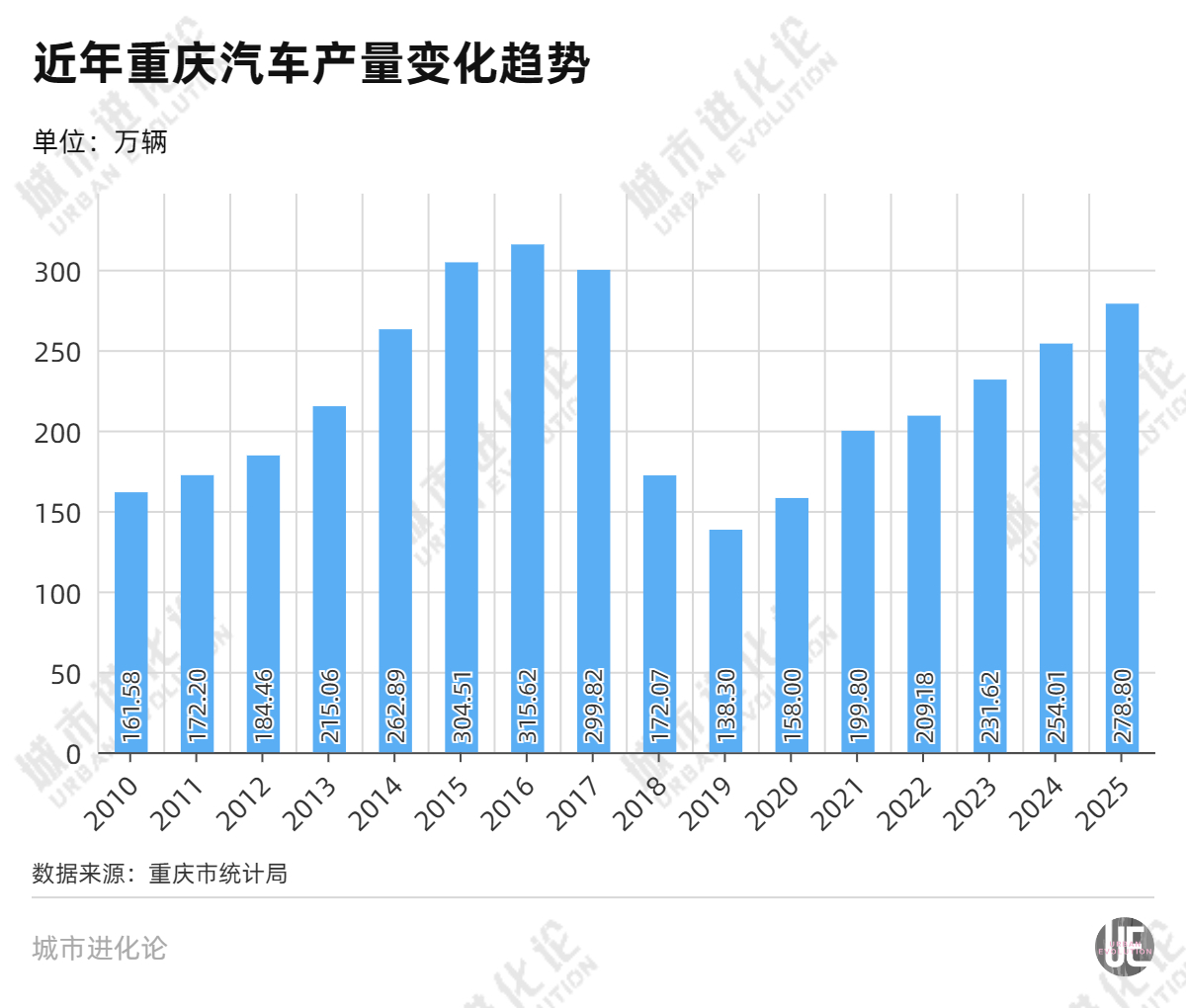
Group 1 - The core viewpoint of the article highlights the intense competition among cities for the title of "Automobile Capital," with Chongqing regaining its position as the leader in automobile production after a decade of decline [1][2][3] - Chongqing's automobile production is projected to reach 2.788 million units in 2025, marking a 9.7% increase, with new energy vehicles (NEVs) expected to account for 1.296 million units, a growth of 36% [1][2] - The issuance of the first L3-level autonomous driving license in China to Changan Automobile signifies a historic milestone for smart driving in the country, positioning Chongqing as a frontrunner in this field [2][11] Group 2 - The article discusses the historical context of Chongqing's automotive industry, noting its peak production of 3.156 million units in 2016, followed by a significant decline starting in 2017, where production fell to 1.383 million units by 2019 [5][6] - The resurgence of Chongqing's automotive sector is attributed to its focus on new energy vehicles, with Changan and Seres leading the charge through strategic partnerships, including collaborations with Huawei [7][10] - The competitive landscape is evolving, with predictions that the penetration rate of L3 and above autonomous vehicles will exceed 10% by 2030, indicating a shift towards smart electric vehicles as a new competitive arena [13][21] Group 3 - Chongqing aims to become a "smart connected new energy vehicle capital" by 2024, leveraging its unique geographical features as a testing ground for intelligent vehicles [14][17] - The article notes that while Chongqing is making strides, it faces challenges in AI competitiveness, ranking 14th nationally in AI industry strength, which could hinder its automotive ambitions [19][20] - The need for Chongqing to address its weaknesses in core technologies and talent retention is emphasized, as it seeks to maintain its leading position in the next round of industry competition [21]