日元套息交易

Search documents
野村东方国际 _ 日本央行加息的背景、展望及影响
野村· 2025-12-23 02:56
Investment Rating - The report maintains a positive outlook on the Japanese economy, indicating a shift in focus from anti-inflation measures to boosting potential growth rates [14]. Core Insights - The Bank of Japan (BOJ) has raised its policy interest rate from approximately 0.5% to 0.75%, aligning with market expectations and indicating a normalization of monetary policy [10][11]. - The report highlights that the core CPI in Japan is nearing the target of stable 2% inflation, with expectations that it may drop below this level in early 2026 [16][19]. - The fiscal policy under Prime Minister Kishi is described as "active but responsible," aiming to balance economic stimulation with fiscal sustainability [104][113]. Summary by Sections 1. Background and Outlook of BOJ's Monetary Policy - The BOJ's decision to raise interest rates is driven by nearing inflation targets and pressures from yen depreciation [6][17]. - The central bank's stance remains cautious, with no new estimates provided for the neutral interest rate, which is crucial for future rate hikes [10][25]. - The report notes that the BOJ's future rate adjustments will depend on comprehensive assessments of actual rates and loan conditions [10][11]. 2. Yen Carry Trade: Scale Evolution, Trends, and Drivers - The report discusses the evolution of yen carry trades, noting that the scale of foreign banks' yen funding has fluctuated, peaking at 14.4 trillion yen in May before declining [38]. - The attractiveness of yen carry trades has increased due to a decrease in implied volatility of the USD/JPY exchange rate [43]. 3. Fiscal Sustainability in Japan: Impact of Rising Interest Rates on Government Debt - Japan's government debt has been on the rise since the 1990s, with interest payments increasing significantly due to the BOJ's rate hikes [94][101]. - The report expresses concerns about the sustainability of Kishi's expansionary fiscal policies amid rising interest rates [90][93]. - The fiscal stimulus plan, amounting to 21.3 trillion yen, is expected to boost real GDP by approximately 0.3% [112][113].
日本加息“靴子”落地 机构研判全球资产配置再平衡
Zhong Guo Zheng Quan Bao· 2025-12-21 22:07
Group 1: Japan's Interest Rate Hike - The Bank of Japan raised its policy interest rate by 25 basis points to 0.75%, the highest level in 30 years, aligning with market expectations [1][2] - This marks the fourth rate hike since the normalization of monetary policy began in March 2024, with the last hike occurring in January of the same year [1] - Analysts noted that the market's reaction was calm, with major indices like the Nikkei 225 and Nasdaq showing gains following the announcement, contrasting with the severe market reaction seen in August 2024 [1][2] Group 2: Market Sentiment and Analysis - The narrative surrounding Japan's interest rate hike has shifted, with many institutions viewing it as a manageable rebalancing rather than a trigger for market turmoil [1][2] - The calm market response is attributed to the difference in market conditions compared to the previous rate hike, where external factors like disappointing U.S. employment data contributed to volatility [2][3] - Analysts believe that the current market environment is more stable, reducing the likelihood of a repeat of the "Black Monday" experienced in August 2024 [2][3] Group 3: A-Share Market Outlook - Despite recent fluctuations, the underlying logic for a positive mid-term outlook for A-shares remains intact, with potential for better positioning in the first half of 2026 [4][5] - External factors, including the Fed's interest rate decisions and concerns over AI market dynamics, have influenced market sentiment but have not altered the fundamental growth narrative [4][5] - The A-share market is expected to benefit from global capital reallocating towards undervalued assets, particularly in light of China's advancements in AI and technology [5][6] Group 4: Investment Opportunities - Foreign institutions are optimistic about A-share equity investment opportunities in 2026, citing attractive valuations compared to developed markets [6][7] - Key investment themes identified include AI, commodities, and sectors benefiting from structural changes, such as energy and finance [7][8] - The anticipated economic growth in China and improvements in corporate earnings are expected to provide fundamental support for the A-share market [6][7]
日本加息“靴子”落地机构研判全球资产配置再平衡
Zhong Guo Zheng Quan Bao· 2025-12-21 20:13
Core Viewpoint - The Bank of Japan raised interest rates by 25 basis points to 0.75%, marking the highest level in 30 years, which aligns with market expectations and is seen as a controlled rebalancing rather than a market shock like the "Black Monday" in August 2024 [1][2] Group 1: Market Reactions - Following the interest rate hike, major global markets reacted positively, with the Nikkei 225 index rising by 1.03% and the Nasdaq increasing by 1.31% [1] - Analysts noted that the market had already priced in the rate hike, leading to a calmer response compared to the previous year’s volatility [2][3] Group 2: A-Share Market Outlook - Despite recent fluctuations, the underlying logic for a positive mid-term outlook for A-shares remains intact, with potential for better positioning in the first half of 2026 [4][5] - External factors, such as the Fed's interest rate decisions and concerns over AI market bubbles, have influenced market sentiment but have not altered the fundamental growth narrative for A-shares [4][5] Group 3: Investment Opportunities - Investment focus for 2026 is expected to center on AI, commodities, and sectors benefiting from structural changes, with a particular emphasis on technology and innovation [7][8] - The potential for a gradual tightening of Japan's monetary policy is anticipated, which may influence global capital flows and investment strategies [3][6]
阅峰 | 光大研究热门研报阅读榜 20251214-20251220
光大证券研究· 2025-12-21 00:03
Group 1 - The article discusses the launch of Ant Group's AI health assistant "Ant Aifu," which aims to transform low-frequency medical consultations into high-frequency health management through an "AI companionship" model, achieving a digital closed-loop in healthcare, pharmaceuticals, and insurance [3][4]. - The application has reportedly surpassed 15 million monthly active users (MAU) and has reached the top of the app store rankings, indicating strong user engagement and market penetration [4]. - The integration of Ant Group's underlying payment and insurance infrastructure enhances the service's capability, allowing for a seamless transition from consultation to medication purchase and claims processing [4]. Group 2 - The report on Zhi Zi Cheng Technology (9911.HK) highlights its successful product and national replication strategy, with projected revenues of 6.9 billion, 8.41 billion, and 9.7 billion RMB for 2025-2027, and net profits of 950 million, 1.24 billion, and 1.49 billion RMB respectively, leading to a "buy" rating with a target price of 14.5 HKD [8]. - Salt Lake Pharmaceutical (300181.SZ) plans to acquire a variety of trace element injection assets, which is expected to enhance its product structure and profitability, with projected net profits of 655 million, 836 million, and 1.063 billion RMB for 2025-2027, maintaining a "buy" rating [24]. - The report on Fen Zhong Media (002027.SZ) indicates a stable business performance driven by strong demand from internet clients, with revised net profit forecasts of 5.62 billion, 6.05 billion, and 6.47 billion RMB for 2025-2027, maintaining an "overweight" rating [30].




招商银行:日本重启加息 或对全球金融条件形成压制
Ge Long Hui· 2025-12-20 11:25
Core Viewpoint - The Bank of Japan raised its policy interest rate by 25 basis points to 0.75% on December 19, indicating a cautious approach to interest rate hikes, which may lead to liquidity reversals in the yen and impact global financial conditions [1] Group 1: Interest Rate Impact - The Bank of Japan's interest rate increase is expected to maintain a highly restrained pace of future hikes, which may lead to a long-term suppression of global asset liquidity due to the reversal of yen carry trades [1] - Approximately $9 trillion in positions are still relying on low-interest yen for liquidity, which may gradually shrink as the interest rate differential between Japan and the U.S. narrows by the end of 2024 [1] Group 2: Japanese Government Fiscal Policy - The Japanese government has approved a supplementary fiscal budget equivalent to 2.8% of nominal GDP, which may exacerbate concerns in the market regarding fiscal expansion [1] - Plans to increase defense spending to 3% of nominal GDP and permanently reduce consumption tax may lead to a steeper rise in Japanese government bond yields in the medium to long term, accelerating the steepening of the yield curve [1]

招银:日本重启加息 或对全球金融条件形成压制
智通财经网· 2025-12-20 10:01
Core Viewpoint - The Bank of Japan (BOJ) raised its policy interest rate by 25 basis points to 0.75% on December 19, marking the highest level since 1995, with unanimous support from nine members [1] Group 1: Policy - The BOJ's decision to raise interest rates is a response to high inflation and the depreciation of the yen, with November's CPI reaching 3.0%, indicating that the policy rate has lagged behind inflation [1] - The BOJ is expected to maintain a gradual rate hike approach, with a potential increase of 25 basis points twice a year, aiming to reach a policy rate of 1-1.5% by 2026 [2] Group 2: Economic Performance - Japan's economy contracted in the third quarter, with trade tensions significantly impacting investment and exports [2] - The combination of "high inflation and low interest rates" has allowed Japan to experience nominal growth that exceeds the pace of debt accumulation, leading to a projected reduction in government leverage from 231% to 215% between 2020 and 2025, with further declines expected [2] Group 3: Risks - The potential reversal of yen liquidity and the Japanese bond market may exert pressure on global financial conditions, with approximately $9 trillion in low-interest yen liquidity at risk of contraction as the US-Japan interest rate differential narrows [3] - The Japanese government's fiscal expansion, including a supplementary budget of 2.8% of nominal GDP and plans to increase defense spending to 3% of nominal GDP, may raise market concerns about long-term debt sustainability [3] Group 4: Market Outlook - Japanese bonds are likely to face upward pressure on yields due to the interest rate hike, particularly at the long end, amid concerns over high debt and inflation [4] - While the interest rate hike may lead to temporary appreciation of the yen, the BOJ's cautious stance and market worries about Japan's debt suggest that the yen will likely continue to experience weak fluctuations [4] - Japanese equities are expected to maintain a strong upward trend, supported by globalization of Japanese companies and ongoing investments in AI and computing power [4]
【招银研究|海外宏观】重启加息,更多风险——日央行议息会议点评(2025年12月)
招商银行研究· 2025-12-20 05:41
Core Viewpoint - The Bank of Japan (BOJ) raised its policy interest rate by 25 basis points to 0.75%, marking the highest level since 1995, with unanimous support from all nine members [1][2]. Group 1: Policy - The BOJ's decision to raise interest rates is driven by high inflation and the depreciation of the yen, with November's CPI reaching 3.0% [2]. - The BOJ is expected to adopt a gradual approach to interest rate hikes, potentially increasing rates twice a year by 25 basis points, aiming for a range of 1-1.5% by 2026 [5]. - High inflation pressure is primarily supply-side driven, with food and utility costs being significant contributors, while service inflation is influenced by labor shortages due to an aging population [5][6]. Group 2: Economic Performance - Japan's economy contracted in the third quarter, with trade tensions severely impacting investment and exports [5][8]. - The combination of high inflation and low interest rates has allowed Japan to experience nominal growth that outpaces debt expansion, leading to a projected reduction in government leverage from 215% to 200% over the next five years [5][12]. Group 3: Strategy and Risks - The BOJ's cautious approach to interest rate hikes may lead to a reversal in yen liquidity, impacting global financial conditions, with approximately $9 trillion in low-interest yen positions potentially shrinking as the US-Japan interest rate differential narrows [14][15]. - Concerns over Japan's fiscal expansion, including a supplementary budget of 2.8% of nominal GDP and plans to increase defense spending, may lead to rising long-term bond yields and a potential "stagflation" scenario [17]. - The outlook for the yen remains weak, with limited potential for sustained appreciation despite the recent rate hike, while Japanese equities may continue to perform well due to global investment trends [17].

日本加息落地:暴跌没有,麻烦在后头
Sou Hu Cai Jing· 2025-12-20 03:16
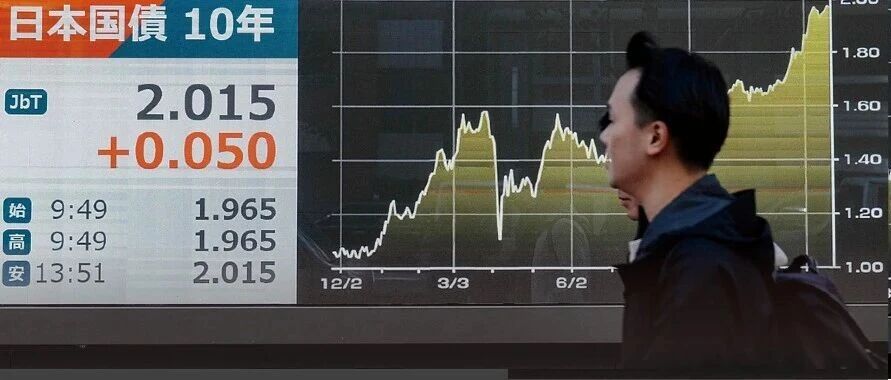
Group 1 - The Bank of Japan raised its policy interest rate by 0.25 percentage points to 0.75%, marking the highest level since September 1995 and signaling the end of a 30-year era of ultra-loose monetary policy [1][6][17] - The decision to raise interest rates was driven by persistent inflation, with the Consumer Price Index (CPI) for November showing a year-on-year increase of 2.9%, remaining above the central bank's 2% target for 44 consecutive months [6][21] - The increase in interest rates has led to a significant rise in Japanese government bond yields, with the 10-year bond yield reaching 2.022%, the highest in 26 years, indicating a sell-off in the bond market [20][22] Group 2 - The market reaction to the interest rate hike was initially positive, with the Nikkei 225 index rising by 1.03% on December 19, and further increasing by 1.69% by the following day, contrary to fears of a financial crisis [3][4] - The depreciation of the yen against the dollar post-rate hike, with the USD/JPY reaching a high of 157.394, raises questions about the effectiveness of the rate increase in attracting investment into yen-denominated assets [15][18] - Analysts express concerns about the long-term implications of rising interest rates on Japan's fiscal health, as the government debt-to-GDP ratio stands at 230%, and increased interest payments could strain the already fragile fiscal situation [21][26]

日本政策重大转向!专家警示:危险一跃
Xin Lang Cai Jing· 2025-12-20 00:33
转自:北京日报客户端 日本央行19日宣布加息25个基点,政策利率从0.5%上调至0.75%,达30年来最高水平。 刘英指出,如果连续两个季度负增长,日本经济就步入了技术性衰退。"紧货币"与"宽财政"的矛盾组合 不仅可能削弱加息效果,更将直接推高本已沉重的政府债务融资成本,加剧财政风险。 日元避险地位面临挑战 "加息还会让日元避险地位面临挑战,可能出现边际弱化趋势。"东方金诚研究发展部分析师徐嘉琦说。 这一决策标志着日本货币政策的重大转向!日本希望以此打破长期低利率、低通胀、低增长的循环。 但受访专家指出,在自相矛盾的财政与货币政策取向下,此次加息有可能成为"危险一跃"。 日本政策"错配" 日本政策利率自1995年9月调降至0.5%后,长期保持宽松,甚至长期实施负利率政策。自2024年3月日 本央行决定结束负利率政策以来,日本央行在行长植田和男执掌下致力于探索货币政策正常化。2024年 7月和今年1月,日本央行两度加息。 连续加息背后,是日本通胀数据连续44个月高于2%的央行目标,以及日元持续疲软带来的输入性通胀 压力。但即便如此,日本政府2025财年的补充预算案日前仍在参议院获得通过。 专家指出,这揭示了日本 ...
日本加息落地:暴跌没有,麻烦在后头
吴晓波频道· 2025-12-20 00:29
点击上图▲立即收听 " 日债指数级上升的利息压力,是日本经济头顶悬挂着的一柄达摩克利斯之剑。 本次加息创下日本1995年9月份以来的最高水平,也正式宣告了日本30年"超宽松货币政策"时代的终结。 其实原本国内市场对日本央行加息的关注度 不高, 但是坊间的一则小道消息却让人对此事警惕起来: 日本央行加息会引 发金融海 啸;全球的 股票、基金等金融资产都被卷进去,甚至金融市场会爆发一个堪比"次贷危机"的大事件。 那么,日本央行加息以后,"黑天鹅"是否爆发了呢?日本股市给出了答案。 " 日本央行公布利率决议后,植田和男出席新闻发布会 12月19日,日经225指数上涨1.03%。截止12月20日凌晨,日经225指数主连大涨1.69%,日本股市不仅没有崩盘,反而涨了不少。 那么,如何理解日本央行加息所掀起的这 场"金融风暴"?今天我们就聊聊这件事儿。 文 /巴九灵(微信公众号:吴晓波频道) 在全球金融市场屏息以待的关注下,12月19日,日本央行行长植田和男终于按下了那个加息的按钮:央行货币政策委员会以9:0全票通过加息方 案,将日本政策利率上调0.25个百分点至0.75%。 没有出现的"黑天鹅" 日本加息并不是今年12 ...