
汽车以旧换新政策

Search documents
【整车主线周报】北汽蓝谷发布业绩预告,12月重卡非俄出口创新高
东吴汽车黄细里团队· 2026-01-26 12:15
Group 1: Passenger Vehicle Insights - The industry subsidy policy has been implemented, and there is optimism for a recovery in passenger vehicle demand in Q1 2026, with a strong outlook for the passenger vehicle sector [3][27] - For the domestic market, focus on high-end electric vehicle companies that are less sensitive to policy changes, such as Jianghuai Automobile, and those expected to see growth in high-end offerings like Geely, Great Wall, BAIC Blue Valley, Seres, and Li Auto [3][27] - For exports, prioritize leading companies with established overseas systems and proven execution capabilities, recommending BYD, Great Wall, Chery, as well as Leap Motor, Xpeng, SAIC Motor, and Changan [3][27] Group 2: Heavy Truck Insights - In 2025, the wholesale volume reached 1.144 million units, a year-on-year increase of 26.8%, with domestic sales of 799,000 units (+32.8%) and exports of 341,000 units (+17.2%), exceeding initial market expectations [4][32] - The estimated number of operational heavy trucks meeting National IV standards or below was 690,000 at the beginning of 2025, expected to be reduced to 450,000-500,000 by the end of the year, with a total of 210,000 units eliminated throughout 2025 [4][32] - For 2026, domestic heavy truck sales are projected to reach 800,000-850,000 units, a year-on-year increase of 3%, with continued recommendations for leading companies such as China National Heavy Duty Truck, Weichai Power, Foton Motor, FAW Jiefang, and CIMC Vehicles [4][32] Group 3: Bus Insights - The implementation of the vehicle replacement policy in 2026 is slightly better than expected, with the continuation of subsidy levels rather than a reduction [4][32] - In 2025, bus sales were 29,000 units, a decrease of 6% year-on-year, indicating a gap from the reasonable replacement midpoint [4][32] - For 2026, a conservative estimate of 40,000 bus sales is projected, reflecting a 40% year-on-year increase, supported by the number of buses over eight years old awaiting replacement [4][32] Group 4: Motorcycle Insights - The motorcycle industry is expected to see total sales of 19.38 million units in 2026, a year-on-year increase of 14%, with large-displacement motorcycles projected at 1.26 million units (+31%) [5][29] - Domestic sales of large-displacement motorcycles are expected to grow slightly to 430,000 units (+5%) in 2026, while exports are anticipated to reach 830,000 units (+50%) [5][29] - The focus remains on leading companies benefiting from the sustained growth in large-displacement and export markets, recommending Chunfeng Power and Longxin General [5][29]



乘用车行业月报:12月乘用车销量同环比下降,预计26年销量同比微增
GUOTAI HAITONG SECURITIES· 2026-01-25 07:45
Investment Rating - The report assigns an "Accumulate" rating for the automotive industry [22]. Core Insights - The report forecasts that the wholesale sales of passenger vehicles in China will reach 30.21 million units in 2026, reflecting a year-on-year increase of 1%. The sales of new energy passenger vehicles are expected to be approximately 16.85 million units, with a year-on-year growth of 10% [20][21]. - In December 2025, the wholesale sales of passenger vehicles in China were 2.814 million units, a decrease of 9% year-on-year and a decrease of 7% month-on-month. For the entire year of 2025, the wholesale sales reached 29.908 million units, an increase of 9% year-on-year [7][8]. Summary by Sections 1. Total Passenger Vehicle Sales - In December 2025, the total wholesale sales of passenger vehicles in China were 2.814 million units, down 9% year-on-year and down 7% month-on-month. The wholesale sales of new energy passenger vehicles were 156.3 thousand units, up 3% year-on-year and down 8% month-on-month. For the entire year of 2025, the wholesale sales of passenger vehicles were 29.908 million units, up 9% year-on-year, while new energy passenger vehicle sales reached 1.5319 million units, up 25% year-on-year [7][8]. 2. Key Automotive Companies' December Sales - **BYD**: In December, BYD delivered 420 thousand vehicles, down 18% year-on-year and down 12% month-on-month. The overseas sales reached 132 thousand units, up 130% year-on-year [8][9]. - **Geely**: In December, Geely delivered 237 thousand vehicles, up 13% year-on-year. The 2026 sales target is set at 3.45 million units, a 14% increase from 2025 [10]. - **Changan**: In December, Changan delivered 257 thousand vehicles, down 19% year-on-year. The 2026 sales target is 3.3 million units, a 13% increase from 2025 [12]. - **Great Wall Motors**: In December, Great Wall Motors delivered 124 thousand vehicles, down 8% year-on-year. The company launched the "Guiyuan Platform" globally [13][14]. - **Li Auto**: In December, Li Auto delivered 44 thousand vehicles, down 24% year-on-year. The OTA 8.2 version was fully pushed [15]. - **Leap Motor**: In December, Leap Motor delivered 60 thousand vehicles, up 42% year-on-year. The 2026 sales target is set at 1 million units [16][17]. - **Xpeng Motors**: In December, Xpeng Motors delivered 38 thousand vehicles, achieving double growth year-on-year and month-on-month. The 2025 total deliveries reached 429 thousand units, up 126% year-on-year [18][19]. 3. Policy Impact and Market Outlook - The report notes that the effectiveness of the old-for-new vehicle policy is expected to diminish, with a projected total of over 11.5 million vehicles replaced in 2025, of which nearly 60% are new energy vehicles. The new policy for 2026 will shift from fixed subsidies to a "proportional subsidy + cap" model [20]. - The report anticipates that the reduction in new energy vehicle purchase tax incentives will lead to a more competitive market, pushing the industry towards higher performance and efficiency standards [21].



汽车以旧换新!最新提醒!
Xin Lang Cai Jing· 2026-01-21 10:25
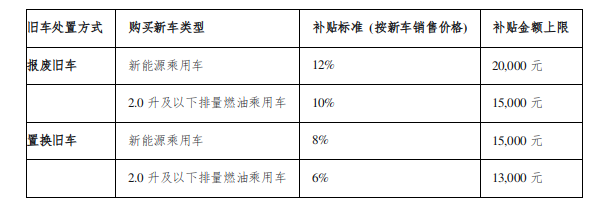
Core Points - The major change in the 2026 vehicle trade-in policy compared to last year is the implementation of a "limited implementation and lottery registration" model for subsidy eligibility, requiring consumers to register for a lottery to obtain qualification before applying for subsidies [1][21] Group 1: Registration and Eligibility - Consumers can participate in the lottery regardless of whether they trade in or scrap their old vehicles or purchase new ones, but it is recommended to register for the lottery first to avoid missing out on subsidies [21][22] - The materials required for lottery registration include the applicant's ID, photos or scans of the old vehicle's registration and driving documents, and the applicant must be the same person applying for the subsidy [24][35] - The validity period for the lottery qualification is three months, or until December 31, 2026, if the qualification period is less than three months from the date of winning [4][25] Group 2: Subsidy Details - In 2026, a consumer can only apply for either the scrapping or trade-in subsidy, not both [5][26] - The conditions for the old vehicle include registration dates: for trade-in, the vehicle must be registered before January 8, 2025; for scrapping, specific registration dates apply based on vehicle type [28] - The subsidy amounts vary based on the method of disposing of the old vehicle and the type of new vehicle purchased, with maximum subsidies of 20,000 yuan for scrapping an old vehicle for a new energy vehicle and 15,000 yuan for a fuel vehicle [9][29] Group 3: Application Process - The application process consists of two main stages: lottery registration and subsidy application after winning [30] - Registration starts on January 9, 2026, with monthly lottery draws, the first being on January 19, 2026 [31][33] - After winning the lottery, consumers have three months to submit required documents for subsidy application, with funds disbursed within approximately 30 working days after approval [34][36]
汽车ETF(516110)收涨超2.1%,汽车以旧换新政策支持内需
Mei Ri Jing Ji Xin Wen· 2026-01-16 08:31
Core Viewpoint - The automotive ETF (516110) rose over 2.1% on January 16, supported by the vehicle trade-in policy aimed at boosting domestic demand. The policy is set to transition from fixed subsidies to proportional subsidies based on vehicle prices, with the maximum subsidy aligning with 2025 levels. This is expected to stabilize market expectations and provide strong support for domestic demand in Q1 2026, while also helping to elevate vehicle price averages and restore industry profits [1]. Group 1 - The vehicle trade-in policy is scheduled to be implemented in 2026, shifting from fixed subsidies to proportional subsidies based on vehicle prices [1]. - The maximum subsidy amount will align with 2025 levels, which is expected to stabilize market expectations [1]. - The policy is anticipated to provide strong support for domestic demand in Q1 2026, aiding in the recovery of industry profits [1]. Group 2 - The commercial vehicle sector, particularly heavy trucks and buses, is expected to benefit from the policy, alongside ongoing export growth [1]. - Heavy truck sales are projected to exceed 1.15 million units in 2026, supported by natural scrappage of National IV and V vehicles and high export growth [1]. - The bus sector is expected to see increased sales due to the rollout of new energy bus subsidies and the upcoming export peak season [1]. Group 3 - The automotive ETF (516110) tracks the 800 Automotive Index (H30015), which includes listed companies in the automotive sector, covering vehicle manufacturing, parts supply, and automotive services [1]. - The index aims to reflect the overall performance and market trends of the automotive industry [1]. - The outlook remains positive for domestic passenger vehicles, focusing on smart technology, high-end products, and a strong cycle of new energy exports [1].
香港汽车ETF(520720)涨超0.8%,连续5日资金净流入
Mei Ri Jing Ji Xin Wen· 2026-01-16 03:18
Group 1 - The implementation of the vehicle trade-in policy in 2026 is expected to stabilize market expectations and boost Q1 sales, with the subsidy policy being beneficial for market stability [1] - The core adjustment for the passenger vehicle sector is the shift from fixed subsidies to proportional subsidies based on vehicle prices, which is anticipated to support domestic demand in Q1 2026 and help restore industry profits [1] - The commercial vehicle sector is expected to maintain high prosperity, particularly in heavy trucks and buses, driven by the continued effects of domestic subsidies and high growth in non-Russian exports [1] Group 2 - The Hong Kong Automotive ETF (520720) tracks the Hong Kong Stock Connect Automotive Index (931239), which selects listed companies involved in vehicle manufacturing and components to reflect the overall performance of the automotive sector [2] - The index focuses on smart driving and new energy vehicles, with constituent stocks primarily concentrated in the automotive sector, showcasing high growth potential and international characteristics [2]
香港汽车ETF(520720)涨超2.4%,行业结构性机会受关注
Sou Hu Cai Jing· 2026-01-13 02:46
Group 1 - The core viewpoint is that the 2026 vehicle trade-in policy will be implemented as scheduled, shifting from fixed subsidies to proportional subsidies based on vehicle prices, which is expected to stabilize market expectations and support domestic demand in Q1 2026 [1] - The maximum subsidy amount will align with the 2025 subsidy levels, which is anticipated to help raise the price center of vehicles and restore industry profits [1] - The heavy-duty truck sector is expected to benefit from ongoing domestic subsidy effects and high growth in non-Russian exports, with sales projected to exceed 1.15 million units in 2026; the penetration rate of new energy vehicles is expected to reach 30-35%, an increase of 3-8 percentage points year-on-year [1] Group 2 - The bus sector is expected to see growth due to the implementation of new energy bus subsidies and the arrival of the export peak season, with sales of medium and large buses projected to grow by over 10% year-on-year in 2026 [1] - The continuation of policies is likely to benefit both the heavy-duty truck and bus sectors, supporting domestic demand and favorable export conditions [1] - The Hong Kong Automotive ETF (520720) tracks the Hong Kong Stock Connect Automotive Index (931239), which selects listed companies involved in vehicle manufacturing, parts production, and related services, focusing on companies undergoing electrification and intelligent transformation [1]
以旧换新精准激活车市消费潜力
Jing Ji Ri Bao· 2026-01-09 22:06
Core Viewpoint - The Chinese government continues to support automotive consumption policies despite the adjustment of the new energy vehicle purchase tax from full exemption to a 50% reduction, signaling a strong commitment to boosting domestic demand and the automotive market [1] Group 1: Policy Implementation and Impact - The central economic work conference proposed the continuation of the "two new" policies until 2026, leading to the rapid release of implementation details for the vehicle trade-in subsidy, which clarifies the support scope, subsidy standards, and work requirements for the new year [1] - The latest data from the Ministry of Commerce indicates that by 2025, over 11.5 million vehicles will be traded in under the old-for-new policy, driving new car sales exceeding 1.6 trillion yuan [1] - The old-for-new policy is expected to activate the used car market gradually, contributing significantly to the stability of the automotive market and macroeconomic growth [1] Group 2: Subsidy Structure and Consumer Benefits - The new policy expands the range of eligible vehicles for trade-in subsidies, allowing more consumers to benefit from the subsidies, thus unlocking the consumption potential of the old-for-new program [2] - The subsidy amount is now linked to the sales price of new vehicles, addressing previous issues with fixed subsidies that lacked price elasticity and did not effectively guide consumer choices [2] - The new subsidy structure aims to enhance fairness and precision in policy implementation while promoting green consumption through higher subsidies for new energy vehicles [2] Group 3: Standardization and Market Transition - A unified national standard for trade-in subsidies will be implemented in 2026, with personal consumers receiving an 8% subsidy (up to 15,000 yuan) for new energy vehicles and a 6% subsidy (up to 13,000 yuan) for fuel vehicles [3] - The updated policy emphasizes the transition towards green and low-carbon vehicles, with nearly 60% of vehicles traded in under the old-for-new program expected to be new energy vehicles by 2025 [3] - The increasing "green content" in vehicle purchases is seen as a driving force for both consumption and industrial upgrades [3] Group 4: Market Dynamics and Consumer Behavior - The automotive consumption landscape in China has shifted from first-time purchases to a focus on replacement purchases, with an estimated 12 million trade-in applications expected by 2026, potentially driving an additional 2.6 million vehicle sales [4] - Consumers are increasingly prioritizing the quality and experience of vehicles, particularly in terms of smart technology, as the automotive market evolves [4] - The optimized old-for-new policy, combined with the wave of industrial transformation, is anticipated to further stimulate consumer activity and market potential in the automotive sector [4]
中航期货橡胶周度报告-20260109
Zhong Hang Qi Huo· 2026-01-09 11:10
1. Report Industry Investment Rating No relevant information provided. 2. Core Viewpoints of the Report - During the period from January 7 to January 13, 2026, the rainfall in the main natural rubber producing areas in Southeast Asia increased slightly compared to the previous period. The impact on rubber tapping work increased slightly in most areas north of the equator and decreased in most areas south of the equator [6]. - This week, the natural rubber futures market fluctuated strongly. Market liquidity and risk preference, as well as the cost support from raw materials, drove up the price, but the demand for downstream tires and finished - product inventory dragged down the upward slope. Although the price is currently at the upper edge of the range and technically pressured, the center of the market's oscillation is still expected to rise as long as the macro - sentiment persists [7]. - The 2026 automobile trade - in policy will benefit more consumers than in 2025, potentially boosting new car consumption [8]. - In December 2025, the wholesale volume of new - energy passenger vehicles was 1.57 million, a year - on - year increase of 4% and a month - on - month decrease of 8%. The cumulative wholesale volume in 2025 was 15.33 million, a year - on - year increase of 25% [8]. 3. Summary According to the Directory 3.1 Report Summary (PART 01) - The rainfall in the main natural rubber producing areas in Southeast Asia had different impacts on rubber tapping work in different regions during January 7 - 13, 2026 [6]. - The natural rubber futures market was bullish this week. Market liquidity, cost support from raw materials, and downstream tire demand had different effects on the price. The price was expected to rise further due to macro - sentiment [7]. - The 2026 automobile trade - in policy would benefit more consumers and potentially boost new car consumption. The new - energy passenger vehicle wholesale volume in December 2025 and the whole year had specific year - on - year and month - on - month changes [8]. 3.2 Multi - Empty Focus (PART 02) - **Bullish factors**: Strong demand for raw material replenishment overseas supported the price of natural rubber raw materials; the reduction of butadiene inventory pressure supported its price; market liquidity and risk preference increased [11]. - **Bearish factors**: The inventory of natural rubber was piling up slightly; the production and inventory of cis - butadiene rubber were high; the overall capacity utilization rate of tire enterprises was weakened by seasonal factors [11]. 3.3 Data Analysis (PART 03) - **Natural rubber raw material prices**: As of January 9, 2026, the prices of Thai glue and cup rubber, as well as those in Hainan and Yunnan in China, were stronger than before. The approaching of the off - season in domestic producing areas and overseas replenishment needs drove up the prices [12]. - **Natural rubber inventory**: As of January 4, 2026, China's natural rubber social inventory was 1.232 million tons, with a month - on - month increase of 2.5%. The inventory in Qingdao continued to pile up due to changes in inbound and outbound rates [15]. - **Butadiene and cis - butadiene rubber**: This week, the domestic butadiene price rose rapidly due to factors such as expected reduction in imports and strong downstream demand. The theoretical production profit of cis - butadiene rubber decreased. As of January 9, 2026, the production of cis - butadiene rubber was high and the inventory fluctuated at a high level [16][19]. - **Tire enterprises**: As of the week of January 9, the capacity utilization rates of all - steel and semi - steel tire sample enterprises decreased. The inventory depletion of all - steel tires was slightly better than that of semi - steel tires. The capacity utilization rate was expected to recover after the New Year's Day holiday but would decline seasonally during the Spring Festival [20]. - **Price differences between rubber contracts**: As of January 8, the price difference between the "RU - NR" main contracts was relatively stable, while the "NR - BR" main contract price difference narrowed, mainly affected by the stronger performance of butadiene prices [23]. 3.4后市研判 (PART 04) - Macro factors, natural rubber fundamentals, synthetic rubber fundamentals, and downstream tire demand had different impacts on the market. Market liquidity and raw material cost support were the main driving forces, while downstream demand and inventory were drag factors. The price was at the upper edge of the range, but the market's oscillation center was expected to rise as long as the macro - sentiment remained [26].
开年车市实探:宝马有车型官降30万,多品牌补贴购置税,小米销售坐收新SU7“天使单”
Xin Lang Cai Jing· 2026-01-09 08:27
Group 1: Market Dynamics - The competition among car manufacturers has intensified at the beginning of the year, with various promotional activities launched to attract consumers due to new policies like halving the new energy vehicle purchase tax and adjusting national subsidies [1][8] - Multiple car companies, including Tesla and Xiaomi, have introduced new financial policies and promotional offers to stimulate sales, indicating a proactive response to market dynamics [2][4] Group 2: Price Adjustments - BMW has adjusted the suggested retail prices of over 30 models, with the largest price drop being 301,000 yuan for the i7 M70L, reducing its price from 1,899,000 yuan to 1,598,000 yuan [2][3] - The price reduction for the iX1 eDrive25L is 24%, dropping from 299,900 yuan to 228,000 yuan, reflecting BMW's strategy to respond to market conditions [2] Group 3: Consumer Incentives - Tesla has launched a limited-time long-term purchase plan, offering low monthly payments for Model 3 and Model Y, with a down payment starting at 79,900 yuan and monthly payments as low as 1,918 yuan [4][5] - Xiaomi's new financial policy for the YU7 includes a 3-year interest-free option, with a down payment starting at 74,900 yuan and monthly payments from 4,961 yuan [5] Group 4: New Product Launches - Xiaomi has announced the new generation SU7, with a starting pre-sale price of 229,900 yuan, and plans to deliver the vehicle in April 2026 [6] - XPeng Motors is set to launch the new P7+ and G7 models, with the G7 achieving a comprehensive range of over 1,100 kilometers in cold conditions [7] Group 5: Policy Impact - The recent policy changes, including the adjustment of the new energy vehicle purchase tax from full exemption to a 50% reduction, are expected to increase consumer costs and influence purchasing decisions [3][8] - The government has introduced a 15,000 yuan subsidy for vehicle purchases completed before January 18, further incentivizing consumers [4]
2025年汽车以旧换新总量超1150万辆,新能源汽车占比近六成
Hua Xia Shi Bao· 2026-01-08 07:36
Core Insights - The "old-for-new" policy for automobiles in China is expected to drive significant growth in the automotive consumption market and industry upgrades, with over 11.5 million vehicles being replaced and related sales exceeding 2.6 trillion yuan in 2025 [2][3] - The policy has led to a substantial increase in the market share of new energy vehicles (NEVs), with NEVs accounting for nearly 60% of vehicles sold through the replacement program [3][4] - The policy has effectively stimulated demand for vehicle upgrades, contributing over 1 percentage point to the overall retail sales growth of consumer goods in 2025 [4] Group 1: Market Dynamics - The "old-for-new" policy has transformed the automotive market, with NEVs achieving a retail market share exceeding 50% for nine consecutive months, peaking at 59.4% in November [3][4] - The policy has created a strong demand for high-quality, green, and smart vehicles, leading to a significant increase in consumer acceptance of NEVs [3][5] - The automotive sector's growth is supported by a robust demand-driven mechanism that encourages manufacturers to innovate and optimize product structures [5][6] Group 2: Environmental and Social Impact - The recycling and resource regeneration aspects of the "old-for-new" policy have led to a significant increase in the recovery of scrapped vehicles, reaching approximately 9.8 million units in 2025, a 24.5% year-on-year increase [7] - The policy has resulted in the recycling of around 960 million tons of steel and 130 million tons of non-ferrous metals, significantly reducing reliance on primary mineral resources and cutting carbon emissions by approximately 24.5 million tons [7][8] - The active second-hand car market, with transactions reaching 39.7 million units from 2024 to 2025, indicates a maturing automotive market and supports resource conservation [8][9] Group 3: Policy Effectiveness and Future Outlook - The "old-for-new" policy has established a positive feedback loop between market demand, policy incentives, and industry upgrades, enhancing China's competitive position in the global NEV supply chain [5][6] - The policy has not only stimulated immediate sales but also fostered long-term competitiveness through technological innovation and cost optimization [6][9] - As the policy framework continues to evolve, it is expected to further enhance the sustainability and vitality of China's automotive industry, positioning it as a leader in the global transition to low-carbon transportation [9][10]
