汽车全球化

Search documents
理想汽车:正式进入埃及、哈萨克斯坦和阿塞拜疆市场
Ge Long Hui A P P· 2025-12-17 10:26
Core Insights - Li Auto has officially entered the markets of Egypt, Kazakhstan, and Azerbaijan, marking a significant expansion in its overseas business operations [1] - This expansion follows the company's previous entry into the Uzbekistan market, completing its strategic layout across Central Asia, the Caucasus region, and Africa [1] - The company is launching its main models, including the Li L9, Li L7, and Li L6, to cater to the local luxury market demand [1] - To ensure a consistent user experience, Li Auto will provide official warranty services, professional after-sales support, and ongoing OTA technology upgrades for overseas users [1]

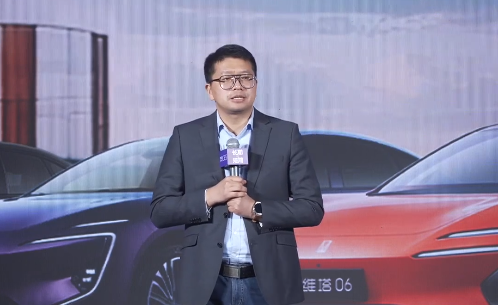
阿维塔雍军:供应链和主机厂要一起做全球化
Xin Lang Cai Jing· 2025-12-05 03:12
Core Viewpoint - The 2025 New Automotive Cooperation Ecosystem Exchange Conference emphasizes the need for collaboration between supply chain partners and manufacturers to achieve globalization in the automotive industry [1][4]. Group 1: Globalization Strategy - Companies like Avita and Changan are pursuing globalization, currently achieving satisfactory sales through KD (knock-down) or direct trade methods [1][4]. - As globalization reaches a certain scale, companies will inevitably face tariff barriers between countries, necessitating a strategic approach to market entry [1][4]. - The proposed model involves "serving one country in one country," indicating a deeper commitment to local markets [1][4]. Group 2: Supply Chain Integration - The entry into new markets should not only involve manufacturers but also the entire supply chain, highlighting the importance of collaboration [1][4]. - Support from all suppliers is crucial throughout the processes of product experience, innovation, and globalization [1][4].


首家央企新势力要IPO了
Hua Er Jie Jian Wen· 2025-11-28 07:32
Core Viewpoint - Avita, a high-end electric vehicle brand under Changan Automobile, has submitted its IPO application to the Hong Kong Stock Exchange, aiming to become the first central enterprise new energy stock in Hong Kong [2] Group 1: Company Growth and Market Position - Avita has achieved a "three years, four cars" layout, with four main models and two limited edition models, covering the mainstream high-end market priced between 200,000 to 700,000 RMB [2] - The company has seen consistent monthly sales exceeding 10,000 units in recent months, with total sales surpassing 100,000 units from January to October [2][4] - Avita's revenue is projected to grow significantly, with expected revenues of 5.645 billion RMB and 15.195 billion RMB for 2023 and 2024 respectively, marking a year-on-year increase of 169.16% [4] Group 2: Strategic Goals and Future Plans - Avita aims to achieve global sales of 400,000 units by 2027 and 800,000 units by 2030, with a long-term goal of 1.5 million units by 2035 [5] - The company plans to focus on enhancing product supply and strengthening its foundational capabilities to achieve scale effects [5] - Avita has completed four rounds of financing, raising over 19 billion RMB, with the IPO funds intended for product development, brand building, and operational support [5][8] Group 3: Partnership with Huawei - Avita has established a strategic partnership with Huawei, with plans for Huawei's products and technologies to be first launched on Avita vehicles [6] - The two companies plan to jointly launch 17 models by 2030, including five upgraded models in 2026 [7] Group 4: Global Expansion - Avita is expanding its presence internationally, having entered over 34 countries and regions since September 2024, with plans to establish over 160 sales channels by 2030 [8] - The brand maintains a high-end positioning in overseas markets, exemplified by the Avita 11's starting price of 1.56 million RMB in Singapore [8]
全球份额稳定提升,中国汽车持续释放活力
Zhong Guo Qi Che Bao Wang· 2025-11-12 13:03
Core Insights - The global automotive market is experiencing significant growth, with global sales reaching 8.55 million units in September 2025, marking a 10% year-on-year increase and a 12% month-on-month increase. China's market share has risen to 38%, up 2 percentage points from the previous year, indicating an acceleration in the globalization of Chinese automobiles [2] Group 1: Domestic Market Dynamics - A series of favorable policies in China have injected strong momentum into the automotive and particularly the new energy vehicle (NEV) sector, driving domestic consumption through trade-in and replacement incentives [2] - Major Chinese automakers, including SAIC, BYD, and Geely, reported sales exceeding 300,000 units in October, with significant year-on-year growth, and the share of NEVs in traditional automakers' sales continues to rise [2] - New energy vehicle startups like Leap Motor, Xiaomi, and Xpeng have also achieved record sales, with Leap Motor's monthly sales surpassing 70,000 units for the first time [2] Group 2: Global Market Position - Chinese automakers are increasingly influential in the global market, with two Chinese companies, BYD and Geely, ranking 6th and 9th respectively among the world's top 10 automakers, and Chery approaching the top 10 at 11th place [4] - The shift in product strategy for Chinese automakers has moved from a one-size-fits-all approach to localized development tailored to the specific needs of different regional markets, enhancing their competitiveness [4][5] - Chinese NEV companies are adapting to stringent European emission regulations and are exploring mid-to-high-end products, improving their brand perception and market presence [4] Group 3: Strategic Shifts in Global Operations - Chinese automakers are transitioning from "going out" to "going in," establishing local production facilities overseas to comply with local regulations and reduce trade barriers [5] - The "ecological going out" strategy represents a new model of globalization for Chinese automotive companies, focusing on systematic output, localized R&D, and supply chain collaboration [5] - The future direction for Chinese automotive companies includes deepening technological innovation, enhancing supply chain collaboration, and building a comprehensive global service ecosystem to maintain stable growth in global market share [5]



观车 · 论势 || 全球份额稳定提升,中国汽车持续释放活力
Zhong Guo Qi Che Bao Wang· 2025-11-12 02:53
Group 1 - Global automobile sales reached 8.55 million units in September 2025, marking a 10% year-on-year increase and a 12% month-on-month increase, with China's global market share rising to 38%, up 2 percentage points from the previous year [1] - Major Chinese automakers, including SAIC, BYD, and Geely, reported monthly sales exceeding 300,000 units in October, showing significant year-on-year growth, while new entrants like Leap Motor, Xiaomi, and Xpeng also achieved record sales [1][2] - The Chinese automotive industry is experiencing a robust growth driven by favorable domestic policies, particularly in the new energy vehicle sector, which has led to increased consumer demand and a diverse product offering [2] Group 2 - Chinese automakers have established a comprehensive supply chain and have achieved self-research capabilities in key components such as power batteries and electric control systems, enhancing their competitiveness in the domestic and global markets [2] - Two Chinese companies, BYD and Geely, ranked 6th and 9th respectively among the world's top 10 automakers, reflecting the growing influence of Chinese brands in the global automotive market [3] - Chinese automakers are adapting their products to meet the specific needs of different regional markets, moving away from a one-size-fits-all approach to a more localized product strategy [3][4] Group 3 - The "going out" strategy of Chinese automakers has evolved from simple exports to establishing local production facilities overseas, which helps comply with local regulations and reduces trade barriers [4] - The new model of "ecological going out" emphasizes systematic output, localized research and development, and supply chain collaboration, enhancing the overall competitiveness of Chinese automotive brands in international markets [4] - Future growth in global market share for Chinese automobiles will depend on continued technological innovation, industry collaboration, and the establishment of a comprehensive global service ecosystem [4]
技术输出、扎根海外,“再造一个比亚迪”
Bei Ke Cai Jing· 2025-11-11 12:30
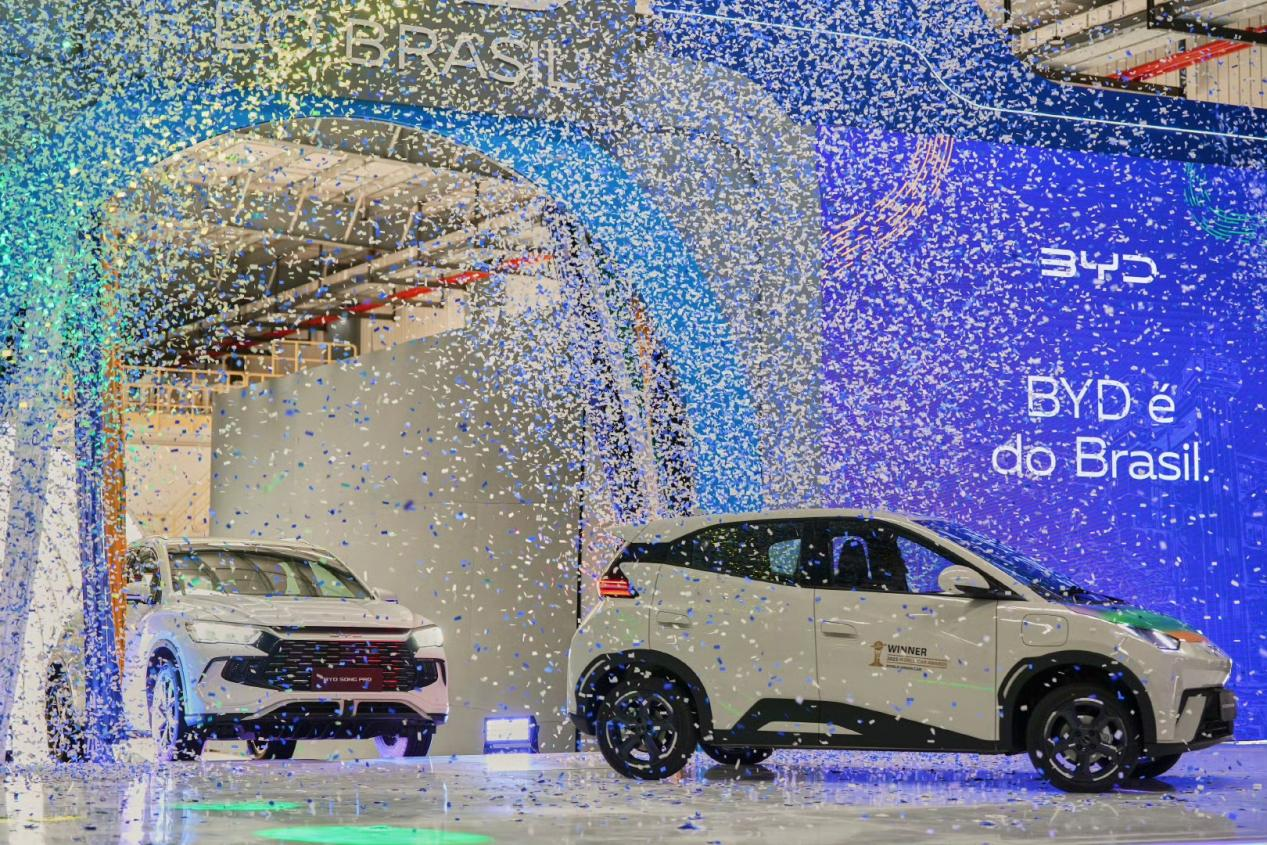
Core Insights - BYD's globalization process is advancing at an unprecedented speed [1] - BYD has surpassed traditional British automotive brands in sales within just two years, indicating a significant market penetration [2][3] - The company has established itself as the largest single overseas market in the UK, with a total sales volume of 35,604 vehicles in the first nine months of 2025, reflecting a year-on-year increase of 576.9% [3] Global Market Expansion - BYD's overseas factories are beginning production, leading to breakthrough sales in various markets including Italy, Spain, Brazil, and Thailand [4] - The company is overcoming user perception barriers and building trust in its brand and products, which is essential for its strategy of "recreating BYD" [5] Strategic Differentiation - Historically, Chinese automotive brands faced challenges in overseas markets due to consumer trust in local brands and established supply chains [6] - BYD is implementing a differentiated strategy based on local market conditions, adapting to various regional policies and competitive landscapes [8] Product and Market Adaptation - Market data shows a preference for plug-in hybrid models in Mexico, Brazil, and Turkey, while pure electric vehicles dominate in countries like Indonesia [9] - BYD's factories in Thailand and Brazil are producing both pure electric and plug-in hybrid models to cater to local preferences [11][12] Local Integration and Innovation - BYD is transitioning from merely exporting products to establishing a local presence and integrating into local markets [13] - The company plans to collaborate with local universities and suppliers in Hungary to enhance the local automotive ecosystem [18] Research and Development Investment - BYD has invested a total of 220 billion yuan in R&D, with 43.75 billion yuan spent in the first three quarters of 2025 [19] - The company’s overseas sales reached 700,000 units in the first nine months of 2025, marking a 132% year-on-year increase and accounting for 22% of total sales [19] Quality and Brand Enhancement - BYD is moving from quantity growth to quality improvement, focusing on product structure upgrades and brand value enhancement [20] - In the EU market, BYD's sales increased by 560% in the first three quarters of 2025, with significant growth in Brazil and Thailand [21] Market-Specific Strategies - At the Tokyo Motor Show, BYD launched the K-EV BYD RACCO, tailored for the Japanese market, and introduced a dual strategy of pure electric and hybrid models [22][24] - BYD is building a complete ecosystem in overseas markets, transitioning from product export to technology output and talent development [25] Conclusion - As more Chinese brands like BYD gain trust and create value, they are poised to transition from emerging players to world-class brands, marking a significant chapter in the globalization of Chinese automotive brands [26]
全球化前哨战,零跑Lafa5将在国内接受考验
Guan Cha Zhe Wang· 2025-11-10 03:08
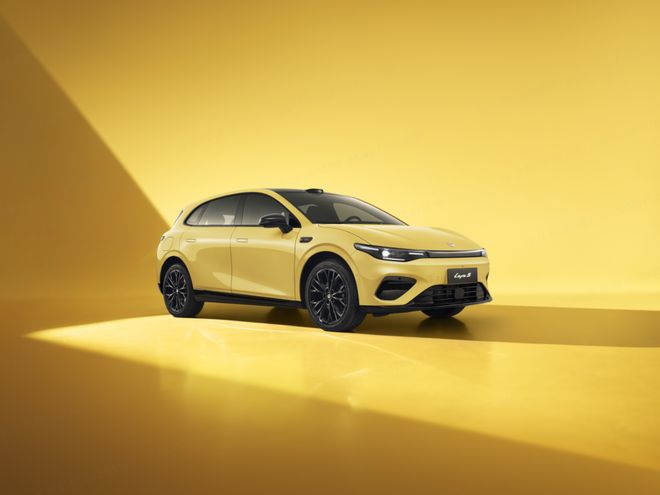
Core Viewpoint - Leap Motor has launched the pre-sale of its new sports sedan model, Lafa5, in the Chinese market, with a price range of 105,800 to 131,800 yuan, targeting urban young consumers who seek individuality [1][3]. Product Features - The Lafa5 is built on the LEAP 3.5 architecture, emphasizing "high aesthetics, intelligence, and sportiness" [3]. - The vehicle features a wide-body coupe design with a width of 1,880 mm, a low windshield angle, and short front and rear overhangs, achieving a drag coefficient of 0.256 Cd [3]. - Interior design includes an ultra-oval digital curved surface, 256-color ambient lighting, and various customization options [5]. Performance Specifications - The Lafa5 is equipped with a 160 kW rear electric drive system, achieving 0-100 km/h acceleration in approximately 6.4 seconds, and a CLTC range of up to 605 km [7]. - The vehicle supports fast charging from 30% to 80% in about 18 minutes [7]. - The suspension system features a front MacPherson and rear multi-link setup, with a 50:50 weight distribution and a torsional rigidity of 34,500 N·m/deg [5]. Market Strategy - The Lafa5 is set to officially launch on November 28 and will gradually enter overseas markets starting in 2026 [3]. - During the pre-sale phase, Leap Motor offers various incentives, including deposit deductions, free customization options, and subsidies for existing car owners [3]. - The vehicle was previously showcased as "B05" at the 2025 Munich Auto Show, indicating its positioning for the European market [9]. Competitive Landscape - The Lafa5 faces competition in the domestic market from similar models, including BYD Seal and Changan Deep Blue SL03, which may have advantages in range, intelligence, or pricing [11]. - The success of the Lafa5 will depend on balancing sporty design with everyday comfort, maintaining a smooth and continuously updated intelligent cockpit experience, and ensuring stable performance in diverse consumer groups [11]. Global Expansion - Leap Motor has delivered over 1 million vehicles to date, with approximately 470,000 units delivered from January to October this year, maintaining a leading position among new car manufacturers [9]. - The company has accelerated its overseas expansion, exporting over 44,000 units and establishing a network of over 600 channels in more than 35 countries and regions [9]. - The Lafa5 represents a shift for Leap Motor from a domestic-focused manufacturer to a brand capable of global sales and distribution [9].
逐浪全球 吉利何以造就“中国汽车新样本”?
Zheng Quan Ri Bao Zhi Sheng· 2025-11-09 16:13
Core Insights - Chinese automotive brands, particularly Geely, are rapidly expanding onto the global stage, with significant growth in electric vehicle exports and market presence [1][2][3] Globalization Strategy - Geely's internationalization journey began in 2003 with its first export of 50 vehicles, marking the start of its global expansion [2] - The company has established assembly plants in various countries, including Indonesia, Uruguay, and Belarus, demonstrating a long-term commitment to internationalization [2] - Geely's strategy has evolved through three phases: initial product exports, followed by production relocation, and culminating in large-scale overseas acquisitions [2][3] Performance Metrics - From January to October this year, Geely's total sales exceeded 2.47 million units, a 44% increase year-on-year, with electric vehicle sales growing by 106% [3] - Geely's exports reached over 40,000 units in September, with European sales increasing by 61.8% and Latin America by over 90% in the first three quarters [3][4] Product and Market Diversification - Geely's product lineup includes over 30 models across four brands, with a significant increase in the market penetration of its electric vehicles from 6.2% in 2021 to 60.5% currently [4] - The company has adopted a flexible approach to meet diverse market demands through a wide range of energy types, including electric, hybrid, and fuel vehicles [4] Technological Innovation - Geely emphasizes technological innovation as a key driver of its growth, investing over 250 billion yuan in R&D over the past 11 years [5][6] - The company has developed a global R&D network and is focusing on localizing technology to meet regional standards, such as adapting EV technology for tropical climates in Malaysia [5][6] Strategic Partnerships - Geely's acquisition of a 26.4% stake in Renault Brazil will enhance its market presence and production capabilities in Latin America [6][7] - The collaboration with local companies aims to optimize production and service delivery, reflecting Geely's strategy of integrating global resources with local operations [7][10] Market Expansion Plans - Geely is expanding its footprint in the UK, planning to increase its sales network from 25 to 100 outlets by the end of 2026, with a goal of launching 15 new models in Europe over the next five years [9] - The UK market is seen as a strategic entry point into Europe, with Geely aiming to leverage its stringent regulatory environment to establish a strong presence [9] Challenges and Adaptations - Geely faces challenges from global trade protectionism and varying technical standards across markets, which it addresses through local partnerships and a diversified supply chain [10] - The company is committed to maintaining a balance between global integration and local responsiveness, ensuring that its products meet local regulations from the design phase [10]
10月份汽车市场延续强劲增长态势
Zheng Quan Ri Bao· 2025-11-02 17:00
Core Insights - The Chinese automotive market continued its strong growth in October, with major automakers reporting impressive sales figures, led by SAIC Motor with 454,000 units sold, followed by BYD and Chery Group, both exceeding 280,000 units [1][2] - The market dynamics were influenced by local subsidy policies, the National Day auto show, and year-end promotions, alongside the implementation of the fourth batch of trade-in subsidies and the launch of multiple new models [1][5] - The overall performance indicates a shift towards high-quality development in the Chinese automotive industry, with significant advancements in new energy vehicle penetration, high-end market positioning, and global expansion [1][5] Group 1: Major Automakers Performance - SAIC Motor achieved a monthly sales record of 454,000 vehicles in October, marking a year-on-year increase of 12.96% [2] - BYD sold 441,700 vehicles in October, with cumulative sales for the first ten months reaching 3,701,900 units, nearing its annual target for 2024 [2] - Geely and Chery also reported significant growth, with Geely's passenger vehicle sales at 307,100 units (up 35% year-on-year) and Chery's sales at 281,200 units (up 3.3%), including a remarkable 54.7% increase in new energy vehicle sales [2] Group 2: New Energy and Emerging Brands - New energy vehicles are becoming a key growth driver, with companies like Leap Motor achieving record sales of 70,300 units in October [3][4] - Hongmeng Zhixing and XPeng Motors are making strides in the high-end market, with Hongmeng selling 68,200 vehicles and XPeng achieving 420,100 units sold, reflecting a 76% year-on-year increase [4] - NIO and Li Auto are also progressing in multi-brand operations, with NIO selling nearly 40,400 units (up 92.6% year-on-year) and Li Auto reaching 31,800 units, with cumulative sales surpassing 1.46 million [4] Group 3: Market Outlook - The automotive market is expected to maintain its momentum into November, driven by promotional events like "Double 11" and the Guangzhou Auto Show, alongside continued subsidies [5] - The demand is anticipated to remain strong, with potential increases in sales due to the impending expiration of the new energy vehicle purchase tax exemption [5]

他们曾嘲笑我们,如今沉默得震耳欲聋
3 6 Ke· 2025-10-31 02:09
Core Insights - The article discusses the evolution of the global automotive industry, highlighting China's rise as a dominant player in car manufacturing and exports, particularly in the electric vehicle (EV) sector [3][4][12]. Group 1: Historical Context - The automotive industry began in Germany in the mid-1880s, but large-scale commercialization occurred in the early 20th century in the United States, with major manufacturers like Ford and GM emerging [1]. - By 1950, over 75% of the world's cars were produced in the U.S., establishing Detroit as the automotive capital [1]. - Post-World War II, Germany and Japan became significant automotive producers, with Japan surpassing the U.S. in production by 1990 [1]. Group 2: China's Emergence - Since 2000, China has been the primary growth engine for the global automotive industry, contributing nearly all growth in production and sales [3]. - In 2023, China surpassed Japan to become the world's largest car exporter, with exports reaching approximately 5.86 million vehicles [3][4]. - The growth in China's automotive sector is attributed to the production of affordable vehicles and the expansion of electric vehicle exports [3]. Group 3: Globalization and Strategy - The globalization of Chinese automotive companies began in 2008, with a focus on emerging markets like Russia and Africa, using a "rural encirclement of cities" strategy [6][8]. - By 2021, Chinese automotive exports broke the million-unit barrier, marking a significant turning point in their global presence [8]. - Geopolitical factors, such as the Russia-Ukraine conflict, allowed Chinese companies to fill market gaps left by Western brands, leading to a surge in exports [9][11]. Group 4: Quality and Reputation Shift - Historically, Chinese cars were viewed as low-quality and imitative, but significant improvements in design and safety have transformed this perception [12][16]. - Collaborations with international design experts and a focus on quality have helped Chinese brands shed their "copycat" image [16][19]. - Recent performance in international safety tests and racing events has further established Chinese vehicles as competitive in quality and performance [20][22]. Group 5: Technological Leadership - China has developed a comprehensive electric vehicle supply chain, positioning itself as a leader in the EV market [28][30]. - The shift from a trade-focused mindset to a globalized approach has enabled Chinese companies to establish local production and supply chains in various markets [30][32]. - The agility and adaptability of Chinese brands allow them to respond quickly to market changes, enhancing their competitive edge [32][33].