
消费市场复苏

Search documents
江苏前11月规上工业增加值增长6.6%
Xin Hua Ri Bao· 2025-12-19 19:59
Economic Performance - The provincial economy has shown steady progress in the first 11 months of the year, with industrial growth and a vibrant service sector contributing to a stable recovery in the consumer market [1] - The industrial added value for large-scale enterprises increased by 6.6% year-on-year from January to November, with a monthly growth of 5.1% in November [1] - Key sectors such as equipment manufacturing, high-tech manufacturing, and digital core product manufacturing saw growth rates of 7.5%, 10.4%, and 10.2% respectively [1] Service Sector - The service industry has shown a steady recovery, with large-scale service industry revenue increasing by 7.5% year-on-year from January to October [1] - Notable growth was observed in residential services, repair and other services (15.5%), leasing and business services (13.4%), and scientific research and technical services (10.1%) [1] - Financial operations remained stable, with the balance of RMB deposits in financial institutions reaching 27 trillion yuan, a year-on-year increase of 7.8% [1] Consumer Market - The consumer market is experiencing a steady recovery, with total retail sales of consumer goods reaching 42,586.8 billion yuan, reflecting a year-on-year growth of 3.8% from January to November [2] - Sales in the wholesale and retail sectors increased by 5.1% and 7.1% respectively, while the accommodation and catering sectors saw growth rates of 2.5% and 5.4% [2]
多维数据展现经济发展新活力
Zheng Quan Ri Bao· 2025-12-10 16:16
■苏诗钰 11月份PPI环比上涨0.1%,连续两个月上涨,虽同比仍有降幅,但主要受上年同期基数较高影响,行业 内部的结构性改善已十分突出。季节性需求拉动能源工业回暖,煤炭开采和洗选业价格、燃气生产和供 应业价格分别环比上涨4.1%和0.7%,成为工业经济的"稳定器"。输入性因素带动下,有色金属冶炼和 压延加工业价格环比上涨2.1%,彰显产业链活力。此外,新兴产业快速发展,带动相关行业价格同比 上涨。 其三,物流领域展现强劲活力。 11月份中国快递发展指数同比增长3%,年快递业务量首次突破1800亿件。这得益于电商大促的拉动, 更得益于物流体系的提质增效。例如,无人配送车规模化投放、生鲜冷链设施完善,让快递服务 既"快"又"准"。公路物流同样呈现稳中向好态势,11月份运价指数升至年内最高水平,以大宗商品及区 域运输为主的整车指数、零担重货指数同比均有增长,既支撑了工业原材料的稳定供应,也保障了消费 商品的高效流通。 总的来说,各项数据的积极变化,并非孤立存在的偶然现象,而是宏观政策精准发力与市场活力持续释 放的必然结果。扩内需政策持续显效,消费潜力不断释放;行业整治"内卷式"竞争,推动工业企业盈利 改善;物流基 ...
摩根大通:看好四大投资主题
Zheng Quan Ri Bao Wang· 2025-11-28 04:39
Core Viewpoint - Morgan Stanley maintains a constructive outlook on the CSI 300 Index for 2026, predicting a target level of 5200 points by the end of 2026, representing a potential upside of 17% from the closing price on November 24 [1] Investment Themes - The report highlights four major investment themes for 2026: the implementation of "anti-involution" policies, growth in domestic and international AI infrastructure, favorable macroeconomic conditions in developed markets benefiting overseas sales, and a recovery in the consumer market [1][2] Anti-Involution Policies - The execution of "anti-involution" policies is expected to accelerate, positively impacting the net profit margins and return on equity of CSI 300 constituents, with projected net profit margins and return on equity of 12% and 11% respectively for 2026, ranking in the middle of the Asia-Pacific market [1] AI Infrastructure Growth - Global capital expenditure on AI infrastructure is anticipated to grow in 2026, benefiting Chinese suppliers, with more Chinese stocks and AI monetization targets expected to gain [1] Macroeconomic Environment - The favorable macroeconomic environment, particularly the expected fiscal and monetary policy easing in 2026, will support overseas sales for listed companies [1] Consumer Market Recovery - The recovery of the Chinese consumer market is expected to benefit both low-end and luxury goods consumption [2] Market Style Shift - Morgan Stanley anticipates a shift in market style from value stocks to growth stocks by early 2026, based on metrics such as market capitalization, average daily trading volume, and overseas revenue [2]
尼尔森IQ:2026年中国消费新图景报告
Sou Hu Cai Jing· 2025-11-25 13:10
Core Insights - The report highlights the steady progress of China's economy, emphasizing the increasing role of consumption in driving GDP growth, supported by various government policies [1][5][6] - The analysis outlines the overall performance of the consumer market, consumer sentiment, core consumption demands, and generational consumption characteristics, providing a clear picture of the Chinese consumer market by 2026 [1] Consumer Market Performance - Consumption's contribution to GDP is on the rise, with retail sales across all channels continuing to grow; durable goods saw a growth rate of 12.5%, significantly higher than the 4.7% for fast-moving consumer goods [1] - Despite a generally optimistic perception of personal financial situations, 40% of consumers remain cautious in their spending [6][7] Consumer Sentiment and Concerns - Consumers' primary concerns revolve around economic downturns and their own and their families' welfare and happiness, with health issues also ranking high among worries [9][10] - The perception of financial status has improved, with 50% of consumers feeling their financial situation is better than last year, and 41% expecting it to improve further [7][8] Consumption Demands and Trends - Key consumer demands are characterized by a focus on product safety and quality, with 81% prioritizing these factors; consumers are willing to pay more for health-beneficial and convenient products [1][10] - There is a noticeable decline in reliance on price promotions, with more consumers preferring to shop during brand sales or at discount stores [10] Generational Consumption Characteristics - The Baby Boomer generation, despite being 19.9% of the population, shows strong consumption willingness, with 70% eager to spend on health and high-end products [2] - Generation X, making up 31.0% of consumers, tends to be more pragmatic, with 37% adopting a cautious spending approach, favoring local brands and health-oriented products [2] - Millennials are financially capable and willing to spend, with 70% favoring products with transparent ingredients and valuing sustainability [2] - Generation Z, accounting for 23.3% of the population, focuses on community identity and is less influenced by celebrity endorsements, with a significant market for niche cultural products expected to exceed 200 billion [2] Market Development Trends - The overall trend in the Chinese consumer market is moving towards quality, personalization, and community-oriented consumption, necessitating brands to align their value propositions with the diverse needs of different generations [2]


长三角释放高质量发展动能
Guo Ji Jin Rong Bao· 2025-11-18 09:11
Core Insights - The Yangtze River Delta (YRD) region, comprising Shanghai, Jiangsu, Zhejiang, and Anhui, achieved a combined GDP of 25.18 trillion yuan in the first three quarters of 2025, accounting for 24.81% of the national GDP, reinforcing its status as a key economic driver in China [1][2][3] Economic Performance - The YRD's economic growth remains robust, with Jiangsu leading at 10.28 trillion yuan, followed by Zhejiang (6.85 trillion yuan), Shanghai (4.07 trillion yuan), and Anhui (3.98 trillion yuan), all showing growth rates above the national average [2][3] - Among 41 cities in the YRD, 31 cities outpaced the national average growth rate of 5.2%, with 14 cities exceeding 6% growth [3][4] City Development Dynamics - The first tier of cities includes nine trillion-yuan cities, with Shanghai, Suzhou, Hangzhou, Nanjing, Ningbo, Wuxi, Hefei, Nantong, and Changzhou contributing significantly to the regional economy, collectively accounting for 57.6% of the YRD's total GDP [3][4] - The second tier includes cities with GDPs between 600 billion and 800 billion yuan, while the third tier consists of cities with GDPs between 500 billion and 600 billion yuan, indicating a balanced regional development [4] Industrial Growth and Transformation - Advanced manufacturing is identified as a cornerstone of the YRD economy, with Shanghai's tertiary sector contributing 79.1% to its GDP, and significant growth in high-tech manufacturing sectors [6][7] - Jiangsu's high-tech industries accounted for 51.8% of its industrial output, with notable growth in sectors like optical fiber and lithium-ion battery manufacturing [6][7] Consumption and Market Dynamics - The recovery of the consumer market is contributing to the YRD's high-quality development, with diverse drivers such as policy incentives boosting physical consumption [9][10] - Jiangsu leads in social retail sales, reflecting its substantial consumer market potential, while Zhejiang's growth in retail sales is supported by digital economy integration and innovative consumption models [10][11] Competitive City Aspirations - Cities like Wenzhou and Xuzhou are on track to achieve trillion-yuan GDP status, with Wenzhou focusing on private sector growth and Xuzhou leveraging national strategic support [11][12] - The successful elevation of these cities would expand the YRD's "trillion-yuan club" to 11 members, enhancing the region's economic influence nationally [14]

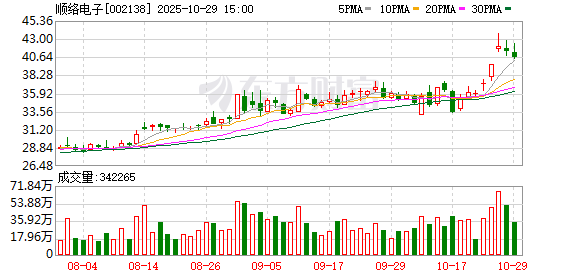
顺络电子:公司在消费电子领域的主要布局为手机通讯市场和其他泛消费类市场
Zheng Quan Ri Bao· 2025-10-29 10:13
Core Insights - The company, Shunluo Electronics, has announced its strategic focus on the mobile communication market and other consumer electronics sectors, indicating a positive trend in the overall consumer market recovery [2] Group 1: Company Positioning - Shunluo Electronics has established a strong market position in the mobile terminal business, which is a traditional application area for the company [2] - The company has gained the trust of major industry clients due to its high product quality and stable supply capabilities, forming strategic partnerships with numerous core mobile enterprises both domestically and internationally [2] Group 2: Market Trends - The overall consumer market is experiencing a sustained recovery, with improving market conditions [2] - The procurement share of new products from major consumer electronics clients is continuously increasing, which is expected to drive the company's performance in the traditional consumer electronics sector [2] - As new products continue to ramp up and the traditional consumer market recovers, the company's performance is anticipated to exceed the overall industry growth rate [2]

消费“主引擎”动能更强劲
Sou Hu Cai Jing· 2025-10-21 02:08
Core Insights - China's final consumption expenditure contributed 53.5% to economic growth in the first three quarters, an increase of 9.0 percentage points compared to the previous year, reinforcing its role as the "main engine" of economic growth [1][2] Group 1: Economic Policies and Measures - The government has implemented a series of macro policies to stimulate consumption, including the allocation of 300 billion yuan in special bonds to support the replacement of old consumer goods [2] - The "old-for-new" policy has led to significant retail growth in categories such as home appliances and communication devices, with retail sales in these sectors maintaining double-digit growth [2][3] - The domestic travel during the Mid-Autumn and National Day holidays reached 888 million trips, showcasing the resilience and vitality of China's consumer market [2] Group 2: Consumer Trends and Market Dynamics - Service consumption, particularly in leisure and travel, has shown strong performance, indicating a high enthusiasm for offline activities among consumers [3] - New consumption models, such as online shopping, have also seen substantial growth, highlighting their importance in supporting overall market expansion [3] - Upgraded consumer goods, including communication devices and home appliances, have experienced over 20% growth, reflecting a steady progression in consumer upgrading [3] Group 3: Future Outlook and Recommendations - The government aims to enhance internal growth momentum by implementing targeted measures to boost consumption, stabilize employment, and increase income channels for residents [4][5] - Suggestions include issuing consumption vouchers and organizing promotional activities to further stimulate consumer spending [5] - Long-term strategies should focus on increasing income levels for low- and middle-income groups and improving the social security system to alleviate concerns related to consumption [5]
开学季为燃动消费注入“青春力量”
Xiao Fei Ri Bao Wang· 2025-09-15 02:52
Group 1 - The "Back-to-School Economy" reflects a vibrant consumer market recovery, showcasing a diverse range of products from high-end digital devices to essential school supplies, indicating a strong economic revival driven by youth consumption [1][3] - Sales data from "What Worth Buying" indicates significant year-on-year growth in sales for key products during the back-to-school season, with MacBook sales increasing by 88.11%, iPad by 72.93%, and learning machines by 22.50%, alongside a notable rise in stationery and military training supplies [1][3] - The back-to-school consumption trend is characterized by a dual drive of practicality and emotional connection, with a marked increase in sales of essential items reflecting the rigid demand from students and families, as well as a surge in personalized and ceremonial products [1][2] Group 2 - The back-to-school season presents new consumer demands that extend beyond hardware, emphasizing the importance of emotional and ceremonial needs, which are crucial for businesses to explore [2] - The strong purchasing power of the young consumer demographic is a vital support for economic growth, with the back-to-school season serving as a key driver for related industries and enhancing market confidence [3] - Businesses are encouraged to optimize the consumer environment and innovate shopping experiences to create a back-to-school consumption ecosystem that meets both practical needs and emotional values, thereby sustaining economic vitality [3]
薛鹤翔、唐广华:8月物价数据显暖意 消费与工业双轮驱动经济向好
Sou Hu Cai Jing· 2025-09-11 16:31
Group 1 - The national consumer price index (CPI) decreased by 0.4% year-on-year in August 2025, while the core CPI, excluding food and energy, increased by 0.9%, marking four consecutive months of expansion [1][4] - The producer price index (PPI) fell by 2.9% year-on-year, but the decline narrowed by 0.7 percentage points compared to the previous month, indicating a shift from decline to stability on a month-on-month basis [1][4] - The divergence in price indicators reflects a differentiated recovery in the domestic consumption market and industrial sector [1] Group 2 - Food prices were the main drag on the CPI, with significant declines in pork, fresh vegetables, and eggs, while non-food prices rose by 0.5%, particularly in services [3] - The PPI showed positive signals as it ended an eight-month decline, with prices in upstream industries like coal processing and black metal smelting turning from decline to increase [3] - Emerging industries such as integrated circuit packaging and shipbuilding saw price recoveries, indicating positive effects from industrial structure adjustments [3][4] Group 3 - Analysts noted that the current price trend exhibits characteristics of "core stability and structural improvement," with the core CPI reflecting a gradual recovery in domestic demand [4] - The narrowing PPI decline suggests improvements in industry capacity governance and stability in supply chains, particularly in key industries [4] - The recovery in emerging industry prices injects new momentum into the industrial economy, indicating that the recovery process in the industrial sector may be faster than expected [4] Group 4 - Experts anticipate that the recovery momentum in the consumption market will continue to be released, with service prices likely to remain high due to the normalization of peak seasons for tourism and accommodation [6] - The construction of a unified national market is expected to optimize industry competition, while macro policies will continue to drive structural adjustments in industries [6] - However, fluctuations in international commodity prices may pose input-related impacts, and the issue of insufficient domestic effective demand requires ongoing policy support [6]

被麦肯锡的年中盘点报告刷屏,我从中总结了20条高价值洞察
3 6 Ke· 2025-09-05 12:07
Core Insights - The report from McKinsey highlights five major surprises in the Chinese consumer market, emphasizing the need for positive news to boost confidence among entrepreneurs, investors, and consumers [1] Macro Confidence and Consumer Sentiment - "Sleeping funds" represent the largest growth engine for future consumption, with total household deposits in China reaching 163 trillion yuan, indicating a potential for significant consumer spending once confidence is restored [2] - Consumer sentiment is shifting from a downgrade to a more "prudent" approach, with retail sales still growing at 5.0%, suggesting consumers are spending smarter and are willing to pay for quality and emotional value [2][3] - High-value categories like automobiles (+11.2%) and home appliances (+30.7%) are experiencing strong growth, indicating that consumers are willing to pay for quality products rather than engaging in price wars [2] Industry Opportunities and Market New Frontiers - The domestic brand share in the new energy vehicle market is close to 90%, showcasing a significant opportunity for brands to leverage technological changes and consumer trends for competitive advantage [4] - China's automobile export volume has increased eightfold since 2019, marking a shift from merely selling products to selling brands, with a notable increase in average export prices [4] - Cultural exports, exemplified by successful IPs like "Black Myth: Wukong," indicate a growing potential for Chinese cultural products to become global trends, opening new avenues for various industries [4][5] Capital Trends and Corporate Strategies - The capital market is favoring consumer brands, with four out of the top ten IPOs in Hong Kong coming from the consumer sector, reflecting long-term investor confidence in the Chinese consumer market [6] - The success of tea brands like Mixue Ice City and Gu Ming highlights the effectiveness of supply chain management and product innovation in the retail sector [6] - Private equity is increasingly investing in "new retail," indicating a reassessment of the value of physical retail spaces and the potential for growth through digitalization and innovative business models [6] Insights for Business Leaders - Global social media can be a powerful tool for brand promotion, as seen with Labubu's success linked to K-pop influencer Lisa [7] - Strong cultural products can drive local economies, suggesting that businesses should consider how their offerings can create new economic opportunities [7] - Expanding visa-free policies in China presents a chance for businesses to attract international customers, particularly in the tourism sector [7] - Focusing on existing customer bases may yield better results than acquiring new customers, as successful companies demonstrate the importance of deep user engagement [7] - Micro-level positive changes can signal macro-level opportunities, encouraging businesses to look beyond pessimistic macro data [7]