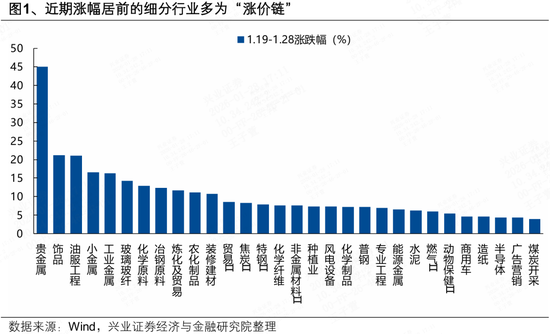
涨价链

Search documents
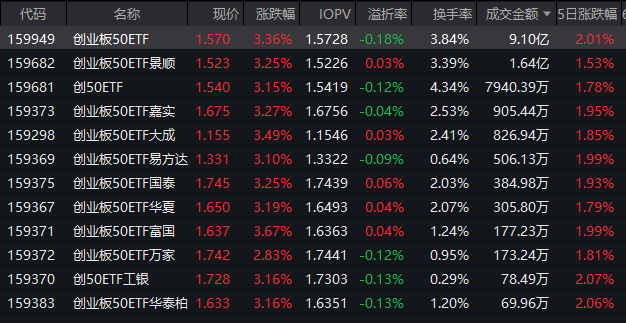
创业板50ETF放量大涨3.36%,半日成交9.1亿元领跑同类,资金悄然回流
Xin Lang Cai Jing· 2026-02-09 04:17
Core Viewpoint - The recent trend of the ChiNext 50 ETF (159949) has shifted from net outflows to net inflows, indicating a potential recovery in investor sentiment and market conditions [1][5]. Fund Flow - As of February 6, 2026, the ChiNext 50 ETF has a circulating scale of 23.148 billion yuan. Over the past 60 trading days, there has been a net outflow of 3.39 billion yuan, while the last 10 days saw a net outflow of 1.04 billion yuan, and the last 5 days experienced a net inflow of 190 million yuan [1][6]. Institutional Perspectives - Industrial insights from Xinyu Securities suggest that the recent global asset adjustment is more about narrative-driven emotional digestion rather than fundamental or policy changes. The market is expected to recover due to increased event catalysts and the "Spring Festival effect" [3][8]. - The report emphasizes a shift from defensive strategies to focusing on the Spring Festival market, particularly in sectors like technology manufacturing and resource-based infrastructure, which are expected to outperform post-holiday [3][8]. - Huaxi Securities notes that despite short-term pressure on the China-US tech sector due to overseas AI expectations, a rebound in US tech stocks on February 6 may lead to a recovery in domestic related sectors [3][8]. ETF Performance - The ChiNext 50 ETF has delivered a return of 36.20% over the past three years, outperforming its benchmark and ranking 435th among 1,634 similar products. It is recommended for investors looking to access China's technology growth sector [4][9]. - Investors can trade the ETF directly through stock accounts or via linked funds, with suggestions to adopt a dollar-cost averaging strategy to mitigate short-term volatility [4][9].


20cm速递|科创200ETF国泰(589220)盘中涨超0.5%,制造业与科技产业景气获关注
Mei Ri Jing Ji Xin Wen· 2026-02-06 08:27
Core Viewpoint - The manufacturing and technology sectors are experiencing increased attention due to rising profitability forecasts in AI hardware and price increase chains, with a notable impact on the industry chain [1] Group 1: Industry Insights - The average year-on-year growth rate of net profit forecasts for AI hardware (semiconductors, components, communication network equipment, etc.) and price increase chains (industrial metals, energy metals, agrochemicals, etc.) for Q4 2025 is expected to improve compared to Q3 2025 [1] - Recent price increases have been observed in electronic components and minor metals, indicating a spillover effect from the upstream price hikes [1] - Concerns have emerged regarding potential declines in profit growth for certain midstream manufacturing products in Q4 2025, with expectations of continued challenges into Q1 2026 [1] Group 2: Investment Opportunities - The current market environment suggests that investors may consider sectors with good growth logic that have not yet fully realized their potential gains during the recent spring market rally, such as electronics (components/semiconductors) and communications [1] - The Guotai Science and Technology 200 ETF (589220) tracks the Science and Technology 200 Index (000699), which includes 200 stocks selected from the Sci-Tech Innovation Board, reflecting the overall performance of the market [1] - The index samples cover multiple high-tech and strategic emerging industries, including information technology, biomedicine, and new energy, showcasing strong innovation and growth characteristics [1]
超2800只个股下跌
第一财经· 2026-01-30 07:30
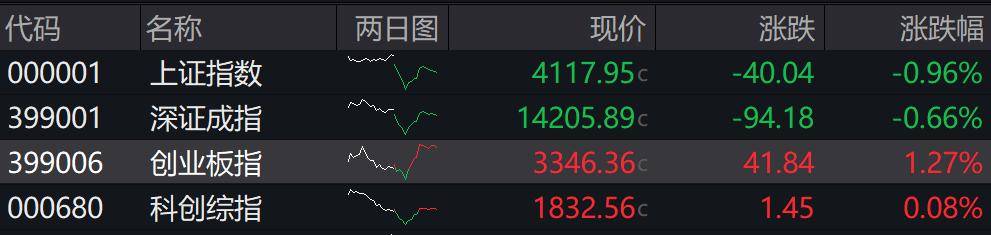
Market Overview - The A-share market experienced a decline, with the Shanghai Composite Index falling by 0.96% to 4117.95 points, and the Shenzhen Component Index decreasing by 0.66% to 14205.89 points. In contrast, the ChiNext Index rose by 1.27% to 3346.36 points, and the Sci-Tech Innovation Index increased slightly by 0.08% to 1832.56 points [3][4]. Sector Performance - The market saw a significant drop in gold and base metal stocks, with many stocks hitting the daily limit down. The sectors of liquor, real estate, brokerage, and oil and gas also faced notable declines. Conversely, agricultural stocks showed strength, with companies like Dunhuang Seed Industry and Denghai Seed Industry reaching their daily limit up [4][5]. - Agricultural stocks had a strong performance, with notable gainers including: - Shennong Seed Industry (+12.91% to 8.66) - Qiule Seed Industry (+10.22% to 21.03) - Wanxiang Denong (+10.05% to 10.29) - Denghai Seed Industry (+10.04% to 11.29) - Dunhuang Seed Industry (+10.00% to 7.92) [6]. Capital Flow - Main capital inflows were observed in the communication, agriculture, forestry, animal husbandry, and coal sectors, while there were outflows from non-ferrous metals, computers, and photovoltaic equipment sectors. Specific stocks with significant net inflows included: - Zhongji Xuchuang (+18.20 billion) - Xinyisheng (+17.25 billion) - Tianfu Communication (+10.55 billion) - Conversely, stocks with notable net outflows included: - Northern Rare Earth (-15.91 billion) - Blue Ocean Vision (-15.30 billion) - Luoyang Molybdenum (-14.32 billion) [9]. Institutional Insights - Guojin Securities suggested that the market style has shifted, recommending a balanced allocation between dividend and technology stocks. - Dexun Securities noted that the Shanghai Composite Index has fallen below the 20-day moving average, advising caution in trading. - Xingye Securities highlighted that the price increase chain has become a significant trend in the capital market, particularly in non-ferrous metals, oil, chemicals, and storage sectors, indicating deep transmission and linkage across the industry chain [11][12].

收盘丨创业板指探底回升涨1.27%,CPO、农业板块走强
Sou Hu Cai Jing· 2026-01-30 07:24
1月30日,A股市场全天探底回升,截至收盘,沪指跌0.96%,深证成指跌0.66%,创业板指涨1.27%。科创综指涨0.08%。 | 代码 | 名称 | 两日图 | 现价 | 涨跌 | 涨跌幅 | | --- | --- | --- | --- | --- | --- | | 000001 | 上证指数 | r | 4117.95c | -40.04 | -0.96% | | 399001 | 深证成指 | 11 | 14205.89c | -94.18 | -0.66% | | 399006 | 创业板指 | Man/ | 3346.36c | 41.84 | 1.27% | | 000680 | 科创综指 | and 1 the | 1832.56c | 1.45 | 0.08% | 盘面上,黄金、基本金属概念股现跌停潮,白酒、地产、券商、油气板块跌幅靠前,商业航天、金融科技、光伏、AI应用题材调整。CPO、 宇树机器人概念股活跃,农业股走强。 具体来看,农业股盘中拉升,敦煌种业、登海种业等多股涨停。 | 代码 | 名称 | 涨幅量 | 现价 | | --- | --- | --- | --- | | 3 ...
上证50指数大涨1.65% 白酒地产联袂走强激活蓝筹主线
Shang Hai Zheng Quan Bao· 2026-01-29 18:42
1月29日,A股市场呈现沪强深弱分化格局,资金向低估值蓝筹集中特征显著。截至收盘,上证指数报 4157.98点,微涨0.16%;深证成指报14300.08点,小幅回调0.30%;创业板指报3304.51点,下跌0.57%; 上证50指数逆势走强,上涨1.65%领跑宽基指数。沪深北三市成交额达3.26万亿元,较上一交易日放量 2671亿元,市场量能维持高位。白酒、地产板块联袂大涨成为当日盘面核心亮点,有效支撑市场情绪。 白酒板块掀涨停潮 白酒板块昨日全线爆发,板块内20只个股强势涨停,头部酒企集体冲高引领行情。贵州茅台单日大涨 8.61%,收盘价报1437.72元,成交额达263亿元,总市值重回1.8万亿元关口;五粮液、山西汾酒、泸州 老窖、洋河股份、古井贡酒等核心酒企悉数涨停,板块整体涨幅居全市场首位。 此次白酒板块走强,源于旺季动销预期与行业拐点预期形成共振。一方面,近期飞天茅台市场批发价格 逐步回暖。1月29日,第三方平台数据显示,53度、500ml飞天茅台酒批发价格继续上涨。其中,2025 年飞天茅台原箱较上一日上涨20元/瓶,至1620元/瓶。另一方面,因白酒行业处于深度调整期,已有多 家白酒企业预计 ...
未知机构:兴证策略近期涨价链的三条线索从我们跟踪的高频价格数据来看近-20260129
未知机构· 2026-01-29 02:10
Summary of Key Points from the Conference Call Industry Focus - The report focuses on the **materials and energy sectors**, specifically highlighting trends in **non-ferrous metals, oil, chemicals, and storage** industries [1]. Core Insights and Arguments 1. **Non-Ferrous Metals Price Increase**: Driven by geopolitical risk aversion and concerns over US dollar credit, prices for non-ferrous metals such as **silver and gold** have risen. This price increase is impacting the cost structure in the **semiconductor manufacturing and testing sectors**, particularly affecting **passive components and power devices** [1]. 2. **Oil Price Surge**: Supply-side disruptions combined with escalating geopolitical tensions have led to an increase in oil prices. This rise is being transmitted downstream, resulting in price hikes in the **chemical sector** and **consumer building materials** such as waterproofing and coatings [1]. 3. **AI-Driven Price Increases**: The strong demand for AI technologies is causing a price surge across various sectors, including **semiconductor manufacturing and testing, storage, CPUs, and cloud services** [1]. Other Important Insights - The report indicates a **deep transmission and linkage** of price increases throughout the supply chain, suggesting a systemic impact across multiple industries [1].
未知机构:盘前0129PH解盘追踪工业有色ETF鹏华159162今日上市扫平周期洼-20260129
未知机构· 2026-01-29 02:05
Summary of Conference Call Notes Industry and Company Involvement - The notes discuss various ETFs including industrial and commodity ETFs, specifically mentioning Penghua ETFs such as 159162 (Industrial and Nonferrous ETF), 159697 (Oil ETF), and 159698 (Grain ETF) [1][2] - The focus is on the performance of the U.S. stock market, Hong Kong stock market, and the implications for A-shares and technology sectors [1][2][3] Core Points and Arguments - The U.S. stock market experienced volatility with a high opening followed by a decline, while the semiconductor sector showed strong performance [1] - The Federal Reserve maintained interest rates, and there was no additional guidance from Powell, leading to fluctuations in the dollar and commodities [1] - Gold prices surged close to 5600, silver approached 120, and oil reached a four-month high, indicating strong commodity market trends [1] - The Penghua Industrial and Nonferrous ETFs are gaining momentum, with a strategy of buying on dips being reinforced despite increased volatility [1] - The Hong Kong stock market showed signs of recovery with a significant upward movement, driven by resource cycles and financial support [2] - The performance of the Hang Seng Central Enterprise ETF is noted to be superior to dividend-focused investments recently [2] - There is a consensus on the dual trends of cyclical and technological sectors, although technology stocks faced liquidity siphoning from cyclical stocks [3] - The semiconductor industry, particularly related to price increases, remains robust, with specific ETFs like the AIDC and cloud computing ETFs expected to perform well [3] Other Important but Potentially Overlooked Content - The notes highlight the increasing interest in the grain sector, with the grain ETF showing a bullish trend [2] - There is a mention of the potential for short-term bullish sentiment leading up to the Chinese New Year, despite external pressures on A-shares [2] - The notes suggest that the market is currently focused on price increase chains, particularly in the semiconductor industry, indicating a broader market trend [2][3] - The anticipation of Tesla's earnings report and comments from Musk is noted as a catalyst for investment in new energy and robotics ETFs [3]
近期涨价链的三条线索
Sou Hu Cai Jing· 2026-01-29 00:13
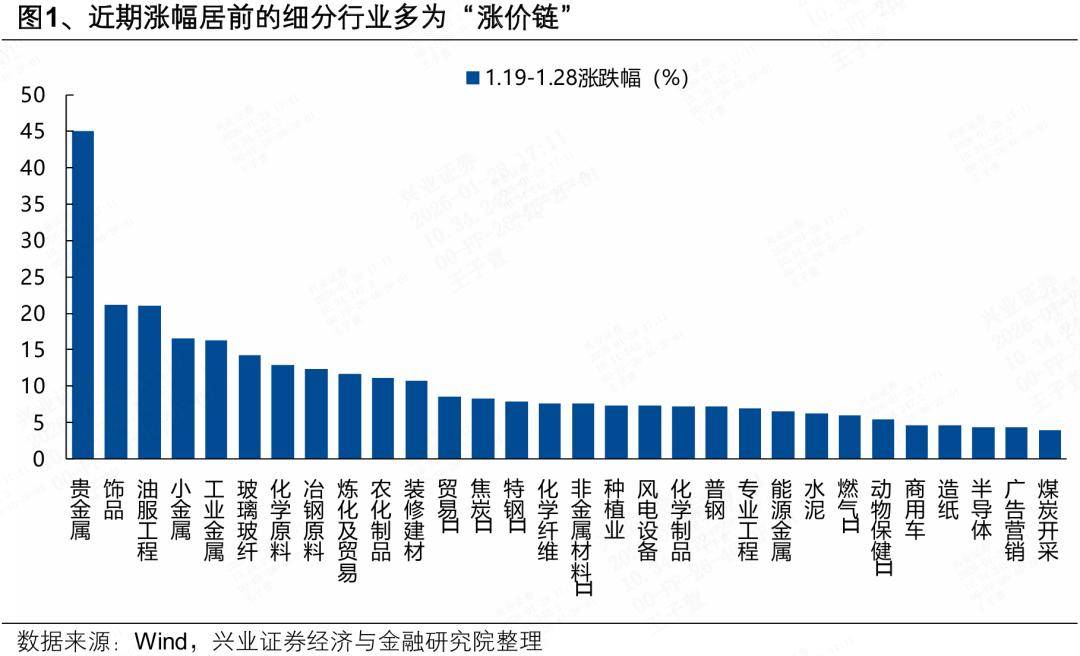
Core Viewpoint - The recent price increase chain has become a significant focus in the capital market, with notable price rises in sectors such as non-ferrous metals, oil, chemicals, building materials, and semiconductors [1] Group 1: Price Increase Trends - The richness of price increase signals this year is at a historically high level, with 321 tracked subcategories showing a significant proportion of price increases over the past three months, second only to the supply-side reform period in 2017 and the inflation surge in 2021 [4] - Recent price increases are primarily concentrated in non-ferrous metals, oil, chemicals, and storage, demonstrating deep transmission and linkage across the industrial chain [7] Group 2: Key Drivers of Price Increases - Geopolitical risk and concerns over US dollar credit are driving up prices of non-ferrous metals, including silver and gold, which are impacting the cost structure in semiconductor manufacturing and testing [8] - Supply-side disruptions and tightening geopolitical situations are pushing oil prices higher, leading to cost transmission to downstream chemical and building materials sectors [8] - Strong demand for AI is triggering a new wave of price increases in storage, with companies like Samsung and SK Hynix planning significant price hikes for LPDDR memory used in iPhones, while domestic semiconductor companies are also raising prices for their products [8] Group 3: Price Change Data - Notable price changes include: - Copper: 15.4% increase over the past week, 44.4% over the past month, and 113.8% year-to-date [9] - Lithium hydroxide: 10.6% increase over the past week, 80.1% over the past month, and 118.7% year-to-date [9] - NAND index: 10.8% increase over the past week, 19.8% over the past month, and 170.3% year-to-date [9] Group 4: Seasonal Trends and Future Outlook - The first quarter is typically a favorable time for price increases, with expectations for further enrichment of price increase signals as the spring construction season begins and policies are implemented post the March Two Sessions [10] - The first quarter is seen as a critical verification window for whether the Producer Price Index (PPI) can stabilize and rise, based on historical inflation cycles [11]
兴证策略:一季度通常是易于涨价的时间 涨价线索有望进一步丰富
Ge Long Hui A P P· 2026-01-28 14:45
Group 1 - The recent price increase chain has become a significant clue in the capital market, focusing on non-ferrous metals, oil, chemicals, and storage, with deep transmission and linkage characteristics across the industry chain [1] - Geopolitical risk sentiment and concerns over US dollar credit are driving the rise in non-ferrous metal prices, including silver and gold, which is affecting the cost side of semiconductor manufacturing and testing processes [1] - Supply-side disruptions and tightening geopolitical situations are pushing oil prices up, which in turn is leading to price increases in downstream chemical and construction materials [1] Group 2 - The strong demand for AI is spreading a wave of price increases, with reports that Samsung Electronics and SK Hynix will significantly raise the prices of LPDDR memory used in iPhones, driven by AI Agent demand pushing CPU prices higher [1] - In China, capacity shortages combined with rising non-ferrous metal prices are driving up costs in semiconductor manufacturing and testing, leading companies like Guoke Micro, Zhongwei Semiconductor, and others to raise prices for their MCU, Norflash, and KGD products [1] - Upstream computing inflation is also transmitting to the midstream cloud computing sector, with Amazon and Google recently announcing price increases for their cloud services [1] Group 3 - From a seasonal perspective, the first quarter is typically a favorable time for price increases, and further clues for price hikes are expected to emerge [1] - The post-Spring Festival period entering the "golden March and silver April" peak season for construction, along with the concentration of policy implementation after the March Two Sessions, suggests that the first quarter is likely to see more price increases [1]
兴证策略张启尧团队:近期涨价链的三条线索
Xin Lang Cai Jing· 2026-01-28 10:37
Core Insights - The recent price increase chain has become a significant clue in the capital market, with notable stock price increases in sectors such as non-ferrous metals, oil, chemicals, building materials, and semiconductors [1][13]. Price Increase Trends - The richness of price increase clues this year is at a historically high level, with the proportion of price increases among 321 tracked subcategories being second only to the supply-side reform period in 2017 and the inflation surge in 2021 [2][15]. - Recent high-frequency price data indicates that the price increase chain is primarily concentrated in non-ferrous metals, oil, chemicals, and storage, showing deep transmission and linkage characteristics throughout the industrial chain [4][17]. Key Price Increase Drivers - Geopolitical risk and concerns over U.S. dollar credit are driving the price increases in non-ferrous metals, including silver and gold, which are transmitting costs to semiconductor manufacturing and testing sectors [4][17]. - Supply-side disturbances and tightening geopolitical situations are pushing oil prices up, leading to cost transmission throughout the entire industrial chain, affecting petrochemical raw materials and downstream products [7][17]. - Strong demand from AI is spreading the price increase wave, with major companies like Samsung and SK Hynix planning significant price hikes for memory used in iPhones, while domestic semiconductor companies are also raising prices due to rising costs [7][18]. Seasonal Outlook - The first quarter is typically a favorable time for price increases, and further clues for price hikes are expected to emerge as the spring construction season begins and policies are implemented after the March Two Sessions [6][22]. - Historical data suggests that the first quarter is a critical verification window for whether the Producer Price Index (PPI) can stabilize and rise [9][22].