科技创新和产业创新融合

Search documents
天津政府工作报告显示:这些成就很耀眼
Zhong Guo Fa Zhan Wang· 2026-01-29 09:42
Economic Growth and Development - Tianjin's GDP has averaged a growth rate of 4.4% since the beginning of the 14th Five-Year Plan, with public budget revenue steadily increasing [1] - The proportion of strategic emerging industries in the city's industrial output has exceeded 30%, and the added value of the service industry has surpassed 1 trillion yuan [1] - Per capita disposable income for residents has grown at an annual rate of 5% [1] Collaborative Development - The collaborative development momentum among Beijing, Tianjin, and Hebei has become increasingly evident, with over 80 central enterprises expanding their presence in the region [1] - The intercity transportation capacity between Beijing and Tianjin has increased by over 50% [1] Innovation and Technology - The Tianjin High Education and Technology Innovation Park has emerged as a new landmark for innovation and entrepreneurship, housing 29 national key laboratories and 62 major research institutions [1] - Significant technological achievements include artificial synthesis of starch from carbon dioxide and advancements in blood cell molecular profiling [1] Reform and Opening Up - Comprehensive reforms and opening-up initiatives have been deepened, with over 100 national-level reform pilot tasks being explored [2] - The Tianjin Free Trade Zone has ranked third nationally in terms of institutional innovation index for five consecutive years [2] - The actual foreign investment in Tianjin reached 26.3 billion USD [2] Urban Development and Governance - The city has optimized its urban carrying capacity, completing seven new metro lines and over 400 kilometers of operational track [2] - The average annual concentration of PM2.5 has decreased by 25% compared to 2020, with 281 days of good air quality recorded [2] Social Welfare and Public Services - The city has implemented various public welfare projects, including the construction of 232 community service centers and 9.56 million units of affordable rental housing [3] - The number of medical and health institution beds has increased by 6,639, with life expectancy reaching 82.58 years [3] Safety and Stability - The city has improved its flood prevention and control systems, successfully managing significant flooding events [3] - Food and drug safety assessments have consistently received an A rating, indicating a high level of public safety [3] Future Development Goals - The city aims to maintain a commitment to high-quality development, focusing on practical actions and innovative practices to build a modern socialist metropolis [4]
牢记嘱托稳中求进提质增效因地制宜滴水穿石久久为功
Xin Lang Cai Jing· 2026-01-27 23:07
Group 1 - The core message emphasizes the importance of economic development and reform in Ningde, aiming for a strong start in the "15th Five-Year Plan" to contribute significantly to the overall provincial development [1][2] - Representatives expressed unanimous support for the government work report, focusing on creating new growth drivers, accelerating marine economy development, enhancing local industries, promoting rural prosperity, and preserving cultural heritage [1] - The government aims to leverage Ningde's advantages in industries such as new energy and biomedicine, promoting modernization and integration within the national market while ensuring social stability and preventing poverty [2] Group 2 - The government stresses the need for high-quality development led by effective party governance, emphasizing the importance of practical achievements that benefit the people [2] - There is a call for comprehensive measures to ensure public safety and social development, particularly as the Spring Festival approaches, to guarantee a joyful and peaceful celebration for the citizens [3]
财政能为“开门红”增色几许?【华福宏观·陈兴团队】
陈兴宏观研究· 2026-01-21 14:44
Key Points - The fiscal policy in 2025 remains strong, but the effectiveness of fiscal expansion in driving economic growth has decreased, reflecting a lower "cost-effectiveness" of fiscal measures due to structural transformation, slow spending of special government bonds, and low price levels impacting fiscal efficiency [2][6][13] Group 1: Fiscal Strength and Effectiveness - The fiscal policy maintains a strong expansionary stance, with total fiscal expenditure as a percentage of GDP showing a recovery in 2025 after a decline from Q3 2022 to the end of 2024 [5][6] - The fiscal multiplier effect has weakened, with the fiscal effect coefficient dropping below 1, indicating that fiscal spending is less effective in driving GDP growth compared to 2024 [6][10] - Structural transformation has led to a shift in fiscal spending towards areas with higher capital retention and longer effectiveness cycles, reducing the expected impact on traditional infrastructure [7][10] Group 2: Changes in Policy Focus - The 2026 fiscal policy aims to maintain a stable budget deficit rate while expanding fiscal spending, with a focus on domestic demand, technological innovation, and strengthening social welfare [15][18] - The emphasis on domestic demand has shifted to a strategic priority of "domestic demand-led" growth, highlighting the importance of increasing residents' income [18][20] - The standardization of tools and policies is aimed at enhancing efficiency, with a focus on preventing local subsidy competition and creating a unified national market [20][21] Group 3: Government Debt and Financing - The issuance of government bonds in Q1 2026 is expected to remain stable compared to the previous year, with a slight increase in net financing scale [24][26] - Local government debt issuance is primarily focused on special refinancing bonds, with a more uniform pace of debt issuance anticipated in 2026 compared to 2025 [26] - The overall growth rate of government debt in Q1 2026 is expected to be lower than in the same period in 2025, indicating a more moderate approach to fiscal expansion [26]


以微专业建设助推江苏“两个融合”发展
Xin Hua Ri Bao· 2026-01-15 22:01
Core Viewpoint - Jiangsu's "14th Five-Year Plan" emphasizes the integration of technological innovation and industrial innovation, highlighting the need for cultivating interdisciplinary talents who can adapt to rapid technological changes [1] Group 1: Micro Majors Concept - Micro majors are not merely a reduction of existing majors but focus on specific, cutting-edge industrial technology fields, forming a cluster of core courses and practical projects through precise design [2] - The vitality of micro majors stems from three core characteristics: focus, cross-disciplinary and practical nature, and agility and openness [2] - Micro majors serve as a strategic interface and innovation incubator, connecting higher education's knowledge innovation with the application of technology in industries [2] Group 2: Value of Micro Majors - Micro majors act as a catalyst and bridge for accelerating the transformation of scientific achievements into productive forces [3] - They address the skills shortage in strategic emerging industries by quickly responding to the specific skill needs of leading enterprises [3] - Micro majors deepen the integration of industry and education, fostering a collaborative ecosystem that enhances the relationship between educational institutions and enterprises [3] Group 3: Development Path for Micro Majors - A forward-looking systemic planning and mechanism reform in the current educational management system is essential for micro majors to drive the integration of technology and industry [4] - The primary task is to strengthen top-level design and strategic guidance at the provincial level, embedding micro majors into regional innovation networks [4] - Establishing a mechanism that encourages collaboration between universities and enterprises is crucial for fostering innovation and avoiding homogenization in micro major offerings [4] Group 4: Institutional Arrangements - A system that encourages enterprises to invest in course resources and training equipment should be developed, linking their contributions to innovation and social impact [5] - Universities need to reform teacher evaluation and incentive mechanisms to elevate the importance of contributions to micro majors alongside traditional academic achievements [5] - Creating a regional micro major alliance among universities can enhance the recognition and transferability of micro major learning outcomes [5] Group 5: Strategic Importance - Micro majors, despite their "micro" label, can significantly contribute to macro strategic goals, particularly in Jiangsu, which has a robust manufacturing base and complete industrial chains [6] - Systematic cultivation of micro majors can address structural talent supply and demand issues while prompting profound changes in higher education organization and evaluation systems [6]
最高补助1亿元,北京市发改委14条措施提升中试服务能级
仪器信息网· 2026-01-07 09:02
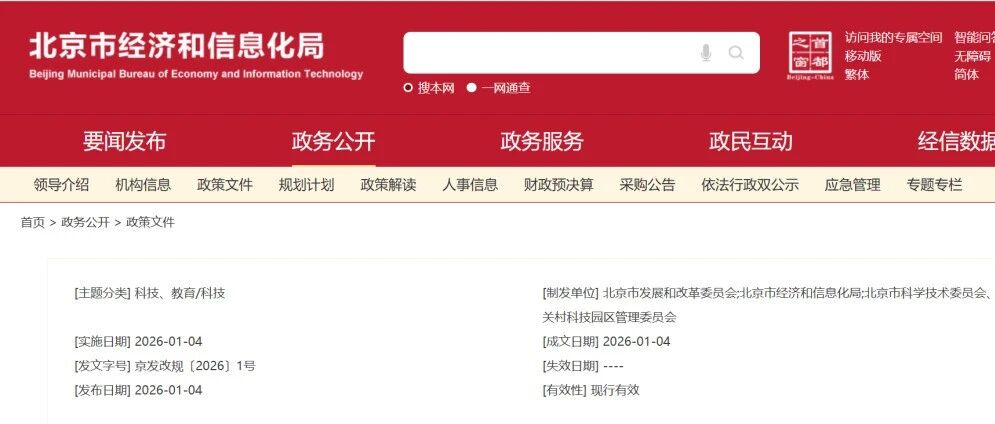
Core Viewpoint - Beijing has introduced 14 policies aimed at enhancing the capacity of pilot testing services, with a goal to establish 10 national-level and 50 municipal-level pilot testing platforms by 2030, promoting the integration of technology and industry, and fostering new productive forces [1][4]. Background of Policy Issuance - Pilot testing is a transitional testing phase for new products moving towards production, crucial for the industrialization of technological achievements. Pilot testing platforms provide specialized services and systematic solutions to support the engineering breakthroughs and industrial applications of technological results [4]. Main Considerations of Measures - Beijing has made significant progress in integrating technological and industrial innovation, forming a "leading talent + new R&D institution" model. However, existing pilot testing platforms do not fully meet the demand for technological achievement transformation, leading to resource fragmentation. The new measures aim to address these issues through a combination of effective market and proactive government actions [6]. Specific Measures - The measures outline 14 policies focusing on four areas: layout of pilot testing platforms, continuous enhancement of service capabilities, optimization of the service ecosystem, and strengthening of support measures. The goal is to establish a pilot testing system that meets the requirements of the capital's modern industrial system by 2030 [7]. Key Initiatives - The measures emphasize the establishment of independent legal entities for pilot testing platforms, particularly in key industries such as artificial intelligence, healthcare, and green low-carbon technologies. New projects will receive financial support based on a percentage of total investment, with a maximum cap [8][9]. Enhancing Service Capabilities - The measures propose initiatives to improve the sustainability of pilot testing platforms, including open sharing of internal testing capabilities and enhancing full-chain service capabilities. This aims to expand the functions of pilot testing platforms to cover the entire industrial chain [10]. Optimizing the Service Ecosystem - The measures focus on strengthening the necessary support for pilot testing platforms, including space, information, finance, talent, and standards. They aim to build a collaborative pilot testing transformation base in the Beijing-Tianjin-Hebei region and enhance the matching of supply and demand through upgraded industrial mapping [11]. Implementation Organization - The measures call for coordinated efforts between city and district levels to ensure effective policy implementation. This includes leveraging the advantages of city-district collaboration and promoting the establishment of pilot testing service platforms in industrial clusters and parks [12].

北京发布新年首个产业政策:新建中试平台最高可获1亿元支持
中关村储能产业技术联盟· 2026-01-06 08:17
Core Viewpoint - Beijing aims to enhance its pilot testing service capabilities to promote the integration of technological innovation and industrial development, with a goal of establishing a comprehensive pilot testing system by 2030 [2][8]. Group 1: Policy Measures - The document outlines 14 policy measures to support the construction and efficient operation of pilot testing platforms, with a focus on key industries such as artificial intelligence, healthcare, and green technology [3][9]. - New pilot testing platforms can receive subsidies of up to 100 million yuan, covering 35% of total investment for leading industries and 25% for emerging technology sectors, with specific caps for different categories [3][9]. Group 2: Development Goals - By 2030, Beijing aims to establish 10 national-level and 50 municipal-level pilot testing platforms to meet the needs of a modern industrial system [2][8]. - The initiative emphasizes the importance of pilot testing as a transitional phase for new products, facilitating the commercialization of technological achievements [8]. Group 3: Support for Enterprises - The policies encourage collaboration among leading enterprises and research institutions to build pilot production lines, enhancing the overall testing capabilities within the industry [9][10]. - Financial support mechanisms, including tax deductions and streamlined project approvals, are introduced to facilitate the rapid establishment and operation of pilot testing projects [10][12]. Group 4: Service Ecosystem Enhancement - The document emphasizes the need for a collaborative approach in building pilot testing bases across the Beijing-Tianjin-Hebei region, focusing on key sectors like hydrogen energy and biomedicine [11]. - A platform for matching supply and demand for pilot testing services will be developed to enhance resource allocation and support industrial innovation [11][12]. Group 5: Talent and Standards Development - The initiative includes plans to strengthen the talent pool for pilot testing by fostering partnerships between universities and industry, aiming to cultivate skilled professionals [12]. - Support for the establishment of standards related to pilot testing services is also highlighted, encouraging participation from various stakeholders in the development of national and international standards [12].
十年来长江经济带生产总值翻了一番多 未来工作重点公布
Yang Shi Xin Wen Ke Hu Duan· 2026-01-05 13:05
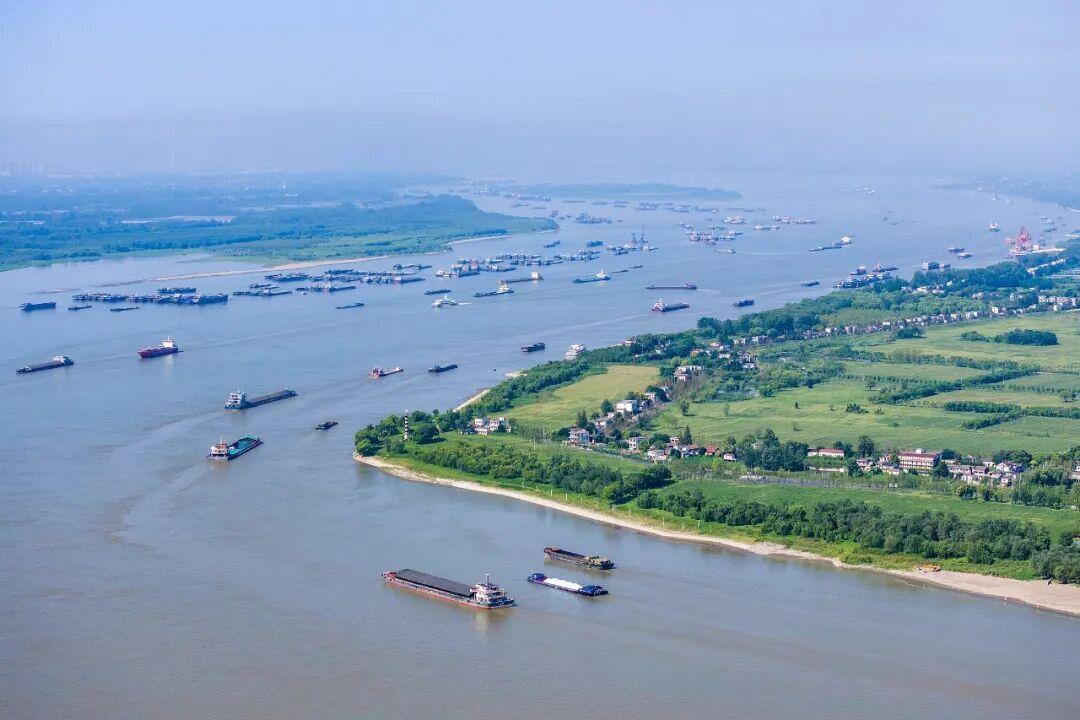
Core Insights - The development of the Yangtze River Economic Belt over the past decade has seen significant improvements in water quality, economic growth, and environmental protection measures [2][3] Economic Growth - The GDP of the Yangtze River Economic Belt has more than doubled, increasing its share of the national GDP from 42.2% to 47.3% [2] - The per capita disposable income of residents has risen from 23,000 yuan to 44,000 yuan, marking a 91% increase [3] Environmental Protection - The proportion of good water quality in the Yangtze River has improved from 67% to 96.5% [2] - The implementation of the "protection first, development second" principle has led to the closure and relocation of nearly 10,000 chemical enterprises and the cleanup of 1,361 illegal docks [2] - The water quality of the Yangtze River has improved from a mix of class five to class two across the entire river [2] Technological and Industrial Innovation - The integration of technological and industrial innovation has accelerated, with the establishment of international technology innovation centers in Shanghai and Wuhan [2] - Notable technological achievements include advancements in nuclear fusion and targeted cancer therapies, alongside the emergence of competitive innovative companies [2] Transportation and Infrastructure - The high-grade navigable waterways of the Yangtze River have increased from 8,000 kilometers to 11,000 kilometers [2] - The cargo throughput of major ports along the river has grown by 71%, reaching 4.2 billion tons, maintaining its position as the world's leading inland waterway [2] Cultural Development - The cultural heritage of the Yangtze River has been enhanced, with the successful inclusion of the Liangzhu Ancient City site in the World Heritage List [2] - Efforts are underway to promote cultural tourism and deepen the integration of culture and tourism [6] Future Development Plans - The "14th Five-Year Plan" emphasizes continued development of the Yangtze River Economic Belt, focusing on ecological protection, innovation, regional collaboration, cultural heritage, and enhancing the quality of life for residents [5][6] - Key initiatives include improving environmental protection, fostering innovation, and enhancing regional connectivity and openness [5][6]
全市科技创新和产业创新深度融合发展大会召开
Nan Jing Ri Bao· 2026-01-05 02:14
周红波指出,"在推动科技创新和产业创新融合上打头阵",是习近平总书记对江苏的殷切嘱托,也 是南京走在前、做示范、挑大梁的必然选择。过去一年,我们深入落实习近平总书记关于科技创新的重 要论述和对江苏工作重要讲话精神,大力建设科技强市、产业强市、人才强市,取得了新的标志性成 果,在培育发展新质生产力上迈出坚实步伐。"十五五"开局之年,要在国家战略大局下思考南京作为、 推进南京行动,更加注重系统集成、平台聚力、主体育强、改革赋能,把各项政策和措施进一步向培育 产业聚焦、向破解难题发力、向集聚人才倾斜,大力促进科技创新和产业创新深度融合,加快塑造发展 新动能新优势。 1月4日,新年第一个工作日,市委市政府召开全市科技创新和产业创新深度融合发展大会,强调 要深入学习贯彻党的二十届四中全会精神和习近平总书记对江苏工作重要讲话精神,汇集政产学研金各 方力量,锚定目标、真抓实干,持之以恒、携手推动南京产业科技创新再上新台阶,为"十五五"开好局 起好步提供新动能。市委书记周红波讲话,代市长李忠军主持,市人大常委会主任吕德明、市政协主席 王立平、市委副书记李佰平,两院院士郑兰荪、刘韵洁、郑海荣、尤肖虎出席。 周红波强调,新的一年 ...
从关键词读懂2025丨锚定新质生产力 产业发展开启多元“融合”
Sou Hu Cai Jing· 2025-12-30 02:16
Core Insights - The article emphasizes the acceleration of new productive forces and the deepening of industrial transformation and upgrading, with "integration" becoming a prominent theme in industrial development [1] Group 1: Industrial Growth and Trends - The expected growth rate of industrial added value for the year is 5.9%, while digital industry revenue is projected to increase by 9%, and the scale of the core artificial intelligence industry is anticipated to exceed 1 trillion yuan [1] - The integration of traditional and emerging industries, as well as the precise alignment of digital technology with the real economy, is highlighted as a key driver for breaking down industry barriers and enhancing growth potential [1] Group 2: Cross-Industry Collaboration - The collaboration between ByteDance and ZTE to launch the "Doubao Phone" and the introduction of AI glasses by Li Auto and Alibaba exemplify the trend of cross-industry terminal creation, reflecting the broader wave of industrial integration expected in 2025 [2] - In agriculture, traditional practices are evolving into smart agriculture through partnerships with emerging industries, showcasing the role of technology in enhancing efficiency and reducing costs [2] Group 3: Automotive Innovations - The rapid development of new energy vehicles is creating an inclusive innovation ecosystem, with companies like Dongfeng Motor collaborating with Huawei and others to advance intelligent driving systems and semiconductor production [3] Group 4: Multi-Dimensional Integration - The pearl industry in Zhejiang is merging with digital and green economies, creating a comprehensive ecosystem with a market scale exceeding 50 billion yuan, while Harbin is developing a composite business model around its ice and snow theme [4] - Experts predict that ongoing breakthroughs in artificial intelligence will further expand the scope of industrial integration, fostering new business models and driving economic growth [4] Group 5: Digital and Real Economy Fusion - In Ulanqab, the establishment of data centers and a significant investment in computing power are enhancing the integration of digital and real economies, with a computing power scale reaching 120,000 P [5] - The procurement of digital technology by enterprises has increased by 10.2%, indicating a solid advancement in the fusion of digital and real sectors [6] Group 6: Intelligent Manufacturing - The announcement of the first batch of 15 leading intelligent factories marks a significant leap in the intelligent transformation of manufacturing, with these factories achieving deep integration of new information technologies and advanced manufacturing [6] - The intelligent factory of Zoomlion showcases high efficiency with an 80% application rate of AI technologies, setting new records in the construction machinery sector [6] Group 7: Future Prospects - The Ministry of Industry and Information Technology forecasts a 9% growth in telecommunications and software business revenue, with the artificial intelligence industry expected to exceed 1 trillion yuan [7] - The integration of technology and industry is seen as a key catalyst for driving digital upgrades in the real economy, reshaping industrial development models [7] Group 8: Innovation and Policy Support - The integration of technological and industrial innovation is being actively promoted by government policies, indicating a clear path for practical exploration across various sectors [8] - The collaboration between academia and industry is yielding significant technological advancements, enhancing the competitiveness of various sectors [9]
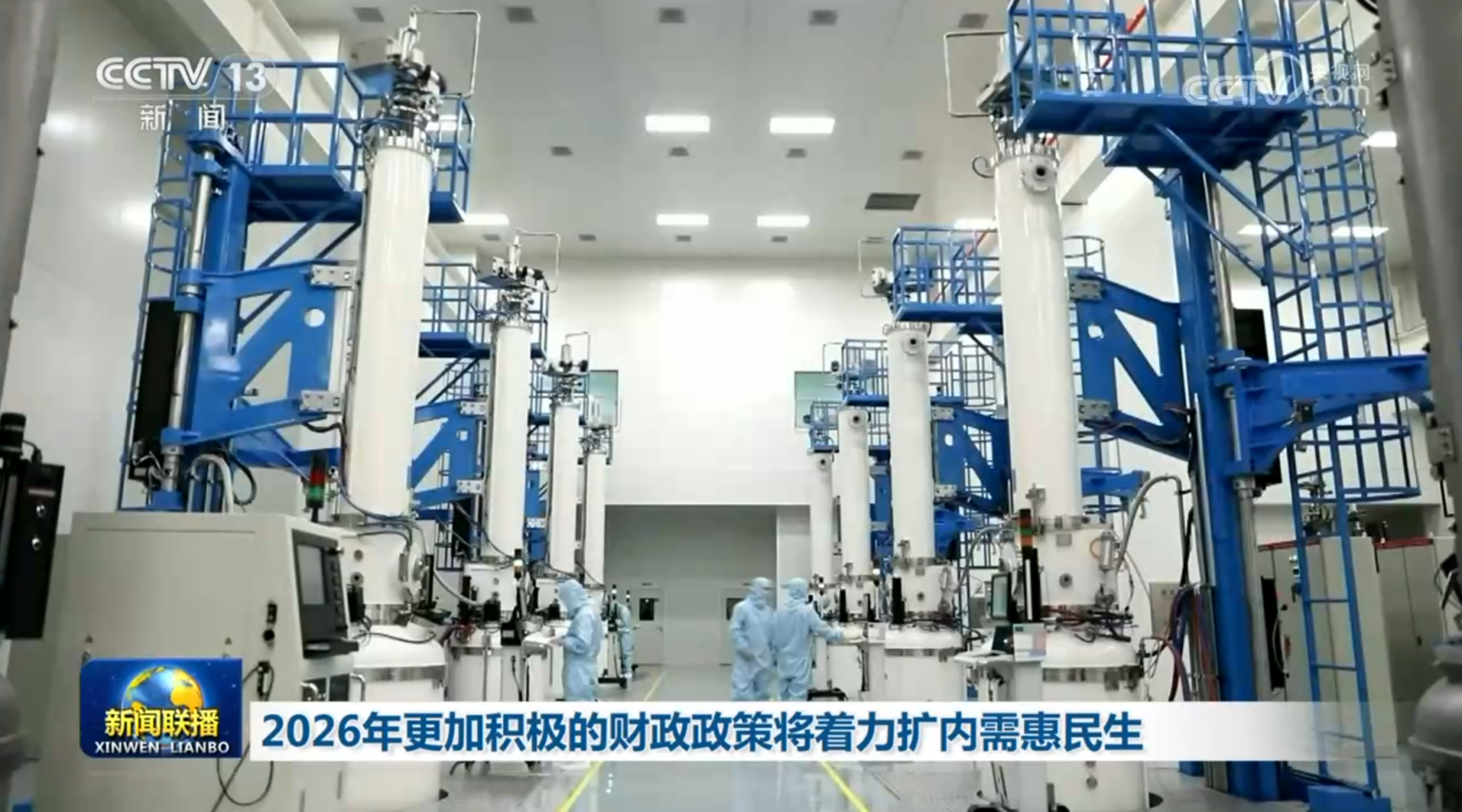
2026年更加积极的财政政策将着力扩内需惠民生
Yang Shi Wang· 2025-12-29 12:41
Group 1 - The core viewpoint is that China will implement a more proactive fiscal policy in 2026 for the second consecutive year, focusing on expanding domestic demand, optimizing structure, increasing momentum, and benefiting people's livelihoods [1][3] - The fiscal expenditure will be expanded to ensure necessary spending, optimize the government bond tool mix, and improve the efficiency of transfer payment funds [1][3] - The policy aims to support the construction of a strong domestic market, boost consumption, and implement special actions to stimulate consumption [3] Group 2 - There will be an active expansion of effective investment, with increased funding for key areas such as new productive forces and comprehensive human development [3] - The fiscal policy will also support the deep integration of technological innovation and industrial innovation, promote urban-rural integration, and enhance regional collaboration [3] - The focus will be on strengthening social welfare and promoting a comprehensive green transformation of economic and social development, enhancing economic development momentum and public well-being [3]