
科技金融体制

Search documents
实现2026年经济目标,深层次改革不可或缺
Di Yi Cai Jing· 2026-01-13 07:18
Group 1 - The core viewpoint emphasizes the importance of policy support and reform innovation in achieving economic stability and growth in 2025, with a GDP growth of 5.2% in the first three quarters and an expected annual growth rate of around 5% [1][2] - The economic structure is continuously optimizing, with emerging industries like artificial intelligence and biomedicine thriving, and significant sales driven by the "two new" policies, including over 2.5 trillion yuan in sales from consumer goods replacement [1][3] - Industrial enterprises have seen a profit increase of 1.9% from January to October 2025, indicating improved corporate performance despite ongoing challenges [1][3] Group 2 - Current economic challenges include insufficient effective demand, with investment showing negative growth and overall consumption remaining weak [2][3] - Price levels are low, with the Consumer Price Index (CPI) fluctuating around zero for two consecutive years and the Producer Price Index (PPI) experiencing negative growth for three years [3][4] - Employment and resident income growth face significant pressure, as highlighted in the "15th Five-Year Plan," indicating a need for focused policy measures [3][4] Group 3 - The central economic work conference has called for more proactive macroeconomic policies to address the ongoing economic downward pressure, including maintaining necessary fiscal deficits and increasing central budget investments [5][6] - A moderately loose monetary policy is to be implemented, focusing on stabilizing economic growth and ensuring reasonable price recovery, with tools like reserve requirement ratio cuts and interest rate reductions [6][7] - The conference outlined "eight persistences" for economic work, emphasizing the need for deep reforms alongside policy support to enhance domestic demand and improve income distribution [7][8]
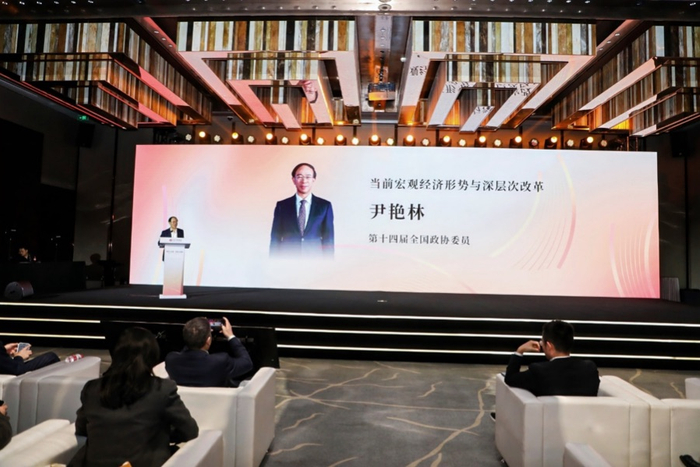
尹艳林:制定实施城乡居民增收计划,需配套推进收入分配改革
2 1 Shi Ji Jing Ji Bao Dao· 2026-01-12 09:27
Economic Overview - The GDP growth for the first three quarters of 2025 is 5.2%, an increase of 0.4 percentage points compared to the same period last year, with an expected annual growth rate of around 5% and a total economic output projected to reach 140 trillion yuan [3][5][6] - The industrial structure is continuously optimizing, with emerging industries such as artificial intelligence, biomedicine, and robotics flourishing and ranking among the world's leaders [6][8] Challenges in the Economy - There are significant issues such as insufficient effective demand, low price levels, difficulties faced by some enterprises, pressure on employment and resident income growth, and low growth rates in fiscal revenue and expenditure [7][8] - Investment has shown negative growth for several months, and overall consumption remains weak [7] - The Consumer Price Index (CPI) has fluctuated around 0 for two consecutive years, while the Producer Price Index (PPI) has experienced negative growth for three years [7] Policy Recommendations - The government is urged to implement more proactive macroeconomic policies, including maintaining necessary fiscal deficits and total debt levels, and increasing central budget investments to support infrastructure projects [9][10] - A focus on income distribution reform is necessary, including increasing basic pensions for urban and rural residents, optimizing personal income tax policies, and improving the salaries of public sector employees to boost overall income [10][11] Financial Sector Reforms - Enhancing the vitality of the capital market requires reforms, including the establishment of a financial system that aligns with technological innovation [4][11] - Commercial banks are encouraged to better serve innovation by exploring pilot programs for investment and loan linkage, which involves deep adjustments to the financial system [4][11]

科技板块或迎配置窗口 交银沪深港科技50ETF助力掘金硬科技!
2 1 Shi Ji Jing Ji Bao Dao· 2025-12-03 02:05
Core Insights - The issuance of the "Jiaoyin CSI Selected Hong Kong-Shenzhen Technology 50 ETF" aims to provide investors with an efficient tool for exposure to hard technology sectors, including semiconductors and AI, as performance in these areas accelerates due to supportive policies [1][2] - The investment logic in the technology sector is shifting from "concept narrative" to "performance-driven," with policies enhancing financing channels for tech innovation and emphasizing high-level technological self-reliance as a core goal [1][2] - The long-term investment value of the technology sector is highlighted by the dual effects of policy support and industry uplift, despite challenges such as market volatility and stock selection difficulties for ordinary investors [1][2] Product Overview - The "Jiaoyin CSI Selected Hong Kong-Shenzhen Technology 50 Index" is the first strategy-based technology index covering the Hong Kong, Shenzhen, and Shanghai markets, focusing on strategic emerging industries [2] - The index emphasizes core areas such as electronic semiconductors, communications, innovative pharmaceuticals, and advanced manufacturing, selecting high-quality companies with strong R&D capabilities and growth potential [2] - The index features a cross-market structure with over 80% A-share representation, focusing on leading companies in electronics, machinery, and power equipment, while including Hong Kong stocks that provide rare assets in smart terminals and innovative pharmaceuticals [2] Index Characteristics - The index's balanced industry layout enhances its resilience against market volatility, with the top three sectors accounting for only 65% as of September 30, 2025, making it more robust in a fluctuating market [3] - The index employs a rigorous selection mechanism, requiring a minimum R&D expenditure ratio of 5% to filter for genuinely high R&D companies, and uses dual-dimensional indicators for growth potential [2][3] - The management team of Jiaoyin Fund has extensive experience in index investment, aiming to minimize tracking deviation and capture excess returns through a collaborative management approach [3]
中国人民银行、科技部等部门联合召开科技金融统筹推进机制第一次会议
财联社· 2025-11-29 06:17
据央行,为深入贯彻党的二十届四中全会精神,加快实现高水平科技自立自强,落实《加快构建科技金融体制 有力支撑高水平科技自立自 强的若干政策举措》,11月27日,中国人民银行、科技部等部门联合召开科技金融统筹推进机制第一次会议。中国人民银行行长潘功胜、 科技部部长阴和俊出席会议并讲话。中国人民银行副行长朱鹤新主持会议,科技部副部长邱勇、金融监管总局副局长周亮、中国证监会副主 席陈华平、国务院国资委党委委员肖宗辉出席。 会议强调,明年是"十五五"开局之年,各有关部门要扎实推进各项工作任务落实,常态化运行科技金融统筹推进机制,强化科金协同、央地 联动,进一步优化政策措施。发挥好科技创新和技术改造再贷款政策作用,高质量建设债券市场"科技板",促进私募股权投资和创业投 资"募投管退"循环,强化科技保险高质量发展,引导和推动金融资源科学高效配置,加强对金融机构"五篇大文章"工作成效评估,完善融资 对接、信息共享、知识产权转化运用等配套机制,助力高水平科技自立自强。 中国人民银行、科技部、国家发展改革委、工业和信息化部、财政部、国务院国资委、金融监管总局、中国证监会、国家知识产权局、国家 数据局、国家外汇局相关司局负责人参加 ...

同科技创新相适应的科技金融体制加快构建
Jin Rong Shi Bao· 2025-11-24 00:37
Group 1 - The core viewpoint of the articles emphasizes the importance of innovative financing mechanisms, particularly the issuance of technology innovation bonds, to support technological advancements and address financing challenges faced by tech enterprises [1][2]. - The issuance of technology innovation bonds has seen significant growth, with nearly 1.5 trillion yuan issued in the first half of the year, accounting for nearly 80% of the total issuance of innovation-related bonds [2]. - The financial resource allocation logic is shifting, allowing equity investment institutions to issue bonds, transforming short-term debt into long-term capital for hard tech companies in critical R&D phases [2]. Group 2 - The banking credit system is undergoing a transformation, with the loan approval rate for tech SMEs exceeding 50%, reflecting a 2.8 percentage point increase year-on-year [3]. - Banks are innovating their lending mechanisms, moving away from traditional collateral requirements to focus on the technological value and growth potential of enterprises [3]. - The establishment of specialized technology finance departments in major banks and the creation of over 2,000 technology branches nationwide are enhancing the support for tech innovation [3]. Group 3 - The multi-tiered equity market is being strengthened to better serve technological innovation, with ongoing reforms in the Sci-Tech Innovation Board and the establishment of the Beijing Stock Exchange [4]. - There are still deep-rooted contradictions in the financial system's support for tech innovation, particularly the tendency to favor mature high-tech enterprises over seed and startup companies that face financing difficulties [4]. - The lack of government risk compensation funds is a significant barrier to improving the financing accessibility for tech enterprises, leading to higher costs due to increased risk management measures by investors and banks [4]. Group 4 - Future development of a financial system that aligns with technological innovation requires patience, breakthroughs, and innovation [5]. - Recommendations include enhancing the foundational systems of multi-tiered capital markets, exploring high-yield bond markets for riskier tech enterprises, and strengthening the linkage between equity, debt, and loans [5][6]. - There is a call for the cultivation of patient and long-term capital, including the establishment of large-scale industrial mother funds to guide social capital towards strategic emerging industries [6].
央行:充分发挥货币信贷政策导向作用
Sou Hu Cai Jing· 2025-11-11 09:36
Core Insights - The People's Bank of China emphasizes the importance of monetary credit policy in guiding financial development [1] - The report outlines a focus on five key areas: technology finance, green finance, inclusive finance, pension finance, and digital finance [1] - There is a commitment to support major national strategies and address key areas and weaknesses in economic and social development [1] Group 1: Monetary Policy and Financial Development - The report highlights the need to optimize and effectively utilize monetary policy tools that support technological innovation [1] - It stresses the importance of enhancing data development and utilization in the technology finance sector [1] - The establishment of a technology finance system that aligns with technological innovation is a priority [1] Group 2: Green Finance Initiatives - The report calls for the optimization of carbon reduction support tools and the expansion of green finance product offerings [1] - It mentions the need to develop carbon accounting rules for financial institutions in key high-carbon industries [1] - Financial institutions are encouraged to participate in the construction of carbon markets in a prudent manner [1]
科技部力推创新积分制“揭榜挂帅”
Zheng Quan Ri Bao· 2025-10-29 23:09
Core Viewpoint - The Ministry of Science and Technology has issued a notice to promote an innovation points system, which aims to enhance the financial support for technology innovation entities through a structured evaluation of their innovation capabilities [1][2]. Group 1: Innovation Points System - The innovation points system quantifies the innovation capabilities of enterprises, providing financial institutions with a basis to identify and support potential technology innovators [2]. - Participation in the innovation points system allows enterprises and research institutions to access various policy supports, such as credit loans and specialized guarantee plans, significantly increasing their financing opportunities [2]. - The system transforms the "technical value" of enterprises into quantifiable credit certificates for financial institutions, alleviating information asymmetry between banks and enterprises [2]. Group 2: Policy Implementation - The notice emphasizes the importance of central-local collaboration and the synergy between science and finance for effective policy implementation [3]. - A multi-dimensional and precise policy implementation system is crucial for converting technology finance policies into actionable measures that provide direct financial support to technology innovation entities [3]. - Financial institutions play a vital role in executing technology finance policies, needing to innovate products and services tailored to the characteristics of technology enterprises [3].
毕马威:资本市场已成为创新药企研发资金的重要来源
Sou Hu Cai Jing· 2025-10-20 14:41
Core Insights - Efficient operation of capital markets has become a crucial source of funding for innovative pharmaceutical companies [1] - Systematic policy optimization has improved financing efficiency and established a multi-layered, sustainable capital support system for the industry [1] - The policy issued in May 2025 emphasizes enhancing capital market support for technology innovation enterprises, particularly those with key core technologies, providing broader financing channels for biopharmaceutical companies [1] Industry Developments - Continuous optimization of the Sci-Tech Innovation Board system has been noted, with the China Securities Regulatory Commission releasing opinions to enhance institutional inclusiveness and adaptability [1] - As of now, 20 companies in the biopharmaceutical sector have successfully listed on the Sci-Tech Innovation Board under the fifth set of standards, with 19 of them achieving product launches, showcasing the system's inclusiveness for high-tech and high-growth enterprises [1]
构建同科技创新相适应的科技金融体制(专题深思)
Ren Min Ri Bao· 2025-10-19 22:26
Core Viewpoint - The integration of technology and finance is essential for national strength and competitiveness, with a focus on developing a technology finance system that aligns with technological innovation to support China's modernization and national rejuvenation efforts [1][2][3]. Group 1: Importance of Technology Finance - Technology innovation is a primary driver for enhancing national core competitiveness and development autonomy, requiring substantial financial support to transition from basic research to industrialization [2][3]. - Financial services for technology innovation are integrated into the national governance system, emphasizing the need for alignment with national strategies and the improvement of people's livelihoods [2][3]. Group 2: Characteristics of China's Technology Finance System - China's technology finance system is characterized by its political and people-oriented nature, contrasting with Western finance that often prioritizes short-term profits [3]. - The system aims to meet major national strategic needs and enhance public welfare while ensuring sustainable capital investment through market returns and public institutional guarantees [3]. Group 3: Strategies for Building a Technology Finance System - Establishing a coordinated mechanism among fiscal, financial, and industrial sectors to create a collaborative effort in supporting technology innovation [4]. - Improving incentive and risk compensation mechanisms, promoting policies like investment-loan linkage, and encouraging social capital to enter the technology innovation sector [4]. - Developing a multi-tiered capital market to increase direct financing, innovate financial tools for various stages of tech enterprises, and enhance exit mechanisms for venture capital and private equity [4]. - Creating a technology finance information-sharing platform to facilitate data connectivity among government, research institutions, financial entities, and enterprises, thereby reducing financial risks and enhancing service efficiency [4].
北京证监局:鼓励支持更多优质科技企业赴北交所上市
Sou Hu Cai Jing· 2025-10-16 03:49
Core Viewpoint - The China Securities Regulatory Commission (CSRC) is enhancing the listing system to support technology-driven companies, emphasizing the importance of listing as a means for these enterprises to gain financial backing [1] Group 1: Policy and Regulatory Framework - The Beijing Regulatory Bureau is committed to optimizing work mechanisms and improving the quality of guidance and supervision for companies seeking to list [1] - Continuous reforms in the listing system aim to increase inclusivity and adaptability, particularly for high-quality, unprofitable companies [1] Group 2: Support for Technology Enterprises - The regulatory body encourages more quality technology companies to list on the Beijing Stock Exchange, leveraging Beijing's advantages as a primary market [1] - There is a focus on guiding enterprises to effectively utilize the Beijing Stock Exchange as a platform for innovative small and medium-sized enterprises [1]